The Last Piece
Part One: The Puzzle on the Table
There is a jigsaw puzzle on my dining room table that has been unfinished for four years.
It’s a thousand pieces, a painting of a white farmhouse in a field of wildflowers, with a red barn and a blue sky full of clouds. My husband, Charles, started it on a Sunday afternoon in March, the way he started a new puzzle every few weeks for forty-one years of marriage. He’d sit at the end of the table with his reading glasses on and his coffee going cold, sorting edge pieces into a shoebox lid, humming old Glen Campbell songs under his breath.
He finished the border that Sunday. He got most of the barn done by Wednesday. On Thursday morning, he kissed me on the cheek at the kitchen door and told me he had errands to run in Nashville and would be back by supper.
He never came back. And for four years, I couldn’t bring myself to touch that puzzle, finish it, or put it away.
My name is Martha Wilson. I’m sixty-eight years old, and I live in a two-story brick house on a quiet street in Chattanooga, Tennessee, with a porch swing and a magnolia tree in the front yard that’s older than I am. I taught third grade at Normal Park Elementary for thirty-four years. I’ve been retired for nine.
I lost my husband and my daughter on the same day, in the same car, on Interstate 24, on a rainy Thursday in April four years ago. A tractor-trailer crossed the median near Monteagle. The state trooper said it was instant. He said they wouldn’t have felt anything.
I’ve never known whether that was true or just the kind of thing troopers say to widows on front porches.
Part Two: Anna
I didn’t know my daughter was in the car.
That’s the part I could never explain to anybody. Not to my pastor, not to my sister in Knoxville, not to the grief counselor I saw for six months afterward. When the trooper stood on my porch and said your husband and your daughter, I thought he’d made a mistake. I told him so. I said, My daughter lives in Nashville. She hasn’t spoken to me in three years. She wouldn’t be in a car with her father.
But she was.
Anna was our only child. She was born when I was thirty-six, after nine years of trying and three miscarriages, and Charles and I loved her the way you love something you’d stopped hoping for. She was bright and funny and stubborn, with my red hair and her father’s laugh. She wanted to be a veterinarian. She brought home every stray dog and injured bird in the neighborhood.
In her twenties, she started drinking. Then pills. It happened slowly and then all at once, the way it does. She dropped out of the University of Tennessee. She moved to Nashville with a man we never met. She called less and less, and when she did call, she needed money.
The last time I saw her, she was twenty-nine. She came to the house on a Saturday in October, thin and shaking, and asked for two thousand dollars. I said no. I said I’d pay for rehab, any rehab, anywhere, but I wouldn’t give her cash. She screamed at me in my own kitchen. She said I’d always wanted a perfect daughter and she’d never been good enough. She said she never wanted to see me again.
I said something I’ve regretted every day since. I said, Then don’t.
She left. She didn’t call. Not on my birthday, not at Christmas, not when I sent cards and letters to the last address I had. Three years of silence.
And then the trooper on my porch, saying her name.
Part Three: After
I don’t remember much of the first year.
I remember the double funeral at First Presbyterian, two caskets side by side at the front of the sanctuary, and how I kept thinking there must be some mistake. I remember people bringing casseroles. I remember sitting in Charles’s recliner every night with the TV on and the sound off, staring at the unfinished puzzle on the dining room table.
I remember not understanding why Anna was in the car. Charles’s errands in Nashville. Anna in the passenger seat. The two of them heading south on I-24 toward Chattanooga, toward home. Nobody could tell me why. The police said Charles had picked her up at an address in East Nashville that morning. The address was a sober living house.
So my daughter had been getting clean. And my husband had known. And neither of them had told me.
Grief nearly consumed me. I’m not ashamed to say it. There were weeks I didn’t get dressed. There were days I didn’t eat anything but saltines and black coffee. There was one night, the second winter, when I sat in the garage in Charles’s old Buick for a long time with the keys in my hand, just thinking, until my neighbor, Mrs. Ruth Haney, knocked on the side door because she’d seen the light on.
She didn’t ask what I was doing. She just sat in the passenger seat with me until I was ready to go inside.
Part Four: The Church Closet
It was Ruth who brought me to the closet.
She’s seventy-four, a retired nurse, and she volunteers at a ministry run out of a small Methodist church on Bailey Avenue called Open Arms. It’s a clothing and supply closet for foster families. Most children come into foster care with nothing but the clothes they’re wearing and maybe a garbage bag of belongings. Open Arms gives foster parents diapers, formula, car seats, pajamas, toothbrushes, books, stuffed animals, and backpacks for school. Everything donated. Everything free.
“They need somebody to sort the children’s books,” Ruth said, standing on my porch in her raincoat on a Tuesday morning. “You were a teacher for thirty-four years. Come on.”
I didn’t want to go. I went anyway.
The closet was a converted Sunday school room in the church basement, with shelves to the ceiling and a long folding table and a smell of laundry detergent and old hymnals. I spent that first morning sorting picture books by age group. Goodnight Moon. The Very Hungry Caterpillar. Corduroy. Books I’d read aloud to thirty-four classes of eight-year-olds and a thousand times to Anna when she was small.
I cried through most of it. Ruth handed me tissues and didn’t say anything.
I went back the next Tuesday. And the next.
The work became a lifeline. I don’t know how else to say it. I sorted books and folded clothes and packed backpacks every Tuesday and Thursday. Then I started helping with the events, the holiday parties and back-to-school drives, where we brought gifts to children in group homes and emergency shelters around Hamilton County.
It didn’t heal anything. Grief doesn’t heal. But it gave the grief somewhere to go. Every pair of tiny socks I folded was something I could do for a child, when I hadn’t been able to do anything for my own.
Part Five: The Group Home
I met her in December.
It was the week before Christmas, three and a half years after the crash. Open Arms was delivering gifts to Sunrise House, an emergency group home for young children on the north side of Chattanooga. It’s a big old Victorian with a chain-link fence and a playground in the backyard, where children under six stay while caseworkers try to find them a foster placement.
We came in with three volunteers and a church van full of wrapped presents. The children were in the big front room, maybe a dozen of them, toddlers and preschoolers, running and shrieking around a scraggly artificial Christmas tree. Ruth started handing out presents. The noise was enormous.
And in the corner by the window, on a little beanbag chair, sat a little girl by herself.
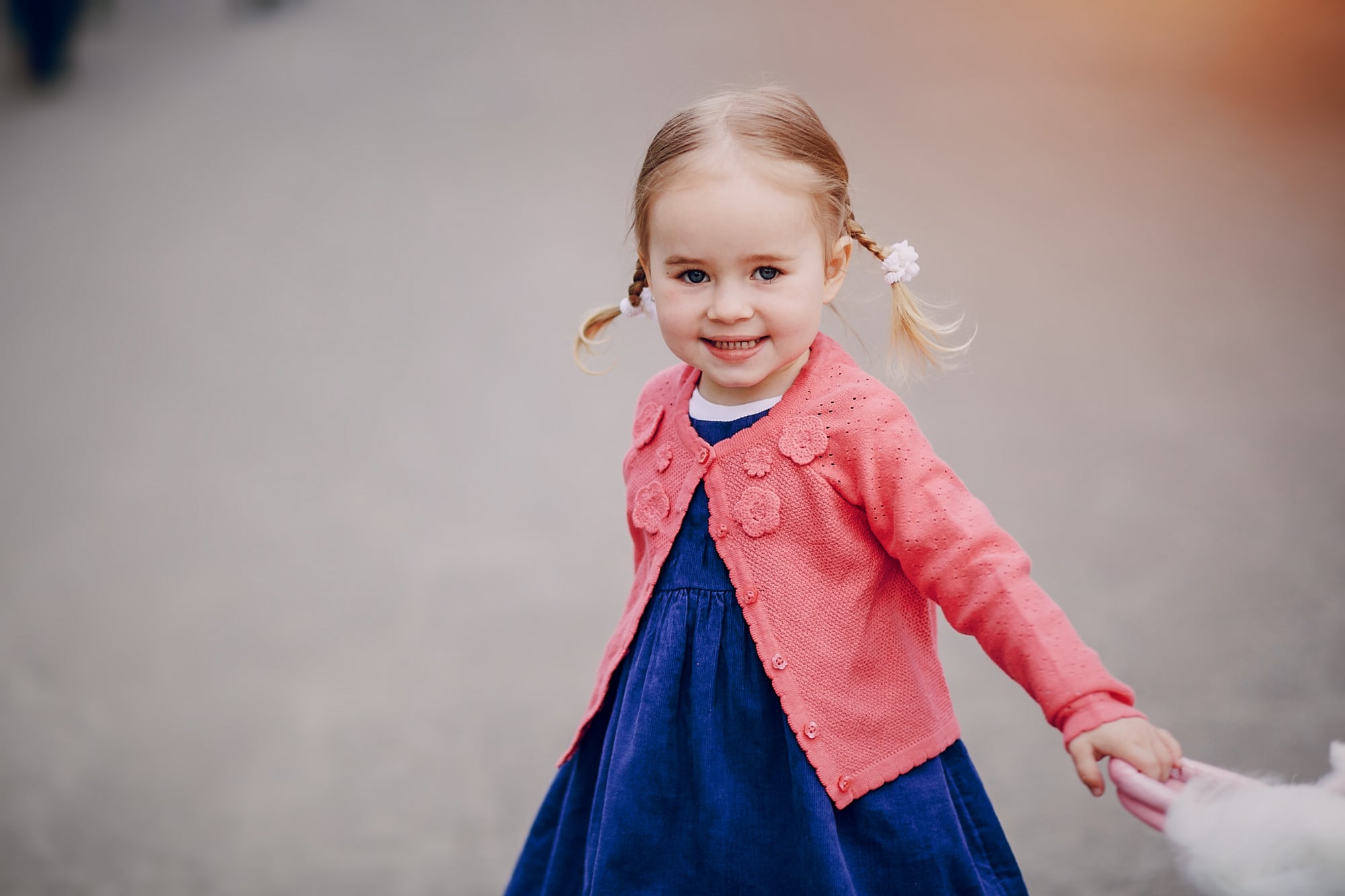
She was three. Small for her age, with red hair, the exact copper-red of my own hair before it went gray, in two crooked pigtails. She was wearing a pink sweater with a reindeer on it, a little too big. She was holding a worn stuffed rabbit missing one eye, and she was watching the other children open their presents with a look I recognized from thirty-four years of teaching.
It was the look of a child who has learned not to expect anything.
I picked up a present from the van, a book and a soft yellow blanket. I walked over and sat down on the floor beside her beanbag.
“Hello,” I said. “I’m Martha. This is for you.”
She looked at the present. Then at me. Then back at the present. She didn’t reach for it.
“Is it mine?” she asked. Her voice was tiny and careful. “To keep?”
“To keep,” I said.
She took it. She unwrapped it slowly, one piece of tape at a time, folding the paper neatly beside her. She found the book. Corduroy. She looked at the bear on the cover for a long time.
“He has a button missing,” she said.
“He does,” I said. “He goes looking for it. Would you like me to read it to you?”
She thought about it very seriously. Then she climbed off her beanbag and sat in my lap.
I read Corduroy to her twice. When I finished the second time, she put her head against my chest and said, very quietly, “He found a home.”
Part Six: Five Families
Her name was Lily.
I asked the caseworker on the way out, a tired, kind woman in her forties named Kendra Hollis, who’d been with the Tennessee Department of Children’s Services for fifteen years. She looked at me a little strangely when I asked.
“Lily’s a special case,” Kendra said, keeping her voice low in the hallway. “She came into care at fourteen months. She’s been in the system almost two years. Three foster homes, now here at Sunrise while we look for something permanent.”
“Is she available for adoption?” I asked.
Kendra hesitated. “Technically, yes,” she said. “Parental rights were terminated a year ago. Mother’s deceased. Father’s unknown. She’s been on the adoption list for eleven months.”
“Eleven months?” I said. “A three-year-old girl? Healthy?”
“She’s perfectly healthy,” Kendra said. She looked uncomfortable. “But she’s been matched with five prospective adoptive families. Five. And all five withdrew before finalization.”
“Why?”
Kendra shook her head. “I wasn’t her caseworker until three months ago,” she said. “The file just says family withdrew for each one. I’ve asked. Nobody seems to know.” She looked back through the doorway at Lily on her beanbag, holding Corduroy against her chest. “It doesn’t make any sense. She’s the sweetest child I’ve ever had on my caseload.”
I looked through the doorway too.
It was impossible to see how anyone could pass up such a precious child. Five families. Five chances at a home, and each one gone.
Looking at her, I felt something shift inside me. Something that had been frozen for three and a half years. I don’t know what else to call it. It was like a key turning in a lock that had rusted shut.
I said it right away, before I could think about it, before I could talk myself out of it.
“Please tell me what I need to do,” I said. “I’d like to adopt her.”
Part Seven: Too Old
Everyone seemed surprised.
Kendra was surprised. Ruth, when I told her in the church van on the way home, was so surprised she missed the turn onto Bailey Avenue. My sister, Carol, in Knoxville, was more than surprised. She called me three times that week.
“Martha,” she said. “You’re sixty-eight years old. You live alone. You haven’t raised a toddler in thirty years. What happens when you’re eighty and she’s fifteen? What happens if you get sick?”
“Then I’ll make a plan,” I said.
“You’re grieving,” Carol said gently. “You’re trying to replace Anna.”
That one hurt. I didn’t answer her for a long time.
“No,” I said finally. “I’m not trying to replace anybody. I’m trying to give a little girl a home.”
The state was surprised too. I could tell. Being sixty-eight and widowed and long removed from raising toddlers, they had their doubts. There was a home study, three visits from a social worker named Dennis who asked me a lot of pointed questions about my health and my finances and my stairs. There were background checks. Fingerprinting. A physical exam with my doctor, who wrote a letter saying I was in better shape than most of his fifty-year-olds. Thirty hours of foster parent training on Saturday mornings in a conference room downtown, where I was the oldest person by twenty-five years.
And there was the question everyone asked, gently, in different ways. What happens to Lily if something happens to you?
So I made a plan. I met with my lawyer, Samuel Ortega, an earnest young man in his thirties whose office was in a renovated bank building on Market Street, the same firm that had handled Charles’s estate. We drew up a will and a trust. We named a guardian: Ruth’s daughter, Sharon, who was forty-five and a pediatric nurse and had three children of her own and had already met Lily twice and fallen in love with her.
I trusted my instincts. My heart was very sure.
Part Eight: Lily Comes Home
It took nine months.
Nine months of paperwork and home visits and court dates and waiting. I visited Lily twice a week at Sunrise House, then at the foster home she moved to in February. I read her Corduroy so many times she memorized it. I learned that she liked strawberries and hated peas, that she was afraid of the dark and of loud trucks, that she sang to her one-eyed rabbit, whose name was Button, every night before bed.
I learned that she always folded wrapping paper neatly before she put it down. And that she always, always asked if things were hers to keep.
The adoption was finalized on a Tuesday in September, in a courtroom on the third floor of the Hamilton County Courthouse. The judge, a gray-haired woman named Barbara Lyle, smiled down from the bench and asked Lily if she knew why she was there.
Lily stood on her chair in a new yellow dress, holding Button by one ear. She thought about it very seriously.
“To get a home,” she said. “To keep.”
Judge Lyle had to take off her glasses and wipe her eyes before she could finish the order.
Once again, my house was lively and joyful.
Lily’s laughter filled the rooms. Her toys covered the floors. Her finger paintings went up on the refrigerator next to Anna’s old ones from 1993, which I’d never taken down. Her little rain boots sat by the front door beside my gardening clogs. She slept in Anna’s old bedroom, under Anna’s old quilt with the yellow ducks on it, with a nightlight shaped like a moon and Button tucked under her chin.
Her playful ways brought back memories of my daughter. Sometimes so strongly it took my breath away.
She laughed with her head thrown back, the way Anna did. She chewed on the end of her hair when she was thinking, the way Anna did. She had a little crease between her eyebrows when she concentrated, exactly like Anna’s. One morning at breakfast, she held her spoon upside down, the way Anna did at three, and I had to leave the kitchen and stand in the hallway for a minute with my hand over my mouth.
I told myself it was grief. That I was seeing Anna everywhere because I wanted to. That all little red-haired girls look a little alike.
From our very first day together, I loved her as my own. It felt like we were two pieces that fit. My heart wasn’t mistaken.
On her first night home, after she’d fallen asleep in Anna’s old bed, I went downstairs and sat at the dining room table in front of Charles’s unfinished puzzle. The white farmhouse. The field of wildflowers. The red barn, half done.
I looked at it for a long time. Then I picked up a piece of blue sky and fit it into place.
Part Nine: The Phone Call
Four months after Lily came home, in January, Samuel Ortega called me.
I was in the kitchen making grilled cheese sandwiches for lunch. Lily was at the dining room table, kneeling on a chair, helping me with the puzzle. She’d gotten very good at the sky. She had a system: she sorted the blue pieces by shade, from darkest to lightest, in rows across the tablecloth.
My phone rang on the counter.
“Mrs. Wilson,” Samuel said. His voice sounded strange. Anxious. “It’s Sam Ortega.”
“Hello, Sam,” I said. “Is something wrong with the paperwork?”
He didn’t answer right away. I heard papers shuffling on his end.
“Mrs. Wilson,” he said. “We’ve discovered some additional documents in Lily’s case file. From the Department of Children’s Services. They were sent over yesterday after a records audit.” He took a breath. “I hardly know how to explain this. Could you come to my office? As soon as you can?”
“Is Lily in some kind of trouble?” I asked. “Is the adoption…”
“The adoption is final,” Sam said quickly. “Nobody can undo it. She’s your daughter. That’s not what this is about.”
He paused again.
“Please just come,” he said. “I don’t think I should explain this over the phone.”
I called Ruth. She came over in five minutes in her slippers to watch Lily. I took my car keys from the hook by the kitchen door and set out without delay, still in my cardigan with grilled cheese crumbs on the sleeve.
Part Ten: The Folder
Sam’s office was on the fourth floor, with a view of the Tennessee River and the old Walnut Street Bridge. He was waiting for me in the doorway when I stepped off the elevator. He looked pale. He hadn’t put on his suit jacket. He had a manila folder in his hand, thick, with a Department of Children’s Services barcode label on the tab.
He led me into his office and closed the door. He pulled out a chair for me, the leather one in front of his desk, and sat down across from me.
Seated across from him, I had no idea what was happening.
He looked more somber than I’d ever seen him. More somber than when he’d read me Charles’s will.
“Mrs. Wilson,” he said. “These documents relate to the five families who withdrew from adopting Lily. We didn’t have them when we did the adoption. They weren’t in the file DCS gave us. They’d been scanned into the wrong system. Into a closed case under a different name.” He shook his head. “I’m deeply sorry. We should have caught it.”
My heart began to beat faster.
“What do you mean?” I said. “What different name?”
He opened the folder gently, the way you’d open something fragile.
“I think,” he said, “it’s best you understand the actual reason they refused.”
He slid the folder across the desk to me.
The first page was an internal DCS memo, dated two years earlier. A caseworker named Rhonda Pierce, who I later learned had retired, wrote to her supervisor:
Re: Minor child L.W., DOB 03/14. Prospective adoptive family (Henderson) has withdrawn following disclosure of pending kinship notification. Family’s attorney advised against proceeding until maternal relative search is resolved. Recommend expedited search.
I didn’t understand it. Kinship notification. Maternal relative search. I turned the page.
The second page was another memo, almost identical. A different family. Another withdrawal. Pending kinship notification. Unresolved maternal relative.
Then I turned to the third page.
I stopped. My hands began to shake.
It wasn’t a memo. It was a letter. A handwritten letter on lined notebook paper, photocopied, with a DCS intake stamp in the corner. The handwriting was loopy and slanted to the right, with little circles over the i’s instead of dots.
I knew that handwriting. I’d known it since it was a three-year-old’s scribbles on the refrigerator.
I shouted. I didn’t mean to. It just came out of me, loud enough that Sam’s secretary knocked on the door to ask if everything was all right.
“Oh my God,” I said. “How could they hide this from me? I can’t believe what I’m seeing. This is impossible!”
Part Eleven: The Letter
Sam told his secretary we were fine. He brought me a glass of water. I couldn’t drink it. My hands were shaking too hard.
I read the letter. Then I read it again.
To whoever is taking care of my daughter, Lily Wilson,
My name is Anna Wilson. I’m Lily’s mom. I’m writing this from the Riverbend Recovery Center in Nashville, where I’ve been for 4 months. I’m 90 days sober today.
I know Lily is in foster care. I know I lost custody. I know I deserved to. I’m not asking for her back yet. I’m not ready. But I need to tell you something in case anything happens to me.
Lily has a grandmother. My mother. Her name is Martha Wilson. She lives in Chattanooga, on Glenwood Drive. She’s a retired schoolteacher. She doesn’t know about Lily. We haven’t talked in three years. That’s my fault, not hers.
I listed my mother as “unknown” on my paperwork when Lily was taken. I’m sorry. I was ashamed. I didn’t want her to see what I’d become.
But if anything happens to me, please find her. Please. She would want Lily. She would love her more than anybody in the world. She was the best mom anyone ever had, and I was too angry and sick to see it.
My dad, Charles Wilson, knows about Lily. He found me last month. He’s been visiting me. He’s going to help me tell my mom when I’m ready. We’re going to go home together.
I named Lily after my grandmother, my mom’s mother, Lillian. My mom will understand.
Please don’t let my daughter grow up without her grandmother.
Anna Marie Wilson
It was dated eleven days before the crash.
Part Twelve: What Happened
Sam explained the rest. Slowly. Carefully. Like a doctor explaining a diagnosis.
Anna had sent the letter to DCS from rehab, addressed to Lily’s caseworker at the time. The letter was received, stamped, and placed in Lily’s case file. Then, eleven days later, Anna was killed. Her death triggered the next stage of the case. Termination of parental rights. A new caseworker. A transfer of the file from Davidson County, where Lily was born, to Hamilton County, where she’d been placed.
In the transfer, the letter and the memos about it were scanned into the wrong electronic file. They were attached to Anna’s own closed case from years earlier, an old child welfare report from when she was a teenager, under her full name, Anna Marie Wilson. Not to Lily’s.
“But the first caseworker read it,” Sam said. “Rhonda Pierce. Before the transfer. She opened a kinship search for the maternal grandmother. That’s standard. The law requires the state to look for relatives before placing a child with strangers.”
He pointed to the memos.
“Every time a family got close to adopting,” he said, “the kinship search was still open in the system. Unresolved. The families’ attorneys saw it in the disclosures. There’s a known grandmother out there who hasn’t been notified.” He shook his head. “No attorney will let a family finalize an adoption with an open kinship notice. If the grandmother shows up later, she could challenge it. So all five families withdrew.”
“Then why didn’t anybody look for me?” I said. My voice was barely a whisper. “I’ve lived on Glenwood Drive for forty-one years. I’m in the phone book.”
Sam looked down at the folder.
“They did look,” he said. “Rhonda Pierce sent a letter to the address listed for the maternal grandfather. Charles Wilson. That was the only relative address in the file, from his visits at the rehab center.” He hesitated. “The letter was sent the week after the crash. It was returned. Addressee deceased.”
He swallowed.
“Somebody saw deceased next to Wilson,” he said, “and closed the address search. They assumed the grandfather’s death meant the grandparents were gone. Nobody followed up on the grandmother’s name in Anna’s letter. Because the letter was in the wrong file.”
I sat in that leather chair with the letter in my lap and stared out the window at the river.
My granddaughter had been in foster care, twenty minutes from my house, for two years. Five families had walked away from her because the state was looking for me. And the state had stopped looking because my husband was dead.
And then, by some grace I’ll never understand, I walked into a group home on the north side of Chattanooga with a book called Corduroy, and sat down next to a little red-haired girl on a beanbag chair.
“Sam,” I said. “Is it true? Is Lily my…”
I couldn’t finish.
Sam reached into the folder and took out one more document. A copy of a Tennessee birth certificate. Child: Lillian Grace Wilson. Born: March 14. Mother: Anna Marie Wilson. Father: Unknown.
“Her legal name is Lillian,” he said quietly. “Everyone’s called her Lily since birth. It’s how she’s listed in the system.”
I put my hand over my mouth.
Lillian. My mother’s name. Anna’s grandmother. Who used to sit on the porch swing at our old house in Signal Mountain and braid Anna’s red hair and sing her Patsy Cline songs.
Part Thirteen: Charles
I didn’t go straight home. I couldn’t. I drove to the cemetery.
Charles and Anna are buried side by side in the Forest Hills Cemetery on the south side of Chattanooga, on a gentle slope under an old oak tree. Two gray granite headstones. I’ve visited every Sunday for four years. I’ve never once known what to say.
That afternoon, I sat on the cold ground in January in my cardigan with grilled cheese crumbs on the sleeve, and I held Anna’s letter, and I talked to my husband.
“You knew,” I said. “You knew about Lily.”
The wind moved in the oak branches. A car went by on the cemetery road.
“You found her,” I said. “You found Anna in rehab. You visited her. You knew she had a baby in foster care. And you were going to bring them both home.” I wiped my face. “That’s why you went to Nashville. That’s why she was in the car. You were bringing my daughter home to me.”
I thought about the last morning. Charles kissing me at the kitchen door. I have errands in Nashville. I’ll be back by supper.
He’d been planning it for a month. Visiting Anna in secret. Helping her get sober. Helping her find the courage to come home. He’d been going to walk through the front door that Thursday night with our daughter beside him, after three years of silence. And then, once she was strong enough, they’d tell me about Lily. And we’d go get her together.
He’d kept it from me because Anna asked him to. Because she was ashamed, and afraid I’d say no again, the way I’d said no that last time in the kitchen. Then don’t.
“I’m sorry, Anna,” I said to the gray headstone. “I’m so sorry I said that. I didn’t mean it. I’ve never meant anything less in my life.”
I sat there until it started to get dark.
Then I drove home to my granddaughter.
Part Fourteen: Ruth
Ruth was sitting at the dining room table with Lily when I came in. They were working on the puzzle. They’d finished most of the blue sky, and Lily was concentrating so hard on a cloud that her tongue was sticking out of the corner of her mouth, with that little crease between her eyebrows.
Anna’s crease.
Ruth looked up at me. She saw my face. She didn’t ask anything. She just stood up and said, “Lily, honey, Miss Ruth has to go home now. Your mama’s back.”
Lily looked up and grinned. “Grandma Martha!” she said. “We did the sky!”
She’s always called me Grandma Martha. From the very first week. Kendra told me it was probably because of my age. Most children in her situation call their adoptive parents Mom or Mommy, but Lily took one look at my gray hair and decided I was a grandma.
I’d never corrected her. It felt right somehow. I didn’t know why.
Now I did.
I sat down at the dining room table beside her. I watched her fit a piece of cloud into the sky, very carefully, pressing it down with her small finger.
“Lily,” I said. “Can I tell you something?”
She nodded without looking up.
“Your mama,” I said, “the mama who had you in her tummy. Do you remember her at all?”
Lily thought about it. “A little,” she said. “She had red hair. Like me. She sang songs.”
“What songs?”
Lily frowned, concentrating. Then she sang, in her tiny, off-key three-year-old voice, a few words.
“I fall to pieces…”
I couldn’t breathe.
Patsy Cline. My mother sang it on the porch swing in Signal Mountain to Anna. Anna sang it to herself in the bathtub until she was twelve. And somewhere, in some apartment in East Nashville, in the eleven months before Lily went into foster care, Anna had sung it to her baby.
“Lily,” I said. My voice was shaking. “That was your mama’s favorite song. When she was a little girl.”
Lily looked up at me, surprised. “How do you know?”
So I told her.
Not all of it. She was three and a half. But I told her the important parts. That her first mama’s name was Anna. That Anna was my little girl, a long time ago. That Anna loved her very much and wanted her to have a grandma. And that Anna’s papa, my husband, was trying to bring them both home to me, when he and Anna had to go to heaven.
Lily listened to the whole thing very seriously, holding a piece of blue sky in her hand.
When I finished, she was quiet for a long time.
“So you’re my real grandma?” she said finally.
“I’m your real grandma,” I said.
She thought about it some more. Then she climbed into my lap, the way she did on the beanbag chair at Sunrise House, and put her head against my chest.
“I knew it,” she said.
Part Fifteen: Denise
Two weeks later, I drove to Nashville.
Sam had found a name in the DCS file. Anna’s sponsor at Riverbend Recovery Center, listed as an emergency contact on her intake forms. Denise Calloway. I called the number. It still worked.
Denise was fifty-two, a big, warm woman with a gravelly voice and twelve years of sobriety. She met me at a Waffle House off Dickerson Pike, the same Waffle House, she said, where she and Anna used to meet every Tuesday morning after their meetings.
She cried for a long time when I told her who I was.
“She talked about you every day,” Denise said, holding her coffee cup in both hands. “Every single day. Her mama. The schoolteacher. The one who read Corduroy to her a thousand times.”
I stared at her. “She told you about Corduroy?”
“She told me everything,” Denise said. “About the house on Glenwood Drive. About the magnolia tree. About her grandmother Lillian and the porch swing. About the last fight. What she said to you in the kitchen.” She shook her head. “She was so ashamed of that. She said she’d been trying for three years to find the words to call you and say she was sorry.”
Denise reached into her purse and took out a spiral notebook. Purple, with a peeling sticker of a horse on the cover.
“Her journal,” she said. “From rehab. She left it in my car the week before the accident. I’ve been keeping it for four years, hoping I’d find you someday.”
She slid it across the table.
I opened it in the Waffle House booth with my hands shaking.
It was full. Every page. Anna’s loopy handwriting with the little circles over the i’s. Entries from every day of her ninety days of sobriety and the month after. Meetings. Cravings. Prayers. Memories.
And near the end, dated four days before the crash, one page I read so many times I can recite it now.
Dad’s picking me up Thursday. We’re going home. To Mom.
I’m so scared. I’ve written her a hundred letters in my head. I don’t know what I’m going to say when she opens the door.
Dad says I don’t have to say anything. He says she’ll just open her arms. He says she’s been waiting three years with the porch light on.
After I tell her I’m sorry, I’m going to tell her about Lily. Dad says we’ll go to DCS together on Monday and start the process. He says a grandma and a grandpa and a mom in recovery is a better family than most kids get.
I keep thinking about Mom reading Corduroy to me. “You must be a friend. I’ve always wanted a friend.” She’d do the bear’s voice. I’m going to make her do the bear’s voice for Lily.
I’m going home.
Part Sixteen: The Porch Light
I want to tell you something I’ve never told anybody.
For three years after Anna left, I kept the porch light on. Every single night. Charles never asked me why. He’d come in from the garage at bedtime and see it burning and just go on upstairs. I think he knew.
After the crash, I turned it off. I couldn’t stand to look at it. It felt like a lie.
The night I got home from Nashville with Anna’s journal, I went out onto the front porch in the cold. It was after nine. Lily was asleep upstairs in Anna’s old bed with Button tucked under her chin.
I reached over and flipped the porch light switch.
The light came on, yellow and warm, shining on the porch swing and the magnolia tree and the front steps.
I stood there under it for a long time, holding Anna’s journal against my chest.
He says she’s been waiting three years with the porch light on.
My daughter came home. Not the way any of us planned. Not through the front door on a Thursday night in April. But she came home. She sent her little girl to sit on a beanbag chair in a group home on the north side of Chattanooga, until I walked in with a book about a bear looking for a home.
I’ve left the porch light on every night since.
Part Seventeen: The Agency
I could have sued. Sam told me so, very gently, a few weeks later. The Tennessee Department of Children’s Services had lost a letter that would have placed my granddaughter with me two years earlier. Because of a filing error, she’d spent two extra years in three foster homes and a group shelter, and been rejected five times by families who’d been told there was a relative out there who might come forward.
“You’d have a strong case,” Sam said. “Negligence. Emotional distress. For you and for Lily.”
I thought about it for a long time.
In the end, I didn’t sue. I asked for a meeting instead.
I sat across a conference table from the regional director of DCS for southeast Tennessee, a weary, decent man named Calvin Brooks, and Kendra Hollis, Lily’s caseworker, and two lawyers from the state. I put Anna’s letter on the table between us.
“I’m not here for money,” I said. “I’m here because somewhere in your system, there’s another letter. From another mother. In another wrong file. And there’s another grandmother who doesn’t know she has a grandchild in a group home twenty minutes away.”
Calvin Brooks read Anna’s letter. He read it twice. When he finished, he took off his glasses and pressed his fingers against his eyes.
“Mrs. Wilson,” he said. “What would you like us to do?”
“Look,” I said. “Go back through every closed kinship search in this region for the last five years. Every one that was closed because a grandparent was deceased. Every one that was closed because a letter came back. Check whether there was another relative. A grandmother. An aunt. A cousin.” I pushed the letter toward him. “Do for them what nobody did for Lily.”
They did it. It took eight months. A team of four caseworkers, led by Kendra, went back through three hundred and eleven closed kinship searches in southeast Tennessee.
They found nineteen children whose relatives had never been properly notified.
Eleven of those children are now living with grandparents, aunts, uncles, or cousins. Three of them were in the same group home where I met Lily.
Part Eighteen: Carol
My sister, Carol, drove down from Knoxville in March.
She hadn’t met Lily yet. She’d been angry with me, I think, for months. Angry and worried. She’d sent birthday cards to Lily, but she hadn’t visited.
She stood on my front porch with her suitcase. Lily opened the door.
Carol looked down at the little girl in the doorway. At the copper-red pigtails. At the crease between her eyebrows. At the stuffed rabbit with one eye.
She dropped her suitcase on the porch.
“Oh, Martha,” she whispered. “Oh my Lord. She looks just like Anna. She looks just like Mama.”
“I know,” I said.
Carol knelt down on the porch in front of Lily. She took both of her small hands.
“Hello, sweetheart,” she said. “I’m your Aunt Carol. I’m your grandma’s sister.”
Lily studied her very seriously. “Are you my real aunt?” she asked.
Carol started to cry. “Yes,” she said. “Yes, baby. I’m your real aunt.”
That night, after Lily was asleep, Carol and I sat at the kitchen table with a pot of decaf.
“I said you were trying to replace Anna,” Carol said quietly. “When you told me you wanted to adopt her. I said you were grieving and you weren’t thinking straight.”
“I remember,” I said.
“I was wrong,” Carol said. She looked up at the ceiling, toward Anna’s old room. “You weren’t replacing anybody. You were finding her.”
Part Nineteen: The Bear’s Voice
I read Corduroy to Lily every night now.
The same copy I gave her at Sunrise House that first Christmas. It’s falling apart. The spine is cracked and two pages are taped back in, and there’s a juice stain on the page where Corduroy rides the escalator. Lily won’t let me buy a new one.
“This is the one Grandma Martha gave me,” she says. “On the first day. It’s mine to keep.”
One night in April, the fourth anniversary of the crash, I was reading it to her in Anna’s old bed, under the quilt with the yellow ducks. We got to the part near the end, where the little girl Lisa comes back to the department store to buy Corduroy and take him home.
I stopped.
“Lily,” I said. “Your mama wrote something in her journal. She said she wanted me to do the bear’s voice for you.”
Lily looked up at me. “The bear’s voice?”
“When your mama was little,” I said, “I used to do a special voice for Corduroy. A deep, rumbly voice. She loved it. She wanted me to do it for you.”
Lily thought about it. Then she nodded seriously.
“Okay,” she said. “Do it.”
So I turned to the last page, where Lisa carries Corduroy up to her little apartment and sews on his missing button. And in the deepest, rumbliest bear’s voice I could manage at sixty-nine years old, the same voice I’d used for Anna thirty years earlier, I read Corduroy’s last line.
“You must be a friend. I’ve always wanted a friend.”
Lily laughed so hard she fell back against the pillow with her head thrown back.
Anna’s laugh.
Then she sat up and looked at me with her serious face, the crease between her eyebrows.
“Do it again,” she said. “For my mama.”
So I did it again. For Anna.
Part Twenty: The Last Piece
We finished the puzzle on a Sunday in May.
It had taken us almost a year and a half. Lily did most of the sky and the clouds. I did the field of wildflowers, every red and yellow and purple petal. Together, we did the white farmhouse, one window at a time. The red barn was the last section left, the part Charles had been working on that Wednesday before the crash, four years ago. Half finished. Waiting.
We sat at the dining room table that Sunday afternoon, with the magnolia tree blooming outside the window and the smell of rain in the air, and we did the barn.
When we were almost done, there was only one hole left in the puzzle. A single piece, right in the center of the barn door.
We looked everywhere. Under the table. In the shoebox lid with the edge pieces. Under the dining room rug. Behind the radiator. Lily crawled under the china cabinet with a flashlight. It wasn’t anywhere.
“It’s lost,” Lily said sadly, sitting on the floor with Button. “Like Corduroy’s button.”
I sat down in Charles’s chair at the end of the table, the chair nobody had sat in for four years. I looked at the puzzle. The white farmhouse. The field of wildflowers. The blue sky full of clouds. The red barn with one missing piece in the middle of its door.
And then I remembered.
Charles’s reading glasses. In the drawer of the hall table, where I’d put them after the funeral, in his old leather case. I’d never opened it. I couldn’t.
I got up and went to the hall table. I opened the drawer. I took out the leather glasses case and opened it.
Inside were his reading glasses, with their bent wire arm that he never got fixed. And tucked beside them, a single jigsaw piece. A piece of red barn door with a little black latch painted on it.
He must have put it there that Thursday morning. Picked it up off the floor, or out of his pocket, and slipped it into his glasses case meaning to put it in later. He never got the chance.
I brought it back to the dining room. Lily was still sitting on the floor with Button.
“Lily,” I said. “Look what Grandpa Charles saved for us.”
She looked up. She saw the piece in my hand. Her whole face lit up.
“You found it!” she said.
I held it out to her.
“You do it,” I said.
Lily climbed up onto the chair beside me. She took the piece from my hand, very carefully, between her thumb and finger. She looked at the hole in the barn door. She looked at the piece. Then she fit it in, and pressed it down with her small finger until it clicked.
The puzzle was finished.
We sat there for a long time, looking at it. The white farmhouse in its field of wildflowers. The red barn, complete. The blue sky full of clouds.
“Grandma Martha,” Lily said quietly. “Is it ours to keep?”
I put my arm around my granddaughter. I kissed the top of her copper-red head, right where my mother used to braid Anna’s hair on the porch swing in Signal Mountain.
“Yes, baby,” I said. “It’s ours to keep.”
I had it framed. It hangs in the front hallway now, where you see it the moment you walk through the door. Underneath, I had a small brass plate engraved.
Started by Charles. Finished by Martha and Lily. Every piece came home.
And every night, when I put Lily to bed and come downstairs, I walk past it on my way to the front door. I reach over and flip the switch.
The porch light comes on, yellow and warm, shining on the swing and the steps and the magnolia tree.
It’s not a lie anymore. It never was. Somebody always comes home.

Adrian Hawthorne is a celebrated author and dedicated archivist who finds inspiration in the hidden stories of the past. Educated at Oxford, he now works at the National Archives, where preserving history fuels his evocative writing. Balancing archival precision with creative storytelling, Adrian founded the Hawthorne Institute of Literary Arts to mentor emerging writers and honor the timeless art of narrative.