Ten to Eight
Milo called at ten to eight on a Thursday morning in early November. I was standing at the kitchen sink in my robe with my second cup of coffee, looking out the window at the frost on the yard and thinking about how many potatoes I’d need to peel for the playoff supper the next day. When the phone rang and I saw my brother-in-law’s name on the screen, I smiled. I figured he was calling to tell me the hog was ready.
“Morning, Milo,” I said. “Is he dressed out?”
There was a long pause on the line, and I heard him breathe in like a man about to jump off a high dive. “I sold the hog, Bernice,” he said.
I set my coffee cup down on the counter very carefully. “You what?”
A man with a trailer had come at six, he said. From over by Iowa Falls. Cash, he said. Four hundred and eighty dollars. The man loaded the hog and drove off, and that was that. Gone.
“Milo,” I said. “That hog was for the boys. For the supper. Tomorrow.”
“I know it, Bernice,” he said, and his voice cracked a little. “I know. I’m sorry. Something came up. I’ll make it right.” And then, before I could say anything else, he hung up.
I did not scream at him. I stood there at my kitchen sink with the phone in my hand and the frost melting on the window, and I wanted to scream so bad my jaw hurt. But I didn’t call him back.
Milo is Lavern’s only brother. He’s fifty-one, three years older than Lavern, a big, loud, good-natured man who raises a few hogs and farms a hundred and sixty acres of his late father’s ground on the north side of Rapids Bend, Iowa. He’s never been married. He lives alone in the old farmhouse where he and Lavern grew up, and he eats Sunday dinner at our table most weeks, and he’s the kind of uncle who taught our son to drive a stick shift at eleven and to cuss at thirteen.
Their mother, Irma, is seventy-four and thinks both her boys hung the moon. She lives in the senior apartments by the Methodist church in town, and she calls each of them every evening at six, and she has never once in her life heard a bad word about either one of them without taking it personally. If I called Milo and gave him a piece of my mind, she’d hear about it by noon. And it would sit at Thanksgiving dinner like a dead mouse under the table for the next ten years.
A fight on the phone would not feed one child. That’s what I told myself, standing there. Whatever Milo had done, and whyever he’d done it, there were fifty-two boys who’d been promised a hog roast the afternoon of the biggest game of their lives, and I was the one who’d told Coach Hanson I’d handle the supper.
So I called Coach Hanson instead.
Chapter Two: The Booster Club
Dale Hanson has coached football at Rapids Bend High School for nineteen years. He’s a short, square, gray-haired man who also teaches American history and drives a pickup with a Hawkeyes sticker on the back window, and in nineteen years he’s taken the Rockets to the state playoffs exactly once, back in 2011. That year they lost in the first round to a school from Cedar Rapids that was three times our size. Since then, we’ve had a lot of winning seasons that ended one game short.
This year was different. This year we were nine and one, with a senior class that had played together since peewee league, and a sophomore quarterback who could throw a football through a tire swing from forty yards. We’d made the playoffs. First round on Friday night, at Clear Lake, an hour and a half north. The whole town had maroon ribbons tied on the mailboxes and BEAT CLEAR LAKE painted on the window of the Casey’s.
And back in September, when the boys had just started winning and the playoffs were only a dream, my brother-in-law had stood up in the bleachers at the homecoming game and hollered down to Coach Hanson that if they made the playoffs, he’d give them a whole hog for the pregame supper. Raised it himself, he said. Best hog in Hardin County. The boys had cheered so loud you could hear it at the elevator. Coach had shaken Milo’s hand on the sideline in front of the whole town.
When Coach answered his phone that Thursday morning, I didn’t even get to say hello.
“Tell me it’s not the hog,” he said.
I closed my eyes. “It’s the hog.”
He was quiet for a long time. I could hear the school bell ringing behind him, and kids slamming lockers. He was standing in the hallway outside his classroom.
“Bernice,” he said finally. “What happened?”
“I don’t know yet,” I said. “Milo sold it this morning. He said something came up. He hung up on me before I could ask what.”
Coach let out a long breath. He told me the booster club had two hundred and twelve dollars in its checking account at the Hardin County Savings Bank. That was all that was left after paying for the new helmets in August and the bus to the playoff game. The pizza place in Iowa Falls needed two days’ notice for an order that size, and they’d already told him they were booked solid on Friday for a wedding. The Casey’s could maybe do some sub sandwiches, but not for fifty-two teenage boys and five coaches.
“First playoff game since 2011,” he said quietly. “Some of those boys don’t eat a real meal before a game, Bernice. You know that. Some of them don’t eat a real meal at home at all.”
I did know that. Rapids Bend has eleven hundred people, and everybody knows everybody’s business. I knew which boys came to school on free lunch and which boys took the leftover rolls home in their backpacks on Fridays. I knew which boys lived with their grandparents and which ones had a mother working two jobs in Iowa Falls and a father nobody had seen in years. For some of those boys, the pregame supper was going to be the best meal they ate all month.
“Give me until four tomorrow,” I said.
“Bernice,” Coach said. “You don’t have to.”
“I’m not asking if I have to,” I said. “I’m telling you I’m going to. You get those boys to our house by one o’clock. I’ll have them fed by four.”
He was quiet for a second. Then he said, “Yes, ma’am,” the way he says it to the principal.
Chapter Three: The Locker
The meat locker in Rapids Bend is a white cinder-block building on the east end of Main Street, next to the grain elevator and across from the Legion hall. Vogt’s Locker and Processing. It’s been there since 1952, when Lloyd Vogt’s father opened it to butcher hogs and cattle for the farmers around town, and Lloyd has run it for the last thirty years. If you raise a steer or a hog in Hardin County, chances are Lloyd has cut it up and wrapped it in white freezer paper with your name on it in black grease pencil.
I got there at eight-forty, still in the jeans and sweatshirt I’d pulled on over my nightgown. The bell over the door jingled. Lloyd was behind the counter in his white apron and his paper hat, cutting pork chops with a band saw. He looked up when I came in, and his eyebrows went up.
“Bernice Keller,” he said. “You look like somebody ran over your dog.”
I told him. All of it. The hog and Milo and the fifty-two boys and the supper. Lloyd listened without saying anything, his hands resting on the counter, his band saw ticking as it slowed down. When I was done, he took off his paper hat and scratched his head.
“Pork shoulder,” he said. “That’s what you want. Boston butts. Bone in. You smoke ’em low and slow overnight and pull ’em, and you’ll feed an army.”
“How much do I need?”
He thought about it. “Fifty-two boys. Five coaches. A bus driver. Some of them boys eat like a combine.” He counted on his fingers. “Sixty pounds, raw. You’ll lose about forty percent cooking it down. That’ll give you thirty-six pounds of meat. A little better than half a pound a head, with sides.”
He went back into the walk-in cooler and came out with his arms full of pork shoulders, still in their plastic. He laid them on the big steel scale one at a time. Lloyd Vogt weighed eight shoulders at the locker while I stood there watching the numbers climb.
“Sixty point four pounds,” he said finally. He wrote it on a piece of white butcher paper with his grease pencil. “Three-ten a pound.”
I did the math in my head. A hundred and eighty-seven dollars and twenty-four cents. That was most of what I had in my checking account until Lavern’s paycheck came on Monday. I took out my debit card.
Lloyd looked at the card. Then he looked at me. Then he took the grease pencil and knocked two dollars off the total and wrote it again. A hundred and eighty-five, twenty-four.
“Lloyd,” I said. “You don’t have to do that.”
“I know I don’t,” he said. He rang it up. Then he reached under the counter and came out with a gallon Ziploc bag full of dark red powder, and he set it on top of the stack of pork shoulders.
“My rub,” he said. “Brown sugar, paprika, garlic, a few things I don’t tell anybody. My dad’s recipe. You put that on tonight and let it sit an hour before you put it in.”
“Lloyd, I can’t take your…”
“Bernice,” he said. He looked at me across the counter, and his eyes were wet. “My boy ate that supper in 2011. Before the Cedar Rapids game. Russell. He was a junior. He played center.” He swallowed. “He’s in Afghanistan now. Air Force. He still talks about that supper. Says it was the best meal he ever ate.” He pushed the bag of rub across the counter. “You take it.”
Chapter Four: What Do You Need
Lavern came home from the elevator at noon.
He works at the Rapids Bend Co-op, running the grain dryer during harvest and the scale house the rest of the year, and it was the tail end of harvest, so he’d been working fourteen-hour days since September. He came in the back door in his Carhartt coat and his seed cap, smelling like corn dust and diesel, and found me in the kitchen with sixty pounds of pork shoulder spread out across every inch of counter space and the kitchen table.
He stopped in the doorway. He looked at the pork. He looked at me.
“Milo called me,” he said.
I didn’t say anything. I was rubbing Lloyd Vogt’s rub into the fourth shoulder with my bare hands, and I didn’t stop.
Lavern stood in the kitchen turning his seed cap in his hands, around and around, the way he does when he’s upset and doesn’t know what to say. He’s a quiet man, my husband. He’s the kind of man who thinks for an hour before he speaks for a minute.
“He’s never gone back on his word,” he said finally. “Not once. Not in fifty-one years.”
“He did this time,” I said.
Lavern looked down at the cap in his hands. “He wouldn’t tell me why,” he said. “He just said he was sorry and he’d make it right. And then he hung up on me too.” He shook his head. “That’s not like him, Bernice. Something’s wrong.”
“I know it,” I said. “And I’ll find out what. But not today. Today I’ve got fifty-two boys to feed.”
He stood there for a long moment, watching me rub the pork. Then he set his seed cap on the kitchen table, on top of the stack of paper plates I’d bought at the Fareway, and he asked me the question I’ll remember for the rest of my life.
“What do you need?”
What do you need. Twenty-four years of marriage, and my husband had never once asked me that. Not because he’s a bad man. Lavern’s a good man, the best I know. But he’s a man who works, and fixes, and takes care, without ever stopping to ask. He’d just see a thing and do it. Asking was something new.
I looked at him. I put down the pork shoulder.
“The smoker,” I said. “Oak. A lot of it. Somebody to sit up with me.”
He nodded slowly. Then he picked his seed cap back up off the paper plates and put it on.
“I own a coat,” he said.
Chapter Five: Six O’Clock
We lit it at six that evening.
Our smoker is a big black steel barrel on a trailer, made out of an old propane tank by Lavern’s father in 1988. It’s six feet long, with a firebox on one end and a smokestack on the other and a lid that takes two hands to lift. Lavern’s dad used to smoke a whole hog in it every Fourth of July for the town picnic. After he died, it sat behind our machine shed for eight years under a blue tarp.
Lavern spent the whole afternoon getting it ready. He hauled it out from behind the shed with his pickup and parked it at the end of our driveway, right by the street. He scrubbed the rust out of the firebox with a wire brush and checked the seals on the door and oiled the hinges on the lid. Then he drove out to Elmer Pruss’s grove south of town and cut a pickup load of oak from a tree that had blown down in the June storms, and split it in our driveway with his maul until his arms shook.
I taped the start time to the lid. That’s what my grandmother used to do when she smoked hams in Missouri when I was a girl. I wrote it on an index card in black marker, LIT 6:00 PM THURS, and taped it right on the lid of the smoker with masking tape, so we’d always know how long it had been.
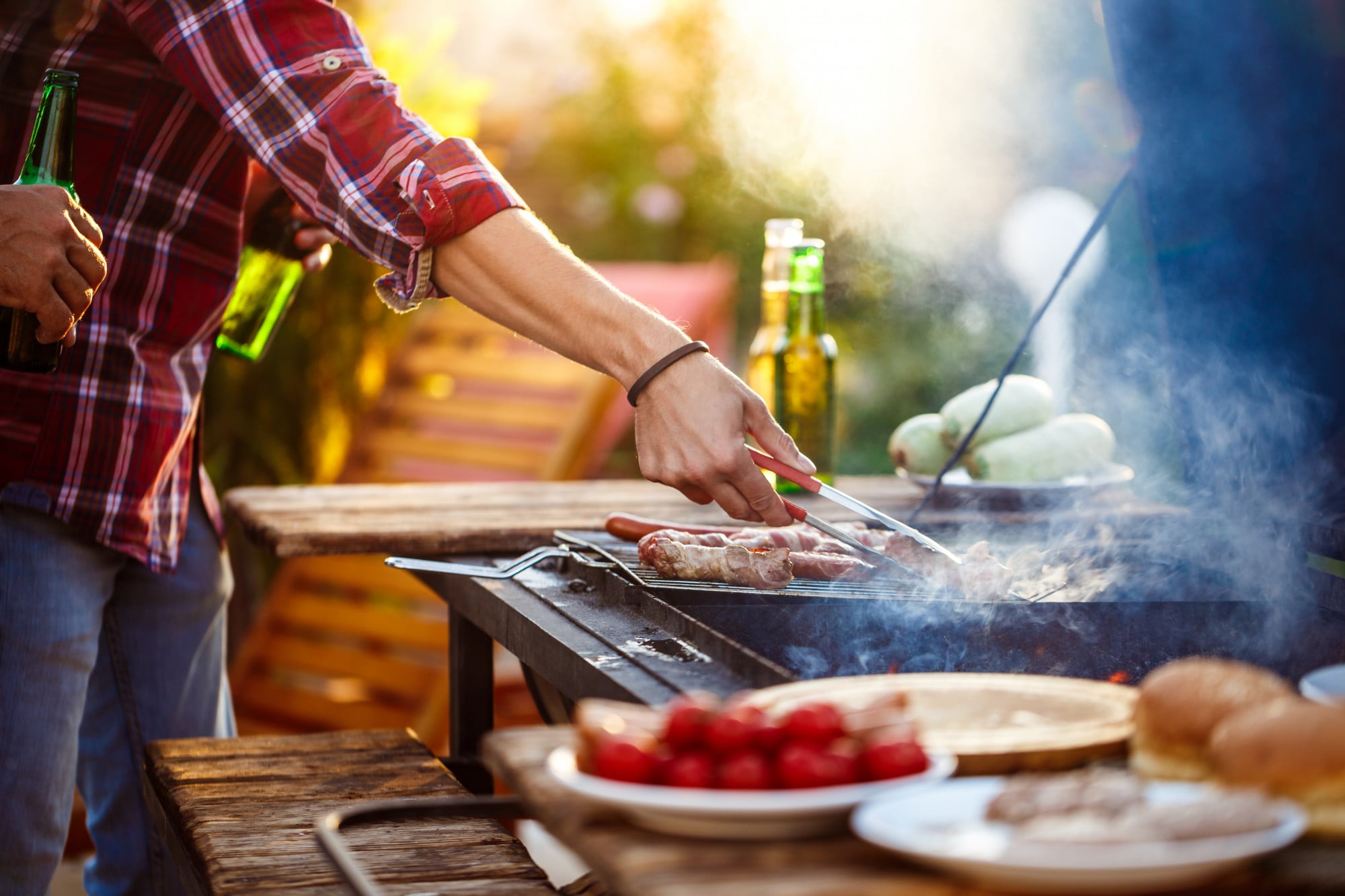
At six o’clock, Lavern lit the fire. We stood there together in the driveway in the dark and the cold, with the yard light buzzing over the garage, and watched the smoke start to curl up out of the stack. It was white at first, then thin and blue. When it was right, Lavern opened the big lid, and I laid the eight shoulders in, one by one, fat side up, on the grates.
Then he closed the lid. And we waited.
Cole came out at nine with wet hair. He’s seventeen, our only child, a senior, an offensive tackle for the Rockets. He’s six foot three and two hundred and forty pounds, and he still has the same cowlick he had when he was four. He’d just gotten out of the shower after practice and dinner, and he was wearing his maroon Rockets hoodie and a pair of basketball shorts and flip-flops, in thirty-four degrees.
He walked down the driveway and stood beside me at the smoker. He looked at the index card taped on the lid. He looked at the smoke.
“Coach said the hog fell through,” he said.
I don’t lie to my son. I never have. Not about Santa Claus, not about where babies come from, not about his grandpa dying. I looked up at him in the yard light.
“Your Uncle Milo sold it,” I said.
Cole didn’t say anything for a long time. He stared at the smoker. I watched his face, and I saw it hurt him. Milo is his favorite person in the world, after Lavern and me. Milo taught him to fish and to shoot and to change a tire. Milo has been to every single one of Cole’s football games since he was eight years old, sitting right behind the bench, hollering at the refs so loud the whole stadium can hear him.
“He said he’d sit behind the bench and holler at the refs,” Cole said quietly. “At Clear Lake. He promised me.”
“Maybe he still will,” I said.
“I don’t think so,” Cole said.
Then he took the fork from my hand. The big two-pronged fork I’d been using to check the shoulders, Lavern’s dad’s old barbecue fork, with the wooden handle worn smooth.
“Let me check the temp, Mom,” he said.
Chapter Six: The Night Watch
Bev Olson came over at eleven in her husband’s barn coat.
Bev lives across the street from us, a widow-turned-remarried, sixty-eight, who runs the church kitchen at First Lutheran and has fed every funeral and wedding in Rapids Bend for the last thirty years. She came across the street in the dark in a barn coat three sizes too big, carrying a big silver thermos under one arm and a cardboard box in the other.
“I saw the smoke,” she said. “Coffee.” She set the thermos on the tailgate of Lavern’s pickup. Then she set down the box. Inside were two big blue speckled roasters, the kind your grandmother used for Thanksgiving turkey, both of them full of baked beans with bacon on top.
“Bev,” I said. “Where did you get these?”
“I made them,” she said. “Last week. For the church Christmas supper. I’ve had them in my chest freezer.” She waved her hand. “I’ll make more for Christmas. These boys need them more than the Lutheran Ladies do.”
“Bev.”
“And Glen’s bringing the tables from the Legion hall,” she said. “First thing tomorrow. He called Harold Mertz, and Harold’s going to open the hall at seven. They’ve got eight long tables and sixty folding chairs. Glen says he’ll set them up in your yard if you want.”
I stood there in my driveway at eleven o’clock at night and stared at her.
“I haven’t asked anybody,” I said.
Bev looked at me over the top of her glasses, the way she looks at a teenager who tries to take two pieces of pie at a funeral.
“That’s why we’re coming,” she said.
She poured us all coffee out of her thermos, into the lid and two paper cups, and we stood around the smoker in the dark, Bev and Lavern and me, while the oak burned and the meat smoked. Cole had gone to bed at ten, because Coach Hanson makes them. Around midnight, Bev went home. She said she’d be back at six with coleslaw.
Lavern slept in a lawn chair beside it with his cap over his eyes. He’d dragged an old aluminum lawn chair out of the garage and set it right next to the firebox, so the heat came off it on his legs. He sat down in it about one in the morning, with his hands folded on his belly and his cap pulled down, and he was asleep in five minutes.
I didn’t sleep. I couldn’t. I sat on the tailgate of the pickup wrapped in an old quilt with a cup of Bev’s coffee, and every hour I got up and checked the fire and added a split of oak and lifted the lid and checked the meat with Lavern’s dad’s fork. Every two hours I wrote the time and the temperature on the index card taped to the lid.
Around two-thirty, a pickup drove slowly down our street. A dark blue Ford with a bad headlight. It slowed down when it got even with our driveway. It almost stopped. I could see a man behind the wheel, a big shape in a seed cap, looking out the window at the smoker and the smoke and Lavern asleep in his lawn chair.
Then it sped up and drove on.
I knew that truck. Everybody in Rapids Bend knew that truck. I’d ridden in it a hundred times. It was Milo’s.
Chapter Seven: Morning
By morning, the smell reached the whole street.
There’s no smell in the world like pork shoulder that’s been smoking over oak all night. It’s sweet and smoky and rich, with that edge of brown sugar and garlic from Lloyd’s rub. By six o’clock that Friday morning, it had drifted down the whole length of Elm Street and around the corner onto Main, all the way to the Casey’s. People told me later they smelled it at the elevator. Lavern’s boss, Gary, said he smelled it from the scale house a half mile away and knew exactly what it was.
The neighbors came out on their porches in their bathrobes with their coffee. Old Mrs. Heggen next door, ninety-one, stood at her storm door and waved. The Petersen kids on their way to the school bus stopped on the sidewalk and stared.
Lavern woke up at six-fifteen in his lawn chair with frost on the brim of his cap. He looked at me on the tailgate in my quilt. He looked at the smoker. He looked at the index card on the lid, with its column of times and temperatures in my handwriting.
“You didn’t sleep,” he said.
“Somebody had to watch it,” I said.
He got up out of the lawn chair stiffly, all six foot two of him creaking, and came over and put his arms around me, quilt and all. He didn’t say anything. He just held on.
At seven, Glen Olson pulled up in front of our house with a trailer full of Legion hall tables, and Harold Mertz and two other men from the Legion right behind him in their own pickups. They set up eight long tables in our front yard, end to end, in two rows, with sixty folding chairs, while the frost melted off the grass. Bev came back with two huge bowls of coleslaw and a sheet cake from the Fareway bakery that said GO ROCKETS in maroon frosting.
Then, at seven-thirty, a big yellow school bus pulled up and parked at our curb. Mr. Nash parked the school bus at our curb six hours early.
Earl Nash is seventy, and he’s driven Rapids Bend school buses for forty-one years. He got out of the bus in his blue windbreaker and his Rockets cap and walked up the driveway and stood beside the smoker for a long time, smelling it.
“Coach said one o’clock,” I told him. “The boys don’t get here till one, Earl.”
“I know it,” he said. “But I figured somebody ought to watch the bus. And I can’t stand that smell all morning from the bus barn.” He sat down on the tailgate beside me. “Besides. I drove the bus to the supper in 2011. I want a good seat.”
Chapter Eight: Fifty-Two
The pork came off at eleven.
Seventeen hours. Lavern lifted the lid, and the steam and smoke rolled up into the cold November air, and there they were. Eight pork shoulders, black and crusted with Lloyd’s rub, so tender the bones slid right out when I touched them with the fork. Bev and I pulled them apart with two forks each, on the kitchen table, into four big aluminum roasting pans, until our hands ached and our clothes and hair smelled like smoke.
Thirty-seven pounds of pulled pork. Lloyd was right almost to the ounce.
At one o’clock they came up the street.
Fifty-two boys in maroon jerseys, in a long line. They’d walked from the high school, four blocks, the way Coach Hanson told them to. Freshmen and sophomores in front, then juniors, then seniors at the back, all of them in their maroon game jerseys with ROCKETS across the front in white letters, carrying their backpacks and their duffel bags. Coach Hanson walked at the front of the line with his clipboard, and the four assistant coaches walked behind.
They stopped at the edge of the driveway and breathed it in.
All fifty-two of them. They came around the corner onto Elm Street and smelled it, and the whole line just stopped, like somebody had blown a whistle. Big linemen and skinny receivers and the sophomore quarterback. They stood at the end of our driveway with their noses up in the air like a bunch of hound dogs, breathing in the smoke and the pork and the oak.
“Oh my gosh,” somebody said.
“Is that ours?” somebody else said. “All of that?”
I stood at the smoker with the lid up and pork on every plate. Bev had the beans going on the tailgate in her blue roasters, and the coleslaw in big bowls, and two loaves of white bread and three packs of buns from the Fareway. Lavern was at the end of the table pouring milk and lemonade into paper cups. Mr. Nash was standing by the bus with his arms crossed, grinning.
“Line up, boys,” Coach Hanson said. “Seniors last. Freshmen first.”
They lined up. Fifty-two boys, single file, past the smoker. I put pork on every plate myself, a big heaping pile on a bun, and Bev put beans and slaw beside it, and Lavern handed them a drink. They filed past, one by one, and every single one of them said something.
“Thank you, Mrs. Keller.”
“Thank you, ma’am.”
“This smells amazing, Mrs. Keller.”
“Thank you, Mrs. Keller.”
Every one. Fifty-two times. I’d never heard so many thank yous in one hour in my life.
A tall, shy lineman named Rollie came through near the end of the juniors. Rollie Teague. He’s six foot four, with red hair and freckles and big hands, and he never says a word in class or at church. He lives with his grandparents on a farm south of town. He held out his plate with both hands, and when I put the pork on it, he didn’t move along.
He stood there, looking at the pork on his plate. Then he looked up at me.
“Could I get one more?” he asked quietly. “It’s not for me.”
I looked at him. His ears had turned red.
“It’s for my grandpa,” he said. “He’s eighty-one. He’s been on soup all week. He had some teeth pulled.” He swallowed. “He used to smoke pork himself, when I was little. In a barrel like that one. He hasn’t been able to in five years.”
I didn’t say anything. I couldn’t. I went into the kitchen and came back out with the biggest foil pan I owned, the one I use for Christmas ham, and I filled it with pulled pork until it was heaped up over the edges. Then I put beans on one side and slaw on the other and covered it with foil and handed it to him.
“For your grandpa,” I said. “Tell him it’s oak. He’ll know.”
Rollie held the pan in both hands like it was made of glass. His eyes were wet.
“Thank you, Mrs. Keller,” he said.
I had to turn and look at the smoker for a minute. Lavern saw me. He came over and stood beside me at the smoker with his hand on my back, and he didn’t say anything either. We just stood there, looking at that old black barrel his father built, with the index card still taped to the lid.
Chapter Nine: The Speech
They ate for two hours. They ate everything. All thirty-seven pounds of pork. Both of Bev’s roasters of beans. All the slaw. All the buns. The whole sheet cake, down to the last crumb of maroon frosting. Some of those boys went back three times, and I didn’t say a word, because I could see in their faces that they needed it.
They sat at the Legion tables in our front yard in the cold November sun and ate and laughed and threw napkins at each other, and the neighbors came out on their porches and watched. Old Mrs. Heggen from next door brought out a kitchen chair and sat on her front step with a plate on her lap that Cole carried over to her. The Petersen kids came home from school at three and stood on the sidewalk staring until Bev gave them each a pork sandwich.
At four o’clock, Mr. Nash climbed behind the wheel and started the bus.
The boys carried their plates to the trash barrels. Lavern had set out three big barrels at the end of the driveway, with trash bags in them. Every single boy picked up his own plate and his own cup and his own napkin and carried them to the barrels. Then Coach told them to look around, and they spread out across our yard and picked up every scrap. Every paper napkin. Every plastic fork. Every crumb of cake.
Not one paper cup was left in the yard when they were done.
Then they started lining up to get on the bus. Their duffel bags on their shoulders. Their helmets in their hands. The sophomore quarterback was first, and then the linemen, and then everybody else, all of them in their maroon jerseys, all of them full.
Coach Hanson stepped up onto the bottom stair of the bus and took off his cap.
He stood there on the step in his maroon Rockets windbreaker, holding his cap in his hand, looking out at fifty-two boys lined up on our sidewalk. And they saw him take his cap off, and something about it made them stop. The talking stopped. The laughing stopped.
Fifty-two boys stopped talking.
Even the sophomores.
“Boys,” he said, “I want you to turn around and look at that smoker.”
They turned around. Fifty-two boys in maroon jerseys turned around on the sidewalk and looked up our driveway at the old black barrel smoker, still smoking a little in the cold, with the lid up and the index card taped on top.
Cole stood up straighter beside me with the fork in his hand.
He’d been helping me serve the last hour, standing beside me at the smoker with his grandpa’s fork. Now he stood there in his maroon jersey, number 74, holding that fork like it was something sacred, and I felt him straighten up next to me like he was standing for the national anthem.
“That smoker’s been running since six o’clock last night,” Coach Hanson said. “Twenty-two hours. Mrs. Keller didn’t sleep. Mr. Keller slept in a lawn chair in thirty degrees. Mrs. Olson brought the beans she made for her church’s Christmas supper. Mr. Olson and the Legion boys brought the tables. Lloyd Vogt at the locker gave her the meat at cost and his dad’s rub. Earl Nash parked this bus here at seven-thirty this morning, just to be here.”
He looked at the boys.
“Nobody asked any of them to do it,” he said. “Nobody paid them a dime. They did it because somebody made you boys a promise, and when that promise fell through, they decided you weren’t going to pay for it.” He paused. “You understand what I’m saying? Somebody made you a promise. And when the promise broke, this town picked it up and carried it for you.”
Nobody said anything. Fifty-two boys stood there on the sidewalk, silent.
“Tonight you’re going to go play the biggest game most of you have ever played,” Coach said. “And you’re going to get hit, and you’re going to get tired, and some of you are going to want to quit in the fourth quarter. And when you do, I want you to remember that smoker. Twenty-two hours. I want you to remember what it looks like when somebody keeps their word to you.” He put his cap back on. “Now get on the bus.”
Chapter Ten: Behind the Bench
We drove up to Clear Lake that night, Lavern and Cole’s grandma Irma and me, in Lavern’s pickup. An hour and a half north on Highway 65, in the dark, with half of Rapids Bend driving the same road ahead of us and behind us. Every car had a maroon ribbon on the antenna. Some of them honked when they passed us.
Irma sat between us on the bench seat in her maroon Rockets sweatshirt and her good wool coat. She’d heard about the hog by noon, of course. Everybody in Rapids Bend had. She hadn’t said a word about Milo the whole drive. She just sat there with her purse in her lap, looking out the windshield at the dark.
Halfway there, she finally spoke.
“He’s ashamed,” she said quietly. “My Milo. Whatever he did, he’s ashamed of it. That’s why he won’t tell anybody.”
Lavern didn’t say anything. He kept his eyes on the road.
The Clear Lake stadium is bigger than ours, with real metal bleachers and lights you can see for five miles. We got there at six-thirty. The visitors’ side was already packed, half of Rapids Bend in maroon, waving signs and ringing cowbells. We climbed up to the fourth row behind our bench, where we always sit, so I could see Cole on the sideline.
And there, in the first row of the bleachers, right behind the bench, sat a big man in a seed cap and a dirty Carhartt coat.
Milo.
He was sitting alone. People on either side of him had left a little space, like they weren’t sure whether to sit by him. He had his hands stuffed in his coat pockets and his shoulders hunched up. He didn’t turn around. He didn’t see us.
Irma saw him. She made a little sound. Lavern stopped on the bleacher steps and stood there, looking down at the back of his brother’s head.
Then the Rockets came out of the locker room and ran onto the field, and the whole visitors’ side stood up and screamed. And Milo stood up too. In the first row behind the bench. And he started hollering.
“LET’S GO, ROCKETS! LET’S GO, SEVENTY-FOUR!”
Cole was running past the bench with his helmet in his hand. He heard it. Everybody on that side of the stadium heard it. Milo’s voice is famous in Hardin County. He stopped dead on the sideline, in the middle of the team, and looked up into the stands.
Milo was standing there with his hands cupped around his mouth.
Cole looked at him for a long time. I couldn’t see his face from where I was. Then he raised his helmet in the air, over his head, toward his uncle. And then he put it on and ran out onto the field.
Milo hollered at the refs the whole game. Every flag. Every bad spot. Every holding call against Cole. The ref on our sideline turned around twice and told him to settle down, and the second time Milo hollered back that he’d settle down when the ref got his eyes checked, and the whole visitors’ side laughed.
The Rockets won. Twenty-eight to twenty-four. The sophomore quarterback threw a touchdown pass with forty-one seconds left, and the whole visitors’ side came down out of the bleachers onto the field. Cole was in the middle of it, in a pile of maroon jerseys, with his helmet off.
When I looked back at the first row behind the bench, Milo was gone.
Chapter Eleven: What Milo Said
We found him in the parking lot. Lavern did. He walked out of the stadium ahead of us, fast, and I saw him go straight to a dark blue Ford with a bad headlight parked at the far end of the lot under a light pole. Milo was sitting behind the wheel with the engine running and his forehead against the steering wheel.
Lavern knocked on the window. Milo jumped. He looked up, and his face was wet. He rolled the window down.
“Lav,” he said.
“Get out of the truck, Milo,” Lavern said.
He got out. He stood there in the parking lot under the light pole in his dirty Carhartt coat, with his hands in his pockets, looking at the ground. Irma came up beside Lavern and stood there with her purse in both hands. I stood behind them. Cole came running across the parking lot in his game pants and his jersey, still sweaty, with his helmet in his hand.
Nobody said anything for a long time.
“I’m sorry,” Milo said finally. “About the hog.”
“Why’d you do it?” Lavern asked. Not angry. Just tired. “You never once went back on your word. Not once in fifty-one years. Why this time?”
Milo looked at the ground for a long time. When he finally answered, his voice was so quiet I had to step closer to hear him.
“The propane man came Wednesday,” he said. “From the co-op. Said I was two months behind. Six hundred and forty dollars. Said he couldn’t fill my tank till I paid.” He swallowed. “It’s November, Lav. The tank was at eight percent. It was going to be twenty degrees Thursday night.”
Lavern stared at him.
“Hog prices went in the tank in August,” Milo said. “I lost money on every pig I sold this year. Every one. I’ve been living on my savings since June, and my savings ran out in October. I’ve been eating eggs and toast for a month.” He laughed, a terrible sound. “I didn’t want to tell anybody. Not you. Not Mom. Not Bernice. I didn’t want anybody to know I couldn’t even keep my own house warm.”
Irma made a sound. She put her hand over her mouth.
“So Thursday morning a fella from Iowa Falls called,” Milo said. “Said he’d heard I had a nice hog. Offered me four hundred and eighty, cash. I said no. He called back at five-thirty in the morning and said he was in my driveway with his trailer.” Milo closed his eyes. “And I looked at my propane gauge. And I took the money. And then I called Bernice and I couldn’t even tell her why. I was too ashamed.”
“You could have called me,” Lavern said quietly. “I’m your brother.”
“I know it,” Milo said. “I know. But you’ve got Cole and Bernice and the house. I’m fifty-one years old, Lav. I’m the big brother. I’m supposed to be the one that’s got it together.” He looked up at his brother. “Instead I’m the one that sold the boys’ supper to buy propane.”
Then he looked over at Cole, standing there in his jersey. And his face crumpled.
“I drove by your house at two-thirty in the morning,” he said to me. “I saw the smoke. I saw Lav sleeping in that lawn chair. I sat at the end of your street for an hour and couldn’t make myself get out of the truck.” He wiped his eyes with his sleeve. “And then I drove up here tonight because I promised that boy I’d holler at the refs. And that was the only promise I had left that I could keep.”
Cole stepped forward. He was holding his helmet in one hand, and in the other, I realized, he was still holding his grandpa’s barbecue fork. He’d carried it on the bus, in his duffel bag, all the way to Clear Lake.
“You kept it,” Cole said. “You hollered.”
Milo looked at him.
“Everybody heard you, Uncle Milo,” Cole said. “The whole stadium. When the ref called that holding on me in the third quarter, you hollered so loud the ref turned around.” He almost smiled. “I didn’t even care about the flag. I was just glad you were there.”
Milo put his face in his hands. Cole set his helmet down on the hood of the pickup, and the fork with it. And then he did what that boy has done since he was a toddler. He walked over to his uncle and put his big arms around him and held on.
Irma came forward. She put her hand on her son’s back. She didn’t say anything. She just left it there.
And Lavern stood under the light pole in the parking lot looking at his brother, and I watched him decide something. Then he reached in his back pocket and took out his wallet and counted out what was in it. Two hundred and twenty dollars. Lavern held it out.
“For the propane,” he said. “That’s what I’ve got on me. I’ll bring the rest Monday.”
Milo looked at the money. “Lav, I can’t.”
“You can,” Lavern said. “You’re my brother. And Bernice told me something this morning that I should have learned a long time ago.” He looked at me. “When somebody’s in trouble, you don’t ask if they have to. You ask what they need.”
Chapter Twelve: The Index Card
We paid Milo’s propane bill on Monday. Lavern and I went down to the co-op together and put six hundred and forty dollars on his account, and the propane truck went out to the farm that afternoon and filled his tank. Milo was standing in his yard when it came, and he called us that night and couldn’t say anything for a long time.
Then he started applying for help. Lavern and I sat at his kitchen table on a Sunday afternoon and helped him fill out the forms. There’s a program called LIHEAP, the Low Income Home Energy Assistance Program, that helps people in Iowa pay for heat in the winter, and he qualified, because his income that year was so low from the hog prices. It paid seven hundred dollars toward his propane through March. And Milo went to the Farm Service Agency office in Eldora and talked to a loan officer about restructuring his operating loan, which he’d been too ashamed to do since August.
The Rockets lost in the second round, at a school in Waverly, by three points in overtime. It didn’t matter. They’d won a playoff game for the first time in Rapids Bend history, and they’d done it with fifty-two full stomachs. When the bus came home from Clear Lake that Friday night at midnight, half the town was waiting at the high school with their headlights on and their horns honking.
Rollie Teague’s grandpa called me the next week. Harlan Teague, eighty-one, with his new dentures. He said it was the best pork he’d eaten since 1994. He asked me where I got the rub, and I told him Lloyd Vogt, and he laughed so hard he had to set the phone down.
And Milo kept a hog back.
He told us at Thanksgiving dinner, at our table, with Irma and Cole and Bev and Glen Olson there too. He stood up with a glass of iced tea before Lavern carved the turkey and said he had something to say. He said he’d picked out a feeder pig from his spring litter, the best one, a Duroc barrow, and he was going to raise it all next year just for the playoff supper. Win or lose. If the Rockets didn’t make the playoffs, he’d roast it for the last home game.
“And I’m not selling it,” he said. “Not for four hundred and eighty dollars. Not for four thousand. I don’t care if I have to sleep in the barn with it to stay warm.”
Everybody laughed. Irma cried.
“And Bernice,” Milo said, looking at me across the table. “I want you to run the smoker. You and Lav. I’ll bring the hog and the oak. But you run it. Because you’re the one who knows how to keep a promise when somebody else breaks it.”
I didn’t know what to say. I just nodded.
Cole graduated in May and went to Iowa State in the fall to study agricultural engineering. He took his grandpa’s barbecue fork with him. He told me he hung it on the wall of his dorm room on two nails, and his roommate thought it was the strangest thing he’d ever seen.
The next November, the Rockets made the playoffs again.
Milo brought the hog to our driveway on a Thursday afternoon, dressed out by Lloyd Vogt, two hundred and sixty pounds. Lavern lit the smoker at six. And before he did, I took a new index card and a black marker and wrote the start time on it, and taped it to the lid, right where the old one had been.
The old card was still there, under the new one. I never took it off. It’s faded now, and the masking tape has curled at the edges, and the ink has run a little from rain and smoke. But you can still read it, in my handwriting.
LIT 6:00 PM THURS. And under that, the column of times and temperatures I wrote through that long night, every two hours, while my husband slept in a lawn chair and my brother-in-law sat in his truck at the end of the street.
Milo sat up with us that second time. All night, in a lawn chair beside Lavern’s, with his cap over his eyes, the two brothers side by side next to the firebox. Bev came at eleven with a thermos. Glen brought the Legion tables at seven. Lloyd Vogt came by at midnight to check the hog and stayed till two. Mr. Nash parked the school bus at our curb at seven-thirty in the morning, six hours early, and sat on the tailgate beside me.
And at one o’clock the next afternoon, fifty-six boys in maroon jerseys came up Elm Street in a long line. They stopped at the edge of the driveway and breathed it in.
Cole drove home from Ames that morning just to serve. He stood beside me at the smoker with his grandpa’s fork, and he helped me put pork on every plate. When a skinny freshman lineman got to the front of the line and held out his plate and quietly asked for one more, not for him, for his mom, who was working a double shift at the nursing home in Iowa Falls, Cole didn’t even look at me.
He went into the kitchen and came out with the biggest foil pan I owned.
And down at the end of the line, at the last Legion table, a big man in a seed cap and a clean Carhartt coat stood pouring lemonade into paper cups. Every boy who came by, he looked them in the eye and said the same thing.
“Eat while it’s hot, son. And tonight, you listen for me. I’ll be right behind the bench.”

Adrian Hawthorne is a celebrated author and dedicated archivist who finds inspiration in the hidden stories of the past. Educated at Oxford, he now works at the National Archives, where preserving history fuels his evocative writing. Balancing archival precision with creative storytelling, Adrian founded the Hawthorne Institute of Literary Arts to mentor emerging writers and honor the timeless art of narrative.