Lane Four
Part One: The Smell of Chlorine
I hadn’t been inside a competitive swimming pool in twenty-two years, and the smell hit me before I’d even opened the doors.
Chlorine, warm and heavy, the kind that soaks into your hair and your skin and your sheets until you stop noticing it. When I was a girl, I smelled like that every single day. My mother used to say she could tell what time it was by how strongly I smelled of the pool: faint in the morning, thick and sharp at night, after the second practice.
I stood in the lobby of the Westridge Aquatic Center in Littleton, Colorado, on a gray Saturday morning in November, holding my phone and a bag of orange slices, and for a moment I was twelve years old again. Standing on a pool deck in Austin, Texas, in a navy-blue team suit, with my arms crossed over my stomach.
Then I shook it off and went inside to watch my daughter swim.
My name is Andrea Molina. I’m forty-one years old, and I’m a sports psychologist at Children’s Hospital Colorado in Aurora. I work with young athletes, mostly between ten and eighteen, who are struggling with anxiety, injury recovery, burnout, and, more often than anyone would like to believe, how they feel about their own bodies.
I’m good at my job because I’ve lived every part of it.
My daughter, Ava, is twelve. She started swimming two years ago, after a friend from school invited her to a summer league practice at the rec center pool. She came home that first day soaking wet and glowing, her goggles leaving red rings around her eyes, and announced that she’d found her sport.
I was terrified. I didn’t tell her that.
Part Two: Since the Divorce
Since the divorce, it was my ex-husband who took our daughter to swimming.
Greg and I split up three years ago. It wasn’t dramatic. There was no affair, no screaming, no thrown dishes. We just woke up one day and realized we’d been living like roommates for five years, two kind people who’d stopped knowing how to talk to each other. We sold the house in Highlands Ranch and bought two smaller places eight minutes apart. Ava splits her weeks between us, Monday through Thursday with me and Friday through Sunday with Greg, with Wednesday dinners all together when we can manage it.
Greg’s a civil engineer. He works from home three days a week and has a flexible schedule. I work long days at the hospital, and some evenings I’m on call for the sports medicine clinic. So when Ava joined the competitive club team, Mile High Aquatics, a year ago, it made sense for Greg to handle practices. Tuesday and Thursday evenings, Saturday mornings. He’d drive her to the Westridge pool, sit in the bleachers with his laptop, and drive her home.
I’d never once been to a practice. I’d never met her coach.
I told myself it was scheduling. That was partly true. But it wasn’t the whole truth, and I knew it. The whole truth was that I hadn’t stood on a pool deck since I was nineteen, and every time I thought about walking through those doors, my chest went tight.
So I let Greg do it. I asked Ava about practice every Monday when she came back to my house, and she’d tell me about her split times and the new flip turn drill and which girls she sat with in the locker room. I’d listen, and nod, and say That’s great, honey. And I’d stay on the other side of the glass.
But her first real meet was a different story. Not summer league. Not a club scrimmage. A sanctioned USA Swimming meet, the Westridge Fall Invitational, with officials in white shirts, electronic touchpads, and a scoreboard. Twelve teams from all over the Front Range. Ava was entered in three events: the 50 freestyle, the 100 freestyle, and the 50 backstroke.
She’d been talking about it for six weeks. She’d made a countdown calendar on the refrigerator at my house. She’d practiced her dive off the edge of the couch.
“Are you coming, Mom?” she asked me at Wednesday dinner, two weeks before. “To the meet? Dad’s coming. But are you coming?”
Greg looked at me across the table. He knew.
“I’ll be there,” I said.
Part Three: The Bench
I arrived shortly before her first race, the 100 freestyle, which was event fourteen on the program, scheduled for around ten-forty. I’d been held up at the hospital. A fifteen-year-old gymnast with a panic attack in the clinic waiting room. By the time I parked and found my way through the lobby, the meet had been going for two hours.
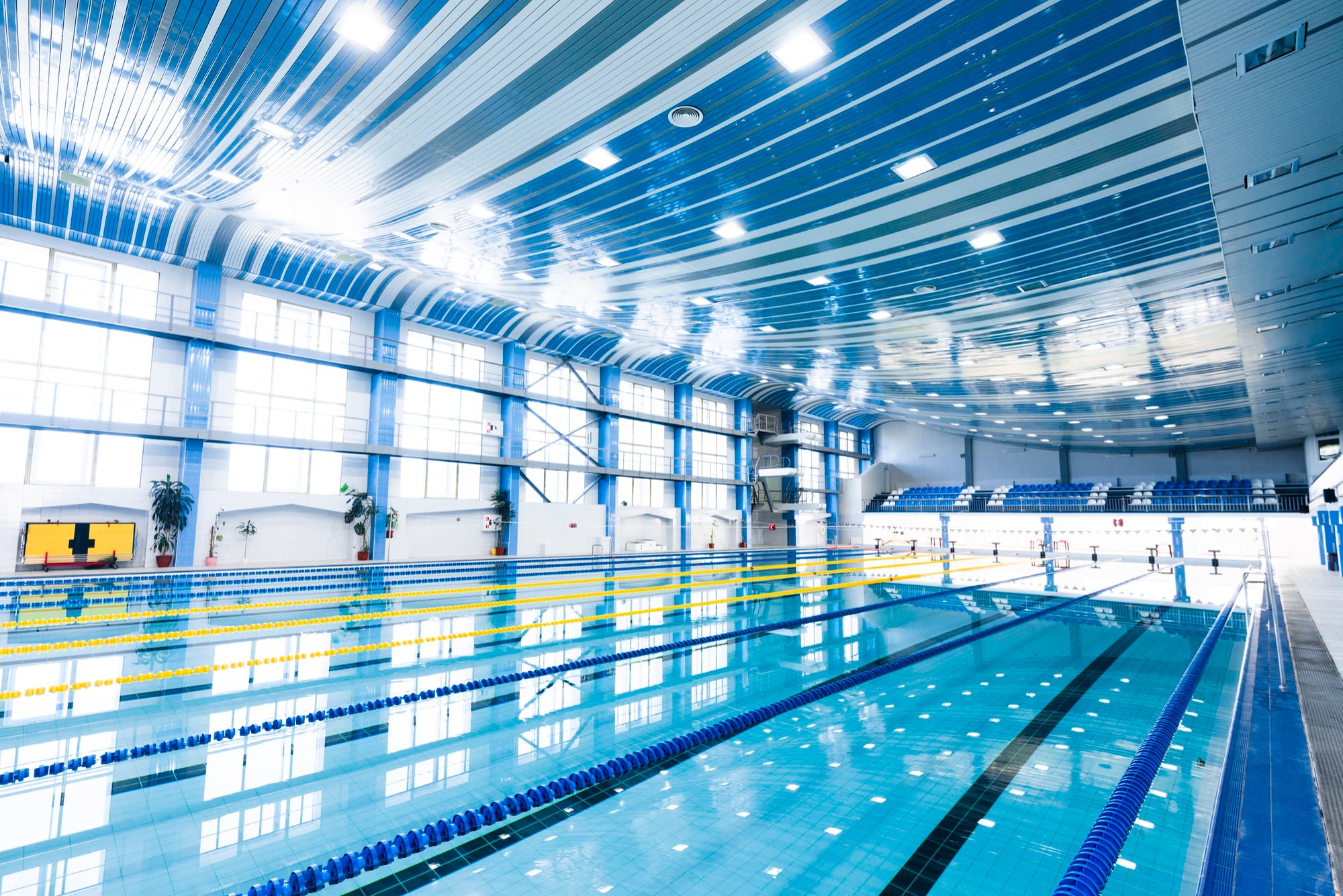
The natatorium was enormous and loud. Fifty meters long, ten lanes, with a diving well at one end and a wall of windows along one side looking out on the snowy foothills. The air was humid and warm. Whistles shrieked. Parents shouted from the bleachers. The announcer’s voice echoed off the tile. Hundreds of kids in team caps and parkas sat on the deck in clusters by team, waiting for their events.
I had my phone ready to record. I scanned the deck for the purple-and-gold Mile High Aquatics team tent.
But something caught my eye first.
My daughter was sitting on a metal bench at the end of the deck, near the warm-up pool, clutching a towel to her legs. She’d pulled it down tight over her knees with both hands, all the way to her ankles, the way you’d pull a blanket over yourself on a cold night.
And standing over her, leaning down close, was a woman in a purple Mile High Aquatics polo shirt and a whistle on a lanyard.
She was young, maybe twenty-six or twenty-seven, tall and lean, with a blond ponytail and the long, ropy shoulders of a former competitive swimmer. She had a clipboard against her hip.
I was about thirty feet away. Close enough to hear.
“You’re seriously going to swim looking like that?” the coach said.
She wasn’t whispering. She said it in a normal, conversational voice, almost cheerful, like she was commenting on the weather.
“Those hairy legs?” she said. “That’s embarrassing, sweetheart. Even the boys are going to laugh at you.”
A few girls sitting nearby on the deck giggled. Three of them, in purple caps. One of them nudged another one and pointed at Ava’s towel.
My daughter bowed her head. She tightened the towel around her legs.
I felt something rise up in my chest that I hadn’t felt in a very long time. Something hot and old and twenty-nine years deep.
I nearly went over. I took two steps toward the bench.
But before I could reach them, the coach straightened up, glanced at her clipboard, and walked away toward the team tent, calling out to somebody about relay cards.
My daughter looked up then. She saw me.
For a split second, her face lit up. Then it crumpled.
Part Four: “You’re a Terrible Mom”
“Mom!” she said, as I hurried over. “Why didn’t you tell me?”
I knelt down beside the bench. “Tell you what, honey?”
“That my legs are disgusting!” Her voice was shaking. She was pressing the towel against her shins so hard her knuckles were white. “Coach Emma said girls my age should shave. She said I should’ve known. She said you should’ve taught me that already!”
“Honey,” I said, “there’s nothing disgusting about your legs.”
“Stop!” Ava said. She was crying now, quiet and furious, the kind of crying you do when you’re twelve and you’re trying not to let anyone see. “Everybody’s going to laugh at me. Because of you! You’re a terrible mom! Why didn’t you warn me?”
Her eyes filled with tears. She turned her face away from me toward the wall.
Her words didn’t hurt. I want to be honest about that. I’ve worked with hundreds of twelve-year-olds. I know what they say when they’re humiliated and frightened and looking for somewhere to put it. They put it on the person they trust the most, because they know that person will still be there afterward.
What hurt was seeing her.
An hour ago, according to Greg’s text messages, she’d been bouncing around the pool deck in her team parka, giddy with excitement, practicing her dive start in the warm-up lane. He’d sent me a video of her doing a goofy little dance with her teammates by the starting blocks. Now she couldn’t bear to stand up.
I sat down next to her on the bench. I didn’t try to take the towel away. I just took her hand, the one that wasn’t gripping the towel, and held it.
“Sweetheart,” I said quietly. “Look at me.”
She didn’t.
“You have nothing to be ashamed of,” I said. “Nothing. Nobody should ever talk to you like that. Not a coach. Not anyone.”
“But she’s my coach, Mom,” Ava whispered. “She said I look gross.”
“I know she did,” I said. “I heard her.”
Ava finally turned and looked at me. Her eyes were red behind her goggles, which were pushed up on her forehead. “You heard?”
“Every word,” I said.
Part Five: Ava’s Legs
Here’s the thing I need you to understand about my daughter’s legs.
They’re the legs of a twelve-year-old girl who’s started puberty. Over the last year, the soft blond hair on her shins has gotten a little darker, a little thicker, the way it does for almost every girl her age. It’s dark brown, like mine, like my mother’s. It’s completely normal. It’s exactly what a healthy body does at twelve.
She hadn’t asked me about shaving. Not once. We’d talked about periods and deodorant and bras, all the big conversations, carefully, at the kitchen table, the way I’d been trained to have them and the way my own mother never did. But shaving hadn’t come up. She hadn’t seemed to care.
I’d decided, very deliberately, not to bring it up first. Because I wanted it to be her choice. If she wanted to shave someday, I’d show her how. If she didn’t, that was fine too. I never wanted her to feel like her body was a problem to be fixed before anyone else could see it.
And now a woman she trusted, a woman she’d been talking about for a year, Coach Emma says, Coach Emma thinks, Coach Emma showed me, had leaned over her on a pool deck in front of her teammates and told her that her body was embarrassing.
I sat on that bench holding my daughter’s hand, and I thought about what to do.
My first instinct was to march over to the purple team tent and say exactly what I thought. Loudly. In front of everyone. I’ve been a mother for twelve years and a sports psychologist for fifteen, and I’ve never once wanted to scream at someone so badly.
But I looked at Ava. At her face, red and blotchy behind her goggles. At her hands pulling the towel down over her knees.
“Ava,” I said. “Do you want me to go talk to her? Right now?”
Her eyes went wide with horror.
“No!” she said. “Mom, no. Please. Don’t make a scene. Everybody’s already looking at me.” She grabbed my arm. “Please don’t.”
I understood. I’m a psychologist, but before that, I was a twelve-year-old girl on a pool deck. The only thing worse than being humiliated is having your mother come and make the humiliation bigger.
“Okay,” I said. “I won’t. Not right now.”
She let go of my arm.
So I chose a different route.
Coach Emma had never met me. She knew Greg. She’d seen him three times a week for a year, sitting in the bleachers with his laptop. She had his phone number and his email. As far as she knew, Ava’s mother was some vague, absent figure who’d failed to teach her daughter about shaving.
She had no idea who I was.
And that gave me an opportunity to handle this differently.
Part Six: The Race
The announcer called event fourteen. Girls’ 11–12 100-yard freestyle.
Ava didn’t move.
“Honey,” I said. “That’s you.”
“I’m not swimming,” she said, staring at the floor. “I’m going to scratch.”
I didn’t argue. I’ve learned that you can’t argue a twelve-year-old out of shame. You can only give her something bigger than the shame to stand on.
“Can I tell you something first?” I asked.
She shrugged.
“When I was twelve,” I said, “I swam too.”
Ava looked up at me sharply. “You did?”
“For a club team in Austin,” I said. “The Longhorn Aquatics. I swam all the way through high school, and then I swam for the University of Texas for one year.”
She stared at me. “You never told me that.”
“I know,” I said. “I’m sorry. I should have.”
“Why didn’t you?” Ava asked.
I looked out at the pool. At the lane lines bobbing in the blue water. At the starting blocks lined up at the far end.
“Because a coach said things to me about my body,” I said quietly. “When I was a little older than you. Things a lot like what Coach Emma said to you. And I believed them. For a long time. And it made me so sick and so unhappy that I quit swimming when I was nineteen and never went back.”
Ava didn’t say anything. She just looked at me with her mouth slightly open.
“So I know exactly how you feel right now,” I said. “I know you want to hide. I know you want to go home and never come back here.”
I squeezed her hand.
“But here’s what I didn’t know at twelve,” I said. “That woman doesn’t get to decide whether you swim. You do. Your legs aren’t what pull you through the water, sweetheart. Your arms and your heart and every single practice you’ve ever done. That’s what’s going to be in that lane. Not her opinion.”
The announcer called the event again. Final call, event fourteen, girls 11–12 100 free. Heat three, lane four, Ava Molina-Pruitt, Mile High Aquatics.
Ava looked at the starting blocks. She looked at her towel. She looked at me.
Then she stood up.
She dropped the towel on the bench. She pulled her goggles down over her eyes. She walked to lane four without looking back.
I stood at the edge of the deck behind the blocks with my phone and recorded the whole thing.
The buzzer sounded. Ava dove. Her dive wasn’t perfect. She went in a little flat. But she came up fast and started pulling, long strong strokes, breathing every three, her flip turn tight against the wall. On the last length, I could see her kicking, legs churning white water, every one of those normal, healthy, dark-haired legs pushing her toward the wall.
She touched third in her heat. 1:08.42. A best time by almost two seconds.
When she climbed out of the pool, she looked up at the scoreboard. She saw her time. She looked across the deck at me.
She didn’t smile. Not yet. But she lifted her chin.
And she didn’t go back for the towel.
Part Seven: Watching
I watched the rest of the meet from the stands.
Greg found me there at noon. He sat down beside me with two cups of coffee from the concession stand. He’d been at the team tent with the other parents and hadn’t seen what happened.
I told him. All of it.
His face went red, then white.
“She said that?” he said. “To Ava? In front of the other kids?”
“Every word,” I said. “I recorded the race. I didn’t record that part. I wish I had.”
Greg put his coffee down on the bleacher. He put his face in his hands.
“Andi,” he said. “Ava asked me about it. Three weeks ago. In the car on the way home from practice.” He looked at me. “She asked if she was supposed to shave her legs. She said some of the girls on the team were doing it. And I…”
He stopped.
“I didn’t know what to say,” Greg said. “I’m a forty-four-year-old man. I panicked. I said, That’s a mom question, kiddo. Ask your mom.”
“She never asked me,” I said quietly.
“I know,” Greg said. “I think she was embarrassed. I think I made her feel like it was something she shouldn’t talk about.” He shook his head. “I should’ve told you.”
I put my hand on his arm. “We both should have done a lot of things,” I said. “Right now, we need to figure out what to do next.”
Greg wanted to go straight to the club’s head coach, a man named Richard Tate who’d run Mile High Aquatics for twenty years. He wanted to file a formal complaint with USA Swimming’s Safe Sport program, which handles reports of misconduct by coaches. He wanted Emma fired.
“We may do all of that,” I said. “And Safe Sport probably should know. But not today.”
“Why not today?”
I watched Coach Emma across the pool, standing at the end of lane five with her stopwatch, shouting encouragement at a little boy swimming butterfly. Go, Tyler! Go! Finish strong! She looked young and energetic and genuinely invested in every kid in the water.
“Because I want to understand her first,” I said. “Before I decide what she deserves.”
Ava swam her other two events that afternoon. In the 50 freestyle, she dropped another second. In the 50 backstroke, the last event of the day, she finished fifth in her heat and came up out of the water laughing about something with a girl in the next lane.
She never once picked up her towel.
Part Eight: The Approach
After the meet, Ava went to the locker room to change. Greg went to the car to warm it up. The natatorium was emptying out, parents folding up bleacher cushions, kids dragging their swim bags toward the exits, officials collecting their clipboards.
I saw Emma by the far end of the pool, near the Mile High team tent, collecting her things. Stopwatches. Relay cards. A mesh bag of kickboards. She was alone.
I walked over with a polite smile.
“Excuse me,” I said. “Are you one of the Mile High coaches?”
She looked up. She smiled back. A bright, friendly, professional smile.
“I am,” she said. “Emma Carlisle. I coach the 11–12 group.” She held out her hand. “Are you a parent?”
I shook it. “Andrea,” I said. I didn’t give my last name. I didn’t say which child.
“Nice to meet you, Andrea,” Emma said. “Can I help you with something?”
“I hope you don’t mind,” I said. “I’m a former swimmer. Longhorn Aquatics in Austin, and one year at Texas. I don’t come to meets very often. It brings back a lot of memories.” I smiled. “I was watching your group today. They looked great. You must be proud.”
Emma’s whole face brightened. “Texas?” she said. “No way. I swam at Arizona State. We hated you guys.”
I laughed. “Everybody hated us.”
“Seriously, though,” Emma said, “that’s so cool. What events?”
“Two hundred fly,” I said. “Back when I was young and stupid.”
She grinned. “Only the crazy ones swim the two-fly.”
We talked for a few minutes. About college swimming. About training camps. About the brutal winter workouts where you’d do ten thousand yards before breakfast. She was easy to talk to, funny and warm and passionate about the sport. She’d been coaching at Mile High for two years. She loved it. She said she wanted to coach a college team someday.
Then I said, casually, the way you’d mention the weather: “I noticed you talking to one of your girls earlier. On the bench by the warm-up pool. About shaving her legs.”
Part Nine: Emma’s Philosophy
Emma’s smile didn’t falter.
“Oh, yeah,” she said. “Ava. She’s one of my twelve-year-olds. Sweet kid. Great kick.” She shook her head. “I just felt bad for her, you know? She came to her first big meet with hairy legs. I didn’t want the other kids to make fun of her.”
“So you told her,” I said.
“Somebody had to,” Emma said. She shrugged, zipping up her mesh bag. “Her mom clearly hasn’t. Her dad brings her to everything. I’ve never even seen the mom. I figured she doesn’t know, or doesn’t care, or whatever.”
She said it lightly. Without malice. Just as a fact she’d decided was true.
“And you think twelve-year-olds should shave?” I asked. “For swimming?”
“I mean, it’s swimming,” Emma said. “Everybody shaves. It’s part of the culture. We shave down for championship meets, it makes you faster. Less drag.” She laughed. “And honestly, it’s just what girls do, you know? I started when I was eleven. My coach made all of us.”
“Made you?”
“Well, not made,” Emma said. “But she told us. Coach Linda. My club coach in Phoenix.” She paused, and a strange look crossed her face. “She used to line us up on the pool deck before meets and check. Legs, armpits. If you hadn’t shaved, she’d say it in front of everybody. Gross, ladies. Nobody wants to see that.”
She laughed again, but it sounded different this time.
“It was kind of mortifying, actually,” she said. “But it worked. None of us ever forgot to shave again.”
I was quiet for a moment.
“Did she say other things?” I asked gently. “Coach Linda? About your bodies?”
Emma’s hands stopped on the zipper of the mesh bag.
“I mean…” she said. “Yeah. Sometimes. She’d weigh us. Every Monday. In front of the team. And she’d say stuff. Like, Somebody’s been eating too much pizza. Or, Carlisle, you’re looking soft. Swimmers don’t look soft.”
She looked down at the bag in her hands.
“I was twelve,” she said quietly.
Part Ten: The Questions
I sat down on the edge of the bleachers next to the team tent. After a moment, Emma sat down beside me. I don’t think she knew why. I think something in the conversation had shifted, and she didn’t quite know how to get out of it.
“Can I ask you something?” I said. “And I don’t mean it as a criticism. I’m genuinely curious.”
“Sure,” Emma said.
“When Coach Linda said those things to you,” I said, “at twelve. How did it make you feel?”
Emma didn’t answer right away. She was looking out at the pool. At the empty lanes and the lane lines bobbing on the still blue water.
“Bad,” she said finally. “Really bad. I remember crying in the car after practice. My mom asked what was wrong, and I wouldn’t tell her.” She swallowed. “I started skipping lunch at school. For like… a long time. Years, actually. I thought if I could get thin enough, Coach Linda would stop saying stuff.”
She laughed, a short, tight sound.
“Spoiler,” she said. “She never stopped.”
“I’m sorry,” I said quietly. “That’s a terrible thing to happen to a twelve-year-old.”
Emma shrugged. “It’s swimming,” she said. “Everybody goes through it. It toughens you up.”
“Did it?” I asked. “Toughen you up?”
She didn’t answer.
I watched her face. I’ve sat across from a thousand young athletes in my office at the hospital. I know what it looks like when someone hears a question they’ve been avoiding for years.
“I quit swimming my junior year at ASU,” Emma said finally. Her voice was very quiet. “I had stress fractures in both feet. And my doctor said I wasn’t eating enough to heal. And I couldn’t… I couldn’t fix it.” She looked down at her hands. “I’ve been in recovery for five years now. I’m doing better. I really am.”
She glanced at me, almost defensively.
“I just don’t want these girls getting laughed at,” she said. “That’s all. I’m trying to protect them.”
Part Eleven: The Mirror
“Emma,” I said. “Can I tell you something about the girl on the bench?”
She looked at me.
“After you walked away,” I said, “she cried. She was terrified to stand up. She almost scratched her race. She told her mother she was a terrible mom for not warning her. That her legs were disgusting.”
Emma’s face changed.
“She said disgusting?” she asked.
“That’s the word she used,” I said. “She said you said she looked gross.”
Emma opened her mouth. Then she closed it.
“When Coach Linda lined you up on the pool deck,” I said gently, “and checked your legs in front of everybody, and said gross, ladies, was she trying to protect you?”
Emma stared at me.
“I think she probably thought she was,” I said. “I think somebody probably did it to her too. When she was twelve. And she thought she was helping. Teaching you the rules. So nobody else would laugh at you.”
I paused.
“But it didn’t feel like protection, did it?” I said. “It felt like the worst thing that ever happened to you.”
Emma didn’t say anything for a long time. Her eyes were wet. She was gripping the mesh bag of kickboards in her lap.
“Oh my God,” she whispered finally. “I sounded just like her. Didn’t I?”
I didn’t answer. I didn’t need to.
“I said embarrassing,” Emma said. “I said even the boys will laugh at you.” She put her hand over her mouth. “Coach Linda used to say that. Word for word. Even the boys will laugh at you, ladies.”
She sat there on the bleacher in her purple polo shirt with her hand over her mouth, staring at the empty pool. A twenty-six-year-old woman who’d spent fourteen years trying to recover from what a coach told her at twelve, who had just said the exact same words to a twelve-year-old girl in front of her teammates.
“I’m a terrible coach,” Emma whispered.
“No,” I said. “You’re a coach who repeated what she was taught. Most people do, until somebody shows them the pattern.” I paused. “The question is what you do now that you’ve seen it.”
Part Twelve: Who I Am
That was when Ava came out of the locker room.
She was wearing her team parka over her sweatpants, her wet hair in a braid, her swim bag over one shoulder. She was looking for me in the stands. Then she saw me sitting on the bleachers by the team tent.
Next to Coach Emma.
Her face went white.
Emma looked up and saw her. She smiled automatically, the bright coaching smile. “Hey, Ava!” she said. “Great swim today. Two seconds off your hundred free!”
Ava didn’t answer. She just stood there frozen, ten feet away, staring at the two of us.
Then she said, very quietly, “Mom?”
Emma turned and looked at me.
I watched her understand. It moved across her face in stages. Confusion. Disbelief. Then a slow, horrible comprehension, like watching someone realize they’ve been standing on thin ice.
“Mom?” Emma repeated.
“I’m Ava’s mom,” I said. “Andrea Molina. I’m sorry I didn’t say so right away.”
Emma’s face went completely white.
“Oh God,” she said. “Oh my God. I said…” She looked at Ava, then at me. “I said you didn’t care. I said you should’ve taught her. I said…”
“I know what you said,” I said quietly.
“I didn’t know,” Emma said. “I swear, I didn’t know who you were. Greg always brings her. I’ve never…” She stopped. She put her face in her hands. “That’s not an excuse. That’s not an excuse at all.”
“No,” I said. “It’s not.”
Part Thirteen: Why I Waited
Ava came over slowly. She stood in front of the bleachers with her swim bag, looking back and forth between the two of us. Her face was confused and wary and a little bit scared.
“Mom,” she said. “You said you wouldn’t make a scene.”
“I didn’t,” I said. “I just talked to Coach Emma. Like two grown-ups.”
Emma lifted her head. Her eyes were red. She looked at Ava for a long moment.
Then she did something that surprised me.
She stood up off the bleacher. And she knelt down on the pool deck in front of my daughter, so that she was looking up at her, the way you’d kneel to talk to a much younger child, except it was Emma who looked small.
“Ava,” she said. “I need to say something to you. And I need you to listen, okay?”
Ava nodded warily.
“What I said to you this morning,” Emma said, “on the bench, about your legs. It was wrong. It was really, really wrong. Your legs aren’t gross. They’re not embarrassing. They’re strong. They’re the legs of a girl who just dropped two seconds in the hundred free at her first big meet.”
Ava stared at her.
“A coach said the exact same things to me when I was your age,” Emma said. Her voice was shaking. “And it hurt me for a long time. For years. And I didn’t even realize I was doing the same thing to you until your mom showed me.”
She swallowed.
“I’m so sorry,” she said. “You didn’t do anything wrong. Your mom didn’t do anything wrong. I did.”
Ava didn’t say anything for a long moment. She stood there in her parka, holding her swim bag, looking down at her coach kneeling on the wet tile.
Then she said, in a very small voice, “The other girls laughed.”
“I know,” Emma said. “That’s on me too. I’ll talk to them.”
“Are you going to make everybody shave?” Ava asked.
“No,” Emma said firmly. “Nobody has to do anything with their body that they don’t want to do. Not for swimming. Not for anybody. That’s going to be a rule on this team from now on.”
Part Fourteen: The Car
In the car on the way home, Ava sat in the back seat of Greg’s Subaru with her swim bag on her lap. She was quiet for a long time. Greg drove. I sat in the passenger seat, which I hadn’t done in three years.
Finally, somewhere on C-470, Ava said, “Mom?”
“Yes, honey?”
“I’m sorry I said you were a terrible mom.”
I turned around in my seat to look at her.
“You were scared and embarrassed,” I said. “And you were angry. And you put it on me because you knew I could take it. That’s what kids do with the people they trust most.” I smiled. “I’ve been doing this job for fifteen years. I know how it works.”
Ava looked out the window. “But it wasn’t fair,” she said.
“No,” I said. “It wasn’t. Thank you for saying so.”
“Mom,” Ava said. “Why didn’t you tell me about shaving? Really?”
I thought about how to answer her.
“Because I didn’t want you to think your body was a problem,” I said. “When I was your age, everybody told me my body was a problem. My coach. The other girls. Magazines. TV. I spent years trying to fix something that was never broken.”
I looked at her.
“I wanted you to decide for yourself,” I said. “Whether you shave, or don’t, or when, or how. I wanted it to be your choice. Not something you do because somebody made you feel ashamed.”
Ava was quiet for a while.
“What if I want to?” she asked finally. “Shave. Not because of Coach Emma. Just because I want to.”
“Then I’ll show you how,” I said. “Tonight, if you want. Or next week. Or never. Whenever you decide.”
She thought about it.
“Can I think about it?” she said.
“Of course,” I said.
Greg looked at me across the front seat. He was smiling.
“That’s a mom answer,” he said quietly.
Part Fifteen: Safe Sport
On Monday morning, I called Richard Tate, the head coach and owner of Mile High Aquatics.
I’d thought about it all weekend. I’d talked to Greg. I’d talked to Ava. I’d even talked to Emma, who called me on Sunday night and asked, in a shaky voice, whether I was going to report her.
“Yes,” I told her. “I’m going to tell Richard. And I’m going to file a report with Safe Sport. Not to punish you. Because it’s the right thing to do, and because it’s the rule. Any adult who sees emotional misconduct toward an athlete is supposed to report it.”
Emma was quiet on the line for a long time.
“Okay,” she said finally. “I understand. I’d do the same thing.”
Then she said something I didn’t expect.
“Can I report myself too?” she asked. “And Coach Linda? From when I was twelve?”
The investigation took six weeks.
Safe Sport interviewed me, Greg, Ava, Emma, and the three girls who’d giggled on the deck. They reviewed Mile High’s policies. They interviewed Richard Tate. They found that Emma’s comments constituted emotional misconduct, a violation of the code. They also found that Mile High had no written policy on body comments, weight, or appearance, and no training for coaches on how to talk to young athletes about their bodies.
Emma received a written warning and was required to complete a twelve-hour education course on athlete well-being and body image. She was placed on probation for a year.
She kept her job.
And Safe Sport opened a second investigation into a club in Phoenix, Arizona, and a coach named Linda Kessinger, who’d been weighing twelve-year-old girls in front of their teammates on Monday mornings for twenty-three years.
Within three months, they’d heard from forty-one former swimmers.
Part Sixteen: The Talk
In January, Richard Tate called me.
“Dr. Molina,” he said. “I’ve been coaching for thirty years. I’ve never once given my coaches any training on how to talk to kids about their bodies. I didn’t think I needed to.” He paused. “I was wrong. Would you be willing to come talk to our staff? And maybe our athletes too? We’d pay you, of course.”
“I won’t take your money,” I said. “But I’ll come.”
I gave the talk on a Saturday morning in February, in the multipurpose room at the Westridge Aquatic Center. Forty-two coaches and assistant coaches from Mile High and three other Front Range clubs. Folding chairs and bad coffee and a projector that didn’t want to connect to my laptop.
I told them about my research. About the rates of eating disorders among female swimmers, which are higher than almost any other sport. About the long-term effects of body shaming on young athletes: depression, anxiety, disordered eating, stress fractures, early dropout. About how a single comment from a trusted coach can stay with a child for decades.
Then I told them my own story.
I’d never told it publicly before. Not in fifteen years of practice.
I told them about Longhorn Aquatics in Austin. About Coach Barbara Hensley, who weighed us every week on a scale she wheeled out onto the pool deck. About the morning in 1997 when I was thirteen and she stood in front of the whole team and said, Molina, you’re getting a little thick in the thighs. Butterflyers need to be lean.
About the next six years of my life. The skipped meals. The extra workouts at night in the hotel gym at away meets. The stress fracture in my left foot at nineteen. The day I walked off the pool deck at the University of Texas and never came back.
About the eight years it took me to recover. About why I became a sports psychologist. About my daughter on a metal bench with a towel pulled down over her legs.
When I finished, the room was silent.
Then a hand went up in the back row. It was Emma.
She stood up. She was wearing her purple Mile High polo shirt. Her hands were shaking.
“Can I say something?” she asked.
Part Seventeen: Emma’s Turn
Emma walked to the front of the room. She stood next to me at the projector. She looked out at forty-two coaches, most of them older than her, some of them her bosses.
“Most of you know me,” she said. “I’m Emma Carlisle. I coach the 11–12 group at Mile High.” She took a breath. “In November, at the Westridge Invitational, I told a twelve-year-old girl that her legs were embarrassing. That even the boys would laugh at her. In front of her teammates.”
The room went very quiet.
“That girl is Dr. Molina’s daughter,” Emma said. “And I said it because a coach said it to me when I was twelve. Word for word. And I never once questioned it.”
She told them about Coach Linda in Phoenix. About the Monday weigh-ins. About the stress fractures at Arizona State. About five years of recovery.
“I thought I was protecting those girls,” Emma said. Her voice cracked. “I thought if I told them the rules early, nobody would ever laugh at them the way people laughed at me.”
She looked out at the room.
“But I wasn’t protecting them,” she said. “I was passing it down. The same way it was passed down to me. And it took a mom I’d never met, sitting next to me on a bleacher, asking me questions I couldn’t answer, for me to see it.”
She looked at me.
“Dr. Molina could have screamed at me,” Emma said. “She could have humiliated me in front of the whole pool deck, the way I humiliated her daughter. I would have deserved it.” She swallowed. “Instead, she asked me how it felt when it happened to me. And I couldn’t lie.”
She turned back to the room.
“If you’ve ever said something to a kid about their body,” she said, “something you heard from your own coach, and you thought you were helping, please. Think about how it felt when it happened to you.”
She sat down.
Nobody said anything for a long moment. Then, from the second row, an older coach with gray hair and a whistle around his neck started clapping. Then the coach beside him. Then the whole room.
Part Eighteen: The Policy
Mile High Aquatics adopted a new policy in March. Richard Tate asked me and Emma to write it together.
It’s two pages long. It’s posted on the wall of the pool deck at the Westridge Aquatic Center, laminated, next to the lap swim schedule.
Coaches will not comment on any athlete’s weight, body shape, body hair, or appearance. Coaches will not weigh athletes. Decisions about shaving, grooming, or any other personal appearance choice belong to the athlete and their family. Our athletes are judged by their effort, their attitude, and their times. Nothing else.
At the bottom, in bold: Strong is the only look that matters.
Ava made the banner.
It’s eight feet long, purple and gold, painted on an old bedsheet with acrylic paint at our kitchen table on a Sunday afternoon. Emma came over to help. So did the three girls who’d giggled on the pool deck in November. Their names are Harper, Lucy, and Mei, and they’d each apologized to Ava separately, awkwardly, in the locker room, within a week of the meet.
The five of them sat around my kitchen table for four hours with paintbrushes and a bag of Doritos, painting letters and arguing about fonts. Emma kept getting paint on her elbows. Mei painted a cartoon dolphin in the corner that looked more like a potato.
The banner hangs over the Mile High team tent at every meet now.
STRONG IS THE ONLY LOOK THAT MATTERS.
Part Nineteen: Ava’s Choice
Ava decided in April.
She came into the bathroom one evening while I was brushing my teeth. She sat down on the edge of the bathtub in her pajamas.
“Mom,” she said. “I thought about it.”
I spit out my toothpaste. “About what, honey?”
“Shaving,” she said.
I sat down on the closed toilet lid beside her.
“Okay,” I said. “What did you decide?”
“I want to try it,” Ava said. “For the championship meet in May. Not because anybody said I have to. Coach Emma said I don’t have to. Harper and Lucy aren’t going to. Mei said she might.” She looked at me. “I just want to see if it makes me faster. Everybody says it does.”
“It does make you a little faster,” I said. “In a championship meet. Less drag.”
“Did you?” Ava asked. “When you swam?”
“Every championship meet,” I said. “But I also did it every single other day too, because I was afraid of what Coach Hensley would say. That’s the difference.”
Ava nodded slowly.
“So it’s okay if I do it because I want to go fast,” she said. “But not if I’m doing it because I’m scared.”
I looked at my twelve-year-old daughter, sitting on the edge of the bathtub in her dinosaur pajamas, working out in thirty seconds something it took me twenty years and a doctorate to understand.
“Yes,” I said. “That’s exactly it.”
So I showed her. That weekend, in the bathroom, with a new razor and a can of shaving cream and a lot of patience. I showed her how to go slowly. How to be careful around the ankles and the knees. How to rinse the razor. She nicked herself twice and swore under her breath and then looked at me guiltily.
“I didn’t hear that,” I said.
When she was done, she looked at her legs for a long time.
“Huh,” she said.
“How does it feel?” I asked.
She considered. “Slippery,” she said. “Weird. Kind of cool?” She shrugged. “I don’t know if I’ll do it again after championships.”
“That’s up to you,” I said.
“I know,” Ava said. “That’s the best part.”
Part Twenty: Championships
The Colorado Age Group Championships were held in May at the Veterans Memorial Aquatic Center in Thornton. Ava qualified in the 100 freestyle. Her first championship meet.
Greg and I sat together in the stands. He brought a big purple sign that said GO AVA in glitter letters. I’d been to every meet since November. I was getting used to the smell of chlorine again.
Coach Emma was on the deck with the Mile High team, under the banner.
Before Ava’s race, I watched something from the stands that I’ll never forget.
A little girl from another team, maybe ten years old, was sitting on a bench near the warm-up pool. Alone. With a towel pulled down tight over her legs.
Ava saw her. She was walking past to the ready room with her goggles in her hand. She stopped. She looked at the little girl and the towel. Then she sat down on the bench beside her.
I couldn’t hear what they said. I watched Ava lean over and say something to her. The little girl shook her head. Ava said something else. She pointed across the deck at the purple banner hanging over the Mile High tent. STRONG IS THE ONLY LOOK THAT MATTERS.
The little girl looked at the banner for a long time.
Then, slowly, she took the towel off her legs and folded it on the bench beside her.
Ava stood up. She gave the little girl a high-five. Then she walked to the ready room for her race.
She swam the 100 freestyle in 1:04.87. Fourth place out of forty-two girls. A best time by more than three seconds.
When she climbed out of the pool, she looked up at the scoreboard. She looked up into the stands, and found Greg and me. She raised both arms over her head.
And she was smiling.
Part Twenty-One: What I Learned
People ask me sometimes why I didn’t just confront Coach Emma on the pool deck that morning. Other parents, mostly. They’ve heard the story from somebody’s sister or somebody’s friend on the team.
They say they would have screamed at her. Reported her on the spot. Gotten her fired. They want to know why I sat down next to her on a bleacher and asked her questions instead.
Here’s what I tell them.
Coach Emma wasn’t a monster. She was a twelve-year-old girl on a pool deck in Phoenix, standing in a line while her coach checked her legs and called her gross. She was a nineteen-year-old with stress fractures in both feet who couldn’t stop skipping meals. She was a twenty-six-year-old who’d spent five years in recovery and still, without even knowing it, opened her mouth and heard her old coach’s words come out.
If I’d screamed at her in front of the whole pool, she would have been humiliated. She would have been angry. She probably would have been fired. And she would have gone on to coach somewhere else, carrying the same words, still believing she was protecting kids.
I didn’t need her humiliated. I needed her to see it.
Shame is the thing that gets passed down. From coach to swimmer, from parent to child, from one generation of twelve-year-old girls to the next. My coach was shamed by hers. Emma’s coach was shamed by hers. And Emma was about to pass it on to my daughter, on a metal bench by the warm-up pool, without ever knowing she was doing it.
The only way to stop it is to ask the person carrying it how it felt when they first picked it up.
Last week, Ava came home from practice with a story.
There’s a new girl in the 11–12 group. Eleven years old. Her name is Rosie. At her first practice, she came out of the locker room with a towel wrapped around her waist, all the way down to her ankles, and wouldn’t take it off. She sat on the bench by the pool for twenty minutes.
Ava sat down next to her.
“What did you say to her?” I asked.
Ava shrugged, the way twelve-year-olds shrug when they’re pretending something isn’t a big deal.
“I just told her about the banner,” she said. “And I told her nobody on our team cares what your legs look like. And I told her my mom used to swim the two-fly at Texas, and a coach was mean to her about her body, and she quit, and she shouldn’t have.” She grabbed an apple from the fruit bowl on the counter. “And I told her if anybody ever says anything, she should tell Coach Emma. Because Coach Emma knows exactly what it feels like.”
She took a bite of the apple.
“And then she took off the towel,” Ava said, with her mouth full. “And she swam. She’s got a really good kick.”
I stood in my kitchen, holding a dish towel, looking at my daughter.
Twelve years old. Shaved legs or not, I honestly couldn’t tell you, because it doesn’t matter anymore. Chlorine in her hair. Goggle marks around her eyes. And somewhere along the way, she’d become the person who sits down on the bench next to the girl with the towel.
“Ava,” I said. “Can I tell you something?”
“What?” she said, chewing.
“You’re a terrible daughter,” I said.
She stopped chewing. She stared at me.
Then she burst out laughing. She laughed so hard she had to put the apple down on the counter.
“I’m your only daughter,” she said.
“Still counts,” I said.

Adrian Hawthorne is a celebrated author and dedicated archivist who finds inspiration in the hidden stories of the past. Educated at Oxford, he now works at the National Archives, where preserving history fuels his evocative writing. Balancing archival precision with creative storytelling, Adrian founded the Hawthorne Institute of Literary Arts to mentor emerging writers and honor the timeless art of narrative.