Hands
Part One: The Peas
“Mom, do we have any ice?”
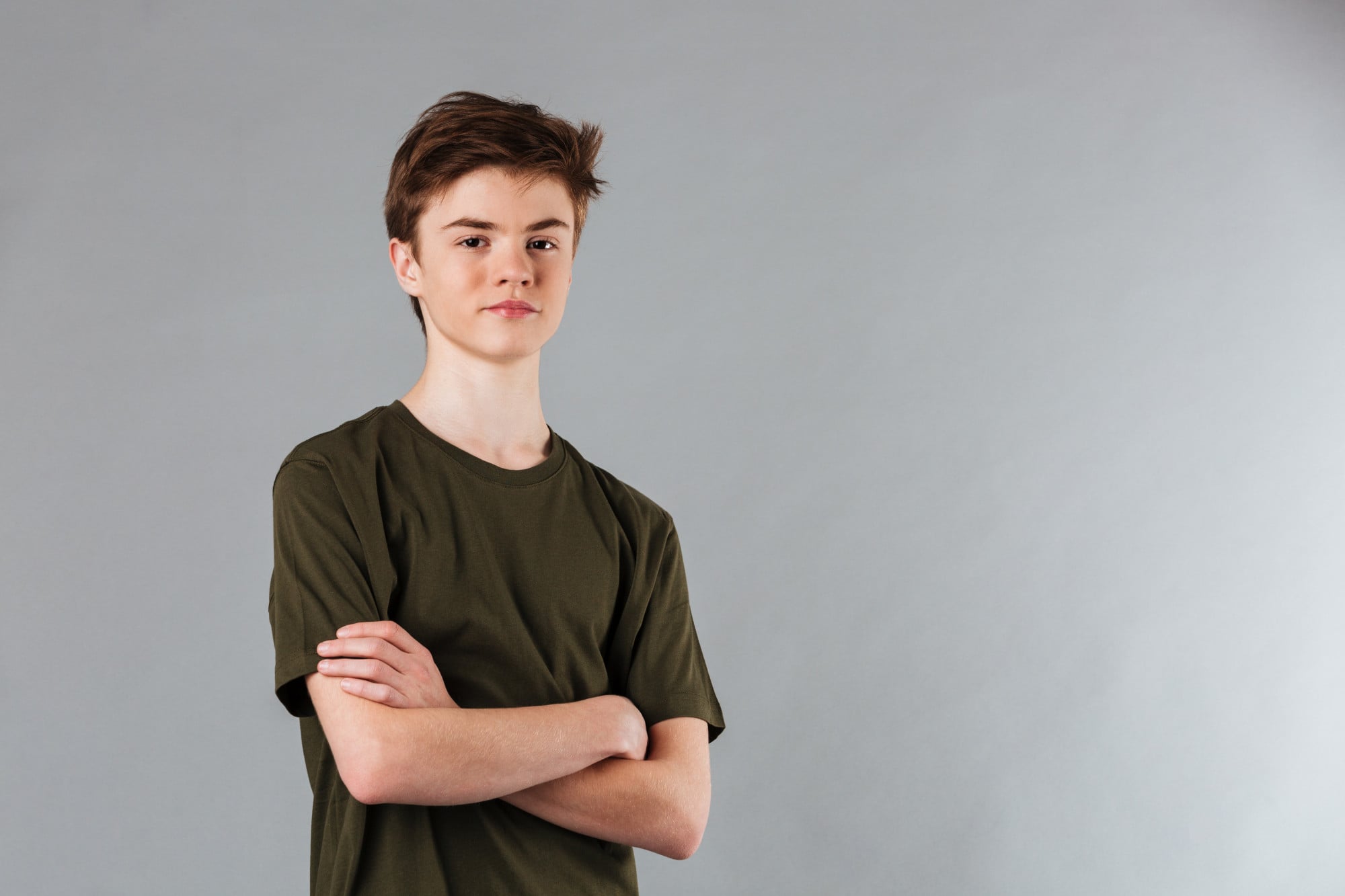
My fifteen-year-old son, Noah, was standing in the kitchen doorway with his backpack still on one shoulder and his hands held strangely behind his back. It was a Tuesday evening in early March, a quarter to six, and I was at the stove stirring a pot of chili. The windows were fogged. The radio was playing the evening news, low.
“Why?” I asked, without turning around.
He didn’t answer right away. That made me turn around.
He brought his hands out from behind his back and held them out in front of him, palms down. The knuckles on his right hand were swollen and purple, the skin split across two of them, the whole back of his hand puffed up like a rising loaf of bread.
“Noah!” I set down the spoon so fast it clattered against the pot. “What happened?”
“It’s not as bad as it looks,” he said.
“That’s what people say when it’s worse than it looks,” I said.
I took his hand in mine, very gently. He winced. The swelling was hot under my fingers. I’m not a doctor, but I’ve been a school bus driver for eleven years and a mother for fifteen, and I’ve seen enough playground injuries and slammed fingers to know this wasn’t nothing.
“Can you make a fist?” I asked.
He tried. He couldn’t, not all the way. His pinky and ring finger stopped halfway, trembling.
My name is Kate Morrow. I’m forty-three years old, and I live with my family in a split-level house on a quiet street in Akron, Ohio, three blocks from Firestone High School, where my son is a sophomore. My husband, Rob, drives a long-haul truck for a freight company out of Cleveland. He’s on the road two weeks at a time, home for one. That week, he was somewhere in Nebraska with a load of auto parts headed for Denver.
And for the past six months, since her hip replacement in September, my mother-in-law had been living with us.
Part Two: Diane
Diane Morrow is seventy-one. She’s small and sharp, with short silver hair she sets in curlers every Saturday night and reading glasses on a beaded chain and a cardigan for every day of the week. She was a church secretary at a Methodist church in Barberton for thirty years. She can type ninety words a minute and recite every book of the Bible in order, and she has an opinion about absolutely everything.
After her surgery, she couldn’t manage the stairs at her own house. So Rob set up the den as a bedroom for her, and she moved in “for six weeks.” That was September. It was March.
I love her. I want to say that clearly before I say anything else. She’s Rob’s mother, and she raised him mostly alone after his father left, and she raised him well. But living with her is like living with a smoke detector. Most of the time it’s quiet. And then, without warning, it goes off at full volume over something that turns out to be toast.
She came into the kitchen for dinner at six on the dot, the way she always does, leaning on her cane. She lowered herself into her usual chair at the end of the table, the one closest to the den. She smoothed her napkin in her lap.
Then she saw Noah’s hand.
He was sitting across from her with it resting on the table next to his bowl of chili. Purple and swollen. She looked at it for a long moment over the top of her reading glasses.
Then she picked up her chair, slowly and deliberately, and scooted it six inches away from him.
“Well,” Diane said. “I knew those boys he runs around with were bad news.”
Noah looked up from his chili. “Grandma,” he said, “they’re on the chess team.”
“Apparently,” Diane said, “they play rough.”
I almost smiled. I couldn’t help it. I pictured Noah’s best friends: Jaden, who’s five-foot-four and wears a bow tie to school on tournament days; Priyanka, who reads Russian novels at lunch; and Marcus, who’s six-foot-three and the gentlest person I’ve ever met, a boy who once carried a spider out of my kitchen in a paper cup and apologized to it. Apparently they play rough.
But the smile didn’t make it all the way to my face. Diane wasn’t finished.
Part Three: “Street Thug”
Diane pointed at Noah’s hand with her fork.
“This is what you get,” she said, “when you raise a violent street thug.”
The kitchen went very quiet. The radio was still murmuring something about the weather. The chili simmered on the stove.
“Take away his phone,” Diane said. She was looking at me, not at Noah, as if he weren’t sitting right there. “Ground him. For a month. Two months. You can’t let this go, Katherine. You let a boy get away with it once, and it never stops.”
“Diane,” I said. “That’s enough.”
She opened her mouth to argue. I held up my hand.
“That’s enough,” I said again.
She closed her mouth. But she kept looking at Noah’s swollen knuckles with an expression I recognized. Not anger, exactly. Something older and sadder, like she was seeing something nobody else at the table could see.
I turned to my son.
“Noah,” I said quietly. “Look at me. Did you hit someone?”
He looked straight at me. He has Rob’s eyes, gray-blue and steady.
“No, Mom,” he said.
“Then tell me what happened.”
He didn’t answer right away. He glanced at his grandmother at the end of the table. Then he put both hands in the front pocket of his hoodie, even though it must have hurt, and looked down at his chili.
“Can you just wait until tomorrow?” he asked.
“Why tomorrow?”
He didn’t look up.
“I need you to trust me,” he said.
Diane scoffed. It was a small sound, a little puff of air through her nose, but it carried across the table like a slap.
“That’s what guilty people say,” she said.
I looked at my mother-in-law. Then I looked at my son, sitting with his hands hidden in his pocket and his head down, the way he used to sit at the dinner table when he was six and had broken something and was working up the courage to confess.
But that wasn’t the face he had now. I know my son’s faces. This wasn’t guilt. It was something else. Something careful. Something that looked a lot like a promise he was keeping.
“No,” I said. “That’s what my son is saying.”
I got up from the table. I went to the freezer and took out a bag of frozen peas. I wrapped it in a dish towel. I handed it to Noah.
He took it with his left hand and pressed it against his right. He winced. Then he let out a long breath.
“Sorry about dinner,” he muttered.
“Peas weren’t the main course,” I said.
He gave me a small, tired smile. It was the first time he’d smiled since he walked in the door.
Part Four: Danny
Diane didn’t say another word through dinner. She ate her chili in small, precise spoonfuls. When she was done, she excused herself and went to the den and closed the door.
Noah went up to his room. I heard him on the phone for a while, his voice low through the ceiling. Then nothing.
I cleaned the kitchen alone. Then I knocked on the door of the den.
Diane was sitting on the edge of the pull-out bed in her bathrobe with her Bible in her lap, but she wasn’t reading it. She was looking at a photograph on the nightstand. I knew which photograph it was before I saw it.
Two boys on the front steps of a little house in Barberton, in 1985. Rob, nine years old, gap-toothed, in a Cleveland Browns T-shirt. And his older brother, Danny, twelve, skinny and grinning, with a scab on his chin and his arm slung around Rob’s neck.
“Diane,” I said. “Can I come in?”
She nodded without looking up.
I sat down beside her on the pull-out bed. Neither of us said anything for a long time.
“He came home with his hands like that,” Diane said finally. “Danny. When he was fifteen. Same hand. Same knuckles.”
I didn’t say anything.
“He said he fell,” Diane said. “Off his bike. I believed him.” She ran her thumb over the photograph. “Then he came home with his hands like that again at sixteen. And seventeen. And then he didn’t come home at all, because he was in the Summit County jail.”
I knew some of the story. Rob doesn’t talk about it much. Danny Morrow got into fights all through high school. Then bar fights. Then worse. At twenty-three, he put a man in the hospital outside a tavern in Cuyahoga Falls and went to prison for six years. He got out, struggled, went back. He died of an overdose at thirty-eight in a motel in Columbus. Diane identified him from a photograph the coroner sent.
Rob was the one who turned out fine. The quiet one. The one who got a commercial driver’s license and married a school bus driver and bought a split-level house three blocks from a good high school.
“I saw his hand,” Diane said. Her voice was shaking. “Noah’s. At dinner. And all I could see was Danny. Fifteen years old. Sitting at my kitchen table with a bag of frozen peas, telling me he fell off his bike.”
She put the photograph back on the nightstand.
“I didn’t push,” she said. “With Danny. I believed him because I wanted to. Because it was easier. And I’ve spent thirty-five years wondering what would’ve happened if I’d pushed.”
I put my hand on her arm.
“Noah isn’t Danny,” I said gently.
“I know that,” Diane said. “In my head, I know that.” She looked at me with wet eyes. “But my heart doesn’t.”
Part Five: The Night
I didn’t sleep much that night.
I lay in bed alone, Rob’s side cold, and listened to the house. The furnace kicking on and off. Diane’s television murmuring through the floor, the shopping channel she falls asleep to. Noah’s room above the garage, silent.
I texted Rob at eleven. He was parked at a truck stop outside North Platte.
Noah came home with his knuckles all swollen. Says he didn’t hit anybody. Says to trust him until tomorrow. Your mom called him a street thug.
Rob called back five minutes later. I could hear the hum of other trucks idling in the lot behind him.
“Is he okay?” Rob asked first.
“I think his hand might be broken,” I said. “He can’t make a fist. I’m taking him to urgent care in the morning.”
Rob was quiet for a moment. “And he says he didn’t hit anybody.”
“He says he didn’t.”
“Do you believe him?”
I thought about my son’s face at the dinner table. The steady gray-blue eyes. I need you to trust me.
“Yes,” I said. “I do.”
“Then so do I,” Rob said.
There was a pause on the line.
“Kate,” he said. “My mom. About the street thug thing.” He sighed. “It’s not about Noah. You know that, right?”
“I know,” I said. “She told me about Danny.”
Rob was quiet for a long time. “She told you?” he said finally. “She never talks about Danny.”
“She did tonight,” I said.
At midnight, I went upstairs. Noah’s door was cracked. The bag of peas was melting on the nightstand beside his bed, soaking through the dish towel. He was asleep on his back with his right hand resting on his chest, swollen and purple in the light from the hallway.
On the floor beside his bed was his chess bag. The old canvas one with the roll-up board and the wooden pieces that used to be Rob’s father’s, the one thing Rob’s father left behind when he walked out. Noah had taken it to school that morning. He had a team practice after school on Tuesdays.
I stood in the doorway for a long time, watching my son sleep.
Then I went back downstairs and lay awake until dawn.
Part Six: 8:14 A.M.
I had a plan for the morning. Drive my bus route, Route 17, forty-six kids from the elementary schools on the north side of Akron. Come home at nine-fifteen. Take Noah out of school and to the urgent care on West Market Street to get his hand X-rayed. Then sit him down and get the truth.
But Noah left before I could stop him.
He was gone by seven-twenty, his chess bag over his shoulder, his right hand wrapped in an Ace bandage he must have found in the bathroom cabinet. He left a note on the kitchen counter in his neat, slanted handwriting.
Mom — went early. Have to do something before first period. I’ll go to the nurse about my hand. Please don’t be mad. Trust me. Love, N.
I drove my route. I dropped off forty-six kids. I came home.
At 8:14, my phone rang.
The screen said Firestone High School.
“Mrs. Morrow?” a woman’s voice said. “This is Angela Collins. I’m the principal at Firestone.”
My heart dropped into my stomach.
“Is Noah with you?” she asked.
“No,” I said. “He left for school about an hour ago. He should be there. Is something wrong? Is he hurt?”
There was a pause on the line.
“He’s here,” Mrs. Collins said. “He’s fine. He’s in the nurse’s office, getting his hand looked at.” She paused again. “Mrs. Morrow, before you punish him, there’s something you need to know.”
An uneasy feeling settled in my stomach.
“Was he in a fight?” I asked.
“No,” Mrs. Collins said. “He wasn’t. But he was in my office yesterday afternoon. Before his injury.”
I sat down at the kitchen table.
“Why didn’t you call me then?” I asked.
“Noah asked me not to,” Mrs. Collins said. “He was very specific about it. He said it wasn’t his story to tell. He said he’d made a promise.” She took a breath. “I agreed, because what he told me didn’t put him in any danger, and I needed time to investigate.”
“Investigate what?”
“Another parent came to see me this morning,” Mrs. Collins said. “First thing. She was waiting outside my office at seven-fifteen.” Her voice softened. “Mrs. Morrow, I think you should come in. I think it’s better if you hear this in person. And I think the other parent would like to meet you.”
“Who’s the other parent?” I asked.
“Her name is Lauren Marsh,” Mrs. Collins said. “Her son, Toby, is a freshman. He’s on the chess team with Noah.”
Part Seven: Toby
I knew Toby Marsh. Not well. But I knew him.
He’d joined the chess team in September. Noah had mentioned him at dinner a few times, in that offhand way teenage boys mention things that matter to them. There’s this new kid, Toby. He’s really good. Like, scary good. He beat Marcus in twelve moves.
I’d seen him once, at a tournament in Canton in January, where I drove the team in my minivan. A small, thin boy with glasses and a buzz cut, in a gray hoodie zipped all the way up to his chin. He didn’t talk to anybody. He rocked slightly in his chair between games. When he played, he hummed under his breath, the same three notes, over and over.
Noah sat next to him at lunch at that tournament. I remember noticing. Noah sat next to him and didn’t say anything, just ate his sandwich, and after a while, Toby stopped humming and ate his too.
I drove the three blocks to Firestone High School still wearing my bus driver’s reflective vest. I didn’t think to take it off.
The school secretary, a cheerful woman named Mrs. Dunbar, buzzed me in and walked me down the hall to the principal’s office. The door was closed. Through the frosted glass, I could see two shapes.
Mrs. Dunbar knocked once and opened it.
Angela Collins was standing behind her desk. She was in her fifties, tall and Black, with close-cropped gray hair and reading glasses pushed up on her forehead. She’d been the principal at Firestone for nine years. Everybody in Akron knew her. She had a reputation for being tough and fair and for knowing the name of every single one of her fourteen hundred students.
And sitting in one of the two chairs in front of her desk was a woman about my age, maybe a little younger, with tired eyes and brown hair pulled back in a messy bun. She was wearing scrubs, dark blue, with a hospital ID badge clipped to the pocket. Lauren Marsh, RN. Akron Children’s Hospital.
She’d been crying.
When I walked in, she stood up.
“You’re Noah’s mom,” she said. It wasn’t a question.
“I am,” I said.
Lauren Marsh crossed the office in three steps and threw her arms around me.
I stood there in my reflective bus driver’s vest, stunned, with a stranger in hospital scrubs hugging me in the principal’s office, crying into my shoulder.
“Thank you,” she kept saying. “Thank you. Thank you.”
I looked over her shoulder at Mrs. Collins.
“Maybe,” Mrs. Collins said gently, “we should all sit down.”
Part Eight: What Noah Told the Principal
Mrs. Collins started with what Noah told her the day before.
He’d come to her office at lunch on Tuesday. He’d asked the secretary if he could talk to the principal privately. He said it was important. He sat in the same chair I was sitting in now, with his chess bag in his lap, and told her about Toby.
Toby Marsh is fourteen. He’s autistic. He’s brilliant at math and at chess and at remembering every bus route in the city of Akron, which he can recite from memory. He finds loud places overwhelming and doesn’t always understand jokes. When he’s anxious, he hums. When he’s very anxious, he rocks. He doesn’t like to be touched.
And since January, a group of older boys had been making his life a nightmare.
“There are three of them,” Mrs. Collins said. “Juniors. I won’t use their names yet, because the investigation is ongoing. But Noah gave me their names yesterday. And he gave me something else.”
She turned her computer monitor around so I could see it.
It was a folder of screenshots. Videos and posts from a social media account. A private one, with a cartoon frog as its profile picture, and a name I won’t repeat. The account had two hundred and forty followers, almost all of them students at Firestone.
Every single post was a video of Toby.
Toby in the cafeteria, rocking in his chair, with someone off-camera making a whooshing sound and laughing. Toby in the hallway, humming his three notes, while a boy walked behind him mimicking him. Toby standing frozen at his locker while someone kept slamming the locker next to his, bang, bang, bang, and Toby covered his ears and squeezed his eyes shut.
Captions under every one. Words I won’t write here. Words that made my face go hot.
“Noah found the account in February,” Mrs. Collins said. “A girl on the chess team showed it to him. He told me he spent three weeks trying to figure out what to do. He didn’t want to make it worse for Toby. He knew if he reported it and the boys found out who reported it, they might come after Toby harder.”
She took off her reading glasses.
“So he did something smart,” she said. “He screenshotted every single post. Every video. Every comment. Every username. He documented the dates and times. Then he made a list of every student he could identify in the background of the videos, every witness. He brought me a folder. A real folder, Mrs. Morrow, with tabs.”
I put my hand over my mouth.
“He’s fifteen,” Mrs. Collins said. “I’ve had police detectives bring me less organized evidence than that boy did.”
Part Nine: The Promise
“Why did he ask you not to call me?” I asked.
Mrs. Collins looked at Lauren Marsh.
Lauren wiped her eyes with a tissue.
“Because of Toby,” she said. “Because Toby asked him not to tell anybody. Not even me.”
She told me the rest.
Toby had never told his mother about the videos. Not one word. For two months, he’d come home from school every day and gone straight to his room and closed the door. He’d stopped eating breakfast. He’d started having meltdowns over small things, a missing sock, a changed TV schedule. Lauren had thought it was a phase. Teenage hormones. Autism getting harder as he got older.
“He was ashamed,” Lauren said, her voice breaking. “He thought it was his fault. He thought if I found out, I’d be embarrassed of him. That’s what he told Noah.”
Noah had found Toby crying in the chess room on Monday afternoon, after one of the boys had slammed his locker again. He’d sat down next to him. He hadn’t touched him. He’d just sat there, the way he did at the tournament in Canton.
After a long time, Toby told him everything.
And then Toby made him promise. Don’t tell my mom. Please. I’ll tell her. I just need time. I need to tell her myself.
“So Noah promised him,” Lauren said. “He promised he wouldn’t tell me. He promised he’d let Toby tell me in his own way, in his own time.” She shook her head. “But he told Toby, I’m going to tell the principal. Because what they’re doing is wrong, and it has to stop. But I won’t tell your mom. That’s yours.”
She looked at me with red eyes.
“He gave my son his dignity,” she said. “Your boy is fifteen years old, and he understood that Toby needed to be the one to tell his own story. Do you know how many adults never understand that?”
Part Ten: The Knuckles
“Then what happened to his hand?” I asked.
Mrs. Collins and Lauren looked at each other.
“Toby told me last night,” Lauren said. “At eleven o’clock. He came into my bedroom and woke me up and sat on the edge of my bed and told me everything. The videos. The account. The locker.” She swallowed. “And what happened after school yesterday.”
After Noah left the principal’s office on Tuesday, Mrs. Collins had started her investigation. She’d called the three boys’ names in to the assistant principal, who began pulling their schedules. She’d flagged the account with the district’s technology office.
But somehow, by the end of the school day, word got out. Somebody had seen Noah go into the principal’s office at lunch. Somebody else had noticed the assistant principal pulling the boys’ class schedules. The boys figured it out.
They didn’t go after Noah.
They went after Toby.
The chess team practiced on Tuesdays from three to four-thirty, in Room 214 on the second floor. At four-thirty, Toby left practice early to catch the city bus home. Number 12, on Copley Road. He always took the back stairs, the old ones at the end of the east wing that nobody else used. It was quieter.
The three boys were waiting for him on the landing.
Noah had been packing up the chess boards in Room 214. He told Lauren later that he got a bad feeling when he saw Toby leave. He didn’t know why. He just did. So he grabbed his chess bag and went after him.
He heard it before he saw it. Toby’s humming. The three notes, louder and faster than he’d ever heard them, almost a scream. And a boy’s voice, laughing. Come on, freak. Do your little song for the camera.
Noah came around the corner of the stairwell. The three boys had Toby backed up against the heavy steel fire door at the bottom of the stairs, the one that leads out to the parking lot. One of them was holding up a phone, filming. Another was standing right in front of Toby, inches from his face.
Toby had his hands over his ears. His eyes were squeezed shut. He was rocking hard against the door, his whole body shaking.
And the third boy, the biggest one, grabbed the handle of the steel door and yanked it open, then let it go.
It swung shut with a crash, right beside Toby’s head.
Then he did it again. And again.
Bang. Bang. Bang. Like the locker. Like every video.
“Toby said the boy was laughing,” Lauren said quietly. “Toby said the door was closing closer and closer each time. He said he couldn’t move. He said he froze, the way he does, and he couldn’t make his legs work.”
She looked at me.
“On the fourth time,” she said, “the door was going to hit him in the head.”
Noah dropped his chess bag on the stairs.
He didn’t punch anybody. He didn’t push anybody. He didn’t say a word.
He ran down the last four stairs and put his right hand between the edge of the steel fire door and Toby’s head.
The door slammed shut on his knuckles.
Part Eleven: The Video
I couldn’t breathe.
I sat in that chair in the principal’s office in my reflective bus driver’s vest with my hand over my mouth, and I couldn’t breathe.
“How do you know?” I whispered. “How do you know he didn’t hit anybody?”
Mrs. Collins turned her monitor back toward herself. She clicked something. Then she turned it around again.
“Because they filmed it,” she said.
It was the boy with the phone. He’d been filming the whole time, the way they always did. And he’d posted it to the frog account at 4:41 p.m. on Tuesday, with a caption that said chess nerd tries to be a hero lol.
By the time the district’s technology office shut down the account at 7:15 that evening, the video had been viewed nine hundred and twelve times.
Mrs. Collins pressed play.
I watched it.
I watched my son come around the corner of the stairwell with his chess bag. I watched him see Toby against the door. I watched the big boy yank the steel door open and let it swing shut, bang, inches from Toby’s head. I watched Noah drop his bag.
I watched him run down the stairs and put his hand in the door.
The sound it made. A dull, heavy crack that the phone’s microphone caught perfectly.
Noah didn’t scream. He made a sound, a sharp breath through his teeth, and his whole body flinched. But he didn’t pull his hand back. He kept it there, braced against the door, between the steel edge and Toby’s head.
The big boy stared at him. For a second, nobody moved.
Then Noah turned around. Not toward the boys. Toward Toby.
He knelt down on the concrete landing in front of Toby, with his crushed hand held against his chest. He didn’t touch him. He just looked at him.
And on the video, very quietly, you can hear him say it.
“Hey, Toby. It’s Noah. You’re okay. I’ve got the door. Let’s go catch your bus.”
The boy with the phone said something. One of the others laughed, but it sounded uncertain now. Noah didn’t look at them. He didn’t say a single word to them. He just stood up, picked up his chess bag with his left hand, and held open the steel door with his shoulder.
Toby walked through it. Noah followed.
The video ended.
Part Twelve: The Bus
“He walked Toby to the bus stop,” Lauren said. “On Copley Road. Three blocks. Holding his hand against his chest. He waited with him for eleven minutes until the Number 12 came. He made sure Toby got on. He stood on the sidewalk and waved until the bus was out of sight.”
She wiped her eyes.
“Then he walked home,” she said. “Two miles. In March. With a broken hand.”
“Broken?” I said.
Mrs. Collins nodded. “The nurse just called up,” she said. “She thinks it’s a fracture of the fifth metacarpal. She’s sending him to urgent care for an X-ray. She wanted me to tell you.” She hesitated. Then she almost smiled, sadly. “She said the common name for it is a boxer’s fracture.”
“A boxer’s fracture,” I repeated.
“It’s what doctors call it,” Mrs. Collins said. “Because it usually happens when somebody punches something.”
I thought about Diane at the dinner table. This is what you get when you raise a violent street thug. I thought about her scooting her chair six inches away from him.
I thought about my son sitting across from her with his broken hand on the table and his other hand in the pocket of his hoodie, saying I need you to trust me. Keeping a promise to a fourteen-year-old boy who wanted to tell his own mother his own story.
I put my face in my hands.
Lauren Marsh reached over and put her hand on my back.
“Toby told me at eleven o’clock last night,” she said quietly. “He sat on the edge of my bed and told me everything. He was so scared, Mrs. Morrow. He thought I’d be ashamed of him.” Her voice broke. “And at the end, he said, Noah said it’s my story. He said I get to tell it. So I’m telling you.”
She was crying again.
“He hasn’t talked to me like that in two years,” she said. “He hasn’t let me in. And last night, because your son kept a promise, my son came into my room and let me in.”
Part Thirteen: Noah
The nurse brought Noah up to the principal’s office a few minutes later. He came in with his right hand in a temporary splint and an ice pack, and his chess bag over his left shoulder. He stopped in the doorway when he saw me.
Then he saw Lauren Marsh. His face went pale.
“Mrs. Marsh,” he said. “Did Toby…”
“He told me,” Lauren said. “Last night. Everything.”
Noah let out a long breath. His shoulders dropped about three inches.
“Good,” he said quietly. “That’s good. I’m glad he told you.”
He looked at me.
“Mom,” he said. “I’m sorry I didn’t tell you last night. I promised Toby. I didn’t want him to find out from somebody else that his mom knew before he could tell her.” He looked down at his splinted hand. “And I didn’t want to say it in front of Grandma.”
“Why not?” I asked.
Noah was quiet for a moment.
“Because she already thought I punched somebody,” he said. “And if I said, No, Grandma, actually I put my hand in a door, she’d want to know why. And then I’d have to tell Toby’s whole story at the dinner table.” He shrugged. “I figured it was better to just let her think what she wanted for one night.”
He looked at me.
“I knew you’d trust me,” he said. “That was enough.”
I stood up. I crossed the principal’s office. I put my arms around my son, carefully, around his broken hand, in front of the principal and Lauren Marsh and Mrs. Dunbar, who’d come to the door to see what was happening.
He didn’t pull away. He’s fifteen, and he hugged me back in the principal’s office in front of his principal. That’s how I knew it had been a long night for him too.
“I’m so proud of you,” I whispered into his hair. “I’m so proud of you, I can’t stand it.”
“Mom,” he mumbled into my shoulder. “You’re wearing your bus vest.”
“I know,” I said. “I didn’t have time to take it off.”
Part Fourteen: Diane Watches
I took Noah to urgent care on West Market Street. The X-ray confirmed it: a clean fracture of the fifth metacarpal, just below the knuckle of his pinky finger. The doctor, a brisk young woman with a ponytail, looked at the X-ray, then at Noah, then at me.
“Boxer’s fracture,” she said. “Classic. Who’d he punch?”
“A steel fire door,” I said. “From the other side.”
She looked at me strangely. “Excuse me?”
“He didn’t punch it,” I said. “It closed on him. He put his hand there on purpose.” I looked at my son on the exam table. “To keep it from hitting somebody else’s head.”
The doctor looked at Noah for a long time. Then she said, very quietly, “Well. That’s a first.”
He got a cast. Blue, at his request, Firestone blue. From his knuckles to halfway up his forearm. Six weeks.
When we got home at one o’clock, Diane was sitting at the kitchen table with a cup of tea and her Bible. She looked up when we came in. She saw the cast.
Her face went tight.
“So it’s broken,” she said. “Well. I hope the other boy’s worse.”
I didn’t say anything. I sat down at the kitchen table across from her. I took my phone out of my purse.
Mrs. Collins had sent me the video. She’d asked first if I wanted it, and I said yes. She said I should be careful who I showed it to, because it was evidence in an ongoing investigation, and because it showed Toby at the worst moment of his life.
I’d called Lauren Marsh from the urgent care parking lot and asked her permission. She said yes. She said, Show your mother-in-law exactly what kind of boy your son is.
“Diane,” I said. “I need you to watch something.”
She looked at the phone. Then at me.
“What is it?”
“It’s what happened to Noah’s hand,” I said.
I pressed play. I set the phone on the table in front of her.
Noah was standing in the kitchen doorway with his cast. He didn’t want to watch. He went to the refrigerator and stood with his back to us, pretending to look for something to eat.
Diane put on her reading glasses. She leaned over the phone.
I watched her face while she watched it.
I watched her see Toby, rocking against the steel door with his hands over his ears. I watched her flinch at the first bang. And the second. I watched her see Noah come around the corner with his chess bag, Rob’s father’s chess bag.
I watched her see him drop it.
I watched her see him run down the stairs and put his hand in the door.
When the crack came through the phone’s tiny speaker, Diane put her hand over her mouth.
She watched him kneel down on the concrete. She heard him say it, very quietly. Hey, Toby. It’s Noah. You’re okay. I’ve got the door. Let’s go catch your bus.
She watched him hold the door open with his shoulder.
The video ended.
Diane didn’t move. She sat there at the kitchen table in her cardigan with her reading glasses on, staring at the black screen of my phone. Her hand was still over her mouth. Her eyes were very wide.
Then her shoulders began to shake.
Part Fifteen: “Come Here”
She didn’t cry right away. She took off her reading glasses and set them carefully on the table beside her Bible. She folded her hands. She looked at the back of her grandson, standing at the open refrigerator in his hoodie with his blue cast.
“Noah,” she said. Her voice was barely a whisper. “Come here.”
Noah closed the refrigerator. He turned around slowly. He didn’t come over.
“Grandma,” he said, “it’s fine. You didn’t know.”
“Come here,” Diane said again. “Please.”
He came over. He stood beside her chair.
Diane reached up with both hands. She took his right hand, the one in the blue cast, very gently, the way you’d hold something made of glass. She held it in both of hers. She looked down at it for a long time.
“I called you a street thug,” she said.
“It’s okay,” Noah said.
“It’s not okay,” Diane said. “I moved my chair away from you. At the dinner table. I looked at your hand and I saw somebody else.” Her voice broke completely. “I saw your Uncle Danny. And I didn’t see you at all.”
Noah didn’t say anything for a moment. He knew about Danny. Rob had told him, two years ago, when Noah asked why Grandma never talked about her other son.
He crouched down beside her chair, so that his face was level with hers.
“Grandma,” he said. “Can I tell you something?”
Diane nodded. She couldn’t speak.
“I didn’t put my hand in the door because I’m brave,” Noah said. “I was so scared. My legs were shaking the whole time. I almost didn’t go down the stairs.”
He looked down at the cast in her hands.
“I did it because of something Dad told me,” he said. “About Uncle Danny.”
Diane went very still.
“Dad said Uncle Danny used to stand up for him,” Noah said. “When they were kids. When the older boys picked on Dad at school, Uncle Danny always showed up. Every time.” He swallowed. “Dad said Uncle Danny wasn’t bad. He just only knew one way to stand up for people. With his fists.”
He looked up at her.
“I just wanted to find another way,” Noah said.
Diane let out a sound I’d never heard her make. She bent over his blue cast and she wept, her shoulders heaving, the way you cry when something you’ve been holding for thirty-five years finally breaks loose.
Noah put his good arm around her. He held his grandmother while she cried, crouched beside her chair in the kitchen.
I stood at the counter and didn’t move. I didn’t want to break whatever was happening.
Part Sixteen: Rob
Rob got home on Friday, three days early.
He’d called his dispatcher from the truck stop in Nebraska on Wednesday afternoon and told her he had a family emergency. He drove nineteen hours straight to Akron with one stop for gas. He came through the front door at two in the morning, unshaven, in his work boots, still smelling like diesel.
Noah was asleep upstairs. Diane was asleep in the den. I was awake at the kitchen table, waiting.
Rob didn’t say anything. He just put his arms around me.
Then he went upstairs. I followed him. He stood in the doorway of Noah’s room for a long time, looking at our son asleep on his back with his blue cast resting on his chest. The chess bag on the floor beside the bed. Rob’s father’s chess bag.
“I watched it,” Rob said quietly. “The video. In the truck. You sent it to me.”
“I know,” I said.
“I watched it about forty times,” Rob said. His voice was rough. “At the truck stop in North Platte. In the cab. With the engine running.” He shook his head. “Kate, I’ve been driving trucks for twenty years. I’ve seen people do brave things on the highway. Pull people out of burning cars. Stop traffic for a deer.” He looked at our son. “I’ve never seen anything like that.”
He went into the room and sat down on the edge of the bed. Noah woke up. He blinked at his father in the dim light from the hallway.
“Dad?” he said. “You’re home early.”
“Yeah, buddy,” Rob said. “I’m home early.”
Noah sat up. He looked at the cast on his hand. Then at his father.
“Are you mad?” he asked.
Rob looked at our son for a long time.
“I’m about the furthest thing from mad a person can be,” he said.
He reached out and took Noah’s right hand, the cast, the same way his mother had.
“Your Uncle Danny,” Rob said quietly. “He used to show up for me. Every single time. At school, on the bus, in the neighborhood. Whenever anybody came after me.” He swallowed. “He’d fight them. He’d get suspended. He’d come home with his knuckles all busted up, and he’d tell Mom he fell off his bike, so I wouldn’t get in trouble for starting it.”
Noah stared at him.
“He took every one of those hits for me,” Rob said. “And he never learned there was any other way to do it. Nobody ever showed him.” His voice broke. “And it ruined his life.”
He held Noah’s cast in both hands.
“You showed up for Toby,” Rob said. “Same as Danny showed up for me. But you didn’t throw a single punch. You just held the door.”
Part Seventeen: The Boys
The three boys were suspended. All three of them, for ten days, the maximum the district allows. The district’s technology office confirmed the frog account was run from one of their phones. Mrs. Collins filed a report with the Akron police, because the video showed what she called an assault on a disabled student, and that’s a crime in Ohio.
The police didn’t press criminal charges. The prosecutor’s office recommended something called restorative justice instead, a program where the boys had to meet with the people they’d hurt, face to face, with a trained mediator, and listen.
Lauren Marsh agreed to it. So did Toby. So did Noah.
I went to the meeting with Noah in April. It was held in a conference room at the Summit County Juvenile Court, with a round table and a box of tissues and a mediator named Mr. Abernathy, a retired social worker with a gentle voice and a gray beard.
The three boys sat on one side of the table with their parents. Their names were Cole, Tyler, and Brandon. Cole was the big one, the one who’d slammed the door. He was sixteen and six-foot-two and played offensive line for the Firestone Falcons. His father was a dentist in Fairlawn. His mother sat beside him in a Burberry coat and didn’t look at anybody.
Toby sat on the other side of the table, next to his mother. He was wearing his gray hoodie zipped up to his chin. He was holding a chess piece in his hand, a white knight, turning it over and over in his fingers.
Noah sat next to Toby. He didn’t touch him. He just sat there.
Mr. Abernathy asked Toby if he wanted to say anything.
Toby didn’t say anything for a long time. He turned the white knight over in his fingers. He hummed his three notes, very softly.
Then he looked up at Cole.
“The door was very loud,” Toby said. “I don’t like loud. It makes everything in my head go white. I couldn’t move. I thought it was going to hit me.”
He looked down at the chess piece.
“Noah put his hand there,” Toby said. “So it hit him instead.”
Cole stared at the table. His face was red.
“I didn’t…” he started. He stopped. He tried again. “I didn’t think it would actually hit anybody. I was just trying to scare him. For the video. I thought it was funny.”
His mother put her hand on his arm. He shook it off.
“Then he put his hand there,” Cole said. “And I heard it break. And I…” He looked up at Noah. “I couldn’t stop thinking about the sound. All night. All week.” His voice cracked. “I’m sorry, man. I’m sorry about your hand.”
Noah looked at him across the table for a long time.
“It’s not me you need to apologize to,” he said quietly. “It’s him.”
He nodded at Toby.
Cole looked at Toby. Toby looked at the white knight in his hand.
“Toby,” Cole said. His voice was shaking. “I’m sorry. For all of it. The videos. The account. The lockers. The door.” He swallowed. “You didn’t do anything to deserve it. I was just…” He stopped. “I was a jerk. I’m sorry.”
Toby turned the white knight over in his fingers.
“Okay,” he said finally.
Then he went back to humming.
Part Eighteen: Chess
The Ohio High School Chess Association state championship was held in May, at a convention center in Columbus. Firestone High School had qualified for the first time in eleven years.
Noah played with his cast off. It had come off two days earlier. His hand was stiff and pale and a little thinner than his left, and the doctor said his pinky knuckle would probably always be a little lower than the others. A souvenir, she called it.
He didn’t care. He said it made him look tough.
I drove the team to Columbus in my minivan. Jaden in his bow tie. Priyanka with her Russian novel. Marcus, folded into the back seat with his knees up by his ears. And Toby, in the front passenger seat next to me, because he gets carsick in the back. He recited every exit on I-71 between Akron and Columbus, in order, the whole way down.
Rob drove separately, with Diane.
She’d asked to come. She’d never been to a chess tournament in her life. She didn’t know how the pieces moved. But on the Monday before the tournament, she’d asked Noah to teach her, and they’d sat at the kitchen table every evening that week with Rob’s father’s old chessboard, and by Friday she knew the knight moves in an L and the bishop goes diagonally and you should never, ever bring your queen out too early.
Toby went undefeated on the first day. Five games, five wins. In the last game, against a senior from a private school in Cincinnati who was rated two hundred points higher, Toby sat perfectly still for forty minutes, humming his three notes, and then checkmated him with a knight.
A white knight. The same one he’d held at the restorative justice meeting.
Noah won three games and lost two. He came in fourteenth in the individual standings. He said it was the best he’d ever done.
Firestone took fourth place in the team competition. Fourth in the state of Ohio. The team got a trophy, a small one, gold plastic with a chess knight on top.
At the award ceremony, when they called Firestone’s name, the five of them walked up to the stage together. Jaden, Priyanka, Marcus, Noah, Toby. Toby didn’t like the noise of the applause, so Noah stood next to him and didn’t say anything. Toby put his hands over his ears and closed his eyes.
And Noah reached out and gently, carefully, held his hands over the tops of Toby’s hands. Over his ears. Like a second set of earmuffs. He didn’t press. He just held them there.
Toby opened his eyes and looked at him. Then he smiled. He let Noah hold his hands over his ears until the applause stopped.
Part Nineteen: Diane’s Seat
Diane was sitting in the front row of the audience at that award ceremony, in her Sunday cardigan, with her cane across her knees.
When Noah came down off the stage holding the little gold trophy, she was the first one to stand up.
She held out her hands.
He gave her the trophy. She looked at it for a long time. Then she handed it back. And she took his right hand instead, the one with the pinky knuckle a little lower than the others, and she held it in both of hers.
“I want to tell you something,” she said.
“Okay, Grandma.”
“When your Uncle Danny was fifteen,” she said, “he came home with his hand like yours. Swollen and purple. He said he fell off his bike.” She looked down at Noah’s hand. “And I gave him a bag of frozen peas, and I didn’t ask a single question. Because I didn’t want to know.”
She was quiet for a moment.
“When you came home with your hand like that,” she said, “I asked every question in the world. I accused you. I called you a thug. I told your mother to punish you.” She shook her head. “And I was wrong both times. With Danny, I should have asked. With you, I should have listened.”
Noah didn’t say anything. He just stood there with his hand in his grandmother’s.
“Your mother said something at the dinner table,” Diane said. “When I said that’s what guilty people say. Do you remember what she said?”
Noah nodded. “She said, No, that’s what my son is saying.”
“That’s right,” Diane said. She looked up at him with wet eyes. “Thirty-five years ago, I needed somebody to say that to me. About Danny. That he wasn’t guilty. That he wasn’t bad. That he just needed somebody to listen and show him another way.” She squeezed his hand. “Nobody did. I didn’t.”
She smiled through her tears.
“But your mother did,” she said. “For you. And look what happened.”
Part Twenty: Hands
It’s October now. Noah’s a junior. He’s taller than Rob. His hand healed fine, mostly. The pinky knuckle is still a little lower than the others, and it aches sometimes when it’s going to rain. He calls it his weather knuckle.
He’s the captain of the chess team. Toby’s a sophomore. He’s ranked fourth in the state among high school players. They still sit together at lunch every day. They still don’t talk much. They don’t need to.
Cole, the boy who slammed the door, joined the chess team in September.
Nobody expected it. He showed up at the door of Room 214 on the first Tuesday of the school year, six-foot-two in his Firestone Falcons letter jacket, and asked if he could learn. Noah looked at Toby. Toby looked at Cole for a long time. Then he shrugged.
“You have to learn the knight first,” Toby said. “It’s the hardest one.”
Cole learned the knight. He’s terrible at chess. He loses almost every game. But he comes every Tuesday. And every Tuesday at four-thirty, when Toby leaves practice early to catch the Number 12 bus, Cole stands up and walks with him down the back stairs and holds open the heavy steel fire door.
He holds it carefully. With both hands.
Diane moved back to her own house in Barberton in June. Rob installed a stair lift for her. She comes to dinner every Sunday. She sits in the same chair at the end of the table, closest to the den.
She doesn’t move it away from anyone anymore.
And sometimes, after dinner, when the dishes are done and Rob’s watching the Browns on TV, Diane and Noah sit at the kitchen table with Rob’s father’s old chessboard. The wooden pieces are worn smooth by three generations of Morrow hands. She still loses almost every game.
Last Sunday, she won. She checkmated him with a knight. A white one.
Noah stared at the board in disbelief. Then he burst out laughing.
“Grandma,” he said. “Where did you learn that?”
Diane smiled. She set down the knight very gently on the board. Then she reached across the table and took her grandson’s right hand, the one with the weather knuckle, and held it for a moment.
“From a boy who held a door,” she said.

Sophia Rivers is an experienced News Content Editor with a sharp eye for detail and a passion for delivering accurate and engaging news stories. At TheArchivists, she specializes in curating, editing, and presenting news content that informs and resonates with a global audience.
Sophia holds a degree in Journalism from the University of Toronto, where she developed her skills in news reporting, media ethics, and digital journalism. Her expertise lies in identifying key stories, crafting compelling narratives, and ensuring journalistic integrity in every piece she edits.
Known for her precision and dedication to the truth, Sophia thrives in the fast-paced world of news editing. At TheArchivists, she focuses on producing high-quality news content that keeps readers informed while maintaining a balanced and insightful perspective.
With a commitment to delivering impactful journalism, Sophia is passionate about bringing clarity to complex issues and amplifying voices that matter. Her work reflects her belief in the power of news to shape conversations and inspire change.