The Brass Key
Part One: Christmas Night
My son stood up in front of twenty-two relatives on Christmas night and ordered me to pay rent or get out of my own house. He thought he was humiliating a helpless seventy-two-year-old widow in front of everyone who mattered to her.
What he didn’t know was that I had a small brass key in the pocket of my wool coat, a secret he’d never imagined, and six years of financial records that could unravel every lie he’d been telling about me. But the worst part of that night wasn’t anything my son said. It was the look on my daughter-in-law’s face when she realized I wasn’t going to beg.
Christmas dinner has always been sacred in the Whitaker family. For thirty-one years, I hosted it in the same white farmhouse outside West Chester, Pennsylvania, that my late husband, Robert, and I spent half our lives turning into a home. It sits on two acres at the end of a long lane, with a red bank barn out back that Robert used as his workshop and a row of old sugar maples along the drive that turn the color of fire every October.
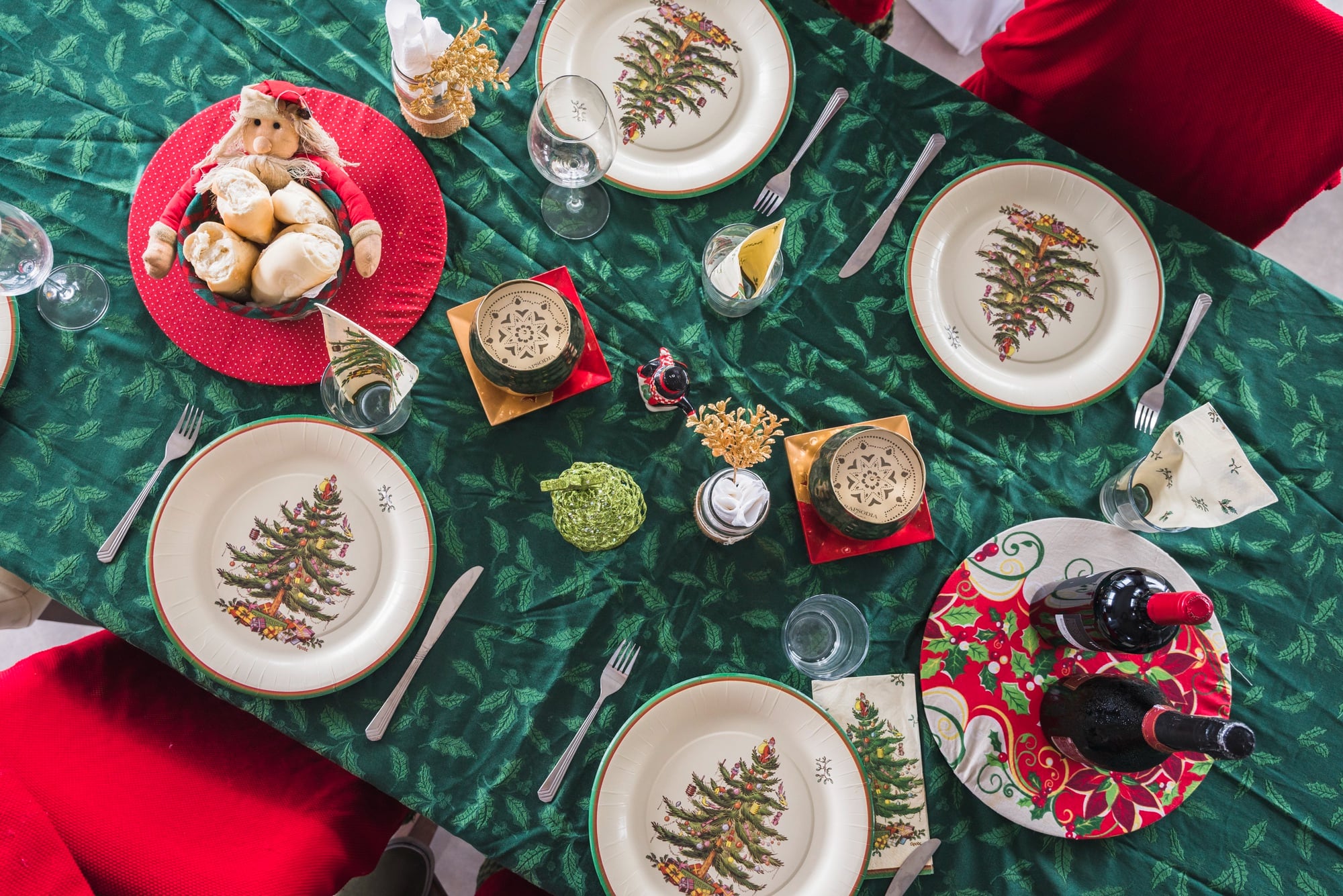
That evening, snow was drifting against the windows. The fireplace in the dining room glowed, candles flickered down the length of the table, and the smell of roast turkey and cinnamon and my mother’s sage stuffing hung warm in the air.
Twenty-two people filled the room. My sisters, Linda and Carol, and their husbands. My son’s cousins and their children. Three teenagers glued to their phones under the tablecloth. My daughter-in-law, Melissa. And my two grandsons, sitting shoulder to shoulder at the long walnut table Robert built the winter after we were married.
Ethan was fifteen, in a navy sweater I’d knitted him, with his grandfather’s quiet gray eyes and long, thin hands. His little brother, Noah, was ten and kept sneaking extra dinner rolls onto his plate when he thought nobody was looking. I was looking. I’d made two extra dozen just for him.
For a few precious moments, everything felt the way it always had. My sister Linda was telling the story about the Christmas in 1987 when Robert set the kitchen curtains on fire trying to flambé a plum pudding. Everybody was laughing. Even Melissa.
Then my son stood up.
Part Two: “Pay Rent or Get Out”
Daniel Whitaker is forty-three. He inherited his father’s broad shoulders and dark hair, though his hairline has started to retreat in the last few years, and he has my mother’s sharp chin. He was wearing a white button-down shirt with the sleeves rolled to his elbows, the way his father used to wear them in the workshop.
He looked straight down the table at me.
“Mom,” he said. “We need to settle something.”
I set my fork down carefully on the edge of my plate.
“Can’t it wait until after dessert, sweetheart?” I said. “Carol brought her pecan pie.”
“No,” Daniel said. “I’ve waited long enough.”
Beside him, Melissa folded her arms. She’s forty-one, with blond hair cut in a sharp chin-length bob and bright red lipstick that looked almost startling against her pale face that night. She was wearing a cream cashmere sweater I’d given her two Christmases ago.
Something about her expression made my stomach tighten.
She wasn’t surprised by whatever Daniel was about to say. She’d been waiting for it.
“Daniel,” I said quietly. “Whatever this is, we can talk about it privately. Tomorrow.”
He slammed his palm flat on Robert’s walnut table.
The crystal glasses rattled. Somebody’s fork clattered onto a plate. Noah jumped in his chair and dropped a dinner roll on the floor.
“PAY RENT,” Daniel said, loud enough to be heard in the kitchen, “OR GET OUT!”
The whole room went silent.
My sister Linda froze with her wineglass halfway to her lips. Carol’s husband, Frank, put down his knife. One of the teenagers lowered his phone. From the kitchen came the low hum of the dishwasher. From the front hallway, the steady tick of the grandfather clock Robert’s father brought over from Germany in 1952.
Twenty-two people turned and looked at me. Waiting, I think, to see if I’d cry.
I didn’t.
“Daniel,” I said. “Please sit down.”
Part Three: “Carrying You”
He laughed. A short, bitter sound I’d never heard come out of him before.
“That’s always been your problem, Mom,” he said. “You think everybody still has to do what you say.”
“I haven’t asked you to do anything,” I said.
“Oh, really?” Daniel said. “Melissa and I have been carrying you for years. You live out here in this big old house, comfortable as you please, while we handle everything.”
Carrying me.
I felt something painful twist under my ribs. Not anger, at first. Something closer to disbelief, the way you feel when somebody tells you the sky is green with a perfectly straight face.
Six years earlier, Daniel’s construction business had collapsed. He’d built custom decks and additions all over Chester County for nine years, and then the housing market in our area cooled, two big clients went bankrupt owing him money, and his business partner disappeared with what was left in the company account.
I remember him sitting at my kitchen table on a gray Tuesday morning in March, his big hands trembling around a coffee mug. He hadn’t shaved in days.
“Mom,” he’d whispered. “I don’t know how I’m going to keep the house.”
I reached across the table and took his hand.
“We’re family, Daniel,” I said. “We’ll figure it out.”
And we had. Or rather, I had.
For six years, I paid the mortgage on Daniel and Melissa’s townhouse in Exton. Every month, on the first. I paid their car insurance. Noah’s daycare when he was little. Dental bills. Orthodontist bills. School supplies every August. The soccer uniforms and cleats and tournament fees my grandsons wore so proudly every fall.
And every December, there was another emergency. A credit card balance that had gotten out of hand. A furnace that died. A tax bill they hadn’t planned for. Something that couldn’t possibly wait until January.
I paid because I loved my family. I paid because Robert always believed you help your children when life knocks them down. And I paid because Daniel always promised, every single time, with tears in his eyes, that it would be the last time.
The last time never came.
And now my son was standing in the house I’d kept for thirty-one years, at the table his father built, telling all our relatives that he had been supporting me.
Part Four: Melissa
Melissa leaned forward in her chair.
“She’s not telling you the whole story, Daniel,” she said.
My eyes went to her. “What story would that be, Melissa?”
She smiled. The red lipstick made it look like a cut.
“Oh, come on, Adele,” she said. “You know perfectly well you couldn’t manage without us.”
Then she turned to the rest of the table, as if she were giving a presentation at work.
“She can barely use online banking,” Melissa said. “Daniel has to help her with everything. Passwords. Bills. The computer. She calls him three times a week because she can’t figure out how to open an email attachment.”
A few of my relatives glanced down at their plates. My sister Carol’s face went pink.
My own cheeks went hot. Not from embarrassment. From the sudden, sick understanding that conversations like this one had probably been happening behind my back for months. Maybe years. At family birthday parties I wasn’t invited to. At barbecues. On the phone with my sisters.
Poor Adele. She can barely manage. Daniel does everything for her.
Four years earlier, I’d had my left knee replaced at Chester County Hospital. I was laid up for six weeks. Daniel came over and set up online bill payments on my computer so I wouldn’t have to drive to the bank on crutches. He wrote my passwords on an index card and taped it inside my desk drawer.
Apparently, he’d mistaken my trust for helplessness.
“That’s enough, Melissa,” I said.
She raised her eyebrows. “Is it? Because I think somebody in this family needs to finally tell the truth.”
Ethan shifted in his chair beside her.
“Mom,” he said quietly. “Stop.”
Melissa didn’t even look at him.
My grandson lowered his eyes to his plate. I noticed his hands were clenched into fists in his lap under the table, so tight his knuckles had gone white.
Part Five: The Glance
Daniel pointed toward the front hallway.
“You’ve got until New Year’s,” he said. “Start paying your share. Or find somewhere else to live.”
I looked at him for a long moment.
“My share of what, exactly?” I asked.
“Rent,” Daniel said. “Household expenses. All the things Melissa and I have been handling.”
“Daniel,” I said. “This house belongs to me.”
He exchanged a quick glance with his wife.
It lasted less than a second. But I saw it. Thirty-one years of being a mother teaches you to see the glances your children think you miss.
And suddenly, I remembered the paperwork.
Three weeks earlier, on a Sunday afternoon, Daniel had driven out to the farmhouse with a folder under his arm. He sat at my kitchen table and slid a document across to me. Twelve pages, single-spaced. He called it a family management agreement.
“It’s just to make things easier, Mom,” he said. “So I can help you manage the property. Handle the taxes, the insurance, the maintenance. You won’t have to worry about anything.”
He handed me a pen.
I told him I’d like to read it first. And maybe have my lawyer look at it.
His face changed. He snatched the folder back. He said I didn’t trust him. He said after everything he’d done for me, I was treating him like a criminal. He drove away without saying goodbye.
He hadn’t called for nine days afterward. When he did, he never mentioned the agreement again.
Now, sitting at Christmas dinner, I noticed a thin manila envelope lying on the table beside Melissa’s plate. I hadn’t seen it before. It was tucked half under the edge of her napkin.
She saw me looking at it.
She moved her hand slowly over it, the way you’d cover a card you didn’t want somebody to see.
My stomach went cold.
Part Six: Linda
My sister Linda finally spoke. She’s seventy-five, three years older than me, a retired nurse with a voice that could still stop a hospital hallway in its tracks.
“Daniel,” she said. “This is your mother’s home. You do not talk to her like that. Not at this table. Not on Christmas.”
He turned on her sharply.
“With all due respect, Aunt Linda,” he said, “you don’t know what’s been going on.”
He was right. She didn’t.
But neither did he. Not all of it.
Three months earlier, in September, I’d bought a house.
A small one-story brick house on a tree-lined street in Lancaster, forty minutes west of West Chester, in the heart of Pennsylvania Dutch country. Two bedrooms. A cheerful yellow kitchen with a window over the sink. A little garden in the back with a stone birdbath. A bedroom window that looked out on an old maple tree.
I’d paid cash. I’d used part of Robert’s life insurance money and part of a savings account Daniel had assumed was spent long ago. An account Robert opened in my name alone in 1998, which he told me never to mention to anyone, not even our son.
In case you ever need a door, Del, he’d said. Everybody needs a door.
Nobody in the family knew about the Lancaster house. Not Daniel. Not Melissa. Not even Linda.
The only person who knew was Miriam Goldberg, the attorney who’d handled Robert’s estate and helped me with the purchase. And Ethan.
I’d had reasons for keeping it secret.
Part Seven: What I’d Noticed
For almost a year, I’d been noticing things that didn’t add up.
Daniel asking strange questions about my finances. How much Robert’s life insurance had paid. Whether I still had the CDs at the credit union. What the farmhouse might be worth now. Melissa’s sudden interest, over Easter dinner, in whether I’d updated my will since Robert died. Daniel’s increasing insistence, to anyone who’d listen, that I was getting forgetful. That I was having trouble keeping up with things. That I really shouldn’t be living alone way out here on two acres at my age.
And men I didn’t recognize, three times in the fall, parking at the end of my lane in a white SUV and walking along the property line with a measuring wheel and a clipboard.
So I started keeping records.
Not just the bank statements. I’d always kept those. Robert taught me that in the first year of our marriage. I started writing things down. Dates. Conversations. Questions Daniel asked. The license plate of the white SUV.
I changed every one of my online banking passwords in October and took down the index card from inside my desk drawer. I put my CDs in a new account at a different bank. I called Miriam Goldberg and asked her to look at a few things for me.
I knew exactly how much money had left my accounts in six years. To the dollar. I knew which bills I’d paid and when.
And I knew the difference between a son who needed help and a son who’d decided his mother’s money already belonged to him.
But I never imagined he’d choose Christmas dinner, in front of twenty-two relatives, at his father’s table, to make his move.
Part Eight: “You Won’t Last a Month”
Melissa gave a little laugh. Light and pretty, like a wind chime.
“Let’s see how you manage on your own, Adele,” she said. “You won’t last a month on that tiny pension.”
Something inside me finally went quiet.
For years, I’d been afraid. Afraid that if I ever said no to my son, if I ever drew a line, I’d lose him. That he’d stop calling. That he’d keep my grandsons away. That I’d be one of those old women who sits alone in a big empty house on Christmas, waiting for a phone that never rings.
So I’d given him everything. Every check. Every emergency. Every last time.
And sitting at that table, with twenty-two people staring at me and the grandfather clock ticking in the hall, I finally understood. Giving them everything hadn’t protected my family. It had only taught them to demand more. It had taught them I was something to be managed. A resource. A bank with a pulse.
I slowly removed the linen napkin from my lap. I folded it once, neatly, and set it beside my plate.
My chair scraped against the old pine floorboards as I stood up.
Every face at the table turned toward me.
At seventy-two, with my silver hair pinned up in a loose twist and a forest-green cardigan over dark slacks and my reading glasses on a beaded chain around my neck, I probably looked exactly like the grandmother they’d always known. The one who made two extra dozen dinner rolls for Noah. The one who knitted sweaters and sent birthday cards with five-dollar bills inside and never, ever made a scene.
But I didn’t feel like her anymore.
I walked out of the dining room, down the front hallway past Robert’s father’s grandfather clock, to the coat closet by the front door.
Part Nine: The Key
“Where are you going?” Daniel demanded behind me. He’d followed me into the hallway. So had Melissa. So had half the table.
I opened the closet. I took down my long charcoal wool coat, the one Robert bought me at Strawbridge’s in Philadelphia for our thirtieth anniversary. I slipped my right hand into the pocket.
There it was. Small and cool and solid. A single brass key on a plain steel ring.
The key to a little brick house in Lancaster that my son knew nothing about.
“I’m not waiting until New Year’s,” I said.
Daniel frowned. “What’s that supposed to mean?”
“It means,” I said, putting on my coat, “I’m leaving tonight.”
Melissa burst out laughing. A real laugh this time, loud and incredulous.
“Leaving?” she said. “And where exactly are you going to go, Adele? It’s Christmas night. It’s snowing. You can’t afford to live anywhere without us.”
I buttoned my coat, one button at a time. Then I turned around.
For the first time that whole evening, I looked directly into my daughter-in-law’s eyes.
“Melissa,” I said. “You’ve misunderstood something.”
Her smile faltered. Just a little.
Daniel stepped forward. “What are you talking about?”
I took the brass key out of my pocket. I held it in my open palm so they could both see it.
“I’m going to manage just fine,” I said.
“With what money?” Melissa snapped.
I took one slow breath.
Then I said the words neither of them ever expected to hear from me.
“With the money in the accounts,” I said, “that have been paying for your lives.”
Part Ten: The Envelope
The front hallway went silent again. Twenty-two people crowded into the doorway of the dining room behind my son and daughter-in-law.
Daniel’s face had gone from red to white.
“What accounts?” he said. “Dad’s insurance money is gone. You told me it was gone. You spent it on the roof and the furnace.”
“I spent some of it on the roof and the furnace,” I said. “The rest I spent on your mortgage. For six years.”
I reached into the inside pocket of my coat. I’d put it there that morning, before anyone arrived, just in case. A folded sheet of paper. Miriam Goldberg had printed it out for me in November.
I unfolded it and held it up.
“Six years,” I said. “Seventy-two mortgage payments on your townhouse in Exton. Eighteen hundred and forty dollars a month. One hundred thirty-two thousand, four hundred and eighty dollars.”
Somebody behind Daniel gasped. I think it was Carol.
“Car insurance for both your cars,” I said. “Fourteen thousand, two hundred. Noah’s daycare, three years, twenty-one thousand. Orthodontist for Ethan, sixty-four hundred. School supplies, soccer fees, camps, uniforms, about nine thousand. And every December emergency.” I looked at Melissa. “Credit cards, the furnace, the tax bill. Thirty-one thousand, eight hundred.”
I folded the paper.
“Two hundred and fourteen thousand, eight hundred and eighty dollars,” I said. “In six years. From the tiny pension and the money you thought was gone.”
Nobody said anything.
My sister Linda had her hand over her mouth. Carol’s husband, Frank, was staring at Daniel with an expression I’d never seen on his kind old face.
“Carrying me,” I said quietly. “That’s what you told everyone. That you’ve been carrying me.”
Daniel opened his mouth. Nothing came out.
Then I looked at the manila envelope. Melissa was still holding it, pressed flat against her cream cashmere sweater like a shield.
“Melissa,” I said. “What’s in the envelope?”
She didn’t answer.
“Is it from the man in the white SUV?” I asked. “The one who’s been walking my property line with a measuring wheel since September? License plate Pennsylvania K-L-M four-four-seven-one?”
Melissa’s face went completely white under her red lipstick.
Part Eleven: Ethan
That was when Ethan spoke.
He’d pushed his way through the relatives in the dining room doorway. He was standing behind his parents in the hallway in the navy sweater I knitted him, fifteen years old, with his hands still clenched at his sides.
“It’s from Brandywine Land Partners,” he said.
Everyone turned to look at him.
“Ethan,” Melissa hissed. “Be quiet.”
“No,” Ethan said. His voice was shaking, but he didn’t stop. “It’s an option contract. To buy Grandma’s house and all the land. They want to build townhouses. Forty-two of them.” He looked at his father. “Dad signed it in August. They paid him fifty thousand dollars for the option. It’s non-refundable.”
Daniel turned around slowly and stared at his son.
“How do you…” he started.
“I heard you,” Ethan said. “In the kitchen. In September. You and Mom. You thought I was asleep.” He swallowed hard. “You said Grandma had to sign over the property by December thirty-first, or the developer would sue you for the fifty thousand. And it was already gone. You said you spent it on the credit cards and the truck.”
He looked at me.
“Mom said if Grandma wouldn’t sign the management agreement, you’d make her move out by New Year’s. And then you’d tell everyone she couldn’t take care of herself, and get power of attorney, and sign it for her.” His voice cracked completely. “And then you’d put her in Rosewood. The assisted living place on Route 100.”
The hallway was so quiet I could hear the snow ticking against the front windows.
“That’s why it had to be New Year’s,” I said softly.
Daniel didn’t answer. He was staring at the floor.
“Ethan told me,” I said, “in October. He rode his bike all the way out here on a Saturday morning. Eleven miles. In the rain. He sat at my kitchen table and told me everything he’d heard.” I looked at my grandson. “He was crying so hard he could barely talk.”
Ethan’s face crumpled.
“I’m sorry, Grandma,” he said. “I’m sorry I didn’t say anything at dinner. I didn’t know what to do.”
“You did exactly the right thing,” I said. “You came and told me. And then you let me handle it.”
Part Twelve: Miriam
I turned to my son.
“Daniel,” I said. “I called my attorney the day after Ethan came. Miriam Goldberg. You remember her. She handled your father’s estate.”
He didn’t say anything.
“She looked into the option contract,” I said. “She called Brandywine Land Partners. She explained to their lawyer that you have no ownership interest in this property. None. It was deeded to me alone when your father died. You can’t sell an option on a house you don’t own.” I paused. “Their lawyer was very surprised. He said you’d represented yourself as having power of attorney and authority to sell.”
Daniel closed his eyes.
“They’re not going to sue me,” I said. “They’re going to sue you. For the fifty thousand dollars. And possibly for fraud.”
Melissa found her voice. “That’s a lie,” she said. “Daniel had every right to negotiate for the family. It’s going to be his house someday anyway.”
“Not anymore,” I said.
I looked at the faces crowded in the dining room doorway. My sisters. My nieces and nephews. Noah, ten years old, peeking out from behind his aunt Carol’s skirt with a dinner roll still clutched in his fist.
“Miriam and I rewrote my will in November,” I said. “And I’ve placed this house and the land in a conservation easement with the Brandywine Conservancy. It can never be subdivided. Never be developed. No townhouses. Ever.” I looked at Daniel. “When I’m gone, it goes to a trust for Ethan and Noah. When they’re thirty.”
Part Thirteen: Leaving
I picked up my handbag from the hall table. I’d packed a small overnight bag that morning, too, and left it in the trunk of my car. Just in case. Robert always said I was the most prepared woman he’d ever met.
“Linda,” I said to my sister. “Would you make sure the turkey gets put away? And Carol’s pie. Everybody should take some pie.”
Linda nodded. She was crying.
Then I turned to my grandsons.
“Ethan. Noah.” I held out my arms.
Noah came first. He ran down the hallway and threw his arms around my waist, still holding the dinner roll. Ethan came slower. He was fifteen and trying not to cry in front of his cousins. But when he got to me, he put his arms around me and held on, and I felt his shoulders shaking.
“I’ll call you tomorrow,” I whispered to them both. “And you can come visit me. Anytime. I’ll make dinner rolls.”
“Where are you going, Grandma?” Noah asked into my coat.
I looked over his head at my son and daughter-in-law.
“To my house,” I said.
I opened the front door. Snow was falling in big soft flakes under the porch light, covering the lane and the old sugar maples and the red bank barn out back where Robert used to build furniture.
I walked out onto the porch. I didn’t look back.
Behind me, I heard my son’s voice, very small.
“Mom,” Daniel said. “Wait.”
I didn’t wait.
Part Fourteen: Lancaster
I drove forty minutes west on Route 30 through the snow in my old Buick, with the windshield wipers going and the radio playing Christmas carols on a station out of Harrisburg. I didn’t cry. I thought I would. I didn’t.
The brick house in Lancaster was dark when I pulled into the little driveway at a quarter to ten. I’d been there a dozen times in the fall, getting it ready. Painting the kitchen yellow. Hanging curtains. Planting tulip bulbs in the garden for spring. But I’d never once spent the night.
I took the brass key out of my coat pocket. It fit the front door perfectly.
Inside, it was cold. I turned up the thermostat. I turned on the lights. The yellow kitchen glowed. I’d stocked the cupboards in November: tea, crackers, a can of soup, a jar of my own strawberry preserves. There was a single place setting on the little round table by the window. One plate. One cup. One fork.
I put the kettle on.
While it heated, I walked through the rooms of my little house. The living room with the secondhand sofa I’d found at an estate sale in Strasburg. The bedroom with the window looking out on the maple tree, its bare branches heavy with snow under the streetlight. The second bedroom, which I’d made up with twin beds and two quilts in case my grandsons ever wanted to stay.
When the kettle whistled, I made a cup of tea and sat down at the little round table in the yellow kitchen. I looked out the window at the snow falling on my garden, covering the stone birdbath and the beds where my tulip bulbs were sleeping.
Then I took out my phone. I had fourteen missed calls. Nine from Daniel. Three from Linda. Two from Carol.
And one text, from a number I didn’t recognize at first.
Grandma, it’s Ethan. I got a new phone so Mom can’t see. Are you okay? Did you get there safe?
I typed back slowly with my thumbs.
I’m safe, sweetheart. I’m in my new kitchen drinking tea. It’s yellow. You’ll love it.
He answered within seconds.
Dad’s sitting on the stairs crying. Mom locked herself in your bathroom. Aunt Linda is yelling at both of them. Noah’s eating all the pie.
I laughed out loud alone in my yellow kitchen.
Tell Noah to save me a piece, I wrote.
Part Fifteen: The Morning After
I slept better that night than I had in a year.
In the morning, I made oatmeal and ate it at the little round table by the window, watching a pair of cardinals at my stone birdbath, bright red against the snow. Nobody needed anything from me. Nobody was waiting for a check.
At nine o’clock, Daniel called again. I let it go to voicemail.
At nine-fifteen, he called again. This time he left a message.
“Mom. It’s me. I know you don’t want to talk to me. I don’t blame you.” A long pause. I could hear him breathing. “Aunt Linda told me where you are. She said you bought a house in Lancaster. In September. With money Dad left you.” Another pause. “I didn’t know. I didn’t know any of it.”
“Brandywine’s lawyer called me this morning. On Christmas. On the day after Christmas. They’re suing me. Fifty thousand dollars plus their legal fees. They said I committed fraud.” His voice cracked. “Mom, I don’t know what to do. Melissa’s not speaking to me. She says it’s my fault. She says I should have made you sign.”
“I’m sorry. I’m so sorry. Please call me back.”
I didn’t call him back that day. Or the next.
I needed time. I needed to sit in my yellow kitchen and drink tea and watch the cardinals. I needed to figure out how I felt about a son who’d stood up at his father’s table and ordered me out of my own house. Who’d told everyone in the family I was helpless. Who’d planned to put me in assisted living so he could sell his father’s land to a developer and pay off his credit cards.
And who was now sitting on the stairs of my farmhouse, crying.
Part Sixteen: Linda
Linda drove out to Lancaster on the twenty-ninth.
She came in her old Subaru with a casserole dish of leftover turkey tetrazzini and the last piece of Carol’s pecan pie in a Tupperware container. Noah had saved it for me, she said. He’d guarded it from his cousins for three days.
She stood in my yellow kitchen and looked around. At the curtains I’d hung, the cardinals at the birdbath, the twin beds made up with quilts in the second bedroom.
“Del,” she said. “Why didn’t you tell me?”
“Because I didn’t want you to have to keep a secret from Daniel,” I said. “And because I wasn’t sure I’d ever have the nerve to use it.”
We sat at my little round table and ate turkey tetrazzini and pecan pie. Linda told me what happened after I left.
The relatives went home, mostly in silence. Carol cried in the car. Frank told Daniel, on his way out the door, that he’d never been so ashamed of a member of this family in his life. Melissa locked herself in my upstairs bathroom for two hours and wouldn’t come out.
And Daniel sat on the stairs in the front hallway, beside his grandfather’s clock, with his head in his hands.
“He kept saying the number,” Linda said. “Two hundred and fourteen thousand. Over and over. Like he’d never heard it before.” She shook her head. “I don’t think he had, Del. I don’t think he ever added it up.”
Part Seventeen: Melissa’s Mother
“There’s something else,” Linda said. “Something you should know about Melissa.”
I looked at her.
“After she came out of the bathroom,” Linda said, “she sat in the kitchen with me. Everybody else had gone. Daniel was still on the stairs. And she told me about her mother.”
Melissa grew up in Reading, Pennsylvania, Linda said. Her father was a steelworker who lost his job when the mill closed in 1991. Her mother cleaned houses. When Melissa was twelve, her mother got sick with cancer, and her father didn’t have insurance anymore. They lost their house. They moved into a single room above a bar on Penn Street.
“Her mother died in that room,” Linda said quietly. “When Melissa was fourteen. Because they couldn’t afford the treatment.”
She looked at me.
“Melissa said she swore, standing at her mother’s grave, that she’d never be poor again,” Linda said. “That she’d never let her children live in a room above a bar. That she’d do whatever it took.”
“That doesn’t excuse it,” Linda said. “What she said to you. What they planned. Rosewood. The power of attorney. It doesn’t excuse any of it.”
“No,” I said. “It doesn’t.”
“But I thought you should know,” Linda said, “why she looked at you the way she did at dinner. When you didn’t beg.” She paused. “I think she’s been waiting her whole life to see what it looks like when a woman with nothing left decides she’s not afraid anymore. And she didn’t know it could look like you.”
Part Eighteen: Daniel Comes
Daniel came to Lancaster on New Year’s Day.
He called first. That was the first thing I noticed. He called and asked if he could come. He asked if I’d let him.
I said yes.
He pulled into my little driveway at noon in his black Ford F-150. The truck, Ethan had told me, that he’d bought with part of the developer’s fifty thousand dollars. He got out and stood in my driveway looking at my little brick house for a long time before he came up the walk.
He looked older. He hadn’t shaved. His eyes were red. He was wearing his father’s old barn coat, the brown canvas one with the corduroy collar that used to hang in Robert’s workshop.
I opened the front door before he knocked.
“Mom,” he said.
“Come in,” I said. “I’ll make coffee.”
He sat at my little round table in the yellow kitchen. He looked out the window at the cardinals at the birdbath. He looked at the twin beds through the open door of the second bedroom, with their quilts. He looked at the single plate and cup in my dish drainer.
He didn’t say anything for a long time.
“It’s nice, Mom,” he said finally. “The house. It’s really nice.”
“Thank you,” I said.
“Dad would like it,” he said.
“Your father paid for it,” I said. “In a way. He opened an account in my name in 1998. He told me everybody needs a door.”
Daniel closed his eyes.
Part Nineteen: The Truth
He told me everything. It came out slowly at first, then all at once, like water through a crack in a dam.
The construction business hadn’t collapsed only because of the housing market. That was part of it. But Daniel had been gambling. Online poker, then sports betting on his phone. It started small, a few hundred dollars here and there. By the time his business partner disappeared, Daniel owed sixty thousand dollars to various betting sites and credit cards.
He’d never told Melissa. He’d never told anyone.
“Every December emergency,” he said, staring at his coffee. “The credit cards. That was me. Not Melissa. She thought it was the business. I let her think it was the business.”
He’d stopped gambling two years ago. He’d been going to meetings in a church basement in Downingtown, on Tuesday nights. But the debt was still there. And then, last summer, Brandywine Land Partners started calling. They’d seen the farmhouse property on a county map. Two acres, close to the new bypass, perfect for townhouses.
“They offered fifty thousand just for the option,” Daniel said. “Fifty thousand dollars, Mom. And a million and a half if the sale went through.” He shook his head. “I told myself it was for the family. That you were getting older. That you couldn’t take care of that big house forever. That it would be mine someday anyway.”
He looked at me.
“I told myself I was helping you,” he said. “And then I stood up at Dad’s table and told everybody I’d been carrying you.”
His voice broke.
“You’ve been carrying me for six years, Mom,” he said. “Since the day I sat at your kitchen table and couldn’t stop my hands shaking. And I told everybody it was the other way around.” He put his face in his hands. “Because I couldn’t stand for anybody to know.”
Part Twenty: What I Said
I didn’t say anything for a long time. I let him cry. I sat across the little round table from my son in his father’s barn coat and let him cry the way he used to cry when he was a little boy and fell off his bike on the lane.
When he stopped, I said, “Daniel. Do you know what your father used to say? About helping people?”
He shook his head.
“He said you help your children when life knocks them down,” I said. “But you don’t keep them on the ground.”
I took a sip of my coffee.
“I kept you on the ground,” I said. “For six years. Every check I wrote, every emergency I paid for, I was keeping you right where you were. I thought I was helping you. I wasn’t. I was making it so you never had to stand up.”
“So here’s what’s going to happen,” I said.
I said it gently, the way I used to talk to my third graders at Hillsdale Elementary when somebody had done something wrong and we needed to make it right.
“I’m not paying your mortgage anymore,” I said. “Or your car insurance. Or any December emergency. You and Melissa are going to have to figure it out. Sell the truck. Sell the townhouse if you have to. Find something smaller.”
Daniel nodded slowly.
“You’re going to settle with Brandywine,” I said. “Miriam says they’ll probably take the fifty thousand back without suing for fraud if you pay it on a schedule. You’re going to pay it. Every dollar. Yourself.”
“How?” Daniel said. “I don’t have a job, Mom. Not a real one. I’ve been doing handyman work for cash.”
“Then you’ll get a real one,” I said.
“And Daniel,” I said. “You’re going to keep going to those meetings in Downingtown. Every Tuesday. And you’re going to tell Melissa the truth. About the gambling. About all of it.”
He looked up at me, terrified.
“She thinks it was the business,” he said. “She thinks it was the housing market. If she finds out it was me…”
“Then she finds out,” I said. “Better from you than from a collection agency.”
Part Twenty-One: Spring
My tulips came up in April. Red and yellow, in neat rows along the back fence of my little garden in Lancaster.
Ethan and Noah came to visit every other weekend. Daniel drove them out on Friday evenings and picked them up on Sunday afternoons. They slept in the twin beds in the second bedroom under the quilts. I made dinner rolls. Two extra dozen, for Noah.
On Saturday mornings, Ethan and I worked in the garden together. He was quiet, like his grandfather. He liked weeding. He said it helped him think.
One Saturday in May, kneeling in the dirt beside the tulip bed, he said, “Grandma. Can I tell you something?”
“Always.”
“Dad got a job,” Ethan said. “He didn’t want me to tell you. He wanted to tell you himself. But I can’t wait.”
I sat back on my heels.
“He’s working for the Chester County Parks Department,” Ethan said. “Building trails and footbridges in the county parks. Benefits and everything.” He grinned. “He says it’s the first time since his business closed that he’s built something with his hands and been proud of it.”
“And Mom,” Ethan said. His face got more serious. “Dad told her. About the gambling. In February.”
“How did she take it?” I asked.
Ethan pulled a weed out of the tulip bed. He looked at it for a long time.
“She cried for two days,” he said. “Then she threw a plate at him. Then she made him take her to one of his meetings. To see.” He shrugged. “Now she goes too. To a different meeting. For families. In the same church basement, on Tuesday nights.”
He looked up at me.
“They’re selling the townhouse,” he said. “We’re moving into a rental in Downingtown. It’s smaller. Noah and I have to share a room.” He almost smiled. “Noah snores.”
Part Twenty-Two: Melissa
Melissa came to see me in June.
She called first, too. That surprised me. She asked if she could drive out to Lancaster on a Thursday afternoon while the boys were at school. Alone.
I said yes.
She stood on my front step in jeans and a plain white T-shirt and sneakers. No cashmere. No red lipstick. Her blond bob had grown out a little and she’d stopped coloring it. There was an inch of light brown at the roots.
She was holding a small potted plant. A geranium, bright red.
“For your garden,” she said. “Ethan said you like red.”
I made iced tea. We sat at my little round table in the yellow kitchen. She looked out the window at my garden for a long time. The tulips were gone by then. I’d planted marigolds and zinnias in their place.
“I said you wouldn’t last a month,” Melissa said finally. She didn’t look at me. “On your tiny pension.”
“I remember,” I said.
“I said you could barely use online banking,” she said. “I said Daniel had to help you with everything. In front of your sisters. In front of everybody.” She shook her head. “I’d been telling people that for two years. At work. At soccer games. To my friends.” She looked at her hands. “I think I needed it to be true. That you needed us. Because if you didn’t, then we were just…”
She stopped.
“Taking,” I said quietly.
She nodded. Her eyes filled up.
“Linda told me about your mother,” I said. “In Reading. The room above the bar.”
Melissa went very still.
“I’m sorry,” I said. “No child should have to watch her mother die like that.”
She put her face in her hands. She didn’t make a sound. Her shoulders just shook.
“I promised her,” Melissa said finally, through her fingers. “At her grave. That I’d never be poor. That my kids would never live in one room.” She wiped her face. “And then I married Daniel, and the business failed, and I was so scared, Adele. I was so scared of ending up in that room again. And you had that big house and those two acres and all that money you never spent.” She looked at me. “I hated you for it. For not being scared. For having a door.”
I looked at my daughter-in-law for a long moment. At her bare face and her grown-out roots and her shaking hands.
“Melissa,” I said. “I was scared every single day for six years.”
She stared at me.
“Scared that if I said no to Daniel, I’d lose him,” I said. “Scared that you’d keep the boys away. Scared of being alone in that big house on Christmas.” I took a sip of my iced tea. “I wrote every check because I was scared. Just like you.”
“Then how did you stop?” Melissa asked. “How did you stand up at that table and walk out?”
I reached into the pocket of my cardigan. I’d started carrying it everywhere after Christmas. I took out the small brass key on its plain steel ring and set it on the table between us.
“Because I had a door,” I said. “Robert made sure of it. Everybody needs a door, Del.”
Melissa looked at the key for a long time.
“I never had one,” she said quietly.
“I know,” I said. “Maybe that’s what we should work on.”
Part Twenty-Three: Christmas
It’s Christmas again now. One year later.
I’m hosting dinner. Not at the farmhouse. The farmhouse is dark this year. The Brandywine Conservancy uses the red bank barn for a children’s nature program now, on Saturdays, and Ethan volunteers there twice a month. Someday the house will belong to him and Noah. But not yet.
This year, Christmas dinner is in my little brick house in Lancaster.
The table doesn’t fit twenty-two. It barely fits eight. I borrowed two card tables from my neighbor, Mrs. Hostetler, and pushed them together with my little round table and covered all three with my mother’s long white linen tablecloth. The chairs don’t match. Some of us are sitting on the piano bench.
Linda is here, and Carol and Frank. Ethan, sixteen now, taller than his father, in a new sweater I knitted him, green this time. Noah, eleven, who has already eaten four dinner rolls.
And Daniel and Melissa.
At five o’clock, as I was carrying the turkey in from the yellow kitchen, Daniel stood up from his chair at the end of the table.
The room went quiet. Linda put down her wineglass. Carol looked at Frank.
I stopped in the kitchen doorway, holding the turkey on its platter.
Daniel reached into the inside pocket of his father’s old barn coat, which was hanging on the back of his chair. He took out an envelope. A plain white one.
He walked down the length of the little table. He stopped in front of me. He held it out.
“Mom,” he said. “This is for you.”
I set the turkey down on the table. I took the envelope. I opened it.
Inside was a check. From Daniel Whitaker’s own checking account, at the Chester County Credit Union. Made out to Adele Whitaker.
Five hundred dollars.
And a note, folded in half, in my son’s handwriting.
Rent. Month one of four hundred and thirty.
I looked up at him.
“Two hundred and fourteen thousand, eight hundred and eighty dollars,” Daniel said quietly. “Divided by five hundred a month. That’s four hundred and thirty months. A little under thirty-six years.” He almost smiled. “I’ll be seventy-nine when I make the last payment.”
“Daniel,” I said. “You don’t have to…”
“Yes, I do,” he said.
He looked around the crowded little table. At his aunts and his uncle and his wife and his sons. At the same people who’d been sitting at his father’s walnut table one year ago tonight, when he stood up and slammed his palm down and shouted at me.
“A year ago,” Daniel said to all of them, “I stood up at Christmas dinner and told my mother to pay rent or get out. I told all of you I’d been carrying her for years.”
His voice cracked.
“It was a lie,” he said. “She was carrying me. For six years. Every month. And I was too ashamed to say it out loud.” He looked at me. “So now I’m saying it. In front of everybody. The same way I said the lie.”
Then he turned back to me.
“I’m paying rent, Mom,” he said. “For the six years I lived in your house without knowing it.”
The little room was very quiet. Mrs. Hostetler’s borrowed card tables. My mother’s white linen tablecloth. The turkey steaming on its platter.
Then Noah, sitting on the piano bench with a fifth dinner roll in his hand, said, very seriously, “Does that mean Dad gets to stay?”
Everybody laughed. Daniel laughed so hard he had to wipe his eyes. Melissa reached over and put her hand on her younger son’s head.
I folded the note and the check. I put them in the pocket of my cardigan, next to the small brass key.
“Yes, Noah,” I said. “Your dad gets to stay.”
I looked at my son.
“As long as he pays rent,” I said.
Daniel grinned.
Then he pulled out my chair at the head of the little table, the way his father used to, and waited for me to sit down.

Specialty: Quiet Comebacks & Personal Justice
David Reynolds focuses on stories where underestimated individuals regain control of their lives. His writing centers on measured decisions rather than dramatic outbursts — emphasizing preparation, patience, and the long game. His characters don’t shout; they act.