Below the Frost Line
Part One: The Coffee Can
My grandson called me at twenty minutes to four on a Monday afternoon in late September, and the first thing he said was, “Grandpa, it’s gone.” He didn’t say hello. He didn’t have to. I knew what he meant before he said it, because there was only one thing in the world that boy owned that he’d have called me about in that voice.
He meant the hoop.
Brody is thirteen. He’s long and thin, all elbows and knees, with a cowlick in the back of his blond hair that no amount of water will flatten and a habit of chewing the drawstring of his hoodie when he’s thinking. He lives with his mother, my daughter Kirsten, in a rented ranch house on Elm Street in Harlan, South Dakota, a town of about eleven hundred people on the prairie east of the Missouri River. His father left when he was four and hasn’t been heard from since, except for one birthday card when Brody was nine with a Nebraska postmark and a ten-dollar bill inside.
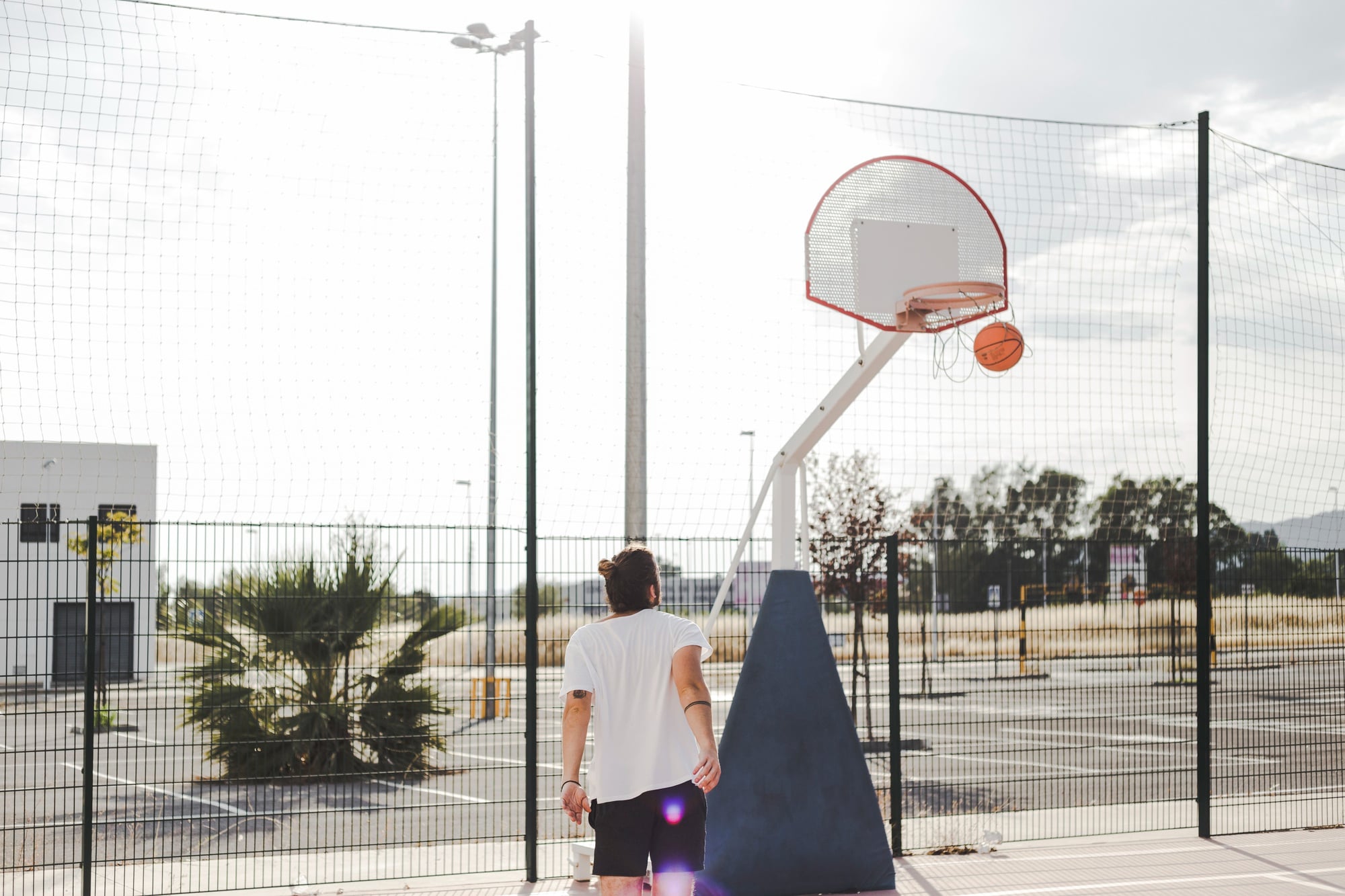
For two summers, Brody mowed lawns to buy that hoop. Mrs. Engebretson’s on Main Street, the Lutheran parsonage, the Kjelstad sisters’ double lot by the water tower, and four or five others when they’d let him. He pushed my old Toro mower up and down Elm and Third and Cedar in the heat with a gas can in a wagon behind him. He charged twelve dollars a yard, eight if they were widows.
He kept the money in a Folgers can on the top shelf of his closet. I know because he showed me, the night he finally had enough. He sat at my kitchen table and counted it out in front of me, ones and fives and a few tens, smoothed flat and stacked by denomination. One hundred eighty dollars exactly, plus four dollars and sixty cents in quarters he didn’t need.
Part Two: The Hoop
We drove to the Menards in Sioux Falls on a Saturday in August, seventy miles each way in my pickup, to pick it out. He looked at every hoop they had. He read the boxes. He asked a young man in a yellow vest about the difference between a polycarbonate backboard and an acrylic one, and the young man didn’t know, so Brody read the box out loud to him.
He chose a Lifetime portable with a forty-four-inch backboard and a base you fill with water or sand. A hundred seventy-nine ninety-nine. He paid for it himself, out of the coffee can, at the register, counting the bills out on the counter while the cashier waited. I stood behind him and didn’t help.
We put it together that afternoon at the end of his mother’s driveway, the two of us, with the instruction sheet weighted down by a rock on the concrete. It took four hours. I didn’t touch a single bolt unless he asked me to. When it was done, he filled the base with the garden hose, adjusted it to ten feet, and stepped back to look at it.
“It’s crooked,” he said.
“It’s not crooked,” I said. “The driveway’s crooked.”
He shot until dark. His mother came home from her shift at nine and found him still out there under the streetlight, shooting free throws in the yellow glow, and she stood at the end of the driveway in her scrubs and cried a little. She told me later it was the first time she’d seen him out of his room on a weekend night since school started.
That hoop stood at the end of Kirsten’s driveway for one month.
Part Three: Vernon
On the last Sunday in September, a rebound came off the rim hard and bounced across the property line into the next driveway, where it hit the tailgate of Vernon Pask’s pickup.
It left a dent. Not big. About the size of a quarter, a shallow dimple in the blue paint just above the bumper. But it was there.
Brody heard it hit. He ran over and looked at it, and his face went white. He went home and stood in his room for a while, Kirsten told me, working himself up to it. Then he went next door and knocked on Vernon’s front door to say he was sorry.
Vernon Pask is sixty-one. He worked thirty years for the county highway department running a road grader, and he took early retirement two years ago, around the time his wife, Linda, left him and moved to Rapid City with a man she’d met at a bowling league. Vernon kept the house on Elm Street, which they’d paid off. Linda kept most everything else.
The one other thing he kept was the pickup. A 2004 Chevrolet Silverado, blue, single cab, with a hundred and ninety thousand miles on it and not a speck of rust. It was the truck he’d bought new the year their son, Tanner, graduated from Harlan High, and it was the truck they’d driven to Denver to move Tanner into his first apartment. Vernon washed it in his driveway every Sunday morning before church, and he waxed it every month.
I understood that. A man who’s lost most of what he had holds on hard to what’s left.
Vernon opened the door when Brody knocked. Brody told him what happened. He said he was sorry. He said he’d pay for it.
Vernon walked out to the driveway in his slippers and looked at the dent for a long time. He ran his thumb over it.
Then he walked back inside and shut the door without a word.
Part Four: Monday
The next day, Monday, with Brody at school and Kirsten working a double at the Good Samaritan nursing home out on the highway, Vernon Pask drained the water out of the base of that hoop with a wet-vac, tipped it onto its wheels, rolled it across the property line, up his own driveway, and into his garage.
Then he locked the garage door.
Mrs. Haugen across the street saw him do it. She told me so at church the following Sunday, very apologetically, as though it had been her fault for not stopping him.
When Brody got off the school bus at three-fifteen and walked up Elm Street, the end of his mother’s driveway was empty. There were two wet circles on the concrete where the base had drained, drying in the sun.
He stood there for a while, I imagine. Then he called me.
I drove over. I didn’t go into Kirsten’s house. I walked straight across the yard to Vernon’s front door and knocked.
He opened it after a long time. He was a big man once, bigger than me, but he’s gone soft around the middle the way retired men do, and his hair’s gone white and thin. He stood in the doorway in a flannel shirt and reading glasses and looked at me.
“Vernon,” I said. “That hoop belongs to a boy.”
He took off his reading glasses and folded them.
“Then the boy,” he said, “should’ve kept it off my truck.”
He shut the door. Not hard. Just firmly, the way you close a door on a salesman.
Part Five: Why I Didn’t
People asked me later why I didn’t call somebody. The sheriff. A lawyer. The pastor. Why I didn’t march back over there and pound on that door until he gave it back, or go to the county and file a complaint. It was theft, plain and simple. Vernon Pask had walked onto my daughter’s property and taken a thirteen-year-old’s hoop and locked it in his garage. Any deputy in Harlan County would have agreed.
I’ll tell you why.
My daughter rents that house on Elm Street from Vernon’s cousin, a man named Duane Pask who lives in Brookings and owns six rental houses around the county. She pays seven hundred a month and Duane’s been fair to her for four years, never raised the rent once, fixed the furnace the same day it quit last January.
If I’d called the sheriff on Vernon over a basketball hoop, the fight wouldn’t have landed on Vernon. It would have landed on Kirsten. Duane would have heard about it by suppertime. Maybe he’d have taken her side. Maybe he wouldn’t. Blood’s thicker than rent checks in a town this size.
And Kirsten didn’t need a war in her own driveway. She works double shifts at the nursing home four days a week, emptying bedpans and turning patients and holding the hands of old folks while they die, and then she comes home and makes Brody’s supper and checks his homework and falls asleep on the couch with the TV on. She’s thirty-six years old, and she’s tired all the way down to the bone.
She didn’t need a feud with the man next door on top of everything else.
So that night, I didn’t call anybody. I sat on my back step with my grandson.
He’d ridden his bike the six blocks over to my place after supper. He didn’t say a word when he came in. He just went out the back door and sat on the concrete step and looked at the yard.
I came out with two cans of root beer and sat down beside him. I didn’t say anything either.
We sat there until the sun went down and the streetlights came on and the crickets started up in the grass. He didn’t cry. I think he’d done that already, on the way over. He just sat there with his elbows on his knees, chewing the drawstring of his hoodie, staring at nothing.
At nine o’clock, I drove him home with his bike in the back of the truck. When I pulled up to Kirsten’s driveway, he looked at the two dry circles on the concrete where his hoop had been.
“It’s okay, Grandpa,” he said. “It was only a hoop.”
That’s when I decided.
Part Six: Concrete
I’m sixty-seven years old. My name is Arne Bjornson. I ran the grain elevator in Harlan for thirty-one years, the big white concrete one by the railroad tracks you can see from fifteen miles out on the prairie. I retired five years ago when the co-op merged with the one in Volga and they didn’t need two managers anymore.
My wife, Marlys, died three years ago this November. Pancreatic cancer. Four months from diagnosis to the funeral. I’ve lived alone in our house on Third Street since then, a white story-and-a-half with a green roof and a big front yard that faces directly across the street onto Harlan Middle School.
I don’t know much about basketball. I played a little in high school, back in 1975, and I was terrible. But I know concrete.
I’ve poured more concrete than most men in South Dakota. Grain bin foundations, loading ramps, truck scales, the floor of the new seed warehouse in 2009. I know what it takes to make a slab that’ll hold through forty years of prairie winters, when the frost goes four feet deep and heaves everything that isn’t anchored below it right up out of the ground.
And I know my front yard sits directly across the street from the middle school, where every kid in Harlan between eleven and fourteen walks past twice a day.
Part Seven: Tuesday
Tuesday morning at six, I went out to the garage and got my post-hole digger, a spade, and a tape measure.
I picked a spot in the front yard about twenty feet back from the sidewalk, on the side away from the driveway, where a basketball wouldn’t go into the street or onto anybody’s car. I measured it twice. Then I started digging.
You have to go down at least four feet for a pole footing in South Dakota. Below the frost line. Anything shallower and the ground will freeze and swell in January and push your footing up out of the ground like a cork, and by March your pole will be leaning like a drunk. I’ve seen it happen to fence posts and mailboxes and every kind of thing.
So I dug four feet. A round hole, eighteen inches across, straight down through the black topsoil and into the yellow clay. It took me all morning. I’m sixty-seven, and my back reminded me of it every time I bent down.
Then I framed the slab. A ten-by-ten square, with two-by-six boards staked on edge and leveled with my four-foot level, the hole for the pole footing right in the middle of the back edge. I laid down four inches of gravel and tamped it. Then I cut and tied a mat of rebar, a grid of half-inch steel bars on twelve-inch centers, the way we did the elevator floors, and set it on little plastic chairs so it would sit in the middle of the slab instead of on the bottom.
The kids across the street started noticing around noon.
Lunch recess at Harlan Middle School is out on the playground on the side facing my house. I looked up from tying rebar and saw a row of faces along the chain-link fence across the street, eleven, twelve, thirteen years old, watching an old man on his knees in his front yard.
One of them called out across the street. “What are you building, mister?”
“A basketball court,” I said.
The kid stared at me. Then he turned around and said something to the others, and three more came over to the fence.
Part Eight: The Pour
I called the ready-mix plant in Brookings on Tuesday afternoon and ordered a short load. Two and a half yards of four-thousand-PSI concrete, with fiber reinforcement and air entrainment for freeze-thaw. The dispatcher was a woman named Shirley who’d taken my orders for twenty years when I ran the elevator.
“Arne Bjornson,” she said. “I thought you retired.”
“I did,” I said. “This one’s personal.”
The truck came Wednesday morning at eight o’clock sharp. A big white mixer, drum turning, backing up over my curb onto the grass. The driver was a young man named Cody whose father had hauled grain for me in the nineties.
The kids were coming up the sidewalk on the way to school. They stopped. By the time Cody swung the chute around over my forms, there were thirty of them lined up along my front fence and across the street at the school’s fence, backpacks on, watching the concrete come down the chute in a gray river.
I filled the footing hole first, all four feet of it, and set the anchor bolts while it was still wet. Four three-quarter-inch J-bolts in a square pattern, held in place by a plywood template I’d cut the night before to match the base plate of the new pole. I checked them with the level three times. If those bolts aren’t plumb and square, the pole won’t stand straight, and there’s no fixing it once the concrete sets.
Then I filled the slab. Cody poured, and I raked it out and pulled it level with a long two-by-four, screeding it back and forth across the top of the forms. Then I went over it with a bull float, the long-handled kind, sweeping it back and forth, pushing the gravel down and bringing the cream up to the surface. Then I got down on my knees on a kneeling board and went over the whole thing with my hand float and my steel trowel, smoothing it out until it shone.
At 8:20, the school bell rang across the street. Most of the kids ran for the doors.
Brody didn’t. He was standing at my front fence in his hoodie and his backpack, watching me on my knees on the wet slab with my trowel. He’d stopped on his way to school. He hadn’t said anything. He’d just watched.
“You’re going to be late,” I said.
“I know,” he said. He didn’t move.
“Go,” I said. “It’ll still be here after school.”
He looked at the slab for another long moment. Then he went.
Part Nine: Curing
Then we waited.
People don’t understand about concrete. They think it dries. It doesn’t dry. It cures. It’s a chemical reaction, the cement and the water binding together, and it takes time. If you rush it, if you let it dry out too fast in the wind or the sun, it’ll crack. If you put weight on it too soon, it’ll crumble.
You have to keep it wet. You have to keep it covered. And you have to wait.
I covered the slab with plastic sheeting and weighted the edges with bricks. Every morning and every evening, I pulled back the plastic and sprayed the surface down with a garden hose, then covered it again.
Three days. That’s what I told Brody. Three days before we could bolt up the pole. Seven before it was really strong. Twenty-eight before it reached its full strength.
Brody checked it every morning before first bell.
He’d come by on his bike at 7:45 on his way to school. He’d lift the corner of the plastic and press one finger to the edge of the concrete, very gently, the way you’d touch a sleeping baby.
“Now?” he’d ask.
“Not yet,” I’d say.
He’d nod and put the plastic back carefully, and go across the street to school.
On Wednesday after school, he came back. He sat on my front step with his math homework and watched the slab like it was going to do something.
On Thursday, he brought two boys from his class. Tyler Kjelstad and Isaiah Mbeki. Isaiah’s family moved to Harlan from Minneapolis two years ago so his father could work at the turkey processing plant. They sat on my front step with Brody and looked at the plastic sheeting and talked about the NBA.
On Friday, there were five of them.
Part Ten: The Pole
Saturday afternoon was sunny and still. One of those perfect South Dakota days at the end of September, when the cottonwoods are just turning yellow and the sky is so blue and so big it makes your chest hurt.
I’d driven back to the Menards in Sioux Falls on Thursday by myself. I’d bought a new hoop. Not a portable this time, but an in-ground system. A Spalding with a four-inch square steel pole, a fifty-four-inch tempered glass backboard, black and white, and a breakaway rim. It was six hundred and forty dollars, plus the anchor kit. I paid for it with a check from Marlys’s and my savings account. I didn’t tell anybody how much.
At one o’clock, Brody and I set the pole.
It took a borrowed engine hoist from my neighbor Lars, the two of us, and an hour of sweating and swearing. Lars came over to help too. Seventy-four years old with a bad hip and a lot of opinions. We lifted the pole upright and lowered its base plate down over the four anchor bolts, which came up through the holes perfectly, every one. I’ll admit I let out a breath I’d been holding since Wednesday morning.
We put on the nuts and the washers. We checked it with the level. Plumb, both directions. We tightened it down. Then we bolted on the backboard and the rim and the black-and-white net.
When it was done, I knelt down at the edge of the slab with my trowel to clean up where the forms had come off, scraping away the little ridges of concrete along the edge and smoothing the corners. My knees were killing me. I didn’t care.
Brody stood on the slab with a basketball. My basketball, an old Wilson from the garage, a little flat, because his was locked in Vernon Pask’s garage along with his hoop.
He looked up at the rim. Ten feet. Black and white backboard against the blue sky. The middle school across the street, with its brick walls and its flagpole.
He took his first shot.
It hit the front of the rim. Rolled around it once. Twice. I watched it go around, and I swear my heart stopped.
Then it dropped through.
He didn’t holler. He didn’t jump or pump his fist or do any of the things boys do on television. He just stood there on the new concrete and looked over at me, kneeling at the edge of the slab with my trowel in my hand.
He didn’t say anything. He didn’t have to.
Then he went and got the ball and shot again.
Part Eleven: Monday at 7:45
On Monday morning at 7:45, he was out there before school.
I heard the ball before I was out of bed. Thump. Thump. Clang. I looked out the front window in my bathrobe and there he was, in his hoodie and his backpack, shooting free throws on my slab in the cold early light, with frost still on the grass.
I made coffee. I took it out to the front step and sat down and watched him.
At 8:00, a pickup came down our street.
Blue Chevrolet Silverado. 2004. Not a speck of rust.
Vernon’s.
He slowed down in front of my yard. Not much. Just enough. I watched him through his windshield, looking over at the slab, the pole, the black-and-white backboard, the boy in the hoodie shooting free throws.
He didn’t wave. I didn’t either.
Then he drove on toward Main Street.
He did it every morning that week. Same time, eight o’clock sharp, on his way to the Cenex station on Main where the retired men drink coffee every morning at the counter. He’d always taken Elm Street to Main. Now he was going two blocks out of his way to come down Third.
He slowed down every single time. He never stopped. He never waved.
Part Twelve: The Coach
On Tuesday morning, Brody’s basketball coach stopped on his way into school.
Mr. Haldorson. Twenty-eight years old, first year teaching at Harlan, a skinny, earnest young man from Mitchell who coaches seventh- and eighth-grade boys’ basketball and teaches social studies. He parked his Subaru in the school lot, saw Brody shooting across the street, and walked over.
“Morning, Brody,” he said, coming up the walk with his travel mug. “Mind if I rebound?”
Brody stared at him. Then he shook his head. No, he didn’t mind.
Mr. Haldorson set his coffee mug on my front step next to mine, nodded at me, and stood under the hoop catching rebounds and passing them back to Brody for fifteen minutes. He made Brody shoot ten free throws in a row. Then he corrected his elbow. Then ten more.
At 8:15, he picked up his coffee mug and went across the street to school.
“Same time tomorrow?” he called over his shoulder.
“Same time tomorrow,” Brody said.
After school, two boys from Brody’s class showed up with their own basketball. Tyler Kjelstad and Isaiah Mbeki again. They didn’t ask. They just walked onto the slab and started shooting.
On Wednesday, there were four boys. On Thursday, there were seven, and two girls from the eighth-grade team who wanted to play H-O-R-S-E and beat every one of the boys.
I sat on my front step every afternoon with a cup of coffee and watched them. Sometimes I brought out a plate of cookies. Marlys’s recipe, oatmeal butterscotch. They disappeared in about ninety seconds.
The front yard was full of kids for the first time since my own daughter was in high school. I didn’t realize how quiet the house had been since Marlys died until it wasn’t anymore.
Part Thirteen: The Note
On Thursday after school, when the other kids had gone home, Brody came inside and sat at my kitchen table with a pencil and a sheet of notebook paper.
He wrote for a long time. He’d write a line, stop, chew his hoodie drawstring, erase something, write it again. He filled most of one side of the page.
Then he folded it in thirds. And he took a twenty-dollar bill out of the pocket of his jeans, a crumpled one, and folded it inside the note.
“What’s that for?” I asked.
He looked up at me.
“The dent,” he said.
“Brody,” I said. “That twenty dollars is the last of your mowing money. I know it is.”
“I know,” he said.
“You don’t owe him anything. He took your hoop.”
Brody thought about it, the way he thinks about everything, very seriously, chewing his drawstring.
“I dented his truck, Grandpa,” he said finally. “That’s still true. Even if he took my hoop.” He looked at the folded paper. “Two wrongs don’t make it go away.”
I didn’t argue with him. I’m not sure I could have, even if I’d wanted to.
He tucked it under Vernon’s windshield wiper on his walk home that evening. I watched from my front step as he rode his bike down Third Street and turned onto Elm.
He never told me what the note said. I never asked.
And Vernon never said a word about it. Not on Friday, when he slowed down in front of my yard at 8:00 sharp and didn’t wave.
Not that whole week.
Part Fourteen: Saturday
Then Saturday came.
It was the first Saturday in October, cold and bright, with a wind out of the northwest that rattled the cottonwood leaves down onto my front yard and across the new slab. Brody came over at nine. We went out to shoot.
He was shooting free throws. I was rebounding for him. I’m not much of a rebounder at sixty-seven with my knees, but I can stand under a hoop and catch a ball if it comes to me, and I can bounce it back.
He’d made eleven in a row. His elbow was in, the way Mr. Haldorson showed him. His feet were set. He was concentrating so hard he’d stopped chewing his drawstring.
At a quarter to ten, Vernon’s pickup came down Third Street.
It wasn’t eight o’clock. It wasn’t a weekday. He wasn’t going to the Cenex for coffee.
He slowed down in front of my yard, the way he’d done every morning that week. But this time, he didn’t drive on.
He pulled up at my curb and stopped.
Brody froze at the free throw line with the ball in his hands. I stood under the hoop.
We watched Vernon Pask turn off the engine. We watched him sit there behind the wheel for a long moment, looking straight ahead through the windshield. Then he opened his door and got out.
He was wearing his good Carhartt jacket and work gloves. He didn’t look at us. He walked around the back of the truck, slowly, the way a man walks when his knees hurt.
He reached the tailgate. The one with the dent the size of a quarter, just above the bumper.
He dropped it.
Part Fifteen: The Tailgate
In the bed of the truck, lying on its side on a moving blanket, was Brody’s hoop.
The Lifetime portable. The forty-four-inch backboard. The base was empty and the net was tangled, but there wasn’t a scratch on it. Vernon had wrapped the backboard in an old wool blanket so it wouldn’t get scuffed on the ride over.
Beside it, in a cardboard box, was Brody’s own basketball. And a bag of sand, the fifty-pound kind from the lumberyard.
Brody didn’t move. He stood at the free throw line, holding my old flat Wilson, staring at the bed of that truck.
Vernon stood at the tailgate with his hands in his jacket pockets. He wasn’t looking at Brody. He was looking at the dent.
“I read your note,” he said.
His voice was rough, like he hadn’t used it much that week.
Part Sixteen: What the Note Said
Vernon reached into the inside pocket of his Carhartt jacket. He took out a folded piece of notebook paper. The note. And the twenty-dollar bill, still folded inside it.
He held it up.
“I’m not keeping your money, son,” he said. He set the twenty on the tailgate. “But I’m keeping this.”
He held up the note.
Brody didn’t say anything. His face had gone red.
Vernon unfolded the note. He looked at it. Then, without asking anybody, he read part of it out loud, standing at the back of his pickup at my curb on Third Street on a cold Saturday morning, in front of a thirteen-year-old boy and an old man in a stocking cap.
“Mr. Pask. I’m sorry about the dent. I know it doesn’t fix it. My grandpa told me that truck is the one thing you kept after your divorce, and that you wash it every Sunday. I didn’t know that when I was shooting. I should have been more careful.”
Vernon stopped. He cleared his throat. He kept going.
“My dad left when I was four. He took his truck. I used to stand at the window and wait for it to come back. It never did. So I think I know a little bit what it’s like to want one thing to stay the way it was.”
“Here’s twenty dollars. It’s all I have left from mowing. I’ll pay you the rest when I mow next summer. I don’t want my hoop back if it means you’re mad at my mom. She works really hard. — Brody Bjornson”
Vernon folded the note back up. He put it in his jacket pocket. His hand stayed there on it for a moment.
I looked at my grandson. He was staring at the concrete.
I hadn’t known about the window. Kirsten had never told me. My grandson had stood at a window waiting for a truck that never came, and he’d never said a word about it to me in nine years.
Part Seventeen: Tanner
Vernon was quiet for a long time. The wind gusted down Third Street and rattled the cottonwood leaves across the slab.
“I’ve got a boy,” he said finally. “Tanner. He’s thirty-four. Lives in Denver. Works for an airline.”
He wasn’t looking at either of us. He was looking at the dent.
“I bought this truck the year he graduated,” he said. “I drove him to Denver in it. Moved all his stuff into his apartment in the back. Fourteen hours each way.” He ran his thumb along the edge of the tailgate. “He hasn’t been home in six years. Calls on Christmas. Sends a card on my birthday. That’s it.”
He was quiet again.
“He used to shoot hoops in our driveway,” Vernon said. “When he was your age. I had a hoop on the garage. Every day after school, he’d be out there. And every day, I’d come home from the county shop and yell at him for leaving the ball in the driveway where I had to park.”
He shook his head slowly.
“I took the hoop down when he was fifteen,” Vernon said. “Because he left the ball out one too many times. I took it down and put it in the garage and told him he could have it back when he learned some respect.” He looked up at the black-and-white backboard on my pole, against the blue sky. “He never asked for it back. He just stopped playing.”
“After Linda left,” he said, “I had that house and this truck. That’s all. I’d wash the truck on Sunday mornings and I’d think about driving it to Denver. Fourteen hours. Just showing up. Saying something.” His voice cracked. “I never did.”
He looked at Brody.
“And then that ball hit my truck,” he said, “and I saw that dent, and something in me just…” He stopped. “I took your hoop the same way I took Tanner’s. Because I was mad, and it was the only thing I could take.”
He reached into the truck bed and put his hand on the backboard of Brody’s hoop, on the wool blanket he’d wrapped it in.
“I had it in my garage all week,” he said. “Next to Tanner’s old hoop. It’s still in there. Twenty years. I never got rid of it.” He shook his head. “Every morning I drove past this yard and saw you out here shooting. With your coach, and your friends, and your grandpa. And I thought, that’s what I took from my own boy. That’s what I put in the garage.”
Part Eighteen: Below the Frost Line
Brody finally moved. He walked off the slab, across the yard, down to the curb, and stopped at the tailgate beside Vernon Pask. He looked at his hoop in the bed of the truck, wrapped in the wool blanket.
Then he looked at the dent.
“It’s still there,” he said. “The dent.”
“Yeah,” Vernon said. “It is.”
“Are you going to get it fixed?”
Vernon looked at the dent for a long time. Then he did something I didn’t expect. He almost smiled.
“No,” he said. “I think I’ll leave it.”
Brody looked up at him, confused.
“Your grandpa poured a slab four feet deep,” Vernon said, nodding at my yard. “Below the frost line. Lars Engebretson told me about it at the Cenex. Said Arne Bjornson dug that hole by hand and set those anchor bolts like he was building a grain bin.” He looked over at me. “Said he did it so it’d still be standing when you’re forty.”
He looked back down at Brody.
“I’ve been driving around this town for six years,” Vernon said, “trying to keep everything the way it was. My truck. My house. Not a scratch on anything.” He put his gloved hand flat on the tailgate, right over the dent. “And there’s nothing underneath any of it. Nothing below the frost line. I just kept it shiny.”
He tapped the dent with one finger.
“I’m going to leave this right where it is,” he said. “So I remember.”
Brody didn’t say anything. He looked at the dent. Then he looked at Vernon.
“Mr. Pask,” he said. “Do you want to shoot?”
Vernon stared at him.
“I haven’t shot a basketball in thirty years,” he said.
“That’s okay,” Brody said. “My grandpa’s terrible too.”
Part Nineteen: Three Men on a Slab
So Vernon Pask took off his good Carhartt jacket and laid it on the tailgate of his blue Chevy pickup. He walked up my front yard in his work boots and his flannel shirt, onto the ten-by-ten slab of four-thousand-PSI concrete I’d poured on Wednesday, under the black-and-white backboard.
Brody handed him my old flat Wilson.
Vernon held it in both hands for a long moment, turning it over. Then he squared up at the free throw line, bent his knees, and shot.
It missed. Badly. It hit the side of the backboard and bounced off into Marlys’s old flower bed.
Brody burst out laughing. So did I. And after a second, so did Vernon. A big, rusty laugh, like something that hadn’t been opened in a long time.
We shot until noon, the three of us. A thirteen-year-old boy, a retired grain elevator manager, and a retired road grader operator, on a slab in a front yard across the street from Harlan Middle School, in the bright cold October sun.
Vernon wasn’t any good. Neither was I. Brody spent most of the morning teaching us. Elbow in. Bend your knees. Follow through like you’re reaching into a cookie jar on a high shelf. Mr. Haldorson’s words, coming out of my grandson’s mouth.
By eleven-thirty, Vernon made three in a row. He stood there under the hoop after the third one went in, breathing hard, his face red from the cold, looking up at the net.
“Tanner used to say that,” he said quietly. “The cookie jar thing. His coach told him that.”
Part Twenty: The Driveway
That afternoon, we put Brody’s hoop back up at the end of Kirsten’s driveway on Elm Street. Vernon carried the bag of sand from his truck. I poured. Brody held the funnel. We filled the base to the top so it’d never tip over in a prairie wind.
Then Vernon did something else. He went into his garage and came out pushing his big rolling toolbox. He got down on his hands and knees on Kirsten’s driveway and adjusted the hoop’s base and backboard, so the rim faced slightly away from his driveway. Toward the street instead. Toward the empty lot on the other side, where a stray rebound would land in the grass.
“There,” he said, standing up with a grunt. “Now you can’t hit my truck if you try.”
Then he walked over and opened his own garage door. He backed his blue Silverado out of the driveway and pulled it into the garage. He closed the door.
“I’ll park it in here from now on,” he said. “Should’ve been doing that anyway. Linda always said so.”
Kirsten came home from her double at the nursing home at 9:30 that night. She found Brody at the end of the driveway, shooting free throws under the streetlight, with his hoop back where it belonged.
And beside him, in a lawn chair at the edge of the driveway with a cup of coffee, was Vernon Pask. Rebounding.
She stood at the end of the driveway in her scrubs. Then she called me.
“Dad,” she said. “What did you do?”
“I poured some concrete,” I said.
Part Twenty-One: Winter
It snowed the second week of November, eight inches overnight. The first big storm of the winter, coming down out of North Dakota on a wind that drifted it four feet deep against the north side of every house in Harlan.
I got up at six to shovel the slab. By the time I got my boots on and came out the front door, somebody had already cleared it. Down to the bare concrete, swept clean, with the snow piled neatly along the edges. The walk to my front step was cleared too, and the sidewalk along Third Street, all the way to the corner.
There were tire tracks in my driveway. A snowblower’s.
Vernon Pask has a big Ariens two-stage snowblower, the kind with headlights. I heard it once in December at five-thirty in the morning, coming down Third Street in the dark.
He never mentioned it. I never thanked him. But every time it snowed that winter, my slab was clear by six.
The kids shot all winter. Not every day. Some days it was ten below with a wind chill of thirty-five below, and even thirteen-year-old boys know better. But on the days when the sun came out and the temperature got up into the twenties, they’d be out there after school in their winter coats and stocking caps and mittens with the fingers cut off, shooting.
I kept a thermos of hot chocolate on the front step. And a plate of Marlys’s oatmeal butterscotch cookies, which I’d learned to bake from her old recipe card.
Part Twenty-Two: Christmas
Two days before Christmas, a car I didn’t recognize pulled up in front of Vernon’s house on Elm Street. A silver rental car with Colorado plates.
Kirsten called me. “Dad,” she said. “I think Vernon’s son is here.”
I found out later what happened.
In November, Vernon had driven to Denver. Fourteen hours, by himself, in his blue Silverado, with the dent the size of a quarter on the tailgate. He didn’t call first. He just showed up at Tanner’s apartment on a Tuesday evening and knocked on the door.
Tanner opened it. He stood there in the doorway staring at his father.
Vernon didn’t say much. He told me later he’d practiced it the whole fourteen hours and still couldn’t get it right. He just said, “I’m sorry I took your hoop down.” And then he cried, standing in the hallway of an apartment building in Denver in his Carhartt jacket.
They talked until three in the morning. Vernon stayed two days.
Tanner came home for Christmas.
On Christmas Eve, at two in the afternoon, I was in my kitchen making a batch of lefse when I heard a sound out front.
Thump. Thump. Clang.
I looked out the window.
Vernon was standing on my slab in his Carhartt jacket and stocking cap. Beside him was a tall man in his thirties in a Denver Broncos jacket, with Vernon’s jaw and Vernon’s big shoulders. And Brody, in his hoodie and his winter coat, holding a basketball.
Brody was showing Tanner something. His elbow. Elbow in. Bend your knees.
Tanner laughed. He took the ball. He squared up. And he shot.
It went in. Nothing but net.
Vernon stood under the hoop and watched his son’s shot drop through, and then he looked over toward my front window. He saw me standing there with flour on my hands.
He lifted one gloved hand and waved.
I waved back.
Part Twenty-Three: The Truck
In the spring, Vernon came by my house on a Sunday morning in April. He’d just washed the truck. He did it in his own driveway now, the way he always had, but he did it on Saturday afternoons instead of Sunday mornings, so he could go to church with Brody and Kirsten and me.
He was holding something. A small square of paper. He held it out.
It was a photograph. Him and Tanner and Brody on my slab on Christmas Eve, in front of the black-and-white backboard. Kirsten had taken it on her phone and printed it out at the Walgreens in Brookings.
On the back, Vernon had written something in pencil, in his blocky road-crew handwriting.
Below the frost line.
“I’m putting a copy in the glove box,” he said. “Next to the registration.”
The dent’s still there on the tailgate of his blue 2004 Silverado. The size of a quarter, just above the bumper. He’s had a dozen people at the Cenex tell him they know a guy in Brookings who could pop it out for fifty bucks.
He always says no.
“That dent,” he tells them, “is the best thing that ever happened to this truck.”
They think he’s crazy. He doesn’t care.
Part Twenty-Four: Twenty-Eight Days
Brody’s fourteen now. He made the eighth-grade A team this winter. He’s still terrible at defense, and Mr. Haldorson says he dribbles like he’s chasing a chicken. But he’s the best free-throw shooter on the team. Eighty-one percent. His elbow’s always in.
He mows lawns again this summer. Mrs. Engebretson’s, the parsonage, the Kjelstad sisters. And Vernon Pask’s. Vernon insisted on paying him twelve dollars, even though he’s not a widow.
Brody gave Vernon back the twenty dollars. Vernon tried to give it back. They’ve been passing it back and forth for six months now, sneaking it into each other’s coat pockets, under each other’s windshield wipers, into the mailbox. Last I heard, it was taped inside the lid of Vernon’s toolbox.
The slab is still out there in my front yard across the street from Harlan Middle School, with the pole and the black-and-white backboard. Kids come after school almost every day. Sometimes twenty of them. I keep the cookies coming.
People ask me sometimes why I went to all that trouble. A four-foot footing, rebar, four-thousand-PSI concrete, anchor bolts, a six-hundred-and-forty-dollar hoop, for a thirteen-year-old whose hoop got taken.
They say I should have just called the sheriff. Gotten the hoop back the easy way, in an afternoon.
Here’s what I tell them.
Concrete takes twenty-eight days to reach its full strength. You can’t rush it. You pour it, and you cover it, and you keep it wet, and you wait. You check it every morning, and every morning, the answer is not yet.
Most things that last are like that. You can’t make them strong by being angry. You can’t make them strong by taking things away from people, or by locking things in a garage, or by keeping everything shiny on the outside. You have to dig down below the frost line, where the ground doesn’t heave in the winter. Then you pour something solid, and you set your anchors straight, and you wait for it to cure.
Vernon Pask figured that out. It took him a dented tailgate and a thirteen-year-old’s note and a fourteen-hour drive to Denver, but he figured it out.
Last Saturday morning, Brody was out on the slab at 7:45, shooting free throws before his summer mowing route. I was rebounding, the way I always do.
At eight o’clock sharp, a blue 2004 Chevy Silverado came down Third Street. It slowed down in front of my yard.
This time, it pulled up at the curb and stopped. Vernon got out in his Carhartt jacket with a cup of coffee from the Cenex in each hand. He walked up the yard and handed one to me. Then he set his own on my front step and held out his hands for the ball.
Brody passed it to him.
Vernon squared up at the line. Elbow in. Knees bent. Follow-through like he was reaching for a cookie jar on a high shelf.
It went in.
He didn’t holler. He just looked over at Brody, and then at me, and grinned. Then he went and got the ball and shot again.

Sophia Rivers is an experienced News Content Editor with a sharp eye for detail and a passion for delivering accurate and engaging news stories. At TheArchivists, she specializes in curating, editing, and presenting news content that informs and resonates with a global audience.
Sophia holds a degree in Journalism from the University of Toronto, where she developed her skills in news reporting, media ethics, and digital journalism. Her expertise lies in identifying key stories, crafting compelling narratives, and ensuring journalistic integrity in every piece she edits.
Known for her precision and dedication to the truth, Sophia thrives in the fast-paced world of news editing. At TheArchivists, she focuses on producing high-quality news content that keeps readers informed while maintaining a balanced and insightful perspective.
With a commitment to delivering impactful journalism, Sophia is passionate about bringing clarity to complex issues and amplifying voices that matter. Her work reflects her belief in the power of news to shape conversations and inspire change.