Pallet
Dad was sitting in the cab of my log truck when I came back across the mill yard. He hadn’t gotten out the whole time we were there. He’d told me his knees were bothering him, which I knew wasn’t true, and so he’d stayed up in the passenger seat with the heater running and the window cracked an inch, watching the grading deck through the windshield. I think he wanted to see it happen without anybody seeing his face while he watched.
He had the check in both hands. He was holding it the way you’d hold a letter from the hospital, by the edges, like it might burn him. When I climbed up into the driver’s seat, he didn’t look at me. He just held it out so I could see.
Six hundred dollars. Lindholm Lumber Company, Hemlock Run, Pennsylvania. Pay to the order of Arvid Lindholm. And on the memo line, in my cousin’s blocky handwriting, a single word. Pallet.
My cousin Lyle runs the sawmill in town. It’s been in our family since 1961, when his father, my uncle Walt, bought an old circle saw and a used steam engine and set up in a pole barn by the railroad tracks on the north end of Hemlock Run. For forty years, Walt sawed oak and maple and cherry off every farm and woodlot in McKean County, and he graded every log he bought as honestly as a priest hears confession. When he died nine years ago, Lyle took over.
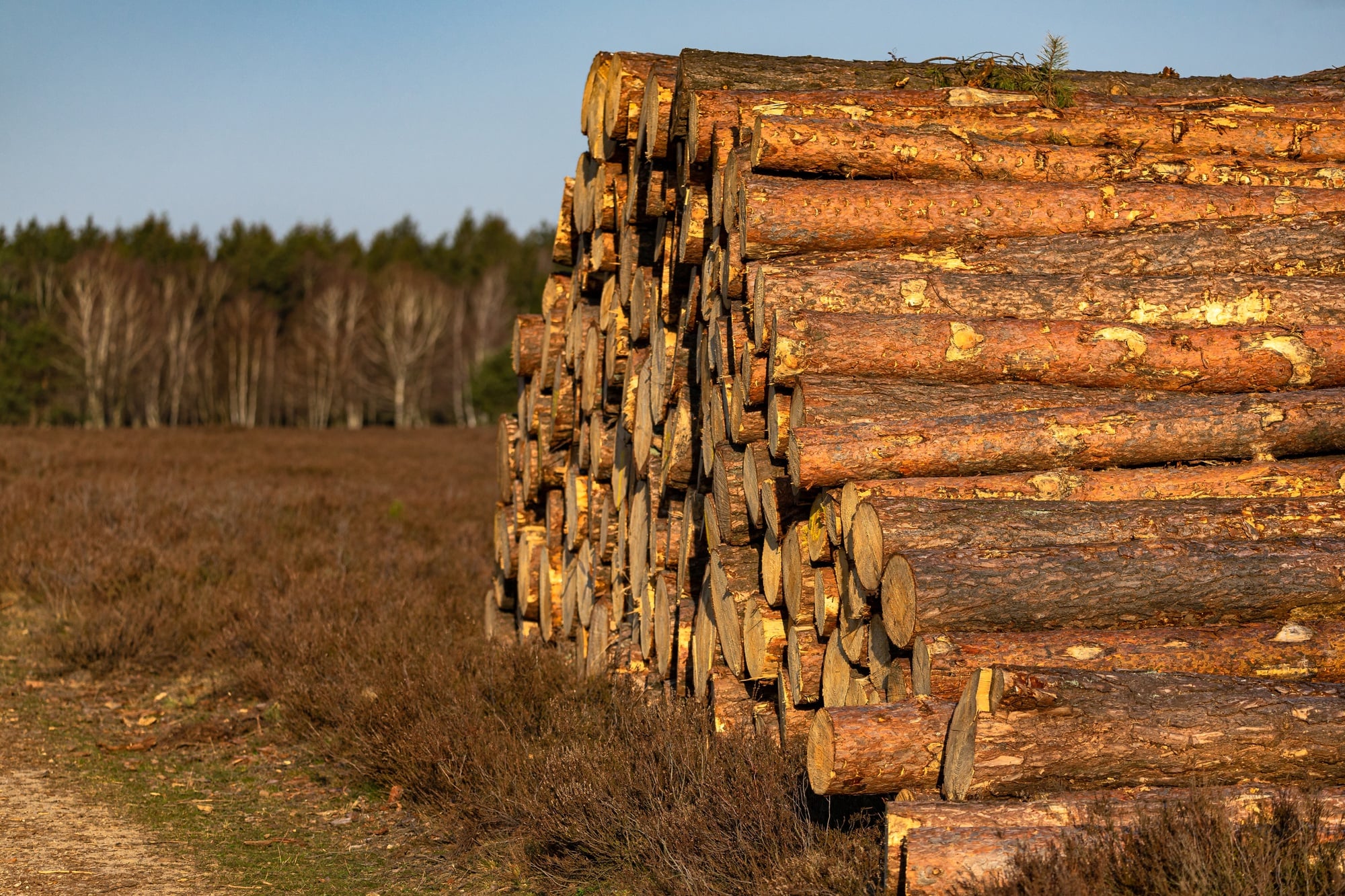
That morning, Lyle’s yard man had rolled our twenty-two logs off my trailer onto the grading deck. He laid them out in a long row on the steel skids, butt to top, the way they always do. Big black cherry logs, twelve and fourteen feet long, sixteen to twenty-two inches across at the small end, with that dark, scaly bark that looks like burnt potato chips. My father had cut every one of them off the hill behind his barn.
Then Lyle came out of the office in his Carhartt jacket and his reading glasses and walked down the row with his lumber crayon. A thick yellow crayon, the kind every log grader in Pennsylvania carries in his shirt pocket. He stopped at the first log, looked at the butt end for about three seconds, and wrote a P on it in big yellow letters.
Pallet.
He walked to the second log and did the same thing. Pallet. Then the third. Pallet. Pallet. Pallet.
Every single one.
Pallet grade is the bottom. It’s the wood that goes to the pallet mill in Bradford to get chopped into rough boards for shipping skids. It’s for logs that are crooked, or rotten, or full of knots and metal and bird peck. It pays almost nothing. And I stood there by my truck and watched my cousin walk down a row of the finest black cherry I’d seen in twenty-six years of hauling logs, and mark every one of them as junk.
You don’t argue a sawmill grade with words. Every logger in the north woods knows that. The grader stands on his deck with his crayon, and you stand on the ground, and whatever you say, he’s the one who decides. If you argue, he just shrugs and tells you to take them somewhere else. You don’t win a grade fight by talking.
You take the logs to a man who will saw them open in front of you.
So I didn’t argue.
Chapter Two: The Hill
Back in August, Lyle walked the hill behind Dad’s barn.
He came out on a Saturday afternoon in his pickup, which he hadn’t done in years, and sat at Mom’s kitchen table and drank her coffee and ate two pieces of her rhubarb pie, and then he asked Dad if he could take a look at the cherry. Dad said sure. They walked up the hill together, the two of them, my eighty-year-old father in his green seed cap with his walking stick, and my cousin in his reading glasses with a clipboard. They were gone two hours.
When they came back down, Lyle offered four thousand dollars for those trees standing. That means Lyle’s crew would come out with their skidder and their saws and cut the trees themselves and haul them away, and Dad would never have to lift a finger. Four thousand dollars, cash, for twenty-some cherry trees on four acres of hillside.
Dad turned him down. He thanked him and told him it was a fair offer. Then he said he’d cut them himself.
“Uncle Arvid,” Lyle said. “You’re eighty years old.”
“I know how old I am,” Dad said. “I was there.”
He cut them himself. All of October, on that steep slope behind the barn, with the old Stihl chainsaw he bought in 1986 and the little Ford tractor with the log chains. One tree a day. Sometimes two, if the weather was good. Mason went up and helped him on Saturdays and after his shift at the Walmart distribution center, but most days it was just Dad, up there alone on that hill in his plaid coat, cutting and limbing and skidding the logs down to the barn lot.
Mom watched him from the kitchen window every single day. She told me later she kept the phone in her apron pocket the whole month of October, in case she had to call the ambulance.
He’d watched those cherries grow since he was a boy. His father, my grandfather Nils, came over from Sweden in 1922 and bought that farm in 1938, a hundred and twenty acres of rocky ground and second-growth woods. The hill behind the barn was cut over the year before they bought it, and the cherries came up in the slash. Dad was born in 1945. He told me once that his earliest memory was walking up that hill holding his father’s hand, and his father stopping beside a little cherry sapling about as tall as Dad was, and saying in his heavy Swedish accent, “That one’s for your old age, Arvid.”
Eighty years later, those cherries were the tallest trees on the farm. Straight as telephone poles, sixty feet to the first limb, with smooth dark trunks you could hardly reach around. Dad watched them every spring when they bloomed white, and every fall when the leaves went yellow, and every winter when the snow sat on their branches. He used to say he’d never cut them. That they’d outlive him.
Then Mom needed her teeth.
She’s seventy-eight. She’d been putting it off for three years. The dentist in Bradford said she needed four implants, and a bridge, and two crowns, and that if she waited any longer she’d lose the rest of them. Eleven thousand four hundred dollars. Their Medicare Advantage plan covered fifteen hundred a year for dental. The rest, they’d have to find.
Dad didn’t tell anybody how they’d pay for it. He just walked up the hill on the first of October with his chainsaw. The money was for Mom’s dental work, and a little something for the grandkids.
I know the mill has been behind on its payments since spring. Everybody in Hemlock Run knows it. Hardwood prices fell through the floor last year when the furniture plants down south started buying cheaper wood from overseas, and Lyle had borrowed heavy to put in a new band saw and a kiln in 2022. I’d heard at the diner that the bank had sent him a letter.
That’s a reason. It isn’t a reason to do it to your own uncle.
Chapter Three: Twenty-Two Logs
I left Dad in the truck. I walked back across the mill yard to the grading deck, where Lyle was standing with his crayon, writing numbers on a clipboard.
He looked up when he saw me coming. He didn’t look surprised. He looked tired.
“Pete,” he said.
“Lyle.”
He held out the clipboard so I could see it. Twenty-two logs, four thousand three hundred board feet by the Doyle scale. Pallet grade. Fourteen cents a foot. Six hundred and two dollars, rounded down to six hundred.
“We’re not selling at that,” I said.
He shrugged. He didn’t argue. He didn’t even look at the logs.
“Suit yourself,” he said. “Nobody’s buying cherry this fall. You won’t do better anywhere in McKean County.” He tucked the crayon back in his shirt pocket. “You can leave them here and think about it. Or you can haul them home. But the check stands either way. Uncle Arvid already has it.”
I didn’t say anything. I just looked at him. My cousin. We grew up a mile apart. We went to Hemlock Run High School together. He was the best man at my wedding. When my dad had his heart attack in 2015, Lyle sat in the hospital waiting room in Bradford all night long with me.
He couldn’t look me in the eye.
My son Mason was already climbing up to the loader seat.
He’d been standing by the back of my trailer the whole time, with his hands in his pockets and his face getting redder and redder. Mason is nineteen. He’s six foot two and quiet, like his grandfather, and he’s worked on my truck with me since he was twelve years old. He’s run that knuckle boom since he could reach the levers. My truck has a hydraulic log loader mounted behind the cab, a big crane with a grapple on the end, and Mason can pick up a twelve-foot log with it as gently as you’d pick up an egg.
He climbed up into the loader seat. He started the hydraulic pump. And he swung the boom out over the grading deck.
One at a time, he swung all twenty-two logs back onto my trailer.
Every one. The grapple came down and closed on a log, and the boom swung up and over and set it down on my trailer bunks, soft as a feather. Then the next one. Then the next. Twenty-two times. It took him forty minutes.
Lyle’s yard man stood there with his hands in his pockets. A young guy, maybe twenty-five, named Tanner. He watched Mason load every log, and he didn’t say a word. When Mason set the last log down, Tanner took off his cap and nodded at him. Just once. Like a man nodding to another man who’d done something right.
Nobody stopped us.
I chained the load down. Four chains and binders. Mason climbed down off the loader and stood beside me. Lyle had gone back into his office and shut the door.
When I climbed back into the cab, Dad was still holding the check. He looked at it one more time. Then he folded it in half, very carefully, along a straight line, and put it in the inside pocket of his green-and-black plaid coat. He buttoned the pocket.
He never cashed it.
Chapter Four: One Phone Call
We drove home with the logs. Twelve miles, out of Hemlock Run and up Route 321 and onto the gravel road that runs up past Dad’s farm. Nobody in the cab said anything the whole way. Dad looked out the window at the hills going by. Mason sat with his arms crossed. I drove.
When we pulled into the barn lot, Mom was standing on the back porch in her apron, waiting. She saw the logs still on the trailer. She saw Dad’s face. She didn’t ask a single question. She just turned around and went back in the house and put the coffee on.
We sat at her kitchen table, the four of us, with the coffee and the rest of the rhubarb pie. Dad took the folded check out of his coat pocket and set it on the table in front of him. Mom looked at it. She read the memo line. Pallet.
“Lyle,” she said quietly. Just his name.
“It’s not his fault, Ingrid,” Dad said. “The mill’s in trouble.”
“I don’t care if the mill’s on fire,” Mom said. “Those are your father’s cherries.”
That afternoon I made one phone call.
I’d been hauling logs for twenty-six years. I’ve hauled for every sawmill from Olean to DuBois, and I’ve hauled to some places most people in Hemlock Run don’t even know exist. One of them is a farm sixty miles south of us, through the hills, outside a little town called Smicksburg in Indiana County. A big Amish settlement. There’s a man there who runs a sawmill on his farm, and I’d hauled him a few loads of oak over the years for a log buyer in Punxsutawney.
Levi Yoder runs a sawmill on his farm, sixty miles south through the hills.
He doesn’t have a telephone in his house. The Amish don’t. But there’s a phone shanty at the end of his lane, a little wooden booth with a phone in it that half a dozen Amish families share. I called it at three o’clock, and let it ring twenty times, and finally a young woman answered in a soft Pennsylvania Dutch accent and said she’d go fetch Levi from the barn.
It took eleven minutes. Then I heard heavy boots on the wooden floor of the shanty, and a deep, slow voice.
“This is Levi.”
I told him who I was. He remembered me. I told him about the cherry. Twenty-two logs, black cherry, off a north-facing hill in McKean County, cut by an eighty-year-old man who’d watched them grow since he was a boy. I told him about Lyle and the crayon. Pallet, pallet, pallet. Six hundred dollars.
Levi didn’t say anything for a long time. I could hear wind blowing through the cracks of the phone shanty.
“How big?” he asked finally.
“Sixteen to twenty-two inches at the small end. Twelve and fourteen foot.”
“North slope?”
“North slope. Old field. Came up in the slash in 1937.”
He was quiet again.
“Bring them Saturday morning,” Levi said. “And bring your father.”
Chapter Five: South Through the Hills
We left at first light.
It was the first Saturday in November, cold and clear, with frost on the windshield and the stars still out in the west when we pulled out of Dad’s barn lot. Mason drove his own pickup behind us, because we’d need two vehicles to get Dad home if anything happened. Mom packed us a cooler with ham sandwiches and a thermos of coffee and a whole rhubarb pie wrapped in a dish towel. She made Dad wear his long underwear and his good wool socks.
Dad rode in the middle of the seat of my log truck. He insisted on it. Mason had offered to drive him down in the pickup, where he’d be warmer and more comfortable, but Dad said no. He said those were his logs on that trailer, and he was riding with them.
We went south on Route 219, through Kane and Ridgway and Brockway, sixty miles of two-lane road winding through the Allegheny hills. It’s the most beautiful country in Pennsylvania in November. The leaves were all down, and the hills were brown and gray and bare, with the dark green of hemlocks in the hollows and the white of the birches on the ridgetops. The creeks were running high and cold. The sky got bluer and bluer as the sun came up.
He hummed the hymn Mom plays on Sunday mornings most of the way down.
Mom plays the piano. She’s played it every Sunday morning of my life, on the old upright Baldwin in their front room, before they go to church at Mount Zion Lutheran. And every Sunday she starts with the same hymn. “Children of the Heavenly Father.” It’s an old Swedish hymn. My grandmother Hanna used to sing it to Dad in Swedish when he was a baby, and Mom learned it on the piano for him the first year they were married.
Dad hummed it from Kane to Ridgway. Then he was quiet for a while. Then, somewhere south of Brockway, he started talking.
“My father planted the first one,” he said. “Did I ever tell you that?”
I looked over at him. “I thought they came up wild. In the slash.”
“Most of them did,” he said. “But the big one at the top of the hill, by the stone wall, he planted it. The spring I was born. From a seed he brought from his mother’s farm in Småland, in his coat pocket, in 1922.” Dad looked out the window. “He said in Sweden, when a son is born, you plant a tree. For his old age.”
I didn’t say anything. I was looking at the road.
“That’s the first log on your trailer,” Dad said. “The big one. Twenty-two inches. Lyle wrote pallet on it.”
Chapter Six: Levi’s Mill
Levi’s mill is an open-sided wooden shed with sawdust all over the ground.
We found it at the end of a long gravel lane off a back road outside Smicksburg, past a white farmhouse with a gray buggy parked beside it and a team of big Belgian draft horses standing in a pasture with their breath steaming. No power lines out there. Not a single pole along the whole lane. A diesel engine turns the saw.
The mill sits in a clearing at the edge of a woodlot, a long pole building with a metal roof and no walls, just posts. Inside is the sawmill itself, a big circular saw blade five feet across, with a steel carriage that runs back and forth on a track to carry the log into the blade. A green Detroit Diesel engine sits at one end, connected to the saw by a long flat belt. Everything is covered in sawdust. Mountains of it, piled up outside the shed, gold and red and white.
Bare wooded hills all around it. A bright, cold morning. No snow yet. The sun was just clearing the ridge to the east when we pulled in, and the frost on the sawdust piles was turning to steam.
Levi was standing by the carriage waiting for us. He’s about sixty, big and broad, with a long gray beard and no mustache, the way the Amish men wear them. He had on a black felt hat and a dark blue shirt and black suspenders and a black wool coat, and his hands were the biggest hands I’ve ever seen, thick and scarred and gentle.
Two of his sons were there too, young men in their twenties with the same beard and the same hat. They stood back by the lumber stacks and didn’t say anything.
Levi walked the length of my trailer and looked at every log.
He walked slowly. He stopped at each log and looked at the butt end, and then he walked down the side of it and looked at the bark, and then he looked at the other end. He put his big hand flat on the bark of some of them and ran it along. He knelt down and looked at the end of the big one, the twenty-two-incher, for a long time. He rubbed his thumb across the yellow P that Lyle had written on it in crayon.
He didn’t say a word. Not one word the whole length of that trailer.
Dad got down out of the truck slowly. Mason helped him. He stood in the sawdust in his green-and-black plaid coat and his faded green seed cap, leaning on his walking stick, and watched Levi look at his logs.
When Levi got to the end of the trailer, he turned around and looked at Dad. Then he nodded once, at Mason, toward the loader on my truck.
Mason climbed up and started the pump and unloaded all twenty-two logs onto Levi’s log deck, beside the carriage, one at a time.
Then Levi rolled the first one onto the carriage and started the saw.
He picked the big one. The twenty-two-incher from the top of the hill. My grandfather’s tree. He and his sons rolled it onto the carriage with cant hooks and dogged it down with the steel clamps. Then Levi walked over to the diesel engine and started it, and it coughed and roared and settled into a heavy, steady rumble, and the big circular saw started to spin, faster and faster, until it was just a silver blur with a high singing hum.
Levi stood at the lever. He pulled it. The carriage moved forward, slowly, carrying the log into the blade.
The bark slabs came off first. The rough outside of the log, with the bark still on it, curling off and falling onto the rollers. Levi turned the log a quarter turn with his cant hook and took another slab off. And another. And another. Squaring it up.
Then the first board.
The saw went through the log with a long, rising scream, and a board peeled off and fell onto the rollers, and the sawdust sprayed out in a red cloud.
Red. Clean. Not a knot in it.
Black cherry, when it’s fresh-sawn, is the color of salmon. Pinkish red, with a fine, straight grain as smooth as silk. As it ages, it darkens into a deep reddish brown, the color of a good violin. This board was fourteen feet long and eleven inches wide, and there wasn’t a single knot in it from one end to the other. Not a pin knot, not a worm hole, not a streak of gum. It was perfect.
Levi’s son pulled it off the rollers and carried it to a stack beside the shed and laid it down.
Dad walked over in his green-and-black plaid coat and stood by the stack.
He walked slowly through the sawdust, leaning on his stick. He stood there and looked down at that board. He laid one hand flat on the top board and looked down at it for a long time. Just his hand. Flat on the wood. The way you’d put your hand on the head of a sleeping child.
I watched his shoulders. They were shaking.
Chapter Seven: The Count
Mason kept carrying boards over in his leather gloves.
Levi didn’t stop sawing, and Mason didn’t stop carrying. He’d catch each board as it came off the rollers and carry it to the stack beside his grandfather and lay it down, carefully, edges lined up, the way Levi’s son showed him. Board after board. Some of them were sixteen inches wide. Some of them were twenty. All of them were red and clean.
I stood a step behind my father and kept my mouth shut.
That’s the hardest thing I’ve ever done. Standing there in that sawdust, watching my eighty-year-old father stand beside a stack of perfect cherry boards with his hand on them, and not saying anything. I wanted to say we told you so. I wanted to say Lyle’s a crook. I wanted to call my cousin right then and tell him to come down here and look at what he called pallet.
I didn’t. It wasn’t my moment. It was Dad’s.
Levi sawed straight through the morning.
All twenty-two logs. He didn’t stop for lunch. He didn’t stop for water. His sons took turns at the lever while he walked the carriage and turned the logs, and Mason carried, and the stack beside my father grew and grew. By noon it was waist high. By one o’clock it was as tall as Dad’s shoulders.
There were a few knots. A little gum. Some heart checks in the middle of the bigger logs, the way old trees get. Levi sawed around them. He put those boards on a different pile. But most of what came off that saw was clear. The best of it was what they call FAS in the hardwood business. Firsts and seconds. The top grade. The kind of cherry that goes into fine furniture and kitchen cabinets and church altars and violin backs.
When the last log was done, Levi shut down the diesel. The saw spun down and the silence came in like water. You could hear the wind in the bare trees. You could hear the Belgians stamping their feet in the pasture by the farmhouse.
Then he pulled a pencil and a little notebook out of his shirt pocket.
A little spiral notebook, the kind you buy at the dime store, with a pencil stub tucked into the wire. He walked over to the stack where Dad was standing. He went down the stack, board by board, counting under his breath.
He measured every board with a wooden tally stick, a long flat ruler with numbers burned into it. Width and length. He’d lay the stick across a board and read it and say a number in Pennsylvania Dutch under his breath and write it in his little book. Then the next board. Then the next. It took him forty-five minutes. He did the clear boards on one pile and the common boards on the other pile.
Dad took off his faded green seed cap and held it against his chest.
He stood there in the cold beside his stack of cherry with his white hair blowing in the wind, holding his cap over his heart, the way he holds it in church when they sing the doxology. He didn’t say anything. He just watched Levi count.
Levi closed the notebook and walked over to him.
“Arvid,” he said. “I will tell you what I can pay.”
Chapter Eight: What Levi Said
Levi stood in front of my father in the sawdust. They were almost the same height. Two old men, one in a black felt hat and one with a seed cap held against his chest.
“You have four thousand six hundred board feet,” Levi said slowly. “Of that, three thousand one hundred is firsts and seconds. Clear. The best cherry I have sawn in ten years.” He tapped the little notebook against his palm. “The rest is number one common. Good wood. A few knots.”
Dad didn’t say anything.
“There is a cabinet shop in Lancaster that buys all the clear cherry I can saw,” Levi said. “They pay me well for it. Three dollars and forty cents a foot, green.” He opened the notebook again and looked at it. “For the clear, I can pay you two dollars and eighty cents a foot. For the common, one dollar and forty. That is what I would pay any man.”
He did the arithmetic out loud, right there, in his slow, careful voice. Three thousand one hundred feet at two eighty. Fifteen hundred feet at one forty.
“Ten thousand, nine hundred and eighty dollars,” Levi said.
Nobody said anything. The wind blew sawdust across the clearing.
Dad stood there with his cap against his chest. His face didn’t change at all. I watched him take it in. Ten thousand nine hundred and eighty dollars. Instead of six hundred. Instead of four thousand.
Mason took off his leather gloves and stood there holding them.
“Levi,” Dad said finally. His voice was rough. “That’s more than the trees were worth standing.”
“The trees were worth what they were worth,” Levi said. “Standing is one price. Sawn is another. You cut them. You skidded them. Your son hauled them. My saw opened them.” He looked at the stack. “Now everybody can see what they are.”
He closed the notebook.
“I will pay you by check,” he said. “From the Farmers and Merchants Bank in Marion Center. Or I will pay in cash, if you want. Today.”
Then he did something I didn’t expect. He looked at the stack of clear boards for a long time. The perfect red boards, piled taller than Dad. And he looked back at my father.
“But Arvid,” he said. “I think you should not sell all of it.”
Dad looked at him.
“The big log,” Levi said. “The first one. The one with the yellow mark on the end.” He walked over to the stack and put his hand on a pile of the widest boards, twenty inches wide, fourteen feet long, the reddest of all. “This came from that log. Seven boards. I have never in my life seen boards like these. Not in forty years of sawing.”
“That’s my father’s tree,” Dad said quietly. “He planted it the spring I was born.”
Levi nodded slowly. Like he wasn’t surprised.
“Then I think,” Levi said, “a man should keep his father’s tree. And make something of it. With his own hands.” He took his hand off the boards. “Take those seven boards home, Arvid. I will pay you for the rest. Ninety-four hundred dollars. And I will put those seven boards in my kiln and dry them for you. No charge. Six weeks. Then your son can come get them.”
Dad didn’t answer for a long time.
When he finally spoke, it wasn’t about the money. It was about the crayon.
“Levi,” he said. “My nephew graded these logs pallet. All twenty-two. His father was my brother. His father graded logs for forty years, and I never once heard a man in McKean County say Walt Lindholm cheated him.”
Levi was quiet.
“Why would he do that?” Dad asked. “To his own uncle.”
Levi looked at the stack of red boards for a long time. Then he took off his black felt hat and held it in his hands.
“A man in trouble,” he said, “sometimes thinks the people closest to him are the ones who will forgive him. So he takes from them first.” He put his hat back on. “Cherry does not lie, Arvid. You can lie about a log standing. You can lie about a log on the deck with a crayon. But when you open it on the saw, it shows you what it is. Every time.”
He looked at Dad.
“Your nephew knew what these logs were,” he said gently. “He walked your hill in August. He offered four thousand for them standing. That was an honest offer. Maybe a little low.” He shook his head. “Then in November, the same logs, he writes pallet. Something happened to him between August and November. Not to the trees.”
Chapter Nine: Home
Levi paid Dad in cash. Ninety-four hundred dollars in a brown paper envelope, counted out on the hood of my truck by one of his sons. Dad tried to tell him a check was fine. Levi said a man who carried an uncashed check in his coat pocket for a week deserved cash.
We drove home through the hills in the late afternoon, with the sun going down orange behind the ridges and an empty trailer rattling behind us. Dad sat in the middle of the seat with the envelope in his coat pocket, right next to the folded check from Lyle.
He didn’t hum this time. He just looked out the window.
Somewhere north of Brockway, he finally spoke.
“Your mother can get her teeth,” he said quietly. “All of them. The good ones.”
“Yes, Dad.”
“And the grandkids. Your two and Karin’s three. Two hundred dollars each for Christmas. I promised them in September.” He was quiet for a minute. “And I want to put something away for Mason. For his schooling. He wants to go to Penn State DuBois. For forestry.”
I looked over at him. I didn’t know Mason wanted to go to college. Mason had never told me.
“He told me in October,” Dad said. “Up on the hill. Cutting the big cherry. He said he wants to learn to manage woods. So nobody can ever cheat his grandfather on a log again.” Dad almost smiled. “I told him he’d have to learn to grade first.”
When we pulled into the barn lot at dark, Mom was on the back porch in her coat with the porch light on. She’d been waiting. She saw the empty trailer. She saw Dad’s face as Mason helped him down out of the cab.
Dad walked across the yard to her, slow, with his stick. He climbed the porch steps. He took the envelope out of his coat pocket and put it in her hands.
She looked inside. She looked up at him.
“Arvid,” she said. “What did you do?”
“I let a man saw them open,” Dad said. “That’s all.”
Mom started crying. Right there on the porch. She put her arms around him and the envelope got crushed between them, and she cried into his plaid coat, and he stood there with his arms around her and his eyes closed.
Mom got her teeth in January. All four implants, the bridge, and both crowns, from Dr. Hensley in Bradford. Eleven thousand four hundred dollars. Their Medicare plan paid fifteen hundred. Dad paid the rest in cash, from the brown paper envelope, at the front desk of the dental office. The receptionist had to count it twice.
Mom smiled at church the next Sunday with her new teeth. She played “Children of the Heavenly Father” on the old Baldwin before they left, and she sang along this time, out loud, in Swedish, the way Dad’s mother used to.
Chapter Ten: Lyle
Lyle came to the farm two weeks before Christmas.
It was snowing. The first real snow of the winter, big wet flakes coming down in the yard light, and I was there because I’d brought Mom a load of firewood. I was stacking it on the back porch when I saw headlights coming up the gravel road. Lyle’s pickup. It pulled into the barn lot and stopped. Nobody got out for a long time.
Then the door opened, and my cousin got out and stood there in the snow in his Carhartt jacket.
He didn’t come to the house. He walked over to the barn, where the stack of cherry slabs and bark from Dad’s October cutting was still piled under a tarp by the barn door. He stood there and looked at the end of one of the slabs, where you could see the red wood under the bark. He stood there for a long time with the snow coming down on his shoulders.
Dad saw him from the kitchen window. He put on his plaid coat and his seed cap and went out the back door and walked across the barn lot to his nephew. I followed, a few steps behind. I didn’t want Dad to be alone.
Lyle heard him coming. He turned around. His face was gray. He looked like he hadn’t slept in a month.
“Uncle Arvid,” he said.
“Lyle,” Dad said.
Lyle reached into his jacket pocket and took out a piece of paper. He held it out. It was a printout of a sale ticket from Levi Yoder’s mill. I don’t know how he got it. Maybe from the cabinet shop in Lancaster. Maybe somebody talked at the diner. Four thousand six hundred board feet. Three thousand one hundred clear.
“I heard,” Lyle said. His voice cracked. “I heard what Levi paid you.”
Dad didn’t say anything.
“The bank’s foreclosing on the mill,” Lyle said. “They sent the letter in September. I’ve got until March. I owe them three hundred and twelve thousand dollars on the band saw and the kiln.” He looked at the ground. “I’ve been grading logs low since August. Not just yours. Everybody’s. Old men, mostly. Farmers who don’t know any better. I’d grade them down, buy them cheap, and sell the lumber high to try to make the payment.” He swallowed. “I told myself it was just this one season. Just till I caught up.”
“And mine,” Dad said quietly.
“And yours.” Lyle’s face crumpled. “I knew those were the best cherry logs I’d seen in ten years. I knew it in August. I walked your hill and I knew. And in November, when Pete brought them in, I’d already cheated so many people that one more didn’t seem to matter.” He wiped his eyes with the back of his glove. “I wrote pallet on my own grandfather’s tree. My dad would’ve…”
He stopped. He couldn’t finish.
Dad stood there in the snow looking at his nephew for a long time.
Then he reached into the inside pocket of his plaid coat, the one he’d buttoned in the cab of my truck at the mill yard six weeks before. He took out the folded check. Six hundred dollars. Lindholm Lumber Company. Pallet.
He held it out to Lyle.
“I never cashed it,” he said.
Lyle stared at the check.
“Your father built that mill on honest grades,” Dad said. “Forty years. I helped him pour the concrete for the first saw pad in 1961. I was sixteen. He told me, Arvid, the only thing a sawmill really sells is a man’s word. The wood’s just what it comes wrapped in.”
Lyle took the check. His hand was shaking.
“You call every man you cheated this fall,” Dad said. “Every one. You go to their houses. You tell them what you did. And you pay them the difference. Whatever it takes.”
“Uncle Arvid, I can’t. I don’t have the money. I’m going to lose the mill.”
“Then lose it honest,” Dad said. “A man can come back from losing a mill. A man doesn’t come back from losing his name.”
Chapter Eleven: Winter
Lyle did it.
He went to every one of them. Eleven farmers, all over McKean and Elk and Potter counties. Old men, mostly, the way he said. He drove to their houses in the snow in January and February and sat at their kitchen tables and told them what he’d done. Some of them threw him out. Some of them cried. One old man in Smethport, who’d sold Lyle a load of red oak for half what it was worth, made him split a cord of firewood on the spot before he’d listen.
He paid back what he could. He sold his own pickup and his hunting camp in Potter County. He paid the rest in installments, a few hundred dollars a month, and he’s still paying.
The bank took the mill in March. They auctioned the band saw and the kiln to a company from West Virginia. The pole barn by the railroad tracks where Walt Lindholm sawed logs for forty years sat empty all spring.
Then in April, Lyle drove sixty miles south through the hills to Smicksburg.
He told me about it later. He sat in the phone shanty at the end of Levi Yoder’s lane and waited an hour for Levi to come in from the fields. Then he stood in the sawdust by Levi’s mill and told him everything. He asked Levi if he needed a man. Not as a grader. As a laborer. Rolling logs. Carrying boards. Anything.
Levi looked at him for a long time.
“Arvid’s nephew,” he said.
“Yes, sir.”
Levi nodded slowly. “Cherry does not lie,” he said. “Neither does a man who drives sixty miles to say he was wrong.” He handed Lyle a pair of leather gloves. “You start Monday. I will teach you to grade again. The honest way.”
Lyle works for Levi now. Three days a week, driving down and back, sixty miles each way. He rolls logs and carries boards and sweeps sawdust. Levi pays him fifteen dollars an hour. Lyle told me it’s the best job he’s ever had.
Dad spent the winter in his workshop.
He went down to Levi’s in January with Mason and brought home the seven boards from his father’s tree, kiln dried, smooth and hard and dark red now, the color of a good violin. He laid them on the sawhorses in the workshop at the back of the barn, by the woodstove. And every morning after breakfast, all winter long, he went out there in his plaid coat and worked on them.
He didn’t tell anybody what he was making. Not even Mom. He said she’d see it when it was done.
It took him four months. Hand planes and chisels and a table saw he bought in 1971. Mason came out and helped on Saturdays, learning. I came out sometimes too, and stood by the woodstove and watched my eighty-year-old father fit dovetail joints by hand, slow and careful, the way his father taught him.
In April, he carried it into the house. Mason and I helped him. It was heavy.
It was a piano bench. A long, wide piano bench for Mom’s old Baldwin, with a lid that lifted up to hold her hymnals. Black cherry from his father’s tree, oiled until the grain glowed red and gold like fire. On the inside of the lid, he’d burned something into the wood with a wood-burning tool, in his careful, shaky handwriting.
Planted 1945 by Nils Lindholm for his son’s old age. Cut 2025 by Arvid Lindholm for his wife. Barn Tack ar Gud.
Barn tack är Gud. It’s the first line of the old Swedish hymn. Children of the Heavenly Father.
Mom sat down on it for the first time on Easter Sunday. She ran her hands over the red wood for a long time. Then she opened the Baldwin and played the hymn, and Dad stood behind her in his good suit with his hand on her shoulder, and neither of them said a word.
Chapter Twelve: For Your Old Age
The first warm Saturday in May, Dad asked Mason and me to come up to the farm early.
He was waiting in the barn lot when we got there, at seven in the morning, with his walking stick in one hand and a cardboard box in the other. Inside the box were twenty-two little seedlings, each one about a foot tall, with their roots wrapped in wet newspaper. Black cherry seedlings, from the state nursery in Spring Mills. Two dollars apiece.
“Twenty-two,” Dad said. “One for every log.”
We walked up the hill behind the barn together. The three of us. Slowly, because Dad’s knees aren’t what they were, with Mason carrying the box and me carrying the planting bar. The hill looked different now. Bare and open, with the stumps of the old cherries scattered across it, gray and weathered, and the new grass coming up green all around them. The morning sun came through where the big trees used to be.
We planted them all morning. Mason dug the holes with the planting bar. Dad set the seedlings in, one by one, and pressed the dirt down around them with his boot. I put a little wire cage around each one so the deer wouldn’t eat them.
The last one, Dad carried to the top of the hill himself. To the stone wall, where the biggest stump was. His father’s tree. Twenty-two inches across, with the rings showing in the gray wood. Eighty rings, one for every year of Dad’s life.
He knelt down beside that stump, slowly, with his hand on the stone wall. Mason knelt beside him. And Dad took the last seedling out of the box and held it in both hands, the roots wrapped in wet newspaper.
Then he held it out to Mason.
“You plant this one,” he said.
Mason looked at him.
“My father planted the first one the spring I was born,” Dad said. “For my old age.” He looked at his grandson. “I’m eighty years old, Mason. I’ll never see this tree get big. Neither will your father, probably. But you will.” He pressed the seedling into Mason’s hands. “This one’s for your old age.”
Mason didn’t say anything. He took the seedling. He dug the hole with the planting bar, right beside his great-grandfather’s stump, and he set it in, and he pressed the dirt down around it with his boot the way Dad did. Then he took off his leather gloves and pressed the last of the dirt down with his bare hands.
Dad put his hand on Mason’s shoulder.
“Somebody’s going to come along someday,” Dad said. “Sixty years, seventy, maybe eighty. They’re going to walk this hill and look at these trees and offer you money. Some of them will be honest. Some of them won’t.” He squeezed Mason’s shoulder. “You remember what Levi said. Cherry doesn’t lie. You saw it open. You don’t take anybody’s word for what it is. You take it to a man who’ll saw it open in front of you.”
“Yes, Grandpa,” Mason said quietly.
We sat on the stone wall at the top of the hill for a long time after that, the three of us. Three generations of Lindholm men, in the May sunshine, looking down over twenty-two little cherry seedlings in their wire cages, scattered across the hillside where the big trees used to be.
Down at the farmhouse, through the open front window, we could hear Mom playing the piano. Sitting on a bench made from Nils Lindholm’s tree, playing his mother’s hymn.
Dad hummed along. Then he started to sing, very softly, in Swedish. And after a while, Mason and I didn’t know the words, so we just hummed with him. And the sound went out over the hill and down across the barn lot and the stumps and the seedlings, all the way to the road, where a pickup was just turning into the lane.
It was Lyle. He’d driven up from Levi’s on his day off, with something wrapped in a blanket on the seat beside him. A cherry board. A clear, red, fourteen-foot board, the last one he’d graded himself at Levi’s mill that week, the first log he’d graded honest since August.
He got out of the truck and stood at the bottom of the hill with the board in his arms, looking up at us on the stone wall.
Dad saw him. He stopped singing. He raised his hand and waved.
“Come on up, Lyle,” he called down. “We saved you a seat.”

Adrian Hawthorne is a celebrated author and dedicated archivist who finds inspiration in the hidden stories of the past. Educated at Oxford, he now works at the National Archives, where preserving history fuels his evocative writing. Balancing archival precision with creative storytelling, Adrian founded the Hawthorne Institute of Literary Arts to mentor emerging writers and honor the timeless art of narrative.