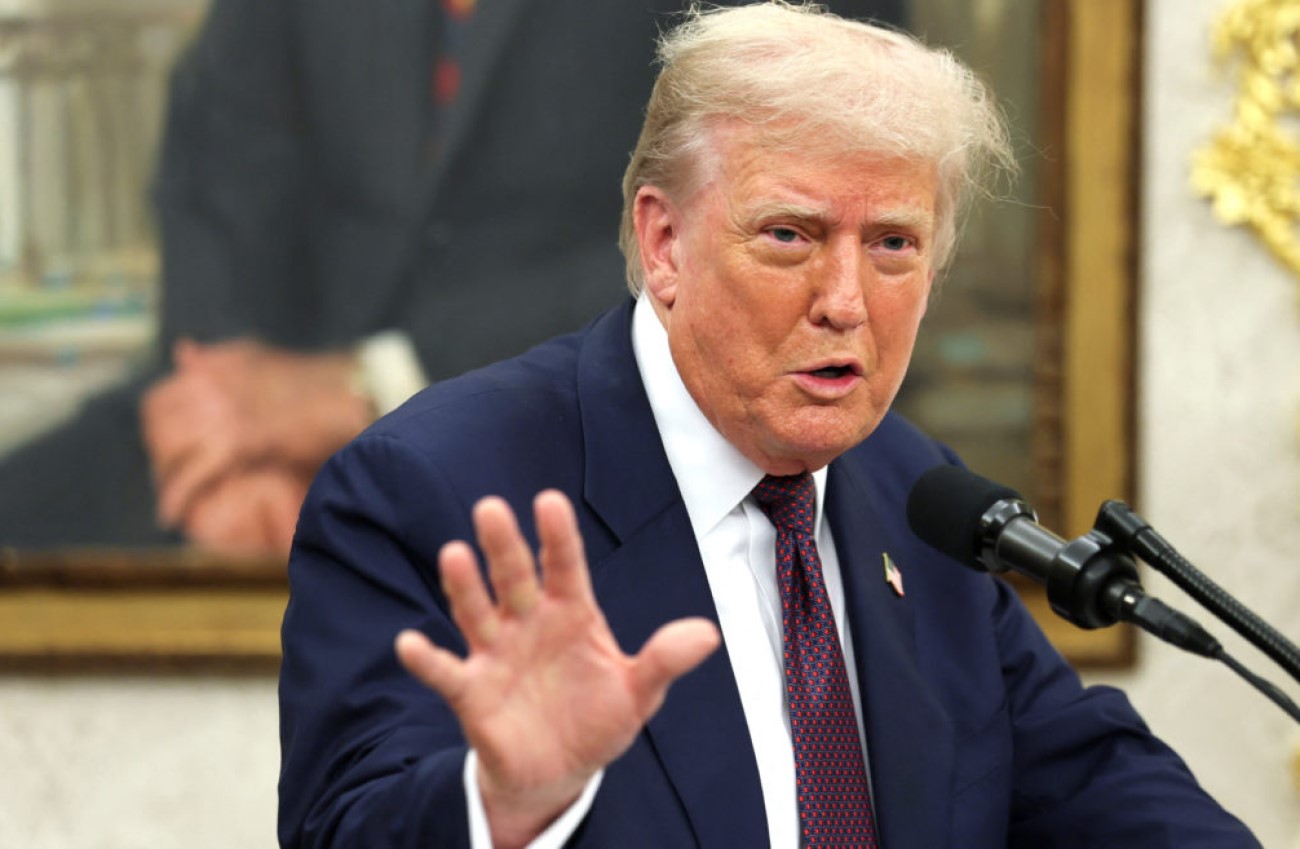
The fundamental task of counting America’s population, a constitutional requirement that has shaped the nation’s democratic representation for over two centuries, has suddenly become the center of an unprecedented political and legal controversy. A recent presidential directive has challenged long-established practices surrounding one of the most basic functions of American government, igniting debates that extend far beyond simple mathematics to touch the very foundations of democratic representation, federal resource allocation, and constitutional interpretation.
This directive represents more than a administrative policy change – it strikes at the heart of how America defines itself as a nation and determines who deserves to be counted in the democratic process. The implications ripple through every aspect of American governance, from congressional representation to federal funding distribution, creating a complex web of consequences that could reshape the political landscape for decades to come.
The Presidential Declaration That Changed Everything
Through his preferred communication platform, Truth Social, President Donald Trump issued a directive that has sent shockwaves through constitutional scholars, demographic experts, and political analysts across the nation. His announcement, characteristically direct and unambiguous, declared his intention to fundamentally alter how America counts its population for the purposes of political representation and resource allocation.
“I have instructed our Department of Commerce to immediately begin work on a new and highly accurate CENSUS based on modern day facts and figures and, importantly, using the results and information gained from the Presidential Election of 2024,” Trump wrote in his social media post. The reference to using information from the 2024 presidential election adds an unprecedented political dimension to what has traditionally been viewed as an objective demographic exercise.
The most controversial aspect of the announcement came in the president’s follow-up statement: “People who are in our Country illegally WILL NOT BE COUNTED IN THE CENSUS. Thank you for your attention to this matter!” This declaration represents a radical departure from more than two centuries of American census practice and constitutional interpretation.
The capitalization of key phrases in the president’s announcement – “WILL NOT BE COUNTED” and “CENSUS” – suggests the deliberate emphasis he places on this policy change, indicating that this is not merely a technical adjustment but a fundamental shift in how America approaches one of its most basic governmental functions.
Historical Context and Constitutional Foundations
The United States Census has been conducted every decade since 1790, fulfilling a constitutional mandate established by the Founding Fathers who recognized that accurate population counting was essential for fair democratic representation. The Constitution requires that representatives be apportioned among the states “according to their respective Numbers,” a phrase that has been interpreted for over two centuries to include all residents, regardless of citizenship status.
This interpretation has deep historical roots. Even during periods of significant anti-immigrant sentiment in American history, the census has consistently counted all residents within U.S. borders. This practice was established not only as a matter of constitutional interpretation but also as a practical recognition that all residents – regardless of their legal status – use public services, contribute to local economies, and impact the communities where they live.
The constitutional language itself is notably broad. The 14th Amendment, ratified in 1868, specifically states that representatives shall be apportioned among the states “according to their respective numbers, counting the whole number of persons in each State.” The use of “persons” rather than “citizens” has been consistently interpreted by courts and census officials to include all residents.
Previous attempts to exclude certain populations from census counts have faced significant legal challenges and have generally been unsuccessful. The Supreme Court has historically taken a broad view of who should be counted, recognizing that the census serves multiple purposes beyond just determining congressional representation, including federal funding allocation and demographic research that informs public policy across numerous domains.
The Mechanics of Modern Census Operations
The United States Census Bureau, operating under the Department of Commerce, has developed sophisticated methodologies over decades to ensure the most accurate count possible of all U.S. residents. This massive undertaking involves thousands of temporary workers, advanced statistical techniques, and extensive community outreach programs designed to reach every corner of American society.
The current census process recognizes the practical challenges of counting undocumented residents, who may be reluctant to participate in government surveys due to fear of deportation or other legal consequences. To address these concerns, the Census Bureau has historically emphasized the confidentiality of census responses and has implemented extensive privacy protections designed to encourage participation from all residents.
The 2020 census calculated the U.S. population to be 331,449,281 people, representing the culmination of years of planning, billions of dollars in expenditure, and the coordinated efforts of tens of thousands of government employees and contractors. Importantly, this count does not distinguish between legal and illegal residents, as the current methodology focuses on physical presence rather than legal status.
According to the Pew Research Center, approximately 11 million undocumented people lived in the United States as of 2022, down from a peak of 12.2 million in 2007. This population is distributed across all 50 states, with significant concentrations in states like California, Texas, Florida, and New York, but with substantial numbers in virtually every American community.
Political Representation and Electoral Consequences
The most immediate and visible impact of excluding undocumented residents from census counts would be felt in the realm of political representation. Census data directly determines how the 435 seats in the U.S. House of Representatives are distributed among the 50 states, a process known as congressional apportionment that occurs after each decennial census.
John Bisognano, president of the National Democratic Redistricting Committee, characterized the proposed change as an attempt to “completely reshape the American electorate,” arguing that the president “wants to make people who voted for him and look like him more representative with more power and a bigger vote share.” This assessment highlights the inherently political nature of the proposed census changes and their potential to alter the balance of political power.
The mathematical impact of such changes would be significant and geographically varied. According to analysis by the Pew Research Center, if only legal U.S. citizens had been counted in the 2020 census for apportionment purposes, California, Florida, and Texas would each have lost one congressional seat and one Electoral College vote. Conversely, Alabama, Minnesota, and Ohio would each have gained one congressional seat.
These shifts would have cascading effects throughout the American political system. States that lose congressional seats also lose Electoral College votes, potentially affecting presidential elections. The redistricting process that follows each census would also be impacted, as state legislatures draw new boundaries for both congressional districts and state legislative districts based on census population counts.
The timing of such changes could be particularly significant given the current closely divided nature of American politics. Even small shifts in congressional representation could alter the balance of power in the House of Representatives, affecting legislative outcomes on numerous policy issues for the entire decade until the next census.
Federal Funding and Resource Allocation
Beyond political representation, census data serves as the foundation for federal funding allocation across hundreds of government programs. The potential fiscal implications of excluding undocumented residents from census counts could be enormous, affecting everything from highway construction to education funding to healthcare programs.
Bisognano warned of “dramatic drops in federal funding to places like Texas and Florida” if undocumented residents were excluded from census counts. This prediction reflects the fact that many federal funding formulas are tied directly to population counts, meaning that states with large undocumented populations could see significant reductions in federal support for various programs.
The irony of this situation is that some states that have supported stricter immigration enforcement might actually be harmed economically by excluding undocumented residents from census counts. Texas and Florida, both states with Republican governors who have generally supported President Trump’s immigration policies, could lose federal funding if their substantial undocumented populations are not counted in future censuses.
The types of federal programs that could be affected span virtually every aspect of government service delivery. Title I education funding for schools serving low-income students, Medicaid reimbursements for healthcare providers, highway construction funds, disaster relief allocations, and community development block grants all rely on census data to determine funding levels.
This creates a complex political dynamic where the fiscal interests of states and local communities may conflict with ideological positions on immigration policy. Local officials who support strict immigration enforcement may nonetheless recognize that excluding undocumented residents from census counts could harm their communities’ access to federal resources.
Legal and Constitutional Challenges
The proposed census changes face significant legal obstacles that could prevent their implementation or lead to protracted court battles that might not be resolved for years. Constitutional scholars and legal experts have raised numerous questions about the legality of excluding any residents from census counts for apportionment purposes.
The Supreme Court has not definitively ruled on whether states can exclude undocumented residents from census counts for congressional apportionment, but lower federal courts have generally interpreted the Constitution’s language broadly to include all residents. The phrase “counting the whole number of persons” in the 14th Amendment has been consistently interpreted to mean exactly that – all persons, regardless of citizenship status.
Previous legal challenges to efforts to modify census counting practices have generally been unsuccessful. During the Trump administration’s first term, attempts to add a citizenship question to the 2020 census faced extensive litigation and were ultimately blocked by the Supreme Court, which found that the administration had not provided adequate justification for the change.
The legal complexity is compounded by the fact that the Constitution mandates a census every ten years, but does not specify the exact methodology to be used. This has traditionally given the executive branch significant discretion in how the census is conducted, but constitutional requirements for fair representation may limit that discretion when it comes to fundamental questions about who should be counted.
Any legal challenges to census changes would likely take years to resolve, potentially creating uncertainty about congressional representation and federal funding allocation that could persist well beyond the implementation of any new counting methodologies. The Supreme Court might ultimately need to resolve these questions, but such a process could take several years to complete.
Technical and Practical Implementation Challenges
Beyond legal obstacles, the proposed census changes would face enormous practical and technical challenges that could make implementation extremely difficult or impossible within traditional census timelines. The complexity of accurately identifying and excluding undocumented residents from census counts presents logistical problems that the Census Bureau has never previously attempted to solve.
Current census methodology does not collect information about legal status, and adding such questions could dramatically reduce response rates among immigrant communities, potentially making the overall census less accurate rather than more accurate. Undocumented residents might simply refuse to participate in a census that explicitly seeks to identify their legal status, creating significant undercounts that could affect the accuracy of the entire enumeration process.
The cost implications of modifying census procedures could be substantial. As one critic noted, “a census costs ten billion dollars,” and implementing new methodologies to identify and exclude undocumented residents could significantly increase these costs. The Census Bureau would need to develop new questions, train thousands of workers on new procedures, and implement verification processes that do not currently exist.
The timeline for implementing such changes is also problematic. The next constitutionally mandated census is scheduled for 2030, and the planning process for that census has already begun based on current methodologies. Implementing fundamental changes to census procedures typically requires years of testing, community outreach, and procedural development that may not be possible within the remaining timeline.
One Reddit user noted the practical challenges: “The logistics on this takes years and even then has to go through congress to approve. They are just going to fudge the numbers then send it off to congress where even Republicans won’t touch this.” This assessment highlights both the technical complexity and the potential political challenges of implementing such changes.
Public Response and Political Polarization
The announcement has generated intense public debate that reflects the broader political polarization surrounding immigration issues in American politics. Responses have varied dramatically based on political affiliation and perspectives on immigration policy, with supporters and critics offering fundamentally different interpretations of both the desirability and feasibility of the proposed changes.
Critics have been particularly vocal in their opposition. One professional who uses census data extensively described the announcement as “infuriating and sickening,” reflecting concerns about the potential impact on research, policy development, and program administration that relies on accurate demographic information. The emotional intensity of such responses reflects the recognition that census changes could have far-reaching consequences beyond immigration policy.
Some members of the public have indicated potential non-cooperation with modified census procedures. “I’m not opening my door to a census worker,” declared one critic, suggesting that the proposed changes could generate broader resistance to census participation that could undermine the accuracy of the entire enumeration process.
However, the proposal has also found support among those who view it as a necessary reform to ensure that political representation and federal resources are allocated based on legal residence rather than simple physical presence. “A new census count for now going forward with ONLY US citizens is essential,” wrote one supporter, while another added: “Protecting elections means counting only citizens. This bill strengthens fairness and voter integrity.”
These divergent responses reflect fundamental philosophical differences about the nature of American democracy, the rights of undocumented residents, and the appropriate basis for political representation and resource allocation. Such divisions suggest that any implementation of census changes would occur in a highly charged political environment that could affect both the execution and the acceptance of results.
Historical Precedents and Comparative Analysis
The United States is not the only democracy to grapple with questions about who should be counted for political representation purposes, and examining international experiences provides context for understanding the potential implications of different approaches. Some countries do limit political representation based on citizenship status, while others, like the United States, have historically counted all residents.
However, changing long-established practices can have unintended consequences that extend beyond the immediate policy goals. Historical examples of census modifications in other countries have sometimes resulted in increased political tensions, reduced data accuracy, and legal challenges that lasted for years or decades.
The American experience with census controversies provides additional context. Previous attempts to modify census procedures, such as efforts to use statistical sampling techniques or to add citizenship questions, have generally resulted in extensive litigation, political conflict, and, in many cases, ultimate failure to implement the proposed changes.
The stability and consistency of census methodologies have historically been viewed as strengths of the American system, providing reliable baseline data that enables long-term analysis of demographic trends, policy effectiveness, and social change. Dramatic changes to these methodologies could disrupt this continuity and make it more difficult to understand and analyze American demographic patterns.
Economic and Social Implications
The economic implications of census changes extend beyond federal funding allocation to affect numerous aspects of American economic life. Businesses rely on census data for market research, site selection, and strategic planning. Academic researchers use census information to study social trends, economic patterns, and policy outcomes. Non-profit organizations depend on demographic data to identify community needs and design program interventions.
Changes to census methodologies could affect the accuracy and usefulness of data for all these purposes. If significant populations are excluded from official counts, the resulting data may not accurately reflect the communities where businesses operate, researchers study, and organizations provide services.
The social implications are equally significant. Census data influences everything from school district planning to healthcare facility location to transportation infrastructure development. Communities with substantial undocumented populations might find that their infrastructure and service needs are not adequately reflected in official planning documents if residents are systematically excluded from population counts.
The psychological and social impact on affected communities could also be substantial. Being officially excluded from population counts could reinforce feelings of marginalization and exclusion among undocumented residents, potentially affecting their willingness to engage with government services, report crimes, or participate in community activities.
International Relations and Diplomatic Considerations
The proposed census changes could also have implications for America’s international relationships and its role as a global leader on democratic governance and human rights issues. The United States has historically promoted inclusive democratic practices internationally and has criticized other countries for systematically excluding populations from political representation.
Implementing census changes that exclude undocumented residents could provide ammunition for critics of American democracy and could complicate diplomatic efforts to promote democratic values internationally. Countries that face criticism for their own exclusionary practices might point to American census changes as evidence of hypocrisy or selective application of democratic principles.
The international immigrant rights community would likely view such changes as a significant step backward for human rights protection in the United States, potentially affecting America’s standing in international forums and its ability to provide moral leadership on global migration and refugee issues.
The Path Forward: Legal, Political, and Practical Realities
As the debate over census changes continues, multiple parallel processes will likely unfold simultaneously. Legal challenges are almost certain to be filed in federal courts, beginning what could be years of litigation over the constitutional requirements for census enumeration. Congressional oversight and potential legislative action could also play a role in determining whether and how any changes might be implemented.
The practical timeline for census implementation provides some constraints on when any changes could actually take effect. The 2030 census planning process is already underway, and implementing fundamental methodological changes would require extensive testing and preparation that might not be possible within the remaining timeline.
Political considerations will also play a crucial role. Even if legal obstacles are overcome, implementing census changes would require sustained political support and cooperation from Congress, state governments, and local communities. The controversial nature of the proposal suggests that such cooperation might be difficult to achieve and maintain.
The Trump administration will need to balance its stated policy goals with practical considerations about feasibility, cost, and effectiveness. Successfully implementing census changes would require not only overcoming legal and political obstacles but also developing technically sound methodologies that actually improve rather than diminish the accuracy of population counts.
Conclusion: Democracy at a Crossroads
The controversy over census counting methodology represents more than a technical debate about demographic enumeration – it reflects fundamental tensions about the nature of American democracy, the rights of all residents, and the basis for political representation in an increasingly diverse society. The outcome of this debate will have consequences that extend far beyond immigration policy to affect virtually every aspect of American governance and society.
The competing visions reflected in this controversy touch on core questions about American identity and values. Should political representation and resource allocation be based on all residents of a community, or should they be limited to those with legal status? How should America balance the practical reality of undocumented residence with legal and constitutional requirements? What are the appropriate roles of different branches of government in resolving these fundamental questions?
The resolution of these questions will likely require input from all three branches of government – executive implementation, legislative oversight, and judicial review – as well as extensive public debate and community engagement. The complexity of the issues involved suggests that any resolution will be partial and temporary, subject to ongoing political and legal challenges.
As this controversy continues to unfold, it serves as a reminder of the ongoing evolution of American democracy and the persistent challenges of balancing competing values and interests in a diverse, dynamic society. The census, seemingly one of the most basic and technical functions of government, has become a battleground for some of the most fundamental questions about American democracy and national identity.
The ultimate outcome will reflect not only legal and constitutional considerations but also the political will and social consensus that emerge from this national conversation. In a democracy, such conversations are both inevitable and necessary, even when they are difficult and divisive. The census controversy provides an opportunity for Americans to engage with fundamental questions about their democracy and to shape the direction of their country’s future development.

Lila Hart is a dedicated Digital Archivist and Research Specialist with a keen eye for preserving and curating meaningful content. At TheArchivists, she specializes in organizing and managing digital archives, ensuring that valuable stories and historical moments are accessible for generations to come.
Lila earned her degree in History and Archival Studies from the University of Edinburgh, where she cultivated her passion for documenting the past and preserving cultural heritage. Her expertise lies in combining traditional archival techniques with modern digital tools, allowing her to create comprehensive and engaging collections that resonate with audiences worldwide.
At TheArchivists, Lila is known for her meticulous attention to detail and her ability to uncover hidden gems within extensive archives. Her work is praised for its depth, authenticity, and contribution to the preservation of knowledge in the digital age.
Driven by a commitment to preserving stories that matter, Lila is passionate about exploring the intersection of history and technology. Her goal is to ensure that every piece of content she handles reflects the richness of human experiences and remains a source of inspiration for years to come.