The Empty Ballroom
My name’s Mark. I’m thirty-four years old, and last week was supposed to be one of the proudest nights of my life. Instead, it turned into the kind of memory that sticks to your chest like a stone you can’t swallow, the kind that sits heavy in your throat every time you try to speak about family, about success, about what it means when the people who should celebrate you choose to diminish you instead.
If you had told me five years ago that I’d be running a company worth over one hundred million dollars, I would have laughed—not the joyful kind of laughter, but the bitter, disbelieving sound of someone who’d been beaten down so many times they’d stopped dreaming big. Back then, I was sleeping in a one-bedroom apartment with peeling paint on the walls, where the heat worked only intermittently and the neighbors’ arguments bled through paper-thin walls at all hours. I lived off gas-station sandwiches and instant coffee, the kind that tastes like regret and ambition mixed together, while trying to convince investors that my idea wasn’t a waste of their time.
I built everything from the ground up. No handouts, no shortcuts, no family money cushioning the inevitable falls. Every sleepless night, every failed pitch where I watched potential investors check their phones while I poured my heart out, every line of code I wrote until my eyes burned and my fingers cramped, every difficult firing and desperate rehiring—I carried it myself. The weight of it aged me faster than the years should have, put lines around my eyes that made me look older than thirty-four, gave me a tension in my shoulders that never quite released.
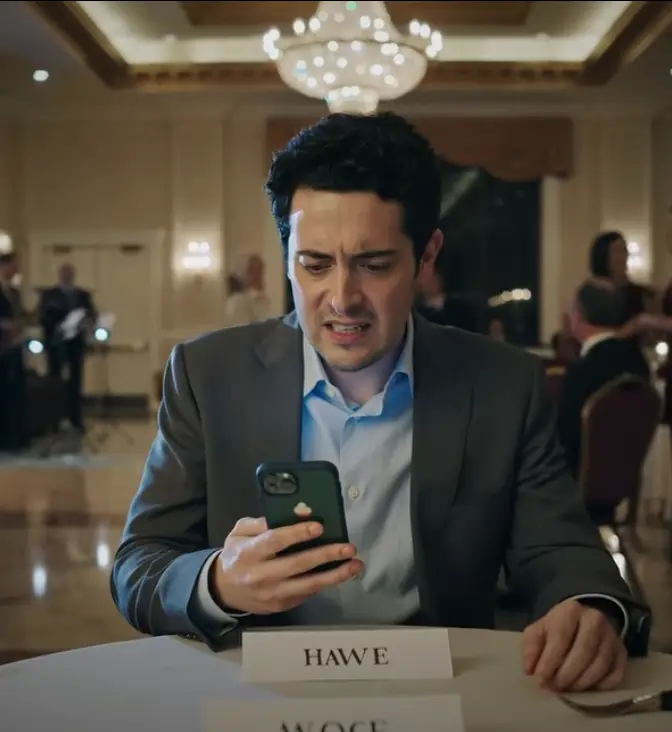
That night, the company had officially crossed the one-hundred-million-dollar valuation mark—a milestone that people dream about, that business magazines write feature stories about, something worth celebrating. I booked a ballroom at the Meridian Hotel, the kind of place with marble columns and crystal chandeliers that I used to walk past as a broke college student, never imagining I’d one day rent the entire space. I spared no expense, ordering champagne that cost more per bottle than I used to make in a week, arranging for a jazz quartet, hiring caterers who prepared food that looked almost too beautiful to eat.
I sent invitations to every family member who had ever claimed they supported me in this journey—my parents, my brother James, aunts and uncles, cousins I’d grown up with. The invitations were printed on heavy cardstock, embossed with gold lettering, because some part of me wanted them to understand that I’d made it, that the kid they’d dismissed had actually done something extraordinary.
That evening, as the chandeliers above cast warm light over the polished marble floors, their glow reflecting off champagne glasses arranged in perfect pyramids, I sat at my table in a tailored suit that suddenly felt too tight around my collar. The fabric was expensive—Italian wool, custom-fitted—but it might as well have been a straitjacket for how constricted I felt. My employees were there, some fifty people who’d believed in the vision when it was barely a sketch on a whiteboard, their faces bright with genuine celebration. Some investors were there too, the ones who’d taken the risk when everyone else had passed, now congratulating themselves on their foresight.
But the table meant for my family—the one I’d positioned prominently near the front, the one where I’d carefully written place cards in my own handwriting because I wanted them to know I’d thought of them personally—remained eerily empty. Eight chairs arranged around pristine white linen, champagne glasses waiting to be filled, untouched appetizers growing cold on plates that no one would ever use.
The Waiting Game
At first, I brushed it off, making excuses in my mind with the desperate optimism of someone who doesn’t want to face an ugly truth. Maybe traffic. The city could be unpredictable, especially on Friday evenings when everyone was trying to escape into the weekend. Maybe they were running late. My father was always particular about his appearance; perhaps he and my mother were still getting ready. Maybe someone got the time wrong, despite the fact that I’d sent the invitations three weeks in advance, followed up with a group text, and even called my mother personally to confirm.
But as the minutes stretched into hours, as the jazz quartet played through their entire first set and started on their second, as my employees kept glancing at the empty table with increasingly awkward expressions, as the caterers began to quietly remove the untouched plates from the family table, I knew with crushing certainty that they weren’t coming.
My mother had texted me earlier in the day, a short message that I’d read over breakfast while trying to calm my nerves about the evening: So proud of you, sweetheart followed by a smiley face emoji that now felt like a lie, like every other empty encouragement she’d offered over the years. And my father, ever the stoic presence who measured his words like a miser counting coins, had said only, We’ll see, which I’d foolishly interpreted as maybe, as a possibility, rather than the dismissal it clearly was.
My younger brother, James, had said nothing in response to the invitation, but he rarely did unless the conversation centered on himself, unless he needed something, unless the attention could somehow be redirected to his latest scheme or failure that required rescue.
By nine o’clock, when the speeches were supposed to begin, when I was meant to stand before the assembled crowd and talk about the journey, about the obstacles overcome and the future we were building together, the truth spilled in through the whispers of a cousin who showed up late. Rebecca was my age, someone I’d been close to as children, before family politics had created invisible walls between us. She arrived in a rush, her face flushed, her eyes avoiding mine in a way that told me she knew something I didn’t want to hear.
“They’re at James’ place,” she said, hesitating, her hand gripping her clutch purse so tightly her knuckles had gone white, as if she hadn’t meant to say it aloud, as if the words had escaped against her better judgment. “Housewarming party. Everyone’s there. I—I came here instead because I thought you should know someone cared.”
The Betrayal
My stomach twisted, a physical sensation of nausea that made the expensive champagne I’d been nursing taste suddenly like poison. James had just bought a house with money that didn’t come from his own pocket, that he’d never worked a day to earn. Money my parents had loaned him—or more accurately, given him, because everyone knew James never paid back his debts. The thirty-two-year-old perpetual adolescent who’d never held a job for more than six months, who’d been fired from positions for showing up late, for poor performance, for attitude problems that he blamed on everyone but himself.
He hadn’t earned that house. He’d never worked a day past five o’clock without complaining. He’d never sacrificed a weekend or stayed up until three in the morning solving problems that seemed insurmountable. He’d never gone without meals to save money for business expenses. He’d never felt the crushing weight of responsibility for other people’s livelihoods.
Yet somehow, his housewarming had taken priority over celebrating what I had poured my soul into for over a decade. More than a decade of grinding, of building, of sacrificing everything that makes life comfortable in the hope of creating something that mattered.
I excused myself from the table, mumbling something to Elena about needing air, and walked to the bar with hands that shook more than I wanted to admit. The bartender, a young woman with kind eyes who’d probably seen plenty of private moments of despair at these events, poured me a whiskey without asking what I wanted. Glass in hand, I stood there staring at the empty seats meant for my family—the place cards I had carefully written with their names in calligraphy I’d practiced for an evening, wanting everything to be perfect.
Mark Harris Sr. my father’s card read, the “Senior” designation he’d insisted on even though I’d never used “Junior,” as if he needed to establish hierarchy even on paper. Susan Harris, my mother’s gentle name that seemed to mock the harsh reality of her choice tonight. James Harris, the golden child whose presence would have stung but whose absence somehow hurt worse, because it confirmed what I’d always suspected—that I wasn’t worth his time.
I had imagined this night so differently. I’d imagined laughing with them, maybe even hearing a rare word of pride from my father, who’d spent my entire childhood pointing out my shortcomings and holding James up as some kind of ideal, despite all evidence to the contrary. I’d imagined my mother beaming, telling her friends about her successful son, finally able to brag without the caveat of concern that usually accompanied any mention of my unconventional career path.
Instead, I was standing alone in a ballroom filled with people who respected me professionally but didn’t know me personally, who would shake my hand and congratulate me and then return to their own lives, while the people who were supposed to know me best, who were supposed to care most deeply, were across town celebrating mediocrity.
The Call
That’s when my phone buzzed against my chest, the vibration startling me badly enough that I nearly dropped my glass. Dad’s name lit up the screen, and for a brief second—God, it’s ridiculous how hope can survive even after being killed a thousand times—I felt a flutter of possibility in my chest.
I thought maybe he was calling to explain, to apologize, to say they’d all been delayed but were on their way, that they’d be arriving late but wanted to see me, that they wouldn’t miss this for the world. The fantasy was so vivid I could almost hear the words before I answered.
I answered quickly, trying to hide the crack in my voice, trying to sound casual and successful rather than devastated and desperate. “Hey, Dad.”
His voice came through, firm and measured, carrying that tone of absolute certainty he’d perfected over decades, the way it always sounded when he wanted to remind me who held the authority in our family dynamic, who made the rules that everyone else was expected to follow. “Mark,” he said, my name in his mouth sounding like a judgment rather than a greeting. “I hope you’re enjoying your little party.”
Little party. The dismissiveness of those words hit me like a physical blow. One hundred million dollars. A decade of work. Fifty employees whose families depended on the company I’d built. And he called it a little party, as if I’d organized a birthday celebration for a child rather than a milestone that most entrepreneurs never achieve.
“Remember this,” he continued, his voice taking on that lecturing quality I’d heard throughout my childhood, during every dinner where I’d tried to share my dreams only to have them dissected and dismissed. “Whatever you build, it still belongs to the family. Don’t forget that. Don’t let success make you forget where you came from, who made you possible.”
I froze, my entire body going rigid as if I’d been struck by lightning. My mind couldn’t wrap itself around the audacity of those words, couldn’t process the cruelty of their timing. Here I was, standing in a room I had paid for with money I earned, celebrating a company I built with nothing but grit and years of sacrifice that had cost me relationships, health, peace of mind, and any semblance of a normal life.
And instead of congratulations, instead of pride, instead of even basic acknowledgment of what I’d accomplished, I got a reminder that in his eyes I was just a tool, an extension of the family brand, a resource to be exploited. My achievements weren’t mine. They belonged to the family, to James, to everyone but me. I was merely the vehicle through which family success had been achieved, not a person with my own identity, my own accomplishments, my own worth.
“Dad, I—” I started, but he’d already hung up, the click of disconnection as dismissive as everything else about the call.
The Revelation
I stood there for a long moment, phone in hand, whiskey in the other, staring at my reflection in the mirror behind the bar. The man looking back at me was successful by any objective measure—tailored suit, expensive watch, the bearing of someone who commanded respect in boardrooms. But his eyes were hollow, haunted by the ghost of a boy who’d never been good enough, who’d spent his entire life chasing approval from people who would never give it.
As I hung up the phone, I looked out across the ballroom where the music had dulled into background noise, where my employees were trying to maintain the celebratory atmosphere despite the obvious elephant in the room. My reflection swam in the glass of my drink, distorted and fragmented, and I realized this wasn’t just about them not showing up tonight.
This was about years of being told I wasn’t enough, years of programming that had convinced me I needed to prove myself, to achieve more, to reach higher, always thinking that the next milestone would be the one that finally earned their recognition. Years of being overshadowed by a younger brother who had been handed everything while I clawed for scraps, who’d been given cars and second chances and unconditional support while I’d been given lectures about responsibility and the importance of not getting “too big for my britches.”
That call wasn’t the first hint of disrespect. It was simply the confirmation of something I had ignored for far too long, something I’d been making excuses for since childhood. The pattern had always been there—I just hadn’t wanted to see it clearly, hadn’t wanted to accept that the family I loved didn’t value me the way I valued them.
And that was the moment I felt something shift inside me—something cold, steady, and unshakable, like metal being forged in fire and then plunged into ice water, emerging harder and more resilient than before. I didn’t know exactly what I was going to do yet, but I knew one thing with absolute certainty: This wasn’t going to be just another night where I swallowed the disappointment and moved on, where I made excuses for them, where I convinced myself that they loved me even if they had a terrible way of showing it.
This time, I was going to remember. I was going to hold onto this feeling, this clarity, this cold understanding of exactly where I stood in their priorities. And this time, I was going to make sure they remembered, too. They’d made a choice tonight, and choices have consequences, even within families. Especially within families.
The Morning After
The next morning, I woke up with a dull ache in my chest that no amount of coffee could wash away, a pain that felt both emotional and physical, as if my body was manifesting the hurt that my mind was trying to process. I sat at my kitchen table in the apartment I’d bought two years ago—a nice place in a good neighborhood, the kind of home I’d dreamed about when I was eating those gas-station sandwiches—staring at the phone on the counter like it was some kind of weapon, like it had the power to hurt me again if I let it.
It felt absurd that such a small device, just glass and metal and circuits, could carry so much weight, so much capacity for pain. But that short call from my dad the night before had left me rattled in a way nothing else had, not even the rejections from investors, not even the near-bankruptcy scares in the early years, not even the moments when I’d wondered if I’d made a terrible mistake throwing away a stable career for an impossible dream.
I didn’t text anyone, didn’t call, didn’t reach out to family members for explanation or apology. I just went about my morning routine on autopilot—shower, coffee, the newspaper I never really read but bought anyway because it felt like something successful people did. I scrolled through emails without really seeing them, sipped bitter coffee that tasted like regret mixed with expensive beans, trying to convince myself to focus on work, on the next deal, on anything but the hollow feeling in my chest.
Then I made the mistake of opening social media.
The first photo appeared in my feed like a slap: my mother and father at what was clearly James’s new house, their arms around him, their faces glowing with pride. My mother looked happier than I’d seen her in years, her smile genuine and unforced, the way I’d always hoped she’d smile at one of my achievements. My father stood tall and proud, chest puffed out, looking like he’d personally built the house with his own hands.
I scrolled further, my stomach knotting tighter with each image. There they were—dozens of photos from James’s housewarming party, posted by relatives I hadn’t spoken to in months, each one a small knife inserted carefully between my ribs. My parents grinning ear to ear in ways they never smiled at my accomplishments. My cousins raising glasses in toasts, their faces flushed with wine and celebration. Aunts and uncles clapping, all crowded around a table where James stood proudly like a king in his castle.
My castle, I thought bitterly, the irony sharp as broken glass. Because without my parents’ money, without their constant bailing him out, without their endless willingness to throw good money after bad in the hope that James would finally become the man they imagined he could be, James wouldn’t have even been able to afford a garage, let alone a whole house. Every dollar in that down payment was money my parents had given him, money they’d never offered me, money they claimed they didn’t have when I’d asked for help with my first business loan.
The Pattern Revealed
And then I saw the kicker, the detail that made everything crystallize with painful clarity. A video posted by my uncle—Dad’s brother, who’d always been particularly close to him, who shared his values and his worldview—showed James giving a speech. I clicked play with trembling fingers, knowing I shouldn’t watch but unable to stop myself, like pressing on a bruise to see if it still hurts.
“This house isn’t just mine,” James said in the video, holding a glass of wine and smiling in that smug way of his, that self-satisfied expression that had annoyed me since we were children. He stood in what appeared to be a newly renovated kitchen, granite countertops gleaming behind him, the kind of finishes that my parents had dismissed as “too extravagant” when I’d renovated my own place. “It belongs to the family. Everything I have, I owe to them. This home is for all of us.”
The room erupted in applause, the sound tinny through my phone’s speaker but emotionally deafening. My mother dabbed her eyes with a napkin, overcome with emotion at her son’s words, at his humility and family-first attitude. My dad stood tall behind James, proud, patting James on the back like he’d just won a Nobel Prize, like he’d accomplished something that actually required effort or skill or sacrifice.
I nearly dropped my phone, my fingers going numb with shock and rage. He had used the exact same words my father had thrown at me the night before: belongs to the family. It wasn’t a coincidence. It wasn’t James independently arriving at the same phrase. My father hadn’t just called me out of nowhere with that line. He’d used it at the party, had probably led the toast with it, had made it the mantra of the evening.
The truth hit me then like a freight train, sudden and unstoppable and devastating: James was the golden child and the rest of the family had circled around him like planets around the sun, drawn by his gravity or perhaps just by the gravity of my parents’ obvious favoritism. And I was just a distant star burning on my own, too far away to be part of their solar system, visible only as a faint point of light that they might glance at occasionally but never really see.
The bitterness wasn’t new. It was a feeling I’d learned to live with, like chronic pain you eventually stop noticing because it’s always there. But that morning, it took root in a different way—sinking deeper into my chest, clawing at my heart, wrapping around my spine. It wasn’t the sharp pain of a fresh wound but the deep ache of an old injury that had never properly healed, that had been aggravated one too many times.
The Accumulated Weight
I replayed all the small moments of favoritism that had stacked up over the years like bricks in a wall, each one individually dismissible but collectively creating a barrier that I’d never been able to breach, no matter how high I climbed, no matter how much I achieved.
James crashing the family car at eighteen, totaling it in a drunk-driving accident that should have landed him in jail but somehow didn’t—Dad bought him a new one within a week. Not a used car, not a cheap replacement, but a brand new vehicle with all the features. Meanwhile, when I’d needed a car for my first job, I’d been told to save up and buy my own, that it would “build character” and “teach responsibility.”
James failing his first two semesters of college with grades so bad he’d been placed on academic probation—Mom convinced a professor she knew to help him out with a fresh start, calling in favors, making appeals, doing whatever it took to keep him enrolled. When I’d struggled in a difficult engineering course, I’d been told to work harder, to figure it out myself, that “the real world doesn’t give second chances.”
James losing job after job, fired from positions that required minimal effort and basic competence—he’s still finding himself, they said with indulgent smiles, as if career instability was a charming personality quirk rather than a pattern of failure. He’s creative, he needs the right fit, they explained to relatives who asked uncomfortable questions. Meanwhile, when I’d left my stable corporate job to start the company, I’d been treated like I was having a mental breakdown, like I was throwing away my future on a childish fantasy.
While James was “finding himself” through his twenties and into his thirties, subsidized by our parents, I worked part-time at three different places just to keep food on my plate and rent paid. I remembered the exhaustion of those years, remembered falling asleep on buses between jobs, remembered eating nothing but ramen and pasta for weeks at a time to save money for the business. No one offered to help. No one suggested I might need support. Because I was “the strong one,” “the responsible one,” the one who didn’t need help because I always figured things out.
The Defining Memory
One memory hit me particularly hard that morning, surfacing from the depths where I’d tried to bury it: years ago, maybe seven or eight, when I told my parents I wanted to start my own business. I remember the silence that followed my announcement, heavy and judgmental, filling the dining room where we sat over Sunday dinner. My mother had stopped eating mid-bite. James had smirked into his napkin, already anticipating my failure.
My dad stared at me across the dinner table for what felt like an eternity, his jaw clenched, his eyes hard with something that looked almost like contempt. “You don’t have the discipline for that,” he’d said flatly, his words falling like stones, each one heavy enough to crush dreams. “Stick with something stable. Leave the big dreams to people who can afford to fail.”
Mom had been quieter, but the look on her face was almost worse—a mix of pity and dismissal, the expression you might give a child who’s announced they want to be an astronaut or a superhero, something sweet but fundamentally impossible. “Honey,” she’d said in that gentle, condescending tone, “maybe you should think about this more carefully. You have a good job. Benefits. Security. Why would you give that up?”
Meanwhile, when James dropped out of college with no plan, no backup, no idea what he wanted to do beyond “maybe traveling for a while to clear my head,” Dad had clapped him on the shoulder with genuine affection. “Don’t worry, son. You’ll find your path. We’re here for you. Take the time you need.”
That pattern hadn’t stopped as we’d gotten older. It had just evolved, morphed into new forms, found new ways to cut. Every loan to James, every bailout, every pat on the back for mediocrity was another cut to me. Every dismissal of my achievements, every minimization of my success, every reminder that family came first—it all reinforced the same message: James mattered. James was valued. James was loved unconditionally. And I was… useful. I was the responsible one. The one who didn’t need support because I was strong enough to stand alone.
And now, even with my company valued at nine figures, even with my name in articles and magazines, even with achievements that should have been undeniable, it still wasn’t enough. They still couldn’t see me. Or worse—they could see me, and they still chose to celebrate James instead.
The Confrontation
A few days later, after stewing in the hurt and anger, after replaying every slight and dismissal in my mind until I’d worn grooves into my thoughts, I went to visit my parents. Part of me hoped I was overthinking it, that there was some reasonable explanation, that maybe they didn’t realize how much it had hurt. Maybe if I just talked to them, explained how I felt, they’d understand. They’d apologize. We could fix this.
But deep down, I knew. Still, I walked into their living room with a practiced smile, the mask I’d learned to wear when interacting with family, the false face that hid the hurt beneath a veneer of casual confidence. Mom was on the couch knitting, something she did when she was avoiding difficult conversations, her needles clicking with mechanical precision. Dad was in his chair with the evening paper, a ritual he’d maintained since before I was born, the newspaper a wall he could hide behind when he didn’t want to engage.
James, of course, was sprawled out on the other sofa, scrolling on his phone like he owned the place, which in some ways he did—he’d never really left home, not emotionally, still depending on our parents for everything from money to validation to basic life decisions.
“You weren’t at the celebration,” I said, sitting down across from them. My voice was steadier than I felt, controlled in a way that took significant effort.
Mom didn’t even look up from her knitting, the needles continuing their rhythmic clicking. “Oh, honey, we wanted to be there, but James had the housewarming, and you know how important that was. He’s been working so hard on making that house a home.”
Working hard. James. The cognitive dissonance was stunning.
“Important?” I asked, almost laughing, the sound harsh in the quiet room. “You think my company hitting one hundred million dollars wasn’t important? You think a decade of work wasn’t worth celebrating?”
Dad lowered his paper slowly, deliberately, peering at me over the top with that look I’d seen a thousand times—the look that said I was being dramatic, unreasonable, making a fuss over nothing. “You’re still young, Mark. There will be other milestones, other achievements. But family comes first.” He nodded toward James with something close to affection. “James needed us. He needed support for this big step.”
I stared at him, my jaw tightening so hard I could feel my teeth grinding. “Support. He’s thirty-two years old and hasn’t held down a job for more than six months in his entire adult life. I built something real. I’ve worked myself to the bone. I’ve sacrificed everything—relationships, health, sleep, any semblance of a normal life. And when I finally had a moment to celebrate something genuinely significant, you chose him.”
James smirked from the couch, finally chiming in with that casual cruelty he’d perfected over the years. “Don’t take it personally, bro. My housewarming was for everyone, you know? It was a family thing. Your little company thing? It’s just business.” He shrugged like it was obvious, like the distinction made perfect sense, like what I had done meant nothing compared to him putting a down payment on a house with money he hadn’t earned.
The Final Straw
Mom clucked her tongue and set her knitting down, her expression pained, as if I was the one causing the problem rather than responding to years of accumulated hurt. “Now, Mark, don’t start an argument. We’re all proud of you, but James is at a stage where he needs encouragement. You know how it is. You’ve always been the strong one. You don’t need us the way he does.”
There it was again—that line I’d heard my whole life, the justification for every instance of favoritism and neglect. You’re the strong one, which translated to: you don’t get help. You don’t get attention. You don’t get the things he gets. You don’t get our time, our presence, our pride, because you can survive on your own. We’ve decided you’re strong enough to be neglected, and we’re comfortable with that decision.
I clenched my fists, my nails digging into my palms hard enough to hurt. “I don’t need your money or your encouragement. I never did. I’ve built everything I have without you. But you could have at least shown up. You could have at least pretended to care about what I’ve accomplished.”
Dad sighed like I was the unreasonable one, like I was a difficult child throwing a tantrum over nothing. “Mark, you need to remember something. Whatever you accomplish, whatever you build, it reflects on this family. Your success is our success. You’re not an island. Don’t start thinking you owe us nothing just because you’ve made some money. We raised you. We made you who you are.”
James laughed under his breath, a sound like breaking glass. “Yeah, man. Don’t get too full of yourself. If it weren’t for how Dad raised us, if it weren’t for the values he instilled, you wouldn’t have made it this far. You should be grateful.”
That was when I felt something inside me snap. It wasn’t loud or explosive, wasn’t the dramatic break you see in movies. It was quiet, like a rope finally breaking after years of strain, after supporting weight it was never meant to bear. The sound was almost imperceptible, but the feeling was absolute—something fundamental had changed, and there was no going back.
I stood up slowly, deliberately, and nodded with a calmness that surprised even me. “You’re right,” I said, my voice steady but cold, like ice forming over deep water. “I owe you all so much.”
Mom smiled faintly, relieved, probably thinking I’d backed down, that I’d accepted my place in the family hierarchy once again, that we could all pretend this conversation had never happened. But as I walked toward the door, I knew I was done. Done being the afterthought, the backup, the strong one who didn’t need love because he could survive without it. Done playing their game by their rules.
I paused at the door, my hand on the knob, and looked back at them one more time. “I’ll remember this,” I said quietly. “All of it.”
And as I walked out of that house where I’d grown up, where I’d spent so many years trying to earn love that was apparently reserved for someone else, I felt the chains begin to fall away. This was the beginning of something new—not just revenge, but reclamation. They’d made their choice. Now I would make mine.
The weight of what came next would be heavy, but for the first time in my life, it would be a weight I chose to carry rather than one forced upon me. And that made all the difference.

Lila Hart is a dedicated Digital Archivist and Research Specialist with a keen eye for preserving and curating meaningful content. At TheArchivists, she specializes in organizing and managing digital archives, ensuring that valuable stories and historical moments are accessible for generations to come.
Lila earned her degree in History and Archival Studies from the University of Edinburgh, where she cultivated her passion for documenting the past and preserving cultural heritage. Her expertise lies in combining traditional archival techniques with modern digital tools, allowing her to create comprehensive and engaging collections that resonate with audiences worldwide.
At TheArchivists, Lila is known for her meticulous attention to detail and her ability to uncover hidden gems within extensive archives. Her work is praised for its depth, authenticity, and contribution to the preservation of knowledge in the digital age.
Driven by a commitment to preserving stories that matter, Lila is passionate about exploring the intersection of history and technology. Her goal is to ensure that every piece of content she handles reflects the richness of human experiences and remains a source of inspiration for years to come.