I kept three pieces. A plain gold ring, worn smooth at the inner surface with years of use. A brooch in the shape of a bird with small garnets for eyes, one of them slightly clouded. A chain with a pendant whose symbol I could not identify, worn smooth with handling, whatever it had been. These I thought of as Marta’s own pieces, the ones she had worn rather than saved, though I could not prove this. It seemed important to keep something that had been part of her in that daily way.
The rest I distributed among the relatives who remained, the descendants of the family who had searched for two generations. There were disputes about the allocation, as there always are. I did not find the disputes surprising. What I found notable was how many people, when they heard how the find had been made, went quiet in the particular way of people who are not sure how to categorize something they have just been told.
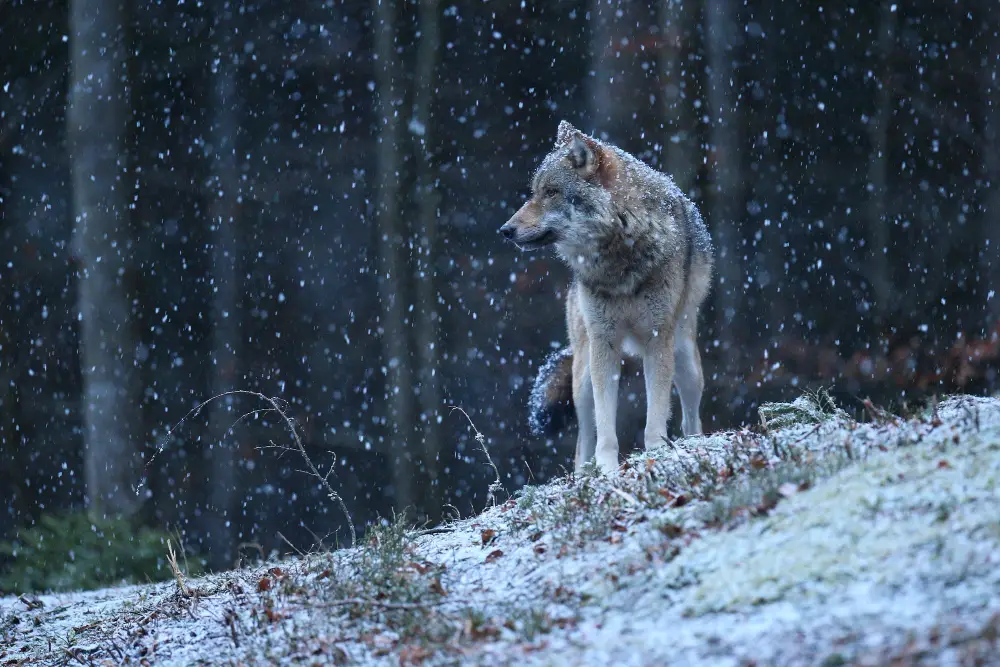
“Wolves,” they would say.
“Four of them,” I would say. “In the storm.”
And there would be a pause, and then the conversation would move on, because there are things that can be acknowledged only briefly before the ordinary world reasserts itself.
I did not leave the house that spring, or that summer, or the one after. The repairs took longer than expected, as repairs always do, but when they were finished the house was sound in ways it had not been for decades. The carpenter who rebuilt the hallway floor asked what had happened to the original boards. I said there had been water damage. He accepted this.
I planted a kitchen garden. I learned which neighbors to wave to and which to stop and talk with. I learned the rhythms of the village in different seasons. I became, in the way that takes time and cannot be rushed, the person who lived in Marta’s house at the edge of the forest, not a visitor, not a temporary occupant, but the current holder of a place that had been in the family for a very long time.
I did not see the wolves again. In the autumn following the storm, I thought once that I heard their howling close by, the same low prolonged quality, the same deliberate tone. I went to the window and looked for a long time, but if they were there I could not find them in the dark.
I had thought about whether I would open the door again, if they came.
I thought I would. Not because I understood what had happened, I do not, but because some debts are real even when they resist ordinary accounting. Whatever reason had brought the fourth wolf to that specific corner of the floor, to dig in that specific place with that specific purpose, it had finished something my great-grandmother had left unfinished. It had returned what had been hidden. The family had searched for thirty years, and the answer had been there the whole time, under their feet, in the corner of the hallway where no one thought to look.
Seven years after I moved in, sorting through the last box I had not yet opened from that first autumn, I found a photograph. A woman in her forties or fifties, standing at the front gate of the house, the pear tree visible behind her. She was not smiling, photographs were serious business in that time, but her posture had something in it that I recognized after a moment as resolution. The quality of a person who has made a decision and is at peace with it.
On the back, in someone else’s handwriting: Marta, 1938.
Six years before the war reached the village. Six years before she would have packed the family’s accumulated gold into a cloth sack and put it in the earth beneath the hallway floor, in the corner where the light never reached, and nailed the boards back down, and walked away carrying the knowledge inside herself like something that had to be protected.
I put the photograph on the windowsill on the forest side of the house.
The curtains on that side I keep open, even at night.
Some things deserve to be looked at directly. Some things have been in the dark long enough.

Lila Hart is a dedicated Digital Archivist and Research Specialist with a keen eye for preserving and curating meaningful content. At TheArchivists, she specializes in organizing and managing digital archives, ensuring that valuable stories and historical moments are accessible for generations to come.
Lila earned her degree in History and Archival Studies from the University of Edinburgh, where she cultivated her passion for documenting the past and preserving cultural heritage. Her expertise lies in combining traditional archival techniques with modern digital tools, allowing her to create comprehensive and engaging collections that resonate with audiences worldwide.
At TheArchivists, Lila is known for her meticulous attention to detail and her ability to uncover hidden gems within extensive archives. Her work is praised for its depth, authenticity, and contribution to the preservation of knowledge in the digital age.
Driven by a commitment to preserving stories that matter, Lila is passionate about exploring the intersection of history and technology. Her goal is to ensure that every piece of content she handles reflects the richness of human experiences and remains a source of inspiration for years to come.
This is a great story. Enjoyed it very much. Thank you for creating it. Look forward to more.
Great story! Well done.