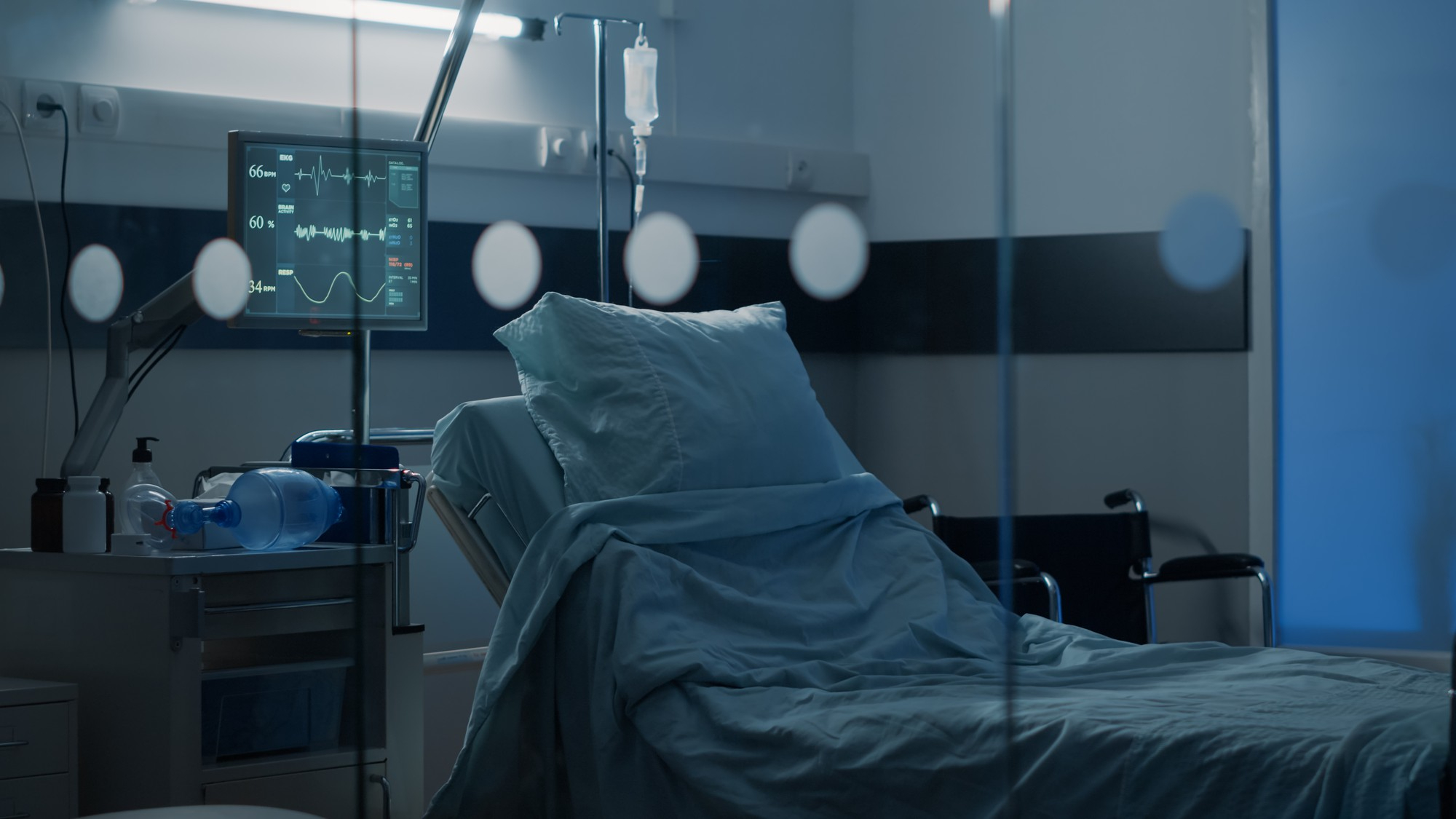
My name is Jalissa Pierce. I am thirty-two years old, and three weeks ago I collapsed at my desk at exactly 11:52 at night. A hemorrhagic stroke, the doctors told me later. They said I had been less than forty-eight hours from permanent brain damage or death. I did not know any of that while it was happening. The last thing I remember is staring at my laptop screen, a cursor blinking on an unfinished sentence, my hand reaching for a water bottle it could no longer find, and then the floor rushing up toward me with a speed that felt almost personal.
The hospital called my mother at 7:10 in the morning. She arrived at 9:40. By 3:20 that afternoon, she had already decided that my older sister Vanessa’s wedding venue tour in the Bahamas could not be postponed. By seven that evening, my entire family was boarding a flight to Nassau, and I spent the next seven days in the ICU believing, in the few moments of semiconsciousness I managed, that I was completely alone. I was not. But I would not know that until a nurse placed a tablet in my hands after I finally woke up and said, very softly, that I should see something. It was the visitor log. One name, repeated every single night, belonging to a man I had never heard of. A man who had stood outside my glass door for three hours on the first night simply watching me breathe. A man who had paid my entire $141,000 hospital bill in cash and asked the hospital to keep his identity hidden. And when my mother saw that name, days later, every drop of color left her face in a way that told me she had been carrying a secret for thirty-two years.
To understand how I ended up in that hospital room, you have to understand what Sundays sounded like in my life. Every Sunday at six in the evening, my phone rang. Not because my mother missed me. Not because she wanted to hear about my week. Sunday at six was when Eleanor Pierce called to go over expenses. Her voice in those moments was soft and unhurried, wrapped in a syrupy warmth she reserved exclusively for requests. Your father’s SUV needs tires. Vanessa’s wedding planner needs the deposit. The electric bill was higher this month. The numbers arrived in a sequence, casual and inevitable, and every time I hesitated she found the same sentence: you do not have a family to support, Jalissa. No husband, no children. You make good money. What else are you spending it on?
I kept a spreadsheet. Seven years of records, every dollar sent home, every loan described as temporary and never repaid. The total was $192,860. Ninety percent of the entries had Vanessa’s name on them. Car payments, credit cards, apartment deposits, vacations, dental work. I always transferred the money the same night because it was easier than the silence that came with refusing. The particular Sunday before my collapse, Vanessa texted a photo of a wedding dress and asked for $28,000 toward the wedding fund. My mother called that same evening to explain that since I was not coming to the Bahamas venue tour, the least I could do was cover the trip. Flights, resort, food and extras: $8,800. I transferred it that night. My bank balance afterward was $4,615. Seventeen days until my company’s IPO. I told myself I just had to hold on a little longer.
There was something else I had been carrying alongside the financial pressure, quieter and older. I did not look like my family. I have blue eyes; they all have brown. My hair is light, almost blonde in summer, while everyone else has hair that is nearly black. When I was sixteen I asked my mother about it once. Why do I look so different? She went completely still, then told me I was implying something unforgivable and refused to answer. I never asked again. Some silences teach you more than answers do.
“I kept a spreadsheet for seven years. Every dollar sent home. Every emergency. Every loan that was never paid back. The total was $192,860. Nearly a third of my life, gone.”
Jalissa Pierce
The weeks before the IPO collapsed into a blur of fluorescent lights and cold coffee. Our CFO quit without notice. My CEO handed everything to me: investor reports, compliance filings, operational audits, due diligence packages. I worked sixteen hours a day, sometimes eighteen. My doctor had warned me months earlier that my blood pressure was not normal for someone my age. I did not slow down. The IPO represented over $12 million in funding for forty employees and my stock options would vest at nearly $300,000. I just had to make it through. Then late on a November night, my head pounding the way it had been for days, I reached for my water bottle and my hand missed. My fingers did not respond. The words on my screen began to blur and rearrange. I tried to reach for my phone. My arm did not move. The last thing I remember is the cursor blinking on an unfinished sentence, and then the floor.
The night security guard saw me collapse at 11:52. By 1:20 I was in the emergency room at North Bridge Medical Center with a hemorrhagic stroke. The ER called my emergency contact four times between 1:20 and 5:50 in the morning. No answer until 7:05. My mother arrived with my father and Vanessa at 9:40. They stayed thirty-four minutes. I was unconscious for all of it, but my ICU nurse, Claire Donovan, told me what she saw. Vanessa stayed in the hallway. My father stood near the elevators making calls. My mother spoke with the doctor for eleven minutes, then walked into my room, looked at me, tubes in my throat, machines breathing for me, and checked her watch.
Claire overheard my mother on the phone in the hallway before they left. The doctor had said: stable but critical, monitor closely for at least seventy-two hours, high risk of complications. My mother relayed one word of that to whoever was on the other end of the line. Stable, she said. That means she is not dying right now. We can still make the flight. In the background, Claire heard Vanessa asking about the diving instructor. My mother made her decision in that hallway. She had heard the word she needed and ignored the rest.
At 3:30 that afternoon, while I was unconscious in room 412, she left me a voicemail. I listened to it five days later when I was finally awake. It was fourteen seconds long. She said the doctor had told her I was stable, that they had to go to the Bahamas as planned because the tickets were non-refundable, that she would call the hospital to check on me, that Vanessa really needed her for this trip. She did not say she loved me. She did not say she was worried. She said Vanessa needs me, and then she hung up. At 6:42 that evening, as my blood pressure was dropping and doctors were preparing me for additional scans, Vanessa posted an Instagram story: the three of them at the airport, gate 18, Oceanic Air Flight 771 to Nassau. My mother smiling. My father looking exhausted. Vanessa in the center, flashing a peace sign. Caption: Bahamas. Here we go.
What the Doctor Actually Said
The doctor’s words were precise: stable but critical, monitor closely for at least seventy-two hours, high risk of complications. Eleanor Pierce heard one word and boarded a plane. She did not lie to herself about what the rest of the sentence meant. She simply chose not to carry it.
✦ ✦ ✦
At 8:05 that same evening, a man walked into North Bridge Medical Center. He approached the front desk calmly and said he was there for room 412, Jalissa Pierce. The receptionist asked if he was family. He said yes without hesitating. He gave his name as Adrien Cole, accepted a visitor badge, took the elevator to the fourth floor, walked down the hallway until he reached my room, and stopped. He did not knock. He did not call for a nurse. He did not ask to be let in. He stood outside the glass door and looked in. He stayed that way for three hours.
The ICU hallway cameras recorded everything. At 8:20 he was still standing, not moving. At 8:50 a nurse approached him; he shook his head gently and she walked away. At 9:35 he sat down in the hallway chair but his eyes never left the glass. At 11:05 he stood again, walked to the door, pressed his palm flat against it, and held it there for several long minutes. At 11:17 he finally walked away. Claire Donovan was the nurse who had approached him that first night. She had worked in ICU for over a decade and had seen every variation of grief and vigil a hospital corridor could contain. When she asked if he wanted to go inside, he shook his head and said he just wanted to make sure she was not alone. She asked if he was family. Something passed across his face then, something heavy that she described to me later as regret mixed with a guilt that had clearly been carried a long time. Yes, he said. I am family. He signed the visitor log and went back to standing outside the glass as if that was the only place he believed he was entitled to be.
He came back the next night. The same gray suit, the same silver hair, arriving at 7:50. He brought a laptop this time and worked quietly in the hallway chair, looking up every few minutes. At 9:40 he closed the laptop, stood, walked to my door, and this time he went inside. He pulled the chair close to my bed and sat down. He did not touch me. He just looked at my face for a long time. Claire watched from the nurse’s station through the glass. His lips moved but she could not hear through the partition. When she asked him afterward what he had said, he gave a small, fractured smile and shook his head. He stayed forty-eight minutes and then left. Claire added a note to my file: Visitor Adrien Cole stated “my daughter” upon entering. Relationship unverified. She called my mother that night to report his presence. No answer. She called twice more. Voicemail both times.
On the morning of November 21st, additional scans showed something was wrong. The swelling in my brain was not reducing as it should. Results came back showing myocarditis, secondary inflammation of the heart muscle triggered by the extreme stress my body had endured. If they did not operate within forty-eight hours, the doctor told Claire, there was a forty percent chance I would never wake up. The surgery would cost $47,000. They needed family consent and a $15,000 deposit by six that evening.
This was the seventh call Claire had made to my mother. This time, someone answered. My mother’s voice was light and relaxed. In the background Claire could hear waves, music, glasses clinking, laughter. Claire explained the complication, the surgery, the timeline. My mother’s first response was to ask how much it would cost. When Claire said $47,000, there was silence, then disbelief. Then Vanessa’s voice rang out in the background about a diving instructor. My mother told Claire to email the consent form and send the bill to my home address. She said I made good money and would handle it. Claire told her I was in a coma and could not pay anything. My mother said I had savings and was always good at figuring things out. Then she ended the call.
Twelve miles from the hospital, in a glass office on the thirty-second floor of a building in downtown Harbor City, Adrien Cole received a call from Marcus Hail. Marcus told him I was still in the ICU and needed emergency surgery, that my family was out of the country and unavailable. Adrien asked one question: how much? Marcus said he was not entirely sure, that they were asking for a deposit and the family could not be reached. Adrien said he would handle it. He ended that call and immediately made another.
At 3:40 that afternoon, the hospital billing department received a wire transfer. $142,000 from AC Holdings Group. The memo read: Full payment for patient Jalissa Pierce, Room 412. Anonymous donor. Do not disclose identity to patient or family. $95,000 for ICU care, $47,000 for the cardiac procedure. Paid in full. The billing manager, Marilyn Cross, called the number attached to the transfer. When the man answered she asked his relationship to the patient. He said family. She pressed for specifics. He said he was her father. She told him the file listed a Daniel Pierce as the patient’s father. A long silence followed. Then: there is more than one kind of father, Ms. Cross. Please process the payment and make sure she gets the surgery she needs. Do not tell her it was me. Not yet. Marilyn set the phone down and looked through the glass corridor toward the ICU wing. Down the hall, outside room 412, she could see him in the hallway chair, laptop closed, eyes fixed on the glass. She whispered to herself without meaning to: that man is the only family that girl has.
“I’ve been doing this for eleven years. I’ve seen every kind of family. But I’ve never seen anyone stand outside a glass door for that long, like they were afraid they didn’t deserve to go in.”
Claire Donovan, ICU Nurse
I do not remember being taken into surgery. I do not remember the anesthesia or the four and a half hours I spent on the operating table while a surgeon worked to repair the damage to my heart. But I know who was in the surgical waiting room. Adrien Cole sat there from 6:50 in the morning until 11:35. He did not read. He did not work. He did not check his phone. He held something in his hands the entire time, a photograph, old and slightly faded, of a young woman with dark hair laughing at something outside the frame. Claire saw him during her break and told me later he kept running his thumb along the edge of it, over and over, like it was the only thing keeping him grounded. When the surgeon came out and said the operation was successful, that I was stable and should wake within twenty-four to forty-eight hours, Adrien stood up. For a moment Claire thought he might collapse. The doctor asked if he was family and he said yes. The doctor asked if he would like to see me in recovery. Adrien hesitated. Then he said not yet. She should see her family first when she wakes up. The doctor said: sir, you are family. Adrien gave a small and fractured smile, the kind that carries more pain than comfort, slipped the photograph back into his wallet, picked up his coat, and walked out of the hospital. He did not stay to see me wake up.
When I finally opened my eyes, the world came back slowly. White ceiling. Fluorescent lights. The steady mechanical rhythm of monitors. I turned my head and looked at the chair beside my bed. Empty. No flowers, no cards, no exhausted family member slumped over from staying too long. Just an empty chair. On the bedside table there was a full glass of water, a blanket folded at the foot of the bed with a precision that looked intentional, and a book I had never seen before. Meditations by Marcus Aurelius, hardcover, old but carefully preserved. It was not mine. I had never read it. I did not remember mentioning it to anyone.
Claire came in to check my vitals. When I asked where my family was, she said they were in the Bahamas. They would be back Monday. She adjusted my IV line and avoided my eyes for a moment. I asked if they had not come back when I needed surgery. No, she said. Then she told me about the man who had been there every night. She handed me the tablet with the visitor log. My hands trembled as I scrolled through it.
November 18th: Adrien Cole, 8:05 to 11:17. November 19th: Adrien Cole, 7:50 to 11:38. November 20th: Adrien Cole, 7:35 to 10:20. November 21st: Adrien Cole, 7:05 to 11:50. Every night. Only one name. No Eleanor. No Daniel. No Vanessa. Just one name, repeated across five nights like a quiet refusal to let me be alone.
I searched his name on the hospital laptop with shaking hands. Adrien Michael Cole, age sixty-four. CEO and founder of Cole Capital Group, private equity, assets under management of $2.4 billion. His photograph appeared on the screen. Silver hair. Blue eyes. Tall. A calm, controlled expression that felt both distant and familiar in a way I could not immediately name. Blue eyes. I have blue eyes. My mother has brown eyes. My father has brown eyes. Vanessa has brown eyes. The memory surfaced without warning: a sixteen-year-old asking her mother where the blue eyes came from and being met with a fury so sharp it shut the question down permanently. The convenient silence that filled in the gap for sixteen years afterward.
I kept searching. Cole Foundation scholarships. A website, clean and professional. I clicked into the higher education section and scrolled until I stopped. Jalissa M. Pierce. University of California, Westbridge. Jalissa M. Pierce, Westbridge School of Business MBA program. My name, year after year. The scholarship that had arrived in my sophomore year without an interview, without an explanation, without anything I could point to as a reason. Just approval. I remembered how confused I had been, and how grateful, and how my mother had looked at me when I told her. You think you are so special, she said. You just got lucky. Lucky. I opened the book from the bedside table. On the first page, in neat and steady handwriting: To my daughter. I hope one day you will understand why I stayed away. A.C. My vision blurred before I fully understood what I was feeling. Tears slid down my face and I did not try to stop them.
The Scholarship Was Never Luck
The scholarship that paid for the rest of Jalissa’s undergraduate degree and her entire MBA had no application, no interview, and no explanation. Her mother told her she had simply gotten lucky. She had spent years accepting that as the story. The truth was that a man she had never met had created an opportunity specifically for her, funded it quietly, and asked for nothing in return, not even the knowledge that it had reached her.
I called Marcus Hail. When he answered I did not give him time for pleasantries. I asked him who the biggest investor in our company was. The silence on the other end told me before his words did. Cole Capital, I said. They invested, did they not? He asked how I knew. I asked when. 2021, he said. Series A. Two million dollars. The same year I joined the company. I asked if Adrien Cole had requested anything specific when he invested. Marcus exhaled. He had asked to remain anonymous. He had asked to be informed if anything ever happened to me. He called Marcus the night I collapsed, before the ambulance report had even come through, to ask which hospital I was being taken to. He knew before anyone else. I looked down at the inscription in the book on my lap and told Marcus quietly that I thought Adrien Cole was my father.
✦ ✦ ✦
Seven days after I was admitted, Monday morning at 11:40, my mother walked into the hospital lobby. Her skin was sun-kissed from a week in the Bahamas. She wore a bright floral dress and carried a duty-free shopping bag. She went straight to the front desk to request my discharge. The receptionist pulled up my file and told her the account had already been settled, no remaining balance. My mother asked who had paid. The receptionist said a family member had made a direct payment. My mother asked the amount. $142,000. The room went quiet in a particular way. My mother said no one in her family had that kind of money. She asked to see the visitor log. The receptionist handed over the tablet.
Claire told me later it was like watching someone see a ghost. The tablet slipped from my mother’s hands and hit the floor. She did not bend to pick it up. She just stood there staring, the name scrolling through her mind the way I imagined it must have scrolled down the screen: Adrien Cole, Adrien Cole, Adrien Cole, six nights in a row, the only name on a log that should have been full of Pierces. She whispered the name once, to herself. Then she walked toward the ICU wing with the slow and terrible steps of someone walking somewhere they cannot avoid. She turned the corner. Adrien was sitting in the hallway chair outside room 412. He looked up. Their eyes met across thirty-two years of silence.
He stood but did not move toward her. He waited. He let the silence carry what words could not. Then he spoke, his voice low and controlled, each word chosen and placed with care. Thirty-two years, Eleanor, he said. Thirty-two years. My daughter grew up believing she was not loved. For thirty-two years I stood on the outside looking in, and this past week I stood outside that glass every night watching over her, paying her bills, making sure she was not alone. He took one step forward. And where were you? My mother opened her mouth and closed it again. He told her he had stayed away because he believed she had a family that loved her, that he had not wanted to destroy her life with the truth. He looked at her then, not with anger but with something colder. I was wrong, he said. He turned toward my room. Today I walked through the door. My mother did not follow. She stood there frozen in the hallway while he walked past her.
She came into my room instead. She looked wrong, her face pale underneath the tan, her eyes wide and unsteady. She said we needed to talk. I was looking past her through the glass at the man now standing in the hallway. Silver hair. Blue eyes. My eyes. I asked who he was. I asked quietly whether he was the man who had been there every night, who had paid for my surgery. Then I said his name. Adrien Cole. My mother went completely still. Is he my father? The silence that followed answered everything before she spoke a word.
It was 1992, she said. She was young. She loved him. He was a junior engineer, no money, no stability, and then his company sent him overseas for two years without warning. She found out she was pregnant. Daniel had already proposed. He had a house, a stable income. He was safe. She had six weeks to decide. She chose security. When Adrien came back two years later, I was already a year old and she was married. She told him to stay away. She told him I was Daniel’s daughter and that he had no rights. She made him believe her. She threatened him. Twenty years later he found out the truth, probably through DNA, probably through someone he hired. He tried to reach out through lawyers and intermediaries. She told him I had a family and did not need the past complicating my life.
I listened to all of this. Then I told her what I had understood for a long time without ever having the language for it. Every time she looked at me she saw him. Every time I succeeded she resented it, because I was not supposed to succeed. I was supposed to be the mistake, the secret, the evidence of a choice she could never fully put behind her. I had kept becoming someone she could not ignore, and she had spent thirty-two years taking from me because it was easier to extract value from me than to face what I represented. I watched her face move through several things as I spoke. When I finished, I told her I had spent my whole life trying to earn her love. I had paid her bills, funded her vacations, and given her everything she ever asked for. And she had still chosen to let me lie there alone. I told her to go home, tell Daniel the truth because he deserved it, tell Vanessa the $28,000 was not coming, and not to come back. She stood at the foot of my bed for a long moment looking at me like she did not recognize the person in front of her. Then she turned and walked out. Her footsteps echoed down the hallway, growing quieter with every step, and I watched through the glass until she disappeared.
Then I watched someone else walk in.
Adrien Cole stopped a few feet inside the room. Not too close. Not too far. Like a man who understood he was crossing a threshold he had waited thirty-two years to reach and did not want to rush it or take it for granted. Neither of us spoke for a moment. The machines kept beeping and the lights hummed overhead and the hospital moved on outside the door, but in that room it was just us and everything that had not been said.
I asked him to start with the glass door. The first night. Why he had not come in. He looked at his hands for a moment and said he had not known if he had the right. Thirty-two years, he said. He had watched my life from a distance. He had been in the back row at my high school graduation. He had watched my college graduation on a livestream from his office. He had sent flowers to my MBA ceremony with no name attached. Every important moment of my life, he had been there, just never where I could see him. That first night, looking through the glass at the tubes and the machines and how still I was, he had thought: this is my daughter, and I do not even know if she would want me here. But he could not leave. And he could not go in. So he stood there making sure someone was present, even if I did not know it.
He told me about the scholarship, confirmed without my having to ask. He had found out about me in 2012 through a DNA confirmation. He did not know how to approach me, so he created an opportunity instead, made sure I qualified, and watched from a distance as it reached me. The investment came in 2021 when he learned I was working at the company. Two million dollars, not because he believed in the company, although it had worked out, but because it was a way to be near me even if I never knew. The hospital bill required no deliberation. I was dying, he said simply. Someone had to take care of it.
“Every important moment of your life, I was there. Just never where you could see me.”
Adrien Cole
I asked about his life. He had been married for fifteen years. His wife had told him he was never really there, that part of him was always somewhere else, with someone else. She was right, he said. He had no children. He could not start over. He already had a daughter he was not allowed to know. Starting again would have felt like a betrayal of that. He told me about the photograph Claire had seen him holding in the surgical waiting room. He pulled it from his wallet and showed it to me: a young woman, dark hair, laughing at something outside the frame. My mother in 1992, two weeks before he left. The last time he had seen her happy. He had carried it for thirty-two years hoping to see that smile again, hoping to find what he had lost. He looked at me then with something in his face that was not grief and not quite joy but something in the narrow space between them. He said he had not found her. He had found something better. He had found me.
I asked what happened now. He said that was entirely up to me. He had waited thirty-two years and could wait longer. If I wanted him to walk out and never come back, he would. Is that what you want, he asked. No, I said. The answer came before I could examine it, simple and immediate and entirely certain. He told me he wanted to be my father. He wanted to know what I was reading, what I was thinking, what made me laugh. He wanted to have dinner with me on my birthday. He wanted to be the person I called when something went wrong. But he knew he had not earned that yet. He knew there was a Daniel Pierce who had raised me, who had his own grief to process now. He knew this was complicated and painful and had no easy answers. He was not asking for everything at once. He was asking to begin.
I looked at him, this man who had never held me but had never stopped showing up for me either. Then I lifted my hand, weak but steady, and held it out. Will you sit down, I said. Just for a second. He stepped forward carefully and sat in the chair beside my bed. The chair that had been empty for five days. For the first time in thirty-two years, he was on the right side of the glass.
The Right Side of the Glass
He had stood outside that room for six nights because he did not know if he had the right to enter. He paid for her surgery and asked the hospital not to reveal his name. He held a thirty-two-year-old photograph in a surgical waiting room and did not stay to see her wake up, because he thought she should see her family first. Every choice he made was structured around her comfort rather than his own need. When she finally held out her hand and asked him to sit, it was the first time in three decades that someone had told him he was allowed in.
I was discharged on November 28th. Adrien drove me home. We did not talk much. There was too much to say and not enough words yet, but we had time, thirty-two years of conversations waiting for us, and neither of us was in a hurry to rush what had taken this long to begin.
A few days later I signed the IPO documents over a video call. The company went public at $14 a share. My stock options vested at nearly $300,000. For the first time in my adult life I had money that was truly mine. Vanessa’s wedding was scheduled for December 8th. Without my contribution the budget fell apart, and the engagement ended two days before the date. My mother’s voicemails arrived in a stream I deleted without finishing. Daniel Pierce filed for divorce after learning the truth. He called me once, his voice tired in the way of someone wronged quietly for too long. He said he was sorry he had not been more present, that he had always sensed something missing between them. I told him I hoped he would find what he was looking for. He had been a victim in all of this, just as I had.
On December 22nd, I met Adrien for coffee. It was awkward at first in the way that honest new beginnings are always awkward, neither of us sure of the other’s habits, not knowing if the other took sugar, not knowing favorite books or movies or the small preferences that accumulate over years of shared breakfasts and ordinary conversations. But we were learning. At one point he pulled out his wallet and showed me the photograph again. My mother in 1992, laughing at something outside the frame. He said he had taken it two weeks before he left, and that it was the last time he saw her happy. He had carried it for thirty-two years hoping to find what he had lost in it. He put it away carefully. I looked across the table at a man who had given up his marriage and his chance at other children and thirty-two years of ordinary proximity, all for a daughter he was not allowed to acknowledge. Who had paid for her education without ever signing his name, invested in her career to stay close, stood outside a hospital door for hours because he was not sure he was allowed to cross it.
People always say blood is thicker than water. My blood family left me in a hospital room and boarded a plane. For seven years they took nearly $200,000 from me and called it love. They treated me like a financial instrument with emotions attached, useful when they needed something and inconvenient when they did not. And a man I had never met stood outside my glass door for hours because he was afraid he did not deserve to come in. He paid for my education without asking to be thanked for it. He paid $142,000 to save my life and asked the hospital not to tell me. He held my mother’s photograph in a surgical waiting room while a doctor repaired my heart, and then he walked out before I woke up because he thought I should see my family first.
I spent my whole life believing that love was something I had to earn, that if I gave enough and sacrificed enough and proved myself enough, eventually I would be enough for the people I called family. What I found in that hospital room was something I had not known to look for: a man who thought I was enough before I had done a single thing for him. Who had been certain of it for thirty-two years, from a distance, through glass, through photographs and livestreams and scholarship applications he filled out in my name. Who asked for nothing in return except, eventually, the chance to sit in a chair beside me and begin.
“My whole life I believed love was something I had to earn. What I found in that hospital room was a man who had been certain of my worth for thirty-two years, from a distance, through glass, asking nothing in return.”
Jalissa Pierce
That is not luck. That is not biology. That is not the automatic entitlement of shared DNA. That is a choice, made repeatedly over decades, in circumstances that would have justified walking away a hundred times over. That is what I am choosing to call family now. Not the people who share your last name and take your money and board a plane while you are unconscious in a hospital room. But the person who drives three hours to stand outside a glass door and make sure you are not alone, even when you do not know they are there. Even when they are not sure they are allowed in. We are still learning each other. We will be for a long time. But for the first time in my thirty-two years, I am not earning my place at a table. I am sitting at one where I was already expected, where a chair had been kept empty since before I knew to look for it, waiting for the day I finally walked through the door.

Adrian Hawthorne is a celebrated author and dedicated archivist who finds inspiration in the hidden stories of the past. Educated at Oxford, he now works at the National Archives, where preserving history fuels his evocative writing. Balancing archival precision with creative storytelling, Adrian founded the Hawthorne Institute of Literary Arts to mentor emerging writers and honor the timeless art of narrative.