The Locket
My name is Maren. I am forty-seven years old, and for the past nineteen years the only person who has made that fact feel meaningful is my son, Leo. He is the entire architecture of my ordinary life, the reason I keep the refrigerator stocked with the cereals he likes even now that he lives at a university forty minutes away, the reason I still leave the porch light on when he visits, the reason I have never once in all these years gone to sleep on a night he was supposed to call without waiting up first. People talk about unconditional love as if it requires some great sacrifice to sustain it, but with Leo it has always felt like the easiest thing I have ever done. He is funny and kind and slightly too serious for his age, and even now that he shaves and drives and argues about politics at the dinner table, he still kisses my cheek before he leaves and says I love you, Mom the way he has said it since he was four years old, with complete and uncomplicated sincerity.
Which is why the night everything changed started the way it did, with me half asleep in bed and my phone lighting up on the nightstand at ten past one in the morning, his name on the screen.
I answered before the second ring. “What’s wrong?” I asked, because that is always my first question, always, the reflex of a mother who raised a child alone and learned early that the phone ringing at strange hours rarely meant good news.
“Nothing, Mom,” he said. “Nothing’s wrong. I just need you to stay up for me, okay? I’m on my way.”
I sat up straighter. “On your way? It’s after one.”
“I know. I’m bringing someone home. I want you to meet her tonight.”
I smiled despite myself, still groggy, still piecing the world back together after being pulled from sleep. “A girl,” I said. It wasn’t really a question.
“No. Well. Not like that.” He paused, and something in the pause felt heavier than the words around it. “She’s someone very special, Mom. I’ve been wanting to introduce you for a while and tonight felt like the right time. Just trust me, okay? I’ll explain everything when I get there.”
I told him I’d be up. I told him to drive carefully. He said he would, and then he was gone, and I sat on the edge of my bed in the dark for a moment, listening to the quiet of the house. There had been something in his voice that I could not name right away. Not worry, exactly. Something older than worry. Something that sounded like the careful tone people use when they are carrying something fragile and don’t want to drop it before they reach the person they are carrying it toward.
I went to the kitchen and put on coffee. I stood at the counter while it brewed and thought about Leo at his campus volunteering job, which he had mentioned a few times but never in great detail, the way young people mention things they consider self-explanatory and don’t think to elaborate on. I thought about the word special, the careful way he had placed it in the sentence. Not a girlfriend. Someone special. I tried to imagine who she might be and found I couldn’t, and eventually I stopped trying and just listened to the coffee maker and the silence of a house at one in the morning.
At two minutes past two, the phone rang again. Not Leo’s name this time. A number I didn’t recognize, and beneath it the name of the hospital fourteen miles away.
I do not remember the drive. I have tried, in the weeks since, to reconstruct it, to locate some visual memory of the road or the dashboard or the dark fields on either side of the highway, but there is nothing. What I remember is the parking lot, the fluorescent shock of the emergency entrance, my own hands on the door handle and the strange observation that they were shaking. I remember a nurse at the reception desk asking me something and the words not quite reaching me, as though there were glass between us. I remember saying my son’s name and watching her face change into the particular expression hospital workers use when they are about to deliver difficult information in a professional manner.
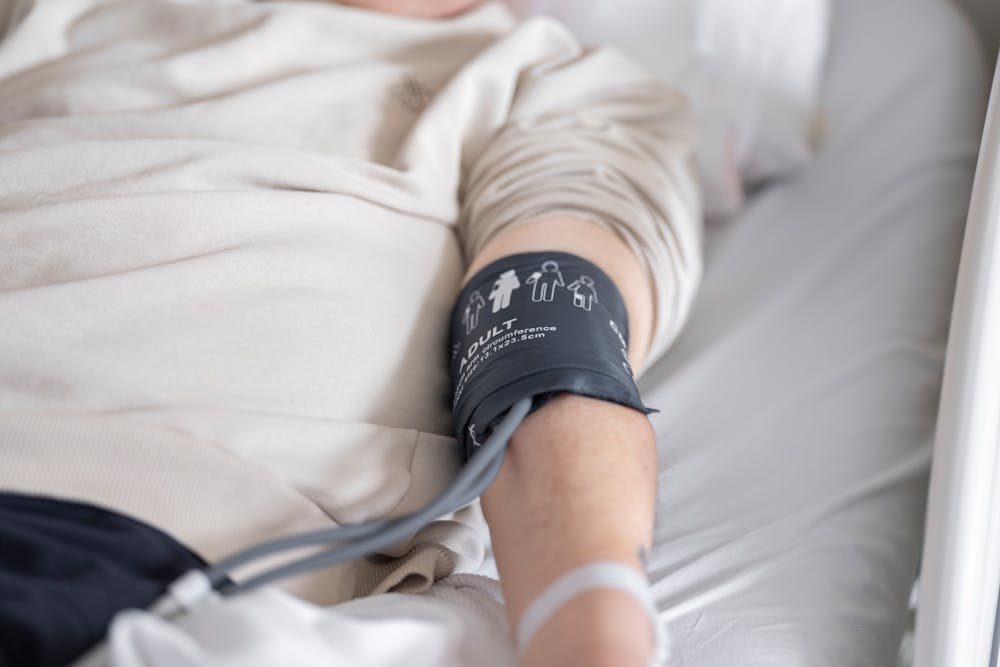
Leo was in surgery. He was alive, but they used the word barely, and I remember that word landing in my chest like something heavy dropped from a height. There had been a head-on collision on Route 9. He was twenty minutes away. Another car had crossed the center line. Leo had been driving.
The waiting room was a place I could not stay in. I paced the corridor outside it, back and forth over the same twelve feet of linoleum, holding my phone even though there was no one to call, no one who needed to know, no one whose presence would make this smaller. It has always been just the two of us. I made my peace with that a long time ago, but there are moments when the aloneness of it presents itself with a particular sharpness, and this was one of them.
A doctor came out to speak to me. She was calm and precise in the way doctors learn to be, and she told me Leo was in surgery, stable but serious, and that they would update me as soon as there was more to report. Then she said there was a female passenger in the other vehicle, or perhaps she was with Leo, they weren’t entirely sure. She had been brought in unconscious. She had no identification on her. She was currently in a coma.
“I know,” I said, which was half true. I knew Leo had been bringing someone. I knew she had no identification. He had told me that much on the phone. I had said it automatically, filling in the blank, and the doctor took it to mean that I knew this woman, which was not what I had meant at all. But I was not thinking clearly. I was not thinking in any linear way. I was just standing there in the corridor while the world rearranged itself around me into something unfamiliar.
After the doctor left, a nurse appeared beside me and held out a small plastic bag, the kind hospitals use for personal effects. “The woman’s belongings,” she said. She handed it to me the way you hand something to next of kin, gently, as though the contents were breakable. Again I did not correct the assumption. I took the bag.
Inside there were sunglasses with a small scratch on the left lens. A half-empty sleeve of peppermint mints. And a silver locket on a thin chain, the kind of jewelry that costs almost nothing but gets worn every day, worn until the silver goes slightly dull at the edges from constant contact with skin.
I don’t know how long I stood there holding it before I opened it. The clasp was stiff. I had to press the small release twice before the two halves separated, and even then I hesitated, not entirely sure why, only aware of a reluctance I couldn’t explain, a sensation that was almost physical, as though something inside me already knew and was trying to give me one more moment before I had to know it too.
I opened the locket.
The photograph inside was small and worn at the edges, the kind of photo that had been handled many times over many years. It showed a young woman sitting on a hospital bed, her hair pulled back loosely, her eyes visibly swollen. She was holding a newborn against her chest with both arms, the baby wrapped in a white hospital blanket, the young woman’s face turned slightly downward, looking at the child with an expression that was not quite love and not quite grief but something in between that had no clean name.
I recognized the room. I recognized the blanket pattern. I recognized the particular way the young woman’s hair had come loose from the elastic and fell across the side of her face.
I recognized her face because it was my face. My face at eighteen years old, on the worst and strangest day of my life.
I sat down in the chair behind me. I don’t know if I chose to sit or if my legs simply gave. I pressed the locket into my palm and closed my fingers around it, and for a while I didn’t think anything coherent. I just sat there with the fluorescent lights overhead and the sounds of the hospital moving around me and the locket warm in my hand.
My mother had taken that photograph. I remember her lifting the camera, a small disposable one, and I remember not having the energy to ask her to stop. I had been awake for thirty-one hours. I had no idea, in that moment, that she had kept the photograph, or that she had given it away, or that thirty years later it would end up in a plastic bag being handed to me by a nurse in the small hours of a Wednesday morning.
Leo woke up just before sunrise. The doctor found me still in the corridor and told me I could go in, and I walked into his room and stood in the doorway for a moment, looking at him in the bed, pale and smaller than I ever think of him, the various tubes and monitors arranged around him with businesslike indifference. I pulled a chair beside his bed and sat down, and after a moment his eyes opened, slow and effortful, and he found my face.
“Mom.” His voice was raw from the intubation, barely above a whisper.
“I’m here,” I said.
He swallowed. His lips barely moved. “Is she okay?”
I told him she was in a coma but alive and stable, and watched his face absorb that the way you watch someone absorb something they were afraid of but had already prepared themselves for. His eyes closed briefly and tears ran sideways across his temples into his hair. I pulled a tissue from my bag and wiped his face, and he didn’t say anything for a while, just breathed.
Then he said, “I met her at the community center. Near campus. The one I’ve been volunteering at on Wednesdays.” He stopped to rest, then went on. “She started coming in a few weeks ago. Didn’t really talk at first, just sat in the corner with a cup of coffee. But she kept coming back.”
I nodded. I waited.
“I don’t know how to explain it,” he said, “except that I felt pulled toward her. Like there was something I recognized without knowing why. She doesn’t trust people easily, you could tell that right away. She had this quality of someone who has learned to be very careful.” His voice was steadying as he talked, the way talking sometimes has the effect of returning you to yourself. “We started talking slowly, over several visits. Little things at first. But eventually she told me about herself. She doesn’t have anyone, Mom. No family, no fixed address, no last name she’s sure of. She’s been moving from place to place since she was old enough to be on her own.”
He paused again. His eyes found mine.
“She told me the only thing she has ever had that connects her to where she came from is the locket. She has carried it her whole life. She said her adoptive parents, the family she went to as a baby, gave it back to her before they dropped her at the orphanage. She didn’t even know if it was hers originally, but it was the only thing she had, so she kept it.” He looked at me steadily. “After a few weeks, she showed me the photo. The woman in it looked like you, Mom. Like you when you were young. I thought maybe you’d know who she was. I thought maybe you could help her figure out where she came from.”
He said her name then. Elena. He said it the way you say the name of someone who matters to you, easily, without fanfare, the name already integrated into the ordinary vocabulary of his days.
I sat back in my chair. I closed my eyes. The lights in the room were the low overnight kind, gentle and amber, and for a moment I simply breathed, feeling the full weight of what the night had brought pressing down on all the years I had spent not thinking about it.
“Leo,” I said. My voice went unsteady before I could catch it. “There is something I should have told you a long time ago.”
I was sixteen when I got pregnant. The boy was a year older, kind enough, but young in all the ways that mattered and not someone I was going to build a life with, even then. I didn’t tell him. By the time I knew for certain, we had already drifted apart in the way high school relationships do, quietly and without drama, and I told myself there was no point. My parents found out first, as parents usually do, and what followed was not a conversation so much as a series of declarations. They were religious people, not cruel people, but there is a kind of certainty that functions like cruelty even when it isn’t intended to. They told me I would not terminate the pregnancy. They told me I would be homeschooled for the year. They told me a couple from our church had been trying to adopt for years and that this was God’s provision for everyone involved. They told me that afterward I would go back to a different school and start fresh and that this chapter would be closed.
I didn’t fight it. I was sixteen and frightened and it genuinely didn’t occur to me that I had the right to fight it. I carried the pregnancy through a long and isolated year, homeschooled at the kitchen table, seeing almost no one, becoming a stranger to my own life. When the baby was born I held her for perhaps an hour. I remember her weight in my arms, the specific impossible lightness of a newborn, and I remember my mother taking the photograph, and I remember a woman I didn’t know coming into the room and my mother handing the baby over and the door closing behind them and the silence that followed.
I went back to school the following September. I didn’t tell anyone. I tried asking questions once, a year or two later, wanting to know at minimum that she was somewhere safe and loved, and my parents shut it down with a finality that made it clear the subject was not available to me. When I was in my twenties I made some attempts to find her. I called agencies, wrote letters, looked into what limited records existed. There was nothing. No trail. Whatever paperwork had been filed was either sealed or incomplete, and eventually I ran out of avenues and told myself the most bearable thing I could think of, which was that she was somewhere good, that she was fine, that she had been given exactly what my parents had promised.
I told myself that enough times that it almost became true.
Leo listened to all of it without interrupting. He lay still in his bed and watched my face while I talked, and when I was done the room was quiet except for the steady beeping of the monitors. I didn’t look at him right away. I looked at my hands, the locket still inside one fist, the chain hanging loose through my fingers.
“So Elena is…” He stopped. Tried again. “She’s my sister?”
“Yes.”
He was quiet for a long time. Then he turned his head slightly toward the ceiling and let out a small, strange laugh, the kind that carries no humor in it, only recognition, the sound of something clicking into place that had been out of alignment for a long time. “She kept telling me she felt like she didn’t belong anywhere,” he said softly. “But she said talking to me felt safe. That I was easy to be around.” He paused. “She told me once that she had never had the feeling of being known by someone. Not really known.”
I pressed my lips together hard.
“She’s been looking,” he said. “That’s what she was doing at the community center, that’s what she’s been doing everywhere she goes. She’s been looking for where she belongs.”
The guilt was not a new thing. It had lived in a particular room inside me for thirty years, and I had learned to keep the door shut. But sitting there in the hospital with Leo’s voice saying those words, the door swung open on its own, and everything I had stored behind it came out at once.
“You should go to her,” Leo said.
I shook my head without meaning to. “I don’t think I can.”
“You can,” he said, and his voice had a firmness in it that I was not accustomed to hearing from him, the voice not of a child asking but of a person who has decided something. “She deserves to know, Mom. You’re here right now. She’s here right now. That doesn’t happen twice.”
I looked at him. My boy, pale and bruised and attached to monitors, lying in a hospital bed at six in the morning, telling me the right thing to do with a certainty that shamed me gently, the way being loved well by someone always does.
“I’ll try,” I said.
The corridor between Leo’s room and Elena’s was not a long one, perhaps sixty feet, but I walked it slowly. I stopped outside her door with my hand near the handle and stood there for what was probably two minutes, maybe three. It is difficult to explain what I was afraid of. Not the confrontation exactly, not the practical mechanics of it, but something older and less rational than that. The fear that she would look at me with the particular contempt that would be entirely her right, the fear that thirty years of absence was simply too large a thing to stand on one side of and speak through, the fear that whatever I said would sound like excuse-making, which it would be, and that excuse-making was all I had to offer.
I thought about turning back. I genuinely considered it, standing there in that corridor with the hospital sounds around me, letting myself imagine walking back to Leo’s room and sitting with him until visiting hours and then going home and finding a way to live inside this knowledge quietly for the rest of my life.
But Leo’s voice was still in my ear. She deserves to know. That doesn’t happen twice.
I pushed the door open.
The room was dim, the blinds partly closed against the early light. The machines hummed steadily. And there was Elena, lying still against the white pillow, her hair spread loosely around her face. I stood just inside the doorway and looked at her, and something happened to me that I was not prepared for.
She looked like me. Not dramatically, not in a way that would announce itself to a stranger, but in the particular way that biology sometimes reasserts itself across decades and distance, in the line of her jaw, in the shape of her brow, in something about the set of her mouth at rest. She looked like the photographs my mother had of me at seventeen, eighteen, the years just before everything changed.
I pulled the chair close to her bed and sat down. The machines recorded her breathing with patient regularity. I held the locket in my hands and looked at her face and tried to find the beginning of what I needed to say.
“I don’t know where to start,” I said quietly. Not to her exactly, not expecting an answer, just filling the silence because silence felt unbearable. “I’ve been practicing this conversation in my head for thirty years, in a way. Different versions of it, different openings. And now I’m here and none of them feel right.”
I looked at the locket in my hands.
“I didn’t know where you were taken. My parents arranged everything, and I was sixteen and I didn’t fight hard enough to find out. When I was older I tried to look for you, but there was no trail. I told myself you were somewhere good. I told myself that often enough that I could almost believe it.”
My eyes were burning. I let them.
“I’m sorry. For all of it. For not fighting harder when I was young, and for not finding you later, and for all the years you spent without knowing where you came from. I’m sorry for what you told Leo, about not belonging anywhere. I’m sorry that was your life.”
I reached out and placed my hand gently over hers where it lay at her side. It was warm. Real. The simple fact of its warmth undid me completely for a moment, and I sat there with my hand over hers and let myself cry without trying to stop it, without trying to manage it into something smaller and more dignified than it was.
“I don’t know if you’ll want to see me when you wake up,” I said. “I don’t know if you’ll want anything to do with me, and I would understand that. But I am here right now. And I’m not going anywhere this time.”
I didn’t see her fingers move at first. I thought I had imagined it. But then it happened again, unmistakably, a slow and deliberate tightening, her hand closing slightly around mine.
I pressed the call button with my other hand. The room filled quickly, voices and movement and the purposeful efficiency of medical staff, and someone guided me gently back into the corridor, and I stood there in the hallway watching through the small window as the doctors and nurses moved around her bed.
I checked on Leo while I waited. He had fallen back to sleep, his face looser now and more like itself, the tension of the early morning hours released into something almost peaceful. I stood in his doorway for a moment, watching him breathe, doing the thing I had done since he was an infant, the thing I suspect I will do until I am too old to stand in doorways.
When the doctor found me in the corridor, he said she was awake. Responsive. Weak, but stable. He said I could go in for a short time.
I pushed the door open a second time and it felt entirely different from the first, though the room was the same room and the same light was coming through the blinds. Elena’s eyes were open. She turned her head when she heard the door, and looked at me, and for a long moment neither of us said anything.
Her brow furrowed slightly. “I know you,” she said. Her voice was thin from disuse, barely there. “Not from before. But from somewhere. You’ve been in my head.”
“My name is Maren,” I said. I moved to the chair and sat beside her again. “I was here while you were asleep. I talked to you.”
“I don’t remember the crash,” she said. “Just pieces. Then nothing.”
“That’s okay.”
She watched me steadily. There was something in her gaze that reminded me of Leo, a quality of patient assessment, of someone who has learned to take their time before deciding what to trust.
“You feel familiar,” she said. “I don’t understand why.”
“I think I can explain that,” I said.
And I did. More carefully this time, more completely than I had with Leo, because she deserved the full version, all of it without omission, the sixteen-year-old girl and the year of homeschooling and the woman from the church and the door closing and the thirty years of trying to tell myself that the story had ended somewhere good. I told her about the photograph and about the locket and about what it had done to me to open it in that hospital corridor and see my own face looking back at me from something she had carried for her entire life without knowing who it was.
When I finished, she was very still. Her eyes were full but she wasn’t crying yet, just holding it, the way you hold something very large while you figure out how to carry it.
“You’re the woman in the locket,” she said.
“Yes.”
She looked at the ceiling for a moment. Then back at me. “So Leo knew. That’s why he wanted me to meet you.”
“He suspected. He wasn’t sure. He just thought you deserved someone who might be able to help you figure out where you came from.”
She was quiet again for a while. I didn’t try to fill the silence. I had said enough for now, I thought. The rest could come later, or not at all if she needed it not to.
“I’m angry,” she said finally, not with heat, just as information. “I want you to know that. Not at you specifically, maybe. At the situation. At all of it.”
“You should be,” I said. “That anger is completely fair.”
She looked at me for a long time. Then she turned her hand over slowly in mine, the way she had done when I thought I had imagined it, and this time it was deliberate and clear.
“I don’t know what this is,” she said. “I don’t know what I want it to be.”
“Neither do I,” I said honestly. “We don’t have to know yet.”
Her eyes filled completely then and two tears slipped sideways down her face, and I reached out and wiped them away without thinking, the gesture completely automatic, maternal in a way I had not permitted myself for thirty years, and she didn’t pull back from it, which was the thing I had been most afraid of.
“I’m not going anywhere,” I told her. “I mean that as a practical statement, not a promise about feelings or the future or anything we haven’t figured out yet. I will just be here. For as long as you want me to be.”
She nodded once, slowly, looking at the ceiling again.
“Okay,” she said.
The following afternoon Leo was moved to a lower-acuity room and given a cane to practice walking, which he did with considerable determination and very little grace. I watched him from the doorway, navigating the narrow hospital corridor, his jaw set with the same focused expression he has had since he was a small boy attempting things that were slightly beyond him, and I felt the familiar specific love of watching someone you raised become more completely themselves.
When he reached me he said, “Take me to see her.”
We went together, Leo moving slowly, one hand on the cane and the other occasionally on my arm at the narrow turns, down the corridor to Elena’s room. I knocked before I opened the door this time. She was sitting up in bed, looking out the window at a gray sky and the parking structure beyond it. She turned when we came in, and something happened to her face when she saw Leo, a loosening, a relief, the specific softness of seeing someone you trust after a period of fear.
“Hey,” Leo said.
“Hey,” Elena said.
He crossed the room carefully and took the chair beside her bed, setting his cane against the wall, and she watched him settle and then looked at me, still standing in the doorway, and something passed between us that I cannot fully describe, only that it was quiet and tentative and real.
Leo looked at her for a moment, and then he said, “I guess I finally brought you home.”
Elena held his gaze. Then she looked at me again. Then back at him.
“Yeah,” she said softly. “You did.”
I came inside and closed the door behind me. I pulled the second chair over and sat down, not too close, giving us all room, and the three of us stayed like that for a while in the low afternoon light, the machines quiet, the parking lot gray and ordinary beyond the window. Elena and Leo talked about small things at first, his cane, her headache, the particular awfulness of hospital food, and I listened without trying to insert myself into it, only glad to be in the room.
At some point Elena’s hand moved to the bedside table where someone had placed the small plastic bag of her belongings, and she found the locket by touch and held it without opening it. She turned it over once between her fingers, the way she had surely turned it ten thousand times before, and then she set it down and left it there, which felt to me like something, though I couldn’t have said exactly what.
Later, when the light had changed and a nurse had come and gone, Leo dozed off in his chair, his head tipped sideways, the cane propped neatly at his side. Elena and I sat in the quiet that his sleeping made, not talking, not needing to, and after a while she looked out the window at the parking structure and said, without turning her head, “He’s a good person.”
“He is,” I agreed.
“You did that,” she said. Not accusingly. Just observing.
I didn’t answer right away. Then I said, “He did most of it himself.”
She almost smiled at that. Not quite, but almost.
We sat together in the dim room while Leo slept and the light outside the window turned from gray to the particular pale orange of late afternoon in early spring, and the machines recorded Elena’s steady breathing, and somewhere down the corridor a cart went by with a sound of wheels on linoleum, and the ordinary world continued all around us with its complete indifference to the fact that inside that small room something that had been broken for thirty years was being set, carefully, piece by careful piece, into the shape of something that might one day hold.

Lila Hart is a dedicated Digital Archivist and Research Specialist with a keen eye for preserving and curating meaningful content. At TheArchivists, she specializes in organizing and managing digital archives, ensuring that valuable stories and historical moments are accessible for generations to come.
Lila earned her degree in History and Archival Studies from the University of Edinburgh, where she cultivated her passion for documenting the past and preserving cultural heritage. Her expertise lies in combining traditional archival techniques with modern digital tools, allowing her to create comprehensive and engaging collections that resonate with audiences worldwide.
At TheArchivists, Lila is known for her meticulous attention to detail and her ability to uncover hidden gems within extensive archives. Her work is praised for its depth, authenticity, and contribution to the preservation of knowledge in the digital age.
Driven by a commitment to preserving stories that matter, Lila is passionate about exploring the intersection of history and technology. Her goal is to ensure that every piece of content she handles reflects the richness of human experiences and remains a source of inspiration for years to come.