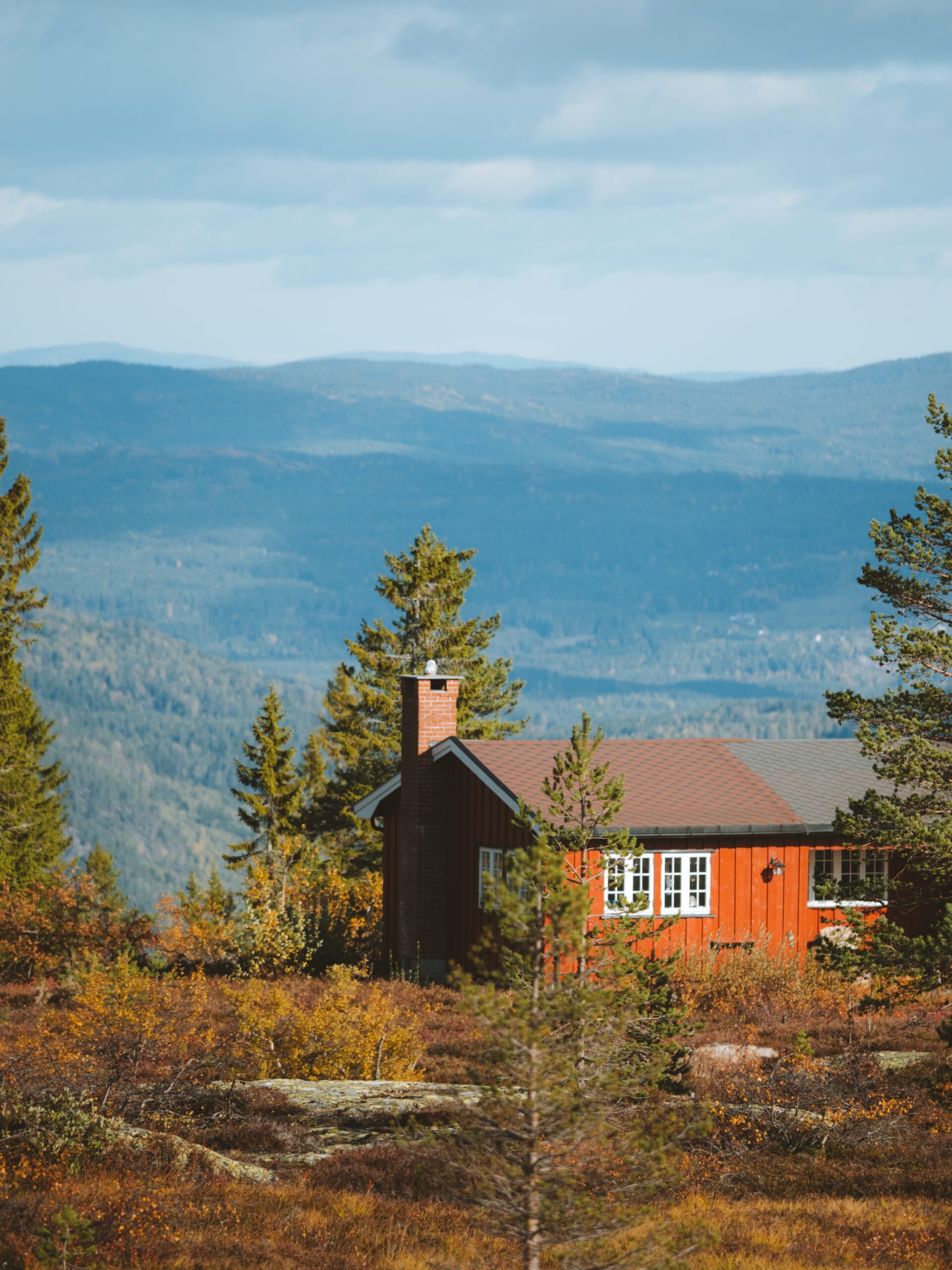
We bought the house in the countryside the year after we got married. It was nothing fancy — two small bedrooms, a garden that needed more attention than it ever got, a porch where you could sit in the evenings and hear actual silence for the first time after a week in the city. Mark said it would be our escape. I said it would be our project. We were both right, and for several years it was exactly that — weekends of planting things and pulling weeds and grilling meat and going to bed tired in the good way, the way you’re tired when you’ve used your body for something real instead of just sitting at a desk.
I loved those weekends. I loved who we were in that house. Slower. Less polished. More ourselves.
Then, at some point that I can only trace in retrospect, it stopped.
It didn’t happen all at once. Mark started finding reasons — a project at work that needed weekend attention, exhaustion that he described as bone-deep, a headache that appeared every Friday and mysteriously resolved by Monday. I absorbed each excuse individually and didn’t add them up for longer than I should have. That’s the thing about being inside a marriage: you extend trust as a default setting, not because you’re naive but because trust is the whole point. Without it, you’re just two people sharing an address.
The call from our neighbor Vera changed that.
She phoned on a Tuesday afternoon, her voice carrying the casual tone of someone passing along neighborhood gossip rather than dropping a piece of information that would hollow out my chest.
“I saw your husband near the house yesterday,” she said. “He was carrying things in from his car for quite a while.”
I told her she must be mistaken. Mark had been at work.
“No,” she said, certain. “I know Mark. It was him.”
After I hung up I sat with the phone in my hand for a long time. I tried to build explanations. He had gone out to check on something and forgotten to mention it. He had surprised me with a renovation project. There was a perfectly ordinary reason he had driven to our countryside house on a Tuesday and spent time unloading his car and hadn’t said a single word about it.
None of the explanations stayed solid when I pressed on them. If there was nothing to hide, he would have told me. Mark had never been the type to keep pleasant surprises secret — he was too impatient for that. If he had done something thoughtful at the house, he would have mentioned it over dinner, pleased with himself. The silence was the problem.
The following weekend, I suggested going out to the house. I kept my voice light, as though the idea had just occurred to me.
Mark tensed before I finished the sentence.
“No,” he said, too quickly. “I’d rather you stayed home. I’ll feel better if you’re here.”
He didn’t say we shouldn’t go. He said he didn’t want me to go. That specific construction — the personal direction of it, the way it wasn’t about circumstances but about my presence at the house — told me something he hadn’t intended to say.
I have gone over that moment many times since then. The things we communicate without choosing to, the information that leaks through despite our best efforts to contain it. Mark was a careful man in most ways. But he made the mistake that careful people sometimes make when they’ve been carrying something heavy for a long time: he relaxed his grip for just one second, and I saw what was underneath.
I waited until he left the house. Then I got in my car and followed.
The drive to the countryside is about forty minutes. I stayed far enough back that he wouldn’t notice me in his rearview mirror. My hands were tighter on the wheel than they needed to be. I tried to prepare myself for what I might find. I ran through the possibilities the way you do when you’re afraid — trying to identify the worst thing so that anything short of it will feel manageable. I thought about the possibility of another woman. I thought about how much that would hurt, how it would change everything, how it would mean years of trust had been misplaced. I thought about the conversation that would follow, about lawyers, about dividing things we had built together.
I prepared myself for that.
I was not prepared for what I actually found.
The front door opened smoothly on its familiar hinges — I had put the key in that lock a hundred times — and I stepped inside our house.
The smell hit me first. Something I didn’t have a word for immediately. New plastic, electronics, something metallic underneath. My eyes adjusted and then my brain began cataloging what I was seeing with the slow disbelief of a system encountering information it has no existing framework for.
Televisions. Laptops still in packaging. Tablets and cameras lined against the wall. Tools in their original boxes. Bags in the corners that I could see without opening contained jewelry — watches, chains, earrings, things that caught the light. On the kitchen table, stacked in rubber-banded bundles, was cash. More cash than I had ever seen outside of a bank. The drawers held more. The shelves held more. Every surface in the house where we had eaten breakfast and read books and sat in comfortable silence had been converted into storage.
I stood in the middle of it and understood that I had been wrong about what I was afraid of.
A mistress would have been simpler. A mistress would have meant a betrayal of the heart — devastating, yes, but comprehensible. What I was looking at was something else. What I was looking at had a legal category.
I did not scream. I did not call anyone. I walked back through the house the way I had come in, got in my car, and drove home. I sat in the kitchen and waited.
When Mark came back, I looked at him across the table — at the familiar face I had been waking up beside for years, at the hands I knew, at the person I thought I understood — and I asked him simply to explain.
He tried the usual sequence. A joke first, then minimization, then the suggestion that I didn’t understand what I was seeing. But when I told him I had been inside the house, had seen everything with my own eyes, he went quiet in a way that was different from his usual silences. This was the quiet of something running out.
Then he told me the truth.
Mark had been fired nearly two years before that conversation. He had not told me. He had not told anyone. For months he had maintained the performance of employment — leaving the house at the right time, coming home at the right time, producing convincing accounts of meetings and projects and workplace dynamics. He had applied for other positions and been rejected. He had taken loans that he told himself he would repay. And when the loans ran out and the performance became impossible to sustain financially, he had made a decision.
He had started breaking into houses.
He chose them carefully, he explained. He watched the owners. He knew when they were away, when the houses were empty, when it was safe to go in. He took things that could be sold gradually, items that wouldn’t immediately generate reports that could be traced back to specific incidents. He stored them in our country house — our house, the one we had planted flowers in and sat on the porch of and driven to on Friday evenings when the city had used us up — because he knew it would be empty during the week. Because nobody would look there. Because I trusted him and would never follow him.
I listened to all of this.
I looked at the man across the table and tried to find the person I had married somewhere in what he was telling me. Not to excuse it. Not to reframe it into something I could forgive easily. Just to understand how much of what I had believed about my life was real and how much had been constructed around a secret this large.
The answer was not reassuring.
Two years. For two years he had been leaving our home every morning performing one life and living another. For two years he had been entering strangers’ houses, taking their things, storing them in the place that was supposed to be our refuge. For two years the gap between what I knew and what was actually happening had been measured in stolen property and criminal exposure that I had had no knowledge of and no way to protect myself from.
I had been a character in his cover story without auditioning for the role.
I will not describe in detail what happened after that conversation, not because it isn’t part of the story but because some things belong only to the people they happened to. What I will say is that the path from that kitchen table to the life I am living now involved many steps I did not expect to have to take and would not have chosen. Legal steps. Financial steps. Steps that required me to think clearly in conditions where thinking clearly felt nearly impossible.
The things in the country house were turned over to the police. Mark was charged. The process that followed was long and procedurally complex and emotionally exhausting in a way that I had not been prepared for because nothing prepares you for the experience of being entangled in consequences you did not choose and did not create.
Vera called me again, weeks later, after word had gotten around the village the way word always does in small places. She didn’t ask for details. She just said she was glad I had found out before something worse happened.
I thought about that for a long time afterward. Before something worse happened. It was a useful framework — the idea that the discovery, as shattering as it was, had also been a kind of protection. Whatever worse looked like in that context, whether it was Mark being caught in a way that implicated me more directly, whether it was the debt continuing to accumulate, whether it was simply the sustained slow damage of living beside a secret that large — the finding out had been better than the not finding out.
I don’t say this as someone who found it easy to believe. I say it as someone who needed to find a way to carry what had happened and eventually decided that the neighbor’s phone call, and my own refusal to accept Mark’s instructions to stay away from my own house, had ultimately saved me from something I can’t fully define but can feel the shape of.
There is a version of my life in which Vera doesn’t call. In which I accept the excuses, let the refusals stand, and go on not knowing. It doesn’t resolve itself. It doesn’t find its ending in a kitchen confrontation. It just continues — the gap between what I know and what is real getting larger and more dangerous and more contaminating with every week that passes.
I am grateful for the phone call. I am grateful that I followed him. I am grateful that I opened the door.
The country house is sold now. I couldn’t have kept it — too many layers of association, too many things that happened there that I don’t want to live beside. The new owners are a young couple who apparently spend their weekends planting flowers and working in the garden. Vera mentioned it in passing when she called to tell me the sale had gone through.
I thought about Mark saying it would be our escape. I thought about myself saying it would be our project. I thought about how both of those things had been true for a while, and then had stopped being true, and how I hadn’t known when the change happened or that the house had been turned into something else entirely.
The things we don’t know about the people closest to us. The spaces between what we observe and what is actually happening. The assumptions we build our days on without examining them because examining them feels like a kind of disloyalty, because trust is supposed to be the whole point.
I don’t know that I have anything conclusive to say about that. Only that I live differently now in some small ways — with slightly more attention to the things that don’t quite add up, with slightly less willingness to smooth over an explanation that doesn’t hold when you press on it. Not with suspicion. Not with the exhausting posture of someone waiting to be betrayed. Just with more honesty about what I actually know versus what I have been told.
The neighbor who calls. The detail that doesn’t fit. The moment when someone says I don’t want you going there and you understand, without being able to explain why, that the instruction is not about your wellbeing but about theirs.
Those are the moments that matter. The ones you listen to even when listening is hard.
I listened. I followed. I opened the door.
And whatever came after — and plenty did — at least I knew what I was dealing with. At least the gap closed. At least the distance between what I believed and what was real collapsed into something I could actually face.
That is not a comfortable ending. It is not a tidy one. But it is an honest one, and after two years of living beside a lie I had not been invited into, honesty feels like the most important thing there is.

Lila Hart is a dedicated Digital Archivist and Research Specialist with a keen eye for preserving and curating meaningful content. At TheArchivists, she specializes in organizing and managing digital archives, ensuring that valuable stories and historical moments are accessible for generations to come.
Lila earned her degree in History and Archival Studies from the University of Edinburgh, where she cultivated her passion for documenting the past and preserving cultural heritage. Her expertise lies in combining traditional archival techniques with modern digital tools, allowing her to create comprehensive and engaging collections that resonate with audiences worldwide.
At TheArchivists, Lila is known for her meticulous attention to detail and her ability to uncover hidden gems within extensive archives. Her work is praised for its depth, authenticity, and contribution to the preservation of knowledge in the digital age.
Driven by a commitment to preserving stories that matter, Lila is passionate about exploring the intersection of history and technology. Her goal is to ensure that every piece of content she handles reflects the richness of human experiences and remains a source of inspiration for years to come.