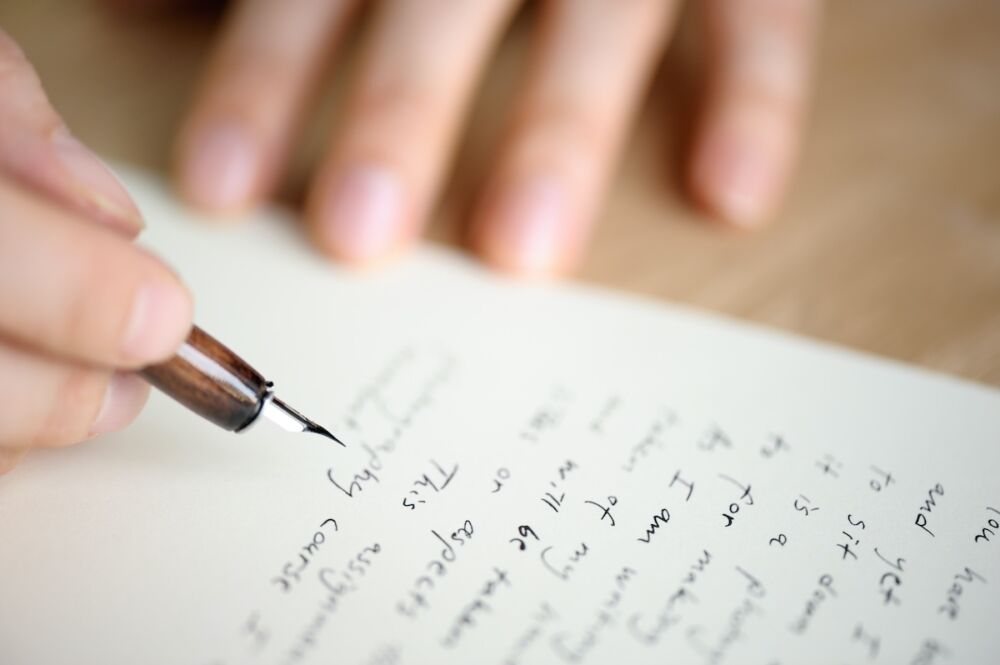
For Mom
I had Owen’s blue camp shirt pressed to my face when the phone rang.
It still smelled faintly of him — that particular combination of laundry detergent and something underneath it that was simply him, a smell I had been trying to memorize since the day I understood I would need to. I sat on his bed every afternoon now, surrounded by his schoolbooks and sneakers and baseball cards, and the kind of silence that did not feel empty so much as cruel. The kind that knows you are listening for something that will not come.
Some mornings I could still see him in the kitchen, flipping a pancake too high and laughing when it landed half on the stove. That had been the last morning I saw him alive. He looked tired, the way he had looked for months by then, but he smiled through it and told me not to baby him when I asked if he was sleeping enough. He had always hated being fussed over. He would scrunch up his nose and say, “Mom, I’m fine,” in the exact tone thirteen-year-old boys use when they mean I love you but also please stop.
Owen had been fighting cancer for two years by then. Charlie and I had built our entire hope around the belief that he was going to come through it. The treatments were brutal and the days were long and frightening, but the doctors were cautiously optimistic, and we had learned to live inside that caution and call it enough. That is why the lake took more than our son that day. It took the future we had already started quietly promising ourselves.
He left that morning with Charlie and some of his friends for the lake house, the way he had done a dozen times before. By afternoon my husband was calling me in a voice I did not recognize — flat, scraped out, a voice that had already accepted what it was being forced to say. He told me Owen had gone into the water. A storm had rolled in faster than anyone expected. The current had carried our son away.
Search teams looked for days. They found nothing. They told us what strong currents do, the clinical language of people who have had to explain this particular kind of loss before, and eventually used the words families are expected to accept when there is nothing solid left to hold.
Owen was declared gone. Without a body. Without a face for me to kiss goodbye.
I broke so badly they admitted me for observation. Charlie handled the funeral arrangements because I could barely stand through a conversation, let alone decisions about caskets and flowers and which photographs to display. When there is no proper goodbye, grief does not find its ending. It just keeps circling the same coordinates, returning to the last known location and finding nothing there.
The phone screen said Mrs. Dilmore.
Owen adored his math teacher. He talked about her at dinner more than he talked about half his friends — the way she turned a problem into a puzzle, the way she got genuinely excited when someone found an unexpected approach to a solution. Math had been his favorite subject because of her. He had been good at it, the kind of quietly good that doesn’t announce itself but shows up consistently in every test and every homework assignment, a steadiness that used to make me proud in the particular way you feel proud when you recognize something of yourself in your child.
“Hello?” My voice came out thinner than I intended.
“Meryl, I’m so sorry to call like this.” Mrs. Dilmore sounded shaken in a careful way, the way people sound when they are trying to manage their own emotion so it doesn’t frighten you before they can explain. “I found something in my desk drawer today. I think you need to come to the school right away.”
“What are you talking about?”
“It’s an envelope,” she said. “It has your name on it. It’s in Owen’s handwriting.”
My hand tightened on the shirt. “From Owen?”
“Yes. I don’t know how I missed it for this long. It was in the back of my bottom drawer. But it’s his. I’m certain.”
I don’t remember ending the call. I remember standing too fast and feeling my heartbeat climb into my throat, and I remember my mother’s face when I found her in the kitchen rinsing a mug. She had been staying with us since the funeral because I was not eating enough and because I kept waking in the night calling his name, and she had come without being asked, the way mothers do when their children are in more pain than can be managed alone.
“What’s wrong?” she asked.
“Owen left me something, Mom. At the school. His teacher found it.”
Her face changed in the way only another mother’s face can change when she hears something like that — not with surprise exactly, but with a kind of soft, stricken understanding that doesn’t look away.
Charlie was at work. Work had become his hiding place since the funeral. He left before I was fully awake and came home after I had already given up waiting. He said very little in between, and he had stopped letting me touch him. The distance between us had started out feeling like two people grieving in parallel, which I understood. But it had shifted into something else, something that felt less like grief and more like a locked room with no visible door.
I drove to the school alone.
At a red light, I looked at the small wooden bird hanging from my rearview mirror. Owen had made it in shop class for Mother’s Day the previous spring. The wings were uneven. The beak was slightly crooked. I had told him it was beautiful, and he had rolled his eyes with the theatrical patience of a boy who knows his mother is contractually obligated to say such things. “Mom, you’re legally required to say that,” he had said, grinning.
The school looked exactly the same when I pulled into the parking lot. That was its own kind of unbearable. The building didn’t know. The brick and the windows and the flagpole in front had no idea that the boy who used to cut across the grass on the far side of the field, when he thought I couldn’t see him taking the long way around, was gone. Everything just continued being itself without him.
Mrs. Dilmore was waiting near the front office, her face pale, holding a plain white envelope with both hands. She extended it toward me carefully, as if she understood that what she was passing over was not just paper.
“I found it in the back corner of the bottom drawer,” she said again. “I genuinely don’t know how I missed it.”
I took it the way you take something fragile and irreplaceable. On the front, in Owen’s handwriting — that slightly tilted, confident script I had seen on hundreds of homework assignments and birthday cards and notes stuck to the refrigerator — were two words.
For Mom.
My knees came close to giving out right there in the hallway.
“Would you like to sit down?” she asked.
“Please,” I said.
She brought me to a small side room, the kind used for parent conferences and quiet conversations, with a single table and two chairs and a window that looked out over the field. I could see the long way around the building from that window. The path he used to take.
I held the envelope for a moment before I opened it, because some part of me understood that whatever was inside would change something, and I had had enough changes I didn’t choose. I was afraid of one more.
Then I slid my finger under the flap.
Inside was a sheet of notebook paper, folded in thirds, the kind torn from the spiral edge of a composition book. The second I saw his handwriting covering the page, my heart ached so sharply I had to press one hand over it before I could read.
Mom, I knew this letter would reach you if something happened to me. You need to know the truth. The truth about Dad and what has been going on these past few years.
The room seemed to go thin around me. I read the sentence again. Then I kept reading.
Owen wrote that I should not confront Charlie. Not yet, and not first. He told me to follow him instead — to see something with my own eyes before I drew any conclusions. Then, after I had seen it, to go home and look beneath the loose tile under the little table in his room.
No explanation beyond that. No tidy answer. Just a path, drawn in his handwriting, asking me to trust him one more time.
I folded the letter, looked at Mrs. Dilmore, thanked her, and went to my car.
For one second I almost called Charlie. Then I remembered what the letter said. I drove to his office building instead and parked across the street.
I sent him a text: What do you want for dinner?
Three minutes later: Late meeting. Don’t wait up. I’ll grab something out.
My stomach turned. Not from surprise exactly. From recognition. I had heard that answer so many times in the past weeks that I had stopped questioning it, had absorbed it into my understanding of what grief looked like in a man who didn’t know how to let me see it.
Twenty minutes later, Charlie came out the front door. He was carrying only his keys, his shoulders bent slightly in the way I had been reading as grief, as weight, as a man being slowly crushed by something he had no vocabulary for. I pulled out behind him and kept three cars between us.
The drive took nearly forty minutes. When he finally pulled in, I recognized the parking lot before I read the sign.
The children’s hospital. The same hospital where Owen had spent two years in treatment, where we had learned which nurses worked which floors and which vending machine had the better coffee and how to read the faces of the doctors before they finished speaking. I knew this building in the particular intimate way of people who have been afraid inside it.
Charlie took bags and boxes from his trunk and carried them toward the entrance. I followed at a distance.
Inside, he moved with the easy confidence of someone who knew exactly where he was going. He nodded to a nurse at the desk and she smiled warmly, the smile of someone who has seen this person before. She pointed him toward the far wing. He disappeared into a supply room and shut the door.
I stood near the wall and looked through the narrow window.
Charlie was changing his clothes. What he was changing into was not what I expected. Bright oversized suspenders. A checkered coat in garish colors. A round red clown nose that he pressed onto his face with both hands, looking at himself in the small mirror on the supply room door. Then he took a single deep breath, picked up the bags, and walked back out into the corridor.
I moved behind a pillar.
He entered the pediatric ward.
Children started smiling before he reached the first room. He was pulling toys from the bags and handing out coloring books and doing a practiced stumble that made one small girl laugh so hard she clapped her hands. A nurse passing the corridor grinned at him. “You’re late, Professor Giggles,” she said.
Charlie smiled back. He had a whole separate smile in there that I apparently did not know about.
I stood in the corridor for a long time, watching through the doorways. Nothing about what I was seeing matched the suspicion Owen’s letter had briefly ignited in me. But something else was happening in my chest that I didn’t have a name for yet — something that felt like the ground shifting in a direction I hadn’t anticipated.
I stepped into the ward.
“Charlie.”
He stopped mid-joke. The smile left his face the instant he saw me, replaced by something raw and exposed, the expression of a man who has been keeping a particular door shut and has just watched it open without warning. He crossed to me quickly and steered me toward a quiet corner of the hallway.
He pulled off the nose and held it in his hand and looked at me. “Meryl. What are you doing here?”
“I should be asking you that.”
I took Owen’s letter from my bag. Charlie saw the handwriting, and something left his face all at once — not just the composure, but the effort of maintaining it, the energy he had been spending for weeks to keep whatever this was from reaching me. My son’s handwriting had done in three seconds what I hadn’t managed in all my attempts to reach him.
“Owen wrote to me,” I said. “He told me to follow you.”
Charlie pressed his palm flat against the wall beside him. “I should have told you.”
“Then tell me now.”
He wiped his eyes with the back of his hand. “I’ve been coming here for two years. After work. I put on this ridiculous outfit and I bring toys and I try to make the kids laugh, even if it’s just for an hour.”
“Why?”
“Because of Owen.”
I forgot how to breathe for a moment.
“During one of his treatments,” Charlie said, his voice steady enough to be devastating in its quietness, “Owen told me the hardest part wasn’t the pain. He said it was watching the other kids on the ward looking scared and trying not to cry in front of their parents. He said he wished someone would just come in and make them smile for one hour.” Charlie looked toward the ward. “So I started. I didn’t tell Owen. I wanted it to be for him — not so he would be proud of me, not because he asked, just because it came from him. And then I found out he had figured it out anyway.”
“And you hid it from me too,” I said.
“I know.” His voice shook. “Everything about those two years felt like one long attempt to keep us both from falling apart. And then after the lake, I didn’t know how to tell you any of it without it sounding insane, or too late, or like I was trying to make myself the hero of a story where our son just died.”
“You let me think you were disappearing from me, Charlie.”
“I wasn’t disappearing,” he said. “I was drowning in private.”
I handed him the letter without another word.
He read it in that hallway, still wearing the checkered coat, tears landing on the page before he finished the first paragraph. For the first time since the funeral, I understood what his distance had actually been — not rejection, not a retreat from our marriage, but shame and grief and a secret too large to carry without it slowly consuming him from the inside.
Charlie pressed the letter to his mouth. Then he looked toward the ward. “I need to finish in there.”
He went back. I watched him do another twenty minutes of jokes and silly dances with a face still swollen from crying, and the children laughed without caring that his eyes were red. They cared that he showed up. That was the whole lesson, right there in a hospital corridor, taught by a man in a checkered coat who had learned it from his thirteen-year-old son.
When he came out, the coat and the nose were gone, and he looked ten years older than he had that morning.
“Let’s go home,” I said.
We went straight to Owen’s room.
Charlie knelt at the little table in the corner — the one Owen had used for homework and Lego projects and the elaborate card games he invented — and pried up the loose tile with a butter knife. A small gift box slid into view.
Inside was a wooden sculpture. Three figures: a man, a woman, and a boy between them. Smooth in some places, rough in others, unmistakably made by Owen’s hands. I had to close my eyes before I could look at it for more than a second. The roughness of it was the part that undid me, the places where his grip had slipped or his tool had caught wrong and he had kept going anyway.
Beneath it was another note. We read it together on the floor of his room, sitting the way we used to sit when he was small and we would read to him before bed.
I’m sorry I didn’t tell you the truth straight out, Mom. I just wanted you to see Dad’s heart for yourself before a letter did the talking for me. I know both of you have been trying, even when it was messy and hard. I also need you to know that I was lucky. Not every kid gets parents who love the way you and Dad do. I love you both more than you know.
I read it twice before I could cry. Then I did. Charlie did too.
We sat on Owen’s floor holding each other for the first time since the funeral, and this time when I reached for him, Charlie did not pull away. He held on the way a man holds on when he has finally run out of places to hide, with his whole weight, with everything he had been carrying alone.
After a long while, Charlie drew back and said quietly, “There’s something else.”
He unbuttoned his shirt.
On his chest, placed directly over his heart, was a tattoo of Owen’s face. Small and detailed and unmistakably him.
“I got it after the funeral,” Charlie said, looking down at it, then back at me. “I didn’t let you hug me because the skin was still healing. And I didn’t show you because I know you hate tattoos, and I couldn’t stand to have done one more thing wrong in front of you. I just needed him close to me. I needed to know he was somewhere on my body that I could feel.”
I laughed through my crying. It was the first real laugh since before the lake — the uncontrolled, helpless kind that comes when something lands exactly right, when grief and love and absurdity collide and your body doesn’t know what else to do.
“It’s the only tattoo I’ll ever love,” I told him.
We stayed in Owen’s room until the light changed and the house went dark around us, and we didn’t bother with the lamps. Some things need the dark to be said properly.
The moment did not fix what grief had done to us. Grief is not something that gets fixed. It gets carried, and the carrying changes shape over time, and sometimes, if you are very lucky, you find someone willing to carry it alongside you so that neither of you has to do it alone. We had forgotten that we were supposed to be doing this together. Owen, from wherever he was, had remembered for us.
He had left a path. He had trusted me to follow it. He had trusted his father’s heart to do the rest.
For a boy of thirteen, who spent two years of his short life fighting a disease in a hospital ward full of frightened children, that kind of wisdom — the wisdom of knowing when to step back and let the truth show itself — was more than most people manage in a lifetime.
I thought about him in that ward during his own treatments, looking around at the other kids and thinking not about his own fear but about theirs. I thought about him watching his father dress up and make children laugh, figuring it out quietly, saying nothing, letting it become what it was without announcement.
I thought about him writing two letters and hiding a sculpture under a floor tile and trusting that someday, somehow, the right moment would arrive to deliver them.
He had known something was broken between Charlie and me, even when we were trying to hide it from him. And instead of asking us to fix it, he had quietly built the mechanism that would fix it for us, then carried it out into the world without us knowing, and left it there for whenever we needed it.
I keep the wooden sculpture on the windowsill in our room now, the three figures in their rough, imperfect forms. I can see his fingerprints in the wood if I look closely. The places where his hands pressed.
Some mornings, when the grief is its heaviest, I hold it and think about that crooked wooden bird hanging from my rearview mirror, the one with the uneven wings and the tilted beak. About how I had called it beautiful and he had rolled his eyes, knowing I was legally required to say so.
He had been right. I was.
But I would have said it anyway.

Laura Bennett writes about complicated family dynamics, difficult conversations, and the quiet moments that change everything. Her stories focus on real-life tensions — inheritance disputes, strained marriages, loyalty tests — and the strength people find when they finally speak up. She believes the smallest decisions often carry the biggest consequences.