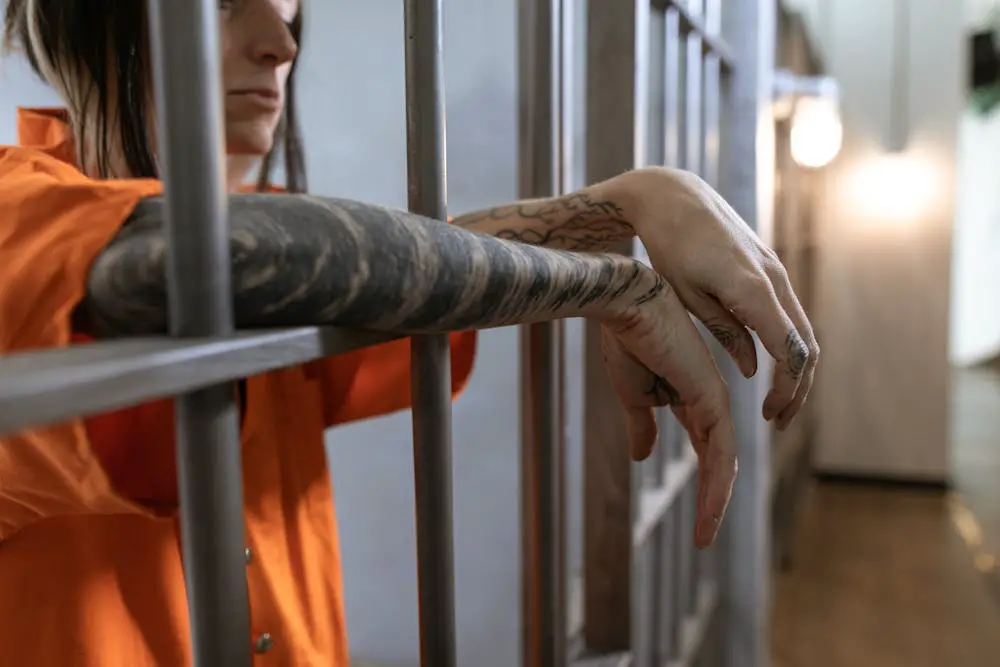
The trial had already been running for two hours when Isabella Reyes finally stood up straight and said, calmly and without preamble, that she spoke ten languages fluently.
The laughter that followed was not unkind in the way that embarrassed people are unkind. It was comfortable laughter, the kind that fills a room when something absurd has been said and everyone present feels that they have already arrived at the correct conclusion. Judge Harold Weston let it roll for a moment before he raised a hand to quiet it, though not before adding his own contribution to the sound.
“Ten languages,” he repeated, leaning back in his chair with the ease of a man who had long ago stopped pretending impartiality was the same as effort. “Girl, can you even speak proper English?”
More laughter. Even the court reporter’s shoulders moved.
Isabella stood at the defendant’s table in a gray blazer that was clean and pressed but clearly not new, her hands resting at her sides. She was twenty-five years old, Mexican-born, brought to the United States at thirteen on her aunt’s visa with two suitcases and a grammar textbook her school in Guadalajara had let her keep. She had learned English from television and neighbors and a public library branch whose librarian had taken a specific interest in her and handed her books at a pace that matched her hunger for them. French she had studied in a community college night class, paying for it with money from her first job at a restaurant near the bus depot. Mandarin she had taught herself from software and free online courses and two years of weekly conversation exchange with a retired teacher in Chengdu who had wanted to practice her Spanish and had been willing, in return, to correct Isabella’s tones until they were right.
The other six languages had accumulated in their various ways, through study and proximity and the specific kind of attention that belongs to people who find that a new language is not a new burden but a new room in a house they have been building all their life.
She was a linguist by education and by instinct. For the past six weeks she had been the subject of a fraud investigation that had cost her employer tens of millions of dollars, and for the past two hours she had answered questions in this courtroom with a composure that seemed to irritate people far more than tears would have.
She looked at the judge. She looked at the prosecutor, a man named Hargrove who arranged his papers with the meticulous self-satisfaction of someone who considered a case already won. She looked at the gallery, at the executives of Caldwell and Partners who sat in the front row with their good suits and their settled faces, and at the deputy director, Marcus Ellroy, who was not looking at her at all but at a spot somewhere above the jury box, in the studied way of a man who has rehearsed a neutral expression until it feels like innocence.
Then she did what she had decided, on the drive to the courthouse that morning in her cousin’s borrowed car, she was going to do if the moment came. She looked at all of them and let the sentence that had been building in her chest for six weeks come out in the language it first arrived in.
In English first, without accent, clear as a bell in a quiet room: “I am innocent, and I can prove it.”
Then in Spanish, the language her mother had spoken every morning of her childhood over the sound of breakfast being made on a small stove in Guadalajara, the language that had traveled with her across the border and had never once apologized for itself.
Then in Mandarin, clean and tonal, every vowel and every tone placed exactly where it needed to be. Then French. Then German. Then Japanese, which always made something in her chest settle, because Japanese had been the language that convinced her, at nineteen, that she was actually going to be able to do this, that the capacity was not a fluke but a feature. Then Arabic, and the Arabic made someone in the gallery audibly exhale. Then Portuguese. Then Russian, deliberate and exact. Then Italian, and in Italian there was something slightly different in her delivery, something that sounded less like recitation and more like ease, the way people sound in languages they have spent time being happy in.
The same sentence, ten times. Each one landing in the courtroom like a stone dropped from a consistent height. The laughter had stopped after Mandarin. By Arabic the room was entirely still. By the time she finished, the silence was the kind that collects in spaces after something has shifted and people are waiting to understand what.
Judge Weston had straightened in his chair. The ease was gone from his posture. “Alright,” he said, and his voice was different now, quieter and without the performance, the voice of a man recalibrating. “Then prove it.”
Isabella turned to her attorney, a woman named Carmen Vela who had taken this case at reduced rate because she believed in it and because she was the kind of lawyer who still, after seventeen years, chose her cases partly on that basis. Carmen slid a tabbed folder across the table.
“Your Honor,” Isabella said, “I’d like to address the source documents directly.”
Hargrove rose immediately. He was a tall man who used his height the way some people use volume. “Objection. The documents have been reviewed and entered into evidence. The defendant’s interpretation of them is not relevant to the question of translation accuracy.”
“The defendant’s interpretation,” Carmen said, rising smoothly, “is directly relevant when the defendant’s expertise is the reason she is sitting at that table. She is a linguist. The alleged crime involves a mistranslation. Her ability to read the source documents in the language in which they were originally written is not incidental. It is the entire point.”
Weston looked between them for a moment. Then he nodded at Isabella. “Proceed.”
Isabella opened the folder and began from the beginning, which was not the courtroom, and not the fraud investigation, but a Tuesday morning four months earlier when she had been called into the office of Marcus Ellroy, deputy director of international finance at Caldwell and Partners, to review a contract with a manufacturing consortium based in Shenzhen.
She described it carefully, because the details were the proof, and she had understood since the beginning that her only safety was in the details.
The contract had been substantial. Forty-three pages of acquisition terms, liability clauses, and financial schedules, drafted partially in English and partially in Mandarin, as was standard for transactions of this kind with Chinese partners. Ellroy had walked her through the document himself, page by page, pointing out the sections he wanted translated for the board review. She remembered thinking at the time that it was unusual for a deputy director to be personally involved in the translation briefing, that normally she received documents through the administrative pipeline and returned her work the same way. But she had not questioned it. Ellroy was senior, and senior people sometimes took unusual interest in large transactions.
What she noticed in Ellroy’s office, and filed away without yet understanding its significance, was a discrepancy in the financial schedule on page thirty-one. The Mandarin text specified a liability cap of eight million yuan. The English summary on the facing page rendered this as eighty million U.S. dollars, a figure that did not correspond to any reasonable exchange rate or contract structure she was aware of. She had flagged it verbally, pointing to the line and asking whether this was intentional or a drafting error.
Ellroy had told her it was a provisional figure, subject to revision, and that she should proceed with the rest of the document and note the discrepancy for the compliance team. She had done exactly that. She had also, because she was thorough and because something about the exchange had stayed with her like a word she couldn’t quite place in the right context, written the discrepancy in her personal translation notes with the date and the specific page reference.
Three weeks later, the Shenzhen deal collapsed. The financial losses were enormous. An internal audit was launched. And the documents that came back through the pipeline to her for formal translation record were not the same documents she had seen in Ellroy’s office.
The discrepancy on page thirty-one was gone. In its place was a figure that tracked cleanly in English and Mandarin, but introduced a different error, buried deeper in the liability schedule on page thirty-seven, in a subordinate clause that restructured the indemnification terms in a way that shifted financial exposure entirely onto Caldwell’s domestic accounts. The clause was technically correct in Mandarin. The English translation she was given to verify was technically accurate. But the underlying logic of the clause, what it actually meant for the company’s liability exposure, required reading it in the context of three other clauses spread across pages twelve, nineteen, and thirty-four, all of which had been subtly altered from the versions she had seen in Ellroy’s office.
The auditors had not spotted the changes. They had compared the final documents against the financial outcomes and found that the translation matched the text. What they had not done, because they had no reason to do it, was compare the final documents against a version that no longer existed in the official record.
Except that Isabella had been in the room when the first version existed. And she had written down what she saw.
“Your Honor,” she said, “I would like to submit my personal translation notes from the original briefing meeting, dated seven weeks before the formal translation record.”
Hargrove was on his feet before she had finished the sentence. “Objection. The authenticity of these notes cannot be verified. The defendant could have written them at any time.”
“The notes were written in a spiral notebook,” Carmen said, “which the defendant’s cousin can testify she purchased at a pharmacy on the date in question. The pharmacy has sales records. The notebook itself has date stamps from Isabella’s note-taking habit of writing the day’s news headline at the top of each day’s pages. The headline on that page corresponds to a story from the San Francisco Chronicle, which can be verified against the paper’s archive.”
The room was very quiet.
“Additionally,” Carmen continued, “the notes were photographed and sent via encrypted message to a friend of the defendant’s that evening. The metadata on the photograph establishes the timestamp.”
Weston looked at Hargrove. Hargrove looked at his papers. Neither of them looked at Marcus Ellroy, but Isabella did, briefly, and what she saw in his face was not quite panic. It was something colder and more deliberate, the expression of a man deciding how much ground he could afford to give up while still holding the center.
“I’ll allow the notes,” Weston said.
The next forty minutes were, in their way, the most extraordinary Isabella had sat through, and she had sat through a great deal in the preceding weeks. A forensic document examiner who had been waiting in the hall was called in to examine the Mandarin text of the contract against the discrepancies Isabella identified. Two of the court’s own language consultants, neither of whom had previously been involved in the case, were brought in to verify her translation of the relevant clauses. They were given the documents without context and asked to assess whether the English renderings matched the Mandarin originals.
They did.
They also confirmed, when shown Isabella’s handwritten notes alongside the final document, that the liability clause on page thirty-seven of the final version did not appear in her notes from the original meeting, and that the clause materially changed the financial structure of the indemnification terms.
A Caldwell and Partners IT technician, subpoenaed that morning on Carmen’s request and visibly unhappy about it, testified that the contract file in the company’s document management system had been accessed and modified six days after the original briefing meeting, under a set of credentials that belonged to a junior analyst who had been on vacation in Arizona at the time.
The credentials had been borrowed. The junior analyst had not known. He had, however, shared his password with his supervisor, because his supervisor had told him it would make document routing easier during busy periods.
His supervisor reported to Marcus Ellroy.
By the time this last piece landed, the gallery had the particular stillness of people who have been watching a magic trick and have just understood that the card was never where they thought it was. The executives in the front row had rearranged themselves in their seats in the small, collective way of people trying to establish distance from something without moving. One of them leaned toward another and whispered something behind his program. Another was looking at his phone, then put it away, then took it out again.
Ellroy himself had not moved. He sat with his hands in his lap and his face in neutral, and only the quality of his stillness gave him away, the stillness of someone who has stopped breathing naturally and is now breathing on purpose.
Weston called a recess.
During the recess, Carmen found Isabella in the hallway outside the restrooms and put both hands on her shoulders. “You did exactly right,” she said. “All of it. The languages, the notes, the photograph. All of it.” She said it twice, as if once might not be enough to push through.
Isabella pressed her back against the wall and let herself feel, for a moment, the accumulated weight of six weeks. She thought about the morning the investigators had come to her apartment, the look on her landlord’s face through the half-open door, the careful and very deliberate way the investigators had spoken to her as though volume and slowness were the same as clarity. She thought about the phone calls to her mother in Guadalajara that she had kept short and gentle so as not to let fear into her voice, knowing that her mother would hear it anyway, because mothers always do, and that her mother would then spend the next several days worrying across a distance of two thousand miles with no way to do anything useful about it.
She thought about her colleagues at Caldwell who had stopped meeting her eyes in the hallway after the investigation began, the particular avoidance of people who are not unkind but who do not want proximity to trouble, as if misfortune were the kind of thing that could travel between people through eye contact. She thought about sitting at her kitchen table at midnight with her personal notes spread in front of her and her laptop open to the encrypted message thread with her friend, reading the timestamp on the photograph she had sent and understanding that the timestamp was the only version of her that existed outside her own memory. That it was, in the end, what everything rested on. A date, a time, a headline from a newspaper, and the habit of a thorough person who had written down what she saw.
She had not cried then. She was not going to cry now.
When they returned to the courtroom, Hargrove’s posture had changed. He was still tall, but the height was doing less work for him. He conferred briefly with a colleague, then turned to face Weston with the expression of a man who has run a calculation and arrived at an unfavorable result.
“Your Honor, the prosecution requests a brief continuance to review the newly submitted materials.”
“You’ll have until tomorrow morning,” Weston said. His voice had completed its transformation by this point. The comfortable ease, the borrowed laughter, the smirk at the edge of his sentence when he asked if she could speak proper English, all of it was gone, replaced by something that was not quite regret but was at least its more functional neighbor: attention.
He looked at Isabella. “Ms. Reyes. You are remanded to your own recognizance pending tomorrow’s session. I would strongly suggest,” he added, and here something passed across his face that was harder to name, “that you are available.”
“I will be, Your Honor,” she said.
She was.
In the morning, Hargrove arrived with a revised position. The prosecution had reviewed the forensic report and the document examiner’s testimony and the timestamp evidence and the IT technician’s account and had concluded that the case against Isabella Reyes could not be sustained. The charges were withdrawn. Weston accepted the withdrawal with a formality that was slightly more deliberate than it needed to be, which was the closest he came to acknowledging, in the public record, what the previous afternoon had established.
Marcus Ellroy was arrested in the courthouse parking lot at 9:14 that morning by federal investigators who had been briefed the previous evening by Carmen Vela and who had spent the intervening hours obtaining the necessary warrants. Two of the executives who had been sitting in the front row were brought in for questioning before noon. The junior analyst whose credentials had been used retained his own attorney by midday and cooperated fully with investigators in exchange for an arrangement that kept him out of the case as a defendant.
The documents were what they were. The timestamps were what they were. The Mandarin text said what it said, and a twenty-five-year-old woman from Guadalajara was the only person in the building who had been able to read it in the room when the original existed, and who had been careful enough, and frightened enough, and thorough enough in her professional habits, to write down what she saw.
Carmen held a brief statement outside the courthouse. She spoke for four minutes, kept the language precise, and thanked the forensic team and the court’s language consultants by name. She did not perform outrage, though she had every right to it. She said that her client’s case illustrated the particular vulnerability of people whose expertise is invisible to those who ought to respect it, and that the court system depended on translators and linguists every day without always understanding what it was depending on.
Isabella stood beside her and did not speak to the press. She had said what she needed to say inside, and she was tired in the way that follows not one difficult day but many of them stacked together, the tiredness that does not lift immediately just because the reason for it is resolved.
Her cousin was waiting at the bottom of the courthouse steps with the borrowed car and a paper bag from the bakery two blocks away that made the pan dulce the way Isabella’s mother had described it, though it was not quite the same.
They drove without talking for a while. The city moved past the windows in the particular way it does when you have been indoors for a long time and the scale of things outside reasserts itself.
“What happens now?” her cousin asked.
Isabella looked out at the street. A woman was crossing at the light with a child on her hip and a bag of groceries in the other hand, managing the balance of it without thinking. A man at a bus stop was reading something on his phone with the deep concentration of someone who has not had a moment to himself all day and is taking one now. The ordinary movements of people who have not spent the morning in a courtroom.
“I don’t know yet,” she said.
That was honest. She did not have a job. She had left Caldwell, or Caldwell had left her, depending on how you counted the weeks of administrative leave that preceded the formal charges. Her professional reputation had been through something that would require time and evidence of its own to recover from. The world was not good at updating its first impressions, especially when the first impression had been printed in a business news item that described her as the translator at the center of the Caldwell fraud investigation without noting that she was there as the accused, not the source.
But she had the notebook. She had the photograph. She had the ten languages that lived in her the way her mother’s cooking lived in her, absorbed young and never entirely separated from who she was. She had the memory of standing in a courtroom while people laughed at her and making the choice, very quietly and without drama, to say the truest thing she knew in every tongue she possessed.
She had been trained to translate, which meant she had been trained to understand that the same meaning could be carried in completely different shapes, and that the goal was never the shape but the meaning underneath. She understood that the laughter in the courtroom had been a shape, and that what it carried underneath was not contempt for her specifically but the assumption of a category she was being placed in, the category of someone whose claim could not be taken seriously.
She had not argued with the assumption. She had not explained herself or asked for the benefit of the doubt. She had simply stood up and demonstrated, in ten consecutive languages, that the category did not fit, and then she had done the harder thing, the thing that required not facility with language but the careful preservation of her own professional habits against the possibility of exactly this kind of crisis: she had produced the evidence.
Carmen called that afternoon to begin discussing the civil complaint against Caldwell and Partners and, separately, the professional misconduct complaint against the judge. The second conversation was brief, because Weston’s conduct was a matter of public record and Carmen had already been in touch with two colleagues who had been thinking about similar matters involving the same courtroom for longer than she had. These things moved slowly, Carmen said, but they moved.
A week later, a linguist she had studied with, now teaching at a university, called to ask if she would consider coming to speak to his advanced translation seminar about the case, not the legal dimensions but the professional ones, the question of what it means to be the only person in the room who can read a document and what responsibilities and vulnerabilities that creates. She said yes. She was not sure she had a complete answer to the question yet, but she thought that not having the complete answer might be exactly the right place from which to talk to students about it.
Her mother called from Guadalajara that evening, and Isabella told her, in Spanish and then in the abbreviated shorthand of people who have been talking across distance for a long time, that it was over. Her mother said nothing for a moment. Then she said what mothers say, the thing that is not quite a question and not quite a statement but lives in the register between them, the register that all languages have a shape for, even if the words are different.
Isabella sat at her kitchen table and held the phone and answered in the language her mother had given her first, the one that lived closest to the center, the one she had carried across a border at thirteen and kept intact through every language she had added since, because adding was not the same as replacing, and she had never confused the two.
Outside the window, the evening was doing what evenings do. The light was changing. Somewhere a few floors below, a neighbor was cooking something that came up through the building the way smells do in old apartments, present and anonymous and oddly comforting.
Isabella had ten languages, and she was innocent, and she had proved it in a room that laughed at her, and tomorrow she was going to figure out what came next.
That was enough for tonight.

Lila Hart is a dedicated Digital Archivist and Research Specialist with a keen eye for preserving and curating meaningful content. At TheArchivists, she specializes in organizing and managing digital archives, ensuring that valuable stories and historical moments are accessible for generations to come.
Lila earned her degree in History and Archival Studies from the University of Edinburgh, where she cultivated her passion for documenting the past and preserving cultural heritage. Her expertise lies in combining traditional archival techniques with modern digital tools, allowing her to create comprehensive and engaging collections that resonate with audiences worldwide.
At TheArchivists, Lila is known for her meticulous attention to detail and her ability to uncover hidden gems within extensive archives. Her work is praised for its depth, authenticity, and contribution to the preservation of knowledge in the digital age.
Driven by a commitment to preserving stories that matter, Lila is passionate about exploring the intersection of history and technology. Her goal is to ensure that every piece of content she handles reflects the richness of human experiences and remains a source of inspiration for years to come.