The New Rhythm
The thing about a family that does not believe you are sick is that, after long enough, you begin to wonder whether they might be right. Not because the evidence is unclear. The evidence was a PICC line threaded through the vein in my upper arm and guided into the superior vena cava near my heart, delivering a continuous infusion of Milrinone from a small battery operated pump I carried in a pouch clipped to my waistband. The evidence was a resting heart rate of one hundred and twelve beats per minute, a left ventricular ejection fraction of eighteen percent, and a file at the cardiology department of Yale New Haven Hospital thick enough to prop open a door. But belief is not really about evidence. Belief is about what people are willing to accommodate, and my family had decided, somewhere around the beginning of my second year of illness, that accommodating the idea that I might die was less convenient than deciding I was faking it.
My name is Emily Vance. I was twenty six years old on the afternoon my brother ripped the central line from my chest at our family’s Fourth of July barbecue in Glastonbury, Connecticut. I had been living with dilated cardiomyopathy since I was twenty four, diagnosed after a series of fainting episodes that my mother initially attributed to dehydration and my father attributed to what he called a lack of toughness. The cardiomyopathy was idiopathic, which meant they could not find a cause, which in my family’s interpretation meant there was no cause, which meant it was not real. That chain of logic sounds absurd set down on paper, but it had a terrible internal consistency when you understood the people involved, and I understood them very well. I had spent my entire life studying the architecture of their affections, trying to find the door that opened into the room where I would be taken seriously, and I had never found it.
The Vances were a family built around a single organizing principle: strength was real and weakness was performance. My father, Arthur, was a commercial contractor who had built his business from a single truck and a line of credit and who believed, with the sincere conviction of a man whose body had never betrayed him, that most suffering was a failure of will. My mother, Eleanor, was a woman whose every public gesture was calibrated to project competence and warmth in equal measure, the kind of woman who brought casseroles to neighbors in crisis and then came home and told us that the neighbor’s problems were largely self inflicted. And my brother, Ethan, three years older and built like the athlete he had been since childhood, had absorbed the family doctrine so thoroughly that he could not look at me without seeing an accusation, as if my illness were a commentary on his health, a shadow cast across the sunlit story he told about himself.
They had not always been cruel about it. In the first months after the diagnosis, there had been a period of cautious concern, phone calls and questions and my mother attending one appointment with me at which the cardiologist, Dr. Alana Reeves, explained the condition in careful, patient language. But the concern lasted only as long as the illness fit the timeline they had imagined for it. When I did not improve after three months, the skepticism began. When I was hospitalized for the first time after a run of ventricular tachycardia that left me unconscious on my kitchen floor, my father visited once and spent most of the visit looking at the monitors as if they were props in an elaborate production. When the PICC line was placed and I began the Milrinone infusion that would keep my heart functioning while I waited for a transplant evaluation, Ethan told our cousin Rachel at Thanksgiving that I had turned a minor health scare into a full time identity.
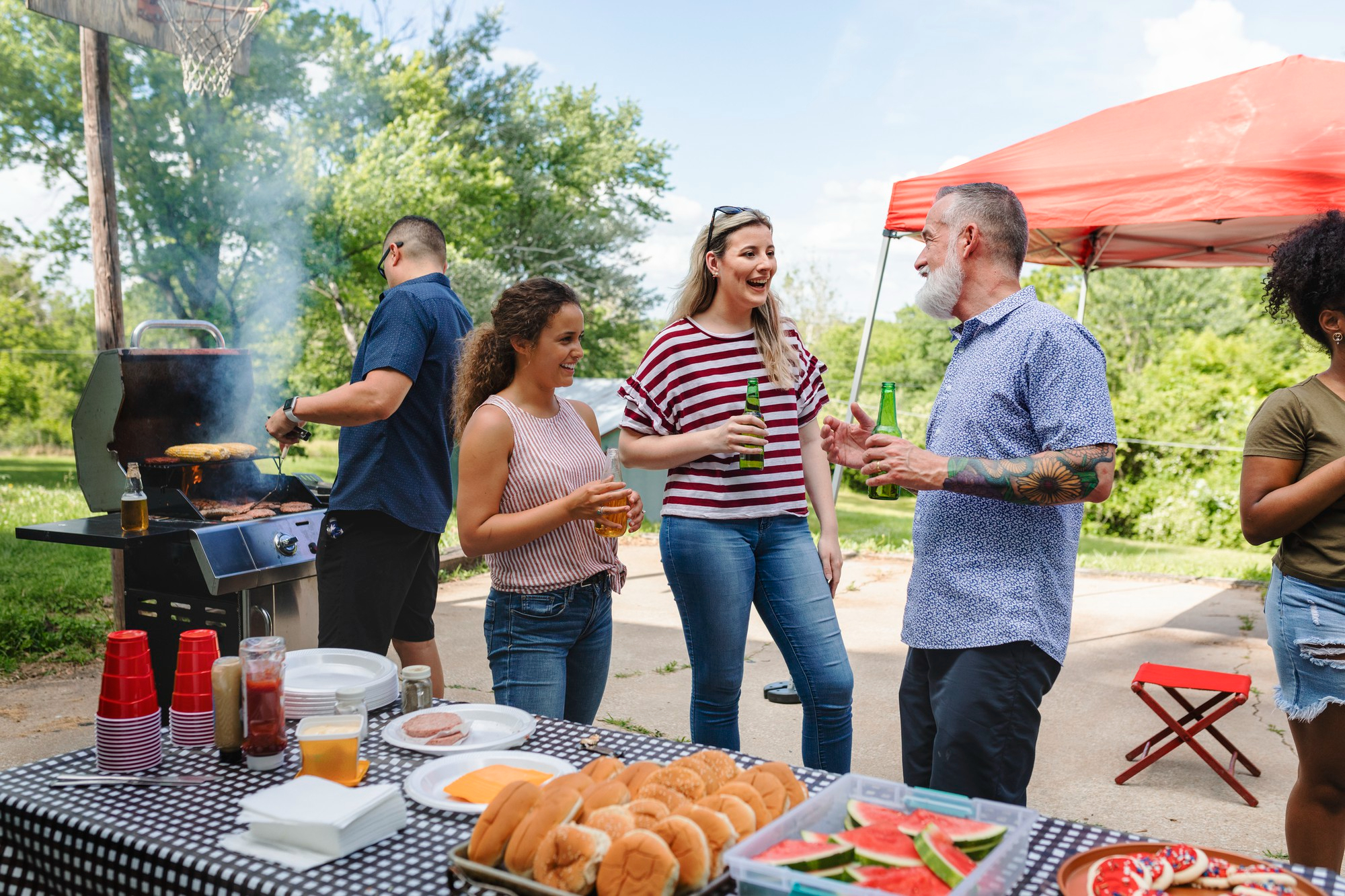
The barbecue was my mother’s idea. She organized it every year, a large gathering at the house in Glastonbury with extended family, neighbors, and what she called friends of the family, people who occupied the social periphery of my parents’ life and who were invited because their presence confirmed that the Vances were the kind of people who hosted things. There would be grilled food and cold drinks and lawn games and children running between the hedges, and my mother would move through it all with a pitcher of her lemonade, the recipe she guarded like a state secret, smiling and refilling glasses and performing the role of effortless hostess with a discipline that I had always found both impressive and exhausting.
I did not want to go. I had not attended the year before because I had been in the hospital, and the relief of that absence had taught me something about how much energy I spent, even in the best of times, managing my family’s discomfort with my body. But my mother had called three times in the week before the barbecue, and in the third call her voice had taken on the particular quality it assumed when she was about to say something she wanted to sound casual but that carried the weight of an ultimatum. She said it would mean a lot to your father. She said Ethan had been asking about me. She said people were starting to talk, meaning the neighbors, the extended family, the social circle that mattered to her more than she would ever admit, and the talk was apparently about why Emily never came to anything anymore, and Eleanor Vance could not abide the implication that her family was anything less than close.
So I went. I wore a long sleeved linen shirt despite the eighty degree heat because the PICC line dressing on my upper arm was visible otherwise and I had learned that the sight of it made people uncomfortable in a way that quickly became my problem. I sat on the porch in the shade because direct sun and humidity stressed my cardiovascular system in ways that could trigger arrhythmias, and because sitting was easier than standing, and because I had stopped pretending I could do things my body could no longer do. The pump hummed quietly against my hip. The lemonade my mother brought me was cold and sweet and I drank it slowly, grateful for the small ordinary pleasure of something that tasted good on a warm afternoon.
For the first hour, the day was merely uncomfortable. Ethan ignored me with a theatrical completeness that was its own kind of aggression, talking loudly about his training schedule and his weekend plans and the truck he was thinking of buying, all of it pitched at a volume that ensured I could hear how full and vigorous his life was compared to mine. My cousins Rachel and Derek sat near me for a while, asking polite questions that circled the subject of my health without landing on it, the way you might walk around a hole in the floor and comment on the wallpaper. My father flipped burgers and told stories about construction projects to a small audience of uncles and neighbors. The afternoon had the quality of a play in which everyone knew their part and the only requirement was that nobody break character.
I noticed the man by the grill early on. He was standing slightly apart from the other guests, holding a glass of water instead of a beer, and he had the particular stillness of someone who was observing rather than participating. He was in his early fifties, I guessed, with silver threaded through dark hair and the kind of posture that comes from years of standing for long hours in concentrated work. My mother had introduced him earlier as Julian, a colleague of someone in my father’s business circle who was in town for a conference. He had shaken my hand with a gentle, deliberate grip and looked at me a moment longer than social convention required, his eyes moving briefly to the outline of the pump pouch at my hip before returning to my face. I thought nothing of it at the time. I had become accustomed to people noticing and then deciding not to notice.
The trouble started, as it always did, with Ethan and an audience. He had been drinking since noon, not heavily enough to stumble but enough to strip away the thin membrane of restraint that kept his opinions about me at the level of muttered asides rather than public declarations. He crossed the yard with a beer in one hand and a plate in the other and stopped in front of my chair with the loose, expansive body language of a man who believes he is about to do something righteous.
“Still hiding over here?” he said. His voice carried. He wanted it to carry. “You know, Em, it’s a family party. You could at least pretend to be part of the family.”
“I’m here, Ethan. I’m sitting right here.”
“Sitting. Yeah. That’s all you do.” He turned slightly so his voice would reach the cluster of cousins near the lawn chairs. “Must be nice, right? Full time job being sick. Rest of us work for a living.”
I felt the familiar premature contraction, the skipped beat that felt like a fist clenching and releasing inside my chest. I pressed my hand to my sternum reflexively, a gesture I had stopped trying to hide because hiding it required more energy than I had. “The cardiologist at Yale said heat and stress are the two biggest triggers for an episode. I’m doing what I was told to do.”
“The cardiologist,” Ethan repeated, as if the word were a punchline. “Right. The one who keeps telling you your heart is failing so you can keep collecting sympathy and skipping out on life. When are you going to admit this is all in your head, Emily? When are you going to grow up?”
I did not answer because there was no answer that could penetrate the wall he had built between his understanding of the world and the reality of my body. I had tried facts. I had tried medical records. I had once, in a moment of desperation, asked my mother to come to an appointment so Dr. Reeves could explain the echocardiogram results directly, and my mother had come and listened and nodded and then, in the car on the way home, said she thought the doctor was being alarmist and that a positive attitude could go a long way. After that I stopped trying to convince them and focused instead on staying alive, which turned out to be a full time occupation that left very little energy for anything else.
What happened next took perhaps four seconds, but I have replayed those seconds so many times in the year since that they have expanded in my memory into something almost cinematic, each frame slowed and separated and examined for the moment when I might have stopped it. Ethan’s gaze dropped to my neckline, where the edge of the PICC line dressing was visible above my collar. The adhesive had loosened in the humidity, and a quarter inch of the transparent dressing had peeled away, exposing the white hub where the catheter entered my skin. I saw his eyes fix on it. I saw the decision form on his face. And I understood, in the half second before he moved, exactly what he was going to do, but my body, the body that could not climb a flight of stairs without resting, could not move fast enough to stop him.
He grabbed the line.
He grabbed it the way you might grab a loose thread on a jacket, with the casual confidence of someone who believes the thing he is pulling is decorative rather than structural. His fingers closed around the hub and he pulled, hard, and the adhesive tore from my skin with a sound that I can still hear when the house is quiet at night, a wet ripping that was followed immediately by a pain so acute and so wrong that my vision whited out for a full second. The catheter, a silicone tube that had been threaded through my vein and positioned near my heart, came out in a single violent motion, and I felt the impossible sensation of air entering my bloodstream through the open wound, a cold rushing wrongness that my body recognized as catastrophic before my mind could name it.
I fell. Not dramatically, not the way people fall in movies with their arms extended and their faces arranged in photogenic anguish. I folded. My knees gave out and I went down onto the porch and then onto the grass at the edge of the steps, and my heart, suddenly deprived of the Milrinone that had been keeping it in a functional rhythm, began to fire in the rapid, chaotic pattern that Dr. Reeves had warned me about in her office six months earlier when she explained what ventricular tachycardia was and what it felt like and what I should do if it happened, which was to lie still and call for help and wait for someone who knew what they were doing.
Ethan held the bloody catheter in the air. There was blood on his hand and on my shirt and on the white railing of the porch, and he looked at the line with the triumphant expression of a man who has just proved his thesis, because in his mind the fact that I had collapsed was not evidence that the line was real but evidence that I was committed to the performance. “See?” he said. “It’s nothing. It’s a tube. She bought this at a medical supply store.”
Rachel had her phone out. She was filming. Derek was laughing. “Give her an Oscar,” someone said, and the laughter rippled through the group of cousins with the easy cruelty of people who have decided that what they are watching is entertainment rather than emergency.
I could not speak. My heart was running at a rate that Dr. Reeves would later estimate at over two hundred beats per minute, a speed at which the chambers do not have time to fill with blood between contractions and the body begins to shut down. The grass was cool against my face. The sky above me was a depthless blue. I could hear the laughter and the music from the speakers and the distant sound of children playing in the neighbor’s yard, and all of it was receding, pulling away from me like the shore pulling away from a boat that has slipped its mooring.
Then Julian was there. He crossed the yard in a way that I did not see because my eyes were losing focus, but I heard his footsteps and then his voice, and his voice was not the polite, modulated voice of a party guest. It was a command. “Everyone move back. Now.” He was on his knees beside me before anyone could respond, and his hand pressed firmly over the exit wound on my chest where the catheter had been, applying pressure with a precision that was not improvised, and his other hand found the pulse point on my neck and stayed there.
“She’s in V tach,” he said, and the words were not directed at anyone in particular but at the situation itself, the way a surgeon speaks in an operating room, narrating the crisis to hold it in the framework of something that can be managed. “Call 911. Tell them cardiac emergency, secondary to traumatic line removal. Tell them she’s on Milrinone and the infusion was interrupted.”
My father put down his spatula. My mother set down the pitcher. The laughter stopped. Ethan said, “Hey, calm down, she’s faking it, she does this,” and Julian looked up at him and the look on his face was something I have only been able to describe since as the absolute absence of tolerance, the face of a man who has spent his career watching people die and who knows exactly what dying looks like and who is looking at a person who has just caused it.
“If you speak again,” Julian said, “I will make certain the police understand exactly what I witnessed here.”
Then he noticed the glass. My lemonade, half spilled in the grass beside me. He reached for it, brought it close to his face, and I saw his expression change. The controlled focus shifted into something colder. He looked at my mother. “Who gave her this glass?”
“I made the pitcher,” my mother said. Her hand was at her throat. “Ethan brought her a glass earlier. Why? What’s wrong?”
Julian’s eyes moved to Ethan. “What did you put in this.”
It was not a question. It was a statement that required a response, and the authority behind it was so complete that Ethan, who had never in his life deferred to anyone who was not physically larger than him, took a step backward. “I didn’t put anything in it. I just.” He stopped. His face changed. “I put some of her pills in it. The white ones from her bathroom. I figured if she was really sick they wouldn’t do anything extra, and if she was faking it she’d have to admit the pills were nothing.”
Julian closed his eyes for one second. When he opened them, his voice was quiet and very precise. “Those pills are Digoxin. It’s a cardiac glycoside. In the dose you likely gave her, on top of her existing regimen, you have caused a potentially lethal toxicity in a woman whose heart is already in failure.” He paused, and the pause was not hesitation but the deliberate creation of space for what he was about to say to land with its full weight. “My name is Dr. Julian Reeves. I am the chief of cardiothoracic surgery at University Hospital. I have spent the last six months reviewing Emily’s case for transplant candidacy. I was invited here today to observe her home environment as part of the psychosocial evaluation required before she can be listed at Status 1A on the national transplant registry.” He looked around the yard, at the cousins with their phones lowered, at my parents standing motionless by the grill, at the neighbors who had stopped mid conversation on the other side of the hedge. “I was here to determine whether this family was capable of supporting Emily through a heart transplant. I have my answer.”
The silence that followed was not the silence of a room waiting for someone to speak. It was the silence of people understanding, all at once, that the story they had been telling about themselves was a lie, and that the lie had been witnessed by someone who could not be charmed or deflected or persuaded that things were not as bad as they looked.
The ambulance arrived seven minutes later. I know because Julian told me afterward that he counted the minutes, and that by minute four my heart rate had slowed not because the V tach was resolving but because the Digoxin toxicity was beginning to suppress the electrical conduction system that kept my heart beating at all, and that by minute six he was preparing to begin CPR. I do not remember most of this. I remember the grass, the sky, his hand on my chest, and a feeling that was not pain exactly but a vast and spreading heaviness, as if my body were being slowly filled with sand. I remember the sound of the siren growing louder. I remember being lifted and the sensation of movement and the bright interior of the ambulance and Julian’s face above me, steady and focused, his lips moving as he spoke to the paramedics in a language that was technical and urgent and that I could not follow.
I was in the ICU for three days. The Digoxin toxicity required treatment with an antibody called Digibind, administered intravenously, and even after the drug levels began to fall, my heart, already weakened by years of cardiomyopathy, could not stabilize. The monitors showed a rhythm that Dr. Reeves, who came to see me on the second day, described as brittle, a heart that was beating but that had lost the resilience to recover from the stress it had been subjected to. She sat at my bedside and held my hand and told me, in the careful language she always used when the news was serious, that the damage from the Digoxin overdose had accelerated the timeline. My heart could no longer sustain itself on medication alone. The transplant evaluation, which had been expected to take another three weeks, was being expedited. I was being listed as Status 1A.
Julian visited every day. He came in the morning before his own surgical schedule and again in the evening, and he sat in the chair beside my bed and talked to me about the transplant process in the calm, thorough way of a man who understood that information was a form of care. He explained what would happen if a donor heart became available. He explained the surgery, the recovery, the medications I would take for the rest of my life. He explained the psychosocial component, which was the part that had brought him to the barbecue, the requirement that transplant candidates have a stable support system capable of providing post operative care. And then he told me, quietly, that he had already spoken with the hospital’s social work team, that they were arranging alternative support, that my family’s involvement was no longer a factor in my candidacy.
“What happened to Ethan?” I asked. It was the third day. My voice was thin and the room was very quiet.
“He’s been charged with aggravated assault,” Julian said. “The district attorney is considering additional charges related to the Digoxin. The cousins’ video has been entered into evidence.” He paused. “Your parents have retained a lawyer. They are cooperating.”
“Cooperating,” I said.
“It means they are answering questions when asked. It does not mean they understand what they allowed to happen. Those are different things.”
I turned my head toward the window. The hospital faced east, and in the mornings the light came through the glass in long pale rectangles that moved across the floor as the hours passed. I had watched them move for three days. It was the kind of thing you notice when your body is too tired to do anything except observe, when the world shrinks to the size of a room and the room becomes its own landscape, every shadow and surface and shift of light as detailed and significant as a countryside you are seeing for the first time.
“My mother came yesterday,” I said. “She stood outside the glass and cried.”
“I know.”
“She didn’t come in.”
“No.”
“I don’t know if she couldn’t or if the nurses stopped her.”
Julian was quiet for a moment. “The nursing staff would have let her in if you had asked. They were waiting for you to ask.”
I did not ask. Not that day, and not the next. I do not know whether that was strength or exhaustion or the simple inability to perform, one more time, the work of making my family’s feelings manageable while my own heart was failing. I only know that I lay in that bed and watched the light move and felt, for the first time in two years, the strange relief of not pretending. There was no one to convince. There was no skepticism to navigate. There was only the monitor and the IV and the quiet presence of people who believed me because the evidence was what it was and they did not need to be persuaded to read it.
The donor heart came on the fifth day. Julian told me at six in the morning, standing at the foot of my bed in surgical scrubs, his face carrying the particular expression of a man delivering news that is both grave and hopeful in equal measure. A young woman in Pennsylvania, a car accident, a family that had made the decision that no family should have to make. The heart was a match. The surgical team was assembling. We would be in the operating room within two hours.
I looked at him. “You’re doing the surgery.”
“I am.”
“Is it strange? Knowing me. Having been at the barbecue. Having seen all of that.”
He considered the question the way he considered everything, with a deliberateness that never felt slow. “It would be strange if it made me less careful,” he said. “It doesn’t. It makes me more so.”
As they wheeled me toward the operating room, I passed the glass partition of the waiting area. My mother was there. She was sitting in a plastic chair with her purse in her lap, and she looked smaller than I had ever seen her, a woman whose careful architecture of appearances had collapsed around her and who did not yet know how to sit inside the rubble. She saw me through the glass and her face crumpled and she pressed her hand to the partition, and I could see that her mouth was forming words but I could not hear them and I did not try to read them. I looked at her for a moment, and what I felt was not anger and not forgiveness but something in between, something that did not yet have a name and that I did not need to name in order to survive it. Then the gurney turned a corner and she was gone, and the fluorescent lights of the surgical corridor passed overhead in a steady rhythm, and Julian walked beside me and said, “We’re ready when you are,” and I said, “I’m ready,” and I closed my eyes.
The surgery lasted nine hours. I know this because Julian told me afterward, and because my mother, who sat in the waiting room for every one of those hours, wrote the times down on the back of a receipt she found in her purse, start time and end time, as if recording the numbers could give her some control over what was happening on the other side of the wall. I do not remember the surgery, of course. I remember the anesthesiologist asking me to count backward from ten, and I remember reaching seven, and the next thing I remember is light and sound returning slowly, like a radio being tuned from static into a clear signal, and Julian’s voice saying my name.
Recovery was measured in weeks, then months. There was the ICU, then the step down unit, then the cardiac rehabilitation floor, then the outpatient clinic. There were medications, dozens of them, immunosuppressants and antivirals and blood pressure drugs and a schedule of pills that I kept on a chart taped to my refrigerator and that looked, in its complexity, like the flight plan for a small aircraft. There were biopsies, small pieces of heart tissue extracted through a catheter and examined under a microscope to check for rejection, and each time the results came back clear I felt a relief so physical it was almost like falling.
Ethan pleaded guilty to aggravated assault and reckless endangerment. His lawyer had pushed for a plea deal that would have kept him out of prison, but the video, the one Rachel had taken, the one that had been intended to humiliate me and that instead documented, in high definition, the assault and its aftermath, made that impossible. The judge watched it in the courtroom. Julian testified. Dr. Reeves testified. The toxicology report from the hospital was entered into evidence. Ethan was sentenced to eight years. I did not attend the sentencing. I learned about it from a text message my father sent, the first communication he had directed at me in five months, two sentences long: “Ethan got eight years. Your mother is not doing well.” I read it once and set my phone on the kitchen counter and went for a walk around the block, slowly, the way I walked everywhere now, carefully and with attention to the rhythm of my breathing and the beat of the heart that someone else’s family had given me so that I could go on living.
He wrote to me from prison. The first letter arrived four months after the sentencing. It was written in his angular, compressed handwriting, the penmanship of a man who had never cared much about legibility because he had always assumed people would make the effort to understand him. He wrote that I had always wanted attention and that I had finally gotten it. He wrote that I had ruined his life for a medical condition that plenty of people managed without making it everyone else’s problem. He wrote that our parents would never recover. He did not write that he was sorry. I read the letter at my kitchen table on a Wednesday morning, and when I finished reading it I folded it and put it in a drawer and sat there for a while looking at nothing in particular. I had expected the letter to make me angry. Instead it made me sad, not for myself but for him, for the absolute, hermetically sealed certainty of a person who could sit in a prison cell and still believe the central premise that had put him there: that my illness was about him.
I did not write back. I did not throw the letter away either. It went into the drawer with a few other things I was not ready to decide about: a Christmas card my mother had sent with a short note that said only “thinking of you,” a photo of the four of us from a vacation when I was twelve that I had found in a box while packing up my old apartment, a get well card from my father that arrived three months after the surgery with no return address, as if he wanted me to know he was thinking of me but did not want to make it easy for me to respond. The drawer was becoming a kind of archive of the family I had lost, or the family that had never quite existed in the form I had believed in, and I did not open it often but I did not throw any of it away.
Julian and I stayed in contact. He was my surgeon and then my follow up physician and then, gradually, something less clinical and more human, a person who called to ask how I was feeling and who meant it in both the medical and the ordinary sense. He was the one who told me, at my six month checkup, that my ejection fraction was now fifty four percent, which was within the normal range, which meant that the heart in my chest was doing what hearts are supposed to do. I sat in his office and looked at the echocardiogram on the screen, the chambers contracting and releasing in the steady, powerful rhythm of a healthy organ, and I cried. Not out of grief. Out of the strange, disorienting recognition of a body that was working the way bodies are supposed to work, a sensation I had not felt in so long that it registered as foreign, the way your own house looks unfamiliar when you return from a long trip and see it with fresh eyes.
It has been a year now. I live in a small apartment near the hospital, close enough that I can walk to my follow up appointments, which I do, rain or shine, because walking is something I could not do without planning and fear for two years and now I can do it whenever I want and I have not yet gotten over the pleasure of it. I work part time at a nonprofit that advocates for patients with chronic illness, helping people navigate insurance denials and specialist referrals and the particular kind of exhaustion that comes from being sick in a system that requires you to prove your suffering before it will treat it. I am good at this work. I understand the terrain.
I have not spoken to my parents since the surgery. My mother sends a card at Christmas and on my birthday, and the notes inside have grown slightly longer with each one, progressing from “thinking of you” to “I hope you are well” to, most recently, “I would like to talk when you are ready. There is no rush.” I have not decided what to do with that sentence. Some days I read it and feel the pull of something old and deep, the child’s need to be seen by the woman who raised her, and other days I read it and feel nothing at all, and I have learned that both responses are true and that I do not have to choose between them yet.
Last week I hiked to the summit of Bear Mountain. It was a Saturday morning in late October, cool and bright, the trees along the trail burning with color in the way that New England trees do in autumn, as if they are trying to be remembered before the leaves fall. It was not a difficult hike by most standards, but for me it was something I would not have survived two years ago, something my body could not have done, and I climbed slowly and steadily and stopped often to catch my breath and drink water and stand among the trees and listen to the wind move through the canopy. At the summit, the view opened out over the river valley, hills rolling away in every direction, the river a silver line in the distance, and I stood there with my jacket unzipped and felt the air fill my lungs and the heart in my chest beating steadily, seventy two beats per minute, the rhythm of a woman standing on a mountain and breathing.
I put my hand on my sternum, over the scar that runs down the center of my chest, a thin raised line that will be with me for the rest of my life. It is not something I hide anymore. It is not something I explain unless I choose to. It is simply part of the body I live in now, the body that someone’s daughter gave me so that I could stand on a mountain and feel the wind and be alive on a Saturday morning in October.
I stayed at the summit for a long time. I watched the light change across the valley and listened to the birds and thought about the woman in Pennsylvania whose heart I carry, and about Julian sitting beside my hospital bed explaining the surgery with the patience of a man who believed I deserved to understand what was happening to me, and about my mother pressing her hand to the glass as I was wheeled toward the operating room, and about Ethan’s letter in the drawer, and about all of it, the whole tangled impossible history of being a person whose family did not believe her body and who survived anyway, not because she convinced them but because she stopped needing to. The wind came up the mountain in a long steady gust that smelled of fallen leaves and cold water and the particular mineral sharpness of stone, and I stood in it and let it pass over me and felt, not happiness exactly, but something sturdier than happiness. Something like the feeling of a heart that is finally, after everything, doing what it was meant to do. Beating. Just beating. Steady and unremarkable and mine.

Ethan Blake is a skilled Creative Content Specialist with a talent for crafting engaging and thought-provoking narratives. With a strong background in storytelling and digital content creation, Ethan brings a unique perspective to his role at TheArchivists, where he curates and produces captivating content for a global audience.
Ethan holds a degree in Communications from Zurich University, where he developed his expertise in storytelling, media strategy, and audience engagement. Known for his ability to blend creativity with analytical precision, he excels at creating content that not only entertains but also connects deeply with readers.
At TheArchivists, Ethan specializes in uncovering compelling stories that reflect a wide range of human experiences. His work is celebrated for its authenticity, creativity, and ability to spark meaningful conversations, earning him recognition among peers and readers alike.
Passionate about the art of storytelling, Ethan enjoys exploring themes of culture, history, and personal growth, aiming to inspire and inform with every piece he creates. Dedicated to making a lasting impact, Ethan continues to push boundaries in the ever-evolving world of digital content.