I was gone for five days.
Just five days, up near the Selkirk Range with a cooler and a quiet lake and no cell signal, the kind of trip that resets something in your head that the regular world spends all year tightening. I had been looking forward to it for weeks. When I came back down into range and felt my phone start buzzing with all the things I had missed, I ignored it. When I turned onto my road and saw the golden late-afternoon light cutting through the tall pines the way it does in September, I felt the particular satisfaction of coming home to a place that has stayed exactly how you left it.
That feeling lasted about forty seconds.
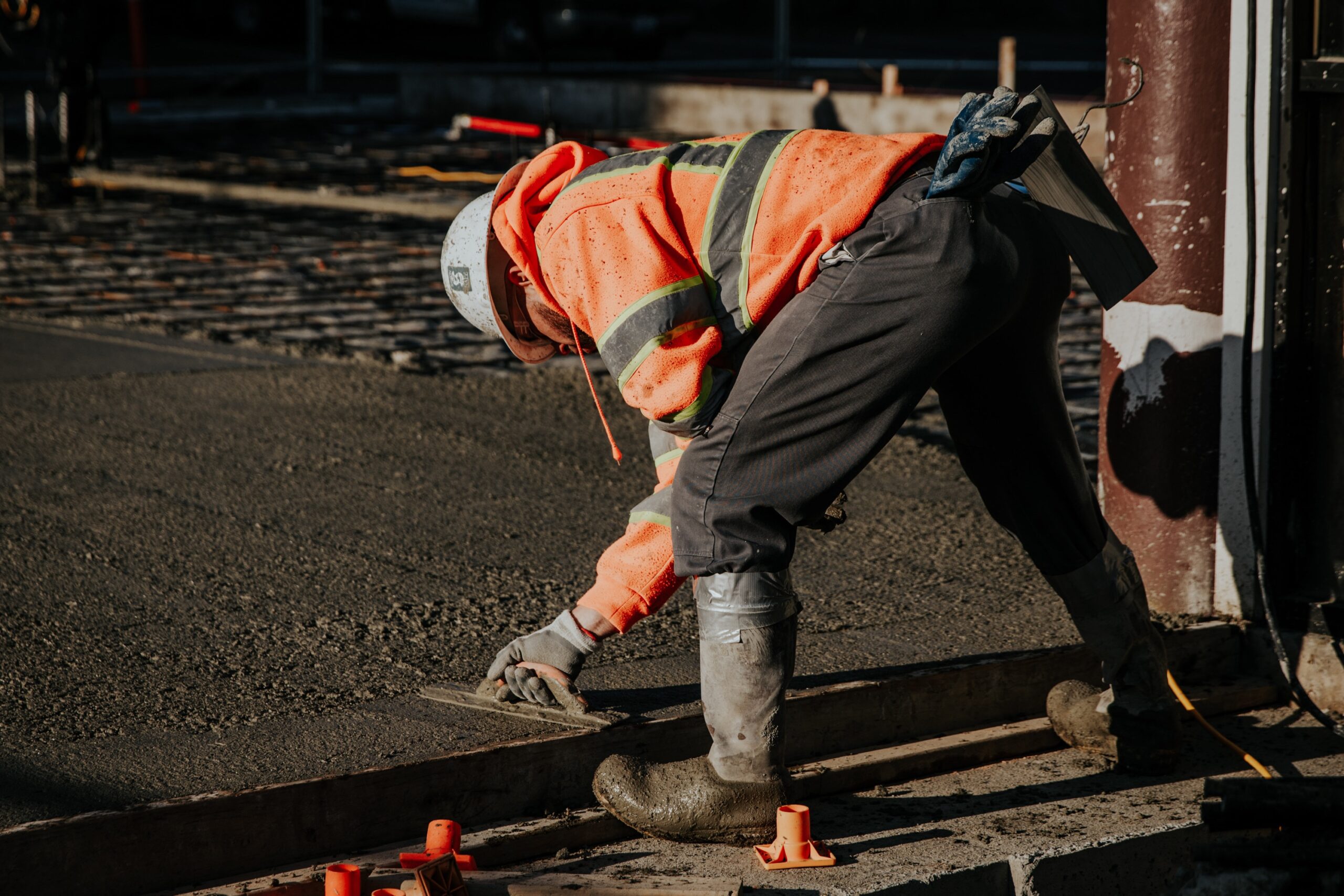
I slowed the truck halfway up the driveway because something registered as wrong before I could name it. Not alarming exactly, just off, the way your eye catches something out of place before your brain finishes processing what it is. Then I saw it. Concrete. Fresh and pale and completely wrong against the dark earth, stretching across the full width of my driveway like someone had decided the road simply ended there. Wooden forms still in place on either side. Rebar sticking up in a row, rusted red against the late sky. Tire tracks circling the whole area from whatever equipment had done the pour.
I stopped the truck and sat there with the engine running for a moment, just looking at it.
They had poured a concrete foundation directly across my only driveway. Not near it. Not close to it. Across it. Blocking it completely, as if my cabin and my sixty acres and my twelve years of living on this land had simply been revised out of the situation.
I got out and walked up to it. I put my hand on the edge of it the way you touch something you don’t quite believe, hoping the physical sensation will settle the question. It did not settle the question. Behind the foundation I could see my cabin through the trees, maybe two hundred feet away, entirely unreachable by any vehicle.
I pulled out my phone and called the number I had for Daniel Harper, who had moved in from Chicago on the property adjoining mine the previous spring.
He picked up on the second ring. His voice was calm. Cheerful, even.
I told him what I was looking at. I told him I could not get to my house.
There was a pause on the line. Not long. But the kind of pause that has a quality to it, that tells you something about whether the person on the other end is surprised or whether they are deciding how to play the next thirty seconds.
“Oh, that,” he said. “Yeah, we thought that section was part of our lot.”
I breathed through the first wave of what I was feeling. “Daniel, that is my driveway. It has been there for decades. I have the survey.”
“Well,” he said, and his tone shifted slightly, “our contractor measured from the road. According to him, we’re within our boundaries.”
I told him as evenly as I could that he was not, and that even if he were, you do not block the only access to someone’s residence. That was not how any of this worked.
He exhaled. The exhale of a man who had already tired of a conversation he had been prepared to have. “Look, you can still get around it. There’s open land to the side, right? Just drive through the trees a bit.”
That was the moment I understood what this was. Not a mistake. Not a contractor’s error that had gotten out of hand. Convenience. His convenience, arranged at my expense, with the assumption that I would absorb the inconvenience rather than make a fuss.
“No,” I said, and my voice had changed. “I’m not rerouting through the woods because you guessed wrong about where your property line was. You need to fix this.”
A different quality of silence this time. Then his voice, colder, more deliberate. “If you really think it’s your land, you’re welcome to take it up legally.”
I stood there after the call ended, phone still in my hand, looking at that pale concrete in the evening light. Behind it, my cabin. In front of it, everything I was going to have to do next.
I slept in my truck that night, parked at the tree line, because hiking in through the dark with my gear felt like the saner option. I lay there listening to the wind in the pines and turned the question over in my mind. Not the legal question, which was straightforward. The human question. How does a person convince themselves this is acceptable? Not a fence a few feet over a line. Not a shed pushed too close to a boundary. A full concrete foundation across the only road to someone’s home, followed by a suggestion to drive through the woods.
By morning I had stopped trying to understand it and started thinking about what to do instead.
I drove into town and went to see Martin Keller, who has been handling land and property law in this county longer than most people in the county have owned their land. Marty is not a dramatic man. He does not give speeches. He has a small office with a good lamp and a lot of filing cabinets, and when he tells you something is wrong, you can build on that.
He spread my survey out on his desk and put on his glasses and traced the boundary line with one finger, slowly, the way he does everything. Then he leaned back in his chair and looked at me over his frames.
“This isn’t even close,” he said.
“Not close at all?”
He shook his head. “From what you’re describing, that foundation is sitting fully on your parcel. Not straddling it. Not overlapping it. Fully.”
I let that settle for a moment even though I had known it. There is a difference between knowing something and hearing a man like Marty confirm it.
“So what do we do?”
He folded his hands on the desk. “We give them a formal opportunity to fix it. I’ll send a letter. Ten days, remove the structure, restore access. If they don’t, we escalate. And if we escalate, we make it considerably more expensive for them to ignore this than to address it.”
He drafted the letter that afternoon. It was precise and dispassionate, the survey attached, the boundaries defined, the demand simple and clear. Remove the structure within ten days or face legal action including removal at their expense. We sent it certified mail.
For about thirty-six hours I half-convinced myself they would come to their senses. Put something in writing, attach a lawyer’s name, and most people recalibrate. Most people look at the paper version of a situation and recognize it for what it is.
Marty called me two days later.
They had retained counsel from a firm in Seattle. They were not acknowledging fault. Their position was that they had relied on their contractor’s measurements and that any dispute over boundary lines required proof of damages. They were proposing we negotiate an easement.
I actually laughed when Marty told me that last part. Not from humor. From the pure script-like predictability of it. They had blocked my access and were now offering to purchase the right to keep the thing that blocked it where it was.
“No,” I said. “Not happening.”
Marty nodded like he had not expected anything different. “Then we file.”
The filing moved everything into a different register. Not argument. Not negotiation. War conducted in paperwork and billable hours and the grinding patience of a legal timeline that does not care how obvious the situation is.
What made it worse during those weeks was what they did next.
They kept building.
While the lawyers were exchanging motions and filings, while everything was technically under active dispute and any reasonable person would have paused, Daniel’s crew came back out. I heard them before I saw them, the diesel rumble of trucks coming up before sunrise, the sound of a generator, the rhythm of nail guns carrying through the trees in the cold morning air.
I drove out one afternoon and parked at the edge of what had been my driveway and watched them work. Framing going up on top of that foundation. Walls taking shape. They were building a garage, and they were building it with the focused efficiency of people on a deadline.
Daniel pulled up about ten minutes after I arrived. Stepped out of his SUV with coffee in hand and sunglasses on like it was any ordinary morning.
“You’re really doing this,” I said, nodding at the structure.
“Doing what?”
“Building on disputed land.”
He tilted his head slightly. “My attorney advised me to continue construction until a court orders otherwise.”
I looked at him. “Did your attorney tell you what happens if the court orders otherwise after the building is finished?”
He smiled. Not warmly. “Then we’ll deal with it.”
That answer followed me for days afterward. Not the words. The tone. Like consequences were something you sorted out later if they became unavoidable, a line item in a cost-benefit analysis that he had already run and been comfortable with. The possibility of being wrong had been factored in as a manageable expense.
Over the following weeks the garage went from foundation to walls to roof trusses to sheathing. Every morning I parked short of the concrete barrier, grabbed what I needed from my truck, and hiked the rest of the way in. Every morning I thought about how long this had been going on and how much longer it was going to go on.
Neighbors noticed. Word travels slowly and completely in places like this. Hank, who has lived down the road since before I moved in, stopped by one evening and I told him what was happening. He just shook his head.
“City people,” he said, not mean about it, just tired. “They think land works like paperwork. Like you can just redraw it if it’s inconvenient.”
I did not argue with him.
Six weeks after we filed, we had a hearing date.
The courtroom was small, the kind that smells of old wood and polished floors and the accumulated weight of a lot of situations that felt urgent to the people in them. Daniel and Elise sat across from me with their Seattle attorney, who was the kind of man who talks with the expectation of being agreed with. Marty sat beside me with his folder of documents arranged with the quiet care of someone who does not need to perform confidence because he simply has it.
Judge Halvorson has been on the bench in this county for a long time. He reviewed the filings without theatrics, looked over the survey, asked a few clarifying questions that told you he had already read everything carefully before walking in.
Daniel’s attorney made the argument about good faith reliance, contractor measurements, undue financial harm from demolition. The judge listened without interrupting, then looked down at the survey again.
“The boundary line here,” he said, tapping the document, “is not ambiguous.”
The room got very quiet.
He looked up directly at Daniel. “You built a permanent structure on land that does not belong to you, and in doing so you obstructed the plaintiff’s only reasonable access to his residence.”
Daniel shifted in his seat. It was the first genuine sign of discomfort I had seen from him since the whole thing started.
The judge’s voice did not change in tone or pace. “I’m ordering removal of the structure. Full removal. You have fourteen days to restore the property to its prior condition. If the structure is not removed within that time frame, the plaintiff is authorized to arrange for its removal and recover all associated costs.”
That was it. No speech. Just a decision, stated clearly, with a timeline attached.
Walking out of the courthouse Marty leaned slightly toward me. “Now we wait,” he said. And for the first time in weeks I felt like the ground had shifted back to something level.
Fourteen days.
I told myself they would use them. Whatever they thought of me, whatever they thought of the whole situation, the math had changed. The court had ruled. The structure was coming down one way or another. The only variable was who paid for it.
Day one passed. Nothing.
Day three. Nothing.
Day seven I drove out again and parked at the line and looked at the garage, fully framed now, roof complete, standing there as if the court order were something that happened in a different world than this driveway.
I called Marty. “They haven’t touched it.”
He did not sound surprised. “I didn’t think they would.”
“What now?”
“We let the clock run,” he said. “Then we act.”
There is a particular quality to that kind of waiting. Anger at least gives you something to push against, a forward motion, a direction for the energy. Waiting is different. You have to just hold the situation in your hands and trust a process that moves slower than any of it deserves.
Day fourteen came and went. No trucks. No workers. No attempt at compliance. Just that garage standing in the morning light exactly as it had been standing when we walked out of that courtroom.
On the morning of day fifteen, I did not hesitate. I had lined everything up already.
Tony Ramirez pulled up just after sunrise with a flatbed and an excavator. You heard the machine before it came around the bend in the road, that low diesel rumble moving through the trees in the still morning air. Marty arrived shortly after, not in his usual office clothes, just jeans and a jacket and his folder, there to document, not to argue.
We had notified the sheriff’s office the day before. Not because we anticipated trouble but because when you are about to tear down something that technically belongs to someone else, even with a court order authorizing you to do it, having the record shows you are not doing anything you are not entitled to do.
Tony stepped down from his truck and looked at the structure and then looked at me.
“That the one?”
“That’s the one.”
He nodded once. “All right. We’ll make it quick.”
There was a moment before it started, one of those seconds where everything goes still. No wind. Just the idling of the excavator engine, and the birds in the pines, and the whole accumulated weight of the past two months pressing up against what was about to happen.
Then Tony climbed into the cab, and the arm lifted, and the bucket angled forward, and it began.
The first contact was not dramatic. It was controlled and deliberate, the bucket pressing into the side wall, wood groaning and then giving, nails pulling free one at a time before the section buckled inward. The second push was harder, and the frame went, the roof shifting, beams snapping, dust rising into the morning light.
Once a structure loses its core integrity, everything else follows quickly. Walls came down in sections. The roof caved. Plywood splintered and split. The careful, deliberately built shape that had taken weeks to construct came apart in hours, reduced to a pile of debris that bore no resemblance to what it had been.
The concrete was last. Tony switched attachments, brought out the breaker, and began cracking the slab. Each impact sent a dull echo through the ground that I could feel in my boots. The rebar bent and twisted as the sections broke free, loaded into the truck in chunks. The line of my driveway began to reappear. Rough at first, scarred, but open.
By late afternoon it was gone. Not hidden. Not modified. Gone. You could stand at the road and look down the full length of my driveway again, the gravel and the curve of the path through the trees leading to the cabin. The way it had always been. The way it should have stayed.
I did not realize until that moment how much the obstruction had been weighing on me. Not just the practical inconvenience, though that had been real and daily and exhausting. But the deeper thing, the presence of something wrong on your land, something that should not be there, visible every time you came home. When it was gone, the absence of it had a physical quality.
Daniel and Elise arrived about twenty minutes after Tony finished. Their SUV came in fast and braked hard when they saw what was left of it, which was a cleared driveway and a pile of debris being loaded onto the flatbed.
Daniel stepped out. He looked shaken in a way I had not seen from him before. Not the managed composure of someone running a strategy. Just a man standing in front of a situation that had arrived at its conclusion without him.
“What the hell is this?” His voice was tight.
“You had fourteen days,” I said.
And then the anger arrived, all at once, the way it does when shock gives way. “You destroyed my property,” he said, stepping toward me. “Do you know what that cost?”
I reached into my jacket and pulled out a folded copy of the court order and held it out to him.
“Yes,” I said. “I do.”
He stared at it for a moment like it personally offended him. Then he took it and scanned through it with his jaw tightening on every line.
“This isn’t over,” he said.
Marty stepped in, quiet as always. “No,” he said, “it’s actually very close to being over.”
Elise had not spoken. She was standing a few feet back with her arms crossed, looking at the cleared space where the garage had been. Her expression was different from Daniel’s. Not anger, not shock. More like a reckoning with something she had maybe understood for a while but had been putting off.
Daniel filed suit a week later. Eighteen thousand dollars in claimed damages, unlawful destruction of property, emotional distress, loss of investment. Marty described it to me as a document that read less like a legal argument and more like someone trying to rewrite the past on paper.
The judge reviewed the prior order and the timeline and the documentation and dismissed it without extended deliberation. “The removal was conducted under court authorization,” he said. “Your claim lacks merit.”
Then he ordered Daniel to pay my legal fees. Every hour Marty had billed. Every filing. Every court appearance across the entire run of the dispute. Plus an additional thirty-four hundred dollars for damage to the driveway surface and surrounding trees caused during their original construction.
You could see the weight of it landing on Daniel’s face. Not just frustration. Something heavier. The look of a person who has finally arrived at the full cost of a decision they made months ago and cannot unmake.
After that the situation subsided the way disputes in rural places eventually do, not with resolution exactly, more with a gradual reduction in temperature. They finished their house. It was built properly this time, well within their actual property line. We do not talk. If we cross paths, there might be a nod. Nothing more.
The driveway is still there. Same curve, same gravel, same filtered light through the pines in the late afternoon. I notice it more than I used to, the way you notice something after it has been taken and returned to you. Not because it changed. Because for a while it was almost lost.
I think about that sometimes when I am sitting on the porch in the evening with the wind in the trees. If I had just taken the drive-around suggestion. If I had absorbed the inconvenience, avoided the conflict, decided that fighting it was not worth what it would cost. That garage would still be standing there. My driveway would be rerouted through the woods. And something that had been true about this land for decades would have been quietly, permanently revised because a man with a contractor and a certain type of confidence decided it was convenient.
The road back to your own front door seems like a small thing until someone tries to take it away from you.
Then it is everything.

Lila Hart is a dedicated Digital Archivist and Research Specialist with a keen eye for preserving and curating meaningful content. At TheArchivists, she specializes in organizing and managing digital archives, ensuring that valuable stories and historical moments are accessible for generations to come.
Lila earned her degree in History and Archival Studies from the University of Edinburgh, where she cultivated her passion for documenting the past and preserving cultural heritage. Her expertise lies in combining traditional archival techniques with modern digital tools, allowing her to create comprehensive and engaging collections that resonate with audiences worldwide.
At TheArchivists, Lila is known for her meticulous attention to detail and her ability to uncover hidden gems within extensive archives. Her work is praised for its depth, authenticity, and contribution to the preservation of knowledge in the digital age.
Driven by a commitment to preserving stories that matter, Lila is passionate about exploring the intersection of history and technology. Her goal is to ensure that every piece of content she handles reflects the richness of human experiences and remains a source of inspiration for years to come.