The first warning came before Diane Whitfield ever opened her mouth.
It came in the way my daughter smiled when she walked into my restaurant that Sunday morning, the kind of smile a person wears when they have decided, very firmly, that everything is going to be fine, and the decision itself is doing all the work because the actual situation is not cooperating. Emma had never been good at pretending. As a little girl she could not hide a broken lamp, a bad report card, or the fact that she had eaten the last slice of Key lime pie from the walk in cooler at one of my restaurants. Her face told the truth even when her mouth tried not to. So when she stepped through the private entrance of the Coastal Pearl wearing a pale blue sundress and the gold bracelet that had belonged to her mother, and she smiled at me with all of her teeth but none of her ease, I knew something was wrong.
I had been in the dining room since nine, even though brunch did not start until eleven. Owners who still show up early are either fools or men who remember what it took to get here, and I have always been the second kind. I checked the table settings myself. I ran a finger along the windowsill to make sure there was no dust. I tasted the hollandaise, sent back a tray of stone crab claws because they were just slightly too warm, and told Marcus twice to keep the champagne properly chilled until the guests sat down.
“You’re fussing,” Marcus said.
“I own the place. Fussing comes with the lease.”
Marcus had worked for me for eleven years. He knew when to laugh and when not to. He laughed that time, but his eyes cut toward the front door, where Emma had just come in with Brandon and his parents behind her. Marcus had seen enough families at enough tables in enough private dining rooms to recognize the particular kind of tension that does not come from traffic or hunger.
Emma kissed my cheek. Her hand lingered on my arm for half a second too long, the way someone holds a railing before stepping onto ice.
“Hi, Dad.”
“Hi, sweetheart.”
Brandon stood beside her with his shoulders slightly hunched, as though he expected someone to throw something at him. He was a decent looking young man, tall, sandy haired, the sort of face that would probably still look boyish at forty. I had liked him when I first met him, though I had not yet decided whether liking him was enough. A father does not hand over his daughter’s future because a man is polite and knows how to make eye contact. But Brandon had been kind to Emma, and Emma had been happy in a way I had not seen from her in years, and that counted for something. It had counted, at least, for this brunch.
Then Diane Whitfield swept into my restaurant.
There are people who enter a room, and there are people who take possession of it. Diane belonged to the second class. She wore a cream silk blouse tucked into tailored ivory trousers, pearl earrings, a diamond tennis bracelet, and three rings on her right hand alone, each one large enough to make a lesser woman walk crooked. Her hair was lacquered into platinum waves so polished they looked carved from something expensive and nonbiological. She moved with the careful elegance of a woman who had studied elegance as a trade rather than absorbed it as a condition, every gesture rehearsed, every smile calibrated, every glance delivered with the assessing precision of someone pricing the contents of a room before the first course arrives.
Behind her came Roger, Brandon’s stepfather, a tanned man in a blue blazer and loafers without socks. He had watery gray eyes, a salesman’s smile that activated half a second too quickly, and the slightly deflated posture of a man who had spent years attaching himself to other people’s confidence because he had none of his own. He shook my hand with too much enthusiasm and held it a beat too long.
“Henry Calloway,” he said, as though saying my name gave him a claim to it. “Great to finally meet the man himself.”
“The man himself is usually in the kitchen,” I said.
Roger laughed hard enough to confirm he had no idea whether I was joking.
Diane extended her hand palm down, wrist limp, fingers curled slightly, the way certain women do when they expect a kiss instead of a handshake. I took it and shook it firmly, businesslike, American. Her eyelids flickered. Only once. Then she recovered with the speed of a woman who has been recovering from small disappointments her entire life and has become very efficient at it.
“Mr. Calloway,” she said, widening her smile. “What a delight. Emma has told me so much about you.”
She had not. Emma had told me almost nothing about Diane Whitfield, which, standing there in the soft light of my private dining room, I suddenly understood was not an oversight. It was a warning she had not known how to deliver.
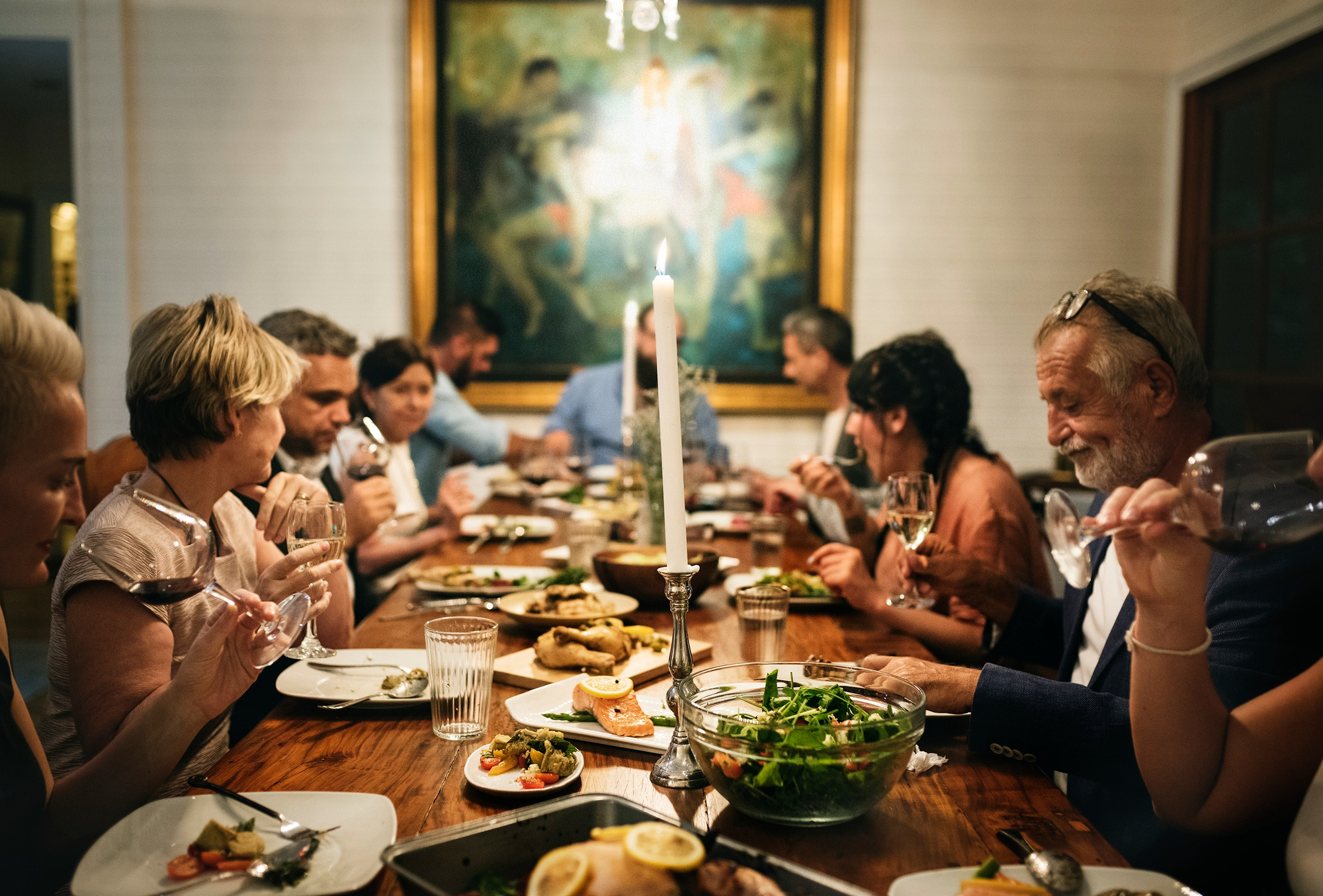
I had reserved the private dining room at the back, the one with the slow ceiling fans and the view toward the little stretch of water behind the building. The table was set for five with white linen, heavy silver, crystal flutes, and small arrangements of gardenias and sea grapes. I had told the kitchen to send out the good plates because Emma had asked me to host this brunch, and because I wanted to make an effort. Stone crab claws on crushed ice. Eggs Benedict with house cured gravlax. Truffled potatoes. Grilled asparagus. Brioche French toast with orange butter. And a bottle of champagne I had been saving for something worth celebrating.
I did not know then that by the end of the afternoon I would be calling a private investigator.
Diane arranged herself at the table like a cat settling into a pool of sunlight: slowly, deliberately, with complete confidence that the territory now belonged to her. Roger took the seat beside her. Brandon sat across from his mother, Emma beside him, and I took the head of the table because it put me where I liked least at family gatherings but most at negotiations, where I could see everyone.
Marcus poured champagne without letting his face say a single thing. That is one of the skills that separates a good server from a professional one. A good server knows how to pour. A professional knows how to observe without being seen observing. When he finished filling the glasses, he glanced at me. It was quick, no more than the movement of an eye. I gave him the smallest nod.
Stay nearby.
“To the future,” Diane said, lifting her flute. Her diamonds flashed in the morning light. “To family. To union. To the beautiful life our children are about to begin together.”
Our children was the first thing she said that made Emma flinch.
We clinked glasses. The champagne was excellent. Diane drank like she was thirsty. Roger drank like he was nervous. Brandon barely touched his. Emma lifted hers, smiled, and set it back down.
For the first twenty minutes, Diane performed. I use that word deliberately. Some people converse. Some people listen, respond, lose themselves a little in the exchange. Diane performed. She told me about her family in Connecticut, the Whitfields, people of consequence since before the Revolution, apparently. She mentioned Greenwich three times before the crab claws arrived. She mentioned Yale in a way that took me a moment to decode: she was not saying she had attended, only that her late father had. She mentioned a cousin on the board of a museum in Manhattan, a friend with a summer home in Nantucket, a florist in Palm Beach who was impossible to book unless one knew how to ask, and a woman named Bitsy who seemed to exist solely to establish that Diane knew a woman named Bitsy.
None of these people meant anything to me. I think that bothered her.
I run restaurants. I have shaken hands with two presidents, three quarterbacks, half the city commission, and a famous actor who once got drunk at our Key Biscayne location and tried to order lobster at two in the morning. I have never once thought to bring any of that up at brunch. Names are garnish. Some people eat the garnish because they cannot tell the difference between decoration and food.
My late wife, Linda, used to say that people show you who they are at the table. Watch the table, Henry. So I watched. I watched Roger laugh half a beat after Diane laughed, calibrating his responses to hers with the attentiveness of a man who had learned the cost of independent reaction. I watched Diane touch his sleeve when she wanted him quiet, a gesture so small and practiced it could have been affection if you were not paying attention. I watched Brandon shrink whenever his mother addressed him, his shoulders drawing inward, his voice thinning, the physical grammar of a person who has been edited so many times he has learned to make himself smaller before the correction arrives. I watched Emma try to bridge a room that did not want to be bridged. And I watched Diane study me whenever she thought I was not looking, her eyes moving over my watch, my restaurant, the staff, the champagne, the windows, measuring.
Then she set down her fork, dabbed her mouth with her linen napkin, and said the words I will remember until they lower me into the ground.
“Now, Henry,” she said. “I think it’s time we talked about the wedding.”
“I figured we’d get there.”
“Spring is fine. But I want to be very clear about expectations.”
The room changed. Not visibly. The fans kept turning. The bay water outside kept flashing under the sun. Marcus, near the sideboard, kept his hands folded. But the air shifted the way air shifts before a storm when the pressure drops and everything goes still and the birds stop singing because they know something is coming that the people below them have not yet noticed.
Emma stiffened beside Brandon. Brandon went still in a way that was too practiced to be surprise. Roger leaned back slightly, making room for the main act.
“The Whitfield family has certain traditions when it comes to weddings,” Diane said.
I waited.
“My own wedding was at the Greenwich Country Club. Four hundred guests. A string quartet from the Philharmonic. White orchids everywhere. My father always said a wedding is not simply a ceremony. It is a statement of family standing. Brandon is my only son. I will not have him married in some backyard with paper lanterns.”
She looked at me as though paper lanterns were a communicable disease.
“Of course,” I said carefully. “Whatever Emma and Brandon want. Their wedding, their day.”
Diane laughed. A real laugh. She found me genuinely amusing. Roger smiled into his champagne. Brandon’s face went blank. Emma looked at me, then at her lap.
“Henry, that’s sweet. Truly. But the children don’t know what they want. The children need guidance.”
Emma was twenty eight. Brandon was twenty nine.
Diane continued. From beside her chair she produced a small leather notebook, the motion elegant and faintly theatrical, like a magician revealing the chosen card. She opened it and began reading. Top tier venue. Vizcaya Gardens, naturally. Three hundred and fifty guests. A custom Vera Wang gown for Emma. A tasting menu by a James Beard chef she had been corresponding with. Fireworks over the bay. A chamber orchestra. Floral installations by a designer out of Palm Beach. Welcome bags at the Ritz for out of town guests. Two nights of pre events. Transportation. Photography. Videography. Press management. Invitation suites. Bridal luncheon. Farewell brunch.
She turned a page.
“The whole production.”
“That sounds expensive,” I said.
“It is expensive,” Diane replied brightly, as though we had finally found common ground. “The full budget is one and a half million dollars. And of course, per Whitfield tradition, the bride’s family covers seventy percent of the cost. So that would be one million fifty thousand dollars from you, Henry. We would want the first installment within thirty days. Vendors require deposits.”
Nobody moved.
I want you to understand the silence that followed, because silence is not empty. It has architecture. That silence filled the room like water rising around furniture. The ceiling fans turned with their soft wooden whisper. Outside the bay window, a gull cried once. Somewhere beyond the door to the main dining room, dishes clinked and a woman laughed at another table, unaware that in the private room a stranger had just tried to reach across white linen and extract a million dollars from my daughter’s future.
Marcus froze mid pour near the sideboard. Only for a second, but I saw it.
Emma’s face had gone the color of skim milk.
Brandon stared at his mother, and the expression on his face was not the shock of discovery. It was the horror of recognition. The look of a man who has seen this before in different rooms with different targets and had spent years praying it would not happen here.
I am sixty seven years old. I have been at tables where men tried to buy my restaurants out from under me. I have been at tables where suppliers lied about prices and bankers smiled before tightening terms. I sat at the table where the doctor told my wife the tumor was inoperable, and I had to keep my hand steady around hers because if I fell apart she would spend her last months comforting me instead of being comforted.
I know how to keep my face still.
“Diane,” I said, “I’m not familiar with that tradition. Where I come from, and where most folks in this country come from, the bride’s family handles what they choose to handle, the groom’s family handles what they choose, and the couple covers the rest. Seventy percent from the bride’s father is not American tradition. That is not even Connecticut tradition. That is something you invented at this table.”
For the first time, Diane’s composure slipped. Her eyes flickered toward Roger for less than a second. Roger gave the smallest nod, the kind of signal a coach gives a player when the play has gone wrong but they need to hold formation.
I caught it. I filed it away.
“Henry,” Diane said, lowering her voice into something soft and wounded, “I understand if this feels like a lot. But Brandon is marrying up.”
Emma inhaled sharply.
That was when I felt it. A foot under the table. Tap. Tap. Tap. Emma’s shoe struck my ankle hard enough to mean something. I did not look at her immediately. I kept my eyes on Diane, nodded once, and let the moment breathe. Then, at the edge of my vision, I saw Emma’s hand disappear beneath the table. A second later she slid her phone up over the edge of the linen, screen tilted toward me where only I could see it.
Six words typed in her notes app.
Dad, he’s not the groom. She is.
I read them once. Then again. Then I let the words settle into me without letting them reach my face. I looked at Brandon. Really looked. The napkin twisted in his fist. His eyes darting toward his mother, then away. His jaw trembling. He had not spoken once in defense of the budget. He had not laughed, had not objected, had not even appeared surprised. He looked like a hostage.
I lifted my champagne and took a slow sip.
“Diane, Roger. Let me think on it. Right now, let’s enjoy this beautiful brunch my kitchen has prepared. We can talk numbers another day.”
Diane took it as a yes. Relief loosened her shoulders. Roger’s hand slid off her arm. Brandon closed his eyes briefly, like a man who has heard a door unlock somewhere far away but does not know if he can reach it.
Let me think on it. Those two words, let me, were doing all the work. Let me think. Let me look. Let me find out exactly who you are before you understand that I already know what you are.
Brunch continued. Diane told stories about her father’s yacht with such specificity that I suspected the vessel either never existed or had belonged to someone she once served drinks to at a country club. Roger gave me fog when I asked about his consulting work. Brandon pushed food around his plate. Emma held her composure together with the same discipline she used during twelve hour hospital shifts, the kind of strength that looks like calm from the outside but costs something invisible and enormous on the inside.
When they left, Diane kissed Emma’s cheeks and called her a beautiful bride. Roger pumped my hand. Brandon was last. His palm was cold and damp. He held on a beat too long.
“Thank you for hosting, Mr. Calloway,” he said quietly.
His eyes were red.
“Take care of yourself, son,” I said.
I stood in the Coral Gables sunlight and watched their rented Mercedes leave the lot. Then I turned to Marcus.
“Get me Joe Russo on the phone. Tell him it’s Henry. Tell him it’s important.”
Marcus did not ask a single question. That is why he has worked for me eleven years.
I drove Emma home that afternoon. She broke three blocks from the restaurant.
“I should have warned you,” she said, her voice small, and I hated Diane Whitfield for every ounce of smallness she had put into my daughter in one brunch.
“You warned me. Six words was enough.”
“No, Dad. Before. I should have told you before.”
Emma told me what she knew. Brandon had come to her three weeks earlier and confessed that his mother and Roger had a pattern of getting close to wealthy people, sometimes through Brandon’s relationships, sometimes through other channels. He said when he was younger Diane would push him toward certain girls from certain families. Three years ago she tried to set him up with the daughter of a hedge fund manager in Boca Raton, and that was when he saw it clearly: the dinners, the weekend trips, Roger asking questions about trusts and assets, Diane calculating returns on relationships the way other people calculate interest on savings accounts. Brandon had refused. He cut contact for two years. Then Roger appeared at his apartment, crying, saying Diane was sick, saying they were broke, saying they had no one. Brandon let them back in. He sent them money, a few hundred here, a thousand there, always with notes that said last time and please don’t call Emma.
“He was trying to contain them,” Emma said. “Then she found out about you. The restaurants. What you own. After that she became obsessed.”
I gripped the steering wheel. “And Brandon didn’t tell you any of this until three weeks ago.”
“He said he kept thinking he could manage them. Keep them away from me.”
“That’s not managing. That’s hoping.”
“I know.”
“Do you think he’s part of it?”
She stared through the windshield. “I think he looked like a prisoner.”
“That’s what I thought too.”
Joe Russo called me back the next morning at 7:12, which told me Marcus had reached him before sunrise, because Joe considered sleeping past six a moral failure. He was a retired Miami Dade homicide detective, thirty years on the force, the kind of man who had spent his career looking at the worst things human beings could do to each other and somehow emerged with his humor intact. He had helped me fifteen years earlier when a former employee tried to embezzle from the Coastal Pearl through fake seafood invoices, and since then we had become the kind of friends who did not need to speak often to trust each other.
“Henry,” he said when I answered. “What kind of trouble?”
“The kind that just tried to bill me a million dollars over eggs Benedict.”
“I’m intrigued.”
I gave him the names. Within a week, Joe brought a folder to my house, sat at my kitchen table, and said, “Buckle in.”
Diane Whitfield was not Diane Whitfield. Her birth name was Diane Marie Lorello, born in Hartford, Connecticut. Not Greenwich. Daughter of an auto parts salesman and a mother who worked part time at a dental office. No yacht. No old family estate. No Revolutionary pedigree unless you counted a great uncle who may have sold tires to a man who once read a book about George Washington. She had attended community college for one year and left without a degree. In her twenties she worked as a hostess at a country club outside Hartford. That was where she met Brandon’s father, Thomas Whitfield, a real estate developer from a family with some money and a better name. She married him quickly, wore the name like armor, and spent money faster than he could make it. Thomas divorced her when Brandon was seven. He died of cancer when Brandon was nine.
She kept the name. She married again: an orthodontist named Michael Adler. Four years later he was broke, his practice was in trouble, and he died of a heart attack at fifty one. No charges, but plenty of rumors. She took what was left and found Roger Donnelly, who had two prior arrests for wire fraud and one federal conviction. Eighteen months in a Pennsylvania prison. He came out in 2009. Met Diane in 2011. After that, Joe said, the two of them became a weather system.
Charlotte. A widow named Marianne Doyle, seventy one, whose husband had left her comfortable but lonely. Diane met her through a charity luncheon, invented a rare cancer, and accepted eighty thousand dollars for nonexistent treatment. Atlanta. A retired judge named Charles Bellamy, too proud to admit he had been fooled by a fake real estate opportunity. Two hundred thousand dollars into a shell company. Naples. A restaurateur named Vincent Martelli who put a hundred and ten thousand into a vineyard partnership that did not exist.
They chose victims who had something to lose besides money: pride, reputation, the quiet dignity of competent people who could not believe they had been taken. Diane and Roger were good at making victims feel complicit, as though admitting the crime meant admitting stupidity.
Joe pulled out a second folder. Brandon. Clean record. Real job. Real company. Paid taxes. Drove a Honda. No evidence of participation in his mother’s schemes. In fact, financial records showed he had been sending Diane and Roger money: rent help, medical bills, groceries. Notes attached to the transfers said things like last time and do not contact Emma.
“He was trying to contain them,” I said.
“Looks that way.”
“Containment isn’t confession.”
“No. It’s not. The kid made bad choices. But there’s a difference between weakness and malice.”
Joe connected me with Special Agent Hannah Watanabe at the Miami FBI field office. She was small, maybe five foot three, with dark hair in a low knot and a face so calm it made everyone else in the room seem theatrical. Wire fraud across state lines. Shell companies. Prior convictions. Pattern of conduct. She wanted documentation, recordings, financial solicitations, clear evidence of where the money was being directed.
“You cannot entrap someone into doing what they would not otherwise do,” she told us. “But from what I have reviewed, no one needs to push your mother and Mr. Donnelly toward fraud. We simply need to give them enough room and record what they do with it.”
Brandon agreed to help. I called him to my office at the restaurant, sat him down, and told him everything Joe had found. He collapsed. Not dramatically. Structurally. He put his head in his hands and wept like a boy, apologizing for Emma, for the brunch, for not telling the truth sooner, for all of it.
“Stop apologizing long enough to tell me the truth,” I said. “Was Emma a target?”
“Not to me. Never to me.” The answer came fast, and then he winced because he knew fast answers sounded rehearsed. “I met her at a hospital fundraiser. She was arguing with a surgeon about discharge instructions for a little boy whose parents didn’t speak English. She didn’t care who the surgeon was. She cared that the mother understood the medication dosage.”
Despite myself, I could see it.
“She was terrifying,” Brandon said, and laughed once through his tears. “In the best way. I loved her before I knew it was happening. Then my mother found out who her father was.”
“How?”
“Emma mentioned you owned restaurants. Not bragging. Just talking. My mother Googled you. After that she became obsessed.”
I asked him whether he would wear a wire. Whether he understood that building a federal case against his own mother meant a betrayal she would never forgive. He looked at the floor for a long time.
“Mr. Calloway, she has been punishing me for betrayals I didn’t commit since I was nine. At least this one will be real.”
That was the moment I began to think he might survive her.
The operation took weeks. Brandon called Diane from my office while Agent Watanabe’s team recorded. Diane was eager, impatient, already irritated that I had not written a check. Roger coached from the background with the smooth efficiency of a man who had done this before, praising my “engagement” as though my silence was a form of agreement.
The second meeting took place at the Coastal Pearl on a Tuesday evening. The private dining room was wired. Diane brought invoices from vendors who did not exist, deposits for accounts controlled by shell companies, and an escrow structure routed through a Delaware entity called RWD Holdings.
“RWD,” I said. “Roger William Donnelly?”
His eyes flickered. Diane intervened smoothly.
They told me everything because they believed they had won. Predators are careful when they are hunting. They are careless when they are eating.
Through it all, I played the role of the cautious businessman warming to the idea. I asked questions. I requested documents. I let Diane believe her performance was working because Agent Watanabe needed clarity, needed the solicitation to be unambiguous, needed the money trail mapped before any door could be closed permanently.
Diane called Emma directly from a blocked number one afternoon. Emma answered because she was coming off a twelve hour shift and forgot the rule. She put the call on speaker and started recording with the second phone Agent Watanabe had given her.
Diane called me resistant to generosity. She told Emma that money sitting in local businesses was different from money used to build legacy. She told her that men could be pulled away by women who made their lives harder.
When Emma told me about the call, I had to walk into the alley behind the restaurant and stand there until the red left my vision.
The arrests happened on a Thursday morning. Federal agents went into the Brickell condo Diane and Roger had rented under layers of shell companies at 6:40 a.m. Diane was in a robe and curlers. Roger was in golf pants. Brandon was at my kitchen table with Emma beside him, her fingers laced through his, both of them waiting.
His phone buzzed at 7:18. He looked at the screen. Then he put the phone facedown on the table and covered his mouth.
“It’s done,” he said.
And then he wept. Not the collapsing sobs from my office. Something different. Grief and relief and guilt and freedom, all of it tangled together in one sound, the sound of a man finally setting down a weight he had been carrying since he was nine years old.
I stood at the counter and thought about Linda. She should have been there. She should have been leaning against the sink, arms crossed, watching this damaged young man cry at our table, already knowing whether he had eaten and when to speak and when to let the silence do its work.
I did the best I could.
I put a plate of toast in front of him.
“Eat,” I said. “In this house, people eat before they fall apart twice.”
Emma laughed through tears. Brandon managed half a slice.
The trial lasted nearly four weeks. Diane entered the courtroom every morning as though attending an unpleasant committee meeting. Roger sat beside her, diminished without motion, his tan fading under fluorescent light. Prior victims testified. Marianne Doyle from Charlotte came with a cane and a voice that filled the courtroom. She described Diane holding her hand, crying about treatments, promising repayment. She described the day she learned there was no cancer.
“I stopped going to my church group,” she said. “I thought everyone would know I had been stupid.”
“You were not stupid,” the prosecutor said.
Marianne looked directly at Diane. “I know that now.”
Vincent Martelli from Naples testified with his jaw tight. We met outside the courthouse afterward. He shook my hand hard.
“You did what I didn’t,” he said.
“I had help.”
“You had guts.”
Brandon testified in a navy suit. Emma held his hand until the bailiff called his name, and then he walked to the stand alone. Diane did not look at him when he passed. The prosecutor asked whether his mother and stepfather intended to defraud me.
“Yes,” Brandon said.
His voice cracked, but he did not look away.
The defense tried to paint him as a bitter, manipulated son. Diane’s lawyer suggested Brandon had invented parts of the story. Roger’s lawyer implied Brandon had participated and turned only when the scheme collapsed.
“Isn’t it true,” Diane’s lawyer asked, “that Mr. Calloway promised you financial support in exchange for your testimony?”
Brandon’s eyes moved to me, then back.
“No.”
“Nothing at all?”
“He gave me toast the morning my mother was arrested.”
A few people in the gallery shifted.
“Toast?” the lawyer repeated.
“Yes. That is the only thing Mr. Calloway has given me besides the chance to tell the truth.”
Emma cried silently beside me.
Diane testified against the advice of anyone with judgment. She wore navy. Pearls. Modest makeup. The jury watched her with the wariness of people who had spent two weeks listening to recordings of her voice and now wanted to see what kind of person could sound warm while sharpening a knife. She told a story of hardship, misunderstood intentions, difficult marriages, a son’s emotional distance, my supposed hostility, Emma’s insecurity. She reframed everything without quite denying anything, the specific talent of a woman who had built her entire life on the space between what was said and what was meant.
The prosecutor let her construct the house. Then he removed each beam.
“Were you born Diane Marie Lorello?”
“Yes.”
“In Hartford?”
“Yes.”
“Was your father a yachtsman?”
“I may have used colorful language.”
“Was he an auto parts salesman?”
“He worked in business.”
“Auto parts?”
“Yes.”
He played the recording from the brunch. Diane’s voice filled the courtroom, polished and confident.
The Whitfield family has certain traditions. The bride’s family covers seventy percent. One million fifty thousand dollars from you, Henry.
I watched the jury. Trials do not always turn on surprises. Sometimes they turn on hearing the truth spoken in a voice that believed it was untouchable.
Diane received fourteen years. Roger received eleven. The judge ordered restitution of 1.3 million to prior victims, money I doubted any of them would fully recover. But the names were on record. The doors were locked. The next Marianne, the next Vincent, the next lonely person sitting across from a beautiful performance at a beautiful table, would not be asked for a deposit.
Outside the courthouse, the sun was absurdly bright. Reporters called questions from the steps.
“Mr. Calloway, do you have a comment?”
I had not planned to speak. I do not like microphones or strangers converting pain into quotable sentences. But I thought of Linda, of the private dining room, of Diane’s cream silk blouse, of six words glowing on a phone screen beneath white linen.
“When somebody shows you who they are at the table,” I said, “believe them the first time.”
Then I walked away with my daughter beside me.
Emma and Brandon did not marry that spring. That was one of the healthiest decisions they made. Love does not become less real because it needs time to clean the wound it arrived through. Brandon began therapy twice a week. Emma went with him sometimes and went alone sometimes. They postponed everything indefinitely, which caused a few of Diane’s remaining sympathizers to whisper that perhaps the whole relationship had been a trap. People will say almost anything to avoid admitting they once admired a monster.
Brandon changed his phone number. Then changed it again after Diane found a way to call from prison. The first voicemail she left was forty seven seconds long. He brought the phone to my kitchen table and stared at it without playing it.
“Do you want me to delete it?” Emma asked.
He nodded.
She deleted it.
After that, he began the slow and uncinematic work of becoming a man without his mother’s voice in his head. Not all at once. Damage done over decades does not evaporate because a judge says fourteen years. Some days he was steady. Some days an unknown number on his phone made him go pale. Some days he apologized for things nobody had accused him of, over-explained where he had been, what he had spent, who he had spoken to, as though honesty required flooding everyone with data so nobody could suspect him of withholding.
Emma loved him without rescuing him. That distinction mattered more than anything else that happened after the trial. She had spent her career caring for people, and caring becomes its own kind of trap if you mistake someone else’s healing for your responsibility. She learned boundaries the way a nurse learns dosage: precisely, because too little accomplishes nothing and too much causes harm.
One evening, about four months after sentencing, she came to the restaurant after her shift and found me in the office.
“I think I’m going to marry him,” she said.
I folded my hands.
“Not today. Not tomorrow. But someday.”
“How does he feel?”
“He says he’ll marry me anywhere, anytime, or never, as long as I choose freely.”
“That sounds like something a man says after a great deal of therapy.”
She smiled. “Doesn’t it?”
“Do you trust him?”
“Yes.”
“Do you trust him to keep choosing you over her?”
She took her time with that answer, which told me more than the answer itself.
“Yes. And I trust myself to leave if he stops.”
That settled something deep in my chest. “Then I’ll walk you down any aisle you choose.”
Her eyes filled. “Even a backyard one with paper lanterns?”
“Especially that.”
The wedding happened eight months after the verdict. Not at Vizcaya. Not at the Ritz. Not under floral installations created by an imaginary Palm Beach designer. It happened in my backyard under the live oaks, with sixty three guests, paper lanterns strung between the branches, and a breeze off the canal that smelled like salt and grilled fish.
Emma wore an off the rack dress that cost four hundred and twenty dollars from a small bridal shop in Coconut Grove. It was simple, ivory, sleeveless, with a skirt that moved when she walked. Around her wrist she wore Linda’s gold bracelet.
Brandon wore his father’s old suit. Not Roger’s. His biological father’s. Aunt Caroline, Thomas Whitfield’s sister, had found it in a cedar closet in North Carolina after hearing about the trial. She called Brandon one night and said his dad would have wanted him to have it. Then she drove it down herself because she did not trust shipping companies with ghosts.
The suit needed tailoring. Marcus knew a man. Marcus always knows a man. When Brandon tried it on, he stood in front of the mirror in my guest room and touched the lapel with two fingers.
“I don’t remember his voice,” he said.
Aunt Caroline, sitting on the bed, said, “It was lower than yours. But you laugh like him.”
The rehearsal dinner was cooked by me, Marcus, and two of my line cooks who refused to let me handle the grill alone because, in their words, Boss gets emotional and overcooks things. We served grilled snapper, smoked short ribs, corn pudding, tomato salad, and a Key lime pie Emma had helped make badly, as tradition required. Linda used to say a family pie should contain at least one flaw so guests know love was involved rather than perfection.
On the wedding morning I woke before dawn, made coffee, and stood in the backyard while the sky lightened. The lanterns hung dark and still from the branches. On a small table near the aisle, Emma had placed a framed photograph of Linda.
I stood before it with my coffee.
“She’s getting married today,” I said.
The woman in the photograph smiled back at me from fifteen years ago, healthy and sunlit, her hair blown across her cheek. I had taken that picture in Key Largo. Emma was twelve then, collecting shells somewhere off camera. We still thought time was generous.
When it was time, Emma came down the stairs.
I have seen my daughter in every state a father sees his child: newborn and furious, scraped and laughing, teenage and furious again, nineteen and standing beside her mother’s hospital bed trying to hold the world together through sheer force of will, twenty eight and pale at a brunch table sliding me six words under the linen because she was frightened but not fooled.
I had never seen her like this.
She was not the most expensively dressed bride in Miami. There were no society editors behind the hedges. But she looked radiant in the oldest meaning of that word, as though light had found her from the inside and decided to stay.
“Dad, you’re crying.”
“No I’m not.”
“You are.”
“Allergies.”
“To what?”
“Time.”
She laughed and then told me I was not permitted to make her cry before the ceremony. I offered her my arm. Just before we stepped outside, she stopped.
“Do you remember the text?” she asked.
“Of course.”
“I almost didn’t send it. I thought maybe I was overreacting.”
“But you sent it.”
“Six words.”
“Six words.”
Then we walked. Everyone stood. The paper lanterns moved softly. Brandon waited beneath the live oaks in his father’s suit, and when he saw her, his face opened completely. All the fear and shame and years of being pulled by strings he had not tied, gone for that one moment. He looked at her the way a man looks at shore after a long time at sea.
I placed her hand in his. “Take care of each other.”
“We will,” Emma whispered.
“I promise,” Brandon said, and he looked me in the eye when he said it.
They wrote their own vows. Emma promised to love him without rescuing him, to stand beside him without standing in front of him, to build a home where truth was not punished. Brandon’s voice shook through most of his. He promised honesty before comfort, loyalty without blindness, and a life in which love would never again be used as a debt.
Even Joe Russo wiped his face and blamed the pollen. I let him have that.
Afterward we ate the way people eat when they understand that food is not decoration but celebration. Snapper with charred lemon. Short ribs smoky enough to make strangers close their eyes. Emma kicked off her shoes before the cake. Brandon danced with Aunt Caroline to an old song his father had loved. Marcus played guitar until midnight.
At some point I found Brandon standing alone near the canal. Not hiding. Just breathing.
“You all right?”
He nodded. “I keep thinking I should feel only happy. But there’s this grief too. Like I’m burying the idea that my mother might become someone else.”
“That’s a real burial.”
“Does it go away?”
“No. It changes address.”
He looked at me. “You always say things like that?”
“Only when I’ve had enough bourbon.”
He laughed.
Then he said, “Thank you, Henry.”
“For what?”
“For not deciding I was her.”
I thought about that. The easy thing would have been to decide exactly that. Villain’s son, villain’s partner, cut him loose, close the door. Clean lines. But life rarely offers clean lines. Sometimes it offers a frightened young man who lied too long because fear had been planted in him before he had words for it, and a daughter brave enough to tell the truth under a tablecloth, and the chance to punish the right people instead of the nearest ones.
“You helped stop her,” I said. “Don’t forget that.”
“I helped late.”
“Yes. And you helped anyway.”
His eyes shone in the lantern light.
Emma came looking for us. “Are you two having a serious dock conversation?”
“Very serious,” I said.
“About what?”
“Pollen,” Brandon said.
“Liar.”
He smiled at her. A real smile. Unafraid. She took his hand, then mine, and for a second the three of us stood by the water while the party glowed behind us.
He calls me Pop now. Not because I asked. The first time it happened was ordinary, which made it count for more than any planned gesture could have. He came by the restaurant to pick up soup for Emma, who had caught a cold from one of her patients. I handed him the bag and told him to make sure she drank fluids.
“I will, Pop,” he said.
Then he froze. I froze. He looked horrified.
“Soup’s getting cold,” I said.
He left. I went into my office and closed the door and sat for a while.
I think about that brunch more often than I admit. Memory does not play it from beginning to end. It comes in fragments. Diane’s cream blouse. The leather notebook appearing from her purse. Roger’s tiny nod. Brandon’s white knuckles around the napkin. Emma’s face when the number landed. Marcus frozen mid pour. The gull outside the window. The champagne nobody wanted anymore.
Most of all I think about the phone. That small rectangle of light sliding over the edge of the table, my daughter’s hand trembling beneath the linen, six words that redirected the afternoon and maybe the rest of her life.
Dad, he’s not the groom. She is.
Those words did more than warn me about Diane. They told me my daughter saw clearly. They told me she was frightened but not fooled. They told me that beneath the politeness, beneath the pressure, beneath all the expensive language designed to make ordinary people feel insufficient, Emma still trusted her own perception enough to send the truth when it mattered.
That is not nothing. That is, in fact, everything.
Diane Whitfield, born Diane Marie Lorello, wanted a wedding that would announce her importance to a room full of strangers whose opinions she could collect like currency. Instead she got a courtroom, a sentence, and a name stripped clean of every borrowed syllable. Roger wanted another account to drain. He got eleven years and a restitution order he will spend the rest of his life failing to satisfy. The money they took from others may never fully return. But their next victim will not sit across from them at brunch. Their next victim will not be handed an invoice disguised as tradition. Their next victim will not mistake performance for pedigree.
And my daughter got married under paper lanterns.
She got a backyard full of people who knew her name without needing it printed in a column. She got grilled fish and imperfect pie and a dress she could dance in and a husband who had learned, the hard way, the difference between family and captivity. She got to stand beneath the live oaks wearing her mother’s bracelet while the people who actually loved her watched her choose a life freely, without a single firework over the bay, without a single orchestrated moment, without a single dollar spent to prove to strangers that she mattered.
She already mattered. She always had.
People show you who they are at the table. Watch who speaks and who flinches. Watch who orders for others without asking. Watch who laughs at cruelty and calls it humor. Watch who calls control tradition and greed legacy. Watch who reaches for your hand beneath the linen when nobody else can see. Watch who stays silent because silence has been trained into them, and watch whether they find their voice when finding it costs them everything they have been afraid to lose.
The table will tell you.
That Sunday brunch almost cost my family more than money. Diane wanted obedience. She wanted access. She wanted my daughter’s future rearranged around her appetite. She wanted Brandon permanently guilty and Emma permanently grateful and me writing checks for the privilege of watching it happen.
Instead she got six words.
Six quiet words beneath a white tablecloth, sent by a woman who knew something was wrong before anyone in that room had proof, who was frightened enough that her hand shook but clear enough that her message did not.
And sometimes that is how entire lives are saved. Not with grand speeches or million dollar productions under fireworks over the bay. Not with string quartets or floral installations or press management or three hundred guests who exist primarily to confirm that someone important is watching.
Sometimes everything turns because one person at the table is brave enough to tell the truth while pretending to reach for her napkin.

Adrian Hawthorne is a celebrated author and dedicated archivist who finds inspiration in the hidden stories of the past. Educated at Oxford, he now works at the National Archives, where preserving history fuels his evocative writing. Balancing archival precision with creative storytelling, Adrian founded the Hawthorne Institute of Literary Arts to mentor emerging writers and honor the timeless art of narrative.