Late that night, my phone vibrated against the wooden crate I used as a nightstand, the sound cutting through the silence in the way that certain sounds do when your body recognizes them before your mind does. The screen lit up with my mother’s name, and something cold moved through me before I even sat up.
Diane Avery never called that late.
My mother believed in routines the way some people believe in luck. Tea at nine. Doors locked by ten. Television off by ten-thirty. She had kept that schedule through illness, through my father’s death, through the particular loneliness of being the kind of mother whose children had grown up and moved somewhere else. She did not drift outside her pattern unless something had pulled her out of it, and when she did, the deviation was itself a message.
So when I saw her name at one-seventeen in the morning, I was already afraid.
I pushed myself upright too fast and looked down at Lily beside me.
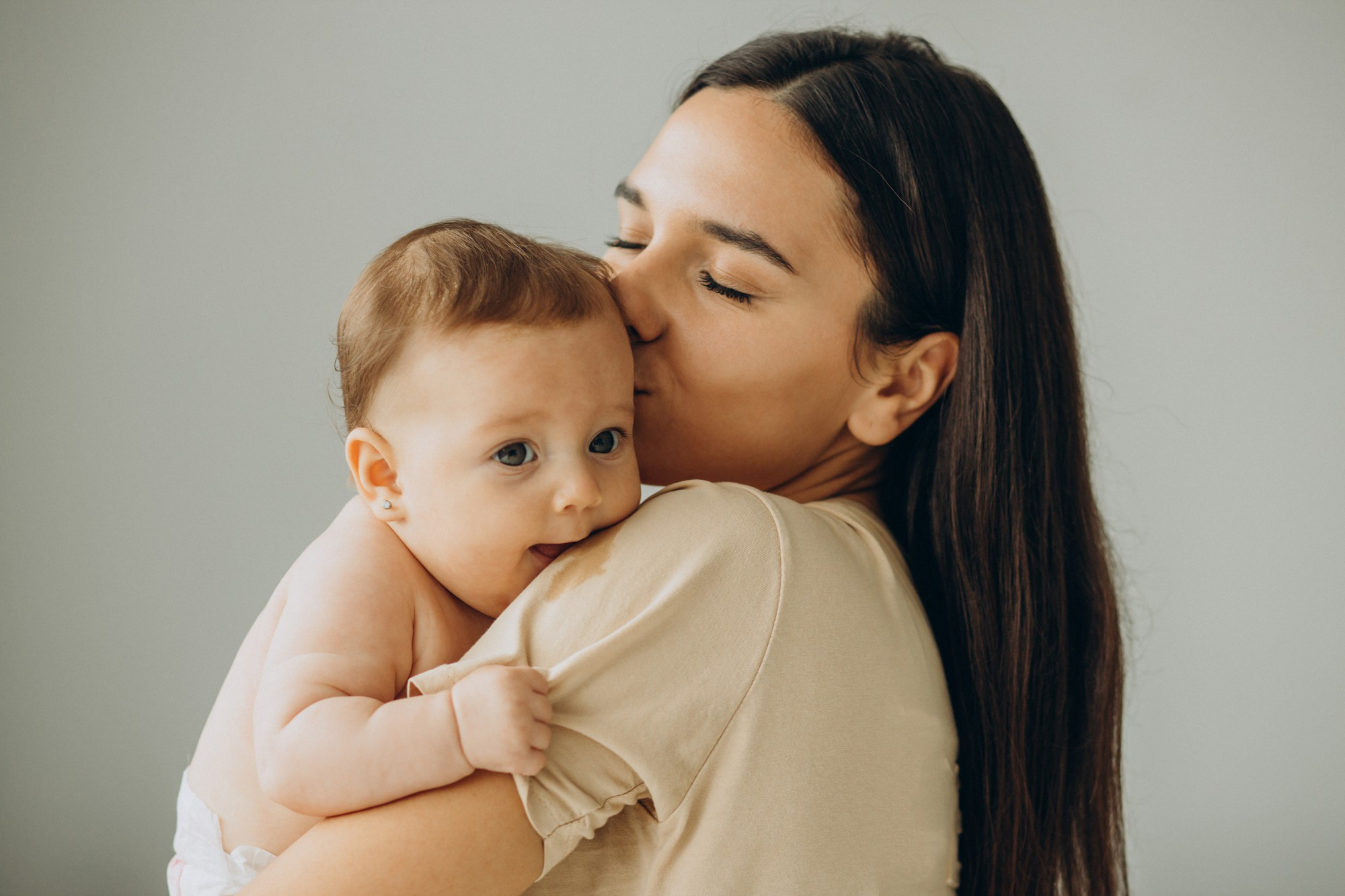
She was exactly where she should have been, warm under the blanket, eight months old, one fist tucked beneath her cheek, the other curled into my shirt as if even in sleep she needed proof I was still there. Her breathing was soft and steady and familiar and real.
I answered.
“Mom?”
At first, only breathing. Not the absent breathing of someone who had dialed by mistake. This was careful, measured, tight, like a person standing very still in the dark and trying not to draw attention to herself.
Then she whispered: “Morgan. When are you coming back for the baby?”
For one second my mind refused to parse the sentence. The words were simple. What they implied was not.
I looked at Lily again, fast enough to hurt my neck.
“Mom,” I said, keeping my voice level with effort, “what are you talking about?”
She answered in a rush. “You dropped her off. You said you were exhausted. You said you needed a few hours. I told you to go home and sleep. I put her in the living room so I could hear her if she woke up, and then you never came back.”
Every hair on my arms rose.
“Mom,” I said, louder now. “Lily is here. She’s been here all night.”
The silence that followed was the wrong kind of silence. Not the pause of someone confused. Not the gap before correction. It was the silence of a line that has gone dead except that somehow we were both still on it.
When my mother spoke again, her voice was no longer confused.
It was frightened.
“That’s impossible,” she whispered.
“She’s asleep beside me,” I said. “I’m looking at her right now.”
Another pause.
Then, in a voice so thin it barely sounded like hers: “Then whose baby is sleeping in my living room?”
I do not remember hanging up. I remember the room around me looking wrong somehow, even though nothing had changed. The laundry basket near the closet. The half-empty water bottle on the nightstand. The yellow glow of Lily’s nightlight casting its small familiar circle. Everything looked painfully ordinary, and that made it worse, because fifteen minutes away, in the house where I had grown up, my mother was standing near another baby. A baby she believed I had brought her. A baby that had nothing to do with me.
I moved instead of thinking, because thinking made the fear expand too fast.
I pulled on jeans, shoved my feet into shoes, grabbed the diaper bag, and lifted Lily carefully. She fussed the moment the blanket left her shoulders, then let out a confused cry when I changed her into a warmer sleeper. I kept whispering to her in a voice I did not trust.
The drive to my mother’s house felt staged in the way of nightmares, every red light conspiring, every dark house holding its breath. My thoughts ran in circles. Maybe she had been confused, and the thought was halfway formed before I rejected it. My mother was not fragile. She was not the type to invent entire conversations. But there had been small things lately. Lost keys she blamed on the new shelf arrangement. Reheated tea she had already made. A doctor’s appointment she insisted was Thursday when it had been Tuesday. I had been pushing those details away because naming them felt like beginning something I was not ready to begin.
Then another possibility came in harder and colder.
What if someone had left a baby at her door?
Which meant someone had known exactly where to leave a child. Someone had known my mother well enough to understand that she would open her door at midnight, look at a baby, and help before she asked a single question. Someone who understood the geography of her goodness.
My phone buzzed at a stoplight. A text from my mother. Please come quickly. She’s asleep. I don’t know what to do.
She. Not the baby. Not it. She.
In less than twenty minutes, my mother had already let this child into her heart.
The house looked exactly as it always had when I turned into the driveway. White siding, small porch, soft yellow light above the door. The same place I had come running after bad dates and job losses and the miscarriage I had not told anyone about until the bleeding stopped. The place that had always meant my mother would be on the other side. That night it looked like a stage built to imitate what safety looked like.
She opened the door before I reached it. Barefoot, gray cardigan, one hand gripping the frame. Even in the porch light I could see how drained she was, the skin beneath her eyes dark, her color gone. She pressed a finger to her lips before I could speak.
“Quiet,” she whispered. “She finally fell asleep.”
She stepped aside. I walked in with Lily against my chest.
The house smelled like chamomile tea and hand soap and, faintly, baby powder.
I stopped breathing for a moment. There had been no reason for baby powder to be in this house for months.
My mother shut the door softly and leaned close. Her panic was in her breathing before it was in her words.
“I thought it was you,” she murmured. “I swear to you, Morgan. I heard a knock. I opened the door. You were standing there with the diaper bag over your shoulder and the car seat at your feet. You said Mom, please, just for a few hours. You sounded so tired. I told you to bring her in. You put her down right there.” She pointed toward the rug by the entry table.
My mouth went dry. “I never came here tonight.”
Her eyes filled immediately. “I know that now.”
Lily shifted against me and made a small sound. My mother stared at her, and I watched the precise moment fresh terror moved across her face. Seeing Lily in my arms did not comfort her. It made the impossible concrete. She backed toward the living room and motioned for me to follow.
The lamp near the couch cast a soft pool of light. The afghan was folded the way she always folded it. The framed photographs still lined the mantel. Nothing appeared disturbed.
Except for the portable crib beside the couch.
I recognized it before I understood what I was recognizing. One of Lily’s old travel cribs, the kind that folds into a carrying case. There was a small stain near one corner where a bottle had leaked during a road trip last fall, and the faded green fitted sheet tucked around the mattress was the one we used when Lily stayed here in December. I had left that crib in my mother’s attic in January.
Someone had brought it down.
Inside it lay a baby girl. Dark lashes, round cheeks, one arm thrown over her head in the total abandon of deep sleep. A pacifier near her shoulder, a pink blanket tucked around her waist.
Then I saw the sleeper.
Yellow with tiny embroidered daisies.
My stomach collapsed inward.
Lily had that exact sleeper. Had it. Had been wearing it this morning, before I changed her after dinner because she had spit up on the collar.
My eyes went to the open diaper bag on the armchair. Lily’s wipes. Lily’s bottle brush. The extra bib with the stitched duck on the front.
I pulled Lily closer.
“Where did that bag come from?” I asked.
My mother looked at it and began shaking. “You brought it.”
“I didn’t.”
“You did,” she said, no anger in it, only horror. “Or someone did. It was on your shoulder. I would swear to that.”
Lily stirred. The baby in the crib turned her head toward us, and we both went still.
She did not wake. But as the blanket shifted lower, I saw something around her ankle.
A hospital band. Old enough to be wrinkled, twisted sideways, the insert facing inward.
I handed Lily to my mother without planning to. “Hold her.”
“Morgan.”
“Hold Lily.”
She took her automatically, hugging Lily so tightly it almost broke me.
I walked toward the crib on legs I could not entirely trust. Every instinct said don’t touch anything. This was evidence. This was a scene I did not understand and should not disturb. But I needed to see that band.
I leaned down carefully, slid one finger beneath the plastic, and rotated it until the printed side faced me.
My knees nearly gave way.
The last name on the hospital tag was Carter.
For a moment the room simply held still around that word. My vision blurred and then sharpened again. Carter. Not a name I associated with strangers. Not a coincidence I could swallow and survive.
Ethan’s last name.
My ex-husband. Lily’s father. The man who had signed away active parenthood the moment it became inconvenient, who had been absent for Lily’s first tooth and first fever and first real laugh, who had told a family court judge with practiced sincerity that he needed space to rebuild his life and then rebuilt it five counties away with someone younger and easier to impress.
My hand gripped the side of the crib.
“Morgan?” my mother said.
I could not answer yet.
Beneath the last name, half-covered by the twisted plastic, was a first name.
Ava.
Ava Carter.
My throat closed.
The baby stirred, lips moving around a sound that did not quite become a cry. She was beautiful in the helpless, devastating way babies are beautiful when they have no idea how completely the adults around them have failed them.
I stepped back so fast my heel caught the rug.
“Her last name is Carter,” I said.
My mother went blank. Then the meaning arrived. “No,” she breathed.
I nodded once.
“Ethan?”
“I don’t know.” But I did. Somewhere below the part of me that needed evidence, I already knew. This was not random. Someone had dressed this baby in Lily’s clothes, used Lily’s old crib, carried Lily’s diaper bag through my mother’s door. Someone had made my mother believe I had arrived in the dark.
Not because they wanted help.
Because they wanted confusion.
“We need to call the police,” my mother said.
“Yes.”
The word came out flat and cold and almost calm in the way that fear can be almost calm when it has burned through everything softer and left only what is necessary.
I pulled out my phone, but before I could dial, Ava opened her eyes.
Dark. Wide. Unfocused from sleep. She stared at me for one disoriented second, then her face crumpled. The cry was thin and broken, more exhausted than loud.
My mother made a wounded sound.
Every rational part of me knew I should not pick her up. This child was part of an active scene. But she was a baby. And she was crying. Those were the only facts that reached all the way down.
I lifted her from the crib.
She was lighter than Lily. Too light. Her hands opened and closed against my collar as if searching for something familiar and finding a close enough approximation to stop her crying almost immediately, the way young babies accept comfort from whoever offers it with enough steadiness.
While my mother warmed formula from her own pantry, the unopened kind she kept for Lily’s visits, I called 911. I answered questions in fragments. Unknown infant. Left inside residence. Possible impersonation. Hospital band. Connection to former spouse. The baby appeared physically unharmed. Yes, we were safe.
I hesitated on that last answer.
Fifteen minutes later, red and blue light moved across the living room walls.
The first officer through the door was a woman named Ramirez. She moved carefully through the room, eyes cataloging without making the space feel more dangerous than it already did. Behind her came another officer, younger, with tension in his shoulders that had not settled yet.
My mother tried to explain from the beginning and got as far as I thought it was my daughter before her voice broke. So I told them. The phone call. The crib. The bag. The hospital band. The name. When I said Ethan Carter, Officer Ramirez looked up. Not sharply. Just enough.
“Is Mr. Carter your former spouse?” she asked.
“Yes.”
She exchanged something with the other officer. A look that carried more information than I could read.
“We received a report earlier this evening involving him,” she said. “A domestic disturbance at an apartment on East Marlow. When officers arrived, the residence was empty. Signs of a quick departure.”
My throat tightened. “Whose apartment?”
“A woman named Tessa Grant.”
The name registered with less surprise than it should have. I knew it from court filings, from the smiling photographs I had stopped looking at, from the particular cruelty of a man who replaced one family while pretending the first one had never quite deserved him.
“Neighbors reported arguing,” Ramirez continued. “They also reported seeing Mr. Carter leave the building carrying what appeared to be a car seat.”
The room went quiet.
My mother sat down on the couch.
I looked at the baby asleep against my chest.
Ava Carter.
Not Lily. Not mine. His.
By morning, the shape of it came together in pieces. Tessa told police Ethan had been spiraling for weeks, possibly months. Money problems he had hidden behind charm. Creditors who had stopped being charmed. A drinking pattern she had minimized to herself because minimizing it was the only way to stay in the life she had built. He had told her Ava was ruining everything, that she needed to handle it, that he had already lost one family and would not let another one take him down. When Tessa said she needed help, he told her help was not coming. Then he had taken the baby and left.
And brought her here.
To the one place where he had calculated that softness still lived.
He had dressed Ava in Lily’s clothes, which he had once seen in a photograph and which were the right size because he had kept enough awareness of his own daughter to know her age if not to show up for it. He had taken the crib from my mother’s attic, which he had helped carry up there two years before the divorce when he was still performing the role of thoughtful son-in-law, when everything was still about the performance. He had come to her door in the dark and used something close enough to my voice on a cold night, spoken softly, standing just at the edge of the porch light, and said Mom, please, just for a few hours.
He had known my mother would hear her daughter before she looked for a stranger.
He had known she would not call anyone right away if she believed I had already asked her not to.
He had known that the woman who kept a spare key under the mat for emergencies and formula in the pantry for visits and the old crib in the attic in case it was needed would not turn away a tired mother in the middle of the night.
He had pressed exactly where the softness was.
That was what he had always done. Not stupidity. Goodness. Predators do not target weakness. They target the people generous enough to keep the door unlocked, and they take careful note of which doors those are.
By sunrise, Ethan was found in a motel parking lot two towns over, asleep in his car with an empty bottle on the passenger seat and Ava’s car seat base in the back. He said he had done nothing wrong. He said Ava was safe. He said he had only needed a break. He said he knew I would understand.
That last part made my hands shake with a specific kind of anger.
Not fear anymore. Not shock. The clean, cold anger of someone who has been counted on one too many times by a person who confused her compassion for a key.
But he had miscalculated. Because he had not just left a baby. He had left evidence. The hospital band. The bag. The crib. My mother’s statement. The neighbor’s camera across the street that had captured his car stopping outside the house at twelve forty-eight in the morning. And one thing he had not known about: the doorbell camera I had installed for my mother three months earlier because I worried about her being alone. It had recorded enough. Not a clear image of his face. But his shoulders. His posture. His voice, low and practiced, saying Mom please through the dark.
Three days later I sat in a family court waiting room with Lily asleep in her stroller and my mother beside me holding a paper cup of coffee she had not touched. Across the hall, Tessa Grant sat with Ava in her arms. She looked younger in person than in photographs. Hollowed out. The particular tired of someone who has been surviving someone charming enough to confuse cruelty with personality.
When she saw me looking, she stood.
She crossed the hall, and we faced each other over the space between us.
“I didn’t know,” she said. Her voice broke at the end of it.
I believed her. Not because I wanted to, but because I recognized the specific look in her eyes. It was the look of someone waking up inside a life they had been defending past the point of honesty.
“He told me you were bitter,” she said. “That you kept him from Lily. That you made everything hard.”
I looked at my daughter. “She’s eight months old. He saw her twice.”
Tessa flinched.
Ava shifted against her chest.
“I’m sorry,” Tessa whispered.
There were a hundred things I could have said. I had years of material. But Ava was between us, and Ava had done nothing, and Tessa was doing what I recognized as the first frightened steps away from the life someone else had designed for her.
“Keep her safe,” I said.
Tessa nodded, tears slipping down her face. “I’m trying.”
The courtroom door opened. Ethan was brought in wearing the same shirt from the motel parking lot. He looked less polished than I remembered. Less inevitable. His eyes found Tessa first, then Ava, then me, and his expression did something I had not expected.
Relief.
Actual relief, as if I were there to rescue him.
“Morgan,” he said, stepping toward me before an officer stopped him. “Tell them. Tell them I wouldn’t hurt anyone.”
For years, I had imagined what it would take to face him without shaking. I thought it would require the right words, some perfectly constructed sentence that would finally make him understand what he had done. But standing there, with Lily beside me and Ava in Tessa’s arms, I understood that I no longer needed him to understand.
I only needed him stopped.
I looked at him and said, “No.”
One word.
He stared. “What?”
“No,” I said again. “I’m not explaining for you. I’m not softening this. I’m not fixing what you broke.”
His mouth tightened. “You’re really going to do this to me?”
Even then. Even there. He still experienced consequences as something other people did to him.
“I’m going to tell the truth,” I said.
The hearing lasted less than twenty minutes. Emergency protections were granted. His access to both children was suspended pending investigation. Tessa received temporary protective support. My custody order was modified before noon.
For the first time since Lily was born, Ethan Carter had no legal path to drift in and out of her life whenever guilt or ego moved him. No more periodic arrivals timed to when he needed to feel like a father without performing the actual work of it. No more letters that Lily was too young to read but that arrived like weather changes, shifting the air in the apartment. The legal order was twelve pages of language I had read three times on the courthouse steps, and it was the most practical love I had ever been given by a document.
When we stepped outside, the sun was too bright for how I felt. My mother walked beside me in silence until we reached the parking lot. Then she stopped.
“I should have known,” she said.
“No,” I said immediately.
“I opened the door.”
“You opened the door because you thought your daughter needed you.”
Her eyes filled.
“That is not your shame,” I said.
I had been watching her small mistakes with low-grade dread for months. Lost keys she blamed on a new shelf arrangement. Tea reheated twice. Appointments recalled on the wrong day. Each incident small enough to explain away, but taken together they had been building in me a quiet terror that I had not named because naming it meant sitting with something I was not ready to face. I had been afraid she was slipping away from me piece by piece, that the mother I relied on was becoming a mother I would have to protect, that the roles between us were quietly reversing.
But that night had not happened because she was fragile. It had happened because Ethan knew exactly how strong she was in the specific way that made her exploitable. He had spent years observing her. He knew she left the attic light on when she stored things there. He knew she kept emergency formula on the pantry shelf. He knew she answered the door for family the way some people answered it for no one.
He had studied her the way people study locks.
That was what he had always done with the people I loved.
Tessa, across the parking lot, buckled Ava into her car seat with shaking hands. Before she closed the door, she looked back at me.
“Thank you,” she said.
I almost told her I hadn’t done anything. But that was not quite true. I had answered the phone. My mother had called. A baby had cried. And this time, everyone had listened before it was too late.
Six months later, my mother’s house looked the same from the outside. Same siding. Same porch. Same light above the door. But the fear had left slowly, the way cold leaves a room after someone opens a curtain that has been closed too long.
There was a new lock on the door and a better camera above the porch. A handwritten note taped near the entry table: Do not open after dark without verifying first. My mother had hated the note for about a week. Then she had decorated it with small flower stickers so it looked less like a warning and more like a household rule she had chosen.
Lily learned to crawl across the living room rug. Then to pull herself upright against the coffee table. Then to take three unsteady steps from the couch into my arms while my mother cried so hard she forgot to record it on her phone.
Tessa sent messages occasionally. Not often. Just enough to know that Ava was gaining weight and beginning to laugh at things, the specific surprised laugh of a baby who has not yet decided whether the world is safe but is beginning to consider the possibility. She had a tiny dimple on one cheek that appeared only when she was about to smile, and her newest development was a fierce opposition to wearing socks, which Tessa reported with the particular exhausted affection of someone who has found something worth being exhausted by.
I thought about that sometimes: two small girls on different sides of the city, both learning to inhabit the world, neither of them responsible for any of the adults who had arranged themselves around them.
Ethan pleaded guilty to lesser charges after the doorbell footage and the neighbor’s camera made denial into a performance nobody was willing to sustain. He wrote letters for a while, to Tessa, to me, even one to my mother. None of us answered. The last one he sent me had only two lines.
I knew you would take care of her. I always knew you had a good heart.
I read it once. Then I put it in the folder with the court orders and the police reports and every document that made the record clear. Not because I needed to keep it. Because I needed to remember, on the days when compassion could be confused with obligation, that one was a choice and the other was something people tried to take.
On a night in late autumn, after Lily was asleep, I stood in my mother’s living room and looked at the portable crib folded in the corner. For months it had been the thing I could not stop seeing when I closed my eyes. The faded green sheet. The stain near the corner. Ava lying inside it in that yellow sleeper.
My mother came in with two mugs of tea and stood beside me.
After a while, she said: “I used to think safety meant keeping the door open for family.”
I looked at her.
She smiled, not without sadness. “Now I think safety means knowing when to lock it.”
From the baby monitor on the table, Lily made a small sighing sound in her sleep.
I reached for my mother’s hand.
Outside, the porch light held its steady position against the dark. The lock was turned. The camera was on. The door stayed closed.
And for the first time in a very long time, that felt like the most honest form of love we had.

Adrian Hawthorne is a celebrated author and dedicated archivist who finds inspiration in the hidden stories of the past. Educated at Oxford, he now works at the National Archives, where preserving history fuels his evocative writing. Balancing archival precision with creative storytelling, Adrian founded the Hawthorne Institute of Literary Arts to mentor emerging writers and honor the timeless art of narrative.