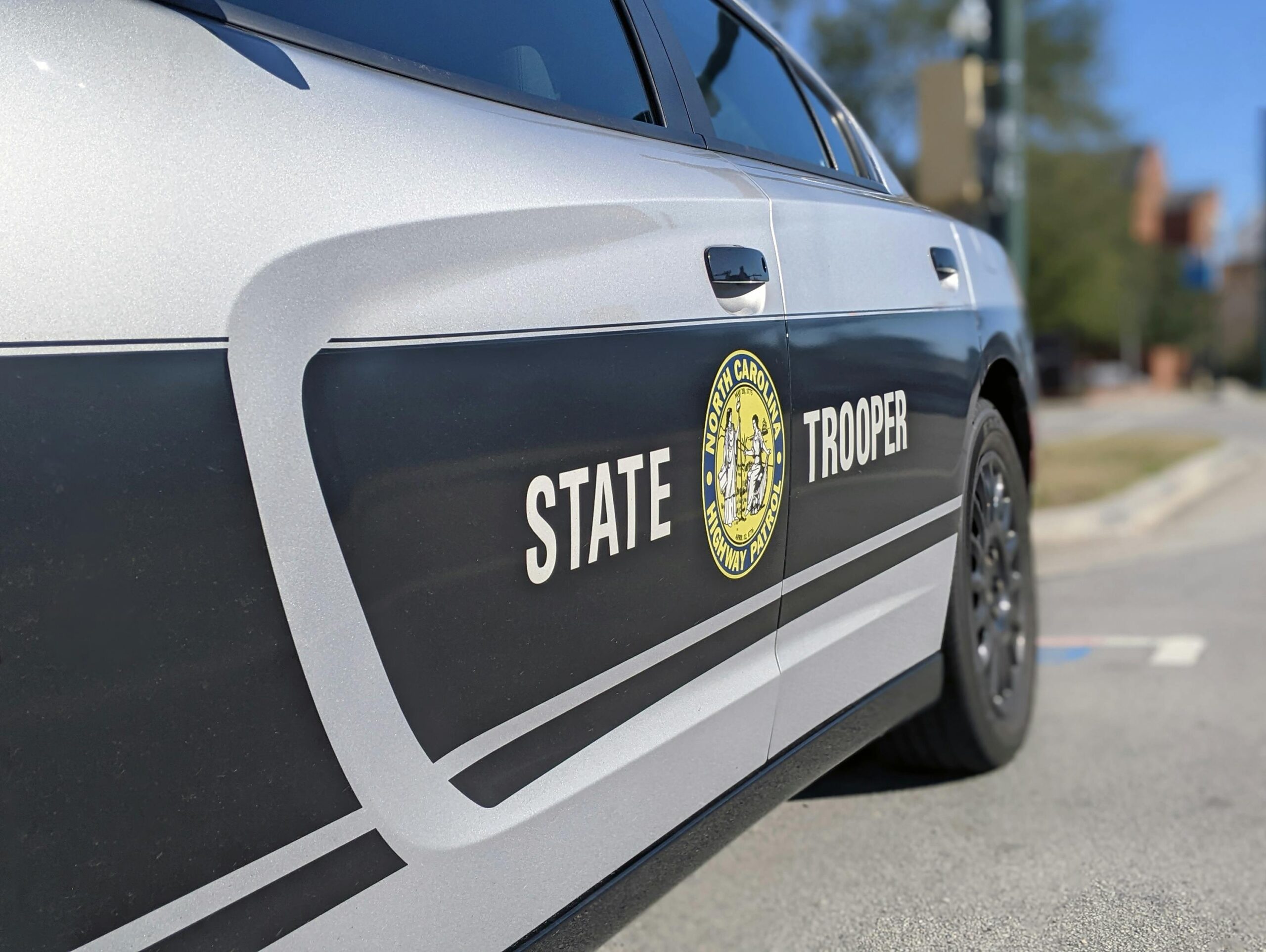
I am eighty-one years old. Three weeks ago, in a few seconds of pure animal fear, I nearly killed a young state trooper with my own car.
He had every reason to treat me as a danger and a fool. That is what I was, on that shoulder, that night. A danger and a fool.
Instead he did something I am still trying to understand. It is the reason I can sit here and write this down at all, and it is the reason I have not yet handed over my keys, though my daughter Kathleen would like me to, and though after what I did, who could blame her.
Let me tell it the way it happened. You have to know about the seat first.
The passenger seat of my car had been my wife’s for fifty-three years. Carol sat in it through three states, four children, and one very bad stretch in 1981 that we do not talk about. She read me the signs. She told me when it was clear to merge. She kept up a low steady patter about nothing at all that I did not know I was steering by until it was gone.
Carol died in February. This was October. And the thing nobody tells you about losing the person who sat beside you is that you do not just lose them. You lose the version of yourself that knew how to do things while they were there.
I had not driven at night alone since the funeral. Kathleen did my errands, or I did them at noon on the empty roads, creeping, both hands on the wheel like a boy at his test. But that night I had run out of Carol’s heart medicine. I still kept it in the cabinet, because I could not make myself throw it out. The pharmacy had called about something, and I got confused, and the long and short of it is that I ended up on the county road after dark. The first time in my life with no one in the seat beside me to tell me it was clear.
Then the lights came up behind me.
I want to be honest about what happened in my body, because I have had three weeks to be ashamed of it and I am done being ashamed. The lights came up red and blue and filled my mirrors, and my heart went somewhere it had no business going, and my hands started to shake, and the first clear thought I had was not about the trooper.
It was about Kathleen. It was about the look on her face if this was the night the State of decided her father could not be trusted on the road. It was about the keys. It was about the house, and the noon errands, and the slow shrinking of a life down to the size of a chair by a window. One stop. One ticket. That was all it would take, and they would be right to.
So I was not calm when I pulled to the shoulder. I was a frightened old man alone in the dark, and I did not have my wife beside me to say, easy now, easy, you’re fine.
I watched him in the mirror.
He came up the side of my car, not straight up the middle. He came along the flank, in the dark, careful, and as he passed the back of the car he reached out and laid his open hand flat on the rear panel, just for a second, the way you might touch a fence post going by.
I did not know why he did that. I thought, in my fear, that he was checking something. Feeling for something. I did not understand it at all. I would not understand it for two more weeks, and when I finally did, it broke me open in my kitchen.
He reached my window. He was young. Younger than my youngest. The rain had started and it ran off the brim of his hat.
“Evening, sir,” he said. “Reason I stopped you, your registration tag is expired. Did you know that?”
I did not know that. Carol handled the tags. Carol had handled the tags for fifty-three years. Carol was in the ground. They had expired in April, two months after her, and I had not known, because how would I. And the simple awful smallness of it, the expired tag, the proof that I could no longer manage the pieces of my own life, was the thing that pushed me over.
My hands were shaking so badly I could not get my wallet free. I told him I would get my license, and I leaned, and I fumbled, and I wanted more than anything in the world to do this one thing right so that he would see I was fine, I was fine, I was not what he thought.
And in trying to do it right, I reached down to put the car in park.
I have gone over it ten thousand times. I know my car. I have driven that car for nine years. But my hand was shaking and my eyes were wet and I was looking at my wallet and not at the column, and I did not put it in park.
I put it in reverse.
And then, because my foot was trembling on the brake and I was twisted around reaching for the floor where the wallet had fallen, my foot came off. And the car began to roll back. And in the half second of horror when I felt it move, when every instinct screamed stop, I did the thing the frightened do. I stamped down hard.
On the wrong pedal.
The car leapt backward. The engine roared. There was a sound I will hear until I die, a great crunching slam, metal into metal, and the airbag went off in my face like a shotgun, and the windshield filled with steam, and I was certain, in that instant, with total clarity, that I had just killed the young man at my window.
I could not breathe. The bag had hit me in the chest. I was crying, I think, or trying to, and saying his name, except I did not know his name, so I was just saying no, no, no, into the deflating plastic and the steam.
I had backed into his patrol car. Hard enough to break my radiator and his. Hard enough that both our cars were finished.
But the young man was alive.
He was alive because he had not been standing behind my car. He had been standing to the side of it, near the rear, exactly where his hand had touched the steel a minute before. The car came back like a thing let off a chain, and it took out the front of his cruiser, and it would have taken out his legs and his hips and very possibly his life if he had been one step to the left, in the place a reasonable person would think a trooper stands.
He was not in that place. He had been trained out of that place. Because the men who taught him knew that the people who hurt officers on a dark roadside are mostly not the dangerous ones. They are the frightened ones. They are the good old men who reach for park and find reverse and panic and stamp the wrong pedal. He had been taught to stand beside that fear instead of behind it, his whole career built around the certainty that someone like me would someday do exactly what I did.
And someone like me did.
I sat in the wreck with the steam rising and the bag in my lap and I waited for the fury. I waited for the gun, even, because I had heard things, and I was an old man who had just rammed a police car in the dark, and I did not know anymore what the world did to men like me.
He appeared at my window.
He had a cut over one eye where something had caught him, and he was breathing hard, and for one second I saw on his young face the raw animal thing that had been on mine, the body understanding before the mind does that it had come close to the edge of everything.
Then he mastered it. I watched him master it. He looked in at me, an old man weeping into an airbag, and whatever he saw, he did not see a danger anymore, and he did not see a fool.
He reached in through the window. And he put his hand on my shoulder.
“Sir,” he said. “Sir, you’re all right. You’re all right. Nobody’s hurt. Just breathe. I’ve got you.”
I have got you.
No one had touched me since February. I want you to understand that. Not Kathleen, who hugs sideways and quick, afraid I will break. Not the doctors, who touch you the way you touch a machine. Since the morning I held Carol’s hand in the hospital and felt it go from a hand into a thing, no living person had laid a hand on me and meant by it you are not alone.
This boy did. This boy whom I had just nearly killed reached through the broken window into the steam and put his warm hand on my shaking shoulder and told me he had me. And something in me that had been clenched since February came apart, and I wept like I had not let myself weep at the funeral, in front of a stranger, in a wrecked car, on the side of a county road in the rain.
He stayed there with his hand on me until I could breathe. He did not rush it.
There is more to tell, the after of it, the tow trucks and the paperwork and Kathleen arriving white-faced and the long conversation about the keys that we are still, gently, having. He did write me up for the tag. He had to. But he wrote in his report, where it mattered, that the driver was a recently bereaved elderly man who became disoriented, and not a single word that would have ended me. I have read it. I asked for a copy and I have read it more times than I should.
But the part I came here to tell you is about his hand on the steel.
For two weeks I could not stop seeing it. The way he touched the back of my car going by, before any of it, when I was just a frightened old man and he was just doing his job. I asked Kathleen. She did not know. I asked a neighbor whose son is on the force, and the son came by, and I asked him, an old man asking a young one to explain a thing he had seen, and the young man went quiet for a moment before he told me.
They are trained to touch the car, he said. A taillight. The trunk. The quarter panel. It does not matter which. What matters is that they leave a print on the steel. So that if it goes wrong out there, if the officer is hurt, or killed, there is a fingerprint on the car that ties him to it. Proof of where he stood. Proof he was there. A man leaving evidence of himself, he said, in case he does not come back to give it any other way.
I sat in my kitchen after the young man left and I understood, finally, the whole shape of it, and it took the legs out from under me.
That boy walked up on my car in the dark fully expecting that it might be the night he died. He touched the steel because some part of his training assumes he will not make it back. And the very thing he did to prepare for his own death, the careful approach from the side, the hand on the rear panel, was the exact thing that kept my fear from making me his killer.
His readiness to die is what kept us both alive.
And then, with that cut over his eye, in the steam of two ruined cars, the young man who had touched my car to leave proof he existed reached in and touched my shoulder to remind me that I did.
Two touches. I cannot stop thinking about the two touches. The hand on the steel that said, if I die here, know I was here. And the hand on my shoulder that said, you did not die here, and you are not alone.
I am eighty-one years old. I have buried my wife and most of my friends. I did not think the world had anything left to teach me about how to be a person in it.
I still have my keys, for now. Kathleen and I are working it out, and the day is coming, I know, when the answer will be no, and I am trying to meet that day with something other than the terror I met the lights with. I have a long way to go.
But I drive past that stretch of county road sometimes, in the daylight, with both hands on the wheel. And every time I pass it I do a thing that must look very strange to anyone watching. At the spot where it happened, I lift one hand off the wheel, and I reach over, and I lay it flat on the empty passenger seat where Carol sat for fifty-three years.
Just for a second. The way you might touch a fence post going by.
I leave a print on the place where she was. Proof she was here. Proof I am, still, somehow, here too.
Then I put my hand back on the wheel, and I drive myself home.

Adrian Hawthorne is a celebrated author and dedicated archivist who finds inspiration in the hidden stories of the past. Educated at Oxford, he now works at the National Archives, where preserving history fuels his evocative writing. Balancing archival precision with creative storytelling, Adrian founded the Hawthorne Institute of Literary Arts to mentor emerging writers and honor the timeless art of narrative.