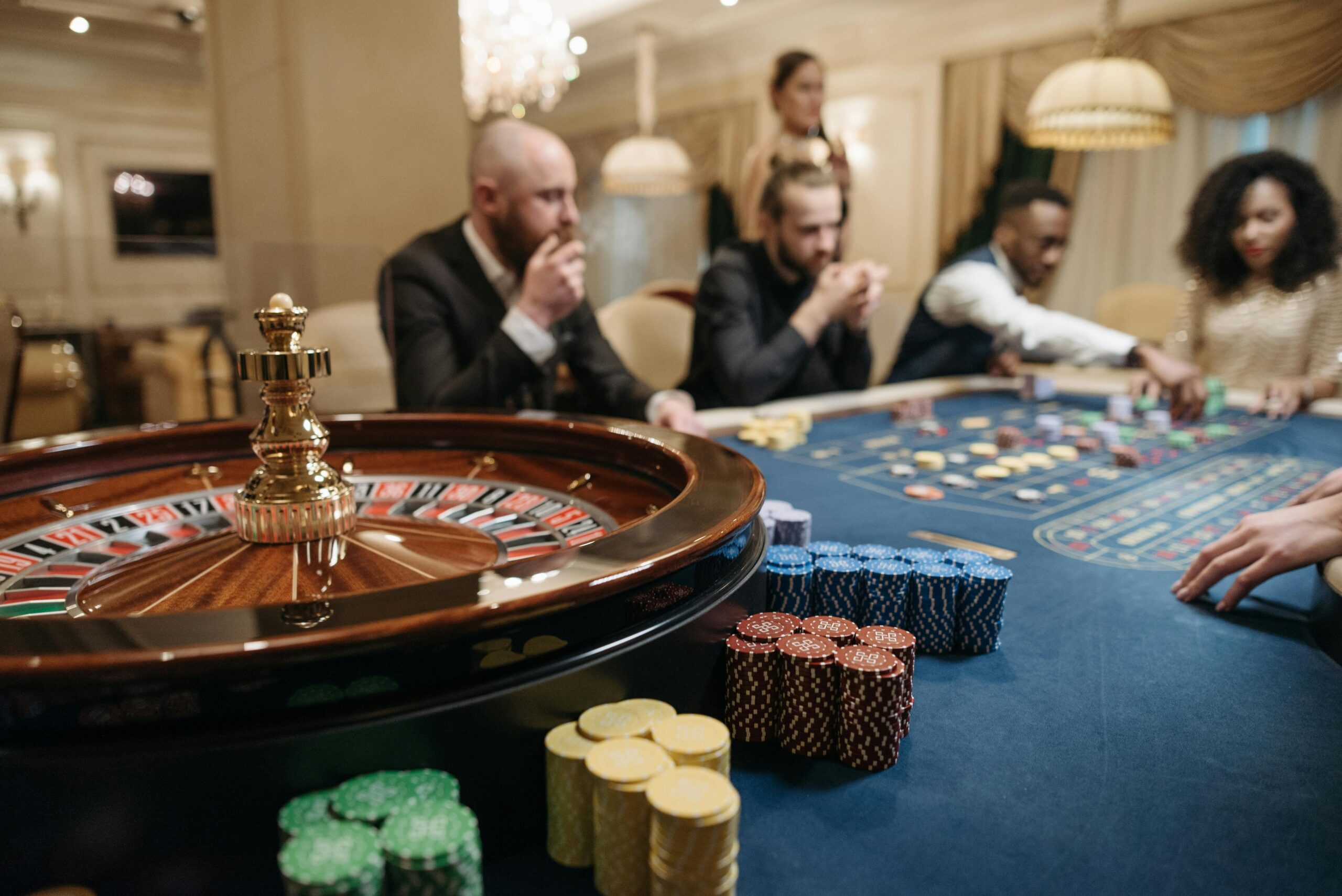
I have walked more than three thousand strangers to their cars on the best night of their lives.
I never learned how a single one of those nights ended. The door closes, the taillights go, and that is that. For nineteen years I made my peace with not knowing.
Then Helen.
She was a small woman in a good wool coat, seventy-some years old, on a dead Tuesday in the worst part of winter. She won forty-eight thousand dollars on an old reel machine in a quiet row. And before she drove off into the ending I would never be told, she stopped in the cold and said a thing to me that I have not been able to put down since.
I will get to what she said. First you have to understand the job, because the job is the only reason her words could land the way they did.
People tell me it sounds wonderful. To stand so near to so much joy. They have the shape of it wrong.
The night a person wins is the most dangerous night of their life. Not the night they lose. The night they win.
A man hits sixty thousand on a machine, and the whole floor knows inside a minute. The lights go red. The bells go off. And somewhere in that room, or out in the dark of the structure, somebody is already doing the same math from the other side of it.
That is what I was for. Twenty years. I am the reason the best night of your life does not also become the last one.
We move you fast. The games rep takes your information, asks if you want the taxes held out, asks if you want a check or you want it in cash. When it is real money, almost everyone takes the cash. A check feels like a promise. Cash feels like the truth, and people want to hold the truth in their hands one time. So we bag it, and I walk them out.
At the car door, every single time, I said the same two things. Flat. The way you say a thing you have said three thousand times.
“Drive safe. Don’t stop for anybody.”
Then I tapped the roof twice and watched the taillights go, and I never once found out what happened next. Three thousand stories. I do not know how a single one of them turned out. You learn to stop wondering. A man cannot carry three thousand endings he will never get.
So I stopped. For nineteen years I stopped.
Helen is the one I could not put back down.
The floor was half empty that night, the kind of night where the carpet swallows the sound and the dealers talk low. She was on an old reel machine in a quiet row, off by herself. She was not playing the way the desperate play. She was playing the way you visit a grave.
When the machine went off, she did not scream.
That was the first thing. I have seen men my own size fall to their knees and weep. I have seen a woman drop a full drink and not notice for a full minute. Helen just folded her hands in her lap and looked at the number on the glass like it had said something rude to her.
Forty-eight thousand dollars.
By the time I reached her, the games rep was already there, kind and quick. Taxes out. Cash, please. Helen answered every question in a low even voice, like a woman giving her own particulars at a hospital desk. When it was counted and bagged she stood, and she let me fall in beside her, and we went out the long way, through the doors, into the cold of the parking structure where my breath went white.
She was quiet most of the walk. Then, near her car, a sensible older sedan kept very clean, she stopped. Not because anything was wrong. She just stopped, and turned, and looked at me.
“Are you going to say it,” she said. “The thing they tell you to say.”
I did not understand her.
“I’ve been three times,” she said. “Smaller, before. Each time the young man at the door says the same thing when he leaves me. Drive safe, don’t stop for anybody. You’re going to say it too. I can see it sitting on you.”
I had been about to say it. The words were already loaded.
“It’s procedure, ma’am,” I said. “For your safety. People watch the lot.”
“I’m sure they do.” She set the bag of money on the hood of her own car like it was a sack of groceries, which is what it looked like. “Don’t stop for anybody. Do you know that’s a terrible thing to say to a person? You say it like a kindness. Drive safe. Don’t stop for anybody. As if the safest a person can be is alone with the doors locked.”
I did not have anything for that. It was late and I was tired and I had said the line so many times it had stopped being made of words.
“My Walt played this machine,” she said. She nodded back toward the doors. “Right there, that row. Every anniversary I’d lose him for an hour and find him on that stool. He’s been gone four years. Today would have been forty-nine years married.” She looked at the bag on the hood. “So I came and I sat on his stool and I fed it the change in my purse, because the house is very quiet on the days that used to be ours. And the foolish thing pays me forty-eight thousand dollars.”
She laughed, once, with no joy in it at all.
“What do I do with that,” she said. “Who do I tell. I’ll drive home and I’ll set this on the kitchen table and there will not be a single person in the world to call. So you walk me to my car, young man, which is the only time in about four years that anyone has walked me anywhere. And then you tell me not to stop for anybody.”
I am not a man who has ever known what to say. My wife told me that, on her way out, a long time ago. That I was a closed door. She was not wrong. I worked nights for twenty years so I would not have to be looked at across a breakfast table and found to be a closed door. I have a daughter. Her name is Lacey. I had not called her in a little over a year, and I could not at that moment have told you why, except that I had gotten very good at not stopping for anybody, including the people I was supposed to.
So I did not say anything wise to Helen. I want to be honest about that. I did not change her life on that frozen ramp.
I just helped her put the bag in the trunk, where it would not sit beside her the whole drive like a hitchhiker, and I closed the trunk gently, and I walked her around to her door and opened it, and she got in.
And when she was in, I did not say the line.
I stood there with my hand on the top of the door, and I could not make myself say it, and the silence got long, and Helen looked up at me and understood, the way some people just understand.
“Good,” she said. “Don’t.”
I tapped the roof twice. She drove off. The taillights went around the ramp and down and out, the way three thousand sets of taillights had gone before, into an ending I would never be told.
Except I could not stop wondering about that one.
I tried. I told myself it was a slow night and a sad old woman and the cold getting into my chest the way it does at my age now. But for weeks I would be standing at a machine watching some lucky stranger sign their slip, and I would think about Helen setting forty-eight thousand dollars on her kitchen table in a quiet house, with nobody to call.
There is a way to look these things up, if you have worked somewhere long enough. I am not proud that I did it. The jackpot paperwork carries an address. Helen lived two counties over, in a town I had driven through a hundred times on my way to nowhere.
I did not call her. There is no version of that call that is not strange. But on a night off, in the spring, I drove out there. I told myself I was just driving. I found the street, and the little house, and the same clean sensible sedan in the drive, and a light on in what I guessed was the kitchen.
I sat across the street for a while with the engine off. I did not knock. A man does not knock on a stranger’s door at night to ask whether the thing he handed her four months ago had a happy ending. That is not a kindness either. That is just a different way of needing something from somebody.
So I sat, and the light stayed on. After a while a second shape moved across the kitchen window behind her. Somebody else. Somebody in the house with her. And I felt something come loose in my chest that I had been holding clenched for longer than four months. I did not need to know who it was. It was enough that the window was not empty. It was enough that somebody, that night, was stopping for her.
I drove home.
And when I got home, at one in the morning, I sat in my truck in my own driveway and I called my daughter. It rang a long time. I had half decided to hang up when Lacey answered, her voice thick with sleep and then sharp with fear, because a call from your father at one in the morning is never good news.
“Dad? What’s wrong? What happened?”
“Nothing’s wrong,” I said. “Nothing happened. I just.” I had not planned past the dialing. “I wanted to hear how you were.”
There was a long quiet on the line. I deserved the quiet. A year of it, at least.
“It’s one in the morning,” she said finally. But she did not hang up. She did not hang up, and after a moment she said, “I’m okay, Dad. I’m okay. Are you?”
And I told her the truth, which I am not in the habit of telling anybody. I told her I did not know, but that I thought I might be getting there.
I still walk the winners out. I will probably do it until they make me stop. The lot is still dark and there are still people in it doing the math from the other side, so the part about safety was never a lie. The danger is real. I have pulled people back from it.
But I do not say the line anymore.
I walk them to the car. I put the heavy bag in the trunk so it does not ride beside them like a stranger. I open the door. And when they are in, I tap the roof twice, and I tell them the one thing twenty years at the edge of other people’s luck has taught me that is worth handing to a stranger in the cold.
I tell them to call somebody. Tonight. Whatever the hour. I tell them the money is not the prize, that the money was never the prize.
I tell them the prize is somebody walking beside you in the dark, and that it is the cheapest thing in the world, and that the house gives it away for free and has the nerve to call it security.
Then I let them go, into an ending I will never be told.
But I think about Helen’s kitchen window, and the shape that crossed it, and I find that I can stand not knowing the rest. Some windows are not empty. That is all a person gets to know, most of the time. It turns out to be enough.

Ethan Blake is a skilled Creative Content Specialist with a talent for crafting engaging and thought-provoking narratives. With a strong background in storytelling and digital content creation, Ethan brings a unique perspective to his role at TheArchivists, where he curates and produces captivating content for a global audience.
Ethan holds a degree in Communications from Zurich University, where he developed his expertise in storytelling, media strategy, and audience engagement. Known for his ability to blend creativity with analytical precision, he excels at creating content that not only entertains but also connects deeply with readers.
At TheArchivists, Ethan specializes in uncovering compelling stories that reflect a wide range of human experiences. His work is celebrated for its authenticity, creativity, and ability to spark meaningful conversations, earning him recognition among peers and readers alike.
Passionate about the art of storytelling, Ethan enjoys exploring themes of culture, history, and personal growth, aiming to inspire and inform with every piece he creates. Dedicated to making a lasting impact, Ethan continues to push boundaries in the ever-evolving world of digital content.