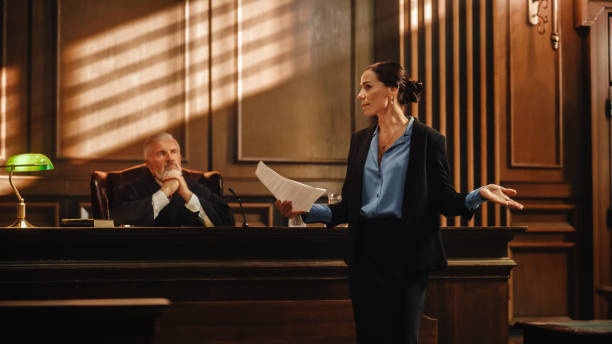
The family courtroom in Columbus, Ohio had gone so quiet that Claire Waverly could hear the soft hum of the fluorescent lights above her head.
Judge Marsha Bennett folded her hands on her desk and looked over her glasses at the two boys sitting in front of her. She spoke gently, carefully, the way you spoke when you understood that the wrong word in the wrong moment could do damage that outlasted the proceeding itself.
“No one here is asking you to choose because we want to hurt anyone. We only need to understand where you feel safe, loved, and heard.”
Claire’s stomach pulled tight.
Her twin sons were nine years old. Noah and Miles should have been worrying about soccer practice and spelling tests and what kind of cake they wanted for their birthday next month. Instead they were sitting in a wood-paneled courtroom between two parents, with a room full of adults waiting on their answer like it could decide the rest of their lives. Because it could.
Across the aisle sat Preston Vale.
Navy suit. Expensive watch. The calm, settled expression of a man who had never once walked into a room without believing it already belonged to him. His two attorneys sat on either side of him, sharp and well-prepared. His mother Evelyn was there in the gallery behind him, spine perfectly straight, hands folded in her lap, wearing the practiced composure of a woman who had spent decades managing appearances. And beside Evelyn sat Preston’s girlfriend, Tessa Monroe, a lifestyle influencer with a hundred thousand followers and the attention span, apparently, of someone who found other people’s custody hearings mildly inconvenient. She was on her phone.
Claire sat with her court-appointed attorney and focused on keeping her hands still in her lap.
She had not asked for the large house in Upper Arlington. Not for Preston’s cars or his vacation accounts or his family money or any of the things his attorney would soon list as evidence of what a good father he could be. She had asked for one thing and one thing only.
Her boys.
Preston’s attorney stood and adjusted his jacket with the smooth confidence of a man billing by the hour.
“Your Honor, Mr. Vale can provide financial stability, private education, comprehensive health coverage, a safe neighborhood, and a structured home environment. Ms. Waverly, while we respect her role as a mother, currently lives with a cousin, has limited income, and has shown signs of emotional instability throughout this process.”
Claire swallowed and fixed her eyes on the middle distance.
There it was again. The same story Preston had been constructing around her for years, brick by careful brick. She had packed lunches and sat through late-night fevers and helped with homework and washed soccer uniforms and attended every parent-teacher conference and made excuses for Preston whenever he came home cold and angry and looking for something to be wrong. She had done all of that, quietly, consistently, for years. And now every bit of it was being arranged into evidence that she wasn’t enough.
Preston lowered his eyes and spoke with his voice soft and reluctant, the way he always sounded when he was performing concern.
“Claire is a good person. But she gets overwhelmed. She cries, she raises her voice, and sometimes the boys go without proper meals. I cannot risk their future because she refuses to accept that she needs help.”
Claire stood before she could stop herself.
“That is not true.”
The judge tapped her pen once. “Ms. Waverly, please sit down.”
Claire sank back into her chair. Preston looked at the floor, but not quickly enough — she caught the faint smile pulling at the corner of his mouth. It was what he had always done. Push until she reacted. Then point at the reaction as proof. She had fallen for it a hundred times and she was falling for it now, in a courtroom, in front of a judge, exactly the way he had planned.
Evelyn Vale leaned toward Tessa and whispered, loudly enough for the first three rows to hear, “Those poor boys need a stable home.”
Claire blinked hard.
Noah sat very straight in his chair, small shoulders rigid under his gray school blazer, the posture of a child who had learned to hold himself together in rooms where things were about to go wrong. Miles sat beside him rubbing his thumb slowly along the edge of his sleeve, eyes fixed on the floor, the way he always went inward when he was frightened.
Claire wanted to go to them. She couldn’t.
Then Judge Bennett turned back to the boys.
“Noah. Miles. You may speak freely here. Who do you want to live with?”
Miles looked like he might cry. Noah looked at his mother first. Then at his father.
Preston smiled at him. “Just answer like we talked about, buddy.”
The judge’s expression changed entirely. “Mr. Vale, do not coach the child.”
Noah stood slowly. He was small for his age, with messy brown hair and eyes that had been carrying something heavier than a nine-year-old’s eyes should carry. His hand stayed inside the pocket of his blazer.
“Your Honor,” he said, and his voice was shaking but he didn’t sit back down, “before I answer, I need to show you something.”
Preston’s smile disappeared.
“Noah, sit down.”
Noah reached into his pocket and pulled out a small red flash drive. A faded superhero sticker clung to one side, the edges worn soft from handling. He held it out toward the judge with a steady arm.
“It has things on it. Things my mom doesn’t know about.”
For the first time all morning, Preston Vale looked afraid.
The drive was placed on the clerk’s desk.
Claire stared at it from across the room, trying to understand what she was seeing. Her nine-year-old son had walked into a custody hearing with evidence. He had planned this. He had prepared. He had done it without telling her, and she didn’t know whether to be terrified or heartbroken or something she didn’t have a word for yet.
“Noah,” the judge asked carefully, “what is on that drive?”
He took a breath. “Videos. Some audio. I copied them from Dad’s computer a few months ago when he left it open.”
Preston’s attorney was on his feet immediately. “Your Honor, we strongly object. This is highly irregular. We cannot verify the origin of these files or whether they have been altered in any way.”
Noah turned toward her. His voice was quiet but firm. “I didn’t change anything.”
Preston hit the table with his palm. The sound cracked through the courtroom. “My own son stealing from me. This is what she’s done to him.”
Claire shook her head. “I didn’t know about this.”
Noah’s voice rose slightly. “Mom didn’t tell me to do anything. She didn’t know.”
The courtroom went still.
Then Noah looked at the judge again and said the thing that broke Claire open.
“She always told us Dad was tired. She said he worked hard. She said not to be upset when he yelled because adults have bad days. Even when she cried on Christmas morning, she told us she just had something in her eye.”
Claire pressed her hand over her mouth.
She had thought she was protecting them. She had thought if she absorbed enough of it, smoothed enough of it over, kept enough of it quiet, the boys would be spared. She had thought they weren’t watching.
Children hear more than adults want to believe. They always do.
The judge ordered the clerk to review the files. A screen near the front of the courtroom flickered on.
The first video showed the living room of Preston’s house. Claire appeared in the background, picking up toys near the couch, unaware the camera was running. Preston stood by the windows with his phone to his ear, his voice coming through clear and unhurried.
“Don’t worry, Tessa. Claire is leaving with nothing. And if I get the boys, she’ll come crawling back just to see them.”
A woman’s laugh on the other end of the line.
“I hope you don’t actually expect me to play stepmom every weekend.”
Preston chuckled. “That’s what nannies are for. I only need custody long enough to break her.”
Claire felt the air go out of her chest.
Not because of the words. She had heard worse from him in seven years of marriage, in a hundred different rooms, in a hundred different tones. What hit her now was the understanding that her sons had heard it too. That Noah had sat with those words in his chest for months, turning them over, deciding what to do with them.
The second file was audio only.
Evelyn Vale’s voice filled the courtroom, crisp and matter-of-fact.
“Preston, if you want the judge to believe you, stop arguing with Claire in public. Make her look unstable. Cancel the grocery card before she shops, then ask why dinner isn’t ready. She’ll react. She always reacts.”
Preston’s answer: “Good. Then I’ll document everything.”
Evelyn’s quiet satisfaction: “That woman was never good enough for our family.”
The murmuring in the courtroom rose and then fell as people caught themselves. Evelyn sat frozen in the gallery, her face pale beneath her makeup, her carefully constructed expression of a grieving grandmother collapsing by degrees.
“That is being taken completely out of context,” she said, but her voice had lost its certainty.
No one in the room looked convinced.
The third video was from the boys’ playroom.
Noah and Miles sat on the carpet in their school uniforms, a scattered pile of Lego between them that nobody was building. Preston paced in front of them. He wasn’t shouting. His voice was low and controlled, which was somehow worse.
“Tomorrow, when the judge asks, you say you want to live with me.”
Miles was crying. Small, quiet tears running down his face. “But I want Mom.”
Preston crouched down in front of him. “Your mother has no house. No money. No future. If you choose her, you lose the school, the trips, the nice rooms, all of it. Everything. Is that what you want?”
Noah’s voice came out trembling. “What if we just tell the truth?”
Preston smiled. The same smile he had offered Noah ten minutes ago from across the courtroom.
“Then your mother will suffer because of what you said. Do you want that on your conscience?”
Claire gripped the edge of the table so hard her knuckles went white. Her attorney said her name quietly beside her. She barely heard it.
In the gallery, Evelyn had stopped trying to explain.
Tessa had put her phone away.
Noah looked at the judge with the kind of steadiness that only comes from having made a decision a long time ago and spending months preparing to keep it.
“There’s one more,” he said.
Preston stood immediately. “Enough. He is nine years old. You cannot allow him to do this.”
Judge Bennett looked at him without any warmth at all. “Mr. Vale, sit down.”
Preston sat.
The last video showed Preston’s home office. The image was slightly blurry, filmed from a low angle — a child’s angle — but the audio was clear. A man in a gray jacket sat across from Preston with a laptop open between them.
Preston’s voice: “Move those accounts before the divorce review. If Claire asks for financial support, I don’t want the real numbers anywhere near this court.”
The man in the gray jacket: “And if there’s an audit?”
Preston, leaning back: “I have people. Besides, Noah is smart, but he’s still a kid. No one’s going to believe him over me.”
Noah closed his eyes.
Claire understood it then. The full weight of what her little boy had been carrying. He had heard that sentence — no one’s going to believe him over me — and he had decided to build a case anyway. He had copied files and hidden a flash drive and waited for the right moment, alone, for months, because he needed someone to finally believe them.
The judge’s voice was very quiet. “Noah, how long have you had these files?”
Noah reached over and took his brother’s hand. Miles held on.
“Months,” Noah said. “I thought if I saved enough, someone would finally believe us.”
Claire couldn’t hold it anymore. “Baby, why didn’t you tell me?”
Noah looked at her with a sadness that had no business being in a nine-year-old’s face.
“Because Dad said if you knew, he’d tell everyone you made us do it. And because—” He stopped. His chin trembled. “Because I didn’t want you to cry anymore.”
For a moment the courtroom was completely silent.
Then Miles raised his hand.
The gesture was so small and careful, like a child in a classroom who wasn’t sure he was allowed to speak.
“I have something too,” he said. His voice was barely above a whisper.
Preston turned sharply toward him. Miles shrank back, but Noah tightened his grip.
“It’s okay,” Noah said, so quietly only the people closest could hear. “Tell the truth.”
Miles looked at the judge. “Dad didn’t want us because he missed us. He told Tessa that if he got us, Mom would have to beg. He said it more than once.”
Everyone turned toward Tessa.
The young woman’s face had gone dark red. Preston’s attorney leaned toward her and whispered urgently. Tessa pulled away from him.
“I’m not getting blamed for this.” Her voice was steady and her eyes were clear. “I have the messages. He told me the boys were leverage. That’s his word, not mine. I have screenshots.”
Preston stared at her. “Tessa.”
She shook her head once. “No. You spent months making everyone think this was about being a good father. I’m not sitting here and pretending with you.”
And that was the moment the room changed.
Not loudly. Not with any single dramatic gesture. It changed the way rooms change when people stop seeing what they’ve been told to see and start seeing what is actually there. One by one, the faces in that courtroom shifted — away from the man in the expensive suit and toward a clearer picture of what he actually was.
A man who had confused control with love for so long he couldn’t tell the difference anymore.
Judge Bennett called a recess.
When she returned her posture was different. Her voice was measured and deliberate and entirely without softness.
“Based on what has been presented today, this court finds immediate and serious concern regarding emotional pressure and psychological manipulation of the minor children, possible interference with financial disclosure in these proceedings, and conduct that requires further investigation. Temporary full custody is granted to Ms. Claire Waverly, pending a complete evaluation and further proceedings. Visitation with Mr. Vale is suspended until appropriate professional recommendations are made.”
Claire bowed her head and sobbed. She didn’t try to stop it.
Noah and Miles came out of their chairs and into her arms at the same time, and she held them both so tightly she could feel their heartbeats against her chest.
Behind her, she heard Preston stand.
“Noah. Miles.” His voice was doing something complicated — still performing, but cracking underneath. “I am your father. Everything I did was for you. You have to understand that.”
Noah pulled back slightly from his mother’s arms and looked at his father.
There was no hatred in his face. No triumph. None of the satisfaction that Preston himself would have worn in that moment. There was only the quiet, tired honesty of a child who had spent too long watching adults lie and had finally decided to stop pretending along with them.
“No, Dad,” he said. “You did it to win.”
Preston had no answer.
In the gallery, Evelyn was crying. Not for Claire. Not for the boys. She was crying because people were watching, because the name she had spent her life polishing had cracked open in a public room and she didn’t know how to perform her way out of it.
“Children should not be allowed to destroy families,” she said, more to herself than anyone.
Claire looked at her through her tears. She didn’t feel anger anymore. She felt something quieter and more final than that.
“My son didn’t destroy anything,” she said. “The truth only opened the door.”
Claire did not leave that courthouse in a luxury car.
She left holding both of her sons by the hand, a folded paper in her coat pocket, and something fragile and real in her chest that she was careful not to breathe on too hard.
They took a rideshare back to her cousin Dana’s small apartment on the east side of Columbus. It was not the kind of place that appeared in lifestyle magazines. Three mattresses on the floor of two small bedrooms. A kitchen table with mismatched chairs, one of which wobbled if you leaned to the left. A pot of vegetable soup warming on the stove because Dana had known they would come home tired and she had wanted something ready. The hallway still smelled like the paint they had put up three weekends ago when the boys decided the walls were too plain.
It was not fancy.
But no one was yelling. No one was watching every move they made and cataloging the mistakes. No one was making two small boys feel diminished so that someone else could feel large.
That night Claire found Noah sitting at the window that looked out over the parking lot and the streetlights and the ordinary Thursday evening world. She sat beside him without saying anything at first.
“I’m sorry, Mom,” he whispered.
“For what?”
His chin trembled. “For being scared for so long.”
She pulled him in close and held the back of his head with her hand. “You never had to be brave for me. That was never your job. I was supposed to be brave for you, and I didn’t do it soon enough.”
She felt him nod against her shoulder.
Miles woke up ten minutes later with the instinct small children have for knowing when the people they love are gathered somewhere without them. He climbed between them without a word and tucked his feet under Claire’s leg for warmth, and the three of them stayed there together until the apartment got quiet and the streetlight outside made long shapes on the wall and both boys fell asleep against her.
Claire stayed awake a long time.
The months after the hearing were not easy and she never told herself they would be. Easy had never been the point. She found work at a small bakery near German Village, starting at five in the morning, coming home smelling like flour and coffee and brown butter. On weekends she cleaned office buildings with Dana, the two of them moving through empty floors with their headphones in, talking about nothing and everything while the city was still sleeping outside the windows. Some weeks she sat at the kitchen table after the boys went to bed and counted what was in her account against what was due, moving numbers around with the particular focused calm of someone who has learned that panic costs more than it’s worth.
But the boys began sleeping through the night.
That was the first thing she noticed, about three weeks in. She had stopped hearing Miles’s feet on the floor at two in the morning, stopped finding him in the hallway standing very still the way he used to do, listening for something. He was sleeping. Full, long, uninterrupted sleep, the kind that left him soft and slow in the mornings, sitting at the table with his cereal getting soggy while he stared out the window at nothing in particular.
Then Miles stopped flinching when a door closed too loudly.
This one she almost missed because it happened gradually, the way healing usually happened — not a single visible moment but a slow accumulation of moments that one day you looked back at and realized had added up to something. She noticed it first when Dana’s boyfriend came in one afternoon and let the front door swing shut behind him. Six months ago, Miles would have startled visibly, would have gone somewhere behind his eyes for a few seconds. Now he just looked up and went back to his drawing.
Then Noah started laughing again.
Real laughing — the unguarded, unselfconscious kind that children produced when they had forgotten for a moment to be careful. It came back in pieces. First at something Miles said at the dinner table. Then at a video Dana showed them on her phone. Then one afternoon in the park near the apartment, running after a dog that had gotten loose from its owner, laughing so hard he had to stop and hold his knees.
Claire stood on the path and watched him and felt something in her chest that she recognized after a moment as relief — not the temporary kind, not the kind that came after a crisis passed, but the deep structural kind, the kind that settled into the bones and changed the way you held yourself.
Her sons were okay.
Slowly, the apartment stopped feeling like the place where they had landed after losing everything and started feeling like the place where something was beginning.
Later that year, Preston’s company came under financial investigation. The accounts his associate had been asked to move turned out to be difficult to fully conceal once the court appointed an independent auditor. People who had praised his business acumen stopped returning his calls. Tessa published a long account on her platform that was careful and specific and included screenshots, and the polished life Preston had spent years constructing began to look like what it actually was — a performance that required constant management and fell apart quickly once the people maintaining it stopped.
Some people still said, in the comments sections and the neighborhood gossip and the places where people debated other people’s choices without knowing the full story, that money gave children advantages they shouldn’t be denied. That stability mattered. That a private school and a big house and a structured environment were real things that made real differences in a child’s life.
Claire didn’t argue with that.
Money could buy private schools and trips abroad and beautiful houses in good neighborhoods. It could buy doctors and tutors and every advantage that money was able to buy.
It could not buy the feeling of going to sleep at night without waiting for something to go wrong. It could not manufacture the particular safety of a home where you were allowed to have a bad day without someone turning it against you. It could not produce, for any amount, the experience of being nine years old and knowing that if you told the truth, the people who loved you would still be there on the other side of it.
On the twins’ tenth birthday, Claire threw a party at the public park three blocks from the apartment. Paper plates and homemade cupcakes with uneven frosting. A banner that Miles had decorated himself with markers, slightly crooked, the letters different sizes. A soccer ball that kept escaping across the grass and having to be retrieved. Dana’s boyfriend brought a bluetooth speaker. The neighbor kids from their building came. It was loud and slightly disorganized and nothing matched.
At some point Noah drifted over to where Claire was sitting on a bench watching Miles attempt to explain the rules of some game he had invented to three children who didn’t understand it but were playing enthusiastically anyway.
“Mom,” Noah said. “Do you miss the big house?”
Claire looked at her sons. Their shoes were worn through at the toes. Their clothes were simple. Their hands were sticky with frosting and Miles had somehow gotten grass stains on his jeans already, which would be an adventure to deal with later.
Their eyes were clear.
Not watchful. Not careful. Not doing that constant quiet calculation of what mood the room was in and what that meant for them. Just clear and present and ten years old, which was exactly what they were supposed to be.
“No, sweetheart,” she said.
Noah waited.
“A beautiful cage is still a cage. This might be smaller, but here nobody has to shrink just so someone else can feel tall.”
Noah considered that the way he considered things — seriously, turning it over. Then he leaned his head against her shoulder and watched his brother teach three confused children a game with no clear rules.
Claire put her arm around him.
She thought about the courthouse. About a small boy with a flash drive and a superhero sticker on the side, standing up in a room full of adults and saying there is something you need to see. She thought about the months he had carried that drive in his pocket, waiting for the right moment, alone with a truth too heavy for his age.
She would spend the rest of her life making sure he never had to be that brave alone again.
Sometimes the greatest thing a mother could give her children was not a perfect life. Not a big house or a private school or the kind of stability that looked good on paper. Sometimes the greatest thing was the courage to leave the life where everyone had learned to stay silent.
Her son had understood that before she did.
She was glad, finally, that someone had listened.

Specialty: Emotional Turning Points
Rachel Monroe writes character-driven stories about betrayal, second chances, and unexpected resilience. Her work highlights the emotional side of family conflict — the silences, the misunderstandings, and the moments when someone quietly decides they’ve had enough.