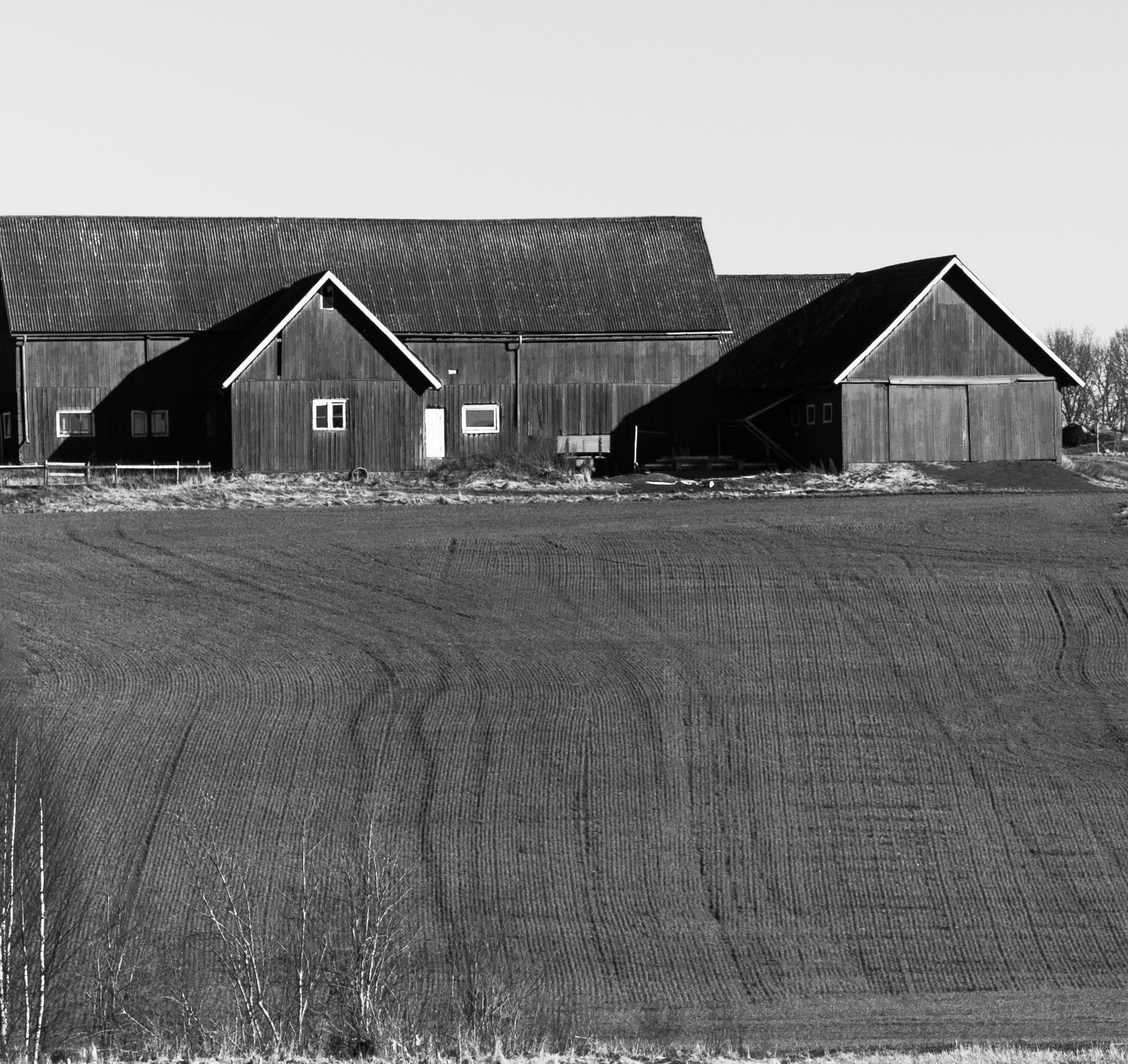
It was October of 1933 when Ruth Hadley’s world ended the second time.
The first time had been four years earlier, on a Tuesday morning in September of 1929, when her husband Carl dropped dead of a heart attack in the wheat field behind their farmhouse in Grady County, Oklahoma. He was fifty-one years old. He had been a quiet man, not given to sentiment or decoration, but the kind of man who fixed things without being asked and never once raised his voice to her in twenty-six years of marriage. She had loved him the way you love something you cannot imagine being without, and then she had to learn to imagine it.
She learned.
Ruth Hadley was not a woman who surrendered to circumstances. She was the daughter of a Kansas homesteader who had broken sod by hand and fed six children through two droughts and a hailstorm that flattened their first crop the same week it was planted. She had grown up understanding that the land did not care about your feelings, and that the only answer to hardship was to get up earlier, work harder, and keep your mouth shut about the rest. So when Carl died she mourned him properly and then she went back to work. She managed the farm herself for four years. Hired a neighbor’s boy for the heavy lifting. Kept the books in the ledger Carl had left half-filled with his own careful handwriting. Made every payment to the bank on time, even in 1931 when the wheat came in thin and the price dropped to thirty-five cents a bushel and she had to sell her good silver to make up the difference.
Those were not easy years for anyone in Grady County. The Depression had arrived in Oklahoma before the rest of the country noticed it, carried in on the back of falling wheat prices and banks that suddenly stopped lending to the families who needed it most. By 1932 a third of the county’s farms had changed hands, foreclosed or simply abandoned by families who loaded what they could onto a truck and pointed west toward California and a rumor of work. The roads were full of them, dusty processions of loss moving through the county, looking for something better than what they were leaving behind. Ruth stayed. She had paid for that land with twenty-six years of her life and she was not going to walk away from it because times were hard. Times had always been hard. That was not a reason.
She had two sons. Everett, thirty-one, lived in Tulsa with his wife Dora and worked as a clerk at a dry goods company. Franklin, twenty-eight, had drifted to Kansas City three years earlier chasing work that never quite became what he had hoped. Both of them wrote occasionally. Both visited at Christmas when the roads permitted. She loved them without condition the way mothers do, with a completeness that does not require the love to be returned in equal measure to remain whole.
She did not know, in the summer of 1933, that they had been talking to each other. She did not know that Everett’s company had cut his hours to three days a week, or that Franklin had borrowed money he could not repay, or that both of them had been quietly looking at the farm the way a drowning man looks at a piece of floating timber.
They came together on a Saturday in late September, which she took for an early Christmas visit. She made a pot roast. She pressed the tablecloth. She set out the good plates Carl’s mother had passed down, the ones with the blue painted rim that she only brought out for company. She was happy to see them with that particular brightness that company brings to a person who has been alone too long, a warmth that fills the whole house the moment the door opens.
After supper Everett put a document on the table.
He explained it in a tone she would later describe to her neighbor Margaret as the voice of a man who has rehearsed what he is going to say so many times that all the feeling has been ironed out of it. The farm needed to be sold. They had found a buyer, a land consolidation company out of Oklahoma City that was acquiring at-risk properties across the county. The price was low but it was real money, and real money in 1933 was not something you argued with. She would receive a portion, enough to rent a room in town somewhere, and they would help her find something suitable.
Ruth sat at the table and looked at her sons and said nothing for a long time.
“This is my home,” she said finally.
“Mama,” Everett said. “It won’t be for much longer anyway. The bank—”
“The bank has been paid,” she said. “Every month. On time.”
Franklin looked at the table.
She looked at the document. There were lines for their signatures and a line for hers. Everett and Franklin had already signed. The date at the top was three weeks earlier. They had signed it before they came. She understood then that the pot roast and the pressed tablecloth had been a formality. They had not come to ask her. They had come to inform her, and to collect the third signature the transaction required.
What neither son could look at directly was the simple truth underneath all the careful language. Everett’s company had cut his hours to three days a week. Franklin had borrowed money he could not repay. Both of them were drowning in their own quiet ways and the farm was the only timber floating within reach. Their mother had kept it alive through four years of the worst economic collapse in American history, had paid every bill on time, had held everything together by sheer will and early mornings, and now that the work was done they had come to collect the value of it.
Ruth Hadley picked up the pen. She signed her name in the same careful handwriting she had used all her life. Then she folded her hands on the table and looked at her sons and said very quietly, “I want you both to remember this day.” Neither of them answered.
On the fifteenth of October, with the first cold front of the season pushing down from the north and the cottonwood leaves turning yellow along the creek bed, Ruth packed one suitcase. She moved through the house slowly, touching things as she passed them. The kitchen where she had cooked thirty-four years of meals. The bedroom where both boys had been born, Carl holding her hand through both labors, his big rough hands surprisingly gentle. The front porch where she and Carl had sat every summer evening watching the light go out of the sky over the wheat fields in a slow procession of orange and purple that she had never once taken for granted.
She did not cry. She had already done that, alone, in the three weeks between signing and this morning. She had cried until there was nothing left, and what remained after was something harder and quieter that she did not yet have a name for.
She picked up her suitcase, walked out the front door, and started down the dirt road that ran south.
Four miles away, at the end of that road, there was a farm that belonged to a man named Harold Briggs.
She had known Harold Briggs for thirty years. He had been Carl’s nearest neighbor, his occasional hired hand, his sometime friend. He was a widower, had been for six years, since his wife Clara died of pneumonia in the winter of 1927. He was a quiet man, quieter than Carl had been, the kind of quiet that comes not from having nothing to say but from having learned long ago that most things don’t require saying. She had seen the way he looked at her at church on Sunday mornings and at the county fair and at the Grange meetings, and she had chosen for twenty-six years not to see it, the way a good woman does when she is happy with the man she has.
She knocked on his door at half past three in the afternoon with her suitcase at her feet and the wind picking up behind her.
Harold Briggs opened the door and looked at her face and read what was written there in one quiet moment. Then he opened it wider and said, “I’ll put the coffee on.”
He did not ask her what had happened. He made coffee and set out bread and butter and a jar of peach preserves his sister had sent from Arkansas, and he let her sit in the warm kitchen until the color came back into her face. When the coffee was gone he said simply, “You’ll take the spare room. It’s warm and the roof is sound.”
“Harold,” she said.
“It’s not a discussion,” he said, and got up to refill the coffee.
She was not a woman who accepted charity, even from a man with kind eyes and a sound roof. Within two weeks of arriving she had quietly taken over the management of his kitchen garden, his egg production, and his household accounts, which she discovered were in such genial disorder that he had been consistently overpaying for supplies and underpaying himself for eggs for the better part of three years. “You have been robbing yourself blind,” she told him pleasantly, and reorganized everything. Harold let her, with the expression of a man who recognizes competence when it appears in his kitchen and has the good sense to step aside for it.
By spring of 1934 they were sharing meals every evening. By summer they were managing the entire property together. Harold had forty acres of cotton that had been middling for years, not from lack of effort but from lack of the kind of systematic attention Ruth applied to everything she touched. She talked to the county extension agent, studied the soil, and persuaded Harold to try a rotation the agent had been recommending to anyone willing to listen. That fall the cotton yield was the best Harold had seen in a decade.
He proposed in November, standing in the kitchen after supper with his hat in his hands, the most uncertain she had ever seen him. She looked at this quiet man who had opened his door and put the coffee on and never once made her feel like a burden. “Yes,” she said. “Obviously yes, Harold.” They were married in December of 1934, small and simple, at the Methodist church in Chickasha, with Margaret and her husband as witnesses. Ruth wore her good blue dress. Harold wore his only suit and looked profoundly relieved.
Everett came in the spring of 1935, driving down from Tulsa with Dora beside him and the expression of a man who has rehearsed an apology but is not sure it will be accepted. Harold answered the door. Everett had never met Harold Briggs formally and he stood on the porch looking at this broad-shouldered man in a clean work shirt who was clearly comfortable in the doorway of what was now, by virtue of the December wedding, as much Ruth’s home as his own. “I’m here to see my mother,” Everett said. “I imagine she knows,” Harold said, and stepped back to let them in.
Ruth received her son in the front room with the pleasantness of a woman who has already worked through every feeling she needed to work through and arrived somewhere clear on the other side. She offered coffee. She asked about Dora’s health. She listened to Everett’s careful explanations of the pressures of 1933 and the decisions that had seemed necessary and the regret that had accumulated since. She let him finish. Then she said, “Everett, I signed that paper myself. Nobody forced my hand.” He blinked. “What you need to understand,” she continued, “is that I signed it so that I would never be able to forget what my sons were willing to do when they were afraid. Not to punish you. So that I would know. A woman needs to know the true character of the people around her. It is useful information.” She poured him more coffee. “I am not angry,” she said. “I want you to know that clearly. But I want you to know the other thing too.”
Franklin came six months later, alone, thinner than she remembered, with the look of a man the Depression had taken something permanent from. She fed him a full meal and let him sleep in the spare room for two nights. She asked Harold to take him out to the cotton fields and walk him through the rotation, and she watched from the kitchen window as her son and her husband moved slowly along the rows together in the late afternoon light, Harold pointing and explaining in his unhurried way, Franklin listening with his hands in his pockets and his head down.
On the second evening Franklin sat at the kitchen table after supper and looked at his mother for a long time. “I’m sorry, Mama,” he said. Not the rehearsed version. The real one, the kind that costs something to say. “I know you are,” she said.
Harold never said anything to either son about the document or the walk down the dirt road. It was not his story to tell and he understood that without being asked. But on the evening after Franklin left, he and Ruth sat on the porch the way they had taken to doing, watching the light go out of the Oklahoma sky in its slow procession of orange and purple, and Harold said quietly, “You all right?”
Ruth thought about it for a moment.
“Yes,” she said. “I think I finally am.”
Harold nodded and they sat in the comfortable silence of two people who have learned that most things don’t require saying.
The farm did well in 1936 and better in 1937. The Dust Bowl storms that turned the sky black and drove thousands of families off the land passed over Grady County hard but not fatally, and the rotation held the topsoil better than most of their neighbors. They were not rich. Nobody in Grady County was rich in those years. But they were steady, and in 1933 Oklahoma, steady was everything.
Ruth Hadley died in 1961 at the age of seventy-nine, in the farmhouse at the end of that dirt road, in the bed she had shared with Harold Briggs for twenty-seven years. Her sons were both there when she went. The obituary in the Chickasha Express described her as a devoted wife and mother and a woman of remarkable resilience. Margaret, who had known her longer than anyone still living by that point, read the obituary and said to her husband that remarkable resilience was accurate as far as it went, but that it left out the part about how Ruth Hadley was simply the finest woman she had ever known, and that the county had been lucky to have her.
Her husband agreed.
This story is a work of historical fiction set during the Great Depression in Grady County, Oklahoma. All characters are fictional. The historical details, including falling wheat prices, land consolidation, the county extension service, and the dust storms of the mid-1930s, are drawn from the real record of rural Oklahoma during the Depression years of 1929 to 1939.

Adrian Hawthorne is a celebrated author and dedicated archivist who finds inspiration in the hidden stories of the past. Educated at Oxford, he now works at the National Archives, where preserving history fuels his evocative writing. Balancing archival precision with creative storytelling, Adrian founded the Hawthorne Institute of Literary Arts to mentor emerging writers and honor the timeless art of narrative.