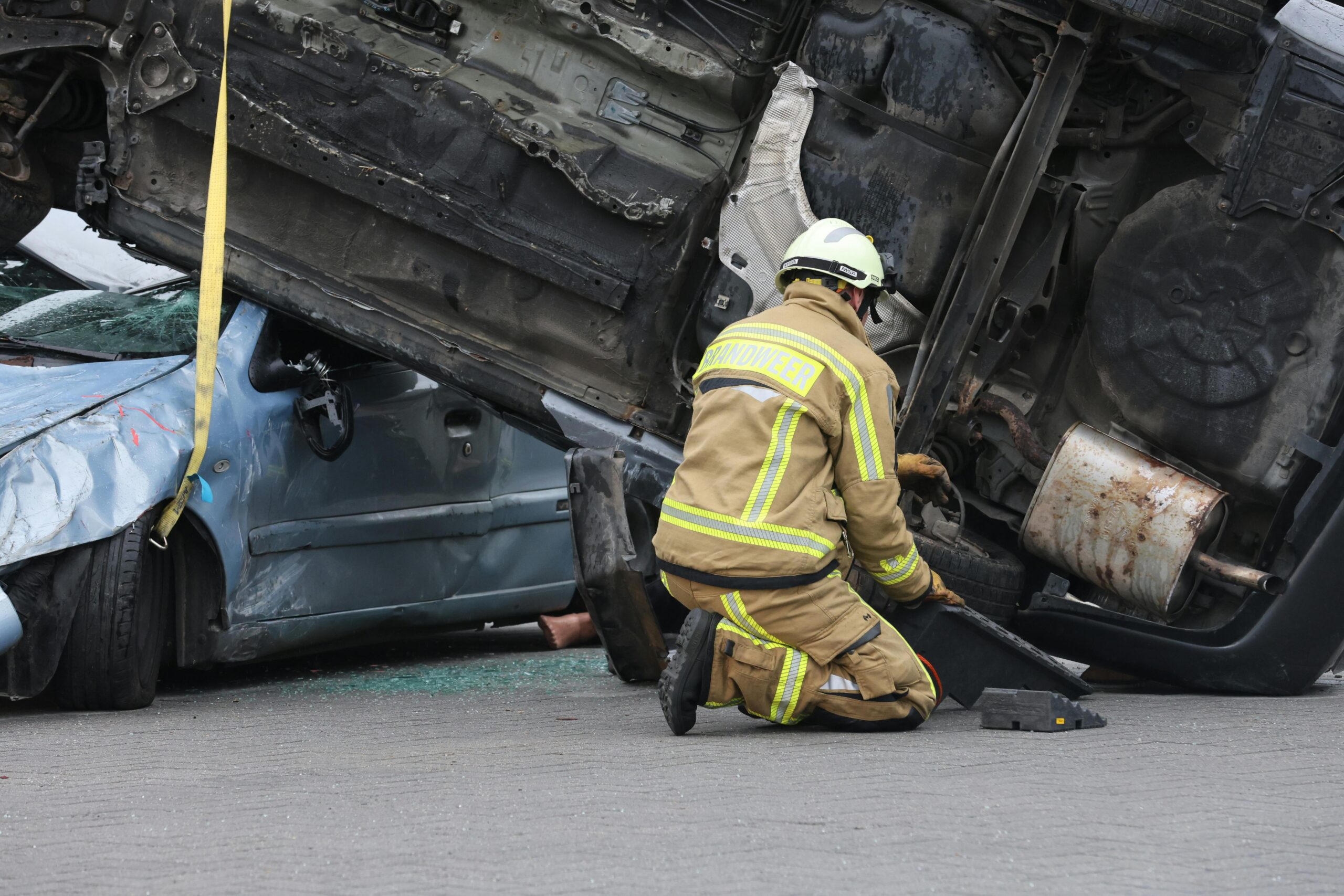
My husband cried after breaking his back in a car accident.
Not because of the pain. Not because of the surgeries. Not because of the long, grinding months of rehabilitation that swallowed an entire year of our lives.
He cried because a doctor sat across from him in a small consultation room with beige walls and a box of tissues already on the table, and explained, gently but without softening it, that there was a very real possibility he would never walk again.
I remember the exact moment it happened. The afternoon sunlight came slanting through the hospital window, laying long golden bars across the linoleum floor. Somewhere down the hall a cart rattled. Ethan sat motionless in his wheelchair, his hands resting in his lap, staring at the doctor’s face as though he had misheard him and was waiting for the sentence to be repeated in a way that made more sense.
Then his eyes filled, slowly, and overflowed.
For eleven years, I had never once seen my husband cry. Not when his father died of a heart attack on an ordinary Wednesday. Not when our house flooded during the hurricane and we spent three days bailing water in the dark. Not even when we lost our first pregnancy and I cried so hard I made myself sick, and he held me without a word because he didn’t have any.
But that afternoon, in that small beige room, he cried.
And I wish I could tell you I crossed the room, wrapped my arms around him, and promised we would get through it together, the way I had promised at the altar.
I didn’t.
I sat in the plastic chair by the door with my hands folded and my face arranged into something that looked like composure, and I felt myself, somewhere deep down where I couldn’t admit it yet, begin to step backward. Out of the room. Out of the marriage. Out of the life we had built.
My name is Claire Morgan, and for a long time I told everyone — and myself most of all — that my marriage ended because of an accident. It was a clean story. People nodded when they heard it. Tragedy, they thought.
The truth is much harder to live with. The accident didn’t end my marriage. I did.
The Man I Married
Ethan and I met when we were both twenty-three. He wasn’t flashy or wealthy, and he wasn’t charming in the way movies teach you to want. When he was nervous he talked about practical things — tire pressure, the weather, whether you’d eaten.
What he was, instead, was dependable. And at twenty-three I didn’t yet understand that dependable is the rarest quality there is.
When my father died unexpectedly the winter we’d been dating eight months, a snowstorm closed half the state. Ethan drove six hours through it anyway, twice sliding into the shoulder, and walked into the funeral home stamping snow off his boots just in time to sit beside me and hold my hand through the eulogy. He didn’t say anything wise. He just didn’t let go.
When our Labrador, Daisy, needed emergency surgery a year later, Ethan slept on the kitchen floor next to her recovery crate for three nights straight, because the vet had said she might be frightened if she woke disoriented and alone. I came down at two in the morning and found him curled on a folded blanket, one hand resting through the bars of the crate on Daisy’s paw, both of them asleep.
That was the man I married. Not a man who said beautiful things, but a man who showed up — for me, for a dog, for anyone who needed him — without being asked and without keeping score.
Two years after we met, we got married in his mother Margaret’s backyard under a string of cheap white lights that kept flickering. For nearly a decade, our life together was wonderfully, gloriously ordinary. We both worked — I in marketing, he as a civil engineer who loved bridges. We paid our mortgage, argued about paint colors, took weekend trips to the coast, and fell asleep in the car on the way home.
It was the kind of quiet, unremarkable happiness that most people spend their whole lives chasing and never quite catch. We had it. I didn’t know we had it. That’s the part I can’t forgive.
The Tuesday That Changed Everything
It was a rainy Tuesday in March. Ethan had left for work at the usual time, kissed me on the temple while I was still half asleep, told me he’d pick up something for dinner.
A delivery truck ran a red light at the intersection of Maple and Third. The driver said later he’d been reaching for a dropped phone. Ethan’s car was hit broadside, the full weight of the truck driving the driver’s side into a concrete barrier.
By the time I reached the hospital, soaked from the parking lot to the door, Ethan was already in surgery. I sat in a waiting room that smelled of burnt coffee and antiseptic for five hours, watching the doors, rehearsing the things I would say to him when he woke up.
The surgeons saved his life, and they deserved the credit they wanted for it. What they could not do — what no one could do — was undo what the impact had done to his spine. They used words like incomplete and uncertain and time will tell. They would not promise me he would walk. They would not promise me he wouldn’t.
Becoming a Caregiver
I attended every appointment. I learned every muscle group, every medication and its schedule, every exercise the therapist assigned. I kept a binder, color-coded, with tabs. I argued with insurance companies in a voice I didn’t recognize and researched experimental treatments at three in the morning.
People told me, constantly, how strong I was. “I don’t know how you do it,” they’d say, and I’d smile and say you just do, you don’t have a choice. What none of them saw was what was happening underneath.
I was exhausted in a way that sleep didn’t touch. Every single day revolved around Ethan’s recovery. Every conversation, the moment it began, bent toward his condition like a plant toward light. Every plan had to be measured first against what he could and couldn’t do — whether the wheelchair would fit, whether there was a bathroom he could use, how long he could sit before the pain made him gray and silent.
And somewhere in those months, so slowly that I never caught the moment it happened, I stopped seeing my husband.
I started seeing the accident instead.
When I looked at him, I no longer saw Ethan — the man who’d driven through a blizzard, who’d slept on the kitchen floor for a frightened dog. I saw a patient. A schedule. A weight I carried that never got lighter. I saw the thing that had happened to my life.
I am ashamed of this now in a way that is difficult to put into words. But I promised myself I would tell this honestly, so here it is: he had done nothing wrong, and I began to resent him anyway.
The Confession
One gray afternoon, about eight months in, I met my friend Jenna for coffee. It was the first time in longer than I could remember that I’d left the house for something that wasn’t an appointment.
And then she asked, in the gentle way that real friends ask, “How are you, though? Really?”
And something in me, some overstrained thing, finally gave way.
“I’m not attracted to him anymore,” I said.
I had never said it out loud. Hearing it in my own voice was like watching a glass slip from my hand — that suspended half-second where you know it’s going to break and you can’t stop it.
Jenna didn’t gasp. She didn’t recoil. She just looked at me across the little table for a long moment, and then she asked one question, quietly.
“Did he choose this?”
I opened my mouth. I closed it. I had no answer.
Because the answer was no. Of course it was no. The man hadn’t chosen to have a truck driven through the side of his car. He hadn’t chosen the wheelchair or the catheter or the nights he lay awake from nerve pain that felt, he once told me in a rare unguarded moment, like his legs were on fire from the inside.
The truth was simple and it was unbearable. Ethan was still, in every way that should have mattered, the same man I had married. The only thing that had changed was his body. And his body, it turned out, was the only thing I had truly understood myself to be married to.
The Business Card
A few weeks later, I did something I told myself was harmless. I told myself I only wanted information.
I scheduled a consultation with a divorce attorney.
I sat in her office and listened to her explain residency requirements and asset division, and I took notes the way I took notes at his medical appointments, as if information could absolve me of what I was actually doing.
She gave me her card on the way out. Instead of putting it in my purse — carelessly, or maybe not carelessly at all — I left it on the kitchen counter at home, in the dish where we dropped the mail and the spare keys.
Ethan found it that evening.
I was at the sink. I heard the small sound of him wheeling up to the counter, and then nothing. I turned around. He had the card in his hand, holding it up close to read it, and I watched his face as he understood what it was.
He didn’t say anything. He looked at it for several seconds — long enough that the silence became its own scream — and then set it back down in the dish, exactly where it had been.
He didn’t yell. He didn’t ask. He never once, in all of it, raised his voice to me.
Somehow that made it infinitely worse. A man who fought back would have given me something to push against, something that could have made me feel justified. Ethan just absorbed it, the way he had absorbed everything, and went quiet, and the quiet told me he had understood something about us that I was still pretending not to know.
Margaret
The confrontation, when it finally came, came by accident.
Ethan’s mother, Margaret, had driven him to a rehabilitation appointment one Thursday because I’d had a work obligation I couldn’t move. I arrived as his session was ending, and the three of us sat together in the bright, rubber-floored waiting area while he caught his breath.
Margaret, making conversation, asked how I was holding up.
I should have lied. I had lied to a hundred people about a hundred smaller things. But I was so tired, and the question caught me at the exact wrong moment, in the exact wrong way, and the truth came up out of me like water finding a crack.
“I don’t know if I can do this anymore,” I said.
Margaret tilted her head. “Do what, sweetheart? You mean the driving? We can work out the —”
“No,” I said. “This. All of it. Everything changed after the accident. I don’t — I don’t love him the same way anymore.”
The waiting room seemed to go very still. Ethan was looking at his hands.
And then I said the sentence that has followed me through every year since, the one I would give almost anything to take back, not because it was a lie but because it was true and I said it out loud in front of him.
“I’m not attracted to him anymore.”
Margaret did not gasp. She did not slap me, though I have since thought she would have been within her rights. She looked at me with a terrible, ancient calm — the calm of a woman who has buried a husband and is now watching her son be abandoned and has decided not to waste her grief on rage.
“Then leave,” she said simply. “He deserves better than someone who has to be attracted to him to be kind to him.”
She let that sit. Then she added, in a voice that has never once stopped echoing in me:
“My son lost the ability to walk. He didn’t lose his value. The fact that you can’t tell the difference tells me everything I need to know about which of you actually lost something in that accident.”
I remember the disappointment in her eyes more vividly than I remember my own wedding day. It wasn’t hatred. Hatred I could have lived with. It was disappointment, the kind you feel for someone you once believed was better than they turned out to be.
The Divorce
Three months later, I filed.
Ethan signed the papers without argument, without a single revision, without asking for anything he was entitled to ask for. When I finally worked up the cowardice to ask him why he wasn’t fighting any of it — the house, the savings, any of it — he looked at me with no anger at all and said the truest thing anyone has ever said to me.
“You already left a long time ago, Claire. I’m just signing the part that’s on paper.”
The divorce was final by the end of summer. He moved into a small, accessible apartment across town, the kind with wide doorways and a roll-in shower, and I told myself, with a confidence I mistook for wisdom, that his world would only get smaller from here. That I had made the hard, honest choice, and that he would shrink into his injury, and that someday I would look back and understand that I’d saved us both from a slow misery.
I have rarely been so completely, so humiliatingly wrong about anything in my life.
The Life I Didn’t Believe He Could Have
The first year after the divorce was, by every account I later pieced together, brutal for him. Progress came in increments so small they were almost invisible, at a cost of pain I can only imagine.
But somewhere in that first year, a therapist talked him into sitting in on a support group for people with recent spinal cord injuries. He went reluctantly, sat in the back, and said nothing. The second time, a nineteen-year-old three weeks out from a diving accident asked the room if it ever stopped feeling like the end of everything. The others looked at the floor. And Ethan — who had spent eleven years not knowing what to say — heard himself start to talk. Not to fix it. Just to tell the kid the truth: that it didn’t stop feeling like the end, exactly, but that it slowly started feeling like a different beginning, and that the difference was everything.
The kid listened the way people listen to someone who has actually been where they are. And something in Ethan, something the accident had buried and my leaving had nearly extinguished, came back on like a pilot light.
He kept going, arriving early and leaving late. Within a year he was running the group. Within two, a rehabilitation center hired him as a peer mentor — a paid position helping newly injured patients navigate the worst weeks of their lives, the weeks he understood from the inside.
Olivia
Her name was Olivia. She was a rehabilitation nurse who worked with several of the patients Ethan mentored.
At first they were only colleagues, passing in hallways, comparing notes on a shared patient. Then they were friends — the kind who stayed late talking in the parking lot. Then, slowly, the way the best things happen, they became something more.
I learned about her the modern way, through photographs that surfaced in the periphery of my life. At first I told myself they were just coworkers.
And eventually it became impossible to pretend I didn’t understand what I was looking at. He had found someone. Someone who, from the evidence, looked at him with no calculation in her face at all.
Standing
Three years after the accident, I attended a charity fundraiser for spinal injury recovery programs. I went for work.
I nearly dropped my drink when I saw him across the room.
A lightweight brace supported one leg. A cane leaned against the table near his hand, unused at that moment.
He was standing.
The man two doctors had warned me might spend his life in a wheelchair was standing on his own two feet, listening to whoever was talking with that same patient attention he had always given everyone — even me, even when I had stopped deserving it.
Olivia stood beside him. As I watched, she said something that made him laugh and reached over to touch his arm — not to steady him, not the careful, clinical touch I had perfected over months of caregiving, but the way you touch someone you simply like being near. Easily. Without pity. As if his body were not a problem to be managed but just the body of the man she loved.
I had spent a year of marriage learning how to touch my husband like a nurse. She had learned how to touch him like a wife in less time than it had taken me to forget how.
He saw me. There was a flicker of recognition, and then, to my astonishment, he made his way over — slowly, carefully, one hand finding the backs of chairs, but under his own power, crossing a room to speak to the woman who had left him when he couldn’t cross a room at all.
We talked for a few minutes. I kept waiting for the bitterness, braced for it. But there was no anger in his voice. No barb hidden in the small talk. No resentment.
Just peace. He had made his peace — with the accident and with me — and it had nothing to do with me at all, which was somehow the most humbling thing of all.
When Olivia joined us, she was warm and entirely without suspicion, because of course she had no reason for any. She spoke about Ethan with an open, easy admiration — about a teenager who’d told his own mother that the only reason he kept doing therapy was that “the guy with the cane” said it would be worth it.
As the two of them walked away together, her hand resting lightly between his shoulder blades, I felt something rise in me that I hadn’t planned for and couldn’t talk myself out of.
Regret. Not because he had moved on. He deserved to move on; he deserved every good thing that had found him.
Regret because I was finally, fully able to see what I had thrown away — and the seeing came years too late to be of any use to anyone but me.
The Keynote
The last time I saw him was at a rehabilitation conference, two years after the fundraiser. I was there for work again. He was there as the keynote speaker.
The room was full — hundreds of people. Patients in wheelchairs and patients with canes. Family members with the particular tired eyes I recognized from my own mirror, once. Therapists, surgeons, nurses. Olivia, in the front row, watching him the way you watch someone you are proud of all the way down to your bones.
He spoke without notes. He talked about the accident plainly — the beige room, the doctor, the moment his life divided into before and after — and, with a candor that silenced the room, about the nights early on when he had wondered whether it was worth continuing at all.
And then he talked about the people who had stayed. He named some of them — the therapist who wouldn’t let him quit, the kid in the support group who’d given him a reason to keep showing up, his mother who had driven him to a hundred appointments and never once made him feel like a burden.
He did not name me. He did not stand up in front of all those people and settle a score; he was too good a man for that, and he had moved too far past me for it to even occur to him. My absence from his list of people who stayed was not an accusation. It was simply the truth, and the truth did not need his help to find me where I sat in the back row.
Near the end, he paused. He looked out over the room, and he leaned slightly on the podium, and he said:
“The people who love you when life is easy matter. I’m not going to stand here and pretend they don’t. But the people who love you when life gets hard — when you’re not who you used to be, when you can’t give them back what they used to get from you — those are the people who show you who they actually are. And here’s the part nobody tells you.”
He paused again.
“Going through something like this shows you who you are, too. Not just the people around you. You. You find out exactly what you’re made of. And the gift of it — the terrible, unasked-for gift — is that once you know, you get to decide what to do with it.”
The room rose to its feet around me. Five hundred people, applauding a man who had been told he might never stand, while he stood.
I stayed in my seat a moment longer than I should have, and then I rose too, because not to would have been one more cowardice in a life that had already had enough of them.
After
I think about Margaret’s words more than I think about almost anything else. My son lost the ability to walk. He didn’t lose his value. The fact that you can’t tell the difference tells me everything.
For a long time I told that story as a tragedy that happened to me. Now I understand the truck didn’t ruin anything. It only revealed what was already there — the difference between the kind of love that shows up in a blizzard and sleeps on a kitchen floor, and the kind that quietly leaves a business card on the counter where it knows it will be found.
Ethan married Olivia. I heard about it secondhand, through a photograph. He was standing in it, of course — a cane in one hand and her hand in the other, and on his face the unguarded, ordinary happiness of a man who had been through fire and found, on the other side of it, exactly the thing he’d had all along and never lost.
I tell this not to be forgiven. I tell it because somewhere out there, someone is sitting in a plastic chair by a door, watching a person they promised to love start to become difficult to love — slower, sicker, sadder, less than they used to be — and is feeling that quiet backward step begin in their own heart.
If that’s you, I have only one thing to say, and I learned it too late to save anything but my own conscience.
The accident is not the test. Your response to it is. And the person who needs you when life gets hard is not asking you to be attracted to them.
They’re only asking you to stay.
I didn’t.
And I have had the rest of my life to understand exactly which side of that lesson I ended up on.

Specialty: Quiet Comebacks & Personal Justice
David Reynolds focuses on stories where underestimated individuals regain control of their lives. His writing centers on measured decisions rather than dramatic outbursts — emphasizing preparation, patience, and the long game. His characters don’t shout; they act.