The man I spent eight months refusing to meet called me at three o’clock in the morning to tell me my daughter might die before sunrise. If you’re wondering why a stranger would make that call, you’re asking the wrong question. The question that still keeps me awake some nights is why he made it at all.
I was sixty-eight years old the first time my own daughter looked at me like I was a stranger. It happened in my kitchen, the one my late husband Walt built with his own hands back in 1979. The cabinets were solid oak, worn smooth in places by decades of use. The drawers still carried tiny dents from Karen’s childhood, when she used to swing them open too hard while helping me set the table. Walt used to joke that those cabinets would outlive both of us. He was right about that. He’d been gone almost twelve years by then, but every corner of that kitchen still carried traces of him.
I had just pulled a roast from the oven when Karen arrived. The first thing I noticed was that she looked nervous. The second thing I noticed was that she was trying very hard not to.
Karen had always been that way. Even as a little girl, she kept her emotions tucked away until they overflowed. She wasn’t dramatic. She wasn’t loud. When she was worried, she smiled more. When she was scared, she talked less. When she had something important to say, she folded her arms tightly across her chest and rehearsed the conversation a dozen times before speaking. That afternoon, she was standing exactly that way.
“Everything okay?” I asked.
Instead of answering, she reached into her purse and pulled out a small black-and-white photograph. She placed it gently on the counter between us. At first I didn’t understand what I was looking at. Then I realized. A sonogram. For a moment, I simply stared. My first grandchild.
I should have hugged her immediately. I should have cried. I should have laughed and started talking about baby names and nursery colors and all the things mothers are supposed to say when their daughters share news like that. Instead, surprise got the better of me.
“Who’s the father?” I asked.
The smile on her face changed slightly. Not smaller. Just more cautious. “His name is Marcus.” I nodded. Then she took a breath. “Marcus is Black.”
Looking back, I don’t think the silence lasted more than a few seconds. But it was long enough. Long enough for Karen to see exactly what she needed to see.
The truth is complicated, and because this story is about honesty, I have to be honest about who I was then. I grew up in a small Indiana town where almost everyone looked like me. My parents weren’t cruel people. They weren’t hateful people. They were churchgoing, hardworking people who helped neighbors and brought food to grieving families and spent their lives believing they were decent human beings. But they carried assumptions. Ideas. Unspoken rules. The kind passed quietly from generation to generation.
Nobody sat me down and taught me prejudice like a school lesson. It was simply woven into the fabric of everyday life. Certain people belonged. Certain people didn’t. Certain families were acceptable. Certain families were not. When I married Walt, my mother asked only one question. Whether his family was “our kind.” At the time, I didn’t challenge the phrase. I didn’t even think twice about it. That’s how deeply those ideas had rooted themselves.
So when Karen stood in my kitchen and told me Marcus was Black, something happened in my face that I couldn’t hide. I wasn’t angry. I wasn’t outraged. I wasn’t even consciously thinking cruel thoughts. But I wasn’t happy either. And Karen saw that. She had spent thirty-nine years learning how to read me. She knew exactly what my silence meant.
I didn’t say anything ugly. For years, I used that fact to defend myself. I hadn’t yelled. I hadn’t forbidden anything. I hadn’t threatened to disown her. I hadn’t even spoken. But age has taught me that silence can wound just as deeply as words. Sometimes more deeply. Because words can be argued with. Silence leaves the other person alone to fill in every blank.
Karen waited. I remember that now. She actually waited. Not long. Just a few seconds. A few hopeful seconds where she was giving me one final chance to respond differently. Then she nodded. A small, sad nod. “That’s what I thought,” she said quietly. She picked up her purse and left.
The sonogram remained on the counter. I stood there listening to the front door close, listening to her car pull away, listening to the terrible quiet that followed. And then I did something I am still ashamed of. I picked up the sonogram, opened a drawer, placed it face down inside, and shut the drawer. As though closing the drawer could somehow close the problem. It couldn’t.
The months that followed were the loneliest of my life, and I’d buried a husband, so I knew lonely. Karen didn’t cut me off completely. That wasn’t her way. Instead, she did something harder. She pulled away slowly. The weekly phone calls became shorter, then less frequent. The Sunday visits stopped. The casual conversations disappeared. Everything became polite. Measured. Careful. We spoke the way distant relatives speak at funerals. Never rude, never warm, always avoiding the thing that mattered most.
At Thanksgiving, she didn’t come home. For the first time in more than twenty years, her chair sat empty at the table. I found myself looking at it anyway.
At Christmas, a card arrived in the mail. Inside was a photograph. Karen stood beside a tall young man with kind eyes and an easy smile. Marcus. The two of them were standing in front of a Christmas tree, bundled in winter coats, laughing at something outside the frame. I studied that picture for a long time. Long enough to notice the way he looked at her. Long enough to realize he loved her. Long enough to understand that she looked genuinely happy. Then I set the photograph on the mantel and did nothing.
Months passed that way. Occasionally, Karen mentioned Marcus during our brief conversations. She told me he worked as a physical therapist. She told me he volunteered coaching youth basketball on weekends. She told me he visited elderly patients whose families rarely came around. She told me he spent three weekends building the baby’s nursery because he wanted everything perfect. Every story painted the picture of a good man. Every story should have challenged my assumptions. Instead, I listened politely and changed the subject.
Looking back, I understand something now that I didn’t understand then. Prejudice survives by refusing to become personal. Because once someone becomes real, the lie begins to fall apart. And I had spent eight months making sure Marcus remained a stranger.
Then the phone rang. Three o’clock in the morning. The kind of phone call that instantly turns your blood cold. I answered on the fourth ring.
“Mrs. Healy?” The voice was unfamiliar. Deep. Steady. Exhausted. “Yes?” “My name is Marcus.” I sat upright immediately. “I’m with Karen.”
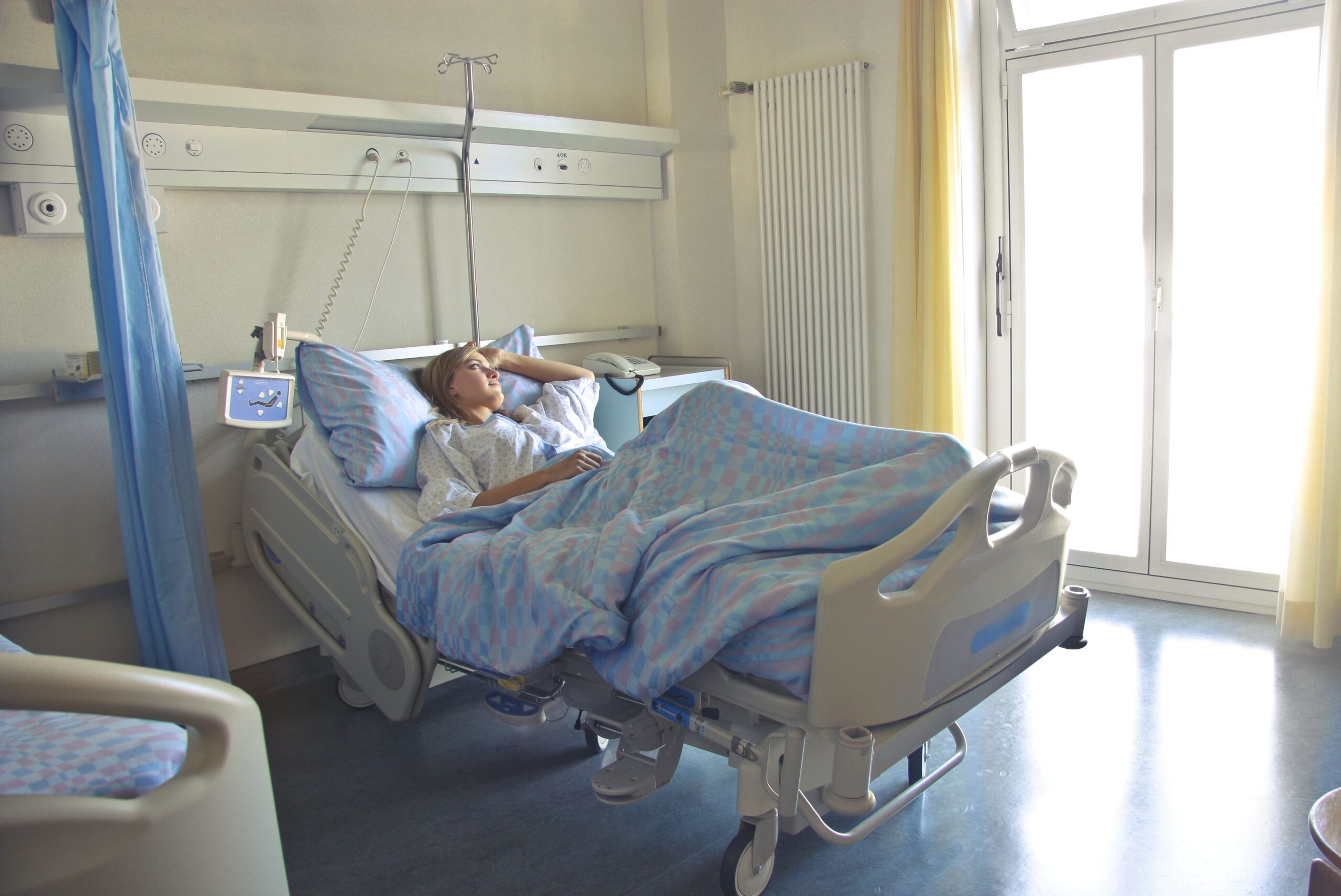
Fear arrived all at once, the kind that leaves no room for anything else. Marcus explained that Karen had gone into labor six weeks early. There were complications. The baby’s heart rate had become unstable. Doctors were preparing emergency surgery. As he spoke, I felt the room shrinking around me.
Then he said something I will carry for the rest of my life. “She keeps asking for you.” I closed my eyes. “What?” “Even when she’s barely awake,” he said softly. “She keeps asking for her mom.”
The guilt nearly crushed me. Eight months of silence. Eight months of distance. Eight months of judgment. And in the most frightening moment of her life, my daughter still wanted me.
Then Marcus said something else. Something that changed me. “I figured you’d want to be here.” Not accusation. Not resentment. Not anger. Grace. Simple grace. From a man I had never shown any.
I left ten minutes later. The roads were nearly empty. Rain tapped softly against the windshield while mile after mile disappeared beneath my tires. For ninety minutes, I replayed every mistake I had made. Every opportunity I had wasted. Every phone call I should have made. Every apology I should have offered. By the time I reached the hospital, I wasn’t just afraid of losing my daughter. I was terrified that I had already lost her.
The waiting room was nearly empty. A television flickered silently in the corner. Coffee machines hummed near the wall. And beneath harsh fluorescent lights, a tall young man paced back and forth. Marcus. The moment he saw me, he stopped.
I expected awkwardness. I expected distance. I expected resentment. Instead, he walked directly toward me. “Mrs. Healy?” I nodded. Before I could say a word, he hugged me.
To this day, I don’t know if he understood what that moment meant. I don’t know if he realized how completely it shattered every ugly assumption I had spent my life carrying. But I remember exactly what he said. “I’m so glad you came.” His voice cracked slightly. “She needs her mom.”
I cried harder than I had cried since Walt’s funeral. Not because of fear, though there was plenty of that. Not because of relief, though there was some of that too. I cried because kindness is hardest to receive from someone you’ve wronged. And Marcus gave it freely.
Karen survived the surgery. The baby survived too. Barely. The next eleven days were spent inside the NICU, and those eleven days changed everything. For the first time, I got to know Marcus. Not the imaginary version I had created. The real one.
We sat together through endless hours of waiting. We drank terrible hospital coffee. We shared updates from nurses. We worried about Karen. We worried about the baby. We celebrated tiny victories that would have sounded insignificant to anyone else. A good oxygen reading. A little weight gain. A stable night.
The longer I sat beside him, the more embarrassed I became by the assumptions I had carried. Marcus wasn’t simply a good man. He was one of the most patient people I had ever met. Every day he split his time between Karen’s room and the NICU. Every day he made sure someone was with her. Every day he asked nurses questions and took notes and advocated for his family. And every day he treated me with more kindness than I deserved.
One afternoon, while we sat together watching rain streak down the hospital windows, I finally apologized. Not the polite kind of apology people offer to end a conversation. A real apology. I told him the truth. I told him I had judged him without knowing him. I told him I was ashamed of myself. I told him Karen deserved better from me.
Marcus listened quietly. Then he nodded. “You know,” he said, “Karen always hoped you’d come around.” The simplicity of that statement nearly broke me. Not because it was dramatic. Because it wasn’t. Because despite everything, my daughter had still believed I could be better.
The first time they placed my grandson in my arms, he weighed barely more than a bag of sugar. Tiny fingers. Tiny nose. Tiny heartbeat. I looked down and immediately saw Walt. Not all of him. Just the chin. The exact same stubborn chin that had stared back at me across dinner tables for forty-three years.
The tears came instantly. “Hello, Walter,” I whispered. “It’s your grandma.” I touched his tiny hand. “I’m sorry I’m late.”
Marcus heard me. He was standing in the doorway. He could have reminded me of every mistake I’d made. He could have told me I didn’t deserve forgiveness. Instead, he smiled. Then he went to get coffee for all of us.
That was years ago. Today Walter is a healthy little boy who runs through my house like he owns it. He calls me Gam-Gam. He believes I know everything. He believes I can fix anything. And every time he grabs my hand, I remember how close I came to missing all of it.
I spent sixty-eight years believing I understood what people meant when they talked about “our kind.” Then a man I had wronged called me at three o’clock in the morning during the worst night of his life, and he taught me the truth. Our kind is the kind who shows up. Our kind is the kind who forgives. Our kind is the kind who chooses love when resentment would be easier. And my grandson, with his grandfather’s chin and his father’s generous heart, is exactly, perfectly my kind.
If there is a silence somewhere in your family that you’ve been too proud, too stubborn, or too frightened to break, don’t wait for a hospital waiting room to teach you what I learned the hard way. Don’t wait for regret. Don’t wait for loss. Pick up the phone. Say the thing that needs saying. The love was never the problem. The only thing standing in the way was me.

Lila Hart is a dedicated Digital Archivist and Research Specialist with a keen eye for preserving and curating meaningful content. At TheArchivists, she specializes in organizing and managing digital archives, ensuring that valuable stories and historical moments are accessible for generations to come.
Lila earned her degree in History and Archival Studies from the University of Edinburgh, where she cultivated her passion for documenting the past and preserving cultural heritage. Her expertise lies in combining traditional archival techniques with modern digital tools, allowing her to create comprehensive and engaging collections that resonate with audiences worldwide.
At TheArchivists, Lila is known for her meticulous attention to detail and her ability to uncover hidden gems within extensive archives. Her work is praised for its depth, authenticity, and contribution to the preservation of knowledge in the digital age.
Driven by a commitment to preserving stories that matter, Lila is passionate about exploring the intersection of history and technology. Her goal is to ensure that every piece of content she handles reflects the richness of human experiences and remains a source of inspiration for years to come.