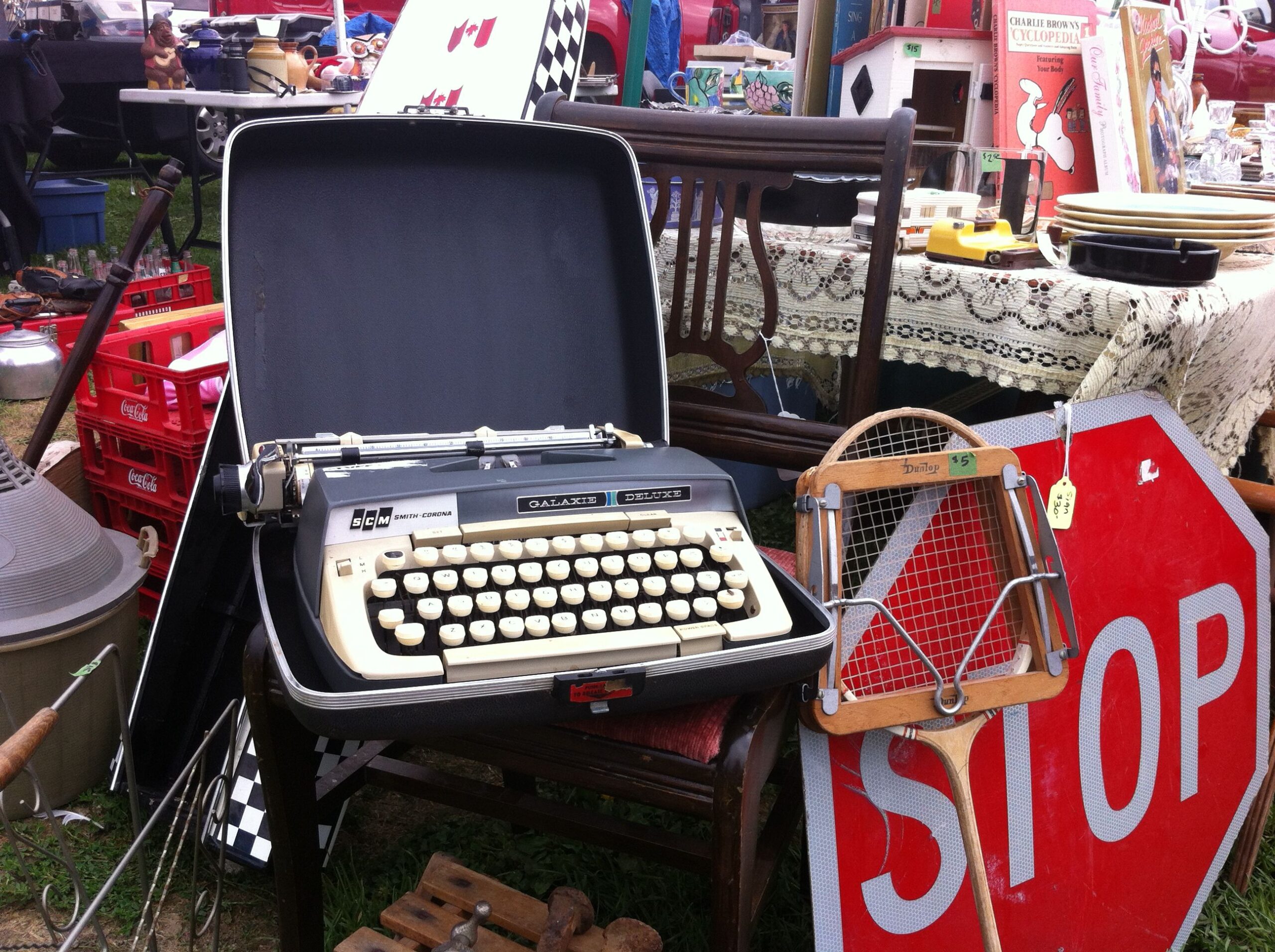
The morning I held the yard sale, I told myself it was just stuff. That is the lie you tell yourself when you are seventy-one years old and finally cleaning out a garage your husband has been gone from for two years.
My name is Margaret Coyle, and I had put it off as long as a person can. Frank died on a Tuesday in October, quietly, in the recliner he refused to let me replace, and for two years afterward I could not so much as open the door to his garage without my chest going tight. His coffee mug was still on the workbench. His reading glasses were still folded on top of a stack of hunting magazines from 2019. The whole room smelled like sawdust and motor oil and him, and I kept it shut like a held breath.
But the house was too big and too empty, and my daughter Lisa had been gentle but firm about it. “Mom,” she said, “you don’t have to get rid of him. You just have to be able to park the car.” So on a Saturday in May, with Lisa’s help, I dragged forty years of Frank’s life out onto the driveway and put little masking-tape price tags on all of it.
Frank and I were married forty-one years. We met at a church social in 1980, when I was nineteen and he was twenty-two and so shy he spilled an entire cup of red punch down the front of my good yellow dress trying to work up the nerve to talk to me. He apologized for a solid five minutes. I told him the only way I would forgive him was if he took me to dinner, and that was that. He was a quiet man his whole life, the kind who would never in a hundred years say I love you across a dinner table, but who would get up at five in the morning to warm up your car in January so you would not have to climb into a cold one. He showed his love with his hands, not his mouth. He fixed things. That was his way of saying it, and after forty-one years I had learned to hear I love you in the sound of him puttering in that garage on a Sunday afternoon.
It is a strange thing, pricing a dead man’s belongings. How much is a coffee can full of mismatched screws worth? A dollar? Fifty cents? How do you put a number on the fishing rod he taught our son to cast with, on the radio that played the same country station for thirty years, on the flannel jackets that still, if I pressed my face into them, smelled faintly of the man who wore them? I priced it all anyway, because the alternative was keeping a garage I could not bear to enter, and that was no way to live either.
If you have ever held a yard sale, you know the peculiar parade of people it brings. The early birds came before I had even finished setting up, headlamps practically on, picking through Frank’s things in the gray dawn light while I was still carrying boxes out in my robe. There was the man who haggled me down from two dollars to one on a perfectly good drill and then drove off in a truck nicer than my house. There were the young couples furnishing first apartments, turning Frank’s old lamps over in their hands. There were the neighbors who I suspect came less to buy than to get a look, the way people do, at the widow Coyle finally clearing out. I smiled at all of them. I made change from a fanny pack. And the whole time, some part of me was standing apart, watching strangers paw through a life, and wanting to shout that the chipped mug was his favorite and the jacket still smelled like him and please, please be gentle with it.
They were not gentle, of course. Why would they be? To them it was a folding table of bargains on a Saturday morning. Only I knew it was a marriage.
The toolbox was the hardest. It was an ugly old thing, gray metal, dented on one corner, the red paint inside worn down to bare steel from forty years of Frank’s hands reaching in. He had bought it the year we married, 1981, with his first real paycheck from the plant. He fixed everything in our lives out of that box. The kids’ bicycles. The leaking sink. The wobbly leg on my mother’s dining chair the week before her funeral. I do not think there was a single object in our home that Frank had not, at one time or another, repaired with something from that box.
I almost kept it. I stood there in the driveway with my hand on the cold metal lid for a long while. But Lisa was watching me with that worried look, and I thought, Margaret, you cannot keep all of it, you will drown in it, and a toolbox is a toolbox. So I emptied out the loose tools to keep, priced the box itself at three dollars, and set it at the end of the table before I could change my mind.
I want you to understand how thoroughly I emptied that box, because it matters for what comes later. I took out every wrench and every screwdriver. I tipped it upside down over a bucket to shake loose the stray washers and the sawdust of forty years. I ran my hand around the inside of it, feeling along the worn red paint, saying a kind of goodbye to it the way you might run your hand along the flank of an old horse you are selling. And I felt nothing unusual. The bottom was just the bottom. Frank had built that false panel so carefully, fitted it so flush, that his own wife, who had cleaned out that box more than once over the decades, never once suspected there was a hollow beneath it. He was a craftsman to the end. He hid his heart so well that I nearly lost it.
A young man bought it around noon. He could not have been more than twenty-five, with paint-stained jeans and a beat-up truck, the kind of kid just starting out who needs a toolbox and cannot afford a new one. He paid with three crumpled ones, tucked the box under his arm, said “thank you, ma’am,” and drove off. I watched him go and felt something I did not have a word for, and then a woman asked me how much for the Christmas dishes, and the moment passed.
I made one hundred and forty dollars that day. I cried that night, but I told myself it was done, and that the crying was the price of moving forward, and that Frank, practical man that he was, would have approved of a clean garage and a car that fit in it.
The two weeks that followed were quieter than I expected, and that frightened me more than the grief had. I had built so much of my days around the dread of that garage that with it finally cleared, I did not know what to do with myself. I would catch myself standing in the kitchen at two in the afternoon with no idea how I had gotten there or what I had meant to do. Lisa called every day, relieved and a little too cheerful, telling me how proud she was, how this was the first step, how Dad would be glad. I said yes, yes, I know, and I did know. But knowing a thing and feeling it are two different countries, and I was stranded somewhere between them.
I thought about the young man with the toolbox more than once in those two weeks, though I could not have told you why. Maybe because the box had been the hardest thing to let go of, and so my mind kept returning to it the way the tongue returns to a missing tooth. I hoped he was getting good use out of it. I hoped, in a vague grandmotherly way, that he was doing all right, that boy just starting out. I never once imagined I would see him again.
Two weeks later, on a Tuesday evening, somebody knocked on my door.
It was the young man. He was standing on my porch holding the gray toolbox, turning it slightly in his hands the way you do when you are nervous, and before I could even ask what was wrong he started talking fast.
“Ma’am, I’m real sorry to bother you. You sold me this box a couple weeks back. I’ve been using it, it’s a good box, that’s not — I’m not here to return it.” He took a breath. “It’s just. There’s a false bottom in it. I didn’t know. I dropped it in my driveway and the bottom panel popped loose, and there was a space underneath, and there was this inside.”
He held out an envelope. It was old and soft with age, the kind of manila that has gone the color of weak tea, and across the front, in Frank’s blocky all-capital handwriting, the handwriting I would know anywhere in this world, were two words.
FOR MAGGIE.
Nobody had called me Maggie since Frank died. To everyone else I was Margaret, or Mom, or Mrs. Coyle. Maggie was his name for me and his alone, and seeing it there in his own hand on my front porch nearly took my legs out from under me. I had to grip the doorframe.
“I didn’t open it,” the young man said quickly. “It’s got your name on it. I figured — I figured it was yours, and I’m sorry it took me two weeks, I had to track down the address from the gal at the bank who runs the community page. I just couldn’t keep it. It didn’t feel right, keeping it.”
I want you to think about that young man for a moment. He had bought that box fair and square. The envelope was hidden so well that I, Frank’s wife of forty-one years, never knew in all that time that it was there. He could have opened it. He could have thrown it away. He could have simply kept the box and never said a word and I would have been none the wiser. Instead he spent two weeks and a tank of gas and more than a little embarrassment tracking down a grieving old stranger to give her back something he did not have to give back at all.
I asked him to come in. I made coffee with hands that would not stop shaking. His name was Tyler, he told me. He did handyman work, just getting his business off the ground, and he had needed a good cheap toolbox to start. We sat at my kitchen table and I set the envelope down between us and I could not for the longest while bring myself to open it.
While I gathered my nerve, Tyler talked, I think to fill the silence and put me at ease. He told me he had grown up two towns over, that his own grandfather had passed the year before, and that he had taken up the handyman trade partly because the old man had taught him to work with his hands and it was the way Tyler felt closest to him now. He told me how the toolbox had popped open in his driveway, how at first he thought the rattle was a loose tool, how he had pried up the dented bottom panel expecting nothing and found instead that soft tea-colored envelope with a woman’s name on it in an old man’s hand. He said he had sat on his tailgate holding it for a long time. He said something about it had stopped him cold, the idea that this was somebody’s whole heart, hidden away, and here it was in his hands by pure accident.
“I kept thinking,” he said, looking down at his coffee, “what if it was my grandpa’s. What if some stranger ended up with the last thing he ever wrote to my grandma, and just pitched it in the trash because it wasn’t theirs to care about. I couldn’t do it. My grandpa would’ve come up out of the ground after me.” He gave a small embarrassed laugh. “So I found you. Took me a while. I’m just glad I got the right house.”
When I finally did, what was inside was not money, though some part of me had braced for that. It was a letter. Three pages, in Frank’s careful hand, dated the spring after his first heart attack — the one in 2015 that scared us both so badly, the one after which he got quiet for a few weeks and I never knew why. I had asked him, back then, what was wrong, why he had gone so far inside himself, and he had only said he was tired, that the heart business had given him a scare, that he would be fine. And then one Sunday he was back out in the garage and the radio was playing and I told myself the worst was behind us. I never knew that during those quiet weeks he had been sitting at his workbench writing me a goodbye, just in case, and then hiding it in the one place he was sure I would keep forever.
He had been wrong about that, as it turned out, by the narrowest of margins. If Tyler had been any other kind of young man, those words would have been lost to me forever, sold off for three dollars on a folding table without my ever knowing they had existed at all.
I will not share all of what Frank wrote, because some of it belongs only to me. But I will share the part I think he would want you to hear. Near the end of the letter, he wrote this:
“Maggie, if you are reading this, then I have run out of time to say it out loud, so I am saying it here. Forty years and I do not think I told you near enough. You are the best thing my hands ever built a life around. When I am gone, do not you dare sit in this empty house and call it loyalty. Sell the junk. Park the car. Let people in. Find something that makes you laugh and go and do it. I did not love you so you could spend your last years guarding a garage full of my old tools. I loved you so you could live. Go and live, Maggie. I will keep.”
I sat at my kitchen table and wept while a young man I had met twice patted my hand and got me a box of tissues from the counter like he had known me his whole life.
That was a year ago now. I would like to tell you what came of it.
I did what Frank told me to do. It did not happen all at once, the way it does in the movies. Grief does not lift like fog; it thins out slowly, and you do not notice it has thinned until one day you realize you laughed at something and did not feel guilty afterward. But I let people in. I joined a Tuesday quilting group at the church that I had been making excuses about for two years, and it turns out half those women are widows too, and there is a particular comfort in the company of people who do not need anything explained to them. I take a watercolor class on Thursdays. I am genuinely terrible at it, my barns look like they are melting and my horses look like dogs, and I have not laughed so hard in years as I do in that drafty rec center on Thursday mornings.
The garage is clean and the car fits and I can walk through it now without my chest going tight, because the most important thing that was ever in it is framed on my bedroom wall instead, all three pages of it, the last thing my husband had to say to me, that I came within one decent stranger of never reading at all.
And Tyler. That boy. I hired him to fix the very sink Frank used to fix, and then the porch step, and then a dozen little things I did not really need done just for the company of him. He brings his lunch and we eat at the kitchen table and he tells me about his girlfriend and his business, which is doing well now, growing every month. He says I am his good-luck customer, the first real job that made him feel like the business might actually work, and that he tells people about the toolbox lady all the time. Last fall he asked if I would come to his wedding. I sat in the second row in a new blue dress and cried like I was family, because somewhere along the way that is what we had become. His own grandmother is gone, and my own grandchildren live three states away and call on Sundays if I am lucky, and I suppose the two of us had a space in our lives shaped exactly like the other. Frank’s toolbox put us together. I have come to think that was the point of it.
He still has the toolbox. He uses it every single day. He told me once that he keeps the false bottom empty on purpose, and that every time he opens it he thinks about being careful, about doing the right thing even when nobody is watching and nobody would ever know. He said an old man he never met taught him that, through a letter he was not even supposed to read.
I think about how close I came to losing those words. Three dollars. A false bottom I never knew about. A box I almost kept and then almost did not. A young man who happened to drop it in his driveway, happened to pry up the panel, and then happened to be the kind of person who would spend two weeks of his own time setting right something no one would ever have known he set wrong. The whole rest of my life turned on that chain of small chances, and most of all on the last link in it, on one young stranger choosing to do the decent thing with something he could have so easily kept for himself.
I have decided I do not believe it was all chance. I think Frank had a hand in it somehow, the way I think he had a hand in a great many things. I think a man who loved that carefully does not just stop, simply because his heart did. I think the love we pack into the things we leave behind goes looking for the people it was meant for, and now and again, against all the odds, it finds its way home.
So here is what I want to leave you with, from one old woman who learned it the hard way. The things we own are just things, every one of them, and we cannot take a single one with us. But every now and again, the love we packed into them finds its way back home, carried in the hands of a stranger who chose to be kind. Be that kind of stranger when your turn comes. And if you are sitting in an empty house calling it loyalty, go and live instead. Somebody who loved you is hoping you will.

Specialty: Quiet Comebacks & Personal Justice
David Reynolds focuses on stories where underestimated individuals regain control of their lives. His writing centers on measured decisions rather than dramatic outbursts — emphasizing preparation, patience, and the long game. His characters don’t shout; they act.