My name is Theresa, and I am sixty-three years old, and I am going to tell you the story of the twelve years I spent eating alone at a table I never stopped setting for two.
I have been a widow since I was young. My husband died before Mary Lou was old enough to remember his face clearly, and so the two of us became each other’s whole world in the way that happens when circumstances remove all the other options. I raised her in a small house with a yard that was more ambition than execution, and I worked the kind of jobs that pay just enough to keep you from falling while never quite giving you the feeling of solid ground under your feet. She was smart and she was kind and she was stubborn in the way that I recognized because I had passed it to her, though I never told her that.
Everyone said she had a great future ahead of her. I believed it. You believe it when you watch a person you made from nothing grow into someone you could not have imagined.
She was twenty-one when she met Kang Jun.
He was nearly twenty years older than her, and he was from South Korea, and I will be honest with you: I opposed the relationship. Not from prejudice, and I want to be clear about that. I had no issue with where he was from or who he was by birth. I opposed it because of the age and because of the distance and because I had a mother’s specific terror of watching my daughter walk toward a life I could not reach her in if something went wrong. I said my piece. I said it more than once. Mary Lou looked at me each time with those eyes that had something fixed in them, something that had already decided, and I understood that I was talking to a wall she had built around a choice she had already made.
They married simply. A month later she left for South Korea with him.
At the airport she held me and cried. I cried too, but quietly, because I thought I was sending her toward something good and the tears were only the ordinary grief of a mother watching her child cross a threshold she cannot follow her through. I thought she would come back in a few years. I thought the distance was temporary. I thought the calls would grow more frequent as she settled and found her footing and began to miss home in the particular way that people miss home when they finally feel secure enough to afford nostalgia.
She did not come back.
One year passed. Then two. Then five. I stopped counting at some point because counting made the number concrete, and concrete numbers have a way of pressing down on you in the night. Every year I told myself the same thing: she is settled now, she is busy, she is building the life she chose and she will come back when she has built enough of it to feel secure leaving it briefly. I told myself this until the telling became something I did out of habit rather than belief.
The money came instead. Every year, exactly eighty thousand dollars, with a short message that always said approximately the same thing in approximately the same words. Mom, take good care of yourself. I’m doing well. That word, well, became the most complicated word in my vocabulary over those years. I held the messages the way you hold something that looks like what you need but does not feel like it when you press it against your chest. The money kept the house improved. It paid for repairs I had been putting off and a new furnace and eventually a modest renovation of the kitchen where Mary Lou had learned to cook beside me. People in my neighborhood observed the improvements and said I was fortunate, and I smiled at them and said yes and went inside and ate my dinner alone.
The evenings were the hardest. Not dramatically hard, which might have been easier to manage, but quietly hard, in the sustained way of something that never reaches a crisis point and therefore never triggers the kind of response that would require you to actually deal with it. I had my routines. I had work. I had neighbors and a small circle of acquaintances and the ordinary texture of a life that was, by most measures, decent. But there is a specific quality of loneliness that belongs to parents who raised their children to be independent and then find themselves alone in a house full of the evidence of that raising: the marks on the doorframe where I measured her height every birthday, the shelf still arranged the way she liked it, the particular angle of the kitchen window light on winter afternoons that always made me think of her because she used to stand exactly there.
We had one video call that I remember with particular clarity. She was still beautiful, but the way a photograph is beautiful, something essential removed from it. Her eyes moved quickly and her voice had a new quality, a practiced efficiency, the quality of someone who has learned to cover a great deal of distance without lingering. I asked why she had not come home. She went quiet for a moment, and then she said: “I’m very busy, Mom.” I did not ask again. I understood even then, in the dull particular way of things you understand but are not prepared to name, that I was being protected from something. Sometimes mothers become cowards out of fear of hearing the truth aloud. I was a coward for several more years.
Every Christmas I set a place for her at the table.
I would cook her favorite stew, a recipe her grandmother had given me, and I would serve it into two bowls and sit across from the empty one and eat in silence. Twelve Christmases of that. I am not telling you this so you will feel sorry for me. I am telling you because I want the weight of twelve to be real to you before I tell you what changed it. Twelve is a long time to maintain a ritual whose meaning is primarily grief. It is long enough that the ritual becomes its own kind of companionship, a conversation with the absence, a way of insisting that the absence is not permanent even when you have stopped fully believing it.
I told myself that money sent reliably was a form of presence. I told myself that her silence was a sign of a life too full and busy to interrupt with frequent contact, not a sign of a life she could not safely describe. I told myself these things with the specific conviction of a person who needs to believe them in order to keep functioning, and I kept functioning, and the years accumulated, and eventually the twelve of them together became a pressure that could no longer be managed by telling myself things.
By the twelfth year I was not angry, exactly. Anger requires a target and I had refused, for twelve years, to examine the situation closely enough to identify one. What I felt was more like the accumulated weight of sustained uncertainty, the particular exhaustion of not knowing whether your child is well or only performing wellness at a safe distance. It was that exhaustion, more than any specific decision, that bought the plane ticket.
I bought a plane ticket to South Korea.
For a sixty-three-year-old woman who had never once left the country, who had always thought of international travel as something that belonged to other people’s lives, this was an act of what I can only describe as controlled panic. My hands were trembling when I purchased it online and I sat with the confirmation on the screen for a long time before I printed it out and put it in the small leather folder I used for important documents. I did not tell Mary Lou I was coming. I considered it and decided against it, because if I told her she would find a way to redirect me, to delay me, to manage me from a distance the way she had been managing everything about our relationship for twelve years. I needed to arrive before she could prepare a version of herself to show me.
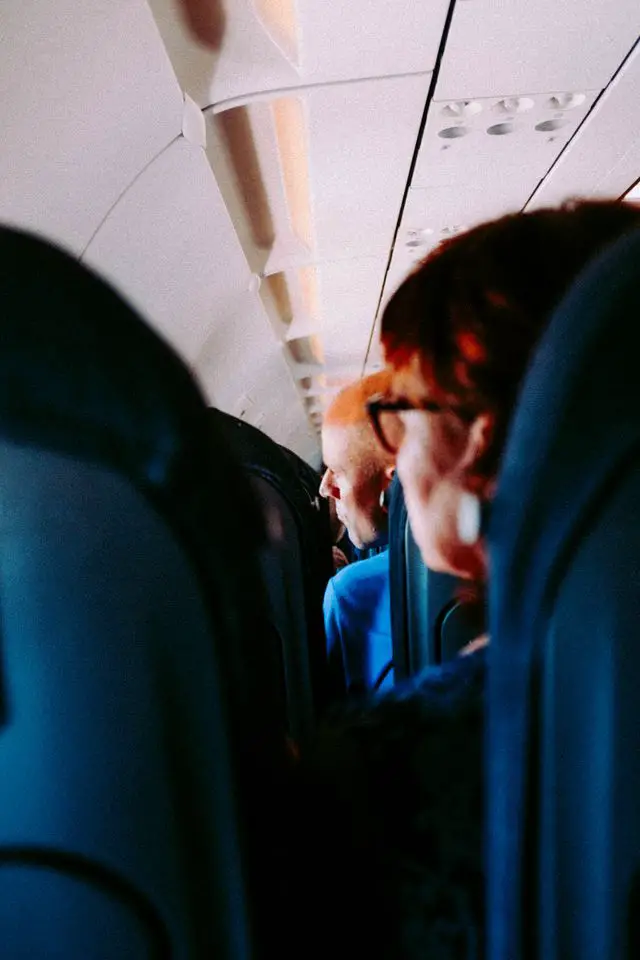
The flight was long and I did not sleep much of it.
I took a taxi from the airport to the address I had memorized from the return lines of her letters. The house was two stories, in a quiet neighborhood, and the garden was tended in a way that suggested duty rather than pleasure, the kind of maintenance that keeps something presentable without reflecting any personal joy in the result. I knocked. No answer. I knocked again and waited and then tried the door, which opened.
I want to tell you what the inside of that house felt like, because it was the first real information I had received about my daughter’s life in twelve years and it arrived not as words but as atmosphere. The house was clean in the way that only houses with no real life in them can be clean. Too orderly. No smell of cooking. No personal clutter, no evidence of a man cohabitating, no male clothing, no aftershave, no boots by the door, none of the accumulated physical testimony of a shared life. One bedroom held a wardrobe of women’s clothes, carefully kept. Another room was set up as an office and had the barely-used quality of furniture that exists for appearance rather than function.
The third room was where my legs stopped working properly.
Boxes. A significant number of them, stacked with precision, and I understood from looking at them what they contained before I had fully processed the thought. I stood in the doorway and felt the floor shift under me in a way that was not physical. Twelve years of money, assembled here. The eighty thousand dollars that had improved my house and replaced my furnace and allowed my neighbors to tell me I was fortunate: here was its source, and here was its cost.
Then I heard the front door open downstairs.
“Mom.”
Her voice. I went down the stairs faster than a sixty-three-year-old woman with a long flight behind her had any business doing and there was Mary Lou, thinner than the video call had shown, tired in the way of a tiredness that has been sustained for too long and has settled permanently into the posture. We held each other without speaking for what felt like a very long time. I pressed my hands against her back and felt the thinness of her and the realness of her simultaneously, and those two things together were almost too much. When I finally pulled back to look at her face I asked the only question I had.
“What kind of life is this?”
She was quiet for a moment, in the way of someone choosing the precise form of a truth rather than deciding whether to tell it.
Then she said: “Mom. I never got married.”
I am going to try to tell you what that sentence cost me to hear, but I am not sure language is adequate to it. The world I had constructed around her absence, the whole architecture of the story I had told myself and allowed others to tell me about my fortunate daughter living her life well in another country, came apart in five words. The money had not come from a comfortable married life. It had come from twelve years of a different arrangement, a contract with conditions I had never been told, and my daughter had not been a wife but a woman bound to a situation by financial obligation so large that breaking it early would have required repaying nearly a million dollars. That was why she had not come home. That was why the house had no life in it. That was why her eyes had changed on that video call into something practiced and distanced and careful.
She had sent me eighty thousand dollars every year for twelve years and she had done it to protect me from knowing what the protection cost her.
That night we slept in the same bed for the first time in twelve years. I stayed awake listening to her breathe and thinking about the plates I had set for her at every Christmas table. About the stew I had made. About the silence I had eaten alone and called by the wrong name. I asked her if she was tired. She said yes, very tired, but that she had not wanted me to suffer. I took her hand and I told her what I should have found more ways to say across all those years: that I did not need the money. That I needed her. She cried for a long time after that, quietly, in the way of someone releasing something that has been compressed so long it has taken on the quality of a permanent condition rather than a weight that can be lifted.
The next morning I made a decision.
I do not know exactly when it formed. I think it was there when I fell asleep and simply announced itself when I woke up, already complete. I sold everything I had. The house that her money had improved over twelve years. The savings. I gathered what could be gathered. Then Mary Lou and I went together to confront the situation.
It was not dramatic. I want to be honest about that because I think people expect these moments to be charged with cinematic energy. It was quiet. We found him and I told him it was over and I showed him what we had gathered, and he looked at my daughter and he looked at me and he said simply: “It’s all over.” We walked out into the sun.
My daughter stopped on the pavement outside and stood still for a moment, and then she took a long, slow breath, the kind you take when something that has been sitting on your chest for years is suddenly not there anymore.
“I’m finally free,” she said.
Those three words were worth every cent of what we had given.
We came home to the States together. We had very little in material terms and a great deal in other terms, specifically the particular forward momentum of people who have recently been relieved of something heavy and are still adjusting to the lightness of moving without it. The world we returned to had continued its ordinary business while we were away, and it received us the way ordinary worlds receive people who have done something extraordinary: without particular ceremony, simply accepting us back into the flow of days.
When we said we wanted to open a small restaurant, people looked at us with the specific skepticism reserved for ideas that seem too simple to contain anything worthwhile. What would make it different from any other small restaurant? What was the concept? What was the demographic? We did not have answers to any of these questions that would have satisfied a business consultant. We had a small space, a few wooden tables, a handwritten menu, hot soup in the mornings, and the accumulated knowledge of two women who had spent significant portions of their lives learning, in very different contexts, what people most need when they are tired and far from where they feel safe.
The first customer said the food was delicious and paid and left, and I watched Mary Lou receive the compliment the way you watch someone receive something they have been denied for a very long time, uncertain at first how to hold it, then steadier, then grateful. She stood at the counter after he left and looked at the space around her and I could see her deciding, in real time, to believe it was hers.
We started arriving early in the mornings and leaving late. The work was physical and repetitive and entirely uncomplicated in the way that honest physical work is uncomplicated, and we welcomed that quality of it. After years of complexity, the clarity of a good broth and clean tables and chairs arranged for people to actually sit in was something close to relief.
We did not name the restaurant immediately. It did not have a name for several months because naming it felt like a declaration we were not ready to make while we were still getting used to simply being in the same room every day. The act of being together, ordinary and unhurried, was itself so new that we needed time to let it become ordinary rather than astonishing. We cooked together in the morning and served together through the day and closed together at night and somewhere in the repetition of that we began to resemble, tentatively, the people we were when we had last lived in the same house.
People came. Drivers and laborers and office workers and students and people who needed somewhere quiet to sit without being asked anything. The neighborhood learned about us the way neighborhoods learn about good things: by word of mouth and by the returning of people who had been once and wanted to come back. I watched my daughter move between the tables and I began to understand what we had actually built, which was not exactly a restaurant. It was a place of warmth without conditions. Food offered without judgment. Soup that arrived without demands attached to it.
One afternoon a young woman came in alone and sat down and ate in silence and then cried quietly into her bowl. Nobody asked her what was wrong. Nobody moved toward her with intrusive comfort or unwanted questions. The soup was there and the silence was there and both of them held her until she had finished and wiped her face and left. I stood in the kitchen doorway watching and I thought: this is what we are. This is what this place is for. This is what my daughter spent twelve years of her life in order to come back and build.
The restaurant was called The Second Life eventually, which is what people started calling it before we had given it a name, and we kept it because it was accurate in more ways than we had intended.
Then, about a year into the restaurant, Kang Jun appeared.
I saw him from across the room before Mary Lou did and I recognized him from the way he entered, the quality of his presence in the doorway, the careful suit. My whole body responded to him before my mind had finished identifying who he was. I looked at my daughter and she saw him at the same moment and I watched her face do something that I will remember for the rest of my life: it did not collapse and it did not harden. It simply became very still.
She walked toward him without hurrying and without looking down and without arranging her face into anything other than what it actually was.
“Why are you here?” she asked.
He looked around the restaurant, at the wooden tables and the handwritten menu and the ordinary warmth of the place, and then he looked at her.
“You’re living well,” he said.
Not as power. Not as accusation. Just as an observation from a person who had expected to find something diminished and had found the opposite.
He told her he had not come to ask her to return. He had come because he was carrying something he needed to set down. His voice cracked slightly when he said it, which I had not expected, and I think Mary Lou had not either.
“I held onto you out of selfishness,” he said. “Out of fear of being alone, believing that money could compensate for everything. But I was wrong.”
My daughter stood still. I watched her hand tremble, not from fear but from the specific physical sensation of pain finally finding a name after years of circulating without one.
“Do you know what I regret most?” she asked him.
He waited.
“It’s not those twelve years,” she said. “It’s that I believed I didn’t deserve another life.”
Nobody spoke for a moment. The wind came through the open door and the soup smelled the same as it always did and the room held what was happening in it without requiring it to be anything other than what it was.
“I don’t hate you anymore,” Mary Lou said. Then: “But there’s nothing left between us either.”
He nodded. He did not argue. He turned and walked out the way people leave when they are losing something that they no longer have any right to hold, slowly and without drama, the decision already made before they reached the door.
When the door closed I went to my daughter and took her hand and asked if she was all right.
She smiled, and it was a real smile, the kind I had been waiting twelve years to see return to her face.
“I am now, Mom.”
That night the restaurant was fuller than it had been, and I sat at one of the wooden tables after closing time and looked around at the space we had made and thought about the trembling hands that had held a plane ticket fourteen months earlier. I thought about the taxi to a quiet house. I thought about the third room with the boxes and the floor shifting under me and my daughter’s voice from downstairs. I thought about the airport twelve years before that, both of us crying, me in silence.
I think about the way mothers and daughters sometimes spend years protecting each other from things the protection itself is making worse. I spent twelve years accepting a version of my daughter’s life because I was afraid of what a real question might uncover. She spent twelve years sending money because she was afraid of what the truth would do to me. We were each managing the other’s imagined fragility, and in doing so we had left each other alone with the real things.
When I finally knocked on that door I was not being brave. I was being a mother who had reached the limit of what she could endure without knowing. What I found behind the door was not what I expected, and I cannot tell you it was not devastating, because it was. But the alternative, another year of eating alone at a table set for two and telling myself the money meant she was happy, was no longer something I was willing to sustain.
I reminded her that she still belonged somewhere. That the door back had always been unlocked. That she only needed someone to show her it was there.
One morning, several months into the life we had made together, I opened the restaurant early and found Mary Lou standing in the doorway to the kitchen, not doing anything, just standing in the morning light that came through the east-facing window at that hour. No hurry in her. No fear. Just breathing.
She heard me behind her and turned around.
“Mom,” she said. “If you hadn’t come that day, I would still be there.”
I didn’t say anything. There was nothing to say that would have added to what we both already knew.
“Thank you for not leaving me alone,” she said.
I held her and neither of us cried, which surprised me a little, because I had imagined that a moment like this would require tears to be real. But it did not. It was real in the way that simple things are real, in the warmth of two people standing in a kitchen in the early morning, in the smell of broth beginning on the stove, in the ordinary specific peace of finally having what you had been missing close enough to touch.
The restaurant became what it was going to become and we became who we were going to become and time moved forward the way it always does, with both mercy and indifference, offering ordinary days that contained in them the entire value of the extraordinary ones that had made them possible.
Life does not always give us a good beginning. What it gives us, if we are willing to act on the moments when action is available, is the chance to start again. Happiness is not a figure in a bank account or a story that reads well when reported to people you want to reassure. It is simpler and harder than that. It is a bowl of soup placed in front of someone without conditions. It is a table set for two with both seats occupied. It is a daughter standing in morning light with no particular agenda, just breathing, just present, just free.
It is knowing, finally and truly, that you are living and not only surviving.
And it is worth everything it costs to get there.

Lila Hart is a dedicated Digital Archivist and Research Specialist with a keen eye for preserving and curating meaningful content. At TheArchivists, she specializes in organizing and managing digital archives, ensuring that valuable stories and historical moments are accessible for generations to come.
Lila earned her degree in History and Archival Studies from the University of Edinburgh, where she cultivated her passion for documenting the past and preserving cultural heritage. Her expertise lies in combining traditional archival techniques with modern digital tools, allowing her to create comprehensive and engaging collections that resonate with audiences worldwide.
At TheArchivists, Lila is known for her meticulous attention to detail and her ability to uncover hidden gems within extensive archives. Her work is praised for its depth, authenticity, and contribution to the preservation of knowledge in the digital age.
Driven by a commitment to preserving stories that matter, Lila is passionate about exploring the intersection of history and technology. Her goal is to ensure that every piece of content she handles reflects the richness of human experiences and remains a source of inspiration for years to come.