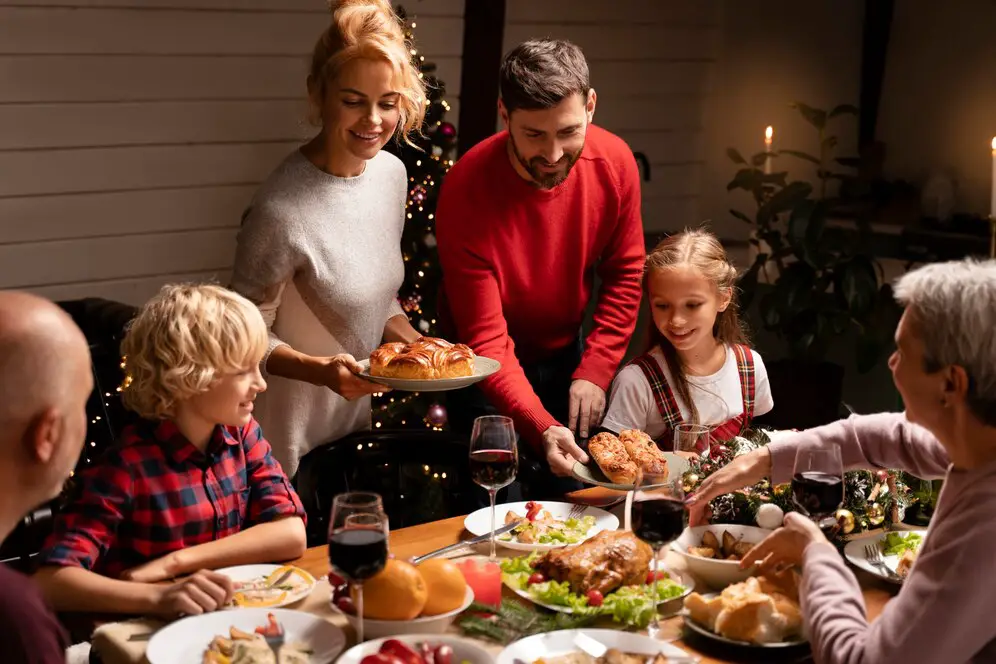
Thanksgiving has always been sacred in my family. The one day when we gather under the pretense that old resentments don’t exist, stuffing ourselves with food and drowning awkward silences in wine.
I’m the oldest of three siblings, but growing up, I was less a daughter and more a third parent. Cooking, cleaning, babysitting. My younger siblings were the golden children, while I was the reliable workhorse. I moved out the moment I could, but still showed up for holidays because, well, family.
That word did a lot of heavy lifting in my life. It was the reason I drove two hours every year. It was the reason I answered the phone when my mother called needing something. It was the reason I kept showing up to a table where I was always seated a little to the side of everyone’s attention, the way you set out a folding chair when the good ones run out.
The betrayal crystallized one week before Thanksgiving.
I was scrolling through our family group chat when my aunt posted, “Can’t wait to see everyone.”
I replied instantly. “Same. Looking forward to it.”
The chat went eerily silent.
I noticed it the way you notice a sound stopping. The little typing dots that usually appeared whenever anyone posted simply didn’t come. No reactions. No replies. Twenty people in that chat, and not one of them touched my message.
My phone buzzed hours later, not in the group chat, but a private message from my cousin.
“Are you actually coming? Your parents told everyone you weren’t invited.”
My stomach tightened into a cold, hard knot.
I read the message three times, as if the words might rearrange themselves into something that made sense. Then I called my mother.
She dodged, deflected, then finally admitted between practiced sighs, “We decided to keep it small this year, just immediate family.”
The word struck like physical blows.
“But I am immediate family,” I said, my voice rising with each word.
Silence.
Then, “We just thought it would be easier. Less tension.”
I hadn’t argued with anyone in months. I sat there with the phone against my ear and tried to find the tension she was describing, and the only thing I could land on was my recent refusal to keep cleaning up my siblings’ messes. That was the tension. Me, finally saying no to something. Apparently a no was loud enough to get me removed from a holiday.
Still clutching my phone, I methodically confirmed what I already knew. Yes, my brother was invited. Yes, my sister and their spouses. Yes, aunts and cousins, too. Everyone except me.
“Well,” my mother said, her voice artificially light, “we didn’t think you’d mind.”
Only then did I remember my father had asked me to chip in for the meal.
I sat very still as the full shape of it came into focus. Not only had I paid for the entire turkey and all the desserts, I’d actually placed the orders myself at the butcher shop and bakery my mother loved. All under my name.
They hadn’t just excluded me. They’d used me.
I remember setting the phone face down on the counter and standing in my kitchen for a long time, not crying, not yelling, just feeling something old and tired finally go quiet inside me. For years I had explained away every slight. He didn’t mean it. She’s just stressed. They love me in their own way. That night, the explanations stopped arriving.
I canceled everything with a single phone call.
Actually, two. The butcher refunded me immediately, no questions, a kind man who simply said, “No problem at all, hon, it’s all under your name.” The bakery hesitated, because the desserts were already half-prepped, but when I explained the order had been placed by mistake, they relented.
Then I waited, knowing exactly how this would play out.
I want to be honest about that waiting. It was not peaceful. I made my coffee that Thanksgiving morning and sat by my own window in my own quiet apartment, and part of me kept expecting the phone to ring early with someone realizing, someone checking, someone catching the gap before it became a crater. Nobody did. That told me everything. Not one person in that house had thought about me long enough to wonder where the food was coming from.
Thanksgiving Day, 12:17 p.m. My phone lit up with my father’s name.
I let it ring four times before answering.
“The food never arrived.”
Panic made his voice crack. I could hear the chaos in the background, my mother’s shrill questions, relatives murmuring. Twenty people standing around a table set with my mother’s good linens and gold-rimmed plates, and nothing on it but empty serving dishes.
I injected confusion into my voice. “Huh? Maybe you should check with whoever placed the order.”
“You placed the order,” he snapped.
“Did I?”
I let the silence stretch uncomfortably.
“Oh, well. I didn’t think you needed anything from me.”
I heard his breathing change. In the background, my mother’s voice, sharp and rising. “What does she mean by that?”
The family I wasn’t good enough to be invited to, but was good enough to finance, was about to learn what exclusion really felt like.
I did not gloat. I want that to be clear. I set the phone down gently and I felt the strangest mix of grief and calm, the way you feel when a long ache finally has a name.
An hour later, my cousin’s text painted the scene.
No turkey. No desserts. Every store closed or sold out, because what is open on Thanksgiving afternoon. My sister in tears because she’d brought a date she wanted to impress. My mother crying in the bathroom. My father ashen-faced as my uncle asked loudly, “Wait, wasn’t your daughter supposed to bring the turkey?”
People connecting dots. Whispers spreading. Realization dawning.
My aunt, my cousin told me later, had gone very quiet, then very still, and finally said out loud what the room was already thinking. “Did you not invite her?”
Three days later, a group text from my mother. “We really missed you at Thanksgiving. Hope we can put this behind us.”
Not an apology. A burial attempt.
I read it and recognized the move instantly, because I had grown up watching her perform it. We missed you. As if I had chosen to be absent. As if there had been a chair waiting with my name on it. As if the missing were a thing that happened by weather rather than by decision.
I didn’t respond.
My aunt called to tell me several relatives had confronted my parents about how they’d treated me. For once, they had to face consequences. People who had nodded along at that table for years were suddenly asking the questions I had never been allowed to ask.
But my mother was never one to accept blame.
Within days, a new narrative emerged. I was difficult. I was unstable. I had ruined Thanksgiving on purpose. The food being canceled was no longer something my parents had set in motion by uninviting the person who ordered it. It was a stunt. A cruelty. Evidence of how impossible I had always been.
My father called twice before I finally answered.
“I don’t know what you were trying to prove,” he said, voice tight with controlled anger. “But you embarrassed your mother.”
I barked out a laugh that surprised even me. “That’s funny. I thought she didn’t even want me there.”
His sigh was heavy. Rehearsed. “We made a mistake.”
“Okay.”
“But what you did was low.”
“Lower than uninviting me after making me pay for the food?”
Heat rose in my chest.
“You should have said something if you had a problem.”
I almost laughed again. The whole architecture of my childhood was in that sentence. I was supposed to absorb the wound and then announce it politely so they could decide whether it counted.
“You’re being dramatic,” he attempted. “It wasn’t even that big of a deal.”
The blood pounded in my temples. “Not a big deal. Then why are you calling me about it, Dad?”
I hung up, my hands trembling so badly I nearly dropped the phone.
That night, my cousin texted, “You officially started a war.”
My mother was spinning a victim narrative, claiming I’d always been difficult, and this just proved it. Christmas loomed like a battlefield on the horizon.
I had no plans to attend until my aunt called.
“Your mom is telling everyone you can’t handle being around family. That’s why you’re skipping Christmas,” she paused. “And your dad is saying he tried to fix things, but you’re too stubborn.”
I gripped the phone so tightly my knuckles went white. “Oh, hell no.”
Here is the thing my mother never understood about me. I will absorb a great deal. I will be quiet for years. But the moment someone tries to write a version of me and hand it to other people as the truth, something in me stands up that does not sit back down easily.
If she wanted to tell everyone I couldn’t handle being around family, then I would walk into the most important family night of the year, perfectly calm, and let them all see for themselves who could handle what.
But I wasn’t going to do it alone.
On Christmas Eve, I arrived fashionably late to my parents’ house.
The moment I walked in, the atmosphere shifted like a needle scratching across a record. Conversation stopped mid-sentence.
My mother’s smile froze. My father’s drink halted halfway to his lips. My sister blinked rapidly as if seeing an apparition.
“Hey,” I said casually, unwinding my scarf. “Merry Christmas.”
After the shock came my mother’s forced smile. “Oh, you made it.”
“Of course,” I replied sweetly. “Wouldn’t miss it.”
Then I stepped aside to reveal my plus one.
My grandmother. My mother’s mother.
The color drained from my mother’s face.
Years ago, they’d had a catastrophic falling out. My mother had tried to keep us from seeing our grandmother, essentially erasing her from our lives. The same move, I realized now, that she had just tried to pull on me. Erase the person, then control the story about why they were gone.
But I had stayed in touch. Quietly, for years. Phone calls on Sunday afternoons. Birthday cards. A standing lunch every few months at a diner halfway between our towns. And when Grandma heard about Thanksgiving, she was livid.
“Oh my,” Grandma said, looking around with exaggerated wonder. “It’s been so long since I’ve been here. What lovely decorations, dear.”
My mother looked like she might faint.
The dinner that followed was gloriously uncomfortable.
My grandmother was in rare form, examining the stuffing with theatrical interest before asking, “Oh, is this the store-bought kind?”
I bit the inside of my cheek to keep from laughing. Around the table, a few cousins did not bother hiding their smiles. My grandmother had a way of asking perfectly innocent questions that landed like small, beautifully wrapped grenades. She asked my mother how the holidays had been. She asked, with great warmth, whether everyone had enjoyed their Thanksgiving. She let each question sit just long enough for the silence to answer.
A week later, strange messages started arriving from relatives. Some concerned. “I heard there was some misunderstanding. Hope you’re okay.”
Others accusatory. “I never thought you’d be so cruel to your own family.”
My aunt explained. My mother was now telling everyone I was unstable, that my behavior at Christmas proved it. She was worried about me, she said. She thought I might be having a breakdown.
The realization hit me like a physical blow.
She couldn’t stand that I’d exposed her. So she was trying to undermine my credibility. Make me the problem so she wouldn’t have to face being wrong. It was the oldest trick in her book, and I had been on the receiving end of it my whole life without ever seeing it laid out so plainly. Every time I had been hurt, I had also been told I was too sensitive about being hurt. The wound and the gaslight, delivered together, so I never got to keep the simple fact of what happened.
I called my grandmother, who confirmed my mother’s campaign. “Unfortunately, she’s been calling everyone saying she’s worried about you.”
I let out a bitter laugh. “You know that’s not true, right?”
“My dear,” she said sharply. “I knew it wasn’t true before she even opened her mouth.”
That night, I crafted a simple message to the family group chat.
“Hey everyone, just wanted to clear up some confusion. I’m doing great. No breakdowns, no drama. It’s been an interesting holiday season, but I’m genuinely in a good place. Hope you all are, too. Wishing everyone a happy new year.”
It was impossible to twist, impossible to argue with. The digital equivalent of smiling and waving while my mother’s story burned to ash. If she said I was falling apart, here I was, perfectly composed, wishing everyone well. There is nothing a person spinning a crisis can do with a calm, kind paragraph. It simply refuses to play the part she had written for it.
Then something unexpected happened.
My brother texted, “Hey, can we talk?”
We hadn’t spoken in months. When I called, his voice was hesitant, almost apologetic.
“Look, I, uh, I don’t agree with what Mom did.”
I nearly dropped the phone. “You don’t?”
He admitted in halting sentences that he’d started seeing through her manipulations. “She’s really good at twisting things.”
Thanksgiving had felt wrong to him, but Christmas was the breaking point. Watching our grandmother walk through that door, watching the panic on our mother’s face, he had finally understood that the calm, reasonable woman telling everyone she was just worried about me was the same woman who had erased her own mother from our lives without blinking.
“I didn’t say anything because you know how she gets.”
“Yeah,” I said softly. “I know.”
“I’m not saying I handled it right,” he continued. “But I just wanted you to know I don’t think you’re crazy.”
I hadn’t realized how much I needed to hear those words until tears prickled at the corners of my eyes. I had spent so long being the only person in the family who saw the pattern that I had started to wonder, in my lowest moments, whether the problem really was me. Hearing my brother say it out loud, plainly, was like having a window opened in a room I hadn’t known was airless.
In that moment, I understood something fundamental had shifted.
Mom was losing her grip.
First, my aunt had sided with me, then my grandmother, and now my brother was beginning to see the truth.
Two weeks later, my phone rang. Mom.
I almost ignored it, but something, curiosity perhaps or the need for closure, made me answer.
“Hello,” I said.
Her voice was ice. “We need to talk in person.”
“About what?”
A pause, then barely controlled fury. “Your little stunt completely humiliated me.”
There it was. Not hurt me or made me sad, but humiliated me. Always about appearances. In thirty years I had never once heard her describe a family problem in terms of anyone’s feelings. Only ever in terms of how it looked, who saw it, what people might think.
“Sunday dinner, 6 p.m. Your father and I expect you here.”
She hung up.
I almost didn’t go, but my aunt convinced me. “Just hear them out. You don’t have to forgive them, but make them say it to your face.”
Sunday evening, I walked into my parents’ house.
The tension was a physical presence. Dad stood rigid by the table. Mom sat at the head, arms crossed, eyes sharp. My sister pretended absorption in her phone. My brother looked nervously between us all.
Mom exhaled sharply. “Do you have any idea what you’ve done?”
I tilted my head. “Which part are you mad about? The turkey, the Christmas surprise, or the fact that people don’t believe your story?”
She scoffed. “You’re so dramatic.”
Dad finally spoke. “Your mother is hurt, and you’ve done nothing but make her look bad.”
“She made herself look bad,” I countered. “I just let people see it.”
My mother’s face flushed. “The truth? You mean your version of events? Because in my version, you abandoned your family, refused to let things go, took revenge over a simple misunderstanding.”
“Misunderstanding?”
The word hung in the air.
“We never meant to exclude you. We just thought it would be easier, and then you had to go and ruin Thanksgiving, embarrass me in front of everyone.”
My brother, of all people, interrupted. “Mom,” he said quietly. “You did exclude her.”
She turned sharply. “Oh, don’t you start.”
“No,” he said, firmer now. “You told everyone she wasn’t coming. You let her pay for the food and then shut her out. That was wrong.”
My father shifted uncomfortably. “We should have handled it better.”
Mom glared at him. “What is that supposed to mean?”
He hesitated. “Maybe she has a point.”
The admission stunned everyone. I had waited my entire life for my father to step even slightly out from behind my mother’s version of things, and here it was, small and reluctant, but real. But I wasn’t finished.
“You didn’t just leave me out,” I said, meeting my mother’s eyes. “You tried to make me look crazy. You told people I was unstable, having a breakdown. Why, Mom? Why go that far?”
And then she blurted it out. “Because I was embarrassed.”
Silence descended.
She blinked as if surprised by her own admission. “I was embarrassed. Okay? When people started asking why you weren’t at Thanksgiving, I didn’t know what to say. I didn’t think it was a big deal at first, and then suddenly people were looking at me like I was the bad guy. So yes, I panicked. I spun the story.”
She swallowed hard. “I couldn’t stand being the bad guy.”
I stared at her. “So instead, you made me the bad guy.”
She didn’t answer.
My dad looked at her like he was seeing her for the first time. My brother sat stone-faced. My sister, who had been quiet the whole time, finally muttered, “Wow.”
Everything settled in that moment. The lies, the manipulation, the selfishness. For the first time, I saw my mother for what she really was. Not some untouchable force, just a woman afraid of looking wrong. So afraid of it that she would rather sacrifice a daughter than sit, even for a moment, with the discomfort of having made a mistake.
I stood up. “I’m done. I don’t need an apology because I don’t think you’re capable of giving a real one. But I need you to know I’m done.”
My mother flinched like I’d slapped her. “Wait, no.”
“You did this,” I cut her off. “You shut me out. And when it backfired, you tried to rewrite history. You made me the villain so you wouldn’t have to face the truth.”
She opened her mouth, but nothing came out.
I turned to my dad. “I appreciate that you tried, but you let it happen. And that hurt, too.”
For once, he had no response.
Then I looked at my siblings.
My sister looked guilty. “I should have said something sooner,” she admitted.
My brother gave a small nod. “Me, too.”
It didn’t fix anything. But it was something. After years of being the only one who would say the quiet thing out loud, I was no longer the only one.
In the weeks that followed, I distanced myself. Mom sent hollow texts. “Can we move past this?”
I ignored them. Move past this was just we missed you wearing a different coat. Another way of stepping over the thing without ever picking it up and looking at it.
My aunt checked in often, supportive as ever. My grandmother sent a heartfelt letter telling me how proud she was. But the real surprise came from my brother.
One evening, he texted, “Can we grab coffee?”
We met up and talked for hours. About things neither of us had ever said before. The way he had been handed the golden-child role and had taken it without ever asking what it cost the person standing next to him. The way I had been handed the workhorse role and had carried it because I thought love had to be earned through usefulness.
“I think I spent so long keeping the peace that I didn’t realize how much damage she was doing,” he admitted.
“Yeah,” I said quietly. “I get it.”
And somehow, through everything, I realized I wasn’t alone. Not entirely. Not anymore.
If you’ve ever been the family scapegoat, the one who sees the dysfunctional patterns while everyone else plays along, you know this hollow feeling in your chest. That moment when you realize the people who should love you unconditionally have placed conditions you can never meet.
You know the gaslight flicker of “That never happened,” and “You’re too sensitive,” and “Why do you always make everything about you?”
Standing up to family manipulation is terrifying. It’s easier to swallow the hurt, to keep showing up, to play your assigned role. For most of my life, that is exactly what I did, because the role at least came with a seat at the table, and I was afraid that if I stopped playing it I would have no seat at all.
But sometimes the bravest thing isn’t forgiveness. It’s holding firm to your boundaries, even when they label you difficult for having them at all.
The empty chair at their Thanksgiving table wasn’t my failure. It was my first step toward freedom.
And every so often, when I catch myself wondering whether I was too harsh, whether I should have just kept the peace one more time, I think about the simple math of that holiday. They had room for my money but not for me. The moment I stopped supplying one without the other, the whole performance fell apart on its own. I didn’t ruin anything. I just stopped holding up a table that was never set for me.
I sit at different tables now. Smaller ones. Quieter ones. Tables where my grandmother asks her mischievous questions and my brother laughs and nobody keeps a running tally of what I’ve earned that year. And I have learned to ask myself, about every table I’m invited to, the only question that ever really mattered.
Is this one feeding me, or is it just keeping me hungry for a love that was never going to be served.

Specialty: Legal & Financial Drama
Michael Carter covers stories where money, power, and personal history collide. His writing often explores courtroom battles, business conflicts, and the subtle strategies people use when pushed into a corner. He focuses on grounded, realistic storytelling with attention to detail and believable motivations.