My name is Audrey Hale, and for most of my adult life, my family believed I was the quiet failure.
Not the dangerous one. Not the prepared one. Not the daughter who would one day walk into a courtroom with three months of records, a federal verification packet, and the last thing her father had written by hand.
Just the quiet one.
That was easier for them to hold onto.
My mother, Brenda Hale, preferred people sorted into simple, clean categories. Jason was charming. My father was hardworking. She was long-suffering. And I was difficult. I had been difficult since college, according to her, because I did not come home and fold myself into the family business the way everyone expected. I did not marry one of the sons of my father’s suppliers. I did not buy a house ten minutes from her driveway. I did not produce children she could photograph on a front porch and use as proof that the Hale family was still intact and flourishing and everything her version of the story required.
Instead, I built a career that was quiet by design.
Some contracts are not dinner-table conversation. Some work does not come with a company Christmas party or a LinkedIn announcement. Some jobs require you to know how to keep your mouth shut for long stretches of time and not flinch when people fill that silence with assumptions.
To my family, privacy had always looked like failure. To my father, it looked like something else.
Thomas Hale had been a man of ledgers, receipts, and tireless early mornings. He built Hale Supply from a borrowed pickup truck, two storage units, and the kind of debt that keeps a person awake at three in the morning doing arithmetic in their head while the house sleeps around them. He was not the kind of man who talked about feelings at the dinner table or explained his love in large gestures. He showed it in small, practical things. In teaching me to read a balance sheet when I was twelve. In letting me sit beside him on delivery routes even when I had homework unfinished. In the way he listened to me describe my work, years later, when the nature of it required me to stay vague, and never once asked me to explain more than I was allowed to share.
When I was small, I used to sit on the cracked vinyl seat beside him while he drove to hardware stores before sunrise. He would hand me gas station hot chocolate, terrible and too sweet, and say, “Numbers tell the story people try to hide.”
I thought that was just something fathers said when they were tired and needed to fill the silence.
Years later, it became the sentence that saved me.
He called me two weeks before he died, at 8:06 in the evening. I remember the exact time because I was eating cold pasta over my kitchen sink, still wearing a hoodie from a conference call that had run two hours too long.
“Audrey,” he said, “I need you to look at something.”
His voice was careful. Not frightened. Careful. There is a difference, and my father understood it. He had faced down suppliers, recessions, insurance adjusters, bad knees, and the particular breed of customer who believed that yelling loudly enough could make invoices disappear. So when his voice went careful instead of hard, I set down my fork and paid attention.
He sent me a scan of several trust statements.
The Hale Family Trust had been established after his first major health scare, a document intended to protect the company assets, the house, and the family reserve he had spent decades building through early mornings and careful arithmetic. My mother loved mentioning the trust in public as evidence of my father’s devotion to his family. Jason loved pretending it was already his to manage. I mostly ignored it until my father asked me not to.
One number did not feel right, was how he put it. Not “I think someone stole from me.” Not “your mother is hiding something.” Just one number that did not feel right.
Four million dollars does not vanish by accident. It leaves fingerprints.
By 11:42 that night, I had copied the wire history, cataloged the amended trust schedules, and sent David Cohen a secure message with seven attachments. David had been my attorney for six years. My family knew him only as “that lawyer Audrey talks to when she wants to sound important.” My father had met him once after a contract review and said, “That man reads before he speaks. Keep him.” I had taken that advice seriously.
My father died nine days after that phone call.
The morning after his funeral, I had a binder labeled HALE FAMILY TRUST, ACCESS LOGS sitting in my car.
My mother had three relatives in her kitchen by noon, all of them drinking coffee beside a half-empty tray of grocery-store sandwiches. I heard her tell my aunt Linda that I was acting strange. She did not say I was grieving. She said strange. That was the first warning.
The second came when Jason asked me, too casually, whether Dad had mentioned anything weird before he passed. He was standing by the sink with his sleeves rolled up the way people roll up their sleeves when they want to look like they have been helping. Jason had always been skilled at looking useful near other people’s work.
I told him Dad had been tired. Jason nodded, looked down into his coffee, and said, “Yeah. He was probably confused near the end.”
That sentence stayed with me. Not because it was cruel, though cruelty was normal in my family when money was nearby. It stayed because it was useful. He was already building the story he would need later.
At 3:18 that afternoon, I photographed the amended trust schedule my mother had left under a stack of sympathy cards. At 6:40, David called and told me not to confront anyone.
“Copy everything,” he said.
So I copied everything. Wire transfer ledgers. Account access logs. Trust amendments. Signature pages. Contractor verification records. Old emails from my father, including one where he had written, Brenda says Jason needs temporary authority, but I never signed off on that.
There is a meaningful difference between suspicion and proof. Suspicion makes people emotional. It makes them loud and accusatory and reckless in ways that can be used against them. Proof makes them quiet. It makes opposing counsel look at paperwork as though it has become a different object than the one they believed they were picking up.
For three months, I kept showing up where I needed to show up. I met David in his office twice. I answered questions from the compliance unit attached to my contract work. I sent scanned copies, then originals, then notarized confirmations. I documented, corroborated, and preserved. I tracked every small inconsistency in the trust records the way my father had taught me to track numbers in a ledger. With patience. With the understanding that the story was already there, already complete, waiting to be read by someone with the authority to act on it.
I slept badly. I ate worse. I did not call my mother.
She filled that silence with her own version of events, as she always had, moving through the family like weather, raining down a particular narrative that presented her as the injured party and me as the one who had caused the injury.
By the time she filed against me, half the family already believed I had stolen from my dead father.
The complaint was written to sound clean. Breach of fiduciary duty. Misappropriation of trust assets. Fraudulent concealment. But underneath the legal language, it was simply my mother’s oldest accusation dressed in court clothes. Audrey thinks she is special. Audrey lies about her work. Audrey took what did not belong to her.
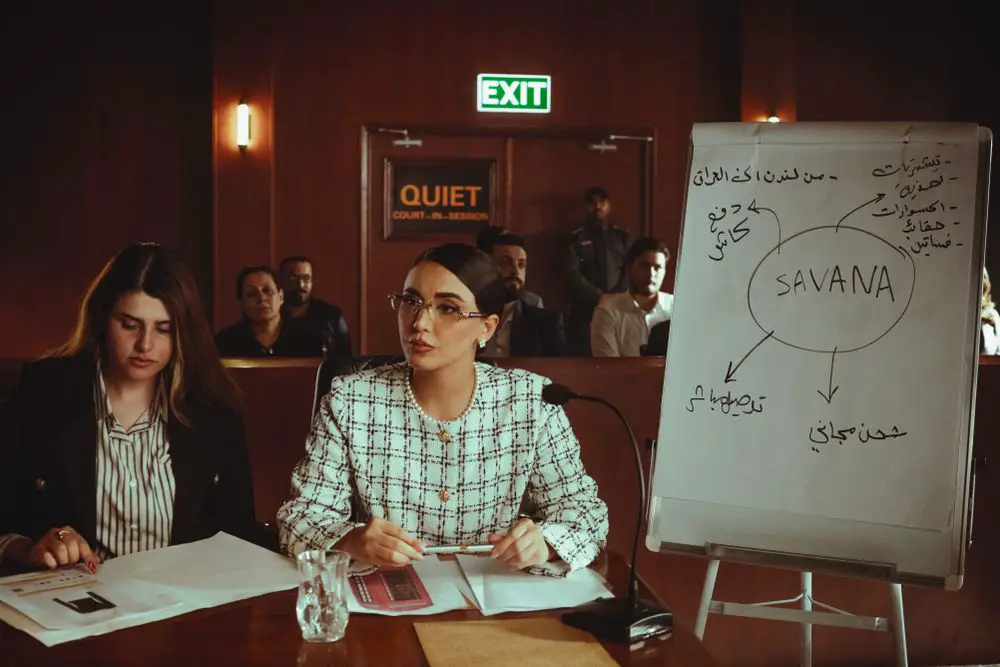
The hearing was set for a Monday morning in February, cold enough that people came into the courthouse stamping their shoes and holding coffee cups like hand warmers. The building smelled of old wood, paper, wool coats, and burned coffee from a vending machine in the hallway. At 9:14, I sat at the defense table beside David while my mother arranged herself at the plaintiff’s table and prepared to cry.
Brenda Hale did not cry the way other people cry. She arranged grief. She lifted her handkerchief. She lowered her chin. She allowed a pause to form so that everyone in the room could watch the pain gather in the place where tears were supposed to come from. Then she looked at Judge Mitchell and said, clearly and without hesitation, “My daughter has not worked a single day since graduating college.”
There it was.
The old family story, now entered into the official record.
She said I sat in my apartment pretending to be important. She said my father had worked his entire life to build that trust. She said I had stolen four million dollars and hidden it offshore. She said I refused to tell my own family where the money had gone.
Jason sat behind her in a charcoal suit, one ankle crossed over the other, wearing an expression of practiced injury. Jason had been practicing that expression since high school. It was a specific look, not quite sad, not quite angry, somewhere in the precise middle where people who want to help feel compelled to intervene. He had learned early that this expression was more useful than an argument. Arguments created opposition. That particular look created rescuers.
When he crashed my father’s pickup at seventeen, he looked wounded. When he lost a supplier account at twenty-six, he looked wounded. When my father quietly covered a tax penalty Jason had caused without telling the rest of us, Jason looked so sincerely wounded by the fact that anyone had noticed the mistake at all that we somehow ended up apologizing for making him feel judged. That was his particular talent. He made other people carry the weight of what he had done, and he made it look like he was doing them a favor by allowing them to carry it, as though the burden were a privilege rather than a theft.
Watching him perform concern from his bench seat behind my mother, I felt something I had not expected. Not anger. A kind of tired clarity. The recognition of a trick you have seen so many times that you no longer need to see how it ends to know exactly where it is going.
My mother’s attorney walked her through a series of questions that had clearly been rehearsed until the answers arrived without effort.
Had Thomas Hale intended the trust to support the family? Yes. Had Audrey had access to sensitive documents? She had. Had Audrey refused to disclose her employment? Always. Did Brenda believe Audrey had taken advantage of Thomas during his final weeks?
At that last question, my mother pressed the handkerchief beneath her eye and whispered, “Yes.”
I did not move.
For one ugly second I imagined standing up and telling the entire courtroom what she had said in the kitchen after the funeral. I imagined telling them how Jason had smiled when he thought no one was looking. I imagined throwing every page across the room and letting them scramble for the truth on the floor.
But anger is noisy. Evidence is patient.
I kept my hands folded. David did not object. Before we had walked in, he had written three lines on his yellow legal pad and shown them to me.
Trust ledger.
Contractor status.
Wait.
So I waited.
Judge Mitchell listened with the tired, practiced focus of a man who had spent years watching families use legal language to dress up decades of old resentment. But the allegations were serious. Four million dollars was serious. A missing trust transfer was serious. An unemployed daughter accused of offshore concealment was serious. He gave my mother’s account the full weight of his attention.
When she finished, he turned toward our table.
“Mr. Cohen,” he said, “these are serious allegations. If there is merit, your client may be facing a criminal referral. Does the defense have anything to say?”
David stood slowly. He buttoned his jacket. The courtroom went still in the particular way rooms do when something is about to shift.
He reached for the thick manila envelope on our table. My mother had glanced at it twice that morning across the distance between our tables, both times with the brief, dismissive assessment of someone who has already decided what they are looking at. It did not look like a bank statement. It did not look like the kind of document she had prepared herself to rebut. It was heavy, sealed, and marked in a way that was neither dramatic nor casual, the way genuinely official things are marked, with a seriousness that does not need to announce itself. A red wax seal held the flap closed. The kind of seal that exists not for ceremony but for chain of custody, for proof of origin, for the verification of something that must not have been touched by unauthorized hands.
The bailiff straightened before David had spoken a full sentence. That was the moment I first allowed myself to breathe slightly more easily, watching a person trained to recognize procedural weight give the envelope the kind of attention reserved for documents that matter.
“We do, Your Honor,” David said.
His voice remained even.
“This document clarifies the exact location of the four million dollars and my client’s employment status, which the plaintiff appears to have misrepresented under oath.”
My mother laughed. One sharp, fast sound. Ugly because it came before she could stop it.
“Employment status?” she said. “She is unemployed.”
David did not look at her.
He handed the envelope to the bailiff.
The bailiff carried it to the bench.
Judge Mitchell examined the seal, then looked at David, then at me. I kept my hands folded, but my nails had pressed half-moons into my palms. For three months I had imagined this moment. I had imagined my mother understanding not embarrassment, not anger, but danger. The kind that comes with page numbers, timestamps, access logs, and a transcript.
The judge broke the red wax seal. Paper whispered as he pulled the documents free. He read the first page. Then the second. The impatience drained from his face slowly enough that you could watch the room change around it.
Brenda’s handkerchief stopped moving.
Jason sat forward.
Judge Mitchell removed his glasses and looked at my mother as though he was seeing her clearly for the first time, the way you look at something once a different light falls on it.
Then he read the first line aloud.
“Pursuant to sealed federal contractor verification…”
My mother’s face went blank. It was not fear yet. Fear has motion. This was something earlier than fear. It was calculation losing the ground beneath it.
David remained standing.
“Page three, Your Honor, confirms Ms. Hale’s income classification. Page five confirms the trust account access logs. Page seven identifies the authorized signatories attached to the transfers in question.”
Jason said “Mom” in a voice that had lost all its polish. It came out thin and reduced.
The judge turned another page. The courtroom did not move. A clerk stopped typing. Someone in the gallery held a paper coffee cup halfway to his mouth and kept it there.
My mother’s attorney stared at the packet the way you stare at something that has just become a different object than you believed it to be.
Then the bailiff stepped toward our table and lifted the smaller cream envelope tucked beneath the main packet.
I had not touched it since David sealed it into the folder. It had sat beneath the larger packet all morning while my mother delivered her testimony, while her attorney asked his rehearsed questions, while Jason performed his expression of wounded dignity for the bench. My father’s handwriting ran across the front in blue ink, familiar enough to tighten my chest even after three months of looking at it.
For Audrey, if they make you prove it.
That was the first moment my mother looked at me. Not at David. Not at the judge. Not at the bailiff holding the envelope. At me.
And it was complicated, standing there under that gaze, because I had been carrying the weight of what she was for so long that I sometimes forgot what she had also been. The look on her face held something I had not seen from her in years, something that existed beneath the handkerchief and the arranged grief and the careful testimony. Something close to recognition. The specific recognition of a person who has just understood that they underestimated someone they had known their entire life.
For a second I saw the woman who used to stand on the front porch waving while my father backed the old pickup out of the driveway. I saw her at the kitchen table cutting the crusts off my bread because I hated them, moving with the small, ordinary love that I had spent years trying to reconcile with everything else she was capable of being. I saw her the way you sometimes see a person who hurt you, all at once, in two versions simultaneously: the one that was real and the one you had needed them to be.
Then the courtroom came back. The handkerchief. The lawsuit. The testimony delivered under oath about the daughter who had never worked a day in her life.
Judge Mitchell opened the cream envelope.
Inside was a notarized statement my father had signed eleven days before he died. There were also copies of two emails, a wire authorization refusal, and a handwritten note.
The judge read silently for nearly a full minute. No one interrupted him. Even my mother knew better than to speak.
When he finally looked up, his eyes went to Jason.
“Mr. Hale,” he said quietly, “before anyone in this courtroom says another word, I need you to understand what this document appears to show.”
Jason shook his head once. It was small. Almost childlike.
“I didn’t move it,” he said.
No one had accused him out loud yet.
That was when my mother closed her eyes.
David’s expression did not change.
The judge read from my father’s statement in a measured, unhurried voice.
“My daughter Audrey Hale is not unemployed. She is restricted by contract from disclosing certain work publicly, and I have verified her employment and earnings through counsel.”
A murmur moved through the gallery. Judge Mitchell lifted his eyes once, and the room went quiet again.
He continued.
“I requested Audrey’s assistance after discovering irregular changes to the Hale Family Trust access permissions. I did not authorize Brenda Hale or Jason Hale to transfer, redirect, or encumber four million dollars from the reserve account.”
My mother made a sound then. Not a sob. A breath that hit something solid and stopped.
Jason leaned backward slowly, as though the bench behind him had become unreliable.
My father had spent his entire life avoiding public conflict. He would argue over an invoice for forty minutes, but family shame made him pull inward. He had always chosen the path that kept the surface smooth, even when the underside was rotten.
Which was why this particular statement hurt in a way I had not anticipated. Not because he had protected me in it. Because he had known that he would need to.
Judge Mitchell turned to the access log summary.
“Mr. Cohen,” he said, “am I understanding correctly that the disputed funds did not go offshore?”
“That is correct, Your Honor.”
“And the funds are currently frozen?”
“Yes, Your Honor. In a protected trust reserve account, pending review.”
The judge looked toward my mother’s table.
“So the money was not stolen by Ms. Hale.”
“No, Your Honor.”
Brenda’s attorney stood. “Your Honor, my client may not have been aware of”
Judge Mitchell raised one hand.
The attorney stopped.
That hand did more than silence one lawyer. It drew a line around a story that had been running unchecked for months, through kitchens, through phone calls, through sympathy cards and whispered conversations at grocery stores and family text chains, and now through sworn testimony in open court. For the first time, someone with genuine authority had placed a boundary around it.
“Mrs. Hale,” the judge said, “you made statements under oath today regarding your daughter’s employment and alleged theft.”
Brenda swallowed. “Yes, Your Honor.”
“Were those statements based on personal knowledge?”
Her mouth opened.
Then closed.
Jason stared at the floor. That was new. Jason ordinarily watched the person he expected to rescue him, calculating the moment to perform his most useful version of remorse. This time there was no one performing the rescue. He had nowhere useful to look.
Brenda tried to recover. “She never told us what she did,” she said.
“That was not my question,” Judge Mitchell replied.
The courtroom became so still I could hear the faint electrical hum of the overhead lights.
My mother looked at me again. There was anger in it now. Not regret, not shame. Anger that I had not stayed inside the box where she had placed me. That I had been something other than what she had decided I was, and that the difference had now been entered into the record.
David slid one final document from his folder.
It was not dramatic. Just paper on a table. But paper had always been my father’s language.
“This is the wire transfer ledger, Your Honor. It shows the initiation attempts, the rejected authorizations, and the account credentials used.”
Judge Mitchell reviewed it without speaking. Then he looked at Jason.
“Mr. Hale, I strongly advise you not to speak further without counsel prepared to address what this document shows.”
I had seen Jason embarrassed. I had seen him angry and wounded and performatively remorseful. I had watched him move through every useful emotion in his repertoire for as long as I could remember.
I had never seen him look small.
He sat very still. My mother reached toward him under the table. He pulled his hand back. Not dramatically, not with heat. He simply withdrew it, the precise and quiet movement of someone separating liability from blame.
That was the first crack. Not love fracturing between them. Something more practical. The moment when two people who have been running the same story understand that the story has ended and someone will need to account for it, and neither of them wants to be the one standing in that position.
The judge ordered the disputed funds to remain frozen pending formal review. He directed the documents to be preserved and entered into the record. He noted that testimony delivered under oath carried consequences beyond the resolution of the civil matter before him and that his findings would be forwarded accordingly. He warned my mother’s attorney that any further filings would need to account for the evidence that had been produced that morning before the court could consider them on their merits.
He did not raise his voice through any of it. He did not need to. Authority is loudest when it does not have to announce itself, when it simply moves forward with the work and lets the record speak.
When the hearing ended, the gallery rose with the low scrape of shoes and winter coats across a stone floor. My mother stayed seated. Her silk handkerchief lay in her lap, untouched for the last twenty minutes.
Jason walked out first, moving with his head down and his hands in his pockets, the posture of a man trying to take up as little visible space as possible. He passed me without looking up. He did not say anything to my mother. He did not pause at the door. He simply left.
He did not wait for her.
I had watched Jason navigate consequences my entire life. He had a talent for making himself adjacent to trouble without standing inside it, for appearing cooperative while remaining protected, for looking wounded in a way that redirected attention from what he had done to how unfair it was that someone had noticed. I had expected him to deploy some version of that talent on the way out of the courtroom.
But talent requires an audience that still believes the performance. This audience had read the ledger.
He left alone, and that told me more than any spoken confession could have.
David packed our papers with the careful efficiency he applied to everything. I stood beside him, suddenly aware of how cold my hands were, how deeply tired I was in a way that had nothing to do with sleep.
For months I had imagined this moment as relief. I thought I would feel clean and light, vindicated, maybe even powerful. I had imagined the truth landing on the room the way a window opening lets in air after a long winter.
Instead I felt tired in a place that rest could not reach.
My mother finally stood.
“Audrey,” she said.
It was the first time all morning she had used my name without turning it into an accusation.
I looked at her.
For one moment I wanted her to say she was sorry. Not because an apology would repair anything. Because some part of me still remembered the kitchen table and the bread with the crusts cut off and the belief, young and stubborn and eventually wrong, that mothers told the truth when it mattered most.
But Brenda Hale had never apologized when denial still had somewhere to go.
“You should have told me,” she said.
There it was. The same old move, delivered even at the end. My failure. My fault. My responsibility to manage the consequences of what she had done.
I picked up my coat.
“No,” I said. “Dad did.”
Her face tightened.
I did not wait for her answer.
The hallway outside was bright with cold February light pouring through tall windows. People moved past carrying folders and coffee cups and ordinary problems that had nothing to do with trust accounts or wire transfers or fathers who wrote letters and sealed them in envelopes just in case.
David walked beside me to the elevator.
“You did well,” he said.
I laughed once. Not because anything was funny.
“I didn’t do anything.”
“You waited,” he said.
He pressed the button and we stood there while the building hummed around us. I thought about the past three months. The nights I had lain awake running through access logs and timeline reconstructions. The meals I had forgotten to eat. The phone calls I had not made and the conversations I had watched my mother conduct across the family with me as the subject and the silence I had not broken.
My father’s sentence came back to me on the steps outside.
Numbers tell the story people try to hide.
He had been right about that. He had been right about most of it.
But standing on those courthouse steps with the cold air sharp against my face and a small American flag snapping hard on its pole near the entrance, I understood something he had not lived long enough to say to me directly.
Silence tells a story too.
My mother’s silence when the judge read the letter. Jason’s silence when the transfer logs were placed on the bench. My own silence across three months of being called lazy and unemployed and unstable and greedy and strange by people who had raised me to believe their version of me was the only one that counted.
They had always mistaken that silence for weakness. For capitulation. For the quiet of a woman who had nothing to say because she had nothing to stand on.
In that courtroom, they had finally learned what it had actually been.
Documentation.
Three months of it, copied and notarized and sealed with wax and handed to a judge who read before he spoke.
My phone buzzed before I reached the sidewalk.
Unknown number. Three words.
We need to talk.
I looked back at the courthouse doors, at the building where my mother had tried to bury me under the story she preferred. Then I looked at the message again.
I deleted it.
Some people only want to talk after the transcript already exists. After the record is sealed and the funds are frozen and the judge has gone back to his chambers and the story has been entered into something more permanent than memory.
By then, the truth has already learned how to speak for itself.
I walked out past the flag, past the stone steps, past the ordinary Tuesday morning that had no idea what had just concluded inside the building behind me. The cold came in clean through my coat. My phone was quiet in my pocket. The street ahead was full of people carrying their ordinary problems in all directions.
For the first time since my father died, I took a full breath without feeling like I had taken something that belonged to someone else.
I had not stolen it.
I had earned it the way my father earned most things.
Through early mornings, and careful arithmetic, and the patient understanding that numbers tell the story people spend their whole lives trying to hide.
He had taught me that from a cracked vinyl seat in an old pickup truck, handing me terrible hot chocolate before sunrise.
I had simply been paying attention.
The way he had taught me to, from a cracked vinyl seat, before the city woke up, holding gas station hot chocolate with both hands to keep warm.
Some lessons arrive early and take years to matter.
That one had been worth the wait.

Lila Hart is a dedicated Digital Archivist and Research Specialist with a keen eye for preserving and curating meaningful content. At TheArchivists, she specializes in organizing and managing digital archives, ensuring that valuable stories and historical moments are accessible for generations to come.
Lila earned her degree in History and Archival Studies from the University of Edinburgh, where she cultivated her passion for documenting the past and preserving cultural heritage. Her expertise lies in combining traditional archival techniques with modern digital tools, allowing her to create comprehensive and engaging collections that resonate with audiences worldwide.
At TheArchivists, Lila is known for her meticulous attention to detail and her ability to uncover hidden gems within extensive archives. Her work is praised for its depth, authenticity, and contribution to the preservation of knowledge in the digital age.
Driven by a commitment to preserving stories that matter, Lila is passionate about exploring the intersection of history and technology. Her goal is to ensure that every piece of content she handles reflects the richness of human experiences and remains a source of inspiration for years to come.