I buried my husband six months ago.
At least, that was what everyone told me I did.
I stood beside a casket under a gray Missouri sky while the wind pulled at my black coat and my son Lucas kept one hand pressed against my elbow, as if I might fold in half and disappear into the grass. I watched the minister lower his head, heard the soft scrape of shovels waiting nearby, and placed a trembling palm on the polished wood of the coffin that supposedly held Thomas Whitaker, the man I had slept beside for forty-one years.
The casket was closed.
They told me it was kinder that way. They said the accident had been too severe, that my memories deserved to remain untouched, that I should keep Thomas in my mind as he had been on Sunday mornings with coffee in his hand and the newspaper across his knees.
So I believed them.
Grief makes obedience feel like mercy. It makes other people’s certainty easier to accept than your own screaming doubt.
For six months I lived inside the shape of his absence. I woke before sunrise and still reached to the right side of the bed. I cooked too much food, bought the brand of mustard he liked, and folded laundry that no longer included his white undershirts with the stretched collars. His reading glasses stayed on the side table. His denim jacket hung by the back door. A small stack of receipts from the marina supply business sat in the kitchen junk drawer, held together with a rubber band, because he had always said he would organize them “this weekend.”
There is always a weekend promised by men who never intend to keep it.
I went to the grocery store on a Wednesday because grief does not refill the refrigerator. The store was busy in that quiet late-afternoon way, retired couples comparing prices, mothers pushing carts with sleepy toddlers, an old country song playing softly from the ceiling speakers. I remember thinking how offensive it was that the world could look so completely ordinary.
I turned into the canned goods aisle with a list in my hand and a heaviness in my chest. Tomato sauce. Chicken broth. Coffee filters. All the small objects of survival.
Then I heard him.
Not a shout. Not my name. Nothing dramatic enough for a movie.
Just a cough. A small, irritated cough, followed by a muttered complaint about the price of peaches.
“Four dollars for syrup and half a can of fruit,” he said under his breath. “Highway robbery.”
My fingers froze around the jar I had reached for.
My body knew before my mind did. My skin prickled. My knees softened. The fluorescent lights seemed to hum louder, and the entire aisle narrowed into one sharp tunnel of sound.
That voice had lived in my house for four decades. That voice had argued with game show hosts, whispered prayers beside hospital beds, called me “Ellie” when he wanted forgiveness, and told our son bedtime stories in a tone so gentle it could make a lamp glow warmer.
I turned slowly.
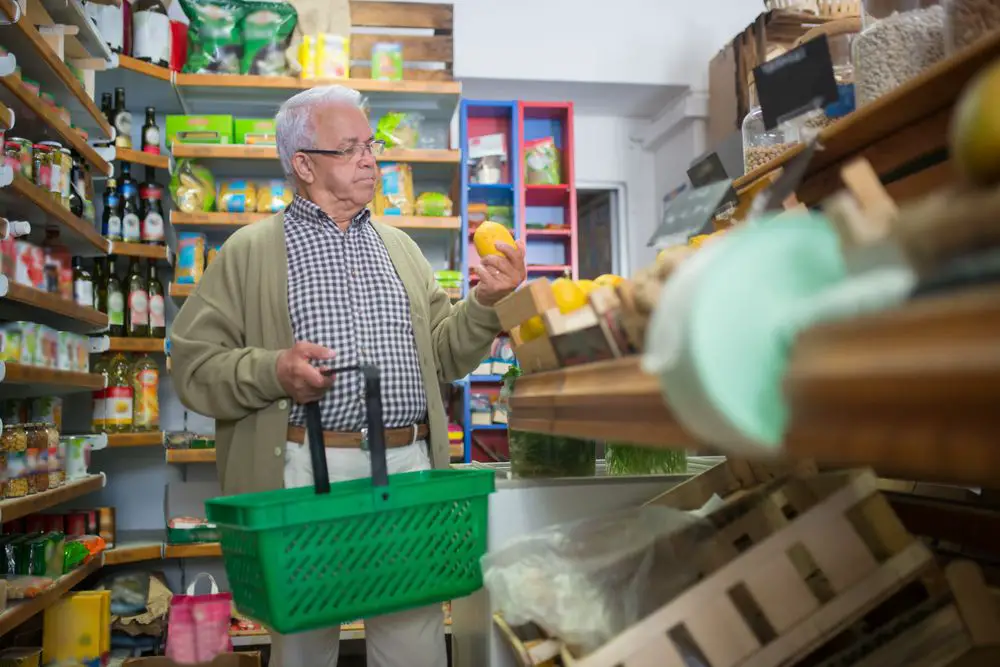
Three shelves down, with a green shopping basket hooked over one arm, stood my husband.
Thomas. Silver hair, a little more uneven than I remembered. Broad shoulders slightly stooped. Brown jacket zipped halfway. The scar above his right eyebrow, pale as a thread. The same left foot turned just a touch outward from the fishing accident he had always claimed “never really hurt.”
He was comparing two cans of peaches.
The jar slipped from my hand and shattered across the tile. Red sauce spread at my feet, and people turned to look.
I was already walking.
“Thomas,” I said.
He looked up.
“Thomas, it’s me.”
For one impossible second, hope rose in me so violently it almost felt like joy. I expected him to gasp, to drop the basket, to say my name in the broken way a man would say it if he had somehow returned from death and found his wife in a grocery aisle.
Instead, he stared at me like I was a stranger.
His brows came together with polite confusion.
“I’m sorry,” he said. “I think you have me mistaken for someone else.”
The words struck harder than the sight of him.
As if forty-one years could be misplaced like car keys. As if I had not watched that face change from young and stubborn to lined and silver. As if I had not memorized the shape of his hands, the weight of his breathing, the exact rhythm of his footsteps in the hall at night.
“No,” I whispered. “No, Thomas. It’s me. Eleanor. Your wife.”
He shifted backward.
That movement hurt worse than any denial. Thomas had never stepped away from me. Not after arguments, not after bad news, not even when I threw a dish towel at him in 1987 because he had forgotten our anniversary and tried to blame daylight saving time.
“My name is Daniel,” he said carefully. “Daniel Brooks. I don’t know you.”
I pulled out my phone with hands that shook badly. I found the photo from his last birthday, the one Lucas had taken on our porch. Thomas in a blue plaid shirt, one arm around my shoulders, squinting into the sunset while I held the cake.
I pressed the screen toward him.
“Look. This is you. This is us. You burned the steaks that day and blamed the grill. You said the grill had an attitude.”
He glanced at the photo.
Only for a moment. But I saw it.
A flicker. Not confusion. Recognition, buried fast, but not fast enough.
His jaw tightened.
“I’m sorry,” he said again. “I’ve never seen that photo. You must be going through something very difficult.”
He placed a hand on my shoulder. The touch nearly destroyed me. It was the same hand, the same warmth, the same careful pressure. Thomas always touched my left shoulder when he wanted me to calm down, as if my grief had a switch hidden there.
“Please,” he said softly. “You should sit down. Get some water.”
I looked at his left hand.
“Show me your fingers.”
His face changed then. Not much. Just enough.
“What?”
“Your left hand. Show me.”
He hesitated, then lifted his hand, palm outward.
There it was.
The crooked pinky. He had broken it at fifteen fixing his mother’s roof, and it had never set right. I used to tease him that if we were ever separated in a crowd, I could identify him by that finger alone.
The aisle tilted.
“I have to go,” he said, suddenly brisk. “I truly hope you feel better.”
He turned away.
“Thomas.”
He kept walking.
I stood there with tomato sauce on my shoes while an employee knelt to clean the mess and strangers avoided my eyes. I heard someone whisper, “Poor thing.”
They were wrong.
I was not poor. I was terrified. Because as I watched my husband walk toward the checkout line under a name I had never heard, one thought rose louder than grief, louder than shock, louder than my own heartbeat.
If Thomas was alive, then who was buried in his grave?
I should have gone home. I should have called Lucas, or my doctor, or the pastor who had prayed beside that closed casket. I should have done what grieving widows are expected to do when reality splits open in public: apologize, steady myself, and accept that sorrow had finally started playing tricks.
But my sorrow had not invented a crooked finger.
So I followed him.
He paid with cash. Thomas had hated carrying cash. He used to say every dollar bill had “passed through too many questionable pockets,” then swipe his card for a pack of gum. Daniel Brooks counted folded bills with Thomas Whitaker’s hands.
He declined a receipt. Thomas kept receipts for everything. Gas, coffee, screws from the hardware store. Once, he kept the receipt for a ninety-nine-cent birthday card because he said “documentation builds character.”
I waited near the magazine rack until he pushed his cart outside, then followed at a careful distance.
He loaded groceries into an old white sedan with a dent along the rear passenger door. Not our car. But the way he packed the bags was unmistakable: heavy items first, bread on top, eggs last, handles tucked neatly inward.
Habits are confessions the body makes when the mouth lies.
I memorized the license plate. Then I got into my car and followed.
He drove away from the nicer side of town, past the bank, past the little brick church where we had held the service. He turned into an older neighborhood with low fences, mature trees, and houses that looked small but loved. He parked in front of a pale green house with white trim and wind chimes by the porch.
The front door opened before he reached it.
A woman stepped out. Mid-fifties, maybe younger. Dark hair pulled back. No makeup. A soft sweater, jeans, bare feet despite the cold boards. She smiled at him with the exhausted ease of a person who had waited for someone many times and never once doubted he would return.
She kissed his cheek.
Not boldly. Not like a mistress claiming victory. Like a wife greeting her husband after groceries.
Two children came running out behind her, a boy and a girl, no more than ten. They crashed into him with laughter.
“Grandpa!” the girl cried. “Did you get the ice cream?”
He laughed. That laugh. Lopsided, warm, a little breathless. The laugh I had buried.
He crouched, balanced the grocery bags, and let them wrap themselves around him. The woman touched his back lightly, and he leaned into that touch without thinking.
That was the moment I stopped hoping for a reasonable explanation.
I took photographs. The house, the car, the license plate, his face as he turned toward the porch, the woman’s hand on his shoulder. Some blurred because my hands would not stop shaking. A few were clear. Clear enough to break a life.
I sat there until the porch light came on. I watched shadows move behind curtains. A small domestic world going on without knowing I was parked across the street, watching my entire marriage come apart one glowing rectangle at a time.
When I finally drove home, I did not remember the route.
Inside, the house smelled faintly of lemon polish and old paper. Thomas’s denim jacket still hung by the back door.
I looked at it for a long time.
Then I sat at the kitchen table, turned on one lamp, and began building a case against my own life. Old photo albums. Insurance documents. Funeral papers. Accident reports. The death certificate Lucas had handled for me. Receipts from the funeral home. I moved like a grieving woman at first. By midnight, I moved like a witness.
At 3:40 in the morning, I called my son.
He answered on the fourth ring, thick with sleep.
“Mom? What time is it?”
“I need you to come over.”
“Did something happen?”
“Yes.”
“Are you hurt?”
I looked down at the photograph of Thomas kissing another woman’s cheek.
“Not in a way that bleeds.”
He arrived forty minutes later in sweatpants and a jacket thrown over a T-shirt, carrying the strained expression of a man hoping to control a fire already inside the walls. He came in with his key and found me at the kitchen table surrounded by photographs and documents.
I slid my phone across the table without speaking.
His face told the story before his mouth tried to lie. First impatience, then confusion, then recognition, then something I had never seen in my son’s eyes.
Fear.
“He looks like Dad,” Lucas said.
“He is your father.”
“People resemble each other.”
“Did you see his hand?”
He rubbed his forehead.
“Mom, you are exhausted. You haven’t slept. You’ve been alone too much.”
“Did you see his hand, Lucas?”
He did not answer.
“Come with me,” I said. “Show me I am a grieving old woman who chased a stranger across town. Let me be embarrassed. I would welcome it.”
He looked away. That was my answer.
We drove in silence. At the end of the street, I pointed to the pale green house. Lucas parked half a block away and turned off the engine. Dawn was beginning to silver the rooftops.
Then the front door opened.
Thomas stepped out carrying a trash bag.
Lucas leaned forward.
The blood left his face so completely I thought he might faint.
Thomas walked down the steps, tied the bag, placed it in the bin, and looked toward the quiet street. Lucas made a sound like a child punched in the chest.
“Mom,” he whispered.
I turned to him slowly.
“How long have you known?”
He gripped the steering wheel until his knuckles whitened.
“Mom, I’m so sorry.”
“Start talking.”
He rested his forehead against the wheel.
“Dad didn’t die in the accident.”
I looked through the windshield at the pale green house.
“Go on.”
“He had another family.” His voice came out thin. “For more than twenty years. He met her through the marina business. Her name is Claudia. She thought he was separated at first. Then he told her you were sick. Then later he said the marriage was over in every way that mattered.”
“How long have you known?”
“Three years.”
I turned toward him.
“Three years?”
“I found duplicate payments. Utility bills. Insurance. A property tax notice. I confronted him.” He wiped his face with his sleeve. “He begged me not to tell you. He said it would ruin you. He said you were fragile.”
“I had an outpatient procedure.”
“I know.”
“No. You don’t know. Fragile is what men call women when they need their silence to sound like kindness.”
He stared at the steering wheel.
“Tell me about the funeral.”
He shut his eyes.
“Dad wanted out. He wanted to live with Claudia full-time, but he did not want a divorce. He said you would take half the house, half the business, half the accounts. There was a man he knew from the marina area. Someone ill, no close family. He paid the man and the man’s niece. The man agreed to use Dad’s ID in hospital records after the accident. He was already dying. He passed at the hospital under Dad’s name.”
“You let me bury a stranger.”
“Yes.”
“You stood beside me at the grave.”
“Yes.”
“You held my arm.”
His voice broke.
“Yes.”
“You watched me talk to a stone with your father’s name on it.”
He began to cry then, not softly, not with dignity. The guilt had finally found his throat.
“I thought I was protecting you,” he said.
“No,” I said. “You were protecting your inheritance.”
He looked at me, stricken.
“Drive me home.”
“We need to talk.”
“We already have.”
When he pulled into my driveway, he reached for my hand. I moved it before he could touch me.
“Your father taught you how to lie,” I said. “But I taught you how to listen. So listen carefully now. Do not come into my house unless I invite you.”
I closed the car door.
For three days, I said nothing to anyone. Lucas would later describe it as me doing nothing. He was wrong. Silence is not nothing when a woman has spent forty-one years being told to keep the peace. Silence is the sound of a door locking.
I watched him pull into my driveway twice and leave after ten minutes on the porch. He sent messages that began with apology and ended with warning. We can fix this privately. Think about the family. Please don’t make this worse.
Privately. That word made me laugh aloud in my empty kitchen. They had buried me privately inside their lie. Built a second household privately. Rewritten my marriage privately. Now they wanted the daylight problem solved the same way.
On the fourth morning, I put on a navy suit I had not worn since Thomas’s memorial luncheon and drove downtown.
The private investigator’s name was Martin Mercer. His office was on the third floor of a narrow brick building, glass door with letters worn at the edges, the calm posture of a man who had disappointed many liars. I laid out the grocery store photographs, the death certificate, the accident report, the old family pictures.
When I finished, he picked up the photograph of Thomas outside the pale green house.
“If this is your husband,” he said, “you are not dealing with adultery. You are dealing with identity fraud, insurance fraud, falsified records, possible improper handling of remains, financial deception, and likely conspiracy.”
The words should have overwhelmed me.
Instead, they steadied me.
“I don’t want suspicions,” I said. “I want documents.”
I wrote him a check without blinking.
“Mrs. Whitaker,” he said, “proof does not always heal people. Sometimes it takes away the last soft place they had to stand.”
I slid the check across his desk.
“My soft places were sold without my consent.”
Over the next ten days, my life split in two. In one version, I was Eleanor Whitaker, widow. I watered porch plants, signed a sympathy card at church, attended a neighbor’s birthday coffee. In the other version, I sat in my car wearing sunglasses and watched the pale green house breathe. Thomas, now Daniel, left every morning at 7:15. He drove to a repair shop on the edge of town. He bought coffee from the same gas station three times a week. On Fridays, he picked up the grandchildren from school.
Grandchildren. I had once imagined Thomas teaching a grandson to fish, a little girl stealing his cap. When that never happened, Thomas had told me life did not owe anyone a script.
The script had existed. It just had another grandmother in it.
Mercer called on a Thursday.
“Come in,” he said. “Bring a strong stomach.”
His report filled a thick folder. Property records showing Thomas had helped purchase the pale green house seventeen years earlier using a business account I had never seen. Utility bills under Daniel Brooks. A second bank account opened nearly two decades ago. Cash withdrawals and transfers from the marina supply business that Thomas always said was “struggling but stable.” There was a birth certificate for Daniel Brooks, issued in another state, attached to a man who had died as a teenager in the 1960s. Thomas had stolen the name of a dead boy.
There were also insurance forms, pension beneficiary updates, and a forged power of attorney filed two months before the accident, granting Lucas authority over certain business assets. My signature appeared on the document.
I stared at it.
It looked like mine. Almost. But the E curved too sharply. The W lacked my small hesitation between letters. Thomas had once teased me for signing checks like I was “drawing a fence.” He knew my handwriting well enough to mimic it. Not well enough to survive it.
“This is forged,” I said.
Then Mercer turned to the phone records. Calls between Thomas and Lucas before the accident. Dozens. Then more after the funeral. A pattern of coordination that stretched far past the grave.
My son had not simply known. He had managed the lie after the coffin went into the ground.
I closed the folder.
For the first time in six months, I did not feel like a widow.
I felt like evidence with a pulse.
My attorney, Mara Ellison, read Mercer’s report in complete silence. When she finished, she set down her glasses and looked at me.
“Mrs. Whitaker, your husband did not leave you. He built an exit strategy around your grief. Your son helped him. The law has names for what they did, but I want to speak plainly first: they tried to erase you.”
My throat tightened.
“Yes.”
“Now we make you visible.”
She did not move loudly. She filed emergency petitions to freeze certain business accounts. She contacted the district attorney’s financial crimes unit and submitted Mercer’s preliminary report. She prepared a civil action for asset recovery, fraud, and elder financial exploitation.
“I am not elderly,” I said.
“You are over sixty-five, and they used your age, your grief, and your trust to manipulate property and funds. We will use every legal tool available.”
I sat back. “Fine. Make me ancient if it costs them more.”
We needed Lucas to talk.
I called him the next afternoon and let my voice sound smaller than I felt.
He answered before the first ring finished. His relief when I said I was tired of fighting was immediate and unguarded. I heard it in the breath he released.
We met at a restaurant near the river. I arrived early. I wore pearl earrings and a pale blouse and a small recorder in the side pocket of my purse, which Mara had tested twice.
“Do not accuse,” she had said. “Do not threaten. Let him rescue himself by explaining.”
Lucas performed concern for the first few minutes. Then I asked him to help me understand, practically, everything that had been done. He unraveled slowly, the way people do when they believe they are offering comfort rather than confession.
He admitted filing forged documents under Thomas’s direction. He admitted knowing another man was in the coffin. He admitted knowing when he held my arm at the grave. He admitted knowing when he stood beside me as I spoke to the stone.
“As long as I stayed quiet,” I said softly, repeating his phrase back to him.
His eyes widened. “Mom, I didn’t mean”
I placed my napkin on the table.
“Yes, you did.”
I walked out before the coffee cooled.
By three that afternoon, Mara had the recording.
By five, the district attorney had it.
By sunrise, warrants were being prepared.
The first arrest was Lucas. He was easier to establish as an active participant: current accounts, forged filings, recent transfers, recorded admissions, ongoing concealment. When his wife called me in fury asking what I had done, I told her his choices had done it. When she said this could have been handled privately, I looked around the kitchen where I had eaten alone for six months across from an empty chair.
“Privacy is where this crime grew,” I said.
She hung up.
They moved on Thomas two days later.
I drove to Claudia’s street and parked in front of the house this time. No sunglasses. No hiding. No trembling.
The curtains moved.
Claudia came to the door.
She was smaller in daylight than I had imagined. Kind-looking. Suspicious. She did not know why I was there, but something in her face suggested that on some level, she had been waiting for an interruption she could not name.
“My name is Eleanor Whitaker,” I said. “I need to speak with the man you know as Daniel.”
Behind her, Thomas stepped into the hallway.
He froze.
For one heartbeat I saw the man who had danced with me in our kitchen, held my hand through my mother’s funeral, built raised garden beds because I wanted tomatoes. Then I saw the coward wearing him.
“Eleanor,” he whispered.
Claudia turned.
“You know her?”
I held out the envelope Mara had prepared.
“These are legal documents. You should read them before the officers arrive.”
Thomas stepped onto the porch slowly.
“What have you done?” he asked.
“What have I done?”
“Ellie, please. This got out of control.”
“A storm gets out of control. A grease fire gets out of control. Forty-one years of marriage do not accidentally become a false death certificate.”
I turned to Claudia.
“His name is Thomas Whitaker. He is my husband. Legally. Publicly. Until he pretended to die rather than divide what we built together.”
Her face went gray. “Daniel?”
“I’m sorry,” I said to her, and despite everything, I meant it. “You lived in his lie too.”
Sirens rose in the distance.
Thomas grabbed the envelope, hands shaking as he pulled out the papers. When he finally looked at me, his voice dropped into the old intimate register that had once made me forgive small things.
“Ellie, I loved you. A part of me always loved you.”
“No,” I said. “You loved being loved by me. You loved the clean house, the loyal wife, the history that made you look honorable. You loved knowing I was somewhere keeping your name warm while you built another life under a stolen one.”
The police cars turned the corner.
Thomas did not run. There was nowhere for a dead man to go once the paperwork proved he was alive.
As they led him down the path, he looked at me one last time.
“I didn’t mean to hurt you,” he said.
I believed that. That was the most insulting part.
Men like Thomas rarely mean to hurt people. They mean to have what they want. The hurt is just something they expect women to carry quietly afterward.
“You meant to use me,” I said. “The pain was only paperwork you forgot to file.”
They put him in the car.
Claudia sat on the porch steps as if her bones had been removed. I should have left her there. A colder woman might have. But cruelty had already had enough help in this story.
I sat beside her, leaving space between us.
“I gave him my life,” she said.
“So did I.”
“Do you hate him?”
I looked toward my car.
“I did. Then I understood that hatred is still a room he gets to live in. I’m evicting him from all of them.”
She nodded slowly.
Before she left, she touched the porch railing and said he had always told her I would never survive alone.
I smiled.
“He always underestimated maintenance.”
Lucas took a plea before trial. The recording from our lunch made a trial unwinnable. His attorney negotiated reduced time in exchange for cooperation, repayment schedules, and testimony against Thomas.
He asked to see me before sentencing. I almost refused. Then I went.
He looked thin, his beard grown in unevenly, standing like a boy outside the principal’s office.
“I don’t expect you to forgive me,” he said.
“Good.”
He told me he had helped Thomas because Thomas had promised to finally trust him with the business. He said he was the only one who understood him.
The oldest hunger in a son.
I felt sorrow then, not enough to soften consequences, but enough to remember the child who had brought me dandelions, the teenager who waited up for Thomas to return from “business trips,” the man who had mistaken being recruited for being chosen.
“Your father did not trust you,” I said. “He used you. Knowing the difference takes longer than one conversation.”
At sentencing, when the judge asked if he had anything to say, Lucas turned toward me.
“I made my mother grieve a lie,” he said. “I will spend the rest of my life ashamed of that.”
I looked at him.
I hoped he meant it.
Thomas never made it to trial. Three weeks after Lucas was sentenced, a calm voice called me just after dawn to say that Thomas Whitaker had suffered a heart attack in the county holding facility and passed at 5:20 in the morning.
For the second time in one year, someone told me my husband was dead.
This time, I asked one question.
“Has the body been identified properly?”
A brief, uncomfortable silence.
“Yes, ma’am.”
“Good. Cremation. No service. No obituary beyond the legal notice.”
Thomas had already had one funeral too many.
After the call, I made coffee and sat at the kitchen table and waited for grief to arrive. It did not. What came instead was a wide, unfamiliar emptiness. Not loneliness. Space. For forty-one years, Thomas had filled rooms by occupying them and then filled them further by leaving. His preferences had lived in every drawer. His moods had shaped holidays. His lies had built walls inside my own house.
Now there was only morning light.
I changed the locks. Then the wallpaper in the downstairs hallway. Then the bedroom furniture. I donated the denim jacket to a charity shop two towns over. I kept one photograph: the birthday photo I had shown him in the grocery store aisle. For months I thought keeping it was weakness. Then I understood it was evidence of a different truth. I had loved honestly. That mattered. Even if he had not deserved it, my love had been real because I was real when I gave it.
Claudia came to see me in late spring. We met on my porch. She brought nothing, no flowers, no apology gift. She sat in the wicker chair Thomas had painted badly years before and told me he had always said I was cruel, that I controlled everything.
“I balanced checkbooks,” I said. “Men who lie often call math control.”
She laughed through tears.
She told me the grandchildren had been confused, then angry. She might lose the pale green house; some of the funds used to purchase it had been traced to marital assets.
“I’m sorry,” I said.
She looked at me, surprised.
“I am. You lived in his lie too.”
Before she left, she paused on the porch steps.
“He told me you would never survive alone.”
I smiled.
“He always underestimated maintenance.”
The final hearing for restitution took place nearly one year after the grocery store. Mara presented the completed accounting. Numbers filled the screen: recovered assets, redirected funds, business proceeds, forged transfer reversals. The judge approved the restoration of my accounts and imposed liens against what remained of Thomas’s estate and Lucas’s future earnings. The Daniel Brooks identity was declared void in every relevant jurisdiction. The death certificate was corrected. The grave marker was ordered amended.
Thomas Whitaker, legally, had died twice.
Only the second death was true.
After the hearing, a young reporter held out a recorder.
“Mrs. Whitaker, what would you say to women who believe they may have been deceived by someone they trust?”
A year earlier I might have said something gentle about patience and family. Now I told the truth.
“Do not confuse peace with silence. Silence often protects the person doing harm. Ask for records. Ask for names. Ask to see the paperwork. Anyone who loves you honestly will not punish you for wanting the truth.”
That evening I drove to the cemetery.
The grave marker still read: Name pending restoration. A court process was underway to identify the man buried there and return dignity to his real story. He had been poor, ill, and purchased by a man who wanted to vanish. He deserved better than becoming the final prop in Thomas Whitaker’s performance.
I stood before the grave for a long time.
“I’m sorry,” I said to the stranger.
Then I said goodbye to the woman who had wept there. She had not been foolish. She had been loyal. She had trusted the people closest to her because trust is supposed to be safe inside a family. They had misused that trust. That did not make her weak. It made them guilty.
I went back to the grocery store once, months later. Not because I needed tomato sauce, though I bought some. I went because places can become haunted if you never reclaim them.
The canned goods aisle looked smaller than I remembered.
No music. No shattered glass. Just shelves and labels and a young employee stocking beans.
I stood where I had stood that afternoon and waited for my body to tremble.
It did not.
I picked up a jar of tomato sauce and held it firmly. A woman beside me asked whether the store brand was any good.
“It’s fine,” I said.
I put two jars in my cart and walked to the checkout.
That night I cooked pasta for myself. I used too much garlic because Thomas used to complain about it. I opened a bottle of wine he would have called overpriced. I ate at the table with a book propped open beside my plate.
The house was quiet.
But it was not empty anymore.
It was mine.
I am not grateful for what they did. People love to say pain makes you stronger, as if betrayal is a school and suffering is tuition. I was strong before Thomas lied. I was strong while Lucas deceived me. I was strong when I stood beside the wrong grave and mourned with my whole honest heart.
What changed was not my strength.
It was my permission.
I stopped asking people who benefited from my doubt to confirm my reality. I stopped mistaking family for safety. I stopped treating my own instincts like rude interruptions.
Now, when something feels wrong, I look directly at it. When someone says trust me, I listen for what they are asking me not to verify. When paperwork appears, I read every line.
And when I pass a mirror, I no longer see only a widow, or a deceived wife, or a woman who was fooled for too long.
I see the woman who walked into a grocery store looking for tomato sauce and walked out holding the first thread of a lie that had wrapped around half her life.
I pulled that thread.
The whole false world came undone.
And the life left standing after it collapsed was finally, completely mine.

Specialty: Legal & Financial Drama
Michael Carter covers stories where money, power, and personal history collide. His writing often explores courtroom battles, business conflicts, and the subtle strategies people use when pushed into a corner. He focuses on grounded, realistic storytelling with attention to detail and believable motivations.