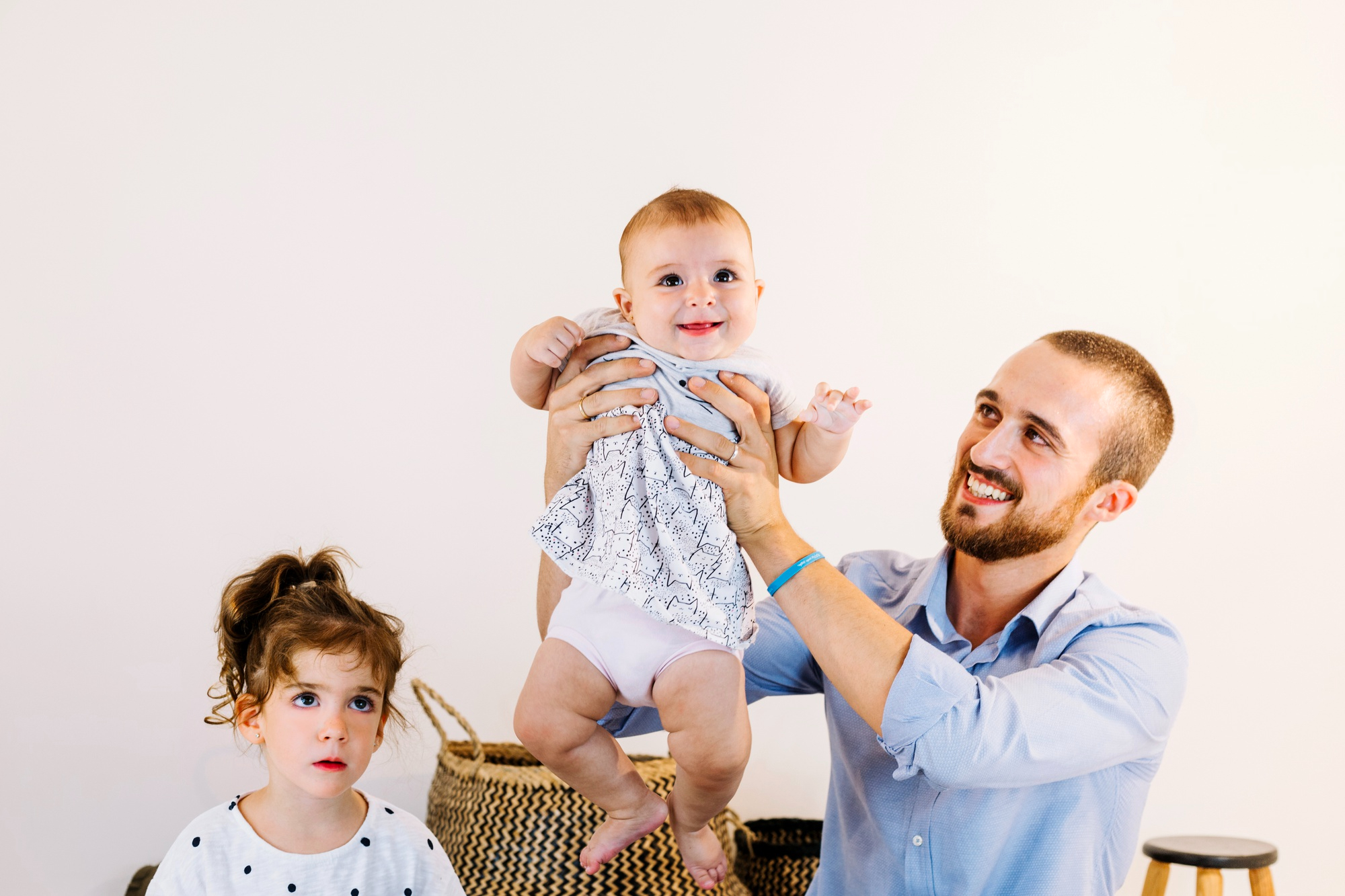
The Yellow Sleepers
Three weeks after Claire died, I sat in my car outside the mall with Ivy and Lily asleep in their stroller and a voice note playing from my phone. It was Claire’s voice, recorded a week before the delivery, when everything still felt like it was going to work out the way we’d planned.
“Mason, please remember to buy more zip-up sleepers,” she said in the recording. I could hear the smile in her voice, the certainty of someone who believed there would be a future in which she would be there to remind me in person if I forgot.
In the background of the recording, I laughed. “What’s wrong with the button ones?”
“No buttons at three in the morning,” Claire answered. “Trust me. You’ll cry before the babies do.”
I pressed my thumb against my wedding ring and sat there listening to my wife talk about a morning that would never come. The recording ended, and I just sat holding my phone, unable to move, unable to stop the weight that pressed down on my chest every single time I heard her voice and remembered that I would never hear it in real life again.
“Fine,” my recorded voice said. “Zip-ups.”
“And yellow,” she added. “Everyone buys pink, and they’re babies, not cupcakes.”
I laughed in the car. Then the laugh turned into something else, and I covered my mouth with my hand while my shoulders shook. The car was too quiet except for the sound of my breathing, and Ivy and Lily slept on, oblivious to the fact that their father was falling apart in the driver’s seat.
Claire had been gone for three weeks. I still caught myself turning to tell her things. When Ivy smiled for the first time, I reached for my phone to video call Claire before I remembered. When Lily finally latched properly during a feeding, I almost texted Claire before my hands froze on the phone’s screen.
People kept telling me I was brave to do it all alone. They said it in hushed voices at the funeral, at the grocery store, in messages they sent because they didn’t know what else to say. I wasn’t brave. I was tired, scared, and guessing my way through every single day. I was reading articles on my phone at three in the morning trying to figure out why one twin was crying louder than the other. I was calling the pediatrician’s after-hours line at least twice a week, my voice shaking as I described symptoms and asked if everything was normal. I was learning how to fold cloth diapers from YouTube videos because sometimes the disposable ones leaked and I couldn’t afford to waste them on user error.
But Claire had asked for yellow sleepers, and that was something I could actually do. That was something concrete and real and within my control.
I looked at my daughters sleeping in the stroller, their tiny fists curled, their breathing shallow and even. They had no idea yet that their mother was gone. They had no memories of her to lose. That was a mercy and a cruelty all at once.
“Okay, girls,” I whispered, lifting the stroller handle. “We’re doing this for Mom.”
The mall was too bright and too full of families who looked whole. Parents moved through the hallways with the unselfconscious ease of people who had never had to imagine losing each other. I saw mothers and fathers working together, one person holding the baby while the other paid for things, one person standing guard while the other used the restroom. They moved through the world as units, complete and intact, and I felt the weight of being a fraction, a half, a person trying to be two people at once.
I kept my eyes on the floor and concentrated on putting one foot in front of the other until I reached the baby store. The yellow sleepers were easy to find, which felt almost surprising. I’d expected this to be harder.
“Your mom was right,” I told Lily, even though she couldn’t understand me. “Buttons are definitely a trap.”
I put two sets in the basket, thinking about Claire with her hands moving quickly, efficiently, getting ready for the babies she would never meet. I thought about the way she had planned everything, color coded her pregnancy binders, read books about sleep schedules and feeding windows and all the things parents were supposed to do. I had teased her about it at the time, but now I understood that she had been trying to control something, anything, in a process that ultimately couldn’t be controlled.
Then Ivy screamed.
The sound cut through the store, sharp and urgent and absolutely desperate. Lily followed half a second later, and suddenly both of my daughters were crying in a way that made people turn and stare. I could feel their eyes on me, assessing, wondering if this young father knew what he was doing.
“I hear you,” I said, moving quickly toward the stroller. “Daddy’s got you.”
I checked Ivy first, my hands moving with the efficiency I’d learned over three weeks. Her sleeper was soaked completely through, a combination of spit-up and the blowout that came from a newborn’s unpredictable digestive system.
“Oh, bug,” I breathed, kissing her forehead. “That’s a big situation.”
Lily kicked and whimpered, her tiny face turning red with the force of her crying. She sounded like a small bird, all helpless and desperate. She sounded like she needed her mother.
“I know. You too. We’re going,” I said, already reaching for the diaper bag.
I grabbed the basket with the yellow sleepers and pushed the stroller toward the restroom sign, my heart beating faster. I had known this would happen eventually. You can’t take newborn twins anywhere without needing to change them. But I had hoped, irrationally, that maybe we would make it through one trip without a crisis. Maybe I would buy the sleepers and get home and feel like I had accomplished something.
The men’s restroom was almost empty. I scanned it quickly, looking for the changing table that was supposed to be there. A man at the sink looked up at me with sympathy written across his face.
“There’s no table,” he said, drying his hands. “I had the same problem last month.”
My stomach sank. A man with a baby also had to figure out where to change them. A man who probably had a wife waiting somewhere, or at least the option of asking a woman to help. I didn’t have that option anymore.
“Do you know where the family restroom is?” I asked, already moving back toward the hallway.
“Other side of the mall, I think,” he said. “By the Crocs store maybe?”
Both girls cried harder. Ivy’s face was turning purple with the intensity of her crying, and I could feel Lily’s frustration building. Three weeks old, and they already knew how to communicate that something was wrong.
I backed into the hallway and found a security guard near the mall directory, his uniform crisp, his face neutral in the way of people who had seen everything and were unimpressed by most of it.
“Excuse me,” I said, making sure I sounded calm, reasonable, like I was asking a simple question instead of asking for help with a crisis. “I need to change my newborn twins. Is the family restroom close to here?”
He looked at the stroller, and his expression softened slightly. “Yes, sir?”
“The one in this wing is closed for renovation. The one in the East Wing is by the Crocs store. That’s about 15 minutes from here, maybe 20 depending on how busy it is.”
“What about the men’s room?” I asked, knowing already what the answer would be. “I just checked. There’s no changing table.”
“They removed it last week. Maintenance issue.”
I looked down at my daughters, both of them screaming now, both of them needing something I couldn’t provide while standing in a hallway in the middle of the mall. Fifteen to twenty minutes was a long time to let a newborn sit in wet clothes. It was also a long time to stand in a public hallway trying to comfort two babies who were only three weeks old and still learning how the world worked.
“So the family room is closed, and the men’s room has no changing table?” I asked, trying to keep the edge out of my voice.
The guard looked sympathetic. “I don’t make those calls.”
“I know,” I said, swallowing hard. “I’m not upset with you.”
He pointed down the hall. “There’s another family restroom in the East Wing. By the Crocs store.”
“That’s 15 or 20 minutes?”
“Yeah. I’m sorry about that.”
A woman walking past us stopped. She was professionally dressed, her hair pulled back, her face arranged in the expression of someone with somewhere important to be.
“The women’s restroom has a changing table,” she said, then immediately stiffened. “But you can’t go in there. You’re a man.”
“I know,” I said, trying to keep my voice level. “But the men’s room has no table, and the family room is closed. My daughters need changing right now.”
“That’s not my problem,” she said, and walked away.
I stood there with two crying babies and a diaper bag cutting into my shoulder. I thought about Claire, about the way she had read all the books and planned everything because she wanted to make sure we were ready. I thought about what she would have done in this situation, and I knew she would have found a solution. She wouldn’t have stood in a hallway looking lost.
I crouched by the stroller, trying to make myself small, trying to speak calmly to my daughters even though my own heart was racing.
“Girls,” I said, trying to keep my voice steady, “we’re going to be quick. We’re going to be respectful. And Daddy’s got you.”
I remembered something Claire had written in one of her pregnancy journals. “Talk to them, Mason. Even when you feel silly. They’ll know your voice.” She’d been reading some parenting book, something about how babies understood tone and rhythm even if they didn’t understand words. I’d laughed at the time, but now I understood that she had been right about almost everything.
I lifted Ivy into the sling against my chest. She was damp and uncomfortable, but at least she was close to me, at least she could hear my heartbeat. Lily stayed in the stroller, still screaming, and I picked up the diaper bag with my free hand.
At the door to the women’s restroom, I stopped. I had never done anything like this before. I had always been someone who followed the rules, who understood that boundaries existed for reasons, who respected spaces that weren’t meant for me. But I was also someone who had his two-week-old daughters crying in a mall because the facility was poorly planned and the city had apparently decided that fathers didn’t need changing tables.
I hated the choice, but I loved Ivy and Lily more than I feared being judged.
So I pushed the door open.
“I’m sorry,” I called before stepping inside. My voice echoed slightly in the restroom. “I have newborn twins. There’s no changing table in the men’s room, and the family room is closed. I’ll be two minutes.”
No one answered. The restroom was quiet except for the sound of my daughters crying and the hum of the ventilation system.
I moved quickly to the changing table and laid Ivy down first. Her clothes were soaked, and she was shaking from crying so hard. I had never felt so determined to be fast and efficient in my life.
“I know, bug,” I whispered, kissing her forehead. “Daddy’s hurrying.”
I worked as quickly as I could, my hands steady even though my heart was racing. I changed her diaper, wiped her down with a wipe, grabbed one of the yellow sleepers I had just bought, and got her zipped into clean, dry clothes. She was still crying, but her crying seemed to shift from desperate to frustrated, which was at least progress.
Then the door opened.
Heels clicked on the tile floor. The sound was sharp, fast, and angry. I looked up just as a woman in a cream blazer approached the sinks. Her name tag said “Patricia.” Her face was arranged in an expression of absolute outrage.
“Absolutely not,” she said.
I turned, trying to position myself between her and my daughters. “I’m sorry. I’ll be done in one minute. My daughters needed changing, and the men’s room had no table.”
“I don’t care,” Patricia snapped. “This is a women’s restroom.”
“I understand,” I said. “There was no changing table in the men’s room, and the family restroom in this wing is closed for renovation. I announced myself when I came in. I’m not trying to bother anyone.”
“Then leave.”
“I can’t leave Lily wet,” I said, looking down at my other daughter still screaming in the stroller.
Patricia stepped closer. “Men always have an excuse.”
The words stung because there was a kernel of truth in them. I did have an excuse. It was just a legitimate one. “The men’s room had no changing table,” I said again, trying to explain, trying to make her understand that I wasn’t trying to invade her space. I was trying to be a father.
She looked at my daughters like they were problems she had personally inherited through no fault of her own.
“You’re not keeping them quiet,” she said, her voice sharp with disapproval.
“They’re three weeks old,” I said. “They cry.”
“This is exactly why babies need mothers, not clueless men who don’t know what they’re doing.”
The words landed in my chest like a physical blow. The room seemed to tilt around me. I heard Claire’s voice in my head from months earlier, from before everything had fallen apart. “You’re going to be such a good dad, Mason. I don’t even know how I got so lucky.”
Then I heard the doctor’s voice, quiet and gentle and carrying impossible news. “We’re sorry. We did everything we could. The amniotic fluid, the complications, it came so fast, and there was nothing we could do.”
My hands froze on Ivy’s zipper.
Then Ivy’s fingers curled around mine. Her tiny hand gripped my finger with surprising strength, and it brought me back to the present, back to the fact that I had two daughters who needed me to be strong right now.
I finished zipping Ivy into her clean sleeper and lifted her against my shoulder, holding her close. She was still crying, but she was clean and dry, and she was mine.
“Their mother died bringing them here,” I said to Patricia, my voice quiet and steady. “Please don’t use her absence against them.”
Something flickered across Patricia’s face. For just a moment, I thought I saw shame. I thought she might apologize or back away or give me some sign that she understood what she had just said to a grieving father.
But the moment passed.
“That doesn’t give you the right to invade women’s spaces,” she said.
“I’m not invading anything,” I said. “I’m changing diapers.”
Patricia pulled out her phone. “You’re leaving. Now.”
“No,” I said.
My own voice surprised me with its certainty.
Patricia blinked like she hadn’t heard me correctly. “No?”
I zipped Ivy into a clean yellow sleeper and held her securely against my shoulder. Then I laid Lily on the changing pad. She had cried herself breathless, and now she was just whimpering, her tiny body shaking.
“I’m not leaving Lily wet because you’re uncomfortable with a father doing his job,” I said.
“That isn’t your decision,” Patricia said.
“It is when she’s my daughter.”
I opened a fresh diaper and worked steadily, my hands moving with the efficiency I’d learned over the past three weeks. I had learned how to do this in the dark. I had learned how to do this with one hand while holding a bottle with the other. I had learned how to do this with trembling hands at three in the morning when I wasn’t sure I was doing it right. I could definitely do this while a woman in a cream blazer told me I was wrong.
Patricia raised her phone. “Then I’m calling security.”
“Call them,” I said, opening the yellow sleeper. “But please step back. I’m holding one newborn and changing another.”
Patricia didn’t move. Instead, she raised her phone to her ear.
“Yes, security to the women’s restroom near the baby store. There’s a man in here refusing to leave,” she said loudly enough for the hallway to hear.
Lily wailed again at the sound of Patricia’s sharp voice.
“I’m almost done,” I whispered to my daughter, trying to shield her from Patricia’s presence as much as I could.
Patricia stepped toward me. “Pack up before they drag you out.”
I shifted Ivy higher on my shoulder, making sure her head was supported properly. “Please step back. I’m holding one newborn and changing another.”
I zipped Lily halfway, tucked her safely against me, grabbed the diaper bag, and pushed the stroller into the hallway with my hip. A small crowd had gathered just outside the restroom. I could see people’s expressions, concern mixed with confusion, uncertainty about what to do with a situation like this.
Patricia followed me into the hallway, her chin high, her phone still in her hand.
“Do you understand who you’re talking to?” she demanded.
I adjusted Lily’s blanket with my chin and tried to steady my breathing. I was holding both of my newborn daughters, and this woman was about to tell me something that would make everything worse.
“My name is Patricia. I work for the largest rental management company in this city. I handle applications for half the apartment buildings around here. I have connections. One call, and you’ll never find a place to live in this city again. I just need your name, and it’s all over.”
My stomach dropped. After the funeral, I had applied for smaller apartments closer to Claire’s mother. Apartments I could actually afford on a single income. She was telling me, in front of all these witnesses, that she could destroy my ability to keep a roof over my daughters’ heads because I had changed their diapers in a restroom.
“That’s illegal,” I said.
“People like you always think rules don’t apply,” Patricia said smoothly. “I can protect my community from unstable people.”
I looked down at Ivy and Lily, who were finally quiet now, their eyes beginning to close as the exhaustion of crying caught up with them.
“You can call whoever you want,” I said, my voice steady even though my hands were shaking. “But you’re not going to shame me into failing my daughters.”
That’s when someone stepped toward me from the crowd.
A pregnant woman, one hand on her belly. A tall man stood beside her, his arm around her shoulders.
“Mom. Stop,” the woman said.
Patricia’s entire demeanor changed. “Paige. Don’t get involved. You too, Lucas.”
So this was her daughter. This was the person Patricia had managed to keep in her life despite whatever version of motherhood she practiced.
The man looked at Patricia calmly. “I’m involved because I’m her husband. And I heard what you said.”
“This man was in the women’s restroom,” Patricia said, trying to frame it in a way that would make him understand why she was the victim here.
“He told everyone why,” Paige answered. Her voice was gentle but firm. “I heard him apologize before he went in. He explained that there was no table in the men’s room and the family room was closed.”
“Don’t get involved,” Patricia said again.
Paige looked at me, then at Ivy and Lily, then back at her mother. “When you have your baby, you’ll understand. A child needs its mother.”
The words echoed Patricia’s earlier cruelty, and I realized that Paige was quoting her mother, showing her exactly what she had said.
“No,” Paige said, her voice breaking slightly. “Being pregnant is exactly why I understand how cruel you’re being.”
Lucas moved beside his wife, his hand finding the small of her back. “Our child is going to need both of us,” he said to Patricia. “And I won’t let anyone tell my child that I’m optional.”
Patricia laughed once, a sharp sound that echoed in the hallway. “Of course. But mothers are different.”
“No,” Lucas said, his voice calm and clear. “That’s where this ends. I’m not letting Paige spend her first year as a mother being told she has to carry everything alone. And I’m not letting our child grow up hearing that fathers are backup parents. I’m not letting our child learn that if something happens to one parent, the other can be shamed into silence.”
Patricia’s face flushed. “So you’re keeping me from my grandchild?”
“I’m telling you where the line is,” Lucas said. “Respect both parents, or don’t bring that attitude into our home. You threatened this man’s home, Patricia. You threatened his ability to keep a roof over his daughters’ heads because he needed to change their diapers. Do you see how wrong that is?”
“So, you’re keeping me from my grandchild?” Patricia repeated, her voice smaller now.
Paige wiped her cheek. “Mom, if something happened to me, I would pray Lucas fought this hard for our baby.”
“Don’t say that,” Patricia whispered.
“Why not?” Paige asked. “This man lost his wife. You knew it, and you used it against him.”
Patricia pointed at me. “He had no right.”
“I had no good option,” I said quietly. “There’s a difference.”
The security guard arrived with a mall manager, both of them looking confused by the scene unfolding in the hallway.
Patricia lifted her chin. “This man entered the women’s restroom.”
The security guard nodded at me. “I told him the East Wing was 15 minutes away.”
I spoke carefully, making sure everyone could understand. “Because the men’s room had no changing table, the family restroom in this wing was closed, and the East Wing was 15 minutes away with two newborns. I announced myself when I entered, apologized, and used the only clean surface available.”
A woman near the door spoke up. “He wasn’t bothering anyone. She was the one yelling.”
An older woman folded her arms across her chest. “He was changing babies, not robbing a bank.”
Lucas faced the manager. “I’d like to file a complaint.”
“Against him?” Patricia snapped.
“No,” Lucas said. “Against the mall. Fathers deserve to be seen too. My child deserves to have both his parents treated with equal respect.”
The manager looked at the twins, at my face, at the small crowd of people who had stopped to watch this moment unfold.
“You’re right,” the manager said. “This should never have happened. We have a facility failure here.”
Patricia scoffed. “He broke the rules.”
“No,” the manager said. “He responded to a lack of facilities. You escalated it unnecessarily.”
The hallway went quiet.
Patricia had wanted me to be the problem. Now everyone could see that she was.
The manager turned to me, his expression genuine and apologetic. “Sir, we have a private staff room nearby. There’s a clean changing table, chairs, and privacy. I should have offered that immediately.”
My throat tightened. “Thank you. I just need them dry and calm.”
Paige stepped toward her mother. “You owe him an apology.”
Patricia’s mouth opened. “I owe him?”
“Yes,” Paige said. “You told a grieving father that his babies needed a mother. You threatened his housing. Then you called security on him for changing diapers.”
Patricia looked around, suddenly aware of how many people were watching her. How many people had heard exactly what she had said and were making judgments about who she was based on that.
“I didn’t know about your wife at first,” she said stiffly to me.
I held Ivy and Lily closer. “You shouldn’t have needed to.”
Her face went pale at that. Because she was right. I shouldn’t have needed to explain my grief to justify doing what my daughters needed me to do.
Paige’s voice softened. “Mom, I love you. But if you ever treat Lucas like he’s less important than me in our child’s life, we’re going to have a problem.”
“You’d keep me away over this?” Patricia asked.
“No,” Paige said. “I’d protect my child from someone who thinks fathers are backup parents. I’d protect my child from someone who thinks grief is an excuse to be cruel to other people.”
Patricia had nothing left to say. The moment passed, and she was left standing in the hallway, smaller somehow, not because anyone had shouted louder, but because everyone had finally heard her clearly.
In the staff room, I finished zipping Lily’s sleeper. She was clean and dry, and both of my daughters were finally settling, their crying fading to small whimpers as exhaustion won out over distress. I held them close, one in each arm, and just breathed for a moment.
Paige appeared in the doorway with my wipes. “These fell out when you were pushing the stroller.”
“Thank you,” I said.
“I’m sorry for my mom,” she said quietly.
“You didn’t do it,” I said.
Lucas stood beside her. “I’m going to make sure the complaint gets heard. The mall needs to fix this.”
“Put my name on it too,” I said, looking down at my daughters. “I don’t want another dad standing in that hallway like I did.”
Later, back in my car with the yellow sleepers in a bag beside me, I sat for a moment and just held my daughters. Ivy was asleep, her tiny hand curled around my finger. Lily was drifting off, her breathing evening out as sleep pulled her under.
“We made it through today, Claire,” I whispered, pressing my wedding ring against my lips. “Your girls made it through today.”
I looked at my daughters, at their faces peaceful now, at the yellow sleepers still in the bag waiting to be put on them at home. I thought about the way Patricia had said babies needed mothers, like fathers were some kind of backup plan, like love was only real if it came from a woman.
But I had held my daughters through their first three weeks of life. I had learned to change them in the dark. I had memorized the different sounds of their cries, the way Ivy cried when she was hungry versus when she was tired versus when she just needed to be held. I had learned to fold cloth diapers. I had learned to swaddle them in a way that made them feel safe and held. I had learned to be enough.
“Tomorrow, we’ll try again,” I whispered.
For the first time since the funeral, since the moment when the doctor had told me that Claire was gone, I believed we could. Not because the world was easy. Not because people like Patricia wouldn’t try to make it harder. But because I had two daughters who needed me, and I would move heaven and earth to give them everything they needed, just like Claire had wanted me to do.
I started the car and drove home, where Ivy and Lily would sleep in their cribs surrounded by yellow sleepers, and I would sit by their beds for hours, listening to them breathe, grateful for every single moment, grateful for the chance to be their father, grateful for the voice note that still played in my phone, grateful for Claire’s faith in me even now, even from a place I couldn’t reach anymore.
The world had been cruel that day. But my daughters had been kind. And that, I was learning, was enough.

Adrian Hawthorne is a celebrated author and dedicated archivist who finds inspiration in the hidden stories of the past. Educated at Oxford, he now works at the National Archives, where preserving history fuels his evocative writing. Balancing archival precision with creative storytelling, Adrian founded the Hawthorne Institute of Literary Arts to mentor emerging writers and honor the timeless art of narrative.