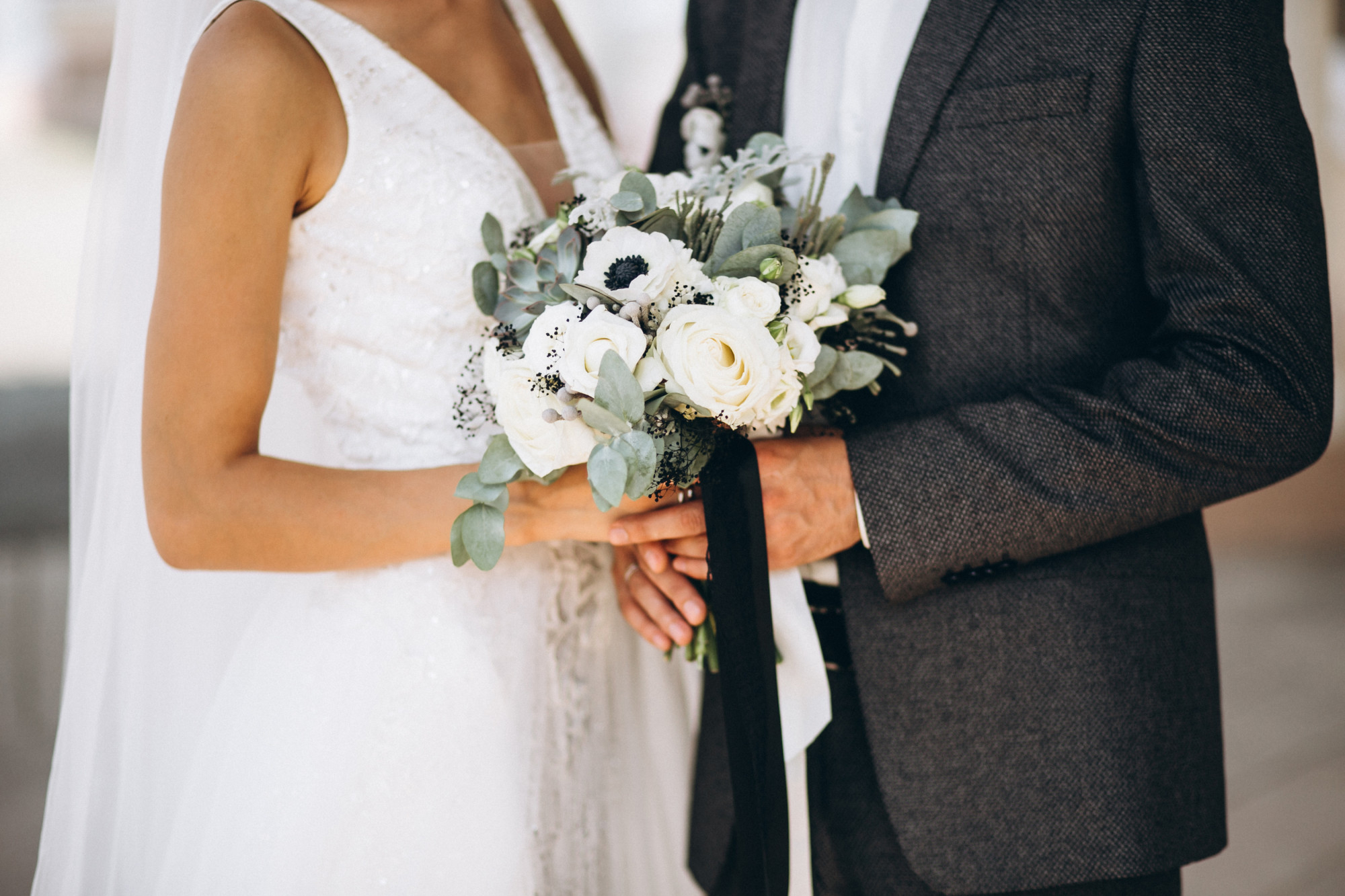
The chandelier over the Rosewood Estate’s ballroom threw gold light across three hundred guests in a way that made everything look more expensive than it was, which was appropriate, because most things at my sister’s wedding were designed to produce exactly that impression.
I had nearly stayed home.
My name is Claire Bennett. I was thirty-two, divorced, raising my eight-year-old daughter Lily on a teacher’s salary, and I had spent the morning ironing the nicest navy dress I owned twice to make sure the crease in the hem behaved. I had debated, through most of the preceding week, whether to attend at all. Vanessa’s events had been produced with the specific goal of showcasing a version of success that required witnesses, and I was useful to that project only as a contrast: the older sister who had not managed to maintain a marriage or achieve a lifestyle that photographed well. My presence would allow the gap between us to be visible in every frame.
But she was my sister, and I was not, at that point, good at choosing myself over the requirements of family. That was something I was still learning.
So I had come. Lily wore her pale yellow cardigan with a ribbon in her hair. She held my hand as we walked through the venue’s entrance, and I could feel in the grip of her fingers that she had already registered something I was trying not to show her: we were not entirely welcome here.
Vanessa Whitmore, my younger sister, had spotted us before we reached the family table. Her face changed in that specific way it changed when I appeared somewhere she was performing happiness, a slight sharpening around the eyes, a smile that turned precise.
“Well,” she said, angled toward the cluster of bridesmaids around her, pitched to carry, “she came alone. No husband. No money. Just a useless kid.”
A few people made sounds. Others became very interested in their champagne flutes.
My mother, Patricia, stood beside Vanessa in silver and pearls. She did not intervene. She laughed, the light, comfortable laugh of a woman who has just heard something she agrees with.
“Let’s not ruin the photos,” she said, looking over me with the critical efficiency of someone making a minor logistical assessment. “Claire, maybe sit somewhere in the back.”
I kept my hand steady around Lily’s.
I had survived things their words could not compete with. The separation, the medical bills, the nights when cereal was what we had because payday was forty-eight hours away, the particular loneliness of waking at three in the morning in an apartment that was too quiet and having to be functional by seven. Their version of cruelty was polished but shallow. It could embarrass me. It could not break me.
But Lily had heard every word.
She looked up at me with the wide, quietly processing expression she uses when she is deciding how to understand something. I bent toward her. “It’s okay,” I said. “We’ll stay for dinner, then go.”
The DJ announced the entrance of the bride and groom. Music filled the room. Vanessa swept across the dance floor in the lace gown she had described in detail to me three times over the preceding year, the one that had required two fittings in New York and cost more than my car. Graham Ellison followed behind her. He was handsome in the polished way of men who have always had reasons to be confident, and his smile was composed, and something about it struck me in that moment as slightly effortful, though I could not have said why.
The speeches began. The maid of honor praised Vanessa’s kindness, which required a certain creative flexibility with the material. My mother cried with the production of a woman who has practiced crying in formal settings. Graham raised his glass and called himself the luckiest man alive.
Then Lily slipped her hand out of mine.
At first I assumed she was heading to the restroom. She sometimes went without telling me, having recently decided that announcing bathroom visits was undignified. But she did not go toward the hallway. She walked between the tables, directly and purposefully, toward the DJ booth near the front of the room.
“Lily,” I said, standing up.
She stepped onto the small platform, reached toward the DJ with the straightforward confidence of a child who has decided to do something and has no time for the negotiation that might stop her, and took the microphone.
Her voice shook. It carried anyway.
“I have a video. My mom didn’t know I had it. The groom needs to see it before the wedding.”
The room went quiet in the absolute way.
Vanessa’s face drained of color.
“Turn that off,” she said, and her voice was no longer the wedding voice, the warm social voice she had been running all evening. It was her other voice, the one I had known my whole life.
But Lily had already passed the DJ a flash drive. And on the large screen behind the sweetheart table, a video began.
I recognized my mother’s kitchen immediately: the yellow curtains, the white marble island, the small copper clock in the shape of a rooster. Three weeks earlier, Vanessa’s bridal events had been in full swing, and my mother’s house had been the gathering point for various planning sessions I had not been invited to attend. The video was shaky, the angle low, the way footage looks when it is recorded from something left on a table, something small that someone forgot was there.
Vanessa stood at the island in yoga pants, her engagement ring catching the kitchen light. Across from her was a man I did not recognize but who Graham clearly did.
“That’s Nolan,” Graham said, almost to himself. “My business partner.”
The room shifted. Chairs scraped. Vanessa’s bridesmaids turned toward each other in the way people do when they are waiting to understand the shape of what is happening.
On the screen, Nolan said: “You’re really going through with it?”
Vanessa’s real laugh, not the wedding laugh, came through the speakers. “Of course I am. Graham’s family has money and he’s too loyal to ask questions.”
Graham set his champagne glass down on the nearest table. His hand was steady.
“What is this?” he asked.
Vanessa lifted her chin. “It’s edited. Claire probably made it. She’s always been jealous.”
“I didn’t know anything about this,” I said, which was true. I had not known Lily had the video. I had not known Lily had been in that kitchen. I had not known any of the things I was about to discover.
My mother appeared on screen. She walked into the kitchen carrying a folder and placed it on the counter with the businesslike manner of someone conducting an ordinary meeting. On the screen, she said she had spoken to the caterer, that everything was on Graham’s card, that after the honeymoon Vanessa could begin moving money through the foundation account.
Graham’s father, an older man in a black tuxedo, stood up. “What foundation account?”
The video continued.
Nolan said my name. The moment it came through the speakers, every head in the room turned toward me.
On screen, Vanessa rolled her eyes. “Claire’s useful when she’s pathetic. People feel sorry for her. Mom can pressure her into signing the old house over after the wedding. She doesn’t even know Dad left half of it to her.”
For a moment I could not locate any part of myself. The sound of the room, the music that had cut off, the murmuring, none of it reached me through the particular quality of silence that descends when you understand that something you were told about your life was never true.
My father had died six years earlier. I had been told there was nothing. Debt, my mother said. Everything gone to medical costs and practical necessities. I had been in grief and I had believed her because grief makes you soft in specific ways, because the person you trusted to tell you the truth about your family was the person telling you there was nothing, and doubting her in those months would have required a kind of clear-eyed analysis I did not have the capacity for. I had signed what she put in front of me. She had known I would. She had counted on it.
My hands were trembling in a way I could not stop.
Aunt Margaret rose from table seven. She was my father’s older sister, retired, gray-haired, a woman with a voice that cut precisely and a tolerance for dishonesty roughly equivalent to her tolerance for unnecessary delay. She looked at my mother across the ballroom.
“Patricia,” she said. “Tell me that isn’t true.”
My mother’s mouth opened and produced nothing.
The video angle shifted slightly, as though the tablet recording it had been nudged. Vanessa’s voice continued through the speaker: once Graham transferred the Cape property into both their names, she would file quietly. Nolan and she had already found a place in Miami.
The ballroom came apart in the way of things that have been holding together through external pressure and are suddenly released.
Graham stared at Vanessa as though he were trying to reconcile two different people he had known into a single coherent figure and finding the arithmetic impossible. Vanessa grabbed his arm. He stepped back.
“Baby,” she said, “listen to me. That recording is taken out of context.”
“You planned to file for divorce,” Graham said. “Move money through a foundation. Leave with Nolan.”
“No,” she said. The word came out thin.
Nolan, who had apparently attended as a guest and was somewhere near the bar, attempted to leave. Two of Graham’s cousins stepped into his path. He lifted both hands and said he had not been part of any financial scheme, that Vanessa had told him she was leaving Graham after the settlement, that was all. He said it with the urgency of a man trying to establish distance between himself and something worse.
Vanessa turned on him. “Shut up.”
That was the moment her composure fully fractured. Not because she felt remorse. Not because she had realized she had hurt Graham or me or anyone else in that room. Because Nolan had just made her look foolish in a room full of three hundred witnesses, and that was the thing she could not absorb.
Graham’s father had his phone out. My mother was saying this was a family matter. Graham’s father said it had become a legal matter, and he said it with the flat certainty of someone for whom law is not abstract but practical.
Vanessa tried to hold Graham’s sleeve.
“Think about how this looks,” she said.
He looked at her steadily. “That’s all you’ve cared about tonight.”
Then he turned away from her.
Vanessa spun toward my daughter.
“You little brat,” she said.
I moved across the dance floor faster than I had moved in years. I stepped between Lily and my sister and I looked at Vanessa with something I had been accumulating my entire life and had never quite directed at her until that moment.
“Don’t speak to her,” I said.
For the first time that day, my sister had nothing to say.
Graham reached into his pocket, took out the wedding band he had not yet placed on his finger, held it for a moment, and walked to the officiant.
“There will be no ceremony,” he said.
The wedding ended not with screaming but with a specific quality of silence, the kind that settles after something large has moved through a room and left everything slightly rearranged.
Vanessa stood in her custom lace gown surrounded by white roses and gold chairs and three hundred people who had just watched her future dissolve. The photographer had lowered his camera. The violinist had stopped the pretense of tuning. Security was moving toward Nolan. My mother had sat down, the way people sit when their legs have stopped consulting them.
I knelt in front of Lily.
“Why did you have that video?” I asked, keeping my voice low.
Her lower lip began to tremble. The brave part had finished and the rest of it was catching up with her.
“When Grandma made me sit in the kitchen that day, she forgot I was there,” Lily said. “I was playing a game on my tablet. Then Aunt Vanessa said your name. She said they were going to make you sign something. I got scared.”
“Why didn’t you tell me?”
“Because you always cry after Grandma calls,” she said. “I didn’t want you to cry before the wedding. I thought Mr. Graham should know.”
I held her for a long time.
“You did a very brave thing,” I said. “But you never have to carry grown-up secrets alone. Not ever.”
Aunt Margaret drove us home that night because my hands were too unsteady for the steering wheel. Lily fell asleep in the back seat with her head in my lap. The streetlights came through the windows in intervals, moving across her face in pale yellow bands as we left Newport behind.
Margaret drove without filling the silence with comfort, which was one of the things I had always appreciated about her. After twenty minutes she said: “Tomorrow, you call a lawyer.”
“I can’t afford one.”
“You can’t afford not to.”
The next morning she arrived at my apartment with a folder, a box of my father’s letters, and the name of an estate attorney named Daniel Price. His office was on the sixth floor of a brick building in downtown Boston that smelled of coffee and printer ink. He was methodical and unimpressed by drama and had the specific quality of calm that develops in people who have spent years dealing with difficult situations without the luxury of panic.
He watched Lily’s video once, then asked to see it again.
Then he took off his glasses and said: “Tell me everything you signed after your father died.”
The picture that assembled over the following weeks was methodical in its ugliness. My father had left me half of his interest in the Plymouth property. The property had not been sold for debts. It had been rented for years through a management company. The rental income had gone into an account my mother controlled. There were signatures on documents I had signed during the foggy months of early grief that my mother had later relied on in ways that exceeded what I had authorized or understood.
I thought about what I had believed during that period. I had believed that my mother was managing the difficult logistics of my father’s death because she was his wife and because managing difficult logistics was something she was organized enough to do and I was too depleted to handle. I had thought I was accepting her help. I had not understood that the help was directional, that she was managing the situation in the direction of her interests and Vanessa’s, and that my signature on certain documents was the mechanism by which my portion of what my father had built was being redirected.
There was an unfiled trust document, already printed, that would have moved my remaining claim into a family trust controlled by my mother with Vanessa as successor trustee.
That document was the one I was supposed to sign at a brunch my mother was going to arrange for two days after the wedding. She had the approach already prepared, because she had been using it since my childhood: soft voice, precise tears, the quiet suggestion that caring about these things made me cold and ungrateful, that a better daughter would not need to be asked twice to do what was best for the family.
Daniel filed the necessary motions. Graham’s family attorney cooperated, having sufficient motivation of their own. Nolan gave a statement designed primarily to distance himself from Vanessa. Vanessa called me twenty-six times in one week. I saved every message in a folder labeled, at Daniel’s instruction, “Contact.”
My mother tried the voicemail approach. She moved through disappointment, through appeals to family unity, through suggestions that everyone had said regrettable things in stressful circumstances. The last voicemail said: you were never grateful, even as a child you were cold.
I sat on my kitchen floor with the phone in my hand and felt the old familiar compression against my ribs, the one that had begun in childhood, the weight of being the daughter who was required to manage her own needs quietly so that Vanessa’s needs could be the main event.
Lily looked up from her homework at the table.
“Mom? Are you sad because Grandma is being mean again?”
I deleted the voicemail.
“No,” I said. “Not anymore.”
The first hearing was enough to establish the wall. My mother appeared in pearls and a navy suit, dressed like a widow of dignity and order. Vanessa arrived in sunglasses despite the courtroom having no windows. Their attorney used phrases like informal family arrangements and emotional context and the particular way grief can create misunderstandings in estate matters.
Daniel used documents.
Bank transfers recorded across seven years of rental income. Records from the management company. Signature comparisons between documents I had signed during my father’s final illness and documents signed afterward, which Daniel’s handwriting consultant noted showed differences consistent with a person in a diminished cognitive state. The unfiled trust papers, recovered from the attorney’s files when that attorney, apparently uncomfortable with where events had gone, cooperated with the investigation. And finally, Lily’s video.
The judge watched the video without expression, which is what good judges do. He watched it twice. Then he ordered the disputed accounts frozen and barred any transfer of the Plymouth property until the full estate questions were resolved.
Daniel told me afterward: it was not a final victory. There would be more hearings. There would be appeals to various things. But there was now a legal structure between my family and what belonged to me, something they could not simply walk through the way they had walked through everything else. That structure had been purchased with months of work and a video recorded by an eight-year-old who had gotten frightened at a kitchen counter and used the one tool she had to do something about it.
Graham never married Vanessa.
Two months after the destroyed wedding, a real letter arrived at my apartment, written in careful, even handwriting.
Claire. I owe Lily more than I can repay. She saved me from a marriage built on lies. I also want to apologize for not intervening when Vanessa and your mother spoke to you that night. I saw it happen. I looked away because I thought it wasn’t my place. I was wrong.
I hope you and Lily are safe.
Inside the envelope was a gift card to a bookstore for Lily, with a note that said: For the bravest person in the room.
Lily used it to buy a hardcover mystery novel and a pack of glitter pens, which she considered the correct balance of practicality and extravagance.
Vanessa’s life did not collapse in one dramatic moment. It came apart in pieces, which is more typical and less satisfying but also, in a different way, more complete. The foundation account was investigated. Graham’s family demanded repayment for certain costs related to the wedding. Nolan stopped returning her calls. Friends who had spent considerable energy on social media celebrating her love story became unavailable. My mother moved in with Vanessa after legal fees began accumulating.
That arrangement lasted six weeks.
Aunt Margaret heard from a cousin that they fought daily during that time: Vanessa blamed my mother for speaking too plainly in the kitchen, my mother blamed Vanessa for failing to account for the fact that wealthy men who become attorneys tend to have families who know how to document things. Neither of them blamed herself. That particular skill had never been part of either of their repertoires.
The Plymouth property was settled through mediation nine months later. The amount I received was not transformative in the Hollywood sense. It was real money, the kind that changes the texture of daily life rather than the shape of overall circumstances. It cleared the debt that had accumulated across years of managing alone, and it created a college fund for Lily, and it allowed us to move out of the cramped apartment and into a small blue house in Quincy with a fenced yard and a maple tree and a room for Lily with windows that caught the afternoon light.
On moving day she stood in the empty living room holding the stuffed rabbit she had slept with since she was three, looking at the space around her.
“Is this really ours?” she asked.
The sunlight was falling across the hardwood floor in the particular wide way that only happens in rooms with windows on two sides.
“Yes,” I said. “Really ours.”
She smiled, then ran upstairs to choose her room, because some kinds of joy have to be expressed through movement.
I stood alone for a moment and let myself think about my father. Not the hospital room, not the service, not my mother’s cold administrative manner in the days after. I thought about him running beside me in a school parking lot when I was learning to ride a bike, his hand hovering near the seat without touching it, letting me find my own balance.
You’re steadier than you think, he had said.
For most of my life, I hadn’t believed that.
A year after the wedding that didn’t happen, a cream envelope arrived at the new house. No return address.
Inside was a photograph from the reception. Lily at the DJ booth, small in her yellow cardigan, holding the microphone with both hands. Behind her the screen glowed. The room had turned toward it. Vanessa was half out of her chair. Graham stood motionless by the sweetheart table.
And in the corner of the frame, partly out of focus, was me. Already moving. Already crossing the dance floor toward my daughter.
My face was not ruined, as my mother had predicted.
It was fierce.
I kept the photograph in a drawer for a while. Then one Saturday afternoon, Lily found it while we were hanging pictures in the hallway.
“Can we frame this one too?” she asked.
“It was a hard day.”
She looked at it with the particular thoughtfulness she brings to things she considers important. “It was the day everything changed,” she said.
So we framed it.
Not because it was a pretty picture. It was not. Not because it showed a triumph that reduced to a single clear image. It did not. It showed an eight-year-old girl telling the truth in a room full of adults who had chosen silence. And it showed her mother, finally, stepping forward.
We hung it at the end of the hallway where we see it every day.
Neither of us needs to explain what it means.
I think about that quite often, actually. About the things we choose to put on walls. About what it means to frame a hard moment and keep it where you can see it instead of putting it somewhere you don’t have to look. Some people might argue you should move forward without looking back. I understand the impulse. But there is a difference between looking back and carrying the past as an obligation, and looking back as a way of remembering clearly what you survived and why you are where you are now.
Lily is ten now. She reads constantly, has opinions about everything, and has recently decided that spiders are interesting rather than frightening, which I consider a significant character development. She does not talk much about the wedding. She has processed it the way children process difficult things: absorbed it, integrated it, moved past it into the business of being herself. Occasionally she will say something that reveals she understood more of it than I thought, but she does not belabor it. She is, as I have always known, steadier than most.
I am, I think, also steadier than I thought.
Not because everything worked out. Some things did not. The relationship with my mother is not repaired and I am not sure it ever will be. Vanessa and I have not spoken since the morning after the wedding, when she sent me a text message full of accusations that I saved in the folder labeled Contact and did not respond to. My father’s house in Plymouth sold the previous spring to a family from the south shore, and I do not know what they have done with it, though I drove past it once and the front garden looked well-tended, which pleased me in a way I was not entirely prepared for.
What I have is what I built and what I protected and what a photograph in my hallway reminds me of every day.
My face was not ruined, as my mother had predicted.
It was fierce.
And it still is.
There is one more thing worth saying, which is about Lily in that moment at the DJ booth.
She had been frightened. She told me later that her hands had been shaking so badly she almost put the microphone down before she started speaking. She said she had thought about it for the entire drive from Massachusetts to Rhode Island, watching the highway from the back seat, deciding whether what she was going to do was brave or just reckless. She had not told me about it because she had decided that if she told me, I would try to manage the situation through the appropriate adult channels, which would take longer than the wedding.
She was not wrong about that.
What she did required the specific kind of courage that belongs to people who have not yet been thoroughly trained out of it: the courage of someone who sees a problem clearly and acts on what they see, without first checking whether acting is permitted. She did not ask if it was her place. She did not wait for a grown-up to handle it. She walked to the front of the room with a flash drive and a shaking voice and said what needed to be said, in front of everyone, because she was frightened for me and could not think of anything else to do.
She was eight years old.
I think about that every time I walk past the photograph.
Sometimes it is the fierceness in my face that catches me. Sometimes it is the screen glowing behind Lily, and the room turned toward it, and all those people understanding at once. Sometimes it is the stuffed rabbit she would ask me to check for in the closet that same night, when we were home and she was tired and the brave part was finished.
She is both of those things simultaneously.
So, it turns out, am I.

Ethan Blake is a skilled Creative Content Specialist with a talent for crafting engaging and thought-provoking narratives. With a strong background in storytelling and digital content creation, Ethan brings a unique perspective to his role at TheArchivists, where he curates and produces captivating content for a global audience.
Ethan holds a degree in Communications from Zurich University, where he developed his expertise in storytelling, media strategy, and audience engagement. Known for his ability to blend creativity with analytical precision, he excels at creating content that not only entertains but also connects deeply with readers.
At TheArchivists, Ethan specializes in uncovering compelling stories that reflect a wide range of human experiences. His work is celebrated for its authenticity, creativity, and ability to spark meaningful conversations, earning him recognition among peers and readers alike.
Passionate about the art of storytelling, Ethan enjoys exploring themes of culture, history, and personal growth, aiming to inspire and inform with every piece he creates. Dedicated to making a lasting impact, Ethan continues to push boundaries in the ever-evolving world of digital content.