The Price of Invisibility
The night my old life ended, it smelled like rosemary and garlic.
My mother believed a good roast chicken could solve anything. It was her answer to bad news, her celebration for good news, her default response to a quiet Sunday evening. I had grown up inside this pattern, had learned to read the language of her cooking the way other children read their parents’ moods.
Tonight, the smell felt like a lie.
I had been the one to prepare it, as always. I rubbed the spices under the skin just the way she liked. I peeled the potatoes, arranged them on a bed of salt. I trimmed the green beans and placed them in the steamer. I was the invisible architect of the evening, the person who made comfort possible without ever being thanked for it.
My sister Lily was upstairs on the phone, her laughter drifting down in bright, careless waves. My father was in the living room, his attention fixed on some game broadcast that held him more captive than any of us ever could. My mother was setting the table, arranging the good silverware, the ones we only used on Sundays.
We looked like a family in a photograph. We looked perfect.
Dinner was served at six o’clock sharp. This had been the rule since childhood. Dad came to the table, his eyes still partially glazed by the television. Lily bounced into her chair, her blonde hair catching the light in a way that made her seem to shimmer, like she was lit from within. She was two years younger than me, but there had always been a glow around her, something that made her seem like the center of everything.
To my parents, she was.
“This looks amazing, Mom,” Lily said, reaching for the chicken.
“Vicki helped,” my mother said, waving a dismissive hand before turning back to Lily with a smile that was warm and genuine in a way I couldn’t remember ever receiving.
I sat in my usual chair, the one with the slight wobble that no one else wanted. I served myself small portions, the way I always did. I had learned early that taking less was the safest way to disappear.
The conversation flowed around me like water around a stone. Dad talked about his golf game. Mom mentioned a sale at the department store. Lily launched into a story about her friend who had gotten engaged, her words tumbling over each other with the kind of unselfconscious enthusiasm that only those who had never been told to be quiet could possess.
I listened. I nodded at the right moments. I was a ghost at my own family’s table.
It was when my mother set down her wine glass, the rim leaving a perfect red stain on the lace doily, that everything tilted.
“Oh, that reminds me,” she said, her voice light and breezy. “I booked the tickets for the trip today.”
My heart gave a small, involuntary jump. We had been discussing a family vacation for months. Two weeks in Italy. A celebration of my parents’ thirtieth wedding anniversary. I had been saving for it, setting aside extra cash from my office administrator job, imagining myself standing in front of the Colosseum, finally doing something just for myself.
“That’s wonderful,” I said, managing what I hoped was a genuine smile. “When do we leave?”
My father grunted from behind his phone. Lily’s eyes lit up with the kind of joy that only came when good things were happening to her.
My mother, however, delivered her words with the precision of someone who had practiced them.
“Well, sweetie,” she began, and I already knew the blow was coming. The word “sweetie” was always the warning. “We ran the numbers, and we just can’t afford two tickets. We’re only taking your sister this year.”
The fork in my hand felt impossibly heavy.
“Two tickets?” I repeated, my voice smaller than I intended. “There are four of us.”
“Two for you and Lily,” my mother explained, her tone suggesting I was being deliberately difficult. “Obviously your father and I are going. It’s our anniversary.”
She smiled at Lily, and it was a smile I recognized but had never received, the kind that said “you are loved unconditionally, you are valued, you are enough.”
“Lily deserves it after everything she’s been through,” my mother continued.
Everything she had been through.
It was their favorite phrase. The recent breakup with a boyfriend who had lasted three months. The part-time job she’d quit because her boss was unreasonable. These were the tragedies they spoke about in hushed, sympathetic tones.
My sacrifices, by contrast, were never mentioned. My withdrawals from college to help with bills. My overtime shifts. My loans taken out in my name so my family could have what they needed. These things were simply expected. They were the quiet price of being the responsible one, the reliable one, the one who understood how to keep a family afloat.
I looked at my father, searching his face for some sign of support, some indication that this was as absurd as I found it.
He didn’t look up from his phone. “You’re an adult, Victoria. You’re 29 years old. You can take your own vacation anytime you want.”
The words were cold and final, a door slamming shut.
He was right. I was an adult. An adult who had given them thousands of dollars to fix the roof last year. An adult who had co-signed the loan for Lily’s car when her credit score was rejected. An adult who paid for the groceries more often than not because my father’s pension didn’t stretch far enough.
I was an adult, and my money had become their money. My time had become their time.
But my seat on a plane, apparently, was still only my own responsibility.
They went back to their conversation as though I had said nothing. They talked about luggage and flight times and the direct route my mother had managed to find. Each word was a small shard of glass embedding itself somewhere deep inside me.
Then Lily looked at me across the table. There was no malice in her eyes, only a thoughtless, casual cruelty that came from a person who had never been taught to consider how her words landed.
“Don’t worry, Vicki,” she said, twirling her fork in her mashed potatoes. “I’ll send pictures.”
My father chuckled. My mother smiled fondly at her daughter. And in that moment, something inside me broke with a clean, quiet snap, like a thread that had been pulled too tight finally giving way.
I had spent my entire life trying to earn my place at this table. I had worked harder, given more, and sacrificed pieces of myself in hopes that one day they would see me. That my love and effort would finally be enough.
But sitting there, listening to them laugh, I understood something with crystal clarity.
Love in this house was not a birthright. It was a privilege, and it had been allocated to someone else before I was even born.
I was not the chosen one. I never would be.
I was the foundation, the silent, sturdy thing they all stood upon, and they had not even noticed I was there.
A strange calm washed over me. The hurt was still present, a deep, cold ache, but it was accompanied by something new. Clarity. Sharp and cold as winter air.
I picked up my fork. I took a bite of the chicken I had cooked. It tasted like nothing.
I smiled, a small smile that didn’t reach my eyes. “That sounds wonderful. I hope you all have the best time.”
They accepted my surrender without question. They didn’t see the emptiness in my voice or the resolve crystallizing in my gaze. They only saw what they had always seen: good, reliable Victoria, accepting her place on the sidelines once again.
I finished my meal in silence. I cleared the plates. I washed the dishes while they laughed in the living room, their voices distant and muffled, like they belonged to another family entirely.
That night, alone in my small bedroom, I began to audit my life.
I opened my laptop and navigated to my banking app. I pulled up ten years of transaction history and began to scroll through the accumulation of my own financial bleeding.
The numbers were devastating. Twelve thousand dollars to help my father after he lost his job. Eight thousand for the mortgage refinance that my mother had promised to repay within a year. Three hundred dollars here, five hundred dollars there, for groceries and utilities and car insurance and my sister’s endless needs.
I printed out pages and pages of bank statements. I gathered receipts from credit cards, documentation of appliances I had purchased for the house, the television in the living room that I was still making payments on. I found the co-signer agreement for my sister’s car loan, a document that had haunted me for ten years as Lily defaulted on payment after payment while my credit took the damage.
I spent the entire night calculating, my hands steady even as my heart raced.
When the final number stared back at me from the screen, I had to read it three times to make sure it was correct.
One hundred twelve thousand, four hundred nineteen dollars.
That was the price of being the good daughter. That was the cost of loving a family that had only valued my utility.
I sat on my bedroom floor surrounded by papers and understood, finally and completely, that I had a choice.
I could stay and continue the pattern. I could go to Italy on my own dime and take comfort from the fact that at least I had tried. I could slowly fade away, becoming more invisible with each passing year, until one day I would realize that my entire life had been spent paying for other people’s happiness.
Or I could leave.
Not in anger. Not in some dramatic confrontation where I screamed about what I had sacrificed and demanded recognition.
But simply, quietly, and completely. Taking back the pieces of myself I had scattered throughout this house like breadcrumbs hoping to find my way home.
I made a phone call the next morning to a company called Silent Separations. Their website promised discreet, judgment-free logistics for people in difficult situations. They specialized in quick, clean exits.
I paid them half of my remaining savings upfront. We scheduled the move for the day after my family left for Italy.
Over the next week, I documented everything. Every appliance I had purchased. Every piece of furniture. Every television and couch and refrigerator. I gathered receipts and credit card statements and created a folder I labeled simply: Reality.
This was my armor. This was the evidence that would protect me from the accusations I knew were coming.
Wednesday morning arrived with a perfect blue sky and the kind of crisp, clear air that made you want to start something new. I stood at the kitchen window and watched my family load the car.
My mother fussed over the luggage. My father directed with military precision. Lily chattered endlessly about the things she planned to buy in Italian boutiques. They were so caught up in their adventure that they barely noticed me.
“Keep the house plants alive, sweetie, and don’t forget to bring in the mail,” my mother called out as she was leaving, giving me a quick, distracted hug that felt more like a brush-off than an embrace.
“Don’t touch my room,” Lily added, wagging a finger playfully, as though I had any interest in her sanctuary of fast fashion and makeup palettes.
“I won’t,” I said. “Have a safe flight.”
They thought I was staying home to hold down the fort. They had no idea I was about to dismantle it.
I watched their car disappear around the corner and then I made another phone call.
Two hours later, a large unmarked moving truck pulled up to the curb. Two men in gray uniforms stepped out, faces neutral, bodies moving with the quiet efficiency of people who had done this before.
I met them at the door and handed them the folder.
“Everything I’m taking is documented in here,” I explained, my voice steady. “Every item has a receipt. My name is on the paperwork. These are my belongings.”
The older man, whose name was Dave, opened the folder and glanced through the first few pages. His expression didn’t change, but he nodded slowly.
“You just point, ma’am,” he said. “We’ll do the rest.”
And so it began.
They moved with methodical grace through the house. The television from the living room first, then the couch, the armchairs, the coffee table I had assembled myself. From the kitchen went the refrigerator, the microwave, the expensive coffee machine I had bought my mother for Christmas.
From the laundry room came the washer and dryer set I was still making payments on.
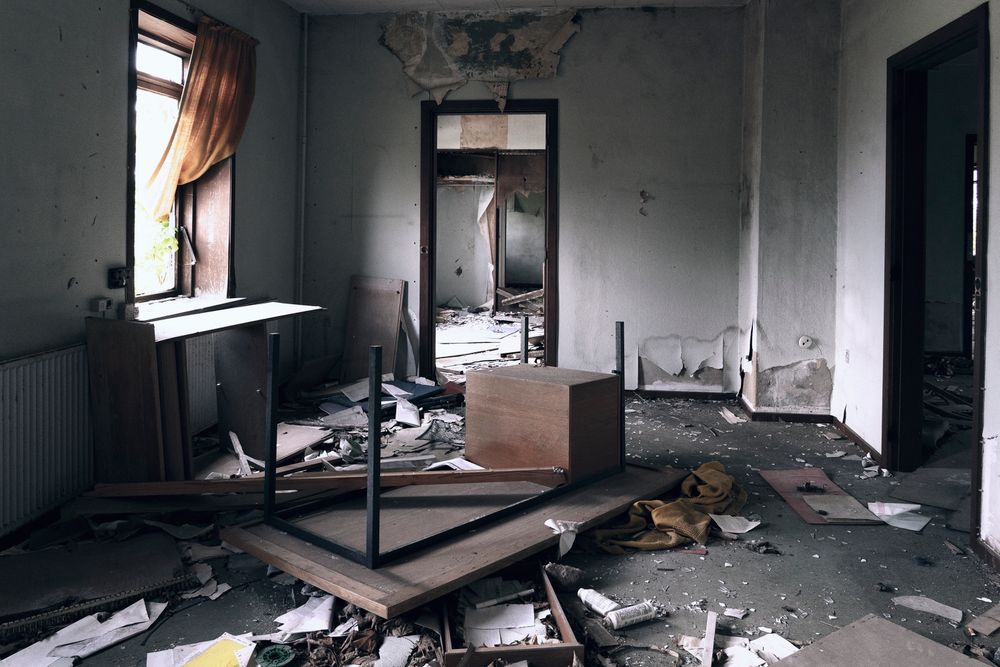
The house began to hollow out. Rooms that had been filled with comfort became empty shells, echoing with our footsteps.
When we reached Lily’s bedroom, I stopped them at the door.
“Nothing in here,” I said.
I had purchased her laptop and her bed, but I left them. Those had been gifts, and gifts cannot be reclaimed without becoming something ugly. I was taking back the things that had been presented as family property, the things that blurred the lines between contribution and theft.
By late afternoon, the house was skeletal. Sunlight streamed through bare windows, illuminating dust motes that seemed to dance in the empty spaces.
I walked to the kitchen counter, the last remaining piece of furniture, and wrote a single letter on plain white paper.
Mom, Dad, and Lily,
Everything I took was mine. Every item was purchased by me, and I have receipts to prove it. Anything that was truly yours is still in the house.
For years, I funded your lives while you called me selfish for wanting a life of my own.
I’m done being your backup plan, your safety net, and your bank account.
Enjoy your trip. I’ll enjoy my life.
Victoria.
I left the letter on the counter with my house key placed carefully on top.
I got into my car and drove away without looking back.
There was nothing left for me there.
I drove for three days, through rolling hills and sprawling flatlands, across state lines and into a new geography. With each mile I put between myself and that hollow house, I felt something release in my chest.
I found a small mountain town where the air was thin and clean and the sky seemed impossibly large. I rented a cabin online without seeing it first, trusting instinct over practicality. When I arrived, it was everything I needed: small, quiet, entirely my own.
The first week was disorienting. I slept in silence. I drank coffee on a porch looking out at nothing but trees. I ate meals by myself and didn’t feel the need to apologize for taking up space.
The peace was interrupted on the second Tuesday, when my phone began to buzz with frantic texts from my mother.
Mom: Victoria, what have you done? The house is empty. Where is everything? Call me right now.
Dad: This is theft. We are on our way to the police station. You have one hour to call us and explain yourself before we file a report.
Lily: I can’t believe you. You ruined our home. Mom is having a breakdown. How could you be so cruel?
The messages kept coming, each one angrier than the last. They called me a thief, a monster, an ungrateful child who had stabbed her family in the back.
I didn’t reply. I had already said everything that needed to be said.
I turned my phone on silent and went for a walk in the cool morning air.
By afternoon, I called a lawyer I had consulted weeks earlier, a specialist in domestic and financial disputes. His name was Bernard, and he had been waiting for this call.
“They’ve already filed a report,” he said calmly. “Detective Miller called an hour ago. I sent him the documentation you provided. All the receipts, all the bank statements, every single purchase with your name attached. The case is closed.”
I felt something in my chest release, a tension I hadn’t even realized I was carrying.
“What does that mean?” I asked.
“It means,” Bernard said, “that there’s nothing they can do. You reclaimed your own property. That’s not a crime. That’s your legal right.”
After we hung up, I sat on my porch and allowed myself to feel the full weight of what I had done.
I had left.
I had taken back what was mine, and I had walked away from the wreckage without looking back.
And there was no legal consequence for that.
There was only freedom.
Three days later, my phone buzzed with a call from Lily.
For a moment, I considered not answering. But I had paid for my freedom once already, and I wasn’t about to shortchange myself by not claiming it fully.
“Hello,” I said, my voice neutral.
“Vicki,” she whispered, and I could hear the tremor in her voice. “We came home to nothing. The house is empty. Mom’s been crying for days. She won’t come out of her room. Dad is just sitting there staring at the wall. You did this.”
“I left what was yours,” I said quietly. “And I took what was mine.”
“But how are we supposed to live?” she cried. “You took the couch, the TV, the refrigerator. That’s everything.”
“The couch I bought when Mom’s back was hurting,” I said, my voice a flat recitation of facts. “The TV I bought because Dad wanted a bigger screen. The refrigerator I purchased with my credit card when the old one died and you all had no money. I have receipts for every single item, Lily. They were never yours to begin with. They were just another loan I was making with no expectation of repayment.”
There was a choked sound on the other end, then her voice cracking as she asked the question I had always known was coming.
“Do you hate me?”
I searched myself for that feeling, looking for anger or resentment. But what I found was something much quieter.
“No,” I said, and it was true. “I don’t hate you. I just stopped financing you.”
I hung up and set my phone on silent.
The months that followed were a slow process of reconstruction. I established routines built around my own needs, not anyone else’s. Morning coffee on the porch. Work that challenged me and paid me well. Evenings spent reading books I had always meant to read.
I made small connections in town. A woman named Sarah at the hiking group who didn’t ask about my past. The librarian who shared my love of mystery novels. A community of people who saw me as a person, not a resource.
I watched my savings account grow for the first time in my adult life. I bought myself a winter coat without guilt. I took a weekend trip to the city just because I wanted to.
I was learning how to be my own companion, and I was discovering that I was good at it.
The letter from my father came on a cold afternoon in late autumn.
I read his angry, slanted handwriting with a detached curiosity. He told me I had made the biggest mistake of my life. He said I had thrown away my family for a pile of furniture. He told me I would regret my choice when I was alone.
He signed it with his name, not “Dad.”
I folded the letter carefully and placed it in a drawer. It was evidence of something important: proof that I had made the right choice.
Nearly a year had passed when I received an email from Lily.
I almost deleted it without reading. I had worked so hard to build this peace, and I was afraid to let anything from my past breach its walls.
But something made me hesitate.
I opened it.
The message was short and written without the usual emojis and exclamation points that had always characterized her words.
Victoria,
I don’t know if you’ll even read this. I don’t blame you if you delete it.
A lot has happened since you left. Mom and Dad are still angry. They bought new furniture on a credit card, and Dad is working part-time as a delivery driver to help pay for it. He hates it.
I had to give up the car. I couldn’t make the payments on my own. I take the bus now. I have two jobs, and for the first time, I’m learning what it means to budget.
Last week my phone broke. My first thought was, I’ll just ask Vicki. Then I remembered. I sat on my bed and cried for an hour.
You were never selfish. You were just tired.
I understand now. I’m sorry it took me so long.
Lily.
I read the email twice, then a third time.
There was no apology asking for forgiveness. No request for money. Just a recognition of truth.
I sat with the email for a long time, feeling neither triumph nor pain.
In the quiet of my own heart, I forgave her. Not for her, but for me. It was a silent, personal act of release, the final ember of resentment turning to ash.
I didn’t reply. My healing didn’t require her validation. My forgiveness didn’t need an audience.
Instead, I moved the email to an archive folder and closed my laptop.
I stood and walked to the window of my cabin, looking out at the mountains. The snow had begun to fall, gentle and quiet, covering everything in white.
A year ago, I had been invisible.
Now, standing in the quiet of my own home, I was simply present.
I was here.
I was whole.
And I was finally, completely, unapologetically mine.
Outside, the mountains held their silence. Inside, I held my peace. And for the first time in my entire life, that was more than enough.
It was everything.

Laura Bennett writes about complicated family dynamics, difficult conversations, and the quiet moments that change everything. Her stories focus on real-life tensions — inheritance disputes, strained marriages, loyalty tests — and the strength people find when they finally speak up. She believes the smallest decisions often carry the biggest consequences.