For nineteen days my brother Thaddeus would not say my name. Not once. He would say “she” and he would say “your sister” and he would say “whoever decided that,” but he would not say Wren, and I understood that to him I had stopped being a person and become a position. That is what a fight over a family cabin will do. It takes three people who used to share a bunk bed under the same tin roof and turns them into three lawyers in three different living rooms, each one rehearsing the speech that will finally make the other two admit they were the selfish one all along.
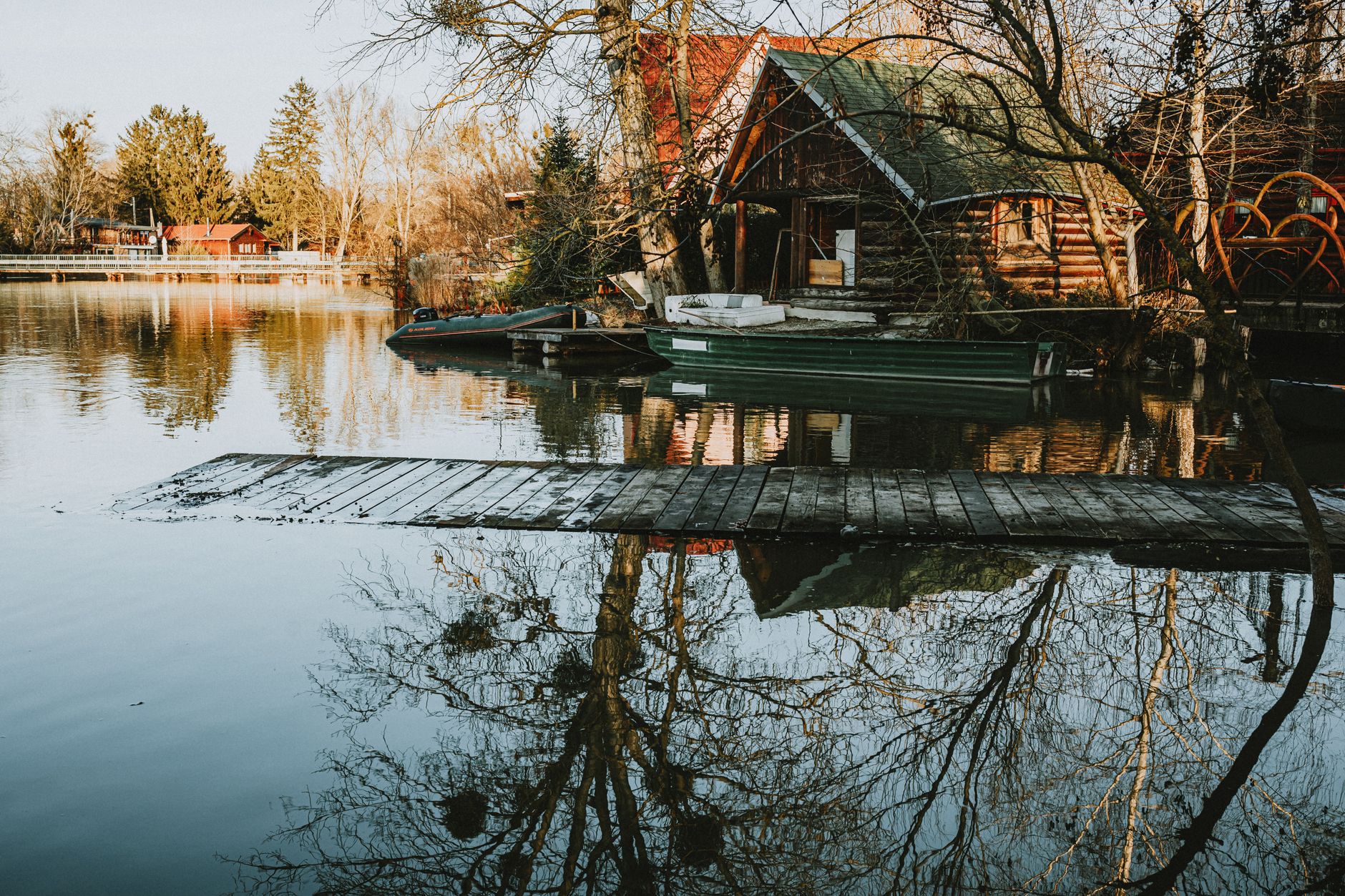
The cabin sits on the north shoulder of Lake Wendaban, outside a town in central Minnesota that you would drive through in ninety seconds with the radio on, a place called Hollis Crossing where the water tower still says HOME OF THE BLUEJAYS in paint that our father helped roll on in 1971. Forty miles of county road, the last six of them gravel, then a mailbox shaped like a walleye that our grandfather welded out of a coffee can and a length of culvert. You turn at the walleye. Everybody in three families has been turning at that walleye for sixty years.
My father, Oren Vask, built the second bedroom onto that cabin with his own two hands the summer I was six, and he died on a Tuesday in March this year at the Hollis Crossing care home with all three of his children in the room and a paper cup of melted lemon ice on the tray table that none of us had the heart to throw away. He was eighty-one. He had been a co-op grain elevator manager for thirty-four years and a Sunday-school superintendent for longer than that, and the last full sentence he said to me, two days before the end, was, “Wren, the dock needs a board on the east side, soft spot, third from the ladder, don’t let your nephew run on it.” That was him. Dying, and worried about a soft board on a dock so a great-grandchild he would never meet would not turn an ankle.
We buried him next to our mother, Lorraine, in the Bethany Lutheran churchyard where the graves all face the lake, and for about four days the three of us were tender with each other in the way that grief makes you tender, all of us saying “Dad would have loved” this and “Dad always said” that. And then the lawyer’s letter came, and the tenderness went out of us like heat out of a cabin when somebody leaves the door open in February.
I want to tell you about my brother and sister first, because if I only tell you about the fight you will think we were bad people, and we were not bad people. We were just three middle-aged children who had each privately decided that we, specifically, were the one who had loved the cabin the most, and that the other two had somehow failed it.
My older brother is Thaddeus Vask, sixty, a heating and cooling man in Brainerd, the responsible one, the one who paid the cabin’s property taxes out of his own pocket for six years when Dad’s pension got thin and never once mentioned it until the fight, when he mentioned it roughly forty times. Thaddeus believed the cabin should be sold. Not because he wanted the money. Because he could not stand the idea of the three of us limping along sharing something none of us could afford to keep up, watching it rot a board at a time, fighting about whose turn it was to fix the septic. “Clean break,” he kept saying. “We sell it, we split it three ways, we stay a family.” He truly thought selling it was how you saved the family, believed it down to the bone.
My younger sister is Marigold, fifty-four, a hospice nurse down in Rochester, the soft one, the one who cried at the reading of the obituary and then cried harder at the reading of the will. Marigold believed the cabin should never, ever be sold, that selling it would be like selling our father’s hands, and she said so in a voice that climbed higher the longer she talked until Thaddeus said the thing he should not have said, which was, “Marigold, you have been up here twice in eleven years, you do not get to be the keeper of the flame.” And that was the first crack, right there, the first real one, and after that the cracks came fast.
And then there is me. Wren Vask Holloway, fifty-seven, the middle one, divorced, a substitute teacher in a district two counties over, the one who actually used the cabin, who drove up every other weekend most of the year, who knew where the spare key hung and which window stuck and how the loons sounded different in October than in June. I believed the cabin should stay in the family and that I should be the one to keep it, because I was the only one keeping it anyway. I believed that quietly and then, when the fight got going, I believed it loudly.
So there it was. Sell it. Never sell it. Give it to me. Three siblings, three answers, and a lake cabin sitting empty on the north shoulder of Lake Wendaban while we tore at each other across forty miles of county road.
The lawyer who read us the will was a woman named Odette Pruss, who had been our father’s attorney for thirty years and had the kind of office in Hollis Crossing where the coffee maker was older than her paralegal. The will itself was simple, almost insultingly simple for the war it started. The house in town went to be sold and the proceeds split. The truck went to Thaddeus. Our mother’s wedding ring went to Marigold. A small savings account split three ways. And the cabin, “Lake Wendaban parcel and all structures thereon,” went to “my three children, Thaddeus, Wren, and Marigold, jointly and equally, to be held in common.”
Jointly and equally. Held in common. The three worst words you can leave to three people who already cannot agree.
“That’s it?” Thaddeus said.
“That is the disposition of the property,” Odette said. “There is one more item.” She took off her reading glasses and folded them and set them on the desk, and I remember thinking she folded them too carefully, like a person buying time. “Your father left a separate instruction regarding the cabin. He was very specific that it not be read today. He wanted it delivered to the three of you together, at the cabin, and not before the first of June.”
“What is it?” Marigold asked.
“I don’t know,” Odette said, and I believed her. “He recorded it. He came in last September and sat in that chair where Wren is sitting and he recorded a message, and he sealed the device in an envelope, and he made me promise on my own mother’s grave that I would not open it and would not let any of you open it until June first, at the cabin, with all three of you present. Those were his terms. I keep my promises to the dead. So will you.”
We did not keep them. Of course we did not keep them. We were too busy fighting to wait until June.
The fight, if you want to know how a thing like this actually goes, does not happen in dramatic scenes. It happens in text messages at eleven at night. It happens in a sister forwarding you an article about lakefront property values with no comment, which is its own kind of comment. It happens in a brother getting a realtor to put a sign at the end of the gravel road before anyone agreed to anything, and your sister driving up forty minutes to pull the sign out of the ground with her bare hands and leave it in the ditch, and the realtor calling you, the middle one, because you are the one who answers the phone. It happens in three people who love the same six acres of pine and water deciding that loving it means controlling it, and that the other two are thieves.
By the middle of May I was not speaking to Thaddeus and Marigold was not speaking to either of us, and a man Thaddeus knew had offered three hundred and ten thousand dollars for the parcel, cash, wanting to tear the cabin down and build something with a three-car garage and a boathouse, and Thaddeus wanted to take it, and I had hired Odette Pruss myself, my own father’s lawyer, to file something to stop him, which when I think about it now makes me want to lie down on the floor. I hired my dead father’s lawyer to fight my own brother over my dead father’s cabin. Odette took the meeting. She did not take my money. She said, “Wren, sit down,” and she said, “June first is eleven days away,” and she said, “I am asking you, as the woman who held your father’s hand the day he made this recording, to wait the eleven days.” And I, God forgive me, said, “I can’t, he could sell it before then,” and she looked at me for a long moment and said, “Your father knew exactly which one of you would say that.”
I did not understand what she meant. I understood it later. I understood it completely.
We waited the eleven days. Not because we grew up. Because Marigold’s lawyer and my position and Thaddeus’s buyer all got tangled in the kind of paperwork that does not move fast in a county where the recorder’s office closes at noon on Fridays, and the upshot was that the soonest anything could happen was after the first of June anyway, so Odette, who I think engineered this on purpose, sent all three of us the same letter on the same day. June first. The cabin. Ten in the morning. All three of you, or the recording stays sealed and the estate stays frozen and none of you gets anything, those were your father’s terms and I intend to honor them.
So on the first of June, a cool gray morning with the lake the color of an old nickel, three cars came down the gravel road and turned at the walleye mailbox, one after another, none of us willing to be the last to arrive and none of us willing to ride together.
I had not been inside the cabin in two months. The fight had made it feel radioactive, a place I owned a third of and could not enter. It smelled the way it always smelled, woodsmoke and lake and the cedar Dad lined the closet with, and the smell undid me a little before I even got my coat off. The three of us stood in that front room not looking at each other. Marigold had been crying in her car, I could tell. Thaddeus had a folder under his arm, his folder, the one with the buyer’s offer in it, because even now, even here, he had brought his evidence.
Odette Pruss arrived last, on purpose I think, and she did not sit. She set a small digital recorder on the kitchen table, the cheap kind you buy at the drugstore, and she said, “I have not heard this. Your father’s instruction was that I press play and leave the room. So that is what I am going to do. I’ll be on the porch.” And she pressed the button and walked out, and the screen door slapped shut behind her, and then our father’s voice came out of that little machine into the cabin he built, and the three of us stood frozen like children caught at something.
“Well,” he said. And then there was a long pause, and a sound I knew, the sound of him settling into a chair, the small grunt he made. “Well, if you’re hearing this, then I’m gone, and the three of you are standing in the cabin, which means you waited like Odette made you, so good. Or you fought her about it first, which” and here he laughed, an old man’s dry laugh, “which I would put money on.”
Marigold made a sound. Thaddeus put his folder down on the table very slowly, like it had gotten heavy.
“I’m going to tell you why I left the cabin to the three of you the way I did,” Dad’s voice went on. “Jointly. Equally. Held in common. I know what those words started. I knew it the day I signed it. Odette told me, she said, Oren, you are lighting a fire, and I said, I know I am, Odette, that’s the point.”
I looked at Thaddeus. He was staring at the recorder like it might bite him.
“Here’s what I know about my children,” Dad said. “Thaddeus, you’ll want to sell it. You’ll dress it up as protecting everybody, and you’ll half believe that, but the truth is you carry things, son. You’ve carried this family on your back since you were nineteen and your mother got sick the first time and I fell apart. You pay the tax on this place. You think I didn’t know. You’d sell it because then nobody could ask you to carry it anymore, and you are so tired, and I never once told you to put it down. I’m telling you now. Put it down.”
I heard my brother breathe in, a ragged pull of air, and when I looked at him there were tears running flat down a sixty-year-old man’s face and he was not wiping them.
“Marigold,” Dad’s voice went on, gentle now, “you’ll say never sell it, never, and you’ll mean it with your whole heart, and you’ll also know in that same heart that you can’t be here, baby, your work is two hundred miles south and you give everything you have to dying strangers because somebody has to and God made you the one who can. You’d keep this place out of love and then never come, and it would sit here being a monument to a guilt you don’t deserve to carry. You loved your mother at the end better than any of us. You don’t owe this cabin a thing.”
Marigold sat down hard on the arm of the old plaid couch, the one Dad refused to throw out, and put both hands over her mouth.
“And Wren.” My own name in my father’s voice. I was not ready for it. “My stubborn middle girl. You’ll want to keep it, and you’ll want to be the one, and you’ll be right that you’ve been the only one tending it. You’ll also turn it into a thing you have to defend, and you’ll spend the rest of your life defending it against your own brother and sister, and you’ll win, and you’ll be alone up here on a dock you fixed yourself with nobody to fix it for. I have watched you do this since you were a girl. You love a thing by holding it so tight that nobody else can touch it. Loosen your hands, Wren. Loosen your hands.”
I did not sit down. I could not. I stood in the middle of my father’s front room and let him take me apart from inside a drugstore recorder.
“So here’s my condition,” Dad said, and his voice changed, firmed up, the Sunday-school superintendent coming into it, the man who ran a meeting. “I’m not leaving the cabin to whichever of you wants it most. I thought about that. The one who wants it most is the one who’d ruin it. I’m leaving it to all three of you, held in common, and here is the condition I’m attaching to your keeping it, and Odette has it in writing too so don’t think you can wiggle out.”
The room did not breathe.
“You may keep this cabin,” our father said, “only if all three of you sign an agreement to come here together, all three, the same three days every single year, the second weekend of August, the way we used to before your mother died and we all scattered. Not to fix it. Not to manage it. To be here. Together. Three days. If any one of you will not come, the deal is off and the cabin gets sold and the money goes to the Bethany Lutheran food shelf, every dollar, and none of you gets a cent. That’s the condition. The cabin was never the inheritance. You three were. The cabin is just the hook I’m using to drag you back into the same room once a year because I will not be here to do it anymore, and Lord knows you won’t do it on your own.”
I heard Thaddeus laugh, a wet broken laugh, the laugh of a man who has just been beaten at chess by someone who has been dead three months.
“I know you’ve been fighting,” Dad said. “Odette won’t have told me, she’s a vault, but I know my children. You’ve been fighting since the day I died, and you’ve probably spent money fighting, and you’ve probably said things across this gap that you can’t take back yet. So here’s the rest of it. The first time you come, this August, you don’t fix anything and you don’t decide anything and you don’t talk about money for three days. You fish off the east side of the dock, mind that third board, it’s soft. You eat at the Crossing Cafe and you let Imelda put too much gravy on it. You go to the late service at Bethany and you sit in the pew with the brass plate that says Lorraine Vask, your mother’s pew, the three of you in a row. And on the Saturday night you build a fire down at the water and you sit at it until it burns down, and you don’t get up until one of you says you’re sorry and the other two say it back. I don’t care who goes first. Somebody goes first. That’s the condition inside the condition. That’s the one that matters.”
There was a long pause then. The lake slapped the rocks outside. The screen door did not open; Odette stayed on the porch like she promised.
“I built this place for you to be a family in,” my father said, quieter now, almost gone. “Not to own. To be a family in. I’m sorry I had to die to make you see it. Take care of each other. Mind the soft board. I love all three of you the same, I always have, and the one who needed to hear that most is the one who never believed it. You know which one you are.” A pause. “All right. That’s all I’ve got. Wren, get the lights on the dock fixed before the ice. Thaddeus, put it down, son. Marigold, come home sometimes. I’m going to go now. Bye, kids.”
And the recording ended, just like that, a small click and then the hiss of nothing, and my father was gone for the second time in three months, and the three of us stood in his cabin in pieces.
I do not know how long none of us moved. Long enough that Odette knocked once on the screen door frame and asked, softly, if we needed more time, and Thaddeus said, in a voice I had not heard from my brother since we were boys, “Yeah. We need more time.” And she nodded and went back to the porch.
It was Marigold who went first. Of course it was Marigold. She stood up off the arm of the couch and she crossed the room to Thaddeus and she said, “I’m sorry. I’m sorry I said you wanted to sell it for the money. You never wanted the money. You wanted to stop being tired.” And Thaddeus, sixty years old, a heating and cooling man who had not cried in front of me since the Carter administration, folded down over our little sister and held onto her and said into her hair, “I’m sorry I said you don’t get to be the keeper of the flame. You loved Mom the best. You did. I was so jealous of how you loved her at the end. I couldn’t do it. I couldn’t be in the room.”
And then they both looked at me, and I was the one who had hired our dead father’s lawyer to fight my own brother, I was the one Dad called stubborn, I was the one who loves a thing by holding it so tight nobody else can touch it, and I will tell you, the word would not come. It is the hardest word there is for a person built like me. I stood there with my jaw working and nothing coming out, and finally Thaddeus, my big brother, reached out one arm and said, “Wren. Get over here. He told you to loosen your hands. Loosen ’em.” And I did. I let go of being right, which I had been holding so hard my whole life that I did not know it had a grip on me, and I walked into my brother and sister and I said the word, I said I’m sorry, I said it about forty things at once, and they said it back, and the three of us stood in the front room of a cabin our father built and we held each other up because none of us could have stood on our own.
We signed the agreement that afternoon, all three of us, at the kitchen table where the recorder still sat. Odette had it drawn up exactly the way Dad described, the second weekend of August, all three or none, and the food shelf as the heir if we failed. We signed it and Odette notarized it and then she did something I will never forget. She took an envelope out of her bag, a sealed one, and she set it in front of us, and she said, “Your father left one more thing. He said to give you this only if you signed. Only if. He said if you fought it and let the cabin go to the food shelf, I was to burn this unopened.” And inside was a single sheet of paper in our father’s hand, and it was not a will and it was not money. It was a list. It was forty-some years of the second weekend of August, written out by year, every year of our childhood and the years after, and beside each year he had written one thing that happened. 1974, Marigold catches her first northern, screams the whole lake awake. 1981, Thaddeus and the Pelkey boy flip the canoe, both fine, Thaddeus blames the wind. 1989, Wren reads the whole three days, won’t fish, says the loons are enough. 1996, Lorraine and the girls can two hundred jars of pickles, the cabin smells like dill till October. And on, and on, down the years, his small even handwriting, until the last entry, which was the year our mother died, and beside it he had written only, We came anyway. It was hard. We came anyway.
We have come anyway, every August since.
That was three years ago now. I am fifty-seven, no, I am sixty, time has gone on while I have been telling you this, and I want you to know how it turned out, because Dad was right that the audience for a story like this deserves the finished thing.
We kept the cabin. We did not sell it. The man who wanted to put up the three-car garage built it on a different lake and good luck to him. Thaddeus put it down, the carrying, he actually put it down. He still does the furnace every fall because that is who he is, but he lets Marigold pay for half the propane now and he lets me argue with him about it and he laughs instead of seething. Marigold comes home sometimes, more than sometimes, she took a position part-time at a hospice up in Brainerd so she could be ninety minutes from the lake instead of two hundred miles, and she says the dying people up north are no different from the dying people down south, they all just want somebody in the room, which is the whole thing Dad was trying to teach us with a cabin and a condition.
And me. I loosened my hands. It is the hardest thing I have ever done and I do it again every August and every time it gets a little easier. I fixed the dock lights before the ice that first fall, both me and Thaddeus out there with headlamps and the loons going crazy at us, and I replaced the soft board, third from the ladder, east side, so my great-niece Junessa, who is four now and runs everywhere because she does not know how to do anything else, will not turn an ankle. I think about my father every single time I walk out on that dock and feel that one board solid under my foot where it used to give. He fixed that board from beyond the grave. He fixed all three of us from beyond the grave, with a drugstore recorder and a condition and a list of Augusts and the patience to know exactly which lie each of his children would tell.
The second weekend of this past August, the three of us sat at the fire down by the water on the Saturday night, the way the condition says, and we let it burn down, and none of us got up. Junessa was asleep up at the cabin with Marigold’s husband watching her. The lake was black and the sky had the whole Milky Way spilled across it the way it only does forty miles from the nearest town. And Thaddeus, poking the fire with a stick the way Dad used to, said out of nowhere, “You know what he did, don’t you. He didn’t leave us a cabin. He left us each other and made us think it was a cabin so we’d be too busy fighting over the cabin to refuse the each other.” And Marigold said, “Took me three years to figure that out.” And I said, “Took me sixty.” And we sat there, three old people at a fire their father lit before he died, and nobody got up, and nobody needed to say sorry that year because there was nothing left to be sorry for, and that, I think, is the proof that the condition worked.
If you have a place like our cabin, a place with a soft board and a list of Augusts and people you have stopped saying sorry to, I am going to tell you the one thing my father spent his whole death teaching me. The thing is not the place. It was never the place. The place is just the hook. Loosen your hands. Go to the lake. Build the fire. Somebody goes first.
He left us one cabin and one condition, and the condition was the inheritance, and the cabin was just how he got us back in the room. I would give every acre of that shoreline back to have him at the fire with us. But he knew I’d say that. He knew exactly which one of us would say that. Stubborn middle girl. Loosen your hands.
We come anyway. Every August. It’s hard sometimes. We come anyway.

Lila Hart is a dedicated Digital Archivist and Research Specialist with a keen eye for preserving and curating meaningful content. At TheArchivists, she specializes in organizing and managing digital archives, ensuring that valuable stories and historical moments are accessible for generations to come.
Lila earned her degree in History and Archival Studies from the University of Edinburgh, where she cultivated her passion for documenting the past and preserving cultural heritage. Her expertise lies in combining traditional archival techniques with modern digital tools, allowing her to create comprehensive and engaging collections that resonate with audiences worldwide.
At TheArchivists, Lila is known for her meticulous attention to detail and her ability to uncover hidden gems within extensive archives. Her work is praised for its depth, authenticity, and contribution to the preservation of knowledge in the digital age.
Driven by a commitment to preserving stories that matter, Lila is passionate about exploring the intersection of history and technology. Her goal is to ensure that every piece of content she handles reflects the richness of human experiences and remains a source of inspiration for years to come.