At exactly 1:58 a.m., my phone rang.
I had been asleep for maybe an hour, the television still murmuring in the other room because I never could remember to turn it off before bed anymore. My late wife Carol used to do that for me. Three years gone and I still expected to hear her footsteps in the hallway, still expected her hand on my shoulder telling me to wake up, the television’s talking again.
The phone screen lit up the dark bedroom. Lily.
My granddaughter did not call me at night. She barely called me at all, not because she did not love me, but because eight-year-olds do not generally operate their own phone calls unless something is wrong. I answered before the second ring finished.
Grandpa, she whispered. I feel so hot.
Four words. They landed in my chest like stones dropped into still water, and the ripples did not stop for a long time.
Lily, I said, sitting up so fast my back protested. Where’s your mom? Where’s your dad?
Florida, she said. For Mason’s birthday.
I sat with that for a second, trying to make the pieces fit. Mason’s birthday was not for another two weeks. I had marked it on my kitchen calendar myself, the way I marked all the dates that mattered to me now that I had grandchildren to track instead of just doctor’s appointments and oil changes.
Baby, are you alone in the house, I asked.
There was a pause that told me more than any answer could have. Then a small, miserable yes.
I want you to listen to me very carefully, I said, already moving, already finding my shoes in the dark with my free hand. I am getting in the car right now. I am coming to you. Can you unlock the back door for me, the one by the kitchen?
I can’t get up, she said. My legs feel weird.
That sentence did something to me that I am not sure I can fully describe even now, a year and some months removed from it. It was not panic exactly. Panic is loud and messy and it makes you fumble. This was colder than that. This was the particular, focused clarity that I imagine soldiers describe, the kind where the whole world narrows down to the next necessary action and nothing else exists.
Okay, I said. Stay where you are. Is Mason with you?
Another pause. I don’t know, she said. I haven’t seen him.
I want you to try something for me, I said, my voice staying level even though my hands were shaking as I grabbed my keys off the hook by the door, the same hook Carol had installed thirty years ago because she said I would lose my head if it were not attached. Can you call out for him? Just his name, as loud as you can manage.
I heard her try. Her voice was thready and weak, nothing like the bright, chattering voice she usually had, the one that filled my kitchen on Sunday mornings with questions about dinosaurs and why the sky was blue and whether dogs dreamed in color.
Nothing answered her.
I called 911 from the car, my phone propped against the dashboard, my hands doing eighty on roads that deserved fifty-five. I gave the dispatcher the address from memory, the address I had driven to a hundred times for birthday parties and Christmas mornings and the ordinary Tuesday dinners that had become less and less frequent over the past year, ever since Brian’s promotion, ever since things had started to feel different between us in ways I had been too slow, or too hopeful, or too afraid, to name.
I want to back up, because none of this makes sense without understanding what came before it.
My son Brian married Marissa nine years ago. She was sharp and capable and ambitious, the kind of woman who could organize a dinner party and a corporate merger with equal precision, and for a long time I admired that about her. They had Mason first, a sturdy, watchful boy who grew into a sturdy, watchful ten-year-old. Then, when Mason was four, they adopted Lily.
I remember the day they brought her home. Carol cried in the kitchen, the good kind of crying, and said that little girl is going to know more love than she knows what to do with. For a while, it seemed true. Brian doted on her. Marissa posted photographs, dressed her in matching outfits with Mason, told everyone at church how blessed they felt.
But adoption is not a single act of love. It is a thousand acts of love, repeated daily, for the rest of your life, and somewhere along the way, I think Marissa stopped repeating hers.
It started small. I noticed it the way you notice a crack in a foundation, a hairline thing that you tell yourself is nothing, that every house settles a little. Lily’s school photos stopped appearing on the mantel next to Mason’s. At family dinners, Marissa would correct Lily’s manners with a sharpness she never used on her own son. When Lily struggled in second grade with reading, Marissa called her slow in front of the whole table, including Lily, and I remember Carol’s hand finding mine under the tablecloth, squeezing hard, the silent signal we had developed over forty years of marriage that meant we will talk about this later, not here.
We talked about it later plenty of times. We never quite knew what to do with what we saw, because nothing was dramatic enough on its own to justify the kind of intervention that tears a family apart. A sharp word here. A favored seat at the table there. The kind of casual cruelty that hides inside normal family noise until you stack enough of it up and realize you are looking at a pattern, not a series of accidents.
Carol passed eighteen months before that February call. In her final year, when she knew her time was limited, she made some changes to our estate that she did not fully explain to me until she was certain of them. She set up a trust, locked until adulthood, splitting a college fund and a modest inheritance evenly between Mason and Lily. Equal shares. Untouchable by their parents until the children turned eighteen.
I think she did it because some part of her sensed what I had been too slow to name. She told me once, near the end, when the morphine made her honest in a way she rarely allowed herself to be: that little girl needs something nobody can take away from her.
I did not know, when Carol made those arrangements, that they would become the spark for everything that followed. I did not know that somewhere in Marissa’s mind, a switch had flipped, that she had begun to see Lily not as a daughter but as a drain, a liability, a mistake dressed up as a moral accomplishment that Brian had made to look good after his promotion.
I did not know any of that until the night my phone rang at 1:58 a.m.
The drive to their house took eleven minutes. It felt like eleven years.
I called the dispatcher back twice for updates, and twice she told me units were en route, stay on the line if you can, sir. I kept Lily talking the whole time on a second call I had going on speaker, the dispatcher’s voice in one ear and my granddaughter’s frightened breathing in the other.
Tell me about your stuffed rabbit, I said, because I had read somewhere, in some parenting magazine Carol used to leave around the house, that you keep a frightened child anchored by asking about something familiar, something safe.
He’s on my bed, Lily mumbled. His name is Buttons. Mason says that’s a baby name but I don’t care.
Good, I said. Buttons is a fine name. You hold onto him when I get there, okay?
I can’t reach him, she whispered, and that sentence nearly took the wheel out of my hands.
When I pulled into the driveway, the house was dark except for a single light over the stove, the kind people leave on as a habit rather than a choice. The garage door was up. No cars inside. Suitcases were gone from where they usually sat by the laundry room, which told me this had not been a sudden departure. This had been planned, packed, executed.
I went through the back door, the one Lily had not been able to unlock, and found it already standing open a few inches, which told me the police might already have made contact, or someone had left in enough of a hurry not to seal it properly. I called Lily’s name into the dark house and heard a faint, cracked answer from upstairs.
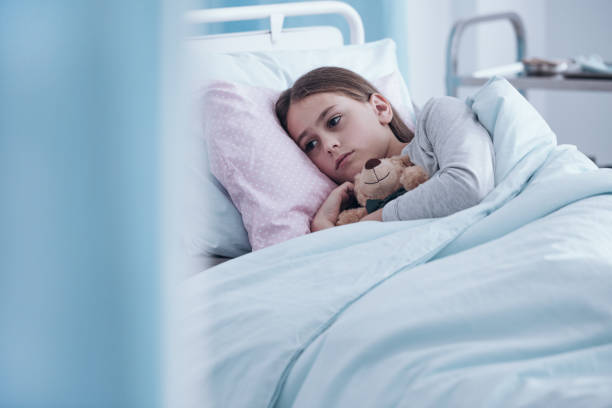
I found her in her bed, the covers twisted around her small body, her face flushed an alarming shade of red, sweat darkening the hair at her temples. Her eyes were glassy, unfocused in the way that terrifies any parent or grandparent who has ever watched a child run a serious fever.
Grandpa, she said, and that one word held more relief than I have ever heard packed into a single syllable.
I’m here, I said, scooping her up, blanket and all, feeling the heat radiating off her small body through the fabric. I’m here, baby. I’ve got you.
That was when I heard the knocking. Not at the front door. From inside the house, muffled, rhythmic, desperate.
I followed the sound down the hallway to the linen closet outside the bathroom, and when I pulled the door open, Mason tumbled out into my arms, his face streaked with tears he had clearly been trying not to let fall, his ten-year-old composure finally breaking now that someone had come.
I heard them, he said, his voice raw. I heard what they said. I tried to stop them.
The paramedics arrived ninety seconds later. The police arrived right behind them. What followed was the blur of lights and questions and the particular efficient chaos of professionals doing their jobs while a grandfather stands uselessly to the side, wanting only to hold both children and never let go.
At the hospital, Lily was diagnosed with a severe fever exacerbated by dehydration and an unidentified sedative in her bloodstream, something the toxicology screen would later confirm as an over-the-counter sleep aid, crushed and mixed into a glass of juice. Mason had been locked in that closet for nearly six hours, no food, no water, nothing but his tablet, which he had used to film everything he could through the cracked door before the battery died.
I called Brian first. I needed to hear his voice, needed some explanation, some thread of sanity to hold onto in a night that had none.
That is when Marissa picked up instead, and the conversation that followed is the one that changed everything that came after.
I said, “What did you just say?”
I’d asked because she had just told me, in a voice flattened by exhaustion or indifference or both, that those weren’t our children anymore. That she and Brian had signed temporary placement papers the week before. That Lily’s adoption had always been too much for the family, and that Mason had behavioral problems because of her, and that they had simply been waiting for an agency to come collect them.
The police officer beside me in the hospital hallway frowned and asked what agency. I repeated the question into the phone. Marissa did not answer.
Brian came on the line, his voice tight in a way I recognized from his childhood, the voice he used when he had broken something and was trying to explain it before I saw the damage myself.
Dad, don’t make this worse, he said. We had a plan.
A plan, I said. You drugged Lily and locked Mason in a closet.
He wasn’t locked, Brian said quickly.
And Mason, sitting on the hospital bed beside me with a blanket around his thin shoulders, looked up and said, quietly but clearly enough for the officer to hear, yes, I was.
That single sentence from a ten-year-old changed the entire shape of the night. The officer’s posture shifted. His pen started moving faster.
The call ended abruptly when Marissa grabbed the phone from Brian and hissed, you have no idea what that girl has cost us, before the line went dead.
The police took Mason’s tablet to be charged so they could review what was on it. While we waited, a child services caseworker arrived, along with a hospital social worker, both of them moving with the practiced gentleness of people who had seen too many nights like this one. I sat between the two children, Lily with an IV taped to her small arm, Mason rigid and watchful beside her, and I told myself that as long as I did not move, nothing else bad could happen to them. It was not a rational thought. Grief and fear rarely are.
Lily slept fitfully, her fever finally beginning to break under the hospital’s careful management. Mason did not sleep at all. He kept his eyes on the door the entire night, the way a much older person watches for danger after they have learned, the hard way, that danger does not always knock.
When the tablet finally powered back on, an officer sat with us while Mason pulled up the video.
It was shaky footage, filmed from behind the cracked closet door, the angle low and unsteady, a child’s hand trying to hold a camera steady while terrified. Brian and Marissa stood in the kitchen below, suitcases already lined up by the garage entrance. Lily could be heard crying somewhere off camera, her voice small and confused.
I’m not losing another vacation because of her, Marissa said on the recording, her tone the same clipped efficiency she might have used discussing a missed flight connection.
She has a fever, Brian said, sounding less like a parent and more like a man reading a complaint off a checklist.
Then give her the medicine, Marissa snapped. She’ll sleep. Your father checks his phone every night. If she calls him, he’ll handle it.
I had to pause the recording there, my hands not quite steady. The officer beside me said nothing, just waited, his jaw tight.
We resumed. The conversation in the video shifted, and that was when the second twist arrived, the one that has stayed lodged in my chest ever since.
Brian asked, what about Mason?
Marissa’s voice, when it answered, had gone colder still. He knows too much.
On the recording, Mason’s breathing audibly changed, a child trying not to make a sound while the adults who were supposed to protect him discussed him like an inconvenience to be managed.
Brian’s voice dropped. He’s my son.
And she isn’t my daughter, Marissa said. But you chose her adoption to look noble after your promotion. Now your little charity case is ruining this family.
From somewhere down the hallway in the recording, Lily’s weak voice drifted in. Mommy, please don’t go.
Marissa walked out of frame. A second later, Lily cried out, a short, startled sound, and the recording captured the front door closing, the distinct double-beep of a car being unlocked, and then nothing but Mason’s own ragged breathing as the tablet’s battery finally gave out, cutting off before he could send what he had recorded to anyone who might help.
The officer exhaled slowly. We need warrants, he said.
By sunrise, Brian and Marissa were located at the Orlando airport, having indeed made it to Florida, though without either child. They had flown down alone, posted old photographs to make it appear Mason was celebrating his birthday with them early, and told relatives that Lily was staying with an aunt for the week. There was no aunt watching Lily. There was no agency. There had never been any temporary placement paperwork beyond a single fabricated document Marissa had typed up herself and left on the kitchen counter, the note I would find later that night, the one that told me, in Marissa’s careful handwriting, not to believe whatever the children said if I came looking, that Lily was prone to dramatics and Mason had been coached to exaggerate.
The whole plan, once it was laid bare in interview rooms and court filings, amounted to this: abandon both children long enough to manufacture a crisis, frame Lily as unstable and difficult, and use that manufactured instability to argue, eventually, that the adoption itself had been a mistake that the family could not be expected to sustain. Whether they intended for Lily to actually be harmed, or whether they were simply reckless enough not to care, became a question for the courts. But intent mattered less to me than the plain, undeniable fact: my granddaughter had been drugged and abandoned with a dangerous fever, and my grandson had been locked in a closet for knowing the truth.
Brian tried, in his interview, to claim he had been pressured into it, that Marissa had worn him down over months until he stopped fighting her. He cried. He said he never meant for Lily to actually get hurt, only for things to look bad enough that someone, somewhere, might finally agree that the adoption had been too much.
But Mason’s video told a different story than the one Brian wanted to tell. So did the medicine bottle, found in the kitchen trash with Lily’s small fingerprints conspicuously absent from it. So did the note. And so did Lily herself, when she woke the next afternoon in her hospital bed, blinked up at the fluorescent lights, found me sitting beside her, and asked the nurse in a small voice, am I still allowed to stay with Grandpa?
I broke completely in that moment, in a way I had not allowed myself to break even during the worst of the night before. I held her hand and told her, baby, you are not going anywhere without me.
The weeks that followed were ugly in the particular way that family tragedies become ugly once they enter the legal system. There were emergency custody hearings. There were reporters, somehow, who had gotten wind of the story and wanted comment. There were relatives on Marissa’s side who called the whole thing a misunderstanding being blown out of proportion, who said we were destroying a mother over one mistake.
One mistake. As if leaving an eight-year-old burning with fever in an empty house was a single error rather than the culmination of years of small cruelties finally allowed to run unchecked. As if locking a ten-year-old in a closet for six hours because he overheard the truth was a momentary lapse rather than a decision made with full clarity. As if writing a note instructing me not to believe my own grandchildren was anything other than premeditation dressed up in the bored, efficient language Marissa used for everything in her life.
But the judge believed the children. The judge believed the video, the medicine bottle, the note, the testimony of the responding officers and the hospital staff. Brian and Marissa were charged with child endangerment and neglect, among other things the lawyers explained to me in terms I mostly understood and mostly did not want to. The children were placed with me on an emergency basis immediately, and after months of evaluations, hearings, and the slow grinding machinery of family court, I was granted permanent legal guardianship of both of them.
Lily recovered from the fever within days. The rest of it took much longer. For months afterward, she insisted on sleeping with a nightlight and kept a thermometer on her nightstand, checking her own temperature obsessively before bed, as though she could prevent the night from ever happening again through sheer vigilance. Mason refused to go near closets of any kind, would flinch if a door clicked shut too firmly, and started hiding small amounts of food in his backpack, just in case, he told me once, his voice carefully casual in the way children’s voices get when they are trying not to sound as frightened as they feel.
Healing did not arrive the way it does in the movies, in a single cathartic scene with swelling music. It arrived in fragments. In pancakes left half-eaten because Lily still struggled some mornings to trust that breakfast would simply be there, no conditions attached. In two a.m. nightmares that required me to sit on the edge of a small bed and just be present until the shaking stopped. In school meetings and therapy appointments and small, hard-won victories that nobody outside our house would have noticed but that felt, to me, like watching two children slowly remember how to be children again.
The first time Lily laughed again, really laughed, the deep unguarded kind, it was because Mason had put whipped cream on his own nose at breakfast one Saturday morning just to make her smile. The sound of it, bursting out of her after months of careful quiet, nearly brought me to my knees right there at the kitchen counter.
The first time Mason slept through an entire night without waking, I found Lily’s stuffed rabbit, Buttons, tucked beside his pillow in the morning. She had put it there, she told me, to guard him. Eight years old, and already understanding instinctively what it means to stand watch over someone you love.
A year later, on Mason’s actual birthday this time, not the manufactured excuse for abandonment that February night had been, we did not go anywhere. We stayed home. I baked a cake that leaned badly to one side because I have never been much of a baker and Carol always handled that part of our lives. Lily decorated it with what could generously be called an enthusiastic excess of sprinkles. Mason took one look at the lopsided, over-sprinkled result and declared it perfect, and I believed him, because by then I understood that perfect had stopped meaning flawless in our house and started meaning ours.
That night, at exactly 1:58 a.m., I woke up suddenly, my body apparently still trained to that particular hour, still braced for the worst.
But there was no phone ringing. No whisper. No fear threading through the dark house. Just the quiet, ordinary sound of two children sleeping safely down the hall, their doors cracked open the way they both still preferred, a small night light glowing steady in the space between their rooms.
I got up anyway, the way you do when old habits outlast the danger that created them, and walked to the kitchen for a glass of water. On the counter, in the same spot where that terrible note had once waited for me, was a new piece of paper. Purple marker, Lily’s careful, looping eight-year-old handwriting, the kind that still mixes up its capital letters here and there.
Grandpa, thank you for coming when I called.
I still have that note. I keep it folded in my wallet now, soft at the creases from being unfolded and refolded more times than I could count, because it reminds me of something I want to carry with me for whatever years I have left.
Family is not always the people who pack suitcases and leave you behind to manage the wreckage of their choices. Sometimes family is simply the person who answers the phone in the dark, who gets in the car before he has finished thinking it through, who arrives in time, and who keeps arriving, every single day after, long after the crisis has passed and all that is left is the slow, ordinary work of loving two children back to themselves.

Sophia Rivers is an experienced News Content Editor with a sharp eye for detail and a passion for delivering accurate and engaging news stories. At TheArchivists, she specializes in curating, editing, and presenting news content that informs and resonates with a global audience.
Sophia holds a degree in Journalism from the University of Toronto, where she developed her skills in news reporting, media ethics, and digital journalism. Her expertise lies in identifying key stories, crafting compelling narratives, and ensuring journalistic integrity in every piece she edits.
Known for her precision and dedication to the truth, Sophia thrives in the fast-paced world of news editing. At TheArchivists, she focuses on producing high-quality news content that keeps readers informed while maintaining a balanced and insightful perspective.
With a commitment to delivering impactful journalism, Sophia is passionate about bringing clarity to complex issues and amplifying voices that matter. Her work reflects her belief in the power of news to shape conversations and inspire change.