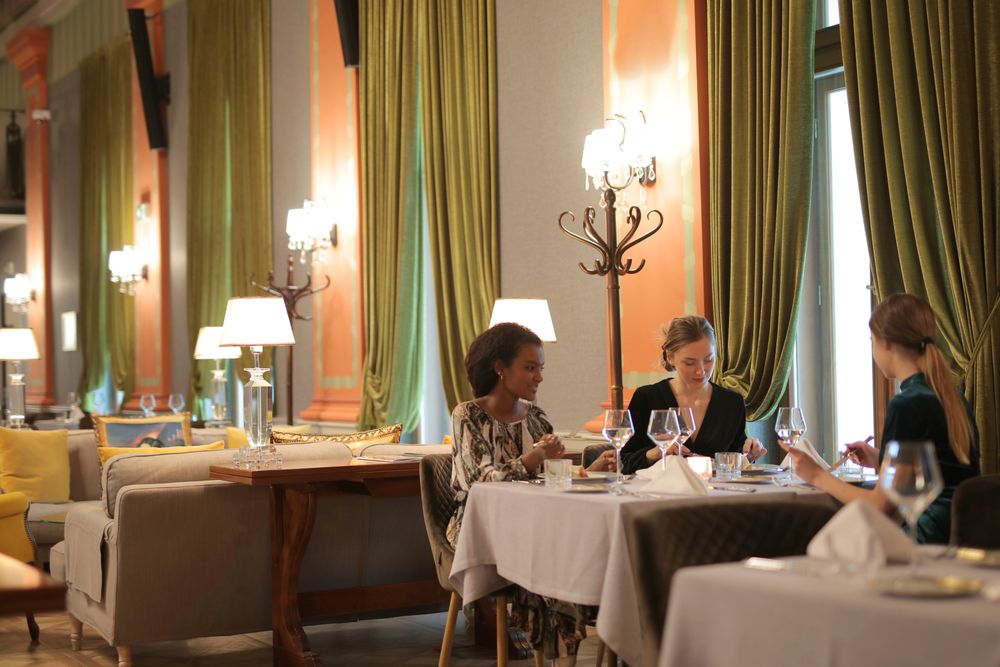
My sister laughed in front of the whole ballroom and called my husband the waiter like she had finally found the perfect way to humiliate me.
My mother smiled faintly, my ex-fiance leaned back in his chair, and everyone waited for me to shrink the way I always had.
Then I noticed the Sterling name engraved on the service folder near Benjamin’s hand, the Ferrari keys in Ethan’s fist, and the hotel security chief standing just a little too close to the doors.
That was when I realized Madison had not stolen a better life from me.
She had walked straight into a room where the truth already had a reservation.
My name is Emma Caldwell. I am thirty-four years old, and for most of my life, my family treated me like the sister who was easier to correct than protect.
Madison was the pretty one. The polished one. The daughter who knew which dress to wear, which fork to lift, which man would photograph well beside her at a holiday party. I was the practical one. The one who remembered birthdays, fixed Mom’s phone settings, picked up pharmacy refills, and sat at the kitchen table with unpaid bills while everyone else acted like responsibility was a personality flaw.
Madison corrected me the way some people adjust crooked picture frames. My hair. My shoes. My job. My relationships. And my mother let her do it because in our family, cruelty sounded more acceptable when it came wrapped in concern.
“Emma, honey, Madison is only trying to help.” That was my mother’s favorite sentence. If Madison told me my dress made me look tired, she was helping. If she laughed because I bought store-brand coffee, she was teasing. But if I answered back, I was bitter. If I cried, I was sensitive. That is how a family trains one daughter to speak and the other to absorb.
We grew up in Oak Brook, Illinois, in a house with a circular driveway and a kitchen my mother remodeled twice before I turned twenty-five. My father, Martin Caldwell, owned a regional insurance brokerage. My mother, Elaine, managed image the way other women managed budgets. Everything had a place. The silver candlesticks. The family reputation. Madison had a place too, front and center. I had a place beside the sink, helping clear plates.
It was not that my parents hated me. That would have been easier to understand. They simply liked me best when I was useful and quiet. Madison gave them shine. I gave them reliability. Shine got photographed. Reliability got called when something broke.
By thirty, I had built a decent life in Chicago, working as operations manager for a nonprofit that helped community health clinics secure grants and manage outreach events. My mother called it sweet little event work. Madison called it not exactly a career, but good for Emma. I stopped correcting them because correction requires the listener to believe you are worth updating.
Then Ethan Whitmore entered my life. Smooth voice, good suit, old private-school confidence, a last name people in certain rooms recognized before they recognized him. He worked in commercial real estate finance. He met me at a donor luncheon where I was fixing a seating mistake and calming a board member who had discovered too late that vegetarian meals do not appear by wishing. Afterward he said, “You’re very real.” At the time I thought he meant grounded. Now I know people who say they love how real you are sometimes mean they enjoy visiting your life before returning to theirs.
We dated for a year. He proposed in the conservatory at Garfield Park with a ring that made my mother cry harder than she cried at my college graduation. For six months I thought I had chosen something no one could take from me. That shows you how young a woman can still be at thirty-one.
Madison met Ethan properly at my parents’ anniversary dinner. She came late, in a red dress, carrying a bottle of wine she had not chosen herself. Ethan stood when she arrived. Madison noticed that. Madison noticed everything that could become hers. At dinner she laughed too long at his jokes, touched his sleeve when she passed the bread, asked about his work with that careful interest she usually reserved for men who had valet parking.
I saw it. I told myself not to be insecure. That is another thing women are trained to do. We see danger and then shame ourselves for having eyes.
Three months later, Ethan was confused. Four months later, he needed space. Five months later, Madison and Ethan were seen together at a charity auction in Lake Forest. By Christmas my mother was asking me to be mature about it because love can be complicated. No one called it betrayal. They called it unfortunate timing.
Madison cried once at my parents’ kitchen island and said, “I never meant for this to happen.”
I asked, “Then why did you answer every call?”
She looked wounded, as if my question had been the knife.
After that, my family expected me to remain available for occasions. Birthdays. Holidays. Engagement brunches. My mother said, “You don’t want people to think you’re bitter.” People always worry about bitterness after handing you something bitter to swallow.
For a while I stayed away. I worked. I cried in my car. Then I met Benjamin.
It happened at the Grand Alcott Hotel downtown, during a fundraising dinner for a free clinic network. I was running check-in because our volunteer coordinator had the flu. A donor’s wife lost her coat ticket, a sponsor’s logo was printed wrong, the AV technician was late. In the middle of that, a server carrying champagne glasses stopped beside me and said, “Table twelve has two extra chairs and table six is missing one. Want me to fix it before anyone turns this into a moral failure?”
I looked at him. White shirt, black vest, calm hands, dark eyes that seemed to see the room without judging it.
“Yes,” I said. “Please.”
Within five minutes the chairs were fixed, the table signs replaced, the coat ticket sorted because Benjamin had asked the right person instead of making a spectacle. At the end of the night he brought me a cup of coffee in a paper cup.
“You’ve been standing for six hours,” he said.
“So have you.”
“Yes, but I’m wearing better shoes.”
I laughed, a real laugh, the kind that surprised me.
His name tag said Benjamin Ross. I assumed he worked banquet service at the Grand Alcott. He did, technically. That was the part everyone later thought was the whole truth.
Benjamin had started in hospitality at sixteen, washing dishes in a family restaurant on the South Side. He worked banquet shifts through college, became a floor captain, then an operations manager, then built a consulting company that helped independent hotels stop bleeding money through bad systems and worse leadership. Years later, his company, Sterling International Hospitality, acquired a small portfolio of historic hotels, including the Grand Alcott.
Benjamin did not tell people that first. He never led with ownership. He said, “Hospitality should make the guest feel seen without making the staff feel invisible.” Once a quarter he worked a service shift in one of his properties. No cameras, no announcement. He said he could not own hotels if he forgot the weight of a tray.
When he told me that, months into dating, I believed him because I had already seen him treat a busboy, a valet, and an elderly guest with the same attention. He never tried to impress me. That was what impressed me. He listened when I spoke. He remembered how I took coffee. He noticed when Madison’s compliments cut too deep and never once told me I was overreacting.
When I finally told him the whole Ethan story, he said, “Your sister did not steal love from you. She revealed what that love was made of.” That was the first time the wound felt less like humiliation and more like information.
Benjamin and I married quietly fourteen months later at the Cook County courthouse on a rainy Friday morning. My best friend Nora came. So did Benjamin’s aunt Lillian. My family was not invited. Not because I wanted revenge. Because I wanted one major life event where no one measured my worth against Madison’s reflection.
My mother found out two weeks later and called, crying, not because she missed the ceremony but because people will ask why we weren’t there. That told me everything. Benjamin heard the call from the kitchen and said nothing until I hung up. Then he put a plate of toast beside me and said, “You don’t owe people an invitation to the parts of your life they only want to audit.”
When Madison and Ethan announced their engagement, my mother called with her careful voice. “Emma, I know this may feel difficult.”
“Then don’t ask me to come.”
“It’s family.”
“No. It’s Madison.”
“She wants to extend peace.”
“She wants an audience.”
The engagement gala was at the Grand Alcott. Of course it was. Madison loved old hotels, or maybe she loved being photographed in them. The ballroom had high ceilings, gold trim, carved plasterwork, the kind of room people call timeless when they mean expensive enough to pretend the past had better manners.
Benjamin heard the venue name and simply said, “Interesting.”
“Is that bad?”
“No. It means if we go, I’ll know where the exits are.”
“You know the exits everywhere.”
“That’s why I’m alive in hospitality.”
I asked him if he wanted to skip it. He said, “Do you?” I thought about the years I had hidden from events because I did not want to be called bitter. “I want to go,” I said. “Then we go.”
He wore a charcoal suit, perfectly tailored, though only someone who understood tailoring would know. I wore a deep blue dress, simple gold earrings, the small diamond band Benjamin gave me at the courthouse. When we arrived, my mother looked at my ring before she looked at my face. “Emma,” she said. “Benjamin.” Not son-in-law. Not welcome. Just his name, held at arm’s length.
Madison stood in the center of the room in silver silk, the smile of a woman who thought she had won twice. First my fiance. Now my dignity. Ethan stood beside her, Ferrari keys looped around his finger, looking richer and more polished than when we were together. He kissed Madison’s temple when he saw me. Too deliberately.
Benjamin’s hand touched the small of my back. Not to guide me. To steady me. “Breathe,” he said quietly.
“I am.”
“No. You’re surviving. Different skill.”
My place card was at table nineteen, near the service doors. Naturally. Benjamin saw it and raised one eyebrow. “Subtle.”
“She thinks so.”
“Do you want to move?”
“No.”
He nodded. That was something I loved about him. He offered exits. He did not force them.
Dinner was elegant. Madison floated from table to table accepting compliments. Ethan shook hands, let people admire the Ferrari key ring, and said things like closing next quarter loud enough to be overheard. Benjamin watched more than he spoke. People like Ethan talk because silence makes them feel unaccompanied. Benjamin could sit inside silence like it had offered him a chair.
During the main course, one of Madison’s bridesmaids asked Benjamin what he did.
“Hospitality,” he said.
“Oh, like restaurants?”
“Sometimes.”
“Hotels?”
“Yes.”
She blinked, bored by the absence of a brag, and turned to ask someone else about vacation homes. I felt anger move through me, not because Benjamin needed defending, but because I knew this room, knew how quickly people measured a man by whether his job could be used in conversation.
Benjamin only squeezed my hand under the table. “Let them show themselves,” he said.
Madison waited until dessert. Of course she did. Women like Madison understand timing better than kindness. The waiters had just placed small chocolate cakes with gold leaf at each setting. The string quartet paused. People leaned back, softened by sugar and alcohol.
Madison stood, lifted her glass, and thanked everyone for celebrating a love story that proved everything happens for a reason. Her eyes found mine.
“And I want to thank my sister Emma for coming tonight. That must have taken courage.” The room made a soft sound, anticipation rather than sympathy. “Emma has always been practical. Grounded. Simple in the best way.” A few people chuckled. “After everything, I’m just so glad she found someone who fits her world.” Then she looked at Benjamin. “Oh please, go ahead, Emma. Tell us your big secret. That your waiter husband is secretly what? A restaurant manager?”
The laughter came fast. Too fast. Like people had been waiting for permission.
“Let her talk,” Ethan said. “This should be fun.”
I looked at my mother. She did not stop them. She smiled. Small. Tired. Almost pleased. That smile did more damage than Madison’s words, because it told me she had never wanted me defended. Only managed.
Benjamin stood behind me, quiet as ever. Not embarrassed, not angry, just watching the room with that steady patience I had once mistaken for shyness.
Then I saw it. The black service folder near his hand, Sterling International Hospitality stamped in silver across the front. A hotel security chief at the east doors looking directly at Benjamin, not at the guests. And Ethan’s face changing when Benjamin finally stood. Not fear exactly. Recognition. The kind that arrives too late.
“You’ve spent your whole life correcting me,” I said quietly to Madison. “But tonight, you and Ethan made the same mistake.”
Her smile thinned. “What are you talking about?”
Benjamin did not raise his voice. He did not need to.
“Madison, if I were a waiter, that would not be an insult.” The room quieted quickly. That sentence traveled farther than any title could have. “The problem is not that you mistook my role. The problem is that you believe service work makes a person safe to humiliate.”
“Don’t be dramatic. It was a joke.”
“No. It was a test of the room.”
Ethan stood. “Look, man, this is a private event.”
Benjamin looked at him. For the first time all night, his expression changed. Not anger. Authority. “It is.”
A man near the east doors stepped forward. Marcus Reed, former Chicago police, now head of security for Sterling International Hospitality. I knew him because Benjamin had introduced us after a staff holiday dinner.
“Mr. Sterling?” Marcus said.
That was when the room truly shifted. My mother’s smile disappeared. Madison frowned. Ethan’s hand tightened around the keys.
Benjamin lifted the folder. “Thank you, Marcus.” The Sterling logo caught the chandelier light. Silver letters. Unmistakable.
“Mr. Sterling?” Madison repeated.
“My full name is Benjamin Sterling Ross. I am the majority owner and managing director of Sterling International Hospitality. The Grand Alcott is one of our properties.”
The silence that followed had weight. Someone whispered, “Oh my God.” Madison’s face went blank in a way I had never seen.
Ethan tried to recover first. He laughed once, too loudly. “Well, that’s quite a reveal. You might have mentioned that before letting people assume”
“I didn’t let them assume anything,” Benjamin said. “You did.”
He opened the service folder. “I came tonight as Emma’s husband. I intended to remain here only as her guest. But since this room has chosen to mock the people who serve it, and since you specifically chose to use my staff’s work as an insult, I’ll speak as the owner.”
“No one mocked your staff,” Madison said.
Benjamin looked toward the west wall, where three servers stood near the service station, faces carefully professional. “You mocked what you thought I was. They heard you.”
That landed harder than the money. Harder than the title. Because for one brief second, Madison had to face not just being wrong, but being ugly in front of the people she had treated as scenery.
My mother stood. “Benjamin, surely this can be handled privately.”
Privately. That old family word. It meant let us hide what we did in public.
Benjamin looked at me first. “Emma?”
I stood. My knees felt unsteady, but my voice did not. “No. This started publicly.”
Madison whispered, “Emma.”
“No. You do not get to use my name softly now.”
Benjamin nodded once to Marcus. “Please have the event manager bring the final account summary.”
Ethan straightened. “What account summary?”
“The one you have ignored for three days.”
A woman in a black suit entered carrying another folder. Camila Ortiz, the Grand Alcott’s senior event director for almost a decade. She handed it to Benjamin.
“Madison, Ethan, the engagement gala was contracted under Ethan Whitmore Events LLC. The initial deposit cleared. The second installment was reversed. The final balance remains unpaid. The upgraded champagne service, valet extension, and luxury vehicle display were added through Mr. Whitmore’s concierge request.”
“That’s a billing issue,” Ethan said.
“The billing issue,” Camila said, “is that your card declined twice and the wire confirmation you sent us cannot be verified.”
Madison turned fully toward him. “Wire confirmation?”
Ethan’s smile had vanished. “It’s a timing issue.”
Benjamin looked at the keys in his hand. “The Ferrari is not yours, Mr. Whitmore. It is part of a promotional vehicle arrangement through our luxury concierge vendor. You signed a use agreement for entrance display and photography only. You do not have authorization to remove the vehicle from the property, especially with the hold unresolved.”
“You’re making this sound criminal.”
“I’m making it sound contractual. That’s often worse for men who prefer performance.”
Madison whispered, “Ethan, tell me this is not true.”
“Madison, not here.”
There it was. The same line every coward finds eventually. Not here. Not now. Not where people can hear the truth.
Madison’s face crumpled, then hardened. “You knew,” she said to me.
“No. But I recognized the pattern.”
“What pattern?”
“Choosing a man because he photographs well beside you.”
My mother said sharply, “Emma.”
For the first time in my life, I did not feel twelve when she used my name that way. “No, Mom. You smiled. When Madison called my husband the waiter, you smiled.”
“I was uncomfortable.”
“You were pleased.” The words left me before I could soften them. “You have spent my whole life letting Madison correct me because it was easier than protecting me. Tonight was not new. It was just louder.”
My father stood slowly. “Emma”
“And you stayed quiet.”
His mouth closed.
Benjamin placed the event summary on the table. “Mr. Whitmore, the Grand Alcott will end service for the evening. Your guests may finish what has been served. No further alcohol will be poured. The unpaid balance will be handled through counsel. The vehicle keys will be returned to Marcus now.”
“You can’t just shut down my engagement party.”
Benjamin looked at the servers along the wall. “I can end service in a room where my staff has been insulted and my property misrepresented. You can continue your celebration without Sterling labor.”
The word labor landed exactly where it needed to. Ethan held the keys for one beat too long. Marcus stepped forward. “Mr. Whitmore.” Ethan placed them on the table. The sound was tiny, metal on linen, but it ended the performance.
Madison sat down slowly, her silver dress pooling around her like spilled light. Phones lowered around the room, and some guests stood, unsure whether leaving made them rude or staying made them complicit. Camila signaled staff quietly, and the servers moved with dignity. That almost broke me. Not Madison’s humiliation. The dignity of people continuing to work in a room that had just been forced to admit it depended on them.
Benjamin touched my hand. “Are you ready?”
I looked around. At Madison. At Ethan. At my mother. At the place card that put me near the service doors. “Yes.”
I turned to Madison one last time. “You didn’t steal a better life from me. You just took the man who thought better meant shinier.”
Her eyes filled. I did not wait for a reply. Benjamin and I walked out through the main doors, not the service doors. Marcus opened them for us.
Outside the ballroom, a young server stood near the corridor holding a tray. As we passed she said softly, “Thank you, Mrs. Ross.”
“You never have to thank me for someone else being corrected,” I said.
She smiled a little. “Still.”
When we reached the elevator, I started shaking. Benjamin pressed the button. “Delayed response,” he said gently.
“I’m okay.”
“I know. You’re shaking and okay.”
When the doors closed, I finally cried. Not because Madison had been exposed. Not because Benjamin owned the hotel. Because I had walked into that ballroom expecting to be humiliated and had discovered, with a strange aching relief, that I no longer had to stay seated for it.
Benjamin pulled me close. “I’m sorry,” he said.
“For what?”
“That they made you hear it before they learned.”
That was the difference between Benjamin and my family. He did not apologize for my reaction. He apologized for what I had been made to endure.
By morning, my phone was full. My mother called eleven times. My father called twice. Madison sent one text at 2:13 a.m.: I didn’t know about the hotel balance. Nothing about what she said. Nothing about Benjamin. Nothing about me. Only the part that affected her.
Ethan sent nothing. Good.
Benjamin’s legal department handled the account. Ethan’s false wire confirmation became a serious matter, though Benjamin chose not to make it a public spectacle. The concierge vendor retrieved the Ferrari from the garage. Ethan left the property in a rideshare. The engagement did not survive the week.
Three days later, my father came to see me. At my condo in River North, not at my parents’ house. He arrived with flowers. I opened the door and did not step aside right away.
“I wanted to apologize,” he said. “I should have stopped Madison.”
“Yes.”
“Your mother and I thought keeping peace meant not embarrassing anyone.”
“No. You thought keeping peace meant not embarrassing Madison.”
He flinched, then nodded. “Benjamin handled that room with more grace than any of us deserved.”
“He did.”
“I misjudged him.”
“You misjudged me first.”
His eyes filled. “I know.”
I let him in. We sat at the kitchen table. He apologized specifically, for the engagement, for Ethan, for Madison’s comments over the years, for smiling when he should have spoken. Specific apologies are rare. I listened.
“I am not ready for family dinners,” I said.
“I understand.”
“I am not ready to see Mom.”
“I understand that too.”
“And Madison?”
“She is a mess.”
“That is not my assignment.”
“No,” he said. “It isn’t.”
My mother’s apology came differently, which means it did not come at all. She sent a handwritten note. The gala was painful for everyone. I hope we can all move forward with grace. Madison is devastated. I read it once and handed it to Benjamin.
“Do you want my honest opinion?”
“Yes.”
“This is a napkin over a grease fire.”
I laughed so hard I had to sit down.
Madison came last, two months after the gala, asking to meet at a coffee shop in Oak Park. Benjamin said, “You don’t owe her. But if you want to hear what she says, I’ll be nearby.” He sat at a table across the room with a book.
Madison arrived in jeans and a sweater. No silver silk. She looked tired in a way makeup could not organize.
“I owe you an apology,” she said.
“You do.”
“I’m sorry for Ethan.”
“That’s broad.”
She closed her eyes. “I’m sorry I let him come between us. I’m sorry I liked that he chose me after choosing you. I’m sorry I called Benjamin a waiter like that was something shameful. I’m sorry I made the room laugh.”
“Why did you do it?”
She laughed once, small and ugly. “At first? Because I could.” No perfume on the truth. “Then because I was scared. That you were happy. Really happy. With someone I thought was beneath the room. And I hated that because if you could be happy without proving anything, then maybe I had spent my whole life proving the wrong things.”
I did not comfort her.
“Ethan was all shine,” she said. “I wanted shine. I thought that meant I won.”
“What do you think now?”
“I think I stood in a ballroom beside a man who rented keys and lied about a bill while mocking the only decent man in the room.”
I glanced across the cafe. Benjamin turned a page in his book, no idea he had just been called decent, which was exactly why it was true.
“I know you probably won’t forgive me,” Madison said.
“Not today.”
“I know.”
“And maybe not for a long time.”
“I know.”
“But I hear you.”
She cried then, quietly, for the first time without asking the room to rearrange itself around her.
We did not become sisters again over coffee. People love stories where one apology repairs thirty years, but those stories are usually written by people who have not spent thirty years being cut. Something shifted, though. A little. A door cracked. Not open. Cracked.
The Grand Alcott changed too. Benjamin started a new training series, not for staff but for event clients. Respectful event conduct. Vendor treatment. Contract language around staff harassment. I helped write the materials. We named it The Table Standard. The first rule: No person working an event is to be treated as an object, prop, punchline, or substitute for someone’s insecurity.
Six months later, Sterling International Hospitality created a scholarship fund for hospitality workers moving into management. Benjamin asked if I wanted my name on it. I thought of the young server in the hallway. Thank you, Mrs. Ross. “Use the Sterling name,” I said. “But make the first dinner at the Grand Alcott.”
No gala nonsense. Just a dinner for staff, families, scholarship recipients, mentors. Round tables, good food, name cards that did not rank anyone by social value. I gave a short toast.
“My husband taught me that hospitality is not about teaching guests they are above service. It is about reminding everyone in the room that dignity is not assigned by job title.”
My mother did not attend. My father did. Afterward he hugged Benjamin and said, “I have a lot to learn.”
“We all do,” Benjamin said.
Years have passed since that night, and Chicago has continued doing what Chicago does, indifferent to any single family’s reckoning. Madison and I speak occasionally now, carefully. She never married Ethan. He moved to Dallas, then Miami, depending on which version of his life is being filtered through LinkedIn. The Ferrari story follows him in certain Chicago circles, though nobody says it directly. They say things like questionable liquidity and showroom confidence. Rich people have such elegant ways of saying broke and dishonest.
Madison works in interior styling now. She is good at it. Annoyingly good, the kind of good that makes you wonder what she might have built years earlier if shine had not always come easier than substance. She sent us a housewarming gift when we moved into our current home, a handmade ceramic serving bowl, with a note: No correction. Just love. I kept the bowl. I kept the note too. Not because everything is healed. Because evidence of change matters.
My mother is still my mother. That sentence contains both love and exhaustion. She has never said she smiled when Madison hurt me because she was used to me absorbing it. She probably never will. But she no longer corrects me to make Madison comfortable. Once, at Thanksgiving, when a cousin made a small joke about my nonprofit salary, my mother said, “Emma works hard. Let’s not do that.” It was not enough for thirty years. But it was a start I had stopped expecting.
Benjamin and I have been married four years now. He still works a service shift once a quarter, still comes home with stories about guests who think the pastry chef controls the weather, bridesmaids who lose their shoes, CEOs who cannot read banquet invoices, and once, a grandfather who tipped every dishwasher in the building because, he said, he knew who actually saved a party. I still work in nonprofit operations. My family still does not fully understand what I do. That matters less than it used to.
Every now and then, we attend events at the Grand Alcott. I notice everything now. The way a server’s face changes when a guest says thank you and means it. The way wealthy people reveal themselves by how they speak to someone carrying a tray.
I think back to Madison laughing in silver silk, Ethan spinning rented keys, my mother’s faint smile, the Sterling name in silver. But that was not the true victory. If Benjamin had simply been a waiter, Madison still would have been wrong. That is the part I hold onto. The reveal did not make Benjamin worthy. It made the room aware. He had already been worthy when he carried chairs without complaint, when he brought me coffee, when he respected me in rooms where no one was watching.
Madison thought she had stolen a better life from me because she stole Ethan. She did not. She removed the man who needed applause and left space for the man who knew how to stand quietly beside me until I remembered I did not have to shrink.
That night, truth had a reservation. Not because my husband owned the hotel. Because dignity finally had a seat at the table.
And this time, when the room waited to see if I would shrink, I did something my family had not prepared for.
I stood.

Ethan Blake is a skilled Creative Content Specialist with a talent for crafting engaging and thought-provoking narratives. With a strong background in storytelling and digital content creation, Ethan brings a unique perspective to his role at TheArchivists, where he curates and produces captivating content for a global audience.
Ethan holds a degree in Communications from Zurich University, where he developed his expertise in storytelling, media strategy, and audience engagement. Known for his ability to blend creativity with analytical precision, he excels at creating content that not only entertains but also connects deeply with readers.
At TheArchivists, Ethan specializes in uncovering compelling stories that reflect a wide range of human experiences. His work is celebrated for its authenticity, creativity, and ability to spark meaningful conversations, earning him recognition among peers and readers alike.
Passionate about the art of storytelling, Ethan enjoys exploring themes of culture, history, and personal growth, aiming to inspire and inform with every piece he creates. Dedicated to making a lasting impact, Ethan continues to push boundaries in the ever-evolving world of digital content.