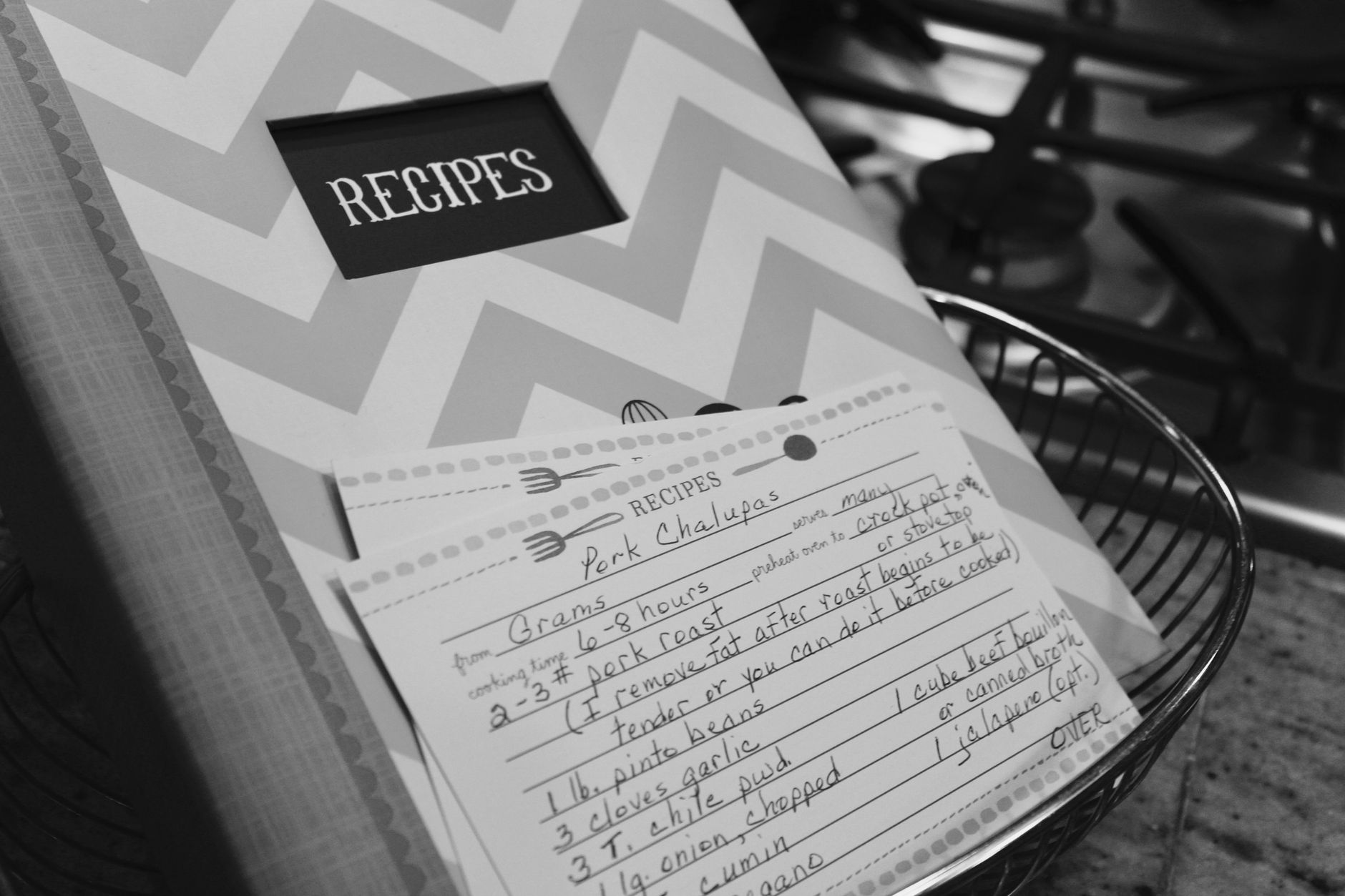
The recipe box is a green tin one with a hinged lid that does not close all the way anymore, and for four years it sat in the middle of my dining room table like a sleeping animal that my sister Diane and I were both afraid to wake.
We did not speak to each other for most of those four years. Over a box of index cards. I want to say that out loud first, before I tell you any of the rest of it, because I need you to understand how foolish two grown women can be when grief gets into them and has nowhere to go. We are talking about cards. Recipe cards. Three inches by five inches, our mother’s handwriting in blue ballpoint that pressed so hard it dented the paper, splattered with cooking grease and the brown rings of coffee cups set down in a hurry. That is what Diane and I lost four years of being sisters over.
My name is Carol. I am sixty-one years old, and I have a sister named Diane who is fifty-eight, and we buried our mother, Lucille, on a cold Thursday in March, and within about ten days of the funeral we were not speaking. The cards did that. Or we did it, and we blamed the cards, which is closer to the truth and harder to say.
Let me start where it actually started, which is the kitchen.
Our mother cooked the way some women pray. Constantly, without announcing it, and like it was the only thing keeping the roof on. She was not a fancy cook. She made pot roast and chicken and dumplings and a peach cobbler that I have never been able to copy no matter how many times I have tried, and she made all of it out of that green tin box. The cards in it were older than I was. Some of them were her own mother’s hand, and some were recipes she had clipped from the backs of soup cans in 1962 and copied over in her own writing so they would last. The box was the brain of that kitchen. Everything good that ever came out of our childhood came out of that box first.
When Diane and I were girls we used to fight over who got to pull the card for whatever Mama was making. Standing on a kitchen chair, flipping through the little tabbed dividers, COBBLERS and ROASTS and HOLIDAY, our hands knocking each other out of the way. So I suppose the war was always going to be over the box. The box was the throne. Whoever held the box held the kitchen, and whoever held the kitchen held our mother, and our mother was gone, and neither one of us could stand it.
Here is the part I am ashamed of.
After the funeral, when the casseroles people bring had stopped coming and the house got quiet, Diane and I and our cousin Renee went over to Mama’s place to start the part nobody wants to do. Sorting. Deciding. Boxing up a whole life into trash bags and keep piles. Diane took the dining room. I took the kitchen. And I found the box exactly where it had always lived, on the counter beside the stove, and I picked it up and I held it against my chest, and something in me just clamped down around it like a fist.
Diane came in to ask me where the good scissors were, and she saw me holding it, and her face changed. I watched it change. She said, real quiet, “I was going to take that.”
And I said, “I found it.”
That was it. That was the whole opening shot of a four-year war. *I found it.* Two words. I have replayed that moment a thousand times and I cannot for the life of me explain why I did not just say, of course, here, you take it, we will share it, it is Mama’s. I do not know why my arms would not loosen. I think I was holding our whole mother in that tin, and I could not give her away, not even to the one person on earth who had the same right to her that I did.
We argued. It got ugly fast, the way it only can with someone who knew you when you were six. Diane brought up that I had lived twenty minutes from Mama and she had lived three states away, like that made the box mine by geography, except she did not mean it that way, she meant the opposite, she meant I had already gotten more years and now I wanted the box too. I brought up that she had not come home for Mama’s knee surgery. She brought up something I had said at Thanksgiving in 2019. I brought up our father, who has been dead since 2008, God knows why. Renee stood in the doorway and watched two middle-aged women turn back into children in about ninety seconds, and finally she said, “Y’all stop it, stop it right now,” and we did not stop it.
I took the box home with me that night. I just walked out with it. Diane did not chase me. She got in her rental car and drove to the airport and flew back to Ohio, and we did not speak again for four years.
I want to tell you what four years of not speaking to your only sister is actually like, because people say it like it is a single decision and it is not. It is a thousand tiny decisions every week. It is her birthday coming around and your thumb hovering over her name in your phone and then not. It is Christmas cards that you address and then do not send. It is your daughter saying, “Have you talked to Aunt Diane,” and you saying, “We are not really talking right now,” in a light voice like it is a small thing, a temporary thing, a thing that will pass, and then a year passes, and then another.
The box sat on my dining room table the whole time. I told myself I was going to cook from it. I never did. I would walk past it twenty times a day. Sometimes I would open the lid and look at Mama’s handwriting and close it again real quick like I had peeked at something I was not supposed to see. I could not cook from it. The grief was too thick in there. But I could not put it away in a cupboard either, because then it would be just a box in a cupboard, and it was not. It was the trophy I had won by being the worst version of myself in my dead mother’s kitchen.
I told my daughter, Megan, that Diane and I had simply grown apart. Megan is thirty-four and she did not believe me for one second. “You grew apart over a recipe box,” she said. “Mom. Listen to yourself.”
I did not listen to myself. That is the whole problem with people. We almost never do.
I want to tell you about the worst night of the four years, because if I just tell you we did not speak, you will picture something clean, two women calmly going about their separate lives, and it was not clean. It was a wound that scabbed over and tore open at the most ordinary moments.
The worst night was a Tuesday in the second year. Nothing special about it. I was making dinner for one, which I had gotten used to, and I went to the freezer for something and I pulled out a Tupperware of soup I had forgotten was in there, and I peeled the lid back and it was Mama’s vegetable soup. I had made a big batch the winter before she died, from the box, from the SOUPS divider, and frozen it, and here was the last container of it, the very last soup my mother’s recipe would ever make for me, two years deep in the back of my freezer behind the bags of peas.
I stood at the counter and I ate that soup standing up and I cried so hard I had to put the spoon down. And the thing I wanted, the only thing in the world I wanted at that moment, was to call my sister and say, Di, I just found the last of Mama’s soup, do you remember the soup, do you remember how she would not tell anybody what was in it. And I picked up the phone. I had her number pulled up. My thumb was right there on her name. And I could not do it. Two years of silence had built a wall so high that I could not climb it even carrying the last bowl of our mother’s soup in my hands. I put the phone down. I put the empty Tupperware in the sink. I went to bed at eight o’clock.
I found out much later that Diane had a freezer too, and a last container of her own, the chili, and that she had done almost the exact same thing in her own kitchen in Ohio at roughly the same time, and that she had picked up her phone and pulled up my name and put it down again too. We were doing the same grief, three states apart, in two silent kitchens, and we could not give each other the one thing that would have helped, which was the other one’s voice. That is what the war cost. Not the box. The soup. The phone calls we did not make. The two years of Tuesdays.
I told my daughter Megan a softer version of all this, and she did not buy a word of it, and one night she said something to me that I did not have an answer for. She said, “Mom, when you die, do you want me and the cousins fighting over your stuff? Or do you want us in the same room?” And I said of course I want you in the same room. And she just looked at me. She did not have to say the rest. The rest was, then why are you teaching me how to do it the other way.
What finally broke it was a wedding. Renee’s daughter, my cousin’s daughter, my first cousin once removed, got engaged, and the wedding was set for that spring in the same town where Diane and I grew up. And Renee, who had spent four years as the unwilling switchboard between two sisters who refused to dial each other directly, called me up and said, “Carol, I am only going to say this once. You and Diane are both coming to this wedding, and you are both going to be civil, and I have already told her the same thing, and I am too old and too tired to seat you at separate tables. You will sit together. I love you both and I am done.”
So that is how I ended up driving four hours with the green tin box buckled into my passenger seat like a person.
I do not fully know why I brought it. I had told myself a dozen reasons on the way out the door. Maybe Diane would want to see it. Maybe I would finally just hand it over and be free of it. Maybe I wanted her to see that I had kept it safe, that I had not let anything happen to Mama’s cards, that whatever else I was, I had been a good steward. I think the real reason is that after four years I could not figure out how to walk back into a room with my sister without bringing our mother with me. The box was the only way I knew to do that.
The wedding was lovely. I will spare you most of it. What matters is the rehearsal dinner the night before, a long table at a barbecue place with a private back room, and Renee, true to her word, seating me directly across from Diane.
My sister had gotten older. That was the first thing that hit me, and I know how that sounds, but you have to understand I had a four-year-old picture of her in my head, and the woman across the table from me had gray coming in at her temples that she had stopped fighting, and lines around her eyes that I did not put there but felt responsible for somehow. She looked like our mother. She looked so much like our mother that I had to look down at my plate.
We were careful with each other. Painfully, formally careful, the way you are with someone you have hurt and who has hurt you and you both know the other one is keeping count. We passed the cornbread. We said excuse me. We talked about Renee’s daughter’s dress and the weather in Ohio and absolutely nothing that mattered, for almost two hours, while the thing that mattered sat between us in the air so thick I could barely eat.
And then, near the end, when the plates were being cleared and people were starting to drift, Diane set down her iced tea and looked at me and said, in a voice I had not heard in four years, the voice she used to use when we were girls and the lights were off and we were supposed to be asleep, she said:
“Do you still have it.”
And I knew exactly what *it* was.
I said, “It is in my car.”
She did not say anything. She just looked at me. And I do not know what came over me, four years of it I suppose, all at once, but I got up from the table and I walked out to the parking lot and I unbuckled that box from my passenger seat and I carried it back inside and I set it down on the table in front of my sister, right there in the middle of a barbecue place with our cousins watching.
And I said, “Here. It should have been both of ours. I am sorry.”
I have wanted to say those words for four years. They cost me almost nothing once I finally said them, which is the cruelest joke of grief, how cheap the thing is once you finally put it down.
Diane put her hand flat on the lid. She did not open it right away. Her chin was doing the thing it does, the thing our mother’s chin used to do, that tremble right before the tears come, and she said, “I should have called you. A hundred times I picked up the phone.”
“I know,” I said. “Me too.”
And then Renee, bless her, who had been watching all this from down the table, came over and sat down beside us and said the thing that changed everything. She said, “Open it. Both of you. Go on. Open it together.”
So we did. Diane opened the lid, and the cards were all there, our mother’s whole kitchen, in order, COBBLERS and ROASTS and HOLIDAY, and Diane reached in and pulled out the first card her fingers landed on, which was the chicken and dumplings, and she went to read it out loud, the way we used to do standing on the kitchen chair, and her voice caught.
Because she had turned the card over.
I need to tell you something about my mother’s recipe cards that I did not know. That neither of us knew. In four years of guarding that box like a dragon, I had read the fronts of those cards a hundred times and I had never once turned them over. Why would you. The recipe is on the front. The back is blank.
Except it was not blank.
On the back of the chicken and dumplings card, in our mother’s hard-pressed blue ballpoint, it said:
*Diane begged for this every birthday until she was 12. Carol picked it off the bone for her because Di hated the bones. My girls.*
Diane read it out loud and then she could not read anymore. She put the card down on the table and put her hand over her mouth.
I picked it up. I read it again with my own eyes because I did not believe it. And there it was, our mother’s hand, a little note from twenty years in the grave, telling us a thing about ourselves that we had both completely forgotten. That I used to pick the chicken off the bone for my baby sister because she could not stand the bones. I had forgotten that. I had spent four years remembering every wrong Diane ever did me and I had forgotten that I used to feed her off my own fork.
I reached into the box and pulled out another card.
The peach cobbler. The one I never could copy. I turned it over before I even read the front.
*Made this the day Carol came home from the hospital. June, 1965. Hottest day I ever cooked through. Worth it. First time I was somebody’s mother.*
I read that one out loud, or I tried to, and I did about as well as Diane had.
We went through the whole box. Right there at the rehearsal dinner, with the cousins gathering around quiet, somebody refilling our tea, nobody saying much. Every single card. Front and back. Forty years of recipes, and on the back of nearly every one, in that same blue ballpoint, a sentence. A note. A small piece of our mother that she had been hiding in plain sight in the one place she knew we would both eventually look.
The pot roast: *Sunday dinner. The girls fought over the crispy ends so I started making two. You’d think they were starving. Lord, I miss them at that table already and they are right upstairs.*
The biscuits: *Carol’s hands are better at these than mine now. Don’t tell her I said so. She’ll get a big head.*
I sat at that table and I laughed out loud through the tears, because I could hear her saying it. *She’ll get a big head.* That was my mother exactly. She never gave you a compliment without a little catch on it so you would not get above yourself.
The banana bread: *Diane brings this to every church potluck and tells them it’s hers. It is hers now. I gave it to her. A recipe is a thing you give away.*
There were lighter ones too, and thank God for them, because if it had all been pure ache I do not think either of us could have made it through the box. The deviled eggs card said: *Don’t let the girls help. They eat half the filling and blame the dog. We don’t have a dog.* I laughed so hard at that one I knocked the iced tea over, and Renee mopped it up still laughing, and for a second the four years just lifted off the table and we were three women laughing at a barbecue place the way you are supposed to laugh about the people you have lost, with your whole chest, because it means they are still funny, which means they are still here.
The fried okra card said: *Diane will tell you she hates this. Diane is lying. She ate a whole bowl at age 7 and cried when it was gone.* And Diane, fifty-eight years old, put her face in her hands and said, “I do not hate okra. I have never hated okra. Why did I tell people I hate okra for fifty years,” and we lost it again, all of us, because that was so exactly our mother, keeping a forty-year receipt on a lie her daughter told about a vegetable, filing it away on the back of a recipe card, waiting.
The pound cake card said: *Carol’s wedding cake, 1986. I made it myself, would not let the caterer touch it. She cried. So did I. Don’t tell your father I cried, he’ll think he won the bet.* I did not even know there had been a bet. I never found out what the bet was. My father has been gone since 2008 and my mother since the year of the box, and somewhere between them there is a wager about whether I would cry at my own wedding that I will now never know the terms of, and that is what death is, finally. It is all the small things you forgot to ask while you still could. The box gave a few of them back. Not enough. But a few.
Diane made a sound when I read that one that I will hear for the rest of my life. *A recipe is a thing you give away.* Our mother wrote that on the back of a banana bread card at some point in the 1990s, in a quiet kitchen, with no idea that two decades later her two daughters would have stopped speaking over the very box those words were sleeping in. *A recipe is a thing you give away.* She had answered our whole stupid war before we ever started it. She had put the answer right there in the box, on the back of the card, and we had spent four years fighting over the front.
I want to tell you about one more card, and then I will tell you how it ended, because I think this is the one that did it.
Near the bottom of the HOLIDAY section there was a card for her cornbread dressing, the Thanksgiving dressing, the one she made every single year of our lives. And on the back of that one she had written something different. Not a memory. Instructions.
It said:
*If you two are reading the backs of these, then I’m gone, and you found them together, which means you’re in the same room. Good. Stay there. Whatever it was, let it go. You only ever had each other. The recipes were always for both of you. So is everything else. Love, Mama.*
She knew.
That is the thing I cannot get past, even now. My mother knew her two daughters well enough to know that we might fall out after she was gone. She knew us. She knew Diane’s stubbornness and she knew mine, because she made them both. And she did not lecture us about it while she was alive, because we would not have heard it. She did the only thing a mother can do from the far side of death. She left it in the box. She bet her whole self on the certainty that whatever we broke, we would eventually, someday, find ourselves standing over that box together, and she left the lights on for us.
*You found them together, which means you’re in the same room. Good. Stay there.*
I read that one out loud to my sister at a rehearsal dinner in a barbecue place forty miles from the kitchen where our mother wrote it, and when I finished, Diane got up out of her chair and came around the table and she put her arms around me, and I put mine around her, and we stood there and cried like the two little girls who used to fight over who got to pull the card.
Four years. Four years of birthdays not called and Christmas cards not sent and a grandmother’s grief carried alone on both ends of a phone line that neither one of us would dial. And the woman who ended it had been dead for four years, and she ended it with a ballpoint pen and the back of a recipe card and a faith in her own children that we had done absolutely nothing to deserve.
Here is how it ended, the practical part, because people always want to know.
We did not split the box. That was the first thing Diane said when we sat back down, wiping her face with a barbecue napkin. “We are not splitting these. Don’t you dare suggest it.” And I laughed, because splitting them had been my plan, my fair-minded, lawyerly, completely missing-the-point plan, half to each of us, even-steven. *A recipe is a thing you give away.* Our mother would have been so disappointed in even-steven.
What we did instead was this. We copied them. The whole box. Diane and I spent the entire next morning, the morning of the wedding, sitting at Renee’s kitchen table in our bathrobes with two new boxes of blank index cards, copying our mother’s recipes out by hand, both of us, so that each of us would have a full set in our own writing the way Mama copied her own mother’s. And on the back of every card, we copied her notes too, word for word, both of us, so that there would be two boxes in the world with our mother’s whole heart in them instead of one box that one of us was guarding alone.
It took us four hours. We missed the bride’s brunch. Renee did not care. She brought us coffee and stood in the doorway of her own kitchen watching her two cousins finally do the thing she had been praying for them to do for four years, and she did not say a word, she just kept the coffee coming.
The original box, the green tin one, we gave to Megan, my daughter. Both of us decided that, together, in about four seconds, no argument. The original goes to the next girl who will stand on a kitchen chair and pull the cards. And someday, God willing, Megan will hand it down too, and the notes on the back will still be there, our mother’s and now ours, because Diane and I added a few of our own that morning. On the back of the chicken and dumplings, under Mama’s note about how I picked the bones for Diane, I wrote: *Still would. Love, Carol.* And Diane took the pen out of my hand and wrote under it: *I know you would. That’s why I was so mad. Love, Di.*
That is the truest sentence anyone has ever written about the two of us. *That’s why I was so mad.* We were never fighting over a box. We were fighting because the one person who loved us both was gone and we did not know how to love each other without her in the middle. The box was just where we put it down.
Diane and I talk every Sunday now. She still lives three states away. We are sixty-one and fifty-eight and we are running out of the kind of years you get to waste, and we both know it, and so we do not waste them anymore. We talk on Sundays because Sunday was pot roast day, the crispy ends, the two pans. We have not missed a Sunday in over a year.
Last Sunday she called me up and said she had made the peach cobbler, the one I never could copy, and it had finally come out right. And I said how, after all these years, and she said she had finally read the front of the card as carefully as we had read the back. There was a line near the bottom, in Mama’s hand, that we had both skimmed past our whole lives because it did not look like an instruction. It said, *don’t rush the fruit.*
That was the secret. Forty years and the secret to my mother’s peach cobbler was *don’t rush the fruit*, and it was right there on the front of the card the whole time, the same way the secret to my whole sister was right there on the back of it.
Don’t rush the fruit. Don’t guard the box. Read the backs of the cards.
And for the love of God, if you have a sister, and you are letting some small dead thing sit on a table between you for four years, call her. Call her tonight. There is a note on the back of something, somewhere in your life, from someone who loved you both and is not here anymore, and it is begging you to be in the same room.
Open the box together. That is the whole recipe. My mother knew it before either of us did, and she pressed it into the paper so hard it left a dent, and she waited, with the patience of the dead, for her two foolish girls to finally turn the cards over.
We did, Mama. We finally did. And we’re in the same room. And we’re staying.

Adrian Hawthorne is a celebrated author and dedicated archivist who finds inspiration in the hidden stories of the past. Educated at Oxford, he now works at the National Archives, where preserving history fuels his evocative writing. Balancing archival precision with creative storytelling, Adrian founded the Hawthorne Institute of Literary Arts to mentor emerging writers and honor the timeless art of narrative.