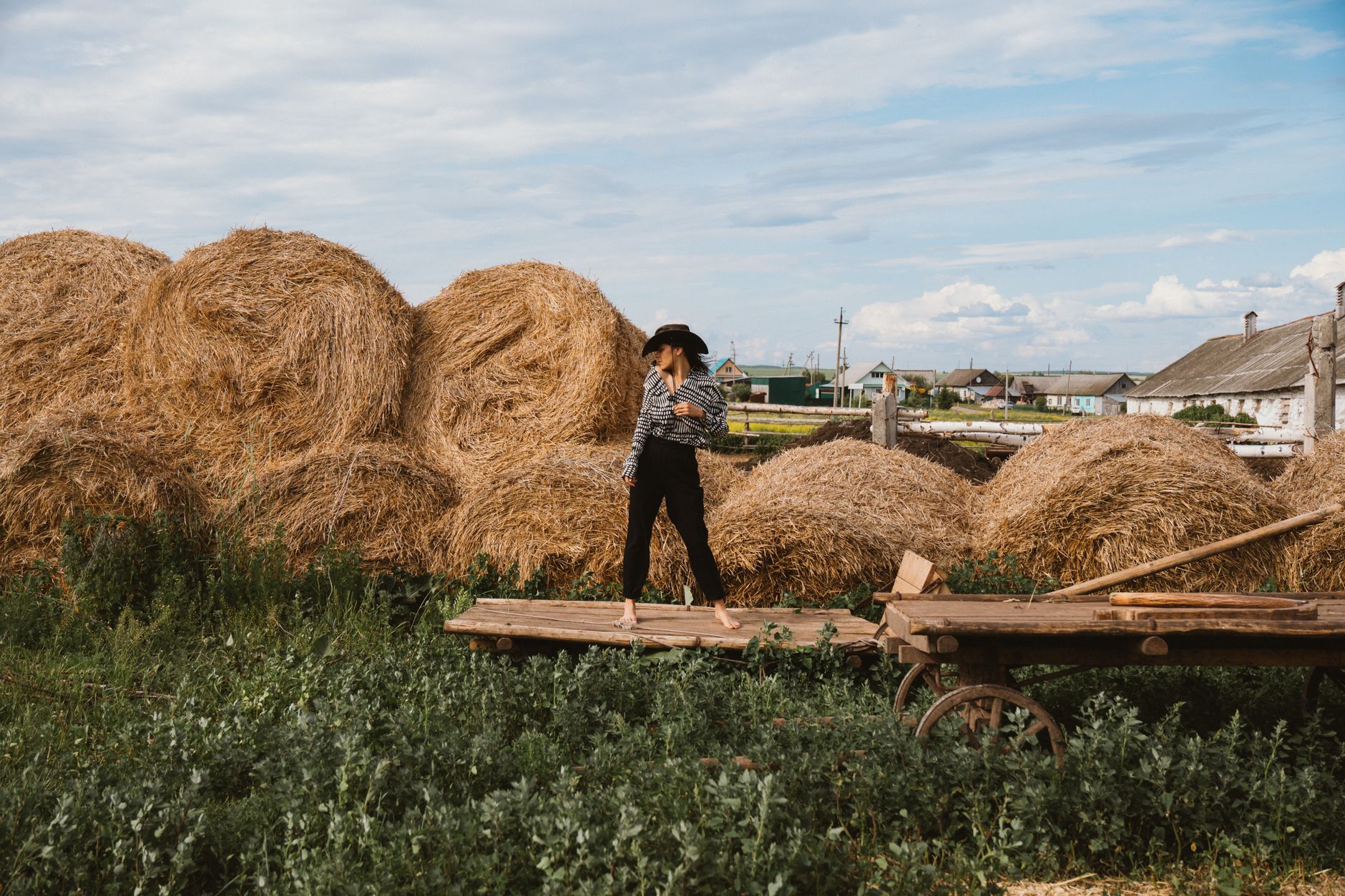
The morning Thaddeus Orsini told me a woman had no business running a row-crop operation, I was standing in his machine shed with manure on my boots and forty dollars of his diesel already in the sprayer tank I had filled before sunup.
He did not whisper it. Thaddeus never whispered anything in his life. He said it loud enough that Booker, the kid who ran the grain cart, heard it from the loft, and loud enough that I heard the words settle into the cold air of that shed and stay there, the way a thing said in March settles into you and waits to be answered in October.
“You’re a fine hand, Wrenna,” he said. “I’ll give you that. You work harder than any man I got. But this place needs a man at the top. Always has. A woman could never run it. Not this. Not the markets, not the bank, not the help. It’d eat you alive in a year.”
I want to tell you I had a clever thing ready. I did not. I had been a hired hand on the Orsini place outside Pell Creek for eleven years, and in those eleven years I had learned every quarter section, every wet hole that drowned out in a heavy June, every fence line, every cranky injector on every tractor he owned. I knew that ground better than he did. He spent his winters in Florida. I spent mine greasing equipment in a shed with one space heater.
But I did not say any of that. I said, “Yes, sir,” because that is what you said to Thaddeus Orsini, and I went back to filling the sprayer, and the words stayed in the cold and waited.
I was forty-nine years old. I had no farm of my own, no husband to put one in his name, and a savings account that would have made Thaddeus laugh out loud if he had ever seen the bottom of it. By every measure he understood, he was right. A woman like me could never run a place like his.
He just did not know what was coming for his place.
## The auction nobody wanted to talk about
Here is the thing Thaddeus did not say loud in his shed, the thing he tried to keep quiet all that winter: the Orsini operation was dying.
It had been dying for three years and he had been hiding it the way a proud man hides a limp. He had borrowed against the ground to buy a combine he did not need, a green monster of a thing with a cab nicer than my whole house, and then corn went the wrong direction two years running and the note came due and the bank in Pell Creek, the little one on Coldwater Street that had carried Orsinis since the Eisenhower years, finally stopped carrying.
I knew because I was the one who took the registered letters in off the gravel when the mail carrier would not leave them in the box. I knew because I was the one in the shed when the man from the bank, a soft-spoken fellow named Lindqvist who wore his church shoes to do unpleasant things, came out and walked the yard with Thaddeus and would not look any of us in the eye.
The land was going to sell. All of it. The home quarter, the bottom ground along Coldwater Creek, the two rented sections he had farmed so long everyone forgot they were rented, the machine line, the bins, the shop. April auction. A man from three counties over, an outfit called Holtby Land and Cattle that already farmed eleven thousand acres and wanted twelve, was circling it like it was roadkill.
And Thaddeus, who had told me a woman could never run it, was going to lose it to a corporation that ran its combines from a laptop in an office two hours away and would not know Pell Creek from a hole in the ground.
That is the night I could not sleep. Not because I wanted to gloat. I want you to understand that. I had nothing in me that night that wanted to watch Thaddeus go down. I had cried at his wife Ottilie’s funeral harder than his own nephews did. The man had taught me to weld. He had handed me my first real paycheck when no other operation in three counties would put a woman on anything but the books.
I could not sleep because I kept doing math.
## The math I did at two in the morning
I had eleven thousand dollars saved. That is the truth, and it is an embarrassing truth, because eleven years of the kind of work I did should have built more, but hired hands do not build wealth, they build other people’s wealth. I had eleven thousand dollars and a 1994 pickup with a cracked windshield and a name on it that no banker in the world would lend against.
But I also had eleven years of knowing exactly what that ground could do.
I knew the home quarter was tired, run flat by Thaddeus chasing corn on corn on corn because corn was what his daddy grew and a proud man does not change. I knew the bottom ground along the creek, the ground Holtby’s people would dismiss as flood-risk in their spreadsheets, was the best dirt in the county if you knew how to read the water and were not too stubborn to put it to beans in a wet year. I knew the rented sections came with two old men as landlords, Augustin Vetch and his sister Lavada, who did not care about money half as much as they cared about whether the person farming their daddy’s ground would say grace before the harvest meal and remember their names.
I knew things a spreadsheet did not know.
So at two in the morning, with the space heater of my own little rented house ticking in the corner, I did the math a hundred different ways, and every way I did it came out the same. I could not buy the whole Orsini place. Not even close. Holtby Land and Cattle would buy the whole Orsini place and never feel it.
But the auction was not selling it whole. That was the crack in the door. Lindqvist, the bank man, in one of those yard conversations where he could not meet our eyes, had let it slip that the bank wanted the thing sold in parcels. Parcels brought more money. Parcels paid the note faster. The whole-farm buyer, the Holtby outfit, wanted it whole and wanted it cheap and was leaning on the bank hard to keep it that way.
The bottom ground along Coldwater Creek was eighty acres. Flood-risk eighty. The parcel nobody serious wanted.
And eighty acres of the best dirt in the county, at the price flood-risk ground brings at an April auction when the big buyer wants it whole, was a number my eleven thousand dollars and a desperate loan might, just might, be able to reach.
## The loan officer who laughed and the one who did not
I will not pretend the first bank did not laugh at me. The young man in the Pell Creek branch, the one who had replaced Lindqvist’s old boss, looked at my application the way you look at a child who has drawn you a picture of a horse. He did not even pretend. He said, and I am quoting him, “Wrenna, farming’s a tough business for anybody right now. For a single gal your age with no equity and no operating history? I can’t see it. I’d be doing you a favor saying no.”
A favor. He thought he was doing me a favor.
I drove forty miles north to Halverson, to a credit union run out of an old hardware store, because a woman I knew from the co-op fuel desk, a sharp old gal named Idelle Pruett, told me the loan officer up there was different. His name was Cormac Teasdale and he had grown up on a quarter section his own family lost in the eighties, and Idelle said he did not see a single woman my age. He saw a farmer.
I sat across from Cormac Teasdale for two hours. I did not bring tears. I did not bring a sad story. I brought eleven years of yield data I had written down in spiral notebooks because Thaddeus never bothered to keep records and somebody had to. I brought soil tests I had paid for myself, out of my own pocket, three years running, because I wanted to know what that ground needed even when it was not mine to feed. I brought a one-year plan for eighty acres of creek bottom that put it to soybeans, not corn, because beans fix their own nitrogen and I could not afford a fertilizer bill, and because beans in that bottom in a normal year would out-yield anything Thaddeus had grown up top in a decade.
Cormac listened. Then he asked me one question. He asked, “What happens if it floods?”
And I told him the truth, which was the thing no spreadsheet at Holtby Land and Cattle would ever have in it. I said, “Mr. Teasdale, that bottom has flooded four times in the eleven years I’ve worked it. Every single time it crested before the third week of May, and every single time it was bone dry and ready by the time you’d want beans in the ground anyway. The flood-risk is real on paper and it’s worth nothing in fact, because the water comes and goes before the crop’s even planted. The men bidding on it don’t know that. I do. That’s the whole edge. I’m not buying flood-risk ground cheap. I’m buying the best dirt in the county cheap, because everybody else can only read the map.”
Cormac Teasdale looked at me a long time. Then he said, “Be at the auction. I’ll have a letter for your line.”
## The day of the auction
The Orsini auction was the first Saturday in April, in a wind that came straight down off the open ground with nothing to stop it, and half the county came because half the county had a reason to. Some came to bid. Most came to watch a proud man’s life get sold off the tailgate of a flatbed.
Thaddeus stood by the shop with his collar up and his jaw set, shaking hands like it was a wake, which it was. When he saw me come up the drive in my cracked-windshield truck, he gave me a small nod, the kind you give a hired hand who showed up to a thing they did not have to show up to. He thought I had come to pay respects.
The Holtby man was easy to spot. Camel coat, no mud on him anywhere, a phone in his hand the whole time. He had a fellow with him doing the actual bidding, a local-looking front man so the crowd would not get its back up about an outside corporation eating one of its own. They wanted it whole. The auctioneer, a good honest man named Ferris Quint who had cried off rings at every farm sale in the district for thirty years, opened the bidding on the whole operation as one lot, the way the Holtby people had pushed the bank to do.
And here is where the parcels saved me. Ferris Quint, God bless him, ran it both ways. He took bids on the whole, and he took bids on the parcels, and at the end he would sell whichever brought more money for the bank. The Holtby front man bid the whole up to a number that made the crowd murmur, a number meant to scare off every parcel buyer, to say this is ours, go home.
But parcels add up. The home quarter went to a young couple from church, the Sigvalds, who had been renting and finally got their own ground. The two rented sections went back to Augustin and Lavada Vetch’s family, who exercised a right of first refusal nobody at Holtby had bothered to check for. Parcel by parcel, the local people took back the pieces that mattered to them, and parcel by parcel, the whole-farm bid started to look small.
Then Ferris Quint called the creek bottom. Eighty acres. Flood-risk eighty. And the camel coat did not even look up from his phone, because in his spreadsheet that parcel was a liability, the one piece he would just as soon someone else got stuck with.
I raised my hand.
I heard it go through the crowd like wind through standing corn. Wrenna. Wrenna’s bidding. The hired hand. I felt every eye on the back of my neck, and I felt Thaddeus’s eyes hardest of all, and I kept my hand up and my chin level and I bid that bottom ground in front of God and the whole county, and when the front man, half-amused, ran me up a notch to see if I would fold, I bid again, and Cormac Teasdale’s letter in my coat pocket let me bid one more time than anyone in that crowd believed I could.
“Sold,” said Ferris Quint, “to Wrenna, on the bottom eighty.”
I do not remember walking back to my truck. I remember Thaddeus catching my arm by the shop, and his face was not angry. That is the part I did not expect. He looked at me like a man seeing something he had been too proud to see for eleven years. He said, “That bottom’ll break your heart, girl. It floods.”
And I said, the only sharp thing I said to him in all of it, “Only before the third week of May, Thaddeus. I’ve been keeping track. You never did.”
## The season nobody thought I would survive
The auction is the part people want to hear about. The hand raised, the county watching, the sold. But the auction was the easy part. The auction was one afternoon. What came after was a season, and a season is two hundred days of decisions made alone in a truck cab with nobody to tell you that you are right.
I had eighty acres, a borrowed planter from the Sigvalds in trade for helping them put in their home quarter, a bank line at Halverson that did not have one dollar of slack in it, and a window. The whole thing came down to a window. I had to get beans in that bottom after the spring high water and before the ground turned, and I had to do it cheap, because every gallon of diesel and every bag of seed came off a line of credit that Cormac Teasdale had stuck his own neck out to give me.
The creek came up the second week of April, right on schedule, just like my eleven years of notebooks said it would. The whole county shook its head. Folks who had been at the auction told each other, kindly, that the poor woman had bought herself a flood. The camel-coat man, I heard later, told someone at the elevator he was glad he had passed on that “swamp.”
I drove out every morning at first light and watched the water and waited. I did not plant into mud just to prove I was busy. That is the thing they did not understand about a woman running ground: they thought I would panic, that I would do something rash to look like a farmer. I did the opposite. I waited. The water crested the third day and started to drop, just like it always had, and by the first week of May that bottom was draining black and sweet and dry, the best seedbed I had ever put a hand into, and on the eighth of May I planted soybeans into eighty acres of the finest dirt in the county while the men up on the high ground were still fighting cold wet clay with their big tractors and their big notes.
I planted alone. I cultivated alone. I walked those beans on foot in June, every row, pulling waterhemp by hand because I could not afford a second pass of chemical, and my hands cracked and bled and I wrapped them and went back out. I learned to fix the borrowed planter’s seed meter myself by the light of my phone at eleven at night because there was no one to call and no money to pay them if there had been. When the drive belt went on the old grain cart I traded Booker, the kid from Thaddeus’s loft who was out of work now, a week of help on his mother’s garden for a week of his hands in my field.
There was one night in late May I have never told anybody about until now, because it is the night I almost quit, and a woman who almost quit does not usually go around telling it. A storm came through after I had the beans in but before they were up, the kind of straight-line wind that comes off the open ground in this country and flattens everything that thinks it is standing. I lay in my little rented house and listened to it tear at the roof and I was certain, lying there in the dark, that I had drowned my one crack at a whole life under two inches of cold rain on flood ground. I had bet eleven years of savings and Cormac Teasdale’s good name and the last shred of standing I had in Pell Creek on eighty acres of bottom dirt, and the wind was out there in the dark telling me I was exactly the fool the young banker had called me. I cried that night. I prayed that night, which I had not done with any honesty since Ottilie’s funeral. And in the morning I drove out before light, with my stomach in my throat, expecting to find my seed washed into the creek and my whole life with it. The bottom had taken the rain and shed the rain and held just enough, and ten days later those beans came up in rows so straight and so even you could have laid a string down them. I have not doubted that ground since. I doubted it once, in the dark, and it forgave me.
There was a Sunday in June I will tell too, because it is the day I understood the county was watching closer than I knew. I walked into the Coldwater Café after church for the first time all spring, because I had been too tired and too proud to sit where I knew I was being talked about. The counter went quiet the way a counter does. Then old Phineas Royder, who had farmed the section east of the Orsini place for fifty years and never once in his life paid a woman a compliment, looked up from his coffee and said, loud enough for the whole café, “Wrenna, I drove past your bottom Thursday. Cleanest stand of beans I’ve seen in this township in twenty years.” And he went back to his coffee like he had said nothing at all. But every man at that counter had heard Phineas Royder say it, and I understood, walking back out to my truck, that the field was already starting to argue my case better than I ever could have argued it myself.
And the whole time, the county watched. Pell Creek is not a big town. There is a diner on the square called the Coldwater Café where the same dozen men have had the same dozen cups of coffee every morning since Carter was president, and I knew, the way you know in a small town, that I was the topic at that counter. The woman who bought the flood ground. Some of them wanted me to fail, I will not pretend otherwise. A woman who steps where men said she could not step makes some men nervous about every place they have ever stood.
But some of them did not. Some of them started to stop by the bottom in their trucks, just to look, and what they saw as June turned to July was eighty acres of soybeans so thick and so dark green and so even that you could not see ground between the rows. The fixed-nitrogen beans loved that rich creek bottom. The dry spell in late July that hurt the corn up top did not touch them, because the bottom held its water like a sponge, just like I knew it would. By August my eighty acres looked like a photograph in a seed catalog, and the high ground that everyone had said was the safe ground, the smart ground, the man’s ground, looked tired and short and thin.
Idelle Pruett from the co-op fuel desk drove out one evening in August and stood on my tailgate and looked at those beans a long time and said, “Wrenna, I’ve sold fuel to every farmer in this county for thirty years, and I have never in my life seen a cleaner field.” That is the only time that whole season I cried, and I waited until she drove off to do it.
## The harvest
I want to tell you about the day Thaddeus Orsini came to watch me cut beans.
By October the whole county knew the bottom had made a crop. You cannot hide a field like that. People drive by. People talk at the elevator. The Holtby man’s “swamp” was carrying beans that everyone could see were going to run forty, forty-five bushels in a year the high ground was lucky to make thirty-five.
I had a combine for three days. I did not own one and would not for years. I rented an old machine off Augustin Vetch, the landlord who farmed his own home place with equipment older than me, and I paid for it by agreeing to cut his beans too once mine were in the bin. I climbed into that old combine on the first dry October morning, and I did not know how to run it, not really, because Thaddeus had never once in eleven years let me run the combine. The combine was the man’s machine. I had filled it with fuel a thousand times and never sat in the seat.
I sat in the seat. I read the manual in the cab. I called Augustin twice and he talked me through the header settings over the phone, patient as a grandfather. And then I dropped that header into the first row of beans I had ever owned in my life, and I cut.
I cut all day. The yield monitor, which I had to figure out myself, climbed and climbed, and I did not trust it, so I weighed the first load on the elevator scale just to be sure, and the elevator man read me the number twice because I asked him to, and it was real. Forty-four bushels to the acre off ground everyone in three counties had called a flood and a swamp and a poor woman’s mistake.
That was the afternoon Thaddeus’s truck came up the field road and stopped on the headland and he got out and stood there, an old man with his hands in his pockets, watching me bring the combine around. I stopped at the end of the row and shut the header down and climbed out, and we stood in the bean dust together, and neither of us said anything for a while.
Then he said, “I owe you an apology, Wrenna.”
And I said, “No, you don’t.”
Because I did not want his apology. I had not done it for his apology. I had done it because a man told me I could never, and the only honest answer to never is to do the thing, quietly, in front of the whole county, in one hard season, and let the field say it for you. The field had said it. Forty-four bushels said it louder than I ever could have. I did not need the old man to say it too.
But he said it anyway, and then he said the thing I will carry to my own grave. He said, “Ottilie always told me you were the best farmer on this place. I told her a woman couldn’t run it. She said I was a fool, and she was right, and I was too proud to listen while she was alive to hear it.” He looked out over my eighty acres of beans. “She’d have liked seeing this. She’d have liked it more than anything.”
I let him stand there as long as he wanted. He had taught me to weld. He had handed me my first real check. He had also told me I could never, and both of those things were true about the same man, the way both things are usually true about the men who shape us.
## What the season bought
I did not get rich that year. I want to be honest about that, because the easy ending is the one where the woman buys the whole farm back and rides off, and that is not what happened, because that is not how it happens.
What happened is this. Eighty acres of forty-four-bushel beans, in a year of high prices because everybody else’s crop was short, paid my operating note in full and left enough to make the first real payment on the land and put a little, a very little, in the bank. It bought me a place. Eighty acres, free of the auction now, in my name, Wrenna’s name, on the deed at the Pell Creek courthouse where no banker had thought my name belonged.
And it bought me the next year. Augustin and Lavada Vetch, the old landlords, came to me that winter, not to Holtby Land and Cattle, and asked me to farm their two sections on shares, because they had watched what I did with eighty acres and they wanted that done with their daddy’s ground, by someone who would say grace and remember their names. The Sigvalds asked me to custom-plant their home quarter. The young couple at church whose own place had been a long shot asked the woman who had been a longer one.
By the next October I was farming six hundred acres. Not eleven thousand. Holtby Land and Cattle still farms eleven thousand and never thinks about Pell Creek. But six hundred acres, in my own name and on shares with people who chose me, is a farm. It is a real, whole, living farm, and a woman runs it, and runs it well, and the markets did not eat her alive and the bank did not and the help did not, because the help is me and I have never once let myself down.
Cormac Teasdale, the loan officer who saw a farmer, still carries my line, and it is a bigger line now, and he tells me I am the safest piece of paper in his whole portfolio. The young man at the Pell Creek bank who said no, the one who thought he was doing me a favor, calls now and then to ask if I would consider moving my account back. I am polite to him. I bank in Halverson.
And Thaddeus Orsini, before he passed two winters later, sold me at a fair price the one thing he had left that he wanted me to have, which was not land at all. It was Ottilie’s old garden tools and her recipe box and the welder he taught me on, the one in the shed where he had told me a woman could never. He did not make a speech about it. He just had Booker drive them over in a truck with a note that said, in an old man’s shaking hand, “These belong with the best farmer on this place. She told me so. I’m slow, but I get there.” That note I kept.
The morning he told me I could never run it, the words settled into the cold March air of that shed and waited to be answered. I answered them in October, with a yield monitor reading forty-four and a whole county watching and an old man crying on my headland. I did not answer them with rage. I never raised my voice to Thaddeus Orsini once in all of it. I answered them the only way that ever really shuts that kind of talk down for good.
I grew the crop. I weighed it on the scale. I put my name on the deed.
And then, every morning since, I have gotten up before the sun and gone out and done it again, because the field does not care who told you that you could never. The field only cares whether you show up, and whether you read the water, and whether you know your ground.
I know my ground. I always did. The only thing that changed is that now it knows me back.

Specialty: Quiet Comebacks & Personal Justice
David Reynolds focuses on stories where underestimated individuals regain control of their lives. His writing centers on measured decisions rather than dramatic outbursts — emphasizing preparation, patience, and the long game. His characters don’t shout; they act.