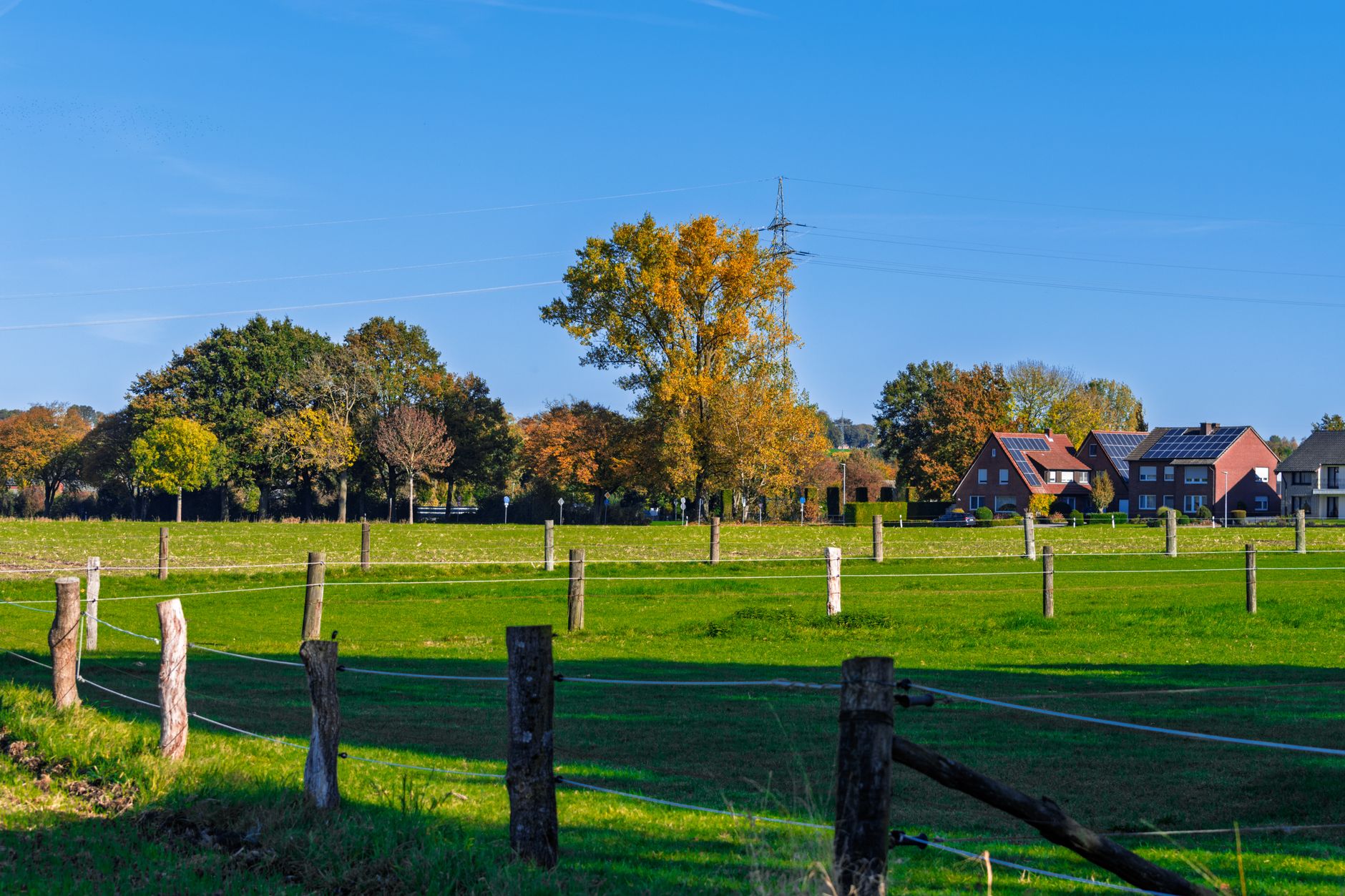
The first time I understood they meant to take it, I was standing in my own kitchen with a coffee cup going cold in my hand, watching a man named Otis Fenwick walk the fence line of my husband’s land like he already owned it.
I am seventy-three years old. I have lived on the Pribyl place outside Halsey, Nebraska, for fifty-one of those years, ever since Vlad carried me over the threshold of a farmhouse that smelled like fresh pine and his mother’s lavender soap. Vlad has been gone four winters now. The land is all I have left of him, and on a gray Tuesday in March, the chairman of the village board was pacing my pasture with a tape measure and a clipboard, not even looking at the house, like the house was already a thing of the past.
I want to tell this the way it happened, slow, because the slowness is the cruelty of it. They did not come at me with shouting. Otis Fenwick never once raised his voice to me. That is what nobody understands about how a small town can swallow an old woman whole. It does it politely. It does it with letters on county letterhead and meetings scheduled at four in the afternoon when a widow with arthritic knees does not want to drive the gravel into town. It does it with a smile and a handshake and a man who calls you “Mrs. Pribyl” in a voice soft as flannel while he is taking the ground out from under you.
So let me start at the fence.
I knocked on the window. He looked up, lifted his hand in a little wave, the kind you give a neighbor, and went back to his measuring. I put on Vlad’s barn coat, the one I still keep on the hook by the back door because it holds his shape, and I went out into the cold.
“Mr. Fenwick,” I said. “Can I help you with something on my land?”
He folded the tape measure into his palm, slow, deliberate. Otis Fenwick is a heavyset man, maybe sixty, with a face that has learned to look kind. He runs the implement dealership on the highway and he has sat on the village board for nineteen years, and there is not a permit or a variance or a road grade in Blaine County that does not cross his desk first.
“Mrs. Pribyl,” he said, warm as anything. “I’m sorry, I should have called ahead. Just doing some preliminary work. The board’s been talking about the future of this stretch.”
“The future of this stretch,” I repeated. “This stretch is my pasture.”
“Of course, of course.” He smiled and tucked the clipboard under his arm. “Nothing’s decided. We’re just looking at options. There’s a real opportunity here for Halsey, and your parcel sits right in the middle of it. Why don’t you come to the meeting Thursday? You’ll want to hear it from us before you hear it on the street.”
That was the first cruelty, and I didn’t even feel it land. Come hear it from us. As if the taking were a gift they were giving me the courtesy of watching.
I went to the meeting Thursday.
—
You have to understand what Halsey is, or you will not understand any of this. It is a village of one hundred and sixty people sitting at the edge of the Sandhills, where the grass goes on like an ocean and the nearest stoplight is forty miles in any direction. We have a grain elevator, a Lutheran church, a bar that serves a pork tenderloin sandwich the size of a dinner plate, a post office open four hours a day, and a village board of five people who decide everything that is decided here. There is no second newspaper to call. There is no city council across town. There is the board, and there is Otis Fenwick at the head of the board, and that is the government of my whole world.
The meeting was in the back room of the village hall, under the kind of fluorescent light that makes everyone look already dead. There were maybe a dozen people there. I knew all of them. I had baked at the funerals of half their parents.
Fenwick stood up with a poster board on an easel, like a man selling a tractor, and he told us about the opportunity.
A company out of Omaha, he said, wanted to put in a “regional agricultural logistics hub.” A rail spur, a grain terminal, truck staging, forty jobs, maybe sixty. Tax base. A future for a town that was drying up and blowing away one funeral at a time. He said the word “future” eleven times. I counted, because counting is what I do when I am frightened and trying not to show it.
And then he put up the map.
There was the highway. There was the rail line. There was the river. And there, shaded in red, square in the center of the whole plan, was my eighty acres. The Pribyl place. My husband’s grandfather’s homestead. The ground where I buried two dogs and a baby that never got to be born and, last of all, the ash tree where I scattered what the crematory gave me back of Vlad.
“The parcel’s been identified as the optimal site,” Fenwick said, not looking at me. “Now, the village can’t just take a person’s land. That’s not how we do things here.” He smiled around the room like he was being generous. “But the board does have tools. There’s the matter of the property being noncompliant with several village ordinances. There’s the question of back assessments. And of course, if a willing seller and a fair offer can come together, everybody wins.”
A willing seller. He was looking at the wall above my head when he said it.
After the meeting, in the gravel lot under a sky thick with stars you cannot see from any city, a woman named Bohdana Kreel, who clerks the village office and has known me since she was a girl in my Sunday school class, touched my sleeve. She is a small, quiet person, maybe fifty, with the kind of face that keeps its own counsel.
“Mrs. Pribyl,” she said, very low. “You should look at everything they send you. Read every word. Don’t sign anything in a hurry.”
Then she got into her car and drove off, and I stood there a long time in the cold, not understanding yet that she had just handed me the only weapon I would have.
—
The letters started the next week.
I want to lay them out for you the way they came, because the pattern is the cruelty. None of them was a fist. Every one of them was a paper cut, and they meant for me to bleed out slow.
The first letter, on village letterhead, informed me that my property was in violation of Halsey Village Ordinance 14-2, the nuisance and dilapidation code, on account of a “structure in disrepair” (my hay barn, which has a leaning south wall Vlad always meant to brace and I never had the money to). I had thirty days to bring it into compliance or face a fine of one hundred dollars per day.
One hundred dollars a day. I live on Vlad’s small pension and what the cash rent on the cropground brings, which is not much, and which I needed to live. A hundred a day would have ended me in a month.
The second letter, two weeks later, was a notice of “reassessment.” Somehow, in a year when no improvement had been made and the whole county was flat, the assessed value of my eighty acres had tripled. Tripled. Which tripled the property tax. Which, the letter helpfully explained, was now in arrears, because the new assessment was applied retroactively, and I owed back taxes I had no way to know I owed until the letter told me I was already behind.
The third letter offered to buy the place. The offer was a little less than half what the land was worth, and the letter, signed by Otis Fenwick as board chairman, noted “with regret” that “given the property’s compliance issues and tax delinquency, this represents a fair and generous resolution for all parties.”
I read that third letter sitting at my kitchen table at eleven at night, and I will tell you the truth, I put my head down on Vlad’s barn coat, which I had laid across the table like a tablecloth because I could not stand to wear it that day and could not stand to put it away either, and I cried until I could not breathe.
They had built a trap with three jaws. The nuisance fine would bankrupt me if I stayed. The reassessment would bankrupt me if I stayed. And the only door out of the trap was their offer, which was robbery dressed up as mercy. Otis Fenwick had not threatened me once. He had simply arranged the village so that the only logical thing a reasonable old woman could do was hand him her husband’s land for half of nothing and thank him for the rescue.
The next morning a man I did not know, a man with an Omaha look about him, parked in my lane and took photographs of my barn for forty-five minutes. When I went out to ask what he was doing, he got in his car and drove away without a word. He had a tripod and a real camera. They were already photographing the place as if it were inventory.
—
I am not a fighter. I want that on the record. I am a woman who taught Sunday school and canned tomatoes and held her husband’s hand in a hospice bed for nine days and never once raised her voice to anybody in seventy-three years. I did not know how to fight Otis Fenwick. I did not have a lawyer. The nearest lawyer who would take a case like this was in Broken Bow, and he wanted a retainer I did not have, and he told me, kindly, that fighting a village board over an assessment was “a long row to hoe” and I would likely lose.
So for about a week, I gave up.
I started going through the house deciding what I could not bear to leave behind, which is a thing you do when you are getting ready to be beaten. I took Vlad’s pocket watch out of the dresser. I went out to the ash tree and sat under it in the cold and told him I was sorry, that I had not been able to hold it, that his grandfather’s ground was going to become a truck lot and I was going to go live in a senior apartment in Broken Bow with beige carpet and a window that looked at a parking lot.
And then I remembered what Bohdana Kreel said in the gravel lot. Read every word.
I had been reading their letters. But it had not occurred to me, until that cold afternoon under the ash tree, that I could read the village’s words too. Not just the letters they sent me. The whole record. The ordinances. The minutes. Everything Halsey had written down about itself in a hundred and thirty years of being a town. It is all public. By law, it is all public, and any citizen can walk into the village office and ask to see it.
I did not have a lawyer. But I had a library card and a stubbornness that surprised me, and I had something Otis Fenwick did not count on, which is that I am old, and old people remember.
I remembered that Halsey used to be a railroad town.
—
The next morning I drove the gravel into town and I walked into the village office and I asked Bohdana Kreel if I could see the village’s ordinance book and the old council minutes. All of them. Going back as far as they went.
She looked at me for a long moment. Then something in her face settled, the way a person looks when she has been waiting a long time to be asked the right question.
“They’re public records, Mrs. Pribyl,” she said, loud enough to be official, for the benefit of anyone listening. “You have every right.” And then, very quietly, as she set the heavy bound volumes on the counter in front of me, “Start with the old book. The one from before the new code was adopted. Nobody’s opened it in a long, long time.”
There were two ordinance books. The current one, a tidy three-ring binder, was where Otis Fenwick lived, with his nuisance codes and his assessment procedures. But underneath it Bohdana laid a different thing entirely: a leather-bound ledger, the cover gone soft and brown as a saddle, the pages inside written in fountain pen and then later in typewriter, the original ordinances of the Village of Halsey going back to its incorporation in 1887.
I sat at the little table in the corner of that office for six hours. Bohdana brought me coffee. People came in to pay a water bill or buy a dog license and looked at the old woman bent over the ancient book and said nothing.
I read about ordinances setting the speed of horses on Main Street. I read about a 1911 ordinance against allowing hogs to run loose. I read about the great waterworks bond of 1923. And I was beginning to think I was a foolish old woman chasing a feeling, until I came to the railroad ordinances.
Because Halsey, you see, was built by the railroad. The whole town existed because the line came through, and back when the line was everything, the village and the railroad and the homesteaders along the right-of-way had made agreements. Solemn ones. Written into the permanent law of the village to induce families to settle and farm the land along the tracks and ship their grain on the line.
And there, in Ordinance Number 31, adopted by the Village Board of Halsey on the ninth day of April, 1889, in faded fountain pen, ratified and never repealed, I found the line that saved my husband’s land.
—
I am going to tell you what it said, because the exact words matter, and because I have read them so many times since that I could recite them in my sleep.
Ordinance 31 was titled “An Ordinance for the Protection of Homestead Settlement Along the Right of Way.” It had been passed to convince families to stay and farm the hard Sandhills ground when the village was new and terrified of blowing away. And in plain nineteenth-century language, it provided that any parcel of land within the village’s jurisdiction that had been “continuously held and occupied by the original homestead family or their heirs and assigns” was designated a “protected homestead parcel,” and that such a parcel:
Could not be reassessed for tax purposes at a rate higher than the surrounding agricultural land, “the intent being to forever shield the settling family from speculative valuation.”
Could not be condemned, taken, or compelled into sale by the village “for any commercial or industrial purpose whatsoever, the homestead being held inviolate against the appetites of commerce.”
And could not be fined or penalized under any village nuisance provision for “the ordinary wear of agricultural structures,” so long as the dwelling itself remained habitable and occupied.
Three jaws. The reassessment. The condemnation. The nuisance fine. The exact three jaws of Otis Fenwick’s trap, each one of them slammed shut and locked, a hundred and thirty-seven years before he ever picked up his clipboard, by men in suspenders who had never heard of him and who had decided, in 1889, that families like Vlad’s came first.
And it had never been repealed. I checked. I checked every page after it. When Halsey “modernized” its code in 1974 and again in 2004, they had adopted a whole new binder of ordinances, but the repealing clause in the new code only repealed ordinances “in conflict herewith,” and nobody, not one person, had ever gone back through the old leather ledger to see what was still standing. Ordinance 31 had simply been forgotten. It sat in that book, asleep, perfectly legal, perfectly binding, waiting.
The Pribyl place qualified on every count. Vlad’s grandfather, Aloysius Pribyl, had filed the original homestead patent. The land had passed father to son to Vlad to me, his heir and assign, never once leaving the family, continuously occupied, the farmhouse habitable and lived in by me every single night. By the plain words of Halsey’s own permanent law, my eighty acres was a protected homestead parcel, and everything Otis Fenwick had done to me, every letter, every fine, every reassessment, the entire condemnation scheme, was flatly, unambiguously illegal under the law of the very village he chaired.
I sat in that corner with the old ledger open in my lap and I started to shake. Bohdana Kreel came around the counter and put her hand on my shoulder, and I looked up at her, and I understood then that she had known. She had not been able to say it. A village clerk who openly took the side of a widow against the board chairman who could fire her would not have lasted a week. But she could tell me to read every word. She could lay the old book on the counter. She could bring me coffee and leave me alone with the truth for six hours.
“Make a copy,” she whispered. “Make three. And bring them to the next meeting.”
—
I made six copies. I drove to Broken Bow to do it because I did not trust the copier in the village office, and I had the originals certified by the county clerk so no one could claim I had forged a line in a leather book. I went to the lawyer in Broken Bow, the one who had told me it was a long row to hoe, and I laid the certified copy of Ordinance 31 on his desk, and I watched his face change. He read it twice. He went and pulled the repealing clauses from the 1974 and 2004 codes. He read those. And then he looked at me over his glasses and he said, “Mrs. Pribyl, this ordinance is still good law. They cannot touch your land. And what they have already done to you may be actionable.”
He wrote a letter for me, on real letterhead, but he told me to read it myself at the meeting first. “Let them hear it from you,” he said, and I thought of Otis Fenwick saying you’ll want to hear it from us, and something in me that had been bent for four winters stood up straight.
The next village board meeting was the second Thursday in April. The room was full this time, because word had gotten around that the Pribyl widow was going to be there and that something was happening. Otis Fenwick sat at the head of the table with the Omaha company’s lawyer beside him, a sleek young man with a leather folder, and there was already a survey crew’s bid sitting in front of the board for “site preparation,” as if my signature on their robbery offer were a formality they would have by the end of the night.
Fenwick was gracious. He always was. “Mrs. Pribyl, we’re glad you came. I think tonight we can bring this matter to a resolution that works for everyone.” He nodded to the Omaha lawyer. “If you’ve reconsidered the village’s offer, we have the paperwork ready.”
I stood up. My knees hurt. My hands were shaking so badly I had to lay the papers flat on the table to keep them still.
“I’d like to read something into the record first,” I said. “It’s a public record. I have every right.”
And I read them Ordinance 31.
—
I read it slowly, in my Sunday-school voice, the one I used to use on the children who would not sit still, every word, the fountain-pen words from 1889. The homestead held inviolate against the appetites of commerce. Shielded forever from speculative valuation. The protected homestead parcel that could not be reassessed, could not be condemned, could not be fined.
I watched Otis Fenwick’s kind face for the exact moment it stopped being kind.
It happened on the word “condemned.” His jaw went slack and his eyes went to the Omaha lawyer beside him, and the Omaha lawyer had gone very still, the way a man goes still when he hears a sound in the dark he cannot explain. By the time I finished reading and laid the certified copy on the table in front of the board, the room was so quiet I could hear the fluorescent light buzzing.
“This ordinance was adopted by this village in 1889,” I said, “and it has never been repealed. I had it certified by the county clerk. My lawyer in Broken Bow has reviewed it and the repealing clauses in your 1974 and 2004 codes, and he agrees it is still good law. My land is a protected homestead parcel. You cannot reassess it above the agricultural rate. You cannot fine my barn. And you cannot take it for a truck terminal. Not for a willing seller, not for an unwilling one. Not at all. Your own town said so a hundred and thirty-seven years ago, and you forgot to read your own book.”
The Omaha lawyer leaned over and whispered something fast in Fenwick’s ear. Fenwick’s face had gone the color of putty. One of the other board members, a younger man named Thaddeus Oberg who farms northwest of town and had never much liked the way Fenwick ran things, picked up the certified copy and read it himself, and I watched his mouth tighten, and then he set it down and looked at Fenwick with an expression I will not forget.
“Otis,” Thaddeus said quietly. “Did you know about this?”
And here is the thing I had not expected. Otis Fenwick, who had never raised his voice to me, who had been so kind, so gracious, so sorry about my compliance issues, looked down at that old ordinance and he did not say no. He could not. Because the truth, which came out over the next weeks, was that the village’s own files, the historical record Bohdana Kreel kept, contained a 2004 memo from the attorney who drafted the modern code, flagging that “certain pre-1900 ordinances may remain in force and should be reviewed before any taking or assessment action.” It had been read. It had been filed. And it had been ignored, because nobody thought a forgotten old woman on a forgotten old homestead would ever walk into the village office and ask to read the leather book.
—
I would love to tell you Otis Fenwick stood up and apologized. He did not. Cruelty that polite does not know how to bend. What he did was go gray and quiet and ask for a recess, and the Omaha lawyer packed his leather folder and was gone from Halsey within the hour and, as far as I know, never came back. The logistics hub went somewhere else, to a town that did not have a widow with a library card and a clerk who told her to read every word.
But the record does not let cruelty just walk away clean, and that is the part I want you to hear.
At the next meeting, Thaddeus Oberg moved that the board formally rescind every action taken against the Pribyl parcel. It passed four to one. The reassessment was reversed and my taxes restored to the agricultural rate, and the “back taxes” I supposedly owed evaporated, because they had never been lawful to begin with. The nuisance fine was voided. My barn, with its leaning south wall, was declared exactly what it always was, the ordinary wear of an agricultural structure, protected by the very ordinance Fenwick’s office had spent a hundred and thirty-seven years forgetting.
And then Thaddeus moved one more thing. He moved that the board formally adopt Ordinance 31 into the modern code, in plain language, so it could never be forgotten again, so no future chairman could ever do to another homestead family what had nearly been done to me. That passed too. The one vote against it, both times, was Otis Fenwick.
He resigned from the board that summer. The story of how the chairman tried to take the Pribyl widow’s land and got stopped cold by the village’s own forgotten law went all up and down the Sandhills, from Halsey to Thedford to Mullen, told in the bar over pork tenderloin sandwiches and in the back pews of the Lutheran church, and a man who has been chairman for nineteen years cannot survive being the fool who never read his own ordinance book. He sold the implement dealership the next year and moved to his daughter’s place down in Kearney. I do not hate him. I am too old and too tired to carry hate. But I will say that the man who calls you “Mrs. Pribyl” in a voice soft as flannel while he takes the ground out from under you should remember that the town keeps a record, and the record does not forget, even when the men who run it do.
—
I am still on the Pribyl place. I am writing this at Vlad’s kitchen table, in his barn coat, on a June evening with the windows open and the smell of the pasture coming in, that green Sandhills smell that is the smell of my entire married life. The ash tree is leafed out full and gold-green in the last light. His grandfather’s ground is still his grandfather’s ground, and someday it will pass to Vlad’s nephew’s girl, who loves it, and she will be its heir and assign, and she will be protected, in plain modern words now, by a law a board of farmers wrote in 1889 to keep families exactly like ours from being swallowed by the appetites of commerce.
I think about those men in suspenders sometimes. They are a hundred and thirty-seven years dead. Not one of them ever knew my name or Vlad’s name or imagined an old woman would one day sit weeping in the corner of the village office with their words open in her lap. And yet they reached across all that time and put their hands over my husband’s land and held it safe. That is what a town’s memory is for. That is what the record is. It is all the dead people of a place agreeing to protect the living ones, if only the living ones will trouble themselves to read it.
Bohdana Kreel still clerks the village office. She comes out to the farm now sometimes, on a Sunday, and we drink coffee under the ash tree, and we do not say much. We do not need to. She told a frightened old woman to read every word, and the words were there, just where the dead had left them, waiting a hundred and thirty-seven years for someone to be afraid enough and stubborn enough to look.
If you take one thing from an old woman in the Sandhills, let it be this. When a man with a kind face and a clipboard tells you the future has no room in it for you, do not believe him until you have read your town’s whole book. Read every word. The thing that saves you may be a single line that everyone in power has forgotten on purpose, sitting in a leather ledger gone soft as a saddle, written by people who loved this ground before you were born and meant for it to outlast every Otis Fenwick who would ever come walking your fence line with a tape measure, thinking the land was already his.
It was never his. It was never theirs. The record said so. They just forgot to look.

Adrian Hawthorne is a celebrated author and dedicated archivist who finds inspiration in the hidden stories of the past. Educated at Oxford, he now works at the National Archives, where preserving history fuels his evocative writing. Balancing archival precision with creative storytelling, Adrian founded the Hawthorne Institute of Literary Arts to mentor emerging writers and honor the timeless art of narrative.