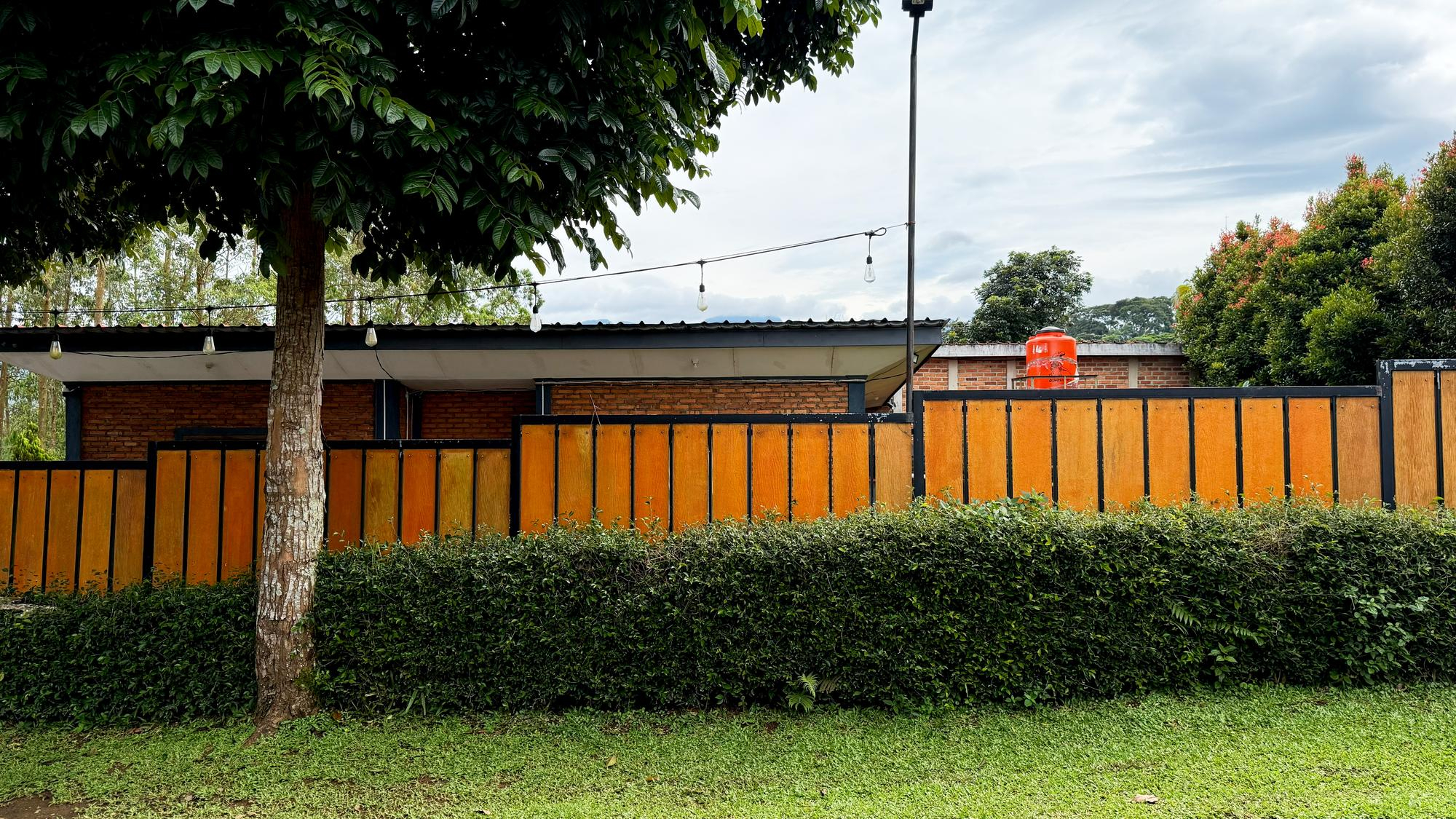
The Basement
I was standing on a ladder, scooping wet leaves out of my gutters when my phone buzzed in my pocket. The morning was cool but not cold, that peculiar kind of early autumn day where everything still feels like summer but smells like change.
“Morning, Dad.”
“You sound exhausted.”
Clara laughed softly.
“I’ve had a long week.”
There was a brief announcement over a loudspeaker in the background, followed by the distant rumble of rolling suitcases. I could picture her moving through the terminal with that careful deliberation she had developed over the past six months. Nothing rushed. Nothing casual. Everything controlled.
“I’m at the airport,” she said. “They have started boarding the earlier flight, so it is noisy.”
I smiled, making my way down the ladder carefully. At seventy-two, I was not as quick as I used to be.
“You always get there too early.”
“I know. It makes me less anxious.”
She paused for a moment before speaking again.
“I wanted to thank you for checking on the house while I am gone.”
“It is not any trouble.”
“And thanks for finding someone to mow the lawn.”
“I told him to be there around one.”
“Perfect.”
Another silence followed. This one felt different. Almost hesitant.
“If you stop by today,” she began, “do not worry if you do not see much inside. I packed everything up before I left.”
“You planning to move while you are gone?”
That earned a small laugh, but it was the kind of laugh that does not quite reach the eyes.
“No.”
Her voice softened.
“I just wanted the place to look tidy.”
I thought it was an odd thing to mention. Then again, the past six months had changed her in ways that went beyond the obvious bruises from the custody fight and the divorce proceedings. Since separating from Evan, she had become meticulous about everything. Doors locked twice. Curtains closed before sunset. Receipts filed away. Every routine carefully followed. Every contingency planned.
She had never said she was afraid.
But I had noticed the changes.
“You will call when you land?”
“I promise.”
“I love you.”
“I love you too, Dad.”
The line went dead.
At the time, I had no reason to believe that would be the last honest conversation we would have for the rest of the day.
Around lunchtime, I drove to Clara’s house to water her flowers before heading home to finish some yard work of my own. Everything appeared perfectly ordinary. The white shutters were closed against the afternoon heat. The porch was spotless. No packages waited by the door. No signs of disturbance. I checked the mailbox, watered the hanging baskets, and locked the gate behind me as Clara always insisted.
As I pulled away, I noticed a dark pickup truck turning out of the neighborhood. I could not make out the driver. The windows were tinted dark enough to obscure everything inside. I barely gave it another thought, though later I would wish I had paid closer attention. Later, I would replay that moment over and over, wondering if I could have changed what came next.
At 1:15 p.m., Jesse, the young man I had hired from the bulletin board at the hardware store, texted me a picture of the freshly cut front lawn. The grass looked uniform and neat, the kind of work that showed genuine care for the details.
Looking good so far, he had written. Starting the backyard now.
I replied with a thumbs-up and went back to cleaning my garage, moving boxes and sorting through old tools I had not used in years. The kind of mindless work that lets your hands stay busy while your mind drifts.
Forty-five minutes later, my phone rang.
His voice was noticeably lower than before, uncertain and careful.
“Mr. Whitmore?”
“Everything alright?”
“I… do not know.”
Something in his tone made me stop what I was doing.
“What happened?”
“I keep hearing somebody crying.”
I frowned, setting down the rake I had been holding.
“Where?”
“Inside your daughter’s house.”
My grip tightened around the rake handle.
“That cannot be right.”
“I thought it was coming from another yard at first,” he said. He sounded embarrassed, like he might be overreacting.
“But every time I shut the mower off, it sounds like it is coming from inside.”
The mower engine suddenly went silent in the background.
For a few seconds, neither of us spoke.
Then I heard it. Faint. A child. Not screaming, just a tired little cry that faded almost as quickly as it began.
Jesse whispered, “That is what I have been hearing.”
My stomach tightened.
“The house should be empty.”
“I know.”
“I was there this morning.”
“I have not gone inside,” he said quickly. “I just thought… if someone needed help…”
“You did the right thing by calling.”
I was already reaching for my truck keys.
“Stay outside.”
“I will.”
“I am on my way.”
I tried calling Clara. Straight to voicemail. That was not unusual during flights. Planes did not permit phone use at altitude. Still, I left a message anyway.
“Call me as soon as you get this.”
Next, I called Evan. No answer. Their divorce had been finalized nearly a year earlier, but the custody dispute over their two-year-old son, Liam, had dragged on through hearing after hearing. Depositions. Evaluations. Arguments. Neither of them spoke directly anymore unless it involved Liam. Everything else went through lawyers, through careful written communication designed to leave no room for misunderstanding or recrimination.
As I backed out of my driveway, a memory surfaced. Three weeks earlier, Clara had come to dinner looking unusually tense. We had ordered from the Italian place she loved, and she had picked at her pasta while I ate. Halfway through the meal, she had asked me an unexpected question.
“Dad…”
“Yeah?”
“If someone keeps driving past your house without stopping…”
I had looked up from my plate.
“Would you think it was strange?”
“Depends.”
“What if it happened almost every evening?”
I remembered setting my fork down carefully.
“Is somebody doing that?”
She had forced a smile.
“It is probably nothing.”
I had not believed her then. Now I wondered why I had let the conversation end there. Why I had not pressed further. Why I had allowed my daughter to sit across from me at my dinner table, clearly afraid, and done nothing more than accept her dismissal.
The drive took barely fifteen minutes. Jesse was waiting beside his mower when I arrived, relief washing over his face like someone who had been holding his breath underwater.
“I am glad you are here.”
“You stayed outside?”
“Like you said.”
He pointed toward the backyard.
“It comes and goes.”
Almost on cue, another faint cry drifted through the still afternoon. Not loud. Just enough to make the hairs on my arms stand up.
“I hear it,” I admitted.
Jesse let out a slow breath.
“I thought maybe I was imagining things.”
“You were not.”
We walked around the side of the house together. Nothing appeared disturbed. No broken windows. No forced locks. No footprints in the flowerbeds. The backyard looked almost exactly as I had left it that morning.
Almost.
Near the back steps, a grocery bag had tipped over. A carton of crackers lay on the grass beside a receipt. I picked it up carefully. The timestamp showed less than two hours earlier.
Chicken noodle soup. Fresh bananas. Apple juice. Children’s fever medicine. Diapers. Pediatric electrolyte drinks.
I stared at the list for a long moment.
Someone had been shopping for a sick toddler.
Jesse looked at me.
“I never saw anyone come back.”
Neither had I.
The back door caught my attention next. It was closed, but it had not latched completely. That was not like Clara. She checked every lock before leaving a room. Ever since the custody fight had turned ugly, she had become almost obsessive about security. Triple-checking doors. Installing new locks. Asking questions about alarm systems. All the small rituals of someone who no longer felt safe in their own home.
I reached beneath the ceramic frog beside the flowerpot. The spare key was exactly where she had always kept it. I wrapped my fingers around it.
Jesse shifted uneasily.
“Maybe we should call the police first.”
I almost agreed. Every rational part of me said he was right. We should document this. We should involve professionals. We should not simply let myself into someone else’s home, even if that someone was my daughter.
Then another soft cry floated through the house. Weak. Tired. The unmistakable sound of a little boy trying not to cry.
Every instinct I had as a father and as a grandfather took over.
“If a child needs help,” I said quietly, “I am not waiting outside.”
The kitchen smelled faintly of warm soup. A saucepan still sat on the stove, its contents congealed into a solid mass. A child’s cup rested beside the sink, recently washed and left to air dry. Everything was tidy. Everything was intentional.
The house was not abandoned.
Someone had been living in it today. Quietly. Carefully.
Jesse remained just inside the doorway.
“I will stay here.”
I nodded and moved deeper into the house.
The crying came again. This time, it was followed by a woman’s gentle whisper.
“It is okay, sweetheart.”
The voice was too soft to make out anything else.
My heart began pounding in a way I had not felt in years.
At the end of the hallway stood the basement door. Slightly open. Clara hated open doors. She had inherited that habit from her mother. Every room. Every closet. Every cabinet. Always closed. A way of keeping the world organized and contained and manageable.
I pushed the basement door wider.
Cool air drifted upward from below.
The whispering stopped.
So did the crying.
Silence settled over the staircase like a held breath.
“Hello?” I called.
No answer.
Only the faint creak of someone shifting below.
Jesse lowered his voice.
“Mr. Whitmore… maybe we should wait.”
I understood why he said it. But if that really was Liam crying downstairs, I could not wait. Not another second.
I started down the wooden steps. Halfway to the bottom, I noticed the duck-patterned baby blanket folded neatly on the landing. My late wife had sewn those tiny yellow ducks before Clara was born. I remembered watching her work on the quilt, her hands moving with careful precision, her whole face soft with anticipation.
The blanket usually stayed inside an old cedar chest upstairs, tucked away like a memory that needed protection.
Seeing it here made no sense.
At the bottom of the stairs, the room opened before me.
For a moment, I forgot how to breathe.
The unfinished basement had become a small apartment. A mattress covered one corner. Children’s books lined a low shelf. Bins held neatly folded toddler clothes. There were diapers, bottled water, canned food, medicine, toys, and a small folding table covered with legal documents.
Nothing looked rushed.
Nothing looked neglected.
Someone had prepared this place with care and attention. Someone had thought through every detail. Someone had made a choice.
Then I heard a tiny cough.
I turned toward the sound.
A little boy sat on the mattress, hugging a worn stuffed rabbit. His cheeks were flushed with fever. His eyes filled with tears as he looked toward the far corner of the room.
“Mommy…”
A woman stepped into view immediately, lifted him into her arms, and kissed the top of his head. Only then did she raise her eyes to mine.
“Dad.”
Clara looked exhausted. Her hair was loosely tied back. Dark circles shadowed her eyes. She wore the same sweater she had been wearing when she had called me from the airport that morning. She did not look surprised. Only relieved that the waiting was finally over.
Behind me, Jesse quietly stepped backward toward the stairs.
“I will give you two some privacy,” he said gently.
Neither of us answered. I could not take my eyes off my daughter.
“You never left,” I whispered.
She hugged Liam a little tighter.
“No,” she said. “I could not.”
For a long moment, none of us spoke. The basement was quiet except for the soft hum of a small fan and Liam’s uneven breathing as he rested his head against Clara’s shoulder.
She rocked him gently until his eyes drifted closed.
Only then did she look back at me.
“I am sorry, Dad.”
Her voice was barely above a whisper.
“I never wanted you to find out like this.”
I looked around the room again. There was nothing careless about what she had done. Fresh bottles of water were stacked against one wall. A first-aid kit sat beside a small cooler. Children’s books, clean blankets, diapers, medicine, and neatly folded clothes filled plastic storage bins.
It was not a prison.
It was a refuge.
Still, one question refused to leave my mind.
“Why?” I asked quietly.
She took a slow breath.
“I really did go to the airport this morning.”
“I believe you.”
“I parked the car, checked in, and sat at the gate.”
“So why come back?”
She looked down at Liam.
“Because I could not leave him.”
“You were only supposed to be gone for a few days.”
“I know.”
Her eyes filled with tears.
“I kept thinking about everything that has happened these past few weeks. Every announcement over the loudspeaker sounded farther away, and all I could picture was Liam.”
She brushed a strand of hair away from his forehead with infinite tenderness.
“When they called my boarding group, I stood up…”
She paused.
“…and I could not make myself walk through the gate.”
“So you left.”
She nodded.
“I drove straight home.”
I remembered our phone call that morning. The way she had sounded exactly like she was standing in an airport. The distant sounds of luggage wheels and boarding announcements carefully crafted to sound authentic.
“You sounded like you were already boarding.”
“I called you from the airport before I walked out.”
She gave me a guilty smile.
“I knew that if I sounded uncertain, you would start asking questions. I was not ready to answer them.”
That finally made sense. She had not lied about being at the airport. She had lied about getting on the plane.
“I almost called you again after I got home,” she continued.
“I picked up my phone three different times.”
“Why did not you?”
“Because I know you.”
She managed a tired smile.
“The moment you realized I was here, you would have driven over.”
She was right.
“I was afraid you would confront Evan.”
“I probably would have.”
“And if that happened,” she said, “his lawyer would have argued that my family was interfering before Monday’s emergency hearing.”
I slowly nodded.
“So you stayed quiet.”
“I hated doing it.”
She looked around the basement.
“But I only needed to make it until Monday.”
I glanced at the folders on the table.
“What happens Monday?”
“My attorney filed an emergency request to suspend Evan’s visitation.”
“Based on what?”
She handed me a thick file. Inside were police reports, attorney correspondence, photographs, and printed text messages. One photograph showed faint bruising around Liam’s upper arm. Another report documented that Evan had returned Liam nearly four hours late after a scheduled visit.
There was also a sworn statement Clara had written in careful, measured language that somehow made everything sound worse. Not because she was dramatic. Because she was not.
I looked up.
“He threatened you.”
She nodded.
“The last time he dropped Liam off.”
Her voice shook.
“He smiled and said, ‘One day I will not bring him back. You will never see him again.'”
My stomach turned to ice.
“I reported it immediately.”
“What did the police say?”
“Without witnesses, it became my word against his.”
She looked exhausted just remembering it.
“Then he started driving past the house.”
“The dark pickup.”
She looked surprised.
“You saw it?”
“I noticed one leaving the neighborhood today.”
“It was not the first time.”
She walked toward the small basement window and pointed.
“The neighbors saw it too.”
She looked at the duck-patterned blanket folded on the landing.
“I covered the basement window after sunset so no one could see lights inside.”
I finally understood.
“And the upstairs?”
“I kept it looking empty.”
She gave a weary laugh.
“If Evan drove by, I wanted him to think I had actually left for Phoenix.”
“So why stay here at all?”
“My lawyer advised me not to leave my legal residence unless there was an immediate emergency.”
She folded her arms.
“Leaving with Liam could have allowed Evan’s attorney to claim I was interfering with the existing temporary custody order.”
“So you stayed.”
“I stayed where the court expected me to be.”
“And waited.”
She nodded.
“I only had to make it through the weekend.”
Silence settled between us. Outside, I could hear Jesse’s mower starting up again in the backyard. Such a normal sound. Such an ordinary afternoon noise in a moment that felt anything but ordinary.
Then Liam stirred. His eyes fluttered open. He looked at me for a second before reaching out with one tiny hand.
“Grandpa.”
I smiled despite everything.
“Hey there, buddy.”
He held up his stuffed rabbit.
“Rabbit sleepy.”
I chuckled softly.
“I think Grandpa is pretty sleepy too.”
For the first time that afternoon, Clara laughed. It was not much. But it sounded real.
I walked over and took her hand.
“You should have trusted me.”
“I know.”
“I would not have judged you.”
“I was not afraid of that.”
She squeezed my hand.
“I was afraid you loved us enough to do something that would hurt the case.”
I could not argue. If she had told me about Evan’s threat, I probably would have driven straight to his house. I probably would have said things that would have been repeated in court. She knew me better than anyone ever could.
“You do not have to hide anymore,” I said.
She looked at me uncertainly.
“What do you mean?”
“I mean you are not spending another night in this basement.”
“What if Evan drives by?”
“Then he will see exactly what you wanted him to see.”
I smiled gently.
“An empty house.”
She frowned.
“But where will we go?”
“My house.”
“What if he follows us?”
“He will not.”
“How can you be sure?”
“Because we are not leaving alone.”
She looked confused.
I took out my phone.
“My friend Daniel retired after thirty years with the sheriff’s department.”
She raised an eyebrow.
“He still knows everyone.”
Within twenty minutes, Daniel arrived with another retired deputy who volunteered with our neighborhood watch. After I explained the situation, both men agreed to stay in separate vehicles where they could quietly watch Clara’s street through the night.
Not to confront anyone.
Simply to observe and document.
“If Evan comes by,” Daniel said, “he will be on three different cameras before he realizes it.”
Clara’s shoulders relaxed for the first time all day.
“Thank you.”
Daniel smiled kindly.
“You have got enough to worry about.”
We packed only what Liam needed for the weekend. His favorite books. Medicine. Clean clothes. The stuffed rabbit. Before leaving, Clara carefully removed the duck-patterned blanket from the basement window and folded it in her arms.
“My mom made this,” she said quietly.
“I know.”
“I kept thinking… if she were still here…”
I rested a hand on her shoulder.
“She would tell you exactly what I am telling you.”
She looked at me.
“You are not alone.”
Monday morning arrived with gray skies and steady rain. Clara’s attorney met us outside the courthouse. The emergency hearing lasted most of the afternoon. The judge reviewed photographs, police reports, documented complaints, witness statements from neighbors who had repeatedly seen Evan’s truck circling the neighborhood, and security camera footage showing his vehicle lingering outside Clara’s house on multiple evenings.
When the hearing ended, the judge issued a temporary emergency order. Evan’s visitation was suspended until a full custody hearing could be held, and all future contact regarding Liam would be supervised under the court’s direction.
It was not a final victory. There would still be more hearings. More evidence. More difficult days ahead. But for the first time in months, Clara no longer had to spend every evening wondering whether someone might try to take her little boy away.
As we walked out of the courthouse, she stopped on the front steps. Rain drizzled softly around us. Liam reached for her hand. She picked him up and held him close. Not because she feared losing him. Because she finally had permission to stop living in fear.
Several months later, I returned to Clara’s house to help her organize the basement. The mattress was gone. The folding table had been put away. The storage bins had been moved upstairs to Liam’s room. Sunlight streamed through the uncovered basement window, filling the space with warmth and light.
Clara carried the duck-patterned blanket upstairs and placed it carefully back inside the old cedar chest.
“It belongs here,” she said.
“It always did.”
Outside, I heard the familiar sound of a lawn mower. Jesse was trimming the front yard again, just routine maintenance on a sunny autumn afternoon.
He waved when he saw me.
“Everything going okay?”
I smiled.
“Much better.”
He nodded and went back to work.
Sometimes I still think about the phone call that brought me there. A simple question from a young man who trusted his instincts.
“Is anyone else supposed to be inside the house?”
That afternoon, I thought I was driving toward a mystery.
Instead, I found a frightened mother, a sick little boy, and a family carrying far more fear than anyone should have to bear.
The mystery was not who was hiding in the house.
It was how long my daughter had believed she had to face that fear completely alone.
She never did again.

Lila Hart is a dedicated Digital Archivist and Research Specialist with a keen eye for preserving and curating meaningful content. At TheArchivists, she specializes in organizing and managing digital archives, ensuring that valuable stories and historical moments are accessible for generations to come.
Lila earned her degree in History and Archival Studies from the University of Edinburgh, where she cultivated her passion for documenting the past and preserving cultural heritage. Her expertise lies in combining traditional archival techniques with modern digital tools, allowing her to create comprehensive and engaging collections that resonate with audiences worldwide.
At TheArchivists, Lila is known for her meticulous attention to detail and her ability to uncover hidden gems within extensive archives. Her work is praised for its depth, authenticity, and contribution to the preservation of knowledge in the digital age.
Driven by a commitment to preserving stories that matter, Lila is passionate about exploring the intersection of history and technology. Her goal is to ensure that every piece of content she handles reflects the richness of human experiences and remains a source of inspiration for years to come.