“Mom, they think you’re embarrassing, and honestly, so do I. It’s easier if you just don’t come.”
That was my daughter. My Brittany. She said it to a room full of people who were not me, ten days before the wedding I had spent every dollar I had left in the world to pay for. She said it because she thought I could not hear her. She did not know the voicemail was still recording.
Let me back up, because a line like that only lands if you know what came before it, and what came before it was thirty-two years of me putting Brittany first, every single time, without ever once being asked to explain why.
My name is Judith Farrow. I am sixty-four years old. I have lived in the same small town in central Ohio my whole life, in a two-bedroom house on Sycamore Street that my husband Danny and I bought in 1987 with a loan from his father and a handshake. Danny died four years ago. Aortic aneurysm, in the driveway, on a Tuesday, while he was scraping frost off the windshield of the truck. He was there and then he was not there, and I have not been able to look at that driveway the same way since.
After Danny died, it was just me and the quiet and the memory of a marriage that had been, by any honest accounting, a good one. And it was Brittany. My only child. The one thing Danny and I made that outlasted us both.
I want to tell you about Brittany the way I saw her, because I think you have to understand how much I loved her to understand how far I was willing to fall.
She was born in the spring of 1994, three weeks early, four pounds eleven ounces, so small the nurses let me hold her against my chest under a blanket for warmth because the incubator felt too far away from me. I counted her fingers. I counted her toes. I made Danny count them too, twice, because I could not believe she was real. We had tried for six years for her. Six years of doctors and thermometers and disappointment, and then there she was, this impossible pink thing, and I decided in that first hour that there was nothing in the world I would not do for her.
I kept that promise. God help me, I kept it too well.
When she wanted ballet, I drove her forty minutes each way to Columbus twice a week for six years, sitting in the parking lot doing crossword puzzles because the gas to drive home and back cost more than the gas to just wait. When she wanted braces, Danny picked up weekend shifts at the plant and I took in ironing for the neighbors, and we got her the braces. When she wanted to go to a state school two hours away instead of the community college fifteen minutes from home, we found a way. We always found a way. That was the whole architecture of our lives: Brittany wants, and we find a way.
Danny used to tease me about it. “You’d give that girl your last breath,” he’d say, and I’d say, “Well, of course I would, she’s my daughter,” like it was the most obvious thing in the world. Because it was.
Brittany was smart. Smarter than me, smarter than Danny, and we were both proud enough of it to say so out loud. She got a degree in marketing and moved to Columbus and got a good job at a company that did something with software that I never fully understood. She started dressing different. Nicer. She started talking about restaurants I had never heard of and using words like “curated” and “elevated,” and I did not begrudge her any of it. I was proud. My girl from Sycamore Street, out there in the world, curating things.
She met Grant two years ago.
Grant Whitmore. The Whitmores of Dublin, Ohio, which is a suburb of Columbus where the houses have names for their subdivisions and three-car garages as standard. Grant’s father owned a chain of car dealerships across three counties. His mother, Pauline, sat on the boards of things. Charity boards, hospital boards, the kind of boards that have galas. I met Pauline Whitmore exactly four times before the wedding, and every one of those four times she looked at me the way you look at a stain on a tablecloth you are hoping no one else will notice.
I knew what I was to them. I was not stupid about it, even if Brittany seemed to think I was. I was the widow from the small town. I bought my clothes at the outlet mall off the interstate. I said “warsh” instead of “wash” and I could not stop myself no matter how hard I tried. When Pauline Whitmore asked me at that first dinner what I “did,” and I said I had worked the front desk at the vet clinic in town for twenty-six years, I watched something in her face close like a screen door.
But Brittany loved Grant. And Grant, I will say this for him, seemed to actually love Brittany. So I put my chin up and I told myself it did not matter what Pauline thought of me. My daughter was happy. That was the whole ballgame.
Then came the wedding.
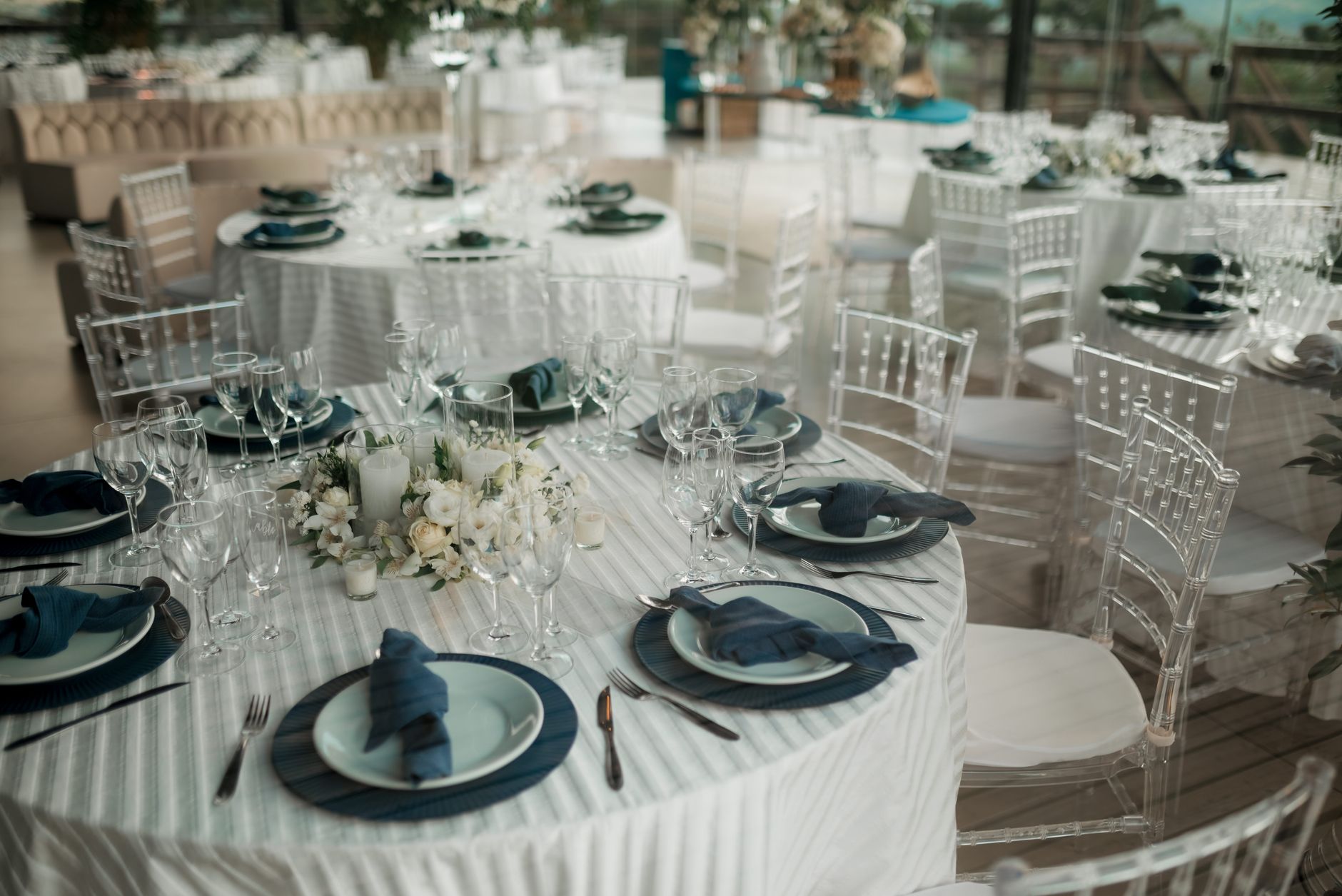
The Whitmores wanted a big wedding, and by big I mean the kind that gets written up in the regional magazine. A vineyard venue an hour outside the city. A guest list of two hundred and forty. A florist who had done weddings for people whose names I recognized from the television. Pauline had “a vision,” and the vision had a price tag, and here is the thing that I have to explain carefully because it is the whole hinge of this story.
The Whitmores did not offer to pay for it.
I have never fully understood why. They had the money the way a lake has water. But there is an old rule, older than any of us, that the bride’s family pays for the wedding, and Pauline Whitmore was a woman who lived by old rules when the old rules happened to favor her. She mentioned it once, lightly, at a dinner, the way you’d mention the weather. “Of course, tradition holds that the bride’s side handles the celebration.” And she smiled at me over her wine glass, and I understood that a bill was being handed to me across that table, and I understood that the size of it was meant to be a test.
I could have said no. I want you to know that I understand that now, sitting here, that I could have said no. I could have said, Brittany, honey, this is more than I have, we need a smaller wedding, and any reasonable person would have understood.
But I did not say no. Because Brittany looked at me across that dinner table with her whole face open and hoping, the same face she had when she was seven and wanted the ballet slippers, and I heard myself say, “Don’t you worry about the money. Your father would have wanted you to have your day.”
I want to tell you exactly what I did, so you understand the weight of it.
I had a little over forty thousand dollars. That was the whole of it. It was Danny’s life insurance, mostly, minus what I’d already spent on the funeral and the four years of living since. It was my entire cushion. It was the money that was supposed to be there if the roof went, if I got sick, if I lived long enough to need help I could not do myself. It was, if I am being honest, the only thing standing between me and being truly afraid at night. I will not use that word again, that word about being afraid, because it does not quite hold what it felt like, so let me just say it was the difference between having a floor under me and not having one.
The wedding came to thirty-eight thousand dollars.
I gave them all of it. Every dollar. The venue deposit, the catering, the flowers, the photographer, the string quartet that Pauline insisted on, the dress that cost more than my first car. I sat at my kitchen table on Sycamore Street with the laptop Brittany had set up for me, and I moved the money out of my accounts and into the accounts of vendors I would never meet, and each time I hit “confirm” I felt a small door close somewhere behind me.
I did not tell Brittany it was all I had. That was my pride and my mistake both. I let her think there was more where that came from, because I did not want her walking down that aisle worried about her mother. I wanted her to have her day the way you want the sun to come up. Completely. Without condition.
For four months I was, God forgive me, happy. I was part of it. I got to go to the dress fitting. I got to hold the little fabric swatches up to the light. Brittany would call me from Columbus and say, “Mom, what do you think of peonies versus garden roses,” and I did not know a peony from a pothole but I would say, “Oh, the peonies, definitely the peonies,” and she would laugh and say I was hopeless, and it was the warmest I had felt since Danny died. I was useful to my daughter again. I was in the circle.
Ten days before the wedding, Brittany called me.
I remember I was standing in my kitchen with a dish towel over my shoulder. I remember the light was that late-afternoon gold that comes through the window over the sink. I remember I answered on the first ring, the way I always did for her, because it was Brittany and it was always Brittany.
“Mom,” she said. And I heard right away that something was wrong, because her voice had that careful flatness it gets when she has decided something and is bracing for me to be difficult about it.
“What is it, baby?”
“So. Okay. I need to talk to you about the wedding.”
“Of course. What do you need?”
There was a pause. A long one. And then she said the thing I did not, in that moment, fully absorb, because my brain would not let it in all at once.
“I think it’s better if you don’t come.”
I thought I had misheard her. I actually said, “You’re cutting out, honey, say that again,” even though she was not cutting out at all.
“I think it’s better if you don’t come to the wedding,” she said, slower, like she was explaining something to a child. “Pauline and I have been talking, and Grant’s family, they’re just, they move in a certain world, Mom, and it’s a whole thing, the whole event is very, it’s a certain level, and I just think it would be better for everyone, less stressful, if it was just, if you weren’t there. To keep the peace. You understand.”
I did not understand. I stood in my kitchen and I held the phone and I could not make the words mean anything.
“Brittany,” I said. “I paid for the wedding.”
“I know, Mom. And I’m so grateful, truly. And I’ll make it up to you, I promise. We’ll do a special lunch, just us, after, and I’ll show you all the pictures. But the day itself, it’s just, it’s really important that it goes smoothly, and Pauline gets so anxious, and it would just be one more thing to manage, you know? It’s not about you. It’s about keeping everything calm.”
It’s not about you. About the mother who was not invited to the wedding she had emptied her life savings to pay for. It’s not about you.
I do not remember how the call ended. I remember saying, “All right, honey,” because thirty-two years of putting Brittany first do not switch off in one phone call, and my first instinct, my deepest and most broken instinct, was still to make it easy for her. I remember hanging up. I remember standing in that gold kitchen light with the dish towel on my shoulder for what might have been a minute or might have been an hour.
And then I sat down at the kitchen table and I did not cry, which surprised me. I just felt very still, and very old, and very stupid.
For three days I did nothing. I told no one. I let the shame of it sit on me like a wet coat. I moved through my house and I did not turn on the lights when it got dark. I kept thinking about Danny, about how he would have gotten in the truck and driven to Columbus and stood in Brittany’s doorway and said something that fixed it, because Danny always knew how to fix it, and Danny was in the ground and I was alone and I could not fix anything.
On the fourth day, my phone rang while I was in the garden. I did not get to it in time. It stopped, and then a few seconds later, it buzzed with a voicemail.
I almost did not listen to it. I want you to know how close I came to just deleting it, because the sight of Brittany’s name on my screen had started to hurt in a way I did not have words for.
But I listened. And this is the part where everything I thought I knew turned over.
Because Brittany had not meant to call me. She had called me by accident, a pocket dial, a butt dial, whatever you want to call it, in the middle of a conversation she was having with someone else, and my phone had recorded ninety-one seconds of that conversation before her voicemail cut off.
I have listened to those ninety-one seconds more times than I will admit to you.
I am going to tell you what was on that voicemail. But not yet. Because to tell you now, before you understand what I did with it, would be to give you the ending before the middle, and this story has a middle, and I earned the middle, and so did she.
What I will tell you is this. The voicemail was not the reason I thought I had been cut out. It was not about Pauline’s anxiety, and it was not about keeping the peace, and it was not, whatever else it was, an accident of circumstance that a grieving mother could forgive as a hard decision made under pressure.
It was a choice. A deliberate, spoken-out-loud, laughing choice. And the reason behind it was so much smaller and so much crueler than “keeping the peace” that when I finally understood it, I sat down on the cold garden dirt in my work gloves and I stayed there until the sky went dark.
I need to tell you about the day I decided what to do, because it is the part of this story I am actually proud of.
I did not call Brittany screaming. I did not send the voicemail to Pauline Whitmore, though I will confess to you that I sat with that option for a long, ugly hour. I did not drive to Columbus and make a scene at the vineyard. Every one of those things would have been a way of handing my dignity to them one more time, of making my pain their event to manage.
Instead I did something harder.
I called the venue, and the caterer, and the florist, and the string quartet, and the photographer. One by one. And I asked each of them a simple question. I asked whose name the contract and the payment were under.
Mine. Every one of them. Judith Farrow. Because I had been the one at the kitchen table hitting “confirm.” Pauline Whitmore, for all her vision, had not put her name on a single line of it. Brittany had not either. The whole wedding, the entire two-hundred-and-forty-guest, magazine-worthy vision, sat legally and financially on the shoulders of the embarrassing widow from Sycamore Street who was not welcome to attend it.
I want to be very careful about what I am telling you here, because I know how it could sound, and it is not what I did.
I did not cancel the wedding. I want that on the record. I thought about it. Of course I thought about it. I had the power to, and there was a version of me, a version I do not entirely dislike, who picked up the phone and pulled every dollar back and let the whole beautiful lie collapse ten days out, and let Pauline Whitmore explain to her board-of-directors friends why the vineyard was empty.
But that version of me would have been hurting Brittany to hurt Brittany. And whatever she had done, whatever was on that voicemail, she was still the four-pound-eleven-ounce girl I counted the fingers of. I could not do it. Not because she deserved my mercy, but because I could not become a person who would take a daughter’s wedding day out of spite. That was not who Danny married. That was not who raised her.
So here is what I actually did.
I let the wedding go forward. Every dollar stayed where it was. The flowers bloomed, the quartet played, the two hundred and forty guests ate the catered dinner I had paid for, and my daughter married Grant Whitmore in a vineyard an hour outside Columbus on a Saturday in June, and I was not there.
But before that Saturday, I did two things.
The first thing was I wrote Brittany a letter. Not an angry letter. I threw away four angry letters before I wrote the one I sent. The letter I sent was one page, in my own handwriting, and it said, in essence, this: I know about the voicemail. I know what you said and I know why. I paid for your wedding because I love you and I would do it again, and I am not asking for the money back, and I am not going to ruin your day. I am going to be at home. When you are ready to talk to me like the woman I raised you to be, and not like a problem to be managed, you know where I live. It is the same house it has always been.
I did not accuse. I did not quote the voicemail back to her. I just let her know that I knew, and then I let her sit in that.
The second thing I did was harder, and it is the thing I want to end on, but I am not going to end on it yet, because you deserve to know what the voicemail actually said, and I promised you the middle.
So here it is. Here is what my daughter said, ninety-one seconds of it, recorded by accident into my phone while she thought she was talking only to Pauline Whitmore.
She was laughing when she said it. That is the part that I cannot put down. She was laughing.
“No, no, it’s handled,” Brittany said. “I told her not to come. God, it was awful, she got all quiet, but she’ll get over it, she always does. She’s not going to do anything.” A pause, Pauline saying something I could not hear. Then Brittany again: “I know. I know. Look, the thing is, once the money’s spent it’s spent, right? It’s not like she can un-ring that bell. She already paid for everything, so honestly, what’s she going to do? She’s harmless. She’ll cry about it and then she’ll send me a birthday card in October like nothing happened, that’s just how she is.”
And then Pauline said something, and both of them laughed, and Brittany said the line that I will hear in my head for the rest of my life:
“Exactly. She already gave us the wedding. We don’t actually need the person.”
We don’t actually need the person.
There it was. Not embarrassment. Not keeping the peace. Not Pauline’s delicate nerves. Just arithmetic. I was a payment that had cleared. The transaction was complete, and you do not invite the cash machine to the party.
I sat in the garden dirt and I understood, finally and completely, that my daughter had done a calculation, and in that calculation I was worth exactly thirty-eight thousand dollars and not one cent, and not one minute, more.
Now I can tell you how it ends. Because it does end, and it does not end the way you might think, and it took a year to get here.
The wedding happened. I stayed home. I spent that Saturday pulling weeds and I made myself a good dinner and I called my sister in Toledo and we talked for two hours, and it was, all things considered, not the worst day of my life. The worst day of my life had a driveway and a frost scraper in it. This was just the second worst.
Brittany did not call me the week after the wedding. Or the month after. She sent me, and I am not making this up, a birthday card in October. Just like she said she would. It had a picture of a garden on the front and it said “Thinking of you, love B,” and I sat at my kitchen table and I laughed until I cried, because she had told Pauline exactly what she was going to do and then she had done it, right on schedule, like a woman winding a clock.
I did not respond to the card.
Here is what I learned in that year, and it is the only thing I have that might be worth something to you if you are reading this and something in it feels too familiar.
Love that only ever flows one direction is not a relationship. It is a subscription. And I had been paying into it for thirty-two years, thinking that the size of what I gave was a measure of how much I was loved, when the whole time it was only ever a measure of how much I could be taken for.
The voicemail did not break my heart. My heart was already broken; the voicemail just showed me where the crack had always been. And once I could see the crack, I could finally stop pouring myself into it.
I stopped calling first. I stopped sending the money I did not have. I stopped answering on the first ring. And for a long time, a long and quiet time, nothing came back the other way, and I made my peace with that. I told myself that I would rather be alone and clear-eyed than surrounded and taken for a fool. I got a part-time job back at the vet clinic, three mornings a week, because the money was thin now, and I found that I liked the dogs and the quiet and the woman named Ruth at the front desk who made me laugh.
And then, this past spring, eleven months after the wedding, there was a knock on my door on Sycamore Street.
It was Brittany. She was standing on my porch and she was not curated and she was not elevated. She had been crying, the real kind, the kind that ruins your face. And she stood there and she said, “Mom. I heard the voicemail. I found it. I know you have it. I know what I said.”
I did not say anything. I had waited eleven months. I could wait a little longer.
“Grant and I are separating,” she said. “And Pauline, she’s not, she was never, and I’ve been sitting in that big house feeling like a piece of furniture, and I finally understood what I did to you. I understood it from the inside.” She was really crying now. “I don’t want the money. I’m not here about the money. I just, I did the math on you, Mom. I actually did the math. And I have been trying to figure out how a person does that to their own mother, and I can’t, I can’t figure it out, and I need you to tell me I’m not the person who did that.”
And I stood in my doorway, in the same house it has always been, and I looked at my daughter, and I made the last decision of this story.
I am not going to tell you what I said to her. That part belongs to me and to Brittany and to the porch on Sycamore Street, and it is the one thing in this whole business that I get to keep.
But I will tell you this much, so you are not left hanging. I did not slam the door. And I did not throw my arms open either. There is a lot of room between those two doors, and it turns out that a person can stand in that room for a long time, holding it open just a crack, watching to see whether the one on the other side has actually changed or has only run out of other options.
We are not fixed. I want to be honest with you about that, because the stories where the mother forgives everything in a rush of tears and the music swells are lies, and I am done with lies, mine and everyone else’s. Brittany and I are not fixed.
But we are talking. Slowly. She comes on Sundays now, and she washes the dishes without being asked, and last week she called me on a Tuesday for no reason at all, just to talk, and when I saw her name on my screen it did not hurt. That is not nothing. After a lifetime of one-direction love, a Tuesday call for no reason is not nothing.
I kept the voicemail. I will probably always keep it. Not to hold over her. I have never once played it back to her face and I never will. I keep it because it is the truest thing anyone in my family has ever said out loud, and because on the nights when the old instinct comes back, the instinct to give and give and give until there is nothing left of me, I take out my phone and I listen to my daughter laugh and say “we don’t actually need the person,” and I remember that I am a person, and that I am not for sale, and that the love I have left, what remains of it, is going to cost more than a wedding to buy.
It is going to cost showing up. On a Tuesday. For no reason at all.
That is the only currency I take now.
Specialty: Emotional Turning Points
Rachel Monroe writes character-driven stories about betrayal, second chances, and unexpected resilience. Her work highlights the emotional side of family conflict — the silences, the misunderstandings, and the moments when someone quietly decides they’ve had enough.