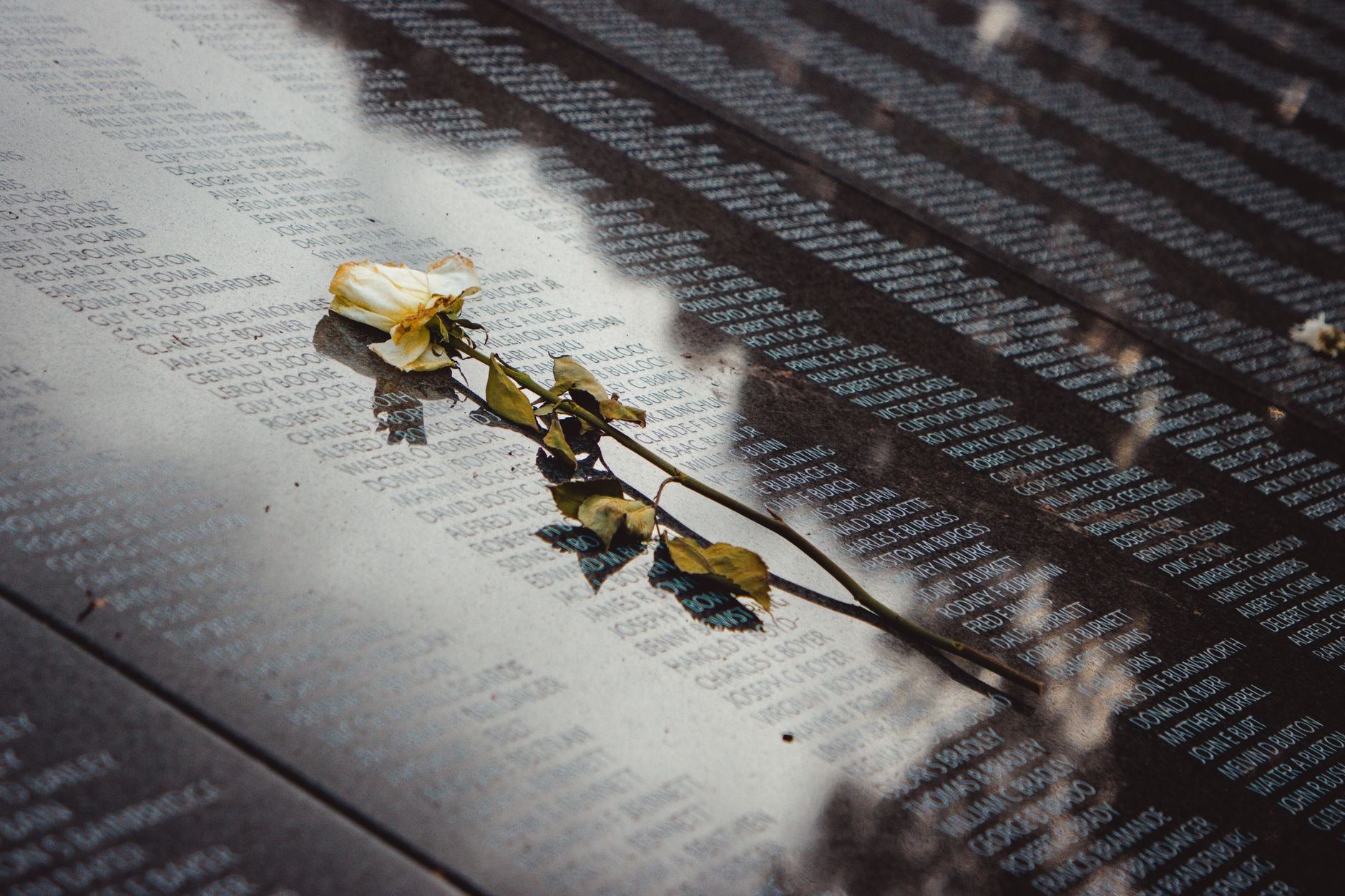
Bev Trask stood in front of the whole town on Memorial Day, looked me in the eye, and told me my dead son did not make the list.
That was the word she used. List. Like it was a signup sheet for the church bake sale, like Mateo had simply forgotten to put his name down, like a boy who died at twenty-two in a place I still cannot say out loud without my mouth going dry had misplaced his own name on some clipboard in the back of the American Legion hall.
I need to tell you the whole of it, from the beginning, because I have learned that people hear a thing like that and they want to make it smaller than it was. They want to say she did not mean it. They want to say it was a busy morning and mistakes happen. I have heard all of that. I heard it that whole week. And I am going to tell you what actually happened, and then you can decide for yourself what kind of thing it was.
My name is Dolores Salcido. I am sixty-six years old. I have lived in the same small Texas town for forty-one years, in a little house two streets off the square, close enough that on a quiet night I can hear the courthouse clock strike the hour. My husband Ruben passed nine years ago, and before that we had one child, and only one, though the Lord knows we tried for more. His name was Mateo. Lance Corporal Mateo Salcido, United States Marine Corps.
He has been gone eleven years now. He was twenty-two.
## The boy before the Marine
People who put up plaques and give speeches, they want the fallen to be statues. Bronze. Clean edges. A name and two dates and nothing in between. But my son was not a statue. He was a boy who could not sit still in church, who I had to pinch on the knee to keep from swinging his feet against the pew. He was a boy who cried when we butchered the hogs and then ate the bacon anyway and felt guilty about the whole thing, both parts, all his life.
He was born in the front bedroom of our house because the truck would not start and by the time Ruben got it running it was too late to drive anywhere, so a neighbor woman who had midwifed half the county came over in her housecoat and caught my Mateo in her two hands at four in the morning. Ruben used to say the boy came into the world impatient and never got over it. He learned to walk early and to run before he could really walk, so he was always falling, always skinning his knees, always getting back up with his chin out like the ground had insulted him personally.
We were not rich. Ruben worked at the feed store and did small-engine repair on the side, and I cleaned rooms at the motel out by the highway and later ran the register at the pharmacy for eighteen years. We did not have much, but we had that boy, and he was enough to fill a house twice our size. He was loud. He was funny in a way that got him sent to the principal’s office and then got the principal laughing too. He gave things away. That was the thing about Mateo that I could never train out of him and, I will confess, never really tried. He gave his lunch to a kid who did not have one. He gave his good jacket to a boy at the bus stop one winter and told me he lost it, and I found out three years later it was no such thing.
Some children are born already knowing that other people are real. That sounds like a strange thing to say. But you have met the other kind, the ones who go their whole lives with everyone else being a little bit like furniture to them, background, in the way. Mateo was never like that. Mateo looked at people. He saw them. When he was fifteen he sat with old Mr. Pruett from down the road every Thursday and let that lonely old man tell him the same war stories over and over, and when I asked him did it not get boring, he looked at me like I was slow and said, “Mama, he needs to tell them. It costs me nothing to hear them.”
It costs me nothing to hear them. My fifteen-year-old said that.
I think about it now because I understand, all these years later, that this is exactly why he did what he did at the end. Some people are made to stand between other people and the cold. I should have known the day he told me, standing in my kitchen while I rolled out tortillas, what that boy would grow up to be. He said he wanted to join the Marines. He said it plain, no working up to it, the way he said everything. And my heart dropped straight through the floor, and I kept rolling the tortilla so he would not see my face, and I said, why the Marines, and he said, “Because they go where it’s worst.”
Because they go where it’s worst. He was seventeen. I signed the papers because he would have signed them himself in a year and I did not want the last thing between us to be no.
## The car in the rain
I will not walk you all the way through the morning they came. If you have loved someone who serves, you already know the shape of that car, and you already know that a mother knows before it even stops moving. You know the two Marines in their dress blues coming up the walk with their covers under their arms and their faces arranged into the only expression a face can hold at a moment like that. You know the word no coming out of your own mouth like you are a child again, like the word has some power to push the whole world back into the shape it was in an hour ago, when your son was still alive and you did not know it was the best hour of the rest of your life.
They told me Mateo had been killed. They told me he had gone back, under fire, for two men who were pinned down and could not move, and that he had gotten both of them out, and that on the way back for a third he was killed. They told me those two men were alive because of my son. They gave me a folded flag. Later they gave me a medal, and later still they gave me a letter from his captain, and I will come back to that letter because it matters to this story more than anything else I own.
But that morning what I mostly remember is that Ruben, my strong Ruben who never cried in front of me in thirty years of marriage, sat down on the kitchen floor with his back against the cabinets and made a sound I had never heard a grown man make, and I got down on the floor next to him because I could not think what else on earth to do, and we sat there on the linoleum together, two old people, while the coffee I had been making went cold on the counter and the world kept being the wrong shape and would not go back.
They brought him home under the flag. The whole town came out for it. I remember thinking, at the funeral, with the square full of people and the color guard and the flag over the casket, that at least here, at least in this one place, my son would always be somebody. That his name meant something in this town. I held onto that. In the eleven years since, when the grief came at me sideways in the grocery store or at three in the morning, I held onto the idea that my Mateo was woven into the fabric of this place, that as long as this town stood, it would remember the boy who went where it was worst.
That is the belief Bev Trask took a pair of scissors to on Memorial Day.
## The photograph
There is a photograph. I have to tell you about the photograph because it is the center of everything that happened, the still point the whole story turns around.
It was taken three weeks before he deployed the last time. He came home on leave and he was so proud of that uniform, and I made him stand out by the mesquite tree in the side yard so I could take his picture in the good light. He kept trying to look serious. He had this idea that a Marine should look serious in a photograph, stern, a man now and not a boy. And he could not do it. He held that expression for about two seconds and then the corner of his mouth would go, and his eyes, his eyes gave him away every time. In the photograph I got, the one good one, he is standing straight and squared away in his uniform and he is trying with his whole heart to look like a serious man, and the smile is right there in his eyes anyway, the boy shining straight through the Marine.
That is the last photograph anybody ever took of my son. I had it framed. It sits on my mantel next to the folded flag, and it has sat there for eleven years, and there has not been a single day in those eleven years that I have not stopped in front of it at least once and said good morning or good night to my boy.
I bring that photograph places. I know how it sounds. I bring it to church sometimes, in my purse. I brought it to Ruben’s funeral. I bring it to the Memorial Day ceremony every single year, because it is the closest thing I have to bringing Mateo himself, and Memorial Day is his day, the one day the whole town is supposed to stand still and remember the ones who did not come home.
So of course I had it with me that morning on the square. I always do.
## The morning of the plaque
The town had decided, that spring, to put up a proper memorial. A bronze plaque, mounted on a block of granite, set right there on the courthouse square where everybody passes it a hundred times a week. The names of our fallen on it, going back generations, all the sons this little town had sent off and not gotten back. There had been a committee. There had been fundraising, spaghetti dinners at the fire hall and a jar by the register at the pharmacy where I used to work. I had put money in that jar myself. I had written a check, a real check, more than we could easily spare, because I thought, this is for Mateo. This is my boy’s name in bronze, forever.
Bev Trask ran the committee, the way Bev Trask runs everything in this town. I do not want to be unfair to her, so I will say this plainly and let it stand. Bev is a woman who needs to be in charge of things. She has run the Memorial Day ceremony for as long as I can remember, and the Fourth of July, and the Christmas lighting on the square, and she does it with a clipboard and a certain kind of smile and a way of talking to people that lets you know she considers your input and then does what she was always going to do. She is not from a service family. I do not hold that against a person. But I have come to believe it mattered, that she did not carry in her own body the weight of what that plaque was actually for.
The morning came bright and hot, the way our Memorial Days always are. I put on my good navy dress. I put the photograph in my purse. I walked down to the square, and there was a good crowd, folding chairs set out, the high school band, the Legion honor guard in their caps. And there, up on the courthouse steps, was the new plaque, under a cloth, waiting.
Bev gave her speech. She likes a speech. And then she pulled the cloth off the plaque, and there was applause, and people started filing up to look at it and find the names they knew.
I waited my turn. My heart was already going, the way it does on his day. And I stepped up close to that bronze plaque, and I started reading the names.
I read them once. I read them looking for one name, the way you scan a crowd for one face, and when I did not find it I told myself I had gone too fast. So I read them again, slower, my finger not quite touching the bronze, top to bottom.
Mateo was not there.
## What she said
I stood there for a long moment. I read it a third time. I want you to understand that my first thought was not anger. My first thought was fear, the specific animal fear of a person who suddenly cannot trust her own eyes, who thinks, I must be having a spell, I must be losing my mind, of course his name is here, and I simply cannot see it. I stood in front of that plaque with people moving around me and I could not find my son.
Then I understood that I was not losing my mind. His name was not on it.
I did not make a scene. I am sixty-six years old and I have buried my only child, and grief teaches you to hold very still when the ground moves under you. I waited. I let the crowd thin. And when Bev Trask was standing off to the side with her clipboard, checking things off, looking pleased, I walked over to her and I said, as quietly and as steadily as I could, “Bev. My son’s name isn’t on the plaque. Mateo Salcido. Lance Corporal, United States Marine Corps. He isn’t on there.”
And she looked at me.
I have replayed the next few seconds a thousand times, and I can tell you exactly how her face went. First there was a flicker of something, some knowledge crossing behind her eyes, so I knew, I knew right then, that this was not news to her. And then it smoothed over into that smile. That committee smile. And she said, “Oh, Dolores.” She said my name the way you would say the name of a child who has come to you with a scraped knee over nothing. “I’m sure it was just an oversight. He must not have made the list.”
The list.
“You have to understand,” she said, and she actually put her hand on my arm, “we can’t fit everybody. There’s only so much room on the plaque. Some names just didn’t make the cut this time. We can maybe look at it for next year.”
I stood there in my navy dress with my son’s photograph in my purse against my hip, and I felt the whole square go strange and far away and very bright.
Some names just didn’t make the cut. My son was not some name. My son went back into gunfire for two men he did not have to go back for and did not come out, and eleven years later a woman with a clipboard was telling me he did not fit.
I did not shout. I want to be honest about that, because I know how satisfying it would be to tell you I let her have it right there on the square. I did not. I think I was too stunned. I said something, I think I said, “He died, Bev. He was killed in action.” And she said, in that same soothing awful voice, “I know, honey, and it’s a real shame, but there were procedures for getting names submitted, and I just can’t be responsible for every family that didn’t turn in their paperwork.”
Paperwork. As though I had failed to renew a library card. As though the reason my son bled out in a place I cannot pronounce was that his mother did not fill out a form.
I walked home. I do not remember most of the walk. I remember letting myself in and standing in my own front room and looking at the photograph on the mantel, my Mateo trying so hard to look serious with the smile in his eyes, and I remember saying out loud to him, to the picture, “I’m sorry, baby. I’m so sorry. I’ll fix it. I swear to God I will fix it.”
## The longest week
I did not sleep that night, or much the next. I want to tell you I sat down and made a cool, clear plan, but that would be a lie. What I did first was doubt myself. That is what people like Bev count on, I have come to understand. She said oversight, and I lay in the dark and thought, was it an oversight? Was there a form? Did I miss something eleven years ago in the fog of the worst year of my life? I got out of bed at two in the morning and I went through the file box where I keep all of Mateo’s things, his papers, and I read every single thing in it by lamplight, and there was no form, there was no paperwork, there was no list I had failed to sign, because there was no such requirement. I checked with the county. I checked with the Legion. The plaque committee had gone through public records and old ceremony programs and simple town memory to build that list of names. There was no signup sheet. There never had been. Mateo’s name should have been the very first one anybody thought of, because he is the only son this town has lost in a generation, the only funeral with a folded flag that most people under fifty have ever attended.
So it was not an oversight. That was the thing I finally understood, sitting on my kitchen floor at three in the morning with his file box open around me like the wreckage of something. Somebody had built that list, and somebody had left my son off of it, and when I said so, that same somebody had looked me in the eye and called my dead Marine a name that did not make the cut.
I do not fully know why. I have my thoughts. There had been friction, years back, between Bev and my Ruben over some committee thing, some slight she never forgave, and my husband had been dead nine years and I would not have thought a grudge could reach past the grave, but I have lived long enough to know that some people carry a grievance like a lit coal in their fist and do not care what it burns. Maybe it was that. Maybe it was carelessness dressed up as procedure. In the end I decided the why did not matter as much as the what, and the what was that my son’s name was not on the square and a public official had told me to my face that he did not belong there.
And somewhere in that long week, the thing in me that had been folded up small for eleven years, folded like the flag on my mantel, finished opening all the way up.
I was done understanding. I was done being soothed. I was done being a quiet grieving mother that people could pat on the arm.
But I was not going to shout, either. Shouting is what they expect from a woman like me, and it lets them file you away as hysterical and move on. No. I thought about my Mateo, who never once raised his voice to win an argument because he did not have to, and I thought about the letter from his captain that I had read a hundred times, and I made a plan that was quiet and that would not let anybody look away.
The town holds a second, smaller gathering on the Sunday after Memorial Day, at the same square, a kind of community service, less formal. Bev runs that too. It was one week out. And I called the town clerk, who had known my Mateo, and I asked if I might say a few words that Sunday. And bless her, she put me on the program before Bev could say no.
## What I brought
That Sunday I put on the same navy dress. I did my hair. And this time I did not put the photograph in my purse. I took it out of the frame, carefully, and I had a man at the print shop make me a copy blown up large, poster size, mounted on a board. My Mateo, six feet of him, in his uniform, trying to look serious with the smile in his eyes. I had them make it big on purpose. I wanted it to be impossible to be in that square and not see my son’s face.
I got there early. The crowd gathered, a good number of them the same people who had been there the week before, plus word had gone around, the way it does in a small town, that Dolores Salcido had something to say. Bev was up front with her clipboard, and when she saw the big mounted photograph under my arm, I watched her face do a thing, a tightening, and I knew she knew.
They called my name. I walked up the courthouse steps, past the plaque, and I set the photograph on an easel I had brought, facing the crowd, so that they were looking at Mateo and Mateo was looking at them. And then I stood next to my son and I spoke.
I did not shout. I told them who he was. I told them the tortilla story and the jacket story and the Mr. Pruett story, so that they would know he was a real boy and not a statue. I told them how he died, plainly, the two men, the going back, the third man he did not reach. And then I said, “Last Sunday I came to this square to honor my son, and I found out his name is not on that plaque behind me. I asked why. I was told he did not make the list.”
You could have heard a pin drop.
And then I did the thing I had planned, the thing that I knew would not let anybody in that square look away. I took out the letter. The letter from Mateo’s captain, that had come with the medal, that I had never once read aloud to a living soul. And I read it to them.
I will not put the whole of it here, because some of it belongs only to me. But the captain wrote about what Mateo did that day, and he wrote one line that I read out slow, standing next to that six-foot photograph of my smiling boy, in front of the whole town and in front of Bev Trask and her clipboard. He wrote: “Your son did not consider any man expendable. He would not leave anyone off the list of those worth saving, even at the cost of his own life.”
He would not leave anyone off the list.
I let that sit in the hot morning air. And then I said, “My son believed every man was worth saving. He died believing it. And a week ago I was told that my son himself was a name that did not make the cut. I am not asking this town for a favor. I am telling you that a boy who would not leave anyone behind has been left behind, on that plaque, on his own square, and I am not going home until that is made right.”
## The morning after
Here is where I could leave you, if this were the trailer and not the whole story. But I promised you the whole of it, and the whole of it includes what happened next, and it is the part that lets me sleep.
When I finished, there was a silence, and then old Mr. Pruett’s son stood up, because his father had passed by then, and he said, loud, “That boy sat with my dad every Thursday for two years. You put his name on the plaque.” And then somebody else stood, and then a lot of somebodies. The Legion men were on their feet. The band director was on her feet. I stood next to my son’s photograph and watched a whole town stand up for him one at a time, and I finally, finally let myself cry, right there on the courthouse steps, eleven years of it.
Bev Trask did not stand. Bev Trask left. She gathered her clipboard and she walked to her car and she drove off, and I have not exchanged more than ten words with her since, and I find I do not need to.
The mayor came up to me afterward. He is a decent man, a little weak the way small-town mayors sometimes are, easily led by a woman with a clipboard, but not a bad man at heart. He took my hand and he said he had not known, that he had trusted the committee, and that he was ashamed. And he told me to be on the square the next morning at eight.
I was there at seven-thirty. And at eight o’clock, the mayor came with two men from the county shop, and they took the plaque down off its granite block, the whole thing, and they loaded it into a truck to go to the foundry two towns over, because a name cannot simply be scratched into bronze, the whole plate had to be recast. And the mayor turned to me on that square, with the empty granite block between us, and he said, “It’ll be back in six weeks. And I’d like your son’s name to be the first one read at the top, above the others, if that’s all right with you. He earned the top of the list.”
The top of the list.
I put my hand on that empty granite and I thought about my boy, impatient, born too fast for a truck that would not start, always running before he could walk, always getting up with his chin out, always going where it was worst. And I said, out loud, to him, “You made the list, baby. You made the top of the list.”
The new plaque came back in five weeks, not six. They held a rededication, and I was asked to pull the cloth off it myself, and I did, and there at the top, above every other name, in bronze that will outlast me and everyone I know, it says:
LANCE CORPORAL MATEO SALCIDO
UNITED STATES MARINE CORPS
HE LEFT NO ONE BEHIND
The photograph, the big one, hangs now in the American Legion hall, where the men who understand best can see his face. The small one is back in its frame on my mantel, next to the flag, and every morning I still stop and say good morning to my boy, and every night I say good night.
I sleep now. That is the thing I did not expect. For eleven years I carried the fear that when I was gone, Mateo would be all the way gone, that I was the last person on earth holding the weight of him. A woman with a clipboard tried to prove that fear true, tried to tell me my son did not fit, and instead she made a whole town stand up and say his name. She meant it as an oversight, a small thing, a name that did not make the cut. What she did was force my son’s name to the top of the list, in bronze, forever, above every other name on the square.
Some people are made to stand between other people and the cold. My Mateo was one of them. He would not leave anyone off the list of those worth saving.
Neither, it turns out, will his mother.

Adrian Hawthorne is a celebrated author and dedicated archivist who finds inspiration in the hidden stories of the past. Educated at Oxford, he now works at the National Archives, where preserving history fuels his evocative writing. Balancing archival precision with creative storytelling, Adrian founded the Hawthorne Institute of Literary Arts to mentor emerging writers and honor the timeless art of narrative.