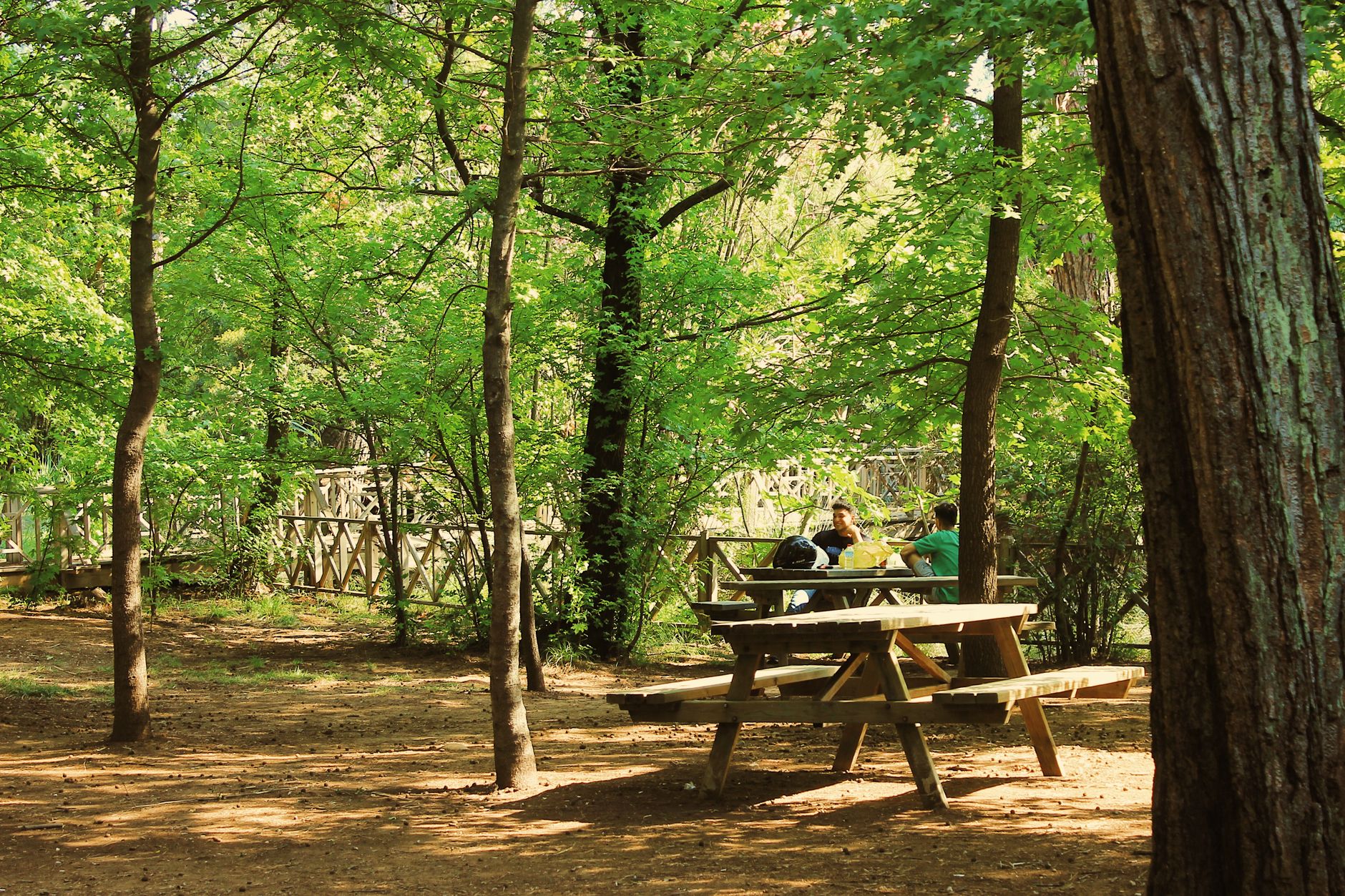
Ashley Vint stood up at the February board meeting, smoothed the front of her blazer, and said the Fourth of July picnic was “dated” and “not the image we want for this church going forward.” She said it the way you’d read a weather report. No heat, no cruelty you could point to and name. Just a flat little verdict, delivered to a room of eleven people, four of whom were younger than the picnic itself.
I was sitting in the third pew back, where I always sit for board meetings, with a legal pad on my knee and my late husband’s pen in my hand. Bill had bought that pen at the drugstore in 1987 and used it to sign checks for the church roof, the parking lot resurfacing, the new water heater in the fellowship hall. I’ve kept it in my purse for six years now, since the morning I woke up beside a man who had gone cold in the night, and I use it for exactly two things: signing my name, and taking notes at the meetings where people decide the shape of the life I have left.
I wrote down what she said. Not out of spite. I write things down so I don’t misremember them later, so I don’t turn a small hurt into a large one in the retelling the way lonely people sometimes do. I wrote: *Ashley Vint. Fourth of July picnic. “Dated.” “Not the image we want.”* And underneath it, without meaning to, I wrote my mother’s name.
I’ll tell you about my mother in a minute. First I need you to understand what the picnic is, because Ashley didn’t, and that was the whole of the trouble.
My name is Keiko Watanabe. I am sixty-nine years old. I have lived in this town, Hartsell, for forty-one years, which by local reckoning still makes me a newcomer, though I have buried a husband here and I intend to be buried here myself, in the plot beside him that we bought together the year we paid off the house. I came to Hartsell in 1985 when Bill got the manager’s job at the grain elevator, and I came from Sacramento, and before that my family came from a relocation camp in the high desert of California where my mother spent the years of the war she should have spent being a young woman.
She did not talk about the camp much. What she talked about was food. My mother believed, the way some people believe in God and some believe in nothing, that a table with enough food on it was a kind of prayer. That you could not stay angry at a person you had fed. That the fastest way into a closed community was through its stomach, and the surest sign you belonged somewhere was that they let you bring a dish and nobody made a face at it.
When we moved to Hartsell, I was the only Japanese face in a town of German and Norwegian farm families, and I felt it. You feel it in a small place. Not meanness, mostly. Just a careful, watchful distance, the way you’d watch a dog you hadn’t decided about yet. My mother had died the spring before we moved, and I had her recipe box, a metal file box the size of a loaf of bread, painted green, with her handwriting on the cards inside. And I had her belief that food was the door.
So the first summer, when the church announced its Fourth of July picnic, I did not go empty-handed and I did not bring a store-bought pie to be safe. I brought my mother’s dishes. I brought her chicken teriyaki and her cucumber sunomono and her rice balls wrapped in the seaweed I had to mail-order because you could not buy it within two hundred miles of Hartsell. I set them on the long tables in the church yard between a woman’s seven-layer salad and another woman’s bars, and I stood back and I waited to be a stranger.
And a farmer named Dale Hoffmann, a big red-faced man who I would later learn had never in his life eaten a thing he could not identify, picked up a rice ball, examined it the way you’d examine a spark plug, ate it, and said, loud, to the whole yard, “Well, hell, Kay, what is that, I need about six more.”
He couldn’t say Keiko. Nobody could, that first year. So I was Kay. And the picnic was the door, exactly like my mother said it would be.
I remember that first afternoon better than I remember most of my wedding. I remember standing at the edge of the church yard in a dress I’d ironed twice, holding a cooler against my hip, terrified in a specific way I don’t think I can make you understand unless you’ve been the only one of your kind in a place. It is not a fear of anyone doing anything. Nobody in Hartsell was ever going to be cruel to my face, that’s not how these people are. The fear is smaller and worse than that. It’s the fear that they will be polite. That you’ll set your food down and they’ll walk past it to the seven-layer salad, and nobody will say a word, and you’ll drive home with the coolers still half full and you’ll understand that polite is the wall they keep you behind. I had watched my mother be walked past, in her own way, her whole life. I knew what it looked like.
So when Dale Hoffmann, a man built like a grain silo, walked up to the table, picked up a rice ball, turned it over twice like he was checking it for a serial number, and put the whole thing in his mouth, I stopped breathing. And when he swallowed and said, “Well, hell, Kay, what is that, I need about six more,” and then hollered it across the yard so his wife would come try one, I had to turn around and pretend to fix the lids on the coolers so nobody would see my face. Bill found me back there. He put his hand on the back of my neck the way he did, and he didn’t say anything, because he knew. He knew what it had cost me to bring my mother into that yard, and he knew what Dale had just given me without having the first idea he’d given me anything.
I have brought her dishes to that picnic every single year since. Forty years. When Dale died, his widow asked me to bring the rice balls to the funeral lunch, and I did, and I have brought them to every Hoffmann funeral since, because that is how it works in a small town: you feed people into your life and then you feed them out of it, and in between you belong.
That is the picnic Ashley Vint called dated.
—
She is not a bad person. I want to say that at the top, before I say anything else, because it would be easy to make her a villain and she is not one, she is something more common and more dangerous, which is a person who is sure. Ashley moved to Hartsell two years ago with her husband, who does something with software that lets him live anywhere, and they bought the old Prochaska place and put in a kitchen you could perform surgery in. She is maybe thirty-four. She joined the church, which I was glad of, we are not a young congregation and we need the young ones. She has a good voice and she sings on the worship team. She organized a coat drive her first winter that collected more coats than the town had cold children, and she drove the extras two hours to a shelter in the city herself, in a snowstorm, and I thought, there is a person who does the work and not just the talking.
Then she got on the board, and she came with ideas.
The church needs ideas. I won’t pretend it doesn’t. Our attendance has thinned the way it thins everywhere, the young people move to where the jobs are, the old people move to where their children are or to the cemetery, and the building costs the same to heat with forty people in it as it did with a hundred and forty. Ashley looked at the numbers, which are real, and she looked at the church’s Facebook page, which had eleven followers and a cover photo of the sanctuary taken in 2009, and she saw a problem she knew how to solve. She wanted the church to look like the churches she’d seen in the city. Coffee bar in the narthex. A rebranding, she called it, with a new logo and a “refreshed visual identity.” Lights and a fog machine for the Christmas service. And, at the February meeting, a cull of the old programs that didn’t, in her word, “convert.”
The Fourth of July picnic did not convert. That was the sin of it. It cost money, it cost a whole Saturday of setup, it drew the same aging crowd it had always drawn, and it did not put a single new young family in a pew on Sunday. By the numbers, Ashley was right. The picnic was a cost center. It was, she said, “the kind of thing that makes us look like a church for old people,” and she said it in a room where the average age was sixty-one, and she did not appear to notice that she’d said it.
“It’s dated,” she said. “It’s not the image we want for this church going forward. If we want young families, we can’t be the potato-salad-and-flag church. That’s not an insult, it’s just, that era is over.”
Nobody said anything. That’s the thing about a room of Midwestern church people, we would rather chew glass than have a conflict out loud, and so eleven people sat in a silence that Ashley read as agreement, and she made a motion to “sunset the July Fourth community picnic effective this year and reallocate the budget to digital outreach,” and Pastor Reff, who is a kind man and a tired one, said, “Well, let’s, ah, let’s think on it,” which in this church is how a thing dies, in the thinking-on-it, and the meeting moved to the parking lot lines.
I did not say anything either. I want to be honest about that. I had the pen in my hand and my mother’s name on the paper and I did not stand up and defend forty years of my life, because I am sixty-nine and I have learned that the loudest person in a quiet room usually gets what she wants, and I did not have it in me to be loud. I drove home. I sat in the driveway for a while with the engine off. Then I went inside and I took my mother’s green recipe box down from the shelf where it lives, and I put it on the kitchen table, and I sat with it, and I was ashamed of how much it hurt.
Because here is what Ashley did not know, could not have known, would have been horrified to learn. She had not canceled a program. She had, without knowing my name was attached to it, canceled the last public thing I did.
—
Bill died in June, six years ago, three weeks before the picnic.
I’ve told you he went cold in the night. What I haven’t told you is what the weeks after are like when a marriage of thirty-nine years ends between one breath and the next, when you go to bed married and wake up a widow and there is no one to tell because the one you’d tell is the one who’s gone. The casseroles come. The town is good about the casseroles. But the casseroles stop, and the calls stop, and eventually the world decides you’ve had enough time and it goes back to its business, and you are alone in a house that is too big and too quiet, and you understand for the first time that you might live another twenty years like this, and the arithmetic of it can flatten you.
Three weeks after I buried him, the picnic came. And I did not want to go. God, I did not want to go. I wanted to stay in that quiet house with the shades down. But I had brought my mother’s dishes to that picnic for thirty-four years and it did not seem right to stop, so I got up at five in the morning the way I always did, and I made the teriyaki, and I made the sunomono, and I made two hundred rice balls with hands that did not entirely feel like mine, and I loaded the coolers into Bill’s truck, which I still could not sell, and I drove to the church.
Making two hundred rice balls is a thing you do with your hands while your mind goes somewhere else. You wet your hands, you salt them, you press the warm rice into the triangle, you set the strip of seaweed, you set it in the row, and you do it again, two hundred times, and if you do it enough years the hands know it without you and the mind is free to wander. That morning my mind wandered to Bill, because everything did that summer. I thought about how he used to come into the kitchen at five-thirty on picnic morning in his undershirt, still half asleep, and steal a rice ball off the tray before I’d even finished, and I’d swat his hand, and he’d eat it anyway, grinning, and say it was quality control. Forty years of quality control. And I stood at my counter at five in the morning three weeks after I’d watched them close the lid, and I reached for the salt, and I understood in my body, not my head, my body, that nobody was going to steal a rice ball off the tray this year, and I put both hands flat on the counter and I stood there for a while and did not make anything at all. Then the clock in the hall chimed the half hour, and I salted my hands, and I went back to it, because the town was going to be hungry at noon whether or not I was standing up straight, and that, it turned out, was the thing that got me back to the counter. People needing to be fed is a rope you can pull yourself up on.
And I did the thing I have done every year. I set up the tables. I organized the potluck the way I’ve organized it for four decades, because somewhere along the way the picnic had become mine to run, not by any vote but by the simple fact that I was the one who showed up at five in the morning. I put out the flags. I set the coffee urns. I laid my mother’s dishes down between the salads and the bars. And people came, and they ate, and Dale Hoffmann’s widow hugged me and cried a little, and children I had watched grow up brought their own children now, and for one afternoon I was not a woman alone in a quiet house. I was Kay, who runs the picnic, who brings the rice balls, who belongs.
I have run it every year since. It is the thing I get up for. When you lose the person your days were built around, you have to build them around something else or they collapse, and I built mine around a metal recipe box and a church picnic and the hundred small tasks of feeding a town once a year. It is not much. I know it is not much. But it is the shape my life took after Bill, and Ashley Vint stood up in a board meeting and called it dated and not one of the eleven people in that room said, wait, that’s Keiko’s, that’s the thing that keeps her going, and I understood that they didn’t say it because they didn’t know. I had never told anyone. You don’t. You don’t tell people the picnic is the thing holding you up. You just show up at five in the morning and let them think you like the work.
—
I did not go to war over it. I want to be clear about that, because I think you’re expecting me to, and I understand why, but that is not what happened and it is not who I am and it is not, God knows, who my mother raised me to be.
What I did was, I called Ashley Vint and I invited her to lunch.
She was surprised. I could hear it. I think she expected the old guard to either roll over or come at her with pitchforks, and a lunch invitation from the picnic lady was not in either column. But she came. She came to my kitchen on a Tuesday in March, and I did not make her a point, I made her food. I made her my mother’s chicken teriyaki over rice, and cucumber sunomono, and I set the green recipe box on the table between us because I wanted her to see it, and I let her eat before I said anything real.
“This is incredible,” she said, and she meant it, she is not a liar. “I’ve never had anything like this.”
“It’s my mother’s,” I said. “She’s been dead fifty-one years. I make it exactly the way she did. Same as I’ve made it for the church picnic every Fourth of July for forty years.”
I watched it land. I watched her do the math, forty years, this dish, the picnic, and I watched her realize, slowly, the way you realize you’ve stepped on something, that the thing she’d called dated in a board meeting had a person attached to it, and the person was sitting across her own plate.
I did not let her apologize yet. I have found that when you let a person apologize too fast, they apologize for the wrong thing, they apologize for hurting your feelings when the thing you need them to understand is bigger than your feelings. So I opened the recipe box, and I took out the cards, and I told her.
I told her about the camp, and my mother’s belief that a full table was a prayer. I told her about being the only Japanese face in a German town in 1985, and Dale Hoffmann and the rice balls, and how the picnic was the door my mother said food would be. I told her about Bill, cold in the night, and the picnic three weeks after, and the five-o’clock mornings, and how you build a life around something after the person it was built around is gone. I told her the thing I have never told anyone, which is that the picnic is not a program, it is the last public thing I do, it is the thing that gets me out of the quiet house, and if you take it away I do not know what I get up for.
I did not cry. I had decided I would not cry, and I did not, though it cost me. Ashley cried. She sat at my kitchen table with my mother’s teriyaki going cold on her plate and she put her hand over her mouth and she cried, and she said, “I didn’t know. Keiko, I swear to God, I didn’t know,” and I said, “I know you didn’t. That’s why I made you lunch instead of a scene.”
And then I said the thing I had driven the whole point of the lunch toward.
“You’re not wrong about the numbers,” I said. “The picnic doesn’t fill pews. You’re right about that. And you’re right that the church needs to reach the young families or in twenty years there won’t be a church to reach anybody. I’m not going to sit here and tell you your ideas are bad because they hurt my feelings. That would make me exactly the kind of old woman you think I am.” I put my hand on the recipe box. “But you looked at a spreadsheet and you saw a cost center, and you didn’t see that the picnic is the one day a year this whole town, the church people and the not-church people, the young and the old, sits down at the same tables and eats each other’s food. You want to reach young families. There were forty young families in that yard last Fourth of July, eating my rice balls, and every one of them was inside the church gates. You had them. You just didn’t count them because they didn’t come back Sunday. That’s not a dead program, Ashley. That’s the widest front door this church has, and you were about to nail it shut to save the cost of paper plates.”
She was quiet for a long time. Then she said, “Will you help me not be an idiot about this?”
And that, that right there, is why she is not a villain. A villain doubles down. Ashley asked for help.
—
Here is what we built, Ashley and I, at that kitchen table and the six kitchen tables after it, because once she understood the picnic she came back, she kept coming back, she is a person who does the work.
We did not just save the picnic. We made it the thing. Ashley took the reach she’d wanted to build with a fog machine and a logo and she pointed it at the picnic instead. She made a real Facebook event and a real page and she posted photos, my mother’s dishes and the flags and the kids with watermelon on their faces, and she wrote it up not as a church picnic but as what it actually is, the one day Hartsell feeds itself at the same table. She got the feed store and the diner and the VFW to co-sponsor. She got the high school band to play. She talked the young families she’d wanted all along into coming, not to a service, to a picnic, because a picnic does not ask anything of you, it just feeds you, exactly the way my mother said.
And she did one more thing, without asking me, which I did not find out about until the day of.
The Fourth of July came. I got up at five, the way I always do, and I made the teriyaki and the sunomono and I made two hundred rice balls with hands that are older every year, and I drove Bill’s truck to the church. And when I got there the tables were already up. Ashley and the young families she’d recruited had come at four-thirty in the morning and set the whole thing up so that the one year the picnic almost died would be the year I did not have to lift a table.
There was a banner over the food tables. It said, in letters a child had clearly helped paint, KEIKO’S TABLE. And under it, a small card, in Ashley’s handwriting: *The Fourth of July community picnic. Forty-one years. Every year, Keiko Watanabe has brought her mother’s recipes to this table so that all of us could belong here. This is the image we want for this church going forward.*
She’d used my own line back at me. The image we want. She’d taken the flat little verdict she’d delivered in February and she’d turned it all the way over.
I stood in the church yard at six in the morning in front of a banner with my name on it and my mother’s green recipe box in my hands, and I did the thing I had refused to do at the kitchen table. I cried. I cried in front of God and the young families and Ashley Vint, and Ashley came and stood beside me and did not say anything, which was the right thing, and after a while she said, “Two hundred rice balls, huh. My hands are going to be useless by August.” Because she’d been up since four-thirty helping make the extra ones, learning the fold from my mother’s cards, getting it wrong and getting it right.
The picnic that year drew four hundred people. It was the biggest one in its history. The feed store ran out of ice. The band played until the fireflies came up. The young families that Ashley had wanted all along were there, at the tables, eating my mother’s food, and some of them did come back Sunday and some of them didn’t, and I have finally, at sixty-nine, made my peace with the fact that it does not matter, that the front door is the point and not the pew, that you feed people into your life and let God do the counting.
—
Ashley runs the picnic with me now. She gets up at five. She has her own key to the fellowship hall and her own set of the recipe cards, copies I made her, in my hand this time instead of my mother’s, and I have watched her make the teriyaki for a room full of people and I have corrected her seasoning exactly once and never again. The coffee bar happened, in the end, and it’s fine, the young people like it. The fog machine did not happen. The logo did not happen. The picnic happened bigger every year.
And the recipe box, my mother’s green metal box the size of a loaf of bread, sits in the fellowship hall kitchen now, not on my shelf, because I decided that a recipe is not a keepsake if only one person can open the box. My mother believed food was the door. She was right, but I think she left out the second half, which I have only learned in these last years, feeding a town that once watched me like a dog it hadn’t decided about: the door only stays a door if you hand somebody else the key.
Ashley asked me, last summer, standing over the teriyaki with steam in her face, why I didn’t just fight her in the board meeting. Why I made her lunch instead. Why I didn’t stand up and say, that’s my mother’s, that’s my dead husband’s memory, that’s the only thing I have left, and shame the whole room into keeping it.
I told her the truth. I told her that my mother spent the years she should have spent being young behind a fence in a desert, and she came out of it believing that the answer to being told you don’t belong is not to fight your way in, it’s to set your food on the table and let it speak. That you cannot stay angry at a person you have fed. That I could have won the board meeting and lost Ashley, and that a picnic run out of spite is not worth running, and that the whole point of the thing, the whole forty-one years of it, was never the potato salad or the flags or even my mother’s rice balls.
The point was the table. The point was that there is one day a year when a Japanese widow and a software wife and a feed store and a VFW hall and a hundred young families and forty old ones all sit down at the same table and eat each other’s food, and for that one afternoon nobody in Hartsell is a newcomer and nobody is dated and nobody is watching anybody like a dog they haven’t decided about. Everybody just belongs.
That is the image I want for this church going forward. Ashley wrote it on a card, but I’ve believed it for forty-one years, and my mother believed it in a desert before I was born, and there is a green recipe box in a church kitchen in a small Midwest town that will keep believing it long after both of us are in the ground beside our husbands.
They tried to cancel the picnic. Instead they gave it my name. I would not have chosen it, the banner, the crying, my name in a child’s paint over the food tables. But I have learned to let people feed me the way I have spent my whole life feeding them, and so I let them. My mother would have understood. You cannot stay angry at a town that has just, at long last, forty-one years in, set your name on the table and called it the image they want.

Laura Bennett writes about complicated family dynamics, difficult conversations, and the quiet moments that change everything. Her stories focus on real-life tensions — inheritance disputes, strained marriages, loyalty tests — and the strength people find when they finally speak up. She believes the smallest decisions often carry the biggest consequences.