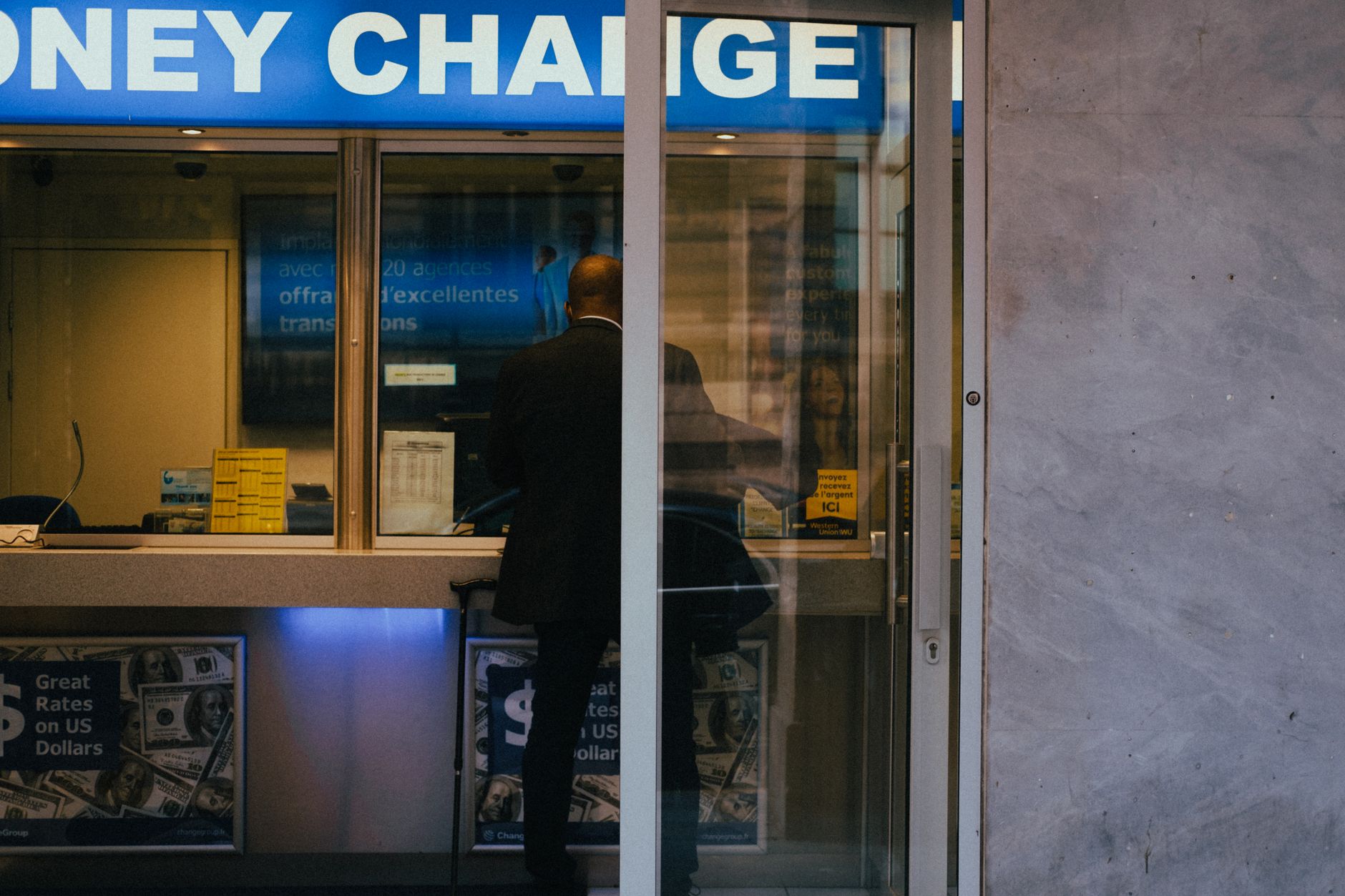
“This is Phyllis. Just a teller. She’s furniture here, honestly. Came with the building.”
Brock Tilden said that about me on a Tuesday morning in March, standing six feet from my window, to a district vice president named Diane Marsh, while I was counting my drawer the way I have counted a drawer every business morning for thirty-four years. He said it with a little laugh at the end, the kind of laugh a man puts on a sentence when he wants the insult to pass as charm. Then he steered her toward his office, one hand floating behind her shoulder, and he talked for twenty minutes about “fee income growth” and “retail floor optimization” while I stood at my window being furniture.
Here is what I want you to understand before I tell you the rest of it. I was not hurt by that line the way you might think. I have been called worse by people who mattered more. What I felt, standing there with a strap of twenties in my hand, was something closer to wonder. Because for fourteen months I had been watching that young man steal from the widows of my town, eight and ten and twelve dollars at a time, and he had just told the one person in the region with the power to stop him that I was not worth noticing.
He thought he was dismissing me. He was actually telling me nobody had checked my work in thirty-four years, and nobody was about to start.
He was right about that. Nobody checked my work. That is exactly why I still had all of it.
My name is Phyllis Grandy. I am sixty-one years old, and I have stood behind the same teller line at the same corner of Main and Third in Barlow, Indiana, since October of 1992. The bank was called Farmers & Merchants Bank of Barlow when I started. It is called Keystone Community Bank now, because a regional outfit bought us in 2019 and put their blue signs over our limestone, but the building is the same building. Marble floor, brass teller rails from 1927, a vault door taller than my husband was. The town is the same town. Grain elevator on the east end, First Baptist and Sacred Heart facing each other across Third like old friends who disagree about one thing, a diner called the Wheel Inn where the coffee has been ninety cents since Reagan because the owner says raising it would be an admission of defeat.
I know this town through its money, which is a strange and intimate way to know a place. I know who bounces a check the week before the disability comes in and covers it faithfully the day it does. I know which farmer takes out the same operating loan every spring with his jaw set like it hurts him. I knew when the Hollis boy started making truck payments too big for his paycheck, and I knew, six months before his own mother did, when he straightened out and started a savings account instead. You stand at a teller window in a town of three thousand people for three decades and you end up holding the town’s whole nervous system in your hands, one transaction at a time.
And I wrote it down. That is the part of this story that matters, so let me tell you where the binder came from.
When I was hired in 1992, the head teller was a woman named Dorene Pack. Dorene was fifty-five then, built like a fence post, and she ran that teller line the way a good sergeant runs a supply room. On my first day she set a green canvas three-ring binder on the counter in front of me, the kind with the cloth cover that goes soft at the corners, and a package of ledger sheets, and she said the sentence that ended up steering the next thirty-four years of my life.
“The computer remembers what it’s told,” Dorene said. “You remember what you saw. Those are two different things, and the day they disagree, the person holding the paper wins.”
Dorene had started in banking when everything was paper, and she had watched the machines come in, and she did not distrust them exactly. She distrusted the people who typed into them. So every night, after balancing, she wrote a page. Date. Weather, because weather moves money in a farm town. Every customer who came through the lobby, by name, because she knew them all. Anything odd. A stop payment that felt off. A cash withdrawal that did not fit the man making it. A deposit that smelled like a story. Not gossip, she was fierce about that. Observations. “We are not the sheriff,” she told me. “We are the memory.”
I thought it was old-fashioned. I was twenty-seven. I did it anyway, because Dorene had the kind of authority you did not test, and then somewhere in the second year it stopped being her rule and became my habit, and then somewhere in the tenth year it became something more like a devotion. Every night, after my drawer proved out, I took fifteen minutes and wrote my page. Who came in. What moved. What was odd. When a binder filled, roughly every two years, I took it home and put it in the fire safe in the sewing room and started a new one.
There are seventeen binders in that safe. Seventeen green canvas binders, 1992 to now. My husband Gene used to tease me about them. He was a custodian at the consolidated school for thirty-one years, a man who fixed boilers and unlocked doors and knew every kid’s name, and he used to say we were the same person in different buildings. “Nobody sees us,” he’d say, “and nothing works without us.” Gene died in the fall of 2021. Pancreatic. Fourteen weeks from the diagnosis to the funeral, and I will not walk you through those weeks except to say that when it was over, the teller window was what held me upright. You can cry all night and still count a drawer at eight in the morning if the counting is in your hands and not your head. The bank did not save my life, but it gave my life a place to stand while it was breaking, and I was grateful to it the way you are grateful to a rail on an icy porch.
So that is who was standing behind the window when Brock Tilden arrived. A sixty-year-old widow with seventeen binders in a fire safe and a habit of seeing everything.
Brock came to us eighteen months ago, in the winter, from a Keystone branch up near Fort Wayne. He was thirty-four years old, and I want to be fair to him even now, so I will tell you the truth: he was not stupid, and he was not lazy. He was something more dangerous than either. He was a man who had learned that numbers going up got him praised, and had never once been asked how they went up.
He wore loafers with little tassels and a watch he checked when people were talking about anything that was not him. He called the lobby “the retail floor.” He called our customers “traffic.” He put a whiteboard in the break room titled FEE INCOME LEADERBOARD, with the tellers’ names down the side, as if we were selling gym memberships, and when I did not generate any fee income to lead with, he wrote a zero next to my name and drew a little frowning face beside it. A grown man. A frowning face. Kayla, our youngest teller, twenty-three and sweet as pie, peeled it off the wall when he left one evening and never got caught, and I wrote that in the binder too, because it was the kind of thing Dorene would have wanted remembered.
I could have lived with all of that. Every business gets a Brock eventually, and mostly you outlast them, the way the limestone outlasts the signage. What I could not live with started in April of last year, and it started with Opal Yancey.
Opal is eighty-four. Her husband ran the Sinclair station out on 42 until his heart gave out at seventy, and she has been a widow eighteen years, and she comes into the bank the first Wednesday of every month, dressed for it, because in Opal’s generation you dressed for the bank. She gets her paper statement in the mail, reads every line with a magnifying glass shaped like a ruler, and keeps her check register in handwriting you could frame.
That April Wednesday she slid her statement across my counter with one line circled in red pen and her chin up high, which is what Opal does instead of crying.
“Phyllis,” she said. “What is an account research fee, and why did I pay eight dollars and fifty cents for one? I didn’t ask anybody to research anything.”
I looked at the line. ACCT RESEARCH FEE, $8.50. I had been a teller thirty-three years at that point and I had processed maybe a dozen research fees in my whole career, and every one of them was attached to an actual request, somebody needing five years of statements reconstructed for a lawyer or the IRS. Opal had requested nothing. There was no request ticket in the system. There was just the fee, assessed manually, on the nineteenth of March, with a branch code where a teller ID should be.
I told her it looked like a mistake and I would get it reversed, and I went to Brock’s office, because a manual fee needs a manager’s override to reverse. He did not look up from his screen for the length of time it took me to explain it, and then he said, “It’s a system migration thing, Phyllis. Corporate’s been catching dormant research flags. I’ll take care of it.”
“Her account’s not dormant,” I said. “She’s in here every first Wednesday.”
“I said I’ll take care of it,” he said, and then he smiled the smile, the one that came with the tassels, and added, “The fee schedule’s a little above your window.”
I went back to my station and I gave Opal her $8.50 in cash out of my own wallet so she would not spend a month watching for the reversal, and that night, in the binder, I wrote it all down. Date. Opal’s name. The fee code, the amount, the assessment date, the branch code where a teller ID should have been, and Brock’s sentence, word for word. The fee schedule’s a little above your window.
Then, in June, it was Bernice Hollis. Twelve dollars, DORMANCY REVIEW FEE, on an account that received a Social Security deposit like a heartbeat every single month, which is the opposite of dormant. Bernice is seventy-nine and did not circle hers in red pen, because Bernice’s eyes are going and her granddaughter reads her mail now, and the granddaughter lives in Evansville and misses things. I only caught it because I ran Bernice’s passbook update and watched the line print.
In August, Lorena Stitt. Ten dollars, PAPER STATEMENT PROCESSING. We do charge for paper statements now, everybody does, but Lorena’s account was grandfathered when Keystone bought us, and I knew it was grandfathered because I was the one who filled out her grandfather form in 2019 and I had written that in the binder too.
Three widows. Three little fees. And I want to stop here and say the thing out loud, because it is the whole engine of what happened.
Eight dollars and fifty cents is nothing. That is precisely why he took it. A man who steals ten thousand dollars gets the FBI. A man who steals eight fifty gets a shrug, if he gets noticed at all. But you take eight fifty from sixty accounts, and take it again in a different costume every few months, and you are pulling real money out of the checkbooks of people who reuse tinfoil and cut their pills in half, and you are doing it to exactly the people who cannot fight back. Every account I found a strange fee on belonged to a customer over seventy-five. Almost all women. Almost all widows. All of them on paper statements, none of them with an email address in the system, none of them with a grown child in town going over their mail. He had picked them the way a coyote picks through a herd. Not the biggest animals. The ones at the edge, in the dark, that nobody counts every night.
Except somebody did count them every night. Somebody had been counting them for thirty-four years.
I want to be honest about the next part, because I have read stories like mine and the woman in them always seems to know exactly what to do, and I did not. I am not an auditor. I am a teller with a high school diploma and a certificate from a banking course I took at the vocational center in 1994. For a while I told myself what Brock had told me, that it was a system thing, migration flags, corporate sweeps, some algorithm in a server up in Fort Wayne being careless with old ladies. Machines are careless in exactly that even-handed way.
But the binder would not let me believe it. That is the thing about writing everything down for three decades. Your own handwriting starts to argue with you.
Because the fees were not even-handed. A system sweep hits everybody who matches a rule. This hit only the ones who would not notice. Marvin Koch is eighty-one and sharp as a tack and reads his statement at the Wheel Inn out loud to whoever sits near him, and Marvin never got a single strange fee. Opal got four in a year. A machine does not know Opal’s eyes are proud and Marvin’s mouth is loud. Only a person knows that. Only a person who stands in that lobby and watches, the way I watch.
And then, in September, I found the thing that turned my stomach and settled my spine, both in the same hour.
Fees, even crooked ones, at least stay inside the bank’s own pocket, and I had half-convinced myself Brock was just juicing his leaderboard, stealing for the whiteboard, pumping his fee income numbers for his bonus, which is theft from the widows either way but at least explains itself. Then I was balancing the branch’s cash-out sheet on a Friday, covering for Kayla, and I saw a line item: COURTESY FEE REFUND, CASH, $34.00, paid across the counter that Wednesday to a customer named Edna Prewitt.
I sat there and looked at that line for a long time.
Because I had squeezed lemons for the funeral lunch we put on for Edna Prewitt in the basement of First Baptist four months earlier. Edna Prewitt died in May. Nobody walked into our branch in September and took thirty-four dollars in cash across a counter on her behalf, and I could prove nobody did, because I know every face that comes through that door and I write the names down every night, and the binder for that Wednesday says fifty-one customers came in and Edna Prewitt, being four months in Barlow Memorial Cemetery, was not one of them.
That is when I finally saw the whole shape of it. He was not just assessing junk fees to fatten his numbers. He was assessing the fees, letting them season on the books, and then processing cash “refunds” of those fees to customers who never asked and never came, under the manager’s override code, and walking the cash out of the building. The fee makes the refund look righteous. The refund makes the cash drawer explain itself. The customers are too old, too alone, or too dead to complain. It is a small, ugly, tidy machine, and the only moving part it cannot survive is a witness with a pencil.
So I became a full-time witness. God forgive me for how long it took.
From September to February I did the quietest work of my life. I did not photograph screens or copy files or take one sheet of the bank’s paper out of that building, because I have handled enough legal messes across my counter to know that the wronged party who breaks the rules hands the wrongdoer a gift. Everything I did was the thing I had always done. I watched the lobby. I balanced my drawer. And every night I wrote my page, except now the page had company: a second section, tabbed, where I lined up what my own eyes and my own binders could prove.
By February it came to this. Over fourteen months, two hundred eleven manual discretionary fees on sixty-three accounts, totaling nine thousand four hundred forty-one dollars, every account belonging to a customer over the age of seventy-five, forty-eight of the sixty-three of them widows. Eighty-seven cash courtesy refunds totaling six thousand one hundred eighty dollars, every one processed under the branch override, and thirty-nine of them, thirty-nine, paid out on days my nightly log shows that customer never set foot in the lobby. Two of them paid to women who were dead. Edna Prewitt, and, in January, Florence Diehl, who had been in a memory care facility in Terre Haute since before Thanksgiving and whose cash was collected across our counter, per the record, in person, on a day it snowed six inches and eleven customers total came through the door and I wrote down every single name.
Seventeen green binders. That was the case. Not a hack, not a leak, not a hidden camera. A woman who wrote down who came in the door every night for thirty-four years, set against a man who was certain to his bones that nobody was watching, because the only person in the room was furniture.
Which brings me back to that Tuesday in March, and Diane Marsh, and the sentence.
The district visit had been on the calendar for two weeks, and I confess I had let myself hope. Diane Marsh had a reputation, even at our distance from the regional office. Fair, cold-eyed, no patience for show. I had decided that if I could get ten minutes with her, I would ask for them. And then Brock walked her past my window and said, “This is Phyllis. Just a teller. She’s furniture here, honestly. Came with the building,” and laughed his little laugh, and Diane Marsh glanced at me for half a second the way you glance at furniture, and they went into his office and closed the door.
I finished counting my drawer. My hands did not shake. I remember being proud of that.
And that night I did not write my usual page first. I sat at Gene’s desk in the sewing room with the fire safe open, and I did something I had been circling for a month and had been too church-quiet, too raised-right, too thirty-four-years-loyal to do. I took my tabbed section and my seventeen binders’ worth of certainty, and I wrote a letter.
Before I mailed it, I drove out to Golden Meadows to see Dorene. She is eighty-eight now, in a wheelchair, and her hands have given out but nothing above the neck has. I told her all of it. The fees. The refunds. Edna Prewitt’s thirty-four dollars. The furniture line. She listened with her eyes closed, and when I finished she was quiet so long I thought she had drifted, and then she said:
“You know what furniture does, Phyllis? It stays in the room. People stop watching what they say in front of it, and they stop watching what they do in front of it. Furniture sees everything.” She opened her eyes. “Send your letter. Certified. Keep your copy. And write down that you sent it.”
I laughed for the first time in a week. Thirty-four years later and she was still teaching me the same lesson. The person holding the paper wins.
The letter went certified mail that Friday to Keystone Community Bancorp’s regional compliance office, with a copy addressed by name to Diane Marsh. Four pages in my own handwriting, because I wanted no question whose hand it came from. I did not accuse anyone of anything I could not point to. I listed what I had observed, dates and amounts, from my own logs. I stated plainly that I had kept a contemporaneous nightly record of lobby traffic and unusual transactions since 1992, that the record was in my possession, and that it was available to any authorized examiner. I signed it Phyllis A. Grandy, Teller, and then, because Gene would have wanted me to, I added: thirty-four years of service.
Eleven days went by. I stamped passbooks. I made small talk about the weather, which was doing that gray Indiana thing where it cannot commit to a season. Brock put new numbers on his whiteboard. I have never in my life been so calm and so sick at the same time.
On the twelfth day, a Tuesday, Diane Marsh walked into the branch at 9:40 in the morning, alone, unannounced, in a coat still cold from outside. Brock came out of his office fast with his hand already extended and a golf story already forming, and she did not exactly ignore him, but she gave him the half second she had given me in March, and I watched him feel it, and I confess before God that watching him feel it was a pleasure I have not fully repented.
“I’m here for a teller consultation,” she said, to the room. Then she looked directly at me. “Mrs. Grandy. Do you have a few minutes?”
We used the back room, the one with the old oak table where the loan committee met for seventy years. I had brought the binders in from my car that morning, all seventeen, in two canvas grocery bags, because some part of me had known that if she came, she would come like this, cold and fast and without a phone call. I set them on the oak in a row, 1992 on the left, and I watched a regional vice president of a bank holding company look at thirty-four years of green canvas and go very still.
“You wrote all of this by hand,” she said.
“Every night. The woman who trained me trained me that way.”
“Show me March nineteenth of last year,” she said, which told me she had read every page of my letter, because that was Opal’s date, the first one.
I did not just show her March nineteenth. For two hours I walked her through it the way I would walk a customer through a statement they were scared of, slow and steady, no drama, one line at a time. The fees and who they landed on. The refunds and when they were paid. The tab where the refund dates lay against my lobby logs, thirty-nine cash payouts to people who were not in the building. And then I opened the September binder to the Wednesday with fifty-one names on the page, and I put my finger next to the funeral program I had folded in behind it, EDNA MAE PREWITT, 1941 to 2025, SERVICES AT FIRST BAPTIST CHURCH OF BARLOW, and I said, “This is the day the record says Edna came in for her thirty-four dollars. I helped serve the lunch at her funeral in May. I can give you the names of forty people who were in that church basement.”
Diane Marsh sat back. She took her glasses off, which I have since learned is the loudest thing she does, and for a moment she looked less like a vice president and more like every farm-raised woman I have ever known doing math she hates.
“Mrs. Grandy,” she said. “Who else has seen this?”
“You,” I said. “And Dorene Pack, who kept the log before me. Nobody else.” And then, because the Lord builds a door and Phyllis Grandy has never once managed to not walk through it, I added, “Furniture doesn’t talk much.”
She had the grace to flinch. I will always respect her for not pretending she did not remember. “I was there for that,” she said. “I laughed at it. Politely, but I laughed.”
“You did.”
“I won’t ask you to excuse it,” she said, and put her glasses back on, and that was the whole apology, and it was somehow enough, because it came attached to what she did next. She asked me to lock the binders in the vault, gave me a receipt for them in her own handwriting, and told me to say nothing to anyone. She was in her car by one o’clock.
The audit team arrived Friday morning at 8:55, three of them, quiet as an insurance adjuster, and they were in the back room with the binders and a laptop for two days. They interviewed me twice. They never once told me what they were finding, and they did not have to, because I already knew, and because you could read it in the way Brock’s voice got brighter and brighter out on the retail floor, the way a man whistles louder walking past a graveyard.
On Monday morning, Brock Tilden was called up to the regional office in Fort Wayne for what the calendar said was a leadership development meeting. He wore the good watch. He did not come back. Tuesday, two men from corporate security boxed his office while a locksmith did the doors, and Kayla stood next to my window watching and said, softly, “Phyllis, what is happening,” and I said, “The system’s catching some flags, honey,” and I have decided that one is between me and the Lord.
Here is what the investigation found, all of which came out later, in the plea, in the newspaper, in the letters the bank was required to send. It was not fourteen months and it was not just us. Brock Tilden had run some version of his little machine for a bit over four years, at our branch and at his previous branch near Fort Wayne, and the number when they finished adding it was just north of thirty-one thousand dollars, pulled a few dollars at a time out of the accounts of more than one hundred forty elderly customers. Because we are a federally insured bank, it was a federal matter. He pled guilty in the spring, embezzlement by a bank employee, and he stood up in a courtroom in Indianapolis in a good suit and said the word “regret” several times. He was sentenced to six months in a federal facility, three years of supervised release, full restitution, and he is barred from ever working in banking again. For the rest of his life. There are men who would trade the six months to escape that last part, and I believe he is one of them, and I find I am at peace with that being his heaviest sentence: every door in his chosen world, locked, forever, by an old woman’s pencil.
The bank paid every affected customer back before his plea was even entered. Restitution would have taken years to trickle; Keystone chose to make the accounts whole immediately, every fee, every phantom refund, with interest, and to send each customer a letter of apology, and Diane Marsh asked me to help the audit team make sure not one account was missed, because, as she put it in front of her own auditors, “Mrs. Grandy’s records are more complete than ours.”
I asked for one thing in return, and I got it. The letters were fine, but Opal Yancey does not trust letters, and Bernice Hollis cannot read hers, and women that age who get official mail from a bank assume they are in trouble. So for two weeks in April, the bank let me spend my afternoons making calls and, for the special ones, house calls. I sat at Opal’s kitchen table under the picture of her Sinclair-station husband and watched her read the letter with her ruler magnifier, chin up high, and when she finished she said, “Eight fifty. All this over eight fifty,” and I said, “No, Opal. All this over you,” and her chin came down, and we had a moment, and then she made me eat pie at ten thirty in the morning, and I ate it.
I need to say a word about the anger, because I am telling this story true or not at all. People ask if I hated him. Here is the honest answer. What Brock Tilden stole in dollars was small enough that a good lawyer could almost make it sound like a rounding error. What he stole in fact was something I do not have a small word for. Opal Yancey has balanced to the penny since Eisenhower, and for a year that man made her doubt her own eyes. Bernice lay awake over twelve dollars she was too proud to mention. He taught the most careful generation this country ever produced to be afraid of their own bank statements, and he did it on purpose, because their carefulness was the camouflage and their pride was the padlock. That is the theft. The money was just how he kept score.
And one more thing about the word he used. He said it to flatter a superior, and he chose it because it was the truest thing he knew about me and he thought the truth was an insult. I have thought about it for a year now and I have decided he was right. I am furniture. I am the counter the whole town has leaned on for thirty-four years. I am the fixture that was here before the blue signs and will be remembered after them. Furniture is what stays in the room, and stays, and stays, and sees everything, and holds everything up. He just forgot that some of the furniture in an old bank is the vault.
In May, Diane Marsh drove down from Fort Wayne one more time. She sat across the oak table where I had opened the binders and she offered me the branch. Manager. My branch, the one I had walked into at twenty-seven with a green binder and a package of ledger sheets. I asked her why, at sixty-one, with the certificates I do not have, and she said the sentence I expect I will keep till they fold my hands: “I’ve been in a hundred branches, Mrs. Grandy. The person who actually knows where the money goes is almost never the one with the office. Just once, I’d like the office to match.”
I took it. I negotiated first, because Gene would have haunted me otherwise: Kayla got moved up to head teller, and the fee income leaderboard went in the dumpster, and the first Wednesday of every month we now put on coffee and pie for the passbook customers and any teller who calls them “traffic” answers to me.
They gave me a brass nameplate. PHYLLIS GRANDY, BRANCH MANAGER. Kayla set it on the big desk with a ribbon around it, and the girls stood there grinning, waiting for me to cry, and I did not cry, because I was laughing too hard, because the first customer through the door that morning was Opal Yancey, dressed for the bank, statement in her purse, and she stopped in front of my new desk and looked at me over her glasses and said, “They told me I should see the manager.”
“You’re looking at her,” I said.
Opal nodded once, like the ledger of the whole world had finally balanced, and slid her statement across the desk. “Well then, Phyllis. Let’s see if they got it right this month.”
They had. To the penny. And that night, at my kitchen table, in the eighteenth green binder, I wrote it all down.

Lila Hart is a dedicated Digital Archivist and Research Specialist with a keen eye for preserving and curating meaningful content. At TheArchivists, she specializes in organizing and managing digital archives, ensuring that valuable stories and historical moments are accessible for generations to come.
Lila earned her degree in History and Archival Studies from the University of Edinburgh, where she cultivated her passion for documenting the past and preserving cultural heritage. Her expertise lies in combining traditional archival techniques with modern digital tools, allowing her to create comprehensive and engaging collections that resonate with audiences worldwide.
At TheArchivists, Lila is known for her meticulous attention to detail and her ability to uncover hidden gems within extensive archives. Her work is praised for its depth, authenticity, and contribution to the preservation of knowledge in the digital age.
Driven by a commitment to preserving stories that matter, Lila is passionate about exploring the intersection of history and technology. Her goal is to ensure that every piece of content she handles reflects the richness of human experiences and remains a source of inspiration for years to come.