Commissioner Hoyt Pace stood in my kitchen with his hat in his hand and told me my grandfather’s land wasn’t mine anymore, that the paperwork was already done, and that I should be grateful for the check he slid across the table.
I want you to picture that. A man walks into your home uninvited, on a Tuesday morning, while your coffee is still warm in the pot. He does not knock the way a neighbor knocks. He raps twice with one knuckle and then he lets himself in through the screen door like he already owns the hinges. And he tells you, in the voice men use when they have decided a thing is settled, that the sixteen acres your grandmother sharecropped and then bought back one dollar at a time, the acres where your father is buried under the big water oak, are going to become a parking lot.
I was sixty-three years old that morning. I had buried both my parents on that land. I had raised my own boy in the little white house my grandfather framed with his own two hands in 1951. And a county commissioner in a pressed shirt was telling me it was already gone.
My name is Odessa Freeman. Let me tell you exactly how they tried to take it, and exactly how they failed.
The morning he came
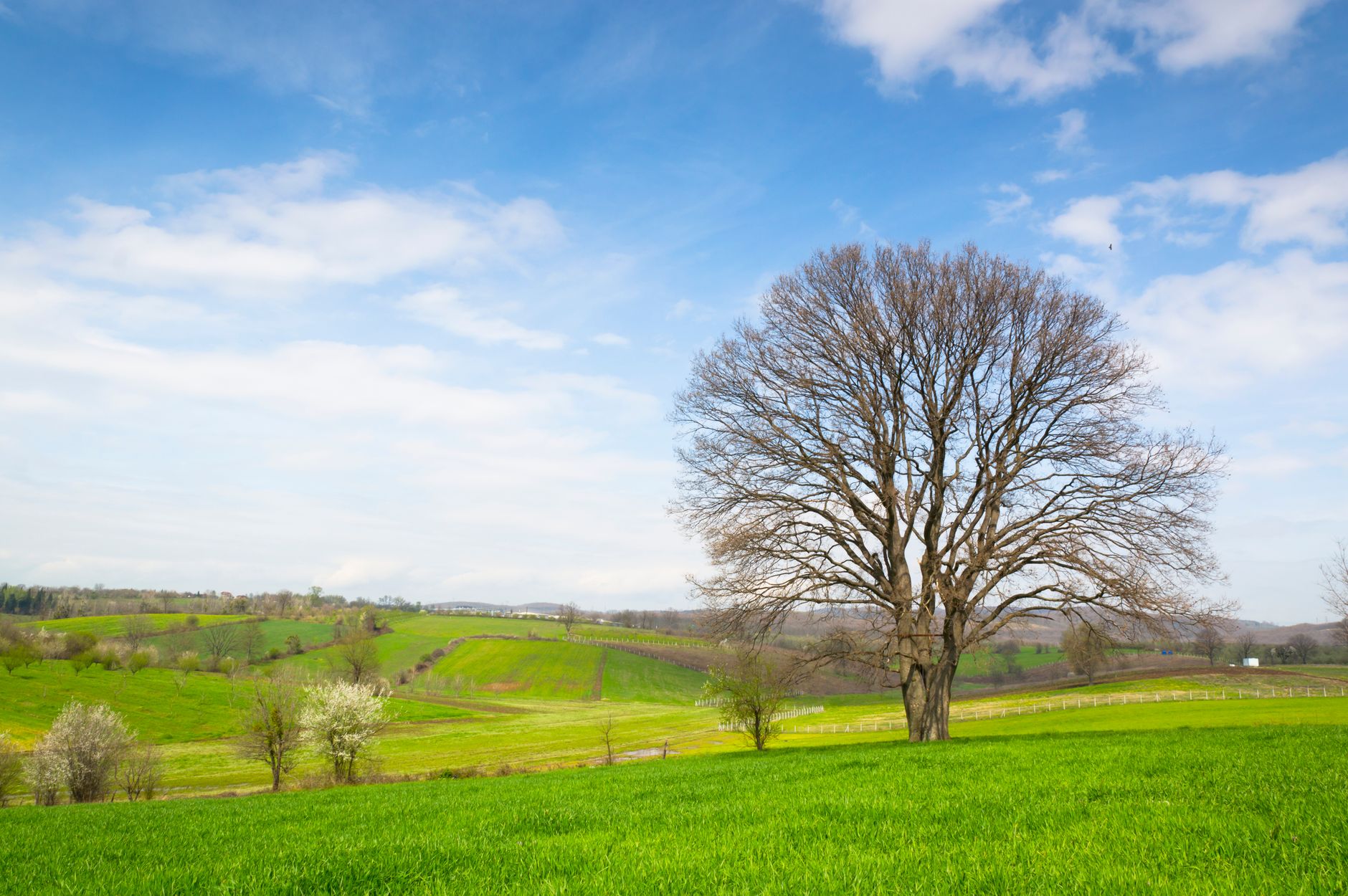
It was the second week of March. The dogwoods along the property line were just starting to bud, that pale green haze they get before the white comes in. I remember because my grandmother always said the dogwoods knew things before people did. She said they bloomed early the spring before she got the land, like they were welcoming her.
I heard the truck before I saw it. A big diesel, the kind that idles louder than it needs to, the kind a man buys when he wants you to hear him coming. It rolled up my gravel drive and parked crooked, half on the grass, the way you park when you are not planning to stay long and you do not respect where you are.
Hoyt Pace got out first. I knew him the way everybody in Chalmette County knew him. He had been on the board of commissioners for eleven years. He had a billboard on Route 9 with his face on it, forty feet tall, squinting into the sun like he was surveying land God had personally handed him. Under his picture it said SERVING OUR COMMUNITY. I always thought that was funny. Serving it to who, I used to say to my son Marcus. Serving it up on a plate.
Behind Hoyt came a younger man in a golf shirt, khaki pants with a crease so sharp you could cut bread with it, and sunglasses he did not take off even when he came inside. He carried a leather folder under his arm. Hoyt never introduced him by name. Later I would learn he was with Meridian Development Group, out of Atlanta, and that he had a name, but that morning he was just the folder.
Hoyt did not wait to be asked in. He raised his hand and rapped twice on the door frame and pulled the screen open and stepped into my kitchen, and the folder man came in behind him, and just like that there were two strange men standing on my grandmother’s linoleum.
“Odessa,” he said. Not Ms. Freeman. Not Mrs. Freeman. Odessa, like we were old friends, like he had ever once in his life sat at this table.
“Commissioner Pace,” I said. I did not offer him coffee.
He looked around my kitchen the way an appraiser looks at a thing he is about to lowball. His eyes went over my grandmother’s plates on the wall, the ones with the little blue flowers. Over the calendar from the funeral home. Over the window that looks out on the water oak and the two headstones underneath it.
“I’m going to be straight with you,” he said, “because I respect you and I respect your family.” He said it the way people say a thing they have decided is a kindness, a thing they have practiced in the truck on the way over. “The county’s moving forward with a project out here. Infrastructure. Public benefit. And your parcel, well, it sits right in the middle of it.”
“What project,” I said.
“Road improvements. Drainage. A community access project.” He waved his hand like the details were dust. “The point is, the county has the authority to acquire the land. Eminent domain. You’ve heard of it. It’s the law, Odessa. It’s not personal. When the public needs land, the public gets the land, and the owner gets paid fair value. That’s the system. That’s America.”
The folder man opened his leather folder and slid a single sheet of paper across my kitchen table. A check. I did not touch it. I looked at the number on it, though. I will not pretend I did not look.
Twenty-two thousand dollars.
Sixteen acres of good bottomland with road frontage on two sides, a house, a well, a barn, and my father’s grave, and the number on the check was twenty-two thousand dollars.
“That’s fair value,” Hoyt said, watching my face. “That’s more than fair, honestly. County assessor’s numbers. It’s already been through the board. The paperwork’s already done, Odessa. This is just the courtesy call. I could’ve sent a letter. I came myself because I respect you.”
I want to tell you that I stood up and threw them out. I did not. I sat very still, the way my grandmother taught me to sit still when a thing is trying to knock you off balance, because a person who is still can think and a person who is flailing cannot.
“Already done,” I said.
“Board voted last month. It’s a done deal. I need you off the parcel by the end of April. I’m giving you six weeks, which is more than the law requires, out of respect.”
He kept saying that word. Respect. He said it the way you throw salt over your shoulder, a little ritual to keep the bad luck off, except the bad luck was him.
What twenty-two thousand dollars looked like
After they left, I sat at that table for a long time. The check sat there too, face up, that number staring at me.
I want you to understand what that land was. Not what it was worth on a county assessor’s spreadsheet. What it was.
My grandmother, Cora Mae, was born in 1919 in a cabin two counties over, the daughter of people who had been owned. She came to Chalmette County as a young woman to work land she did not own, for a family named Pruitt, sharecropping cotton and then soybeans, keeping a third of what she grew if the Pruitts felt generous and less if they did not. She raised my mother in a tin-roofed shack on the far corner of that same land, the corner nobody wanted because it flooded, and every year she put a little aside. A dollar here. Fifty cents there. Egg money. Wash money. Money from taking in sewing.
It took her nineteen years. Nineteen years of setting money aside a coin at a time, of being told by the bank that they did not lend to people like her, of finding a white lawyer in the next county over who would hold the paper for her for a fee because a Black woman could not walk into the courthouse and buy land clean in 1948, not in this county. Nineteen years, and in 1948 she bought sixteen acres from the estate of the very family she had sharecropped for, the Pruitts, who had gone broke and had to sell.
She bought the land she had worked as a slave’s granddaughter. She bought it in her own name. And she made my grandfather promise, and he made my mother promise, and my mother made me promise, that it would never leave the family. That no matter what anybody offered, no matter who came with a truck and a check and a smile, the answer was no. Because they had not paid for dirt. They had paid for the right to stand on the earth and belong to it.
My father is buried on that land. My grandmother is buried on that land. There is a place under the water oak with my name already on a flat stone, waiting.
And Hoyt Pace slid twenty-two thousand dollars across the table and called it respect.
The thing that did not add up
I did not sleep that night. I lay in the bed my grandfather and grandmother had shared, the bed my mother died in, the bed I would likely die in, and I stared at the water stain on the ceiling that had been there since a storm in 1998 and listened to the old house tick and settle the way it does. There is a particular loneliness to being sixty-three and a widow and being told, by a man in a pressed shirt, that the ground under your own bed is going to be taken from beneath you. I had lost my husband Robert eight years back. I had lost my mother before that, and my father before that. I had done all my grieving on this land, at that kitchen table, under that oak, and now a stranger wanted to pave over the whole shape of my grief and call it progress.
But somewhere around three in the morning, staring at that water stain, a thing started to bother me. A small thing. A splinter.
Road improvements. Drainage. A community access project.
I had lived on that road my whole life. The county had not so much as filled a pothole on Route 9 in fifteen years. When the culvert washed out in 2019, we the neighbors fixed it ourselves, with our own gravel, because the county said there was no money. And now, all of a sudden, there was money for a major infrastructure project that happened to run straight through the one stretch of Route 9 with the best road frontage and the flattest, most buildable ground in the whole county.
My land.
And the man from Atlanta. The folder man. The county does not send a developer from Atlanta to buy land for a drainage ditch. You send a county engineer for a drainage ditch. You send a road crew. You do not send a man in a golf shirt with a leather folder and sunglasses he will not take off, a man whose creased khakis have never once been near an actual construction site.
I lay there and I thought about my grandmother’s face. Cora Mae Freeman did not smile in photographs. She thought smiling for a camera was a way of asking to be liked, and she had spent nineteen years being told she was not worth liking, so she was done asking. In the one picture I have of her on this land, from 1949, she is standing at the corner post with her hand on it, not smiling, looking straight into the lens like she is daring it to say she does not belong there. That was the woman who taught me. And I could hear her, plain as if she were in the room, saying the thing she said to me a hundred times when I was a girl. They count on you not reading, Odessa. The whole thing they do, from the beginning of time, it only works if you do not read the paper. So you read the paper.
I got up. I made coffee, black, the way she drank it. And I went and got my grandmother’s tin box.
The tin box
Every family that has ever had to fight to keep a thing keeps a box. Ours was a Garrett snuff tin, red and gold, the kind they stopped making decades ago, and it lived on the top shelf of the hall closet behind the good tablecloth. Inside was everything.
The original deed, from 1948, the paper my grandmother’s lawyer had held for her, with her name on it, Cora Mae Freeman, in the clerk’s careful cursive. The tax receipts, every single one, going back to 1948, because my grandmother never in her life trusted the county to keep an honest record, so she kept her own. Little slips of paper, receipt books, canceled checks, all of it, seventy-some years of proof that this family had paid its taxes on this land every year without fail.
And something else. A survey. A real survey, done by a licensed surveyor in 1951 when my grandfather built the house, with the property lines marked exact, the acreage certified, and stamped and filed with the county.
I spread it all out on the kitchen table where the check had been. I made myself read every word. I am not a lawyer. But my grandmother had taught me that the people who take things from you count on you not reading. They count on the paper being boring and long and full of words designed to make your eyes slide off. So you read anyway. You read it twice. You read it out loud if you have to, because the ear catches what the eye skips.
And that is when I found the first lie.
The first lie
Hoyt Pace had told me the board voted last month. That the taking had been approved. That the paperwork was already done.
The county keeps its records at the courthouse, and the courthouse records are public, and public means mine. So the next morning I drove into town and I sat in that records room for six hours, and a young clerk named Denise, whose grandmother had known my grandmother, helped me pull every file.
There was no vote.
There was no eminent domain proceeding on my parcel. There was no public project on file. There was no drainage plan, no road improvement, no community access project, nothing. The county had not voted to take my land, because the county, as a body, did not know a thing about it.
What there was, buried in the planning commission minutes, was a rezoning application. Filed six weeks earlier. Filed by Meridian Development Group of Atlanta, Georgia. An application to rezone a sixteen-acre parcel on Route 9 from agricultural to commercial, for the purpose of, and I read this line four times to be sure, “a retail shopping center anchored by a regional grocery and pharmacy.”
A shopping strip.
Not a road. Not a drain. A shopping strip. And the parcel described in Meridian’s own application, by its own metes and bounds, was my land. My grandmother’s sixteen acres. And the assessor’s valuation attached to Meridian’s file, the number they were using internally, the real number, was not twenty-two thousand dollars.
It was four hundred and ten thousand dollars.
What they were actually doing
Let me lay it out the way I finally understood it, sitting in that records room with Denise, both of us going quiet as it came clear.
Hoyt Pace and Meridian Development had a deal. Meridian wanted my land for a shopping center. My land was worth, on the open market, north of four hundred thousand dollars, and worth a great deal more than that to a developer who needed exactly that flat, road-fronted parcel and no other.
But I would never sell. Everyone in the county knew the Freemans would never sell. My grandmother had turned down offers for sixty years, and I had turned down two myself.
So they could not buy it. They had to take it. And the only way to take land from an owner who will not sell is eminent domain, which the county can do, but only for a genuine public use, and a shopping center is not a public use. The Constitution says so. You cannot condemn a Black woman’s family land and hand it to an Atlanta developer for a grocery store. That is not eminent domain. That is theft with a county seal on it.
So here was their trick. Hoyt was going to manufacture a public project. Dress the taking up as “road improvements” and “drainage” and “community access.” Get the board to approve the taking of my parcel for that fake public project, quietly, buried in a consent agenda, on a night when nobody was watching. Pay me the lowball assessment, twenty-two thousand, on the theory that a sixty-three-year-old widow would take the check and go. Then, once the county owned it, once it was county land, they would quietly transfer or lease it to Meridian, rezone it, and the shopping center would go up on my father’s grave.
The twenty-two thousand was not a mistake. It was the plan. Pay me a fraction, pocket the difference between what they paid me and what Meridian would pay the county, and split it up among the men in the pressed shirts.
But Hoyt had gotten ahead of himself. He had come to my kitchen and told me the board had already voted, that it was already done, because he wanted me scared and gone before I could ask a single question. He wanted me to believe the fight was over before it had started.
The fight had not started. And the board had not voted. He had lied about the one thing that was the easiest in the world to check, because he never once imagined I would check it.
The county attorney
I did not go to a lawyer first. I could not afford a lawyer, not the kind of lawyer you need to fight a county, and I knew it. What I had was paper, and the truth, and my grandmother’s voice in my head telling me that the people who take things count on you being too tired and too poor and too alone to make noise.
So I made noise.
I made copies of everything. Denise helped me. The rezoning application with my land in it. The four-hundred-ten-thousand-dollar assessor’s number Meridian was using. The absence of any public project, any vote, any eminent domain proceeding. And the original 1948 deed, and the 1951 survey, and seventy-two years of tax receipts, every one, proving clear and unbroken title in my family’s name.
Then I did three things.
First, I called the county attorney’s office and requested, in writing, the legal basis for the condemnation of my parcel, citing it by its parcel number, and I copied the state attorney general’s office on the letter. In writing. Certified mail. So there would be a record, and so the county attorney would understand that the state was now watching.
Second, I called the state chapter of a legal aid organization that fights eminent domain abuse, and I sent them my file, and a young lawyer named Priya called me back within two days and said, and I will never forget it, “Mrs. Freeman, I have been doing this for nine years, and I have rarely seen a fraud this clean and this stupid. They wrote it all down.”
Third, I called the newspaper. Not the county paper, which Hoyt half owned. The paper in the state capital. And I told a reporter named Tom Wexler that a county commissioner was trying to steal a Black family’s land, land bought by a sharecropper in 1948, to hand to an Atlanta developer for a shopping mall, and that I had the paper to prove it.
## The board meeting
The taking was on the agenda for the April board meeting. Buried, like I knew it would be, in the consent agenda, item 14 of 19, described as “acquisition of Route 9 parcel for public infrastructure purposes.” A line so boring your eye would slide right off it. Which was the point.
They count on you not reading.
The meeting was on a Thursday night in the county building. The board sat up on their raised bench, five of them, with Hoyt in the center chair because he was the chairman. There was a public comment period, three minutes per speaker, the kind of thing that is designed to let people vent into the air and then be ignored.
I signed up to speak.
I want to tell you I was calm. I was not calm. My hands were shaking when I stood at that little podium with the microphone. But my grandmother’s tin box was under my arm, and my son Marcus was in the third row, and half of Chalmette County was in that room because Tom Wexler’s article had run that morning on the front page of the capital paper, with the headline THE ACRE THEY TRIED TO CONDEMN, and my grandmother’s face in it, the one photograph I had of her standing on her land in 1949.
Hoyt saw me at the podium and something moved across his face. He knew. He knew before I said a word.
“My name is Odessa Freeman,” I said. “I own the sixteen acres on Route 9 that this board is about to vote to take tonight, under item 14, for public infrastructure purposes.”
I let that sit.
“Except there is no public infrastructure project. There is no road. There is no drainage. I have been to the courthouse. There is no plan on file, because there is no plan.”
I held up the rezoning application.
“What there is, is this. An application filed six weeks ago by Meridian Development Group of Atlanta, to rezone my land, described right here by its own boundaries, into a commercial shopping center anchored by a grocery store. Which means this board is not being asked to take my land for the public. This board is being asked to take my land for a developer. And that is not eminent domain. That is against the Constitution of the United States, and every lawyer in this room knows it.”
The room had gone very quiet.
“Commissioner Pace came to my kitchen last month,” I said, and I looked right at him, “and he told me the board had already voted. He told me it was already done. He told me to take twenty-two thousand dollars and be off my land by the end of April. He said it to my face at my grandmother’s kitchen table. And the board had not voted, because you are voting tonight. So he lied to me, to run me off my own land before I could stand where I am standing right now.”
Hoyt’s face had gone the color of a brick.
“My grandmother bought this land in 1948,” I said. “She was a sharecropper. She saved for nineteen years, one dollar at a time, to buy the land she had worked for the family that had once owned her people. She paid taxes on it every year for the rest of her life, and my mother did, and I have, and I have every single receipt right here in this box, seventy-two years of them, because she taught me the county would try to say we didn’t own what we owned. My father is buried on that land. And you were going to pave it for a parking lot and pay me a nickel on the dollar and split the difference.”
I set the whole file down on the podium.
“I have sent all of this to the state attorney general. I have sent it to a legal aid organization that sues counties for exactly this. And I have sent it to the newspaper, which is why every one of you is sitting here tonight. So you can vote on item 14 if you want to. But you should know that if you do, you are voting to defend a fraud, on the record, with the attorney general watching, and it will not be Odessa Freeman who pays for it.”
I sat down.
The vote that never happened
There was no vote on item 14.
One of the other commissioners, a woman named Ruth Delgado who had been on the board two years and had, I think, been kept out of the room where the deal was made, moved to strike item 14 from the agenda entirely and refer the matter to the county attorney and the state for review. It was seconded before she finished the sentence. The three other commissioners could not get their hands up fast enough to distance themselves from Hoyt Pace. A thing that has a county commissioner and a lie and a newspaper reporter and the attorney general all in the same room stops being a deal and starts being a fire, and nobody wanted to be caught standing next to the man holding the match.
Hoyt did not say a word. He sat in the center chair with his brick-colored face and his forty-foot billboard smile nowhere to be found, and he let the motion carry, because there was nothing else he could do.
What happened after
The attorney general’s office opened an investigation within the month. It turned out that my land was not the only parcel Hoyt Pace and Meridian had lined up. There were three others, all small, all owned by old people, all lowballed, all dressed up as fake public projects. Two of those owners had already taken the check, because nobody had told them to read the paper, and nobody had told them there was no project. The state made the county unwind those takings too. Those families got their land back, and Meridian’s real numbers, once they were on the front page, forced an honest valuation.
Hoyt Pace did not run for reelection. By the time his term ended, he was under indictment for official misconduct and conspiracy to defraud, and the last I heard the case was still working through the courts, slow the way those things are slow. Meridian Development pulled out of the county entirely and never built their shopping center anywhere near Route 9. The Atlanta folder man, I learned much later, had a name, and it was in the indictment too.
And me? I kept my land.
I kept every acre. I never signed a thing. The twenty-two thousand dollar check I mailed back to the county attorney’s office with a note that said, in my grandmother’s spirit, “This is not for sale. It was never for sale. Please do not come to my kitchen again.”
The water oak
I want to end where I always end, which is under the water oak.
The spring after all of it, the dogwoods bloomed early again, that pale green haze and then the white. Marcus came up from the city with his own children, my grandbabies, and we walked the property line the way my grandmother used to walk it with me, touching the corner posts, telling the story of each one.
We stopped at the water oak. My grandmother is there. My father is there. And the flat stone with my own name is there, waiting, because that is where I am going to lie down for good when my time comes, in my own dirt, on my own land, that no man in a pressed shirt with a leather folder could take from me because I read the paper he told me not to read.
I put my hand on the bark of that tree. It has been growing on this land longer than any Freeman has owned it, and it will be growing here long after I am under it. And I said to my grandmother, out loud, the way she used to say things to the dogwoods, “I kept it, Cora Mae. I kept every acre. They came with a truck and a check and a lie, and I kept it.”
The wind moved through the leaves. That is all. Just the wind.
But my grandmother would have said the tree knew. She always said the tree knew things before people did.
They told me the paperwork was already done. So I read the deed out loud, in a room full of people, with her face on the front page of the paper and her tin box under my arm.
And the land is still ours.
It always was.

Specialty: Quiet Comebacks & Personal Justice
David Reynolds focuses on stories where underestimated individuals regain control of their lives. His writing centers on measured decisions rather than dramatic outbursts — emphasizing preparation, patience, and the long game. His characters don’t shout; they act.