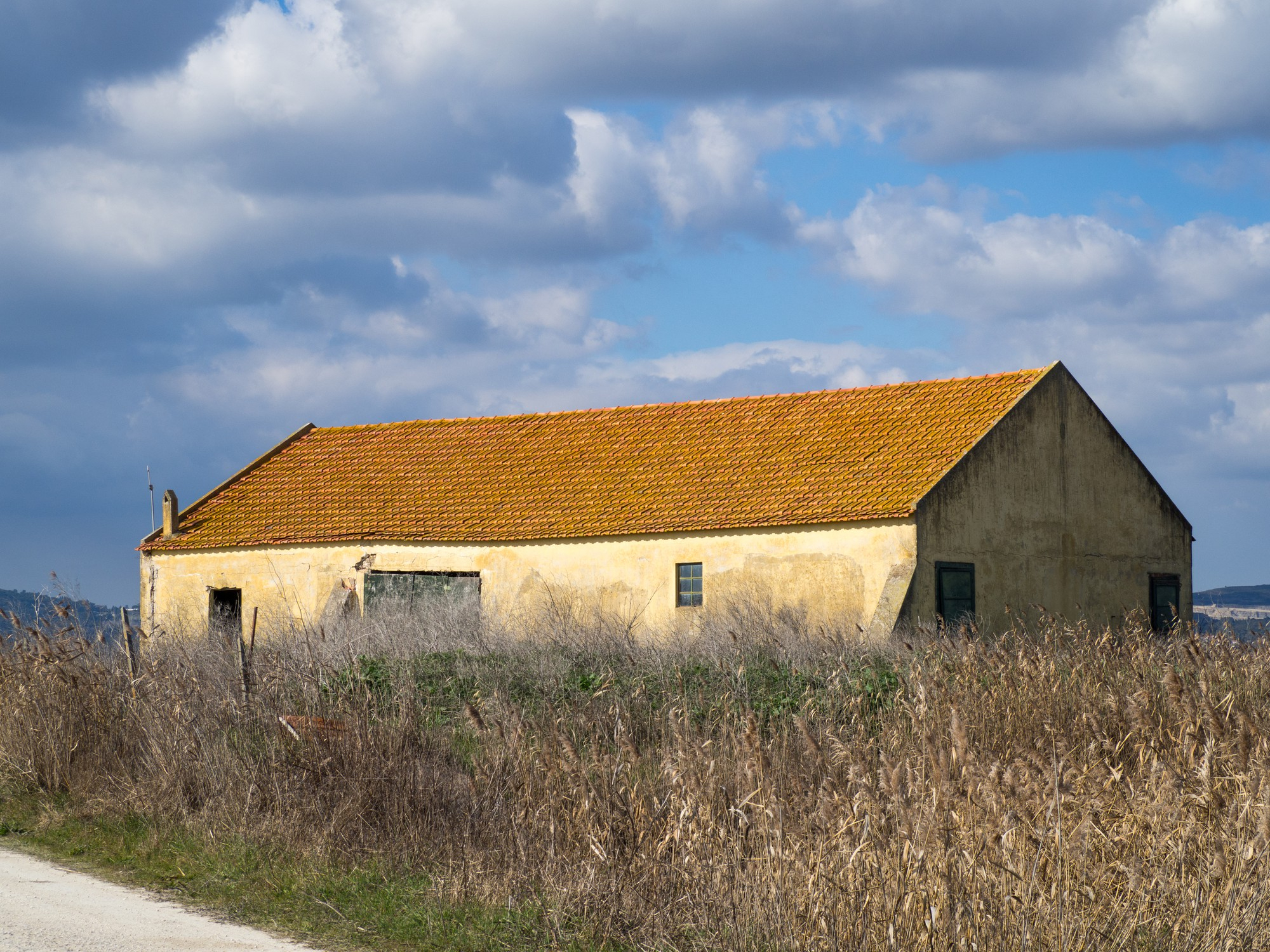
I inherited an old farm from my late wife, while my son received a $5 million penthouse in Los Angeles. He treated it like the farm was all I needed and made it clear I couldn’t stay. So I drove there with one bag and no answers. When I opened the door, I finally understood why Jenny had sent me.
Seven days after I buried my wife, a lawyer in Century City read her will and handed my son the keys to a five-million-dollar penthouse in Los Angeles. Then she turned to me, slid a rusted key across the mahogany table, and said my wife had left me an old farm two hours north that no one had mentioned in years.
My son called it a burden before we even stood up. By the end of that week, he had contractors in the penthouse, fresh paint samples laid out, and a legal notice waiting in the guest room.
I drove toward that farm with one duffel bag, a wedding photo, and no idea why Jenny wanted me there so badly.
My wife always had a reason for everything she did.
She was the kind of woman who could walk into a room full of men in expensive suits and walk out with the deal, the permits, and the best seat at the table. Jenny built her life the way some people build steel bridges—clean lines, no wasted effort, every piece carrying purpose.
I was a history teacher.
I liked chalk dust, red pens, yellow legal pads, and the steady rhythm of semesters. Jenny liked maps, contracts, hard hats, and open land. For forty years, we made that difference feel easy.
Then she got sick.
In her final months, she started taking quiet trips I didn’t understand. Meetings with her attorney behind closed doors. Requests for old documents. And she kept telling me, in that calm voice that made everything sound manageable,
“If anything happens, trust the farm.”
I used to smile and kiss her forehead.
I thought she meant memory.
I didn’t realize she meant survival.
At the will reading, my son Marcus barely let the lawyer finish the first page before his posture changed. He sat straighter when she mentioned the penthouse. His wife touched his wrist and gave him a quick, satisfied smile—the kind people give when they think the future just opened for them.
Then the lawyer said my name.
“To Samuel Preston,” she read, “the property known as Preston Farm, including the farmhouse, outbuildings, and surrounding acreage.”
Marcus blinked.
“That’s it?”
The lawyer adjusted her glasses.
“There is also a sealed letter, to be opened on the property.”
Marcus let out a short laugh.
“A rundown farm and a mystery envelope. Mom really knew how to make a point.”
I looked down at the key in my hand. Old iron. Cold. Heavy.
“Your mother was very deliberate,” the lawyer said quietly.
Marcus stood, grabbed his coat, and looked at me like I had somehow chosen this outcome myself.
“Dad, don’t act surprised when you realize she left you a tax bill and a broken roof.”
I should tell you something about my son.
He wasn’t always like this.
There was a time he ran barefoot through the yard with a plastic shovel, convinced every patch of dirt might hide treasure. A time he helped Jenny plant roses and came inside covered in mud, asking if roots could hear us talking.
But money changes how people listen.
And grief, mixed with entitlement, can turn a son into someone you barely recognize.
Three days after the will reading, I woke in the penthouse to the sound of drills.
Not one. Several.
By the time I came downstairs, workers were carrying lighting fixtures through the foyer and covering the floors. Marcus stood in the living room with coffee in one hand and a clipboard in the other.
“You didn’t say they were starting this early,” I said.
“I have a schedule,” he replied without looking up.
One worker pushed open the door to Jenny’s study. Her shelves were still full. Her notebooks still stacked beside the brass lamp. The framed map she loved was already being taken down.
“Wait,” I said. “Those are her things.”
Marcus finally looked at me.
“Dad, the place needs updating.”
“Your mother’s been gone one week.”
He exhaled.
“Jessica and I are moving forward.”
That afternoon, I found the notice in the guest room.
Twenty-two days.
Not a conversation. Not a plan. A deadline.
“I need the room cleared by the end of the month.”
When I went downstairs, Marcus was scrolling on his phone.
“You’re serious,” I said.
He leaned back.
“Dad, the farm is yours. Live there. Sell it. Lease it. I don’t care. But this place is part of my life now.”
“This was our home.”
“And now it isn’t.”
That night, I packed in silence.
A few shirts. A wedding photo wrapped in a towel. Jenny’s gray cardigan that still carried the faintest trace of her perfume.
The next morning, while taking a box outside, I found something in the recycling bin.
A glossy brochure.
A private residential community near Bakersfield. Clean lawns. Perfect smiles.
Behind it—a draft intake form.
My name printed at the top.
A move-in date already chosen.
Before Jenny had even passed.
I stood there holding it while the sunlight hit the driveway.
Marcus hadn’t just planned for me to leave.
He had planned where I would go.
And Jenny… somehow… had known.
I didn’t confront him.
Not yet.
I put the papers in the trunk, got in the car, and drove away.
The city faded behind me.
Glass towers turned into warehouses, then open roads, then fields stretching under a wide sky.
By the time I reached the gravel drive, everything felt quieter. More real.
The farm stood there waiting.
Peeling paint. Crooked shutters. A leaning barn. Dry grass.
Exactly the kind of place someone like Marcus would dismiss in seconds.
I sat in the truck, listening to the engine tick as it cooled.
Then I took Jenny’s cardigan from the seat.
As I slipped it on, something crackled in the pocket.
A note.
Small. Folded. Her handwriting.
Trust the farm. Check the barn after you go inside.
That was all.
No explanation.
Just the same words she had spoken before.
I stepped onto the porch.
The boards creaked under my boots. The key felt heavier in my hand.
I slid it into the lock.
For a moment, I expected resistance. Dust. Decay. Disappointment.
Instead, it turned smoothly.
The door opened.
And inside—
A wooden table that looked deliberate.
Two sealed envelopes.
An old olive trunk.
And on top, in Jenny’s handwriting, just three words:
“FOR YOU FIRST.”
And the moment I opened that first envelope…
I knew this farm was never meant to be a burden.
The first page contained only one sentence.
Samuel, before you look inside the trunk, go to the barn.
I almost laughed.
Even after death, Jenny was still giving instructions in the precise order she wanted them followed.
I folded the letter, slipped it into my pocket, and walked back outside.
The afternoon sun had begun to sink behind the fields. Long shadows stretched across the dry grass, and the barn stood at the far end of the property like an abandoned ship.
From the farmhouse, it had appeared ready to collapse.
Up close, I noticed something strange.
The siding was weathered, but the foundation was new.
The hinges were rusted, but the lock had recently been oiled.
A small black camera was mounted beneath the roofline.
Jenny had wanted the place to look forgotten.
But it was not.
The same iron key opened the barn door.
When I pulled it toward me, lights flickered on automatically.
I stopped in the doorway.
There was no rotting hay inside.
No broken equipment.
No animals.
The entire interior had been rebuilt.
Polished concrete covered the floor. Steel beams reinforced the roof. Along one wall stood filing cabinets, shelves of binders, rolled construction plans, and several computer monitors.
A large wooden desk sat beneath the loft.
Beside it was a leather chair I recognized immediately.
It had once stood in Jenny’s office in downtown Los Angeles.
A framed photograph rested on the desk.
Jenny and me on our twentieth anniversary.
We were standing near the ocean, wind pushing her hair across her face while she laughed at something I could no longer remember.
Under the photograph was another envelope.
SIT DOWN BEFORE YOU OPEN THIS.
“That serious?” I whispered.
My voice echoed through the barn.
I lowered myself into her chair and opened the envelope.
This letter was longer.
Much longer.
Jenny had written it by hand.
My dearest Samuel,
If you are reading this, then Marcus has done exactly what I feared he would do.
I hope I was wrong.
I hope he gave you time to grieve.
I hope he treated our home as your home.
I hope he remembered that you were his father before you became an obstacle to whatever future he imagined for himself.
But I stopped building plans around hope many years ago.
Six months before her death, Jenny had discovered that Marcus and Jessica were researching senior communities.
Not for themselves.
For me.
Marcus had contacted two facilities and requested information about transferring an older parent without that parent’s direct involvement.
He had also asked one of Jenny’s assistants for copies of our property records, medical documents, and financial statements.
When the assistant refused, Marcus told her that Jenny had given him permission.
She had not.
Jenny confronted him privately.
According to the letter, Marcus claimed he was preparing for “every possibility.”
He told her that if she died first, I would not be capable of managing the penthouse alone.
He said the apartment was too valuable to be wasted on an aging retired teacher.
I lowered the letter.
For several moments, I could hear nothing except the faint hum of the lights.
Marcus had made those plans while Jenny was still alive.
While I was driving her to medical appointments.
While I was helping her into bed.
While I was sitting beside her at night, pretending not to notice when her breathing changed.
I forced myself to continue reading.
I did not tell you, Jenny had written, because I knew what it would do to you. You loved the boy he had been. Part of you still believed that boy would return if you waited long enough.
Then came the line that broke something inside me.
I could not control what kind of son Marcus chose to become. I could only make certain his choices did not destroy you.
I covered my mouth with one hand.
Jenny had known.
She had known I would be standing there alone.
She had imagined me reading those words in the chair where she had once worked.
And she had built an answer before I even understood there was a problem.
The farm was not a forgotten piece of land.
It consisted of four hundred and eighty acres.
Jenny had quietly purchased neighboring parcels over a period of twenty-three years, using several holding companies to prevent developers from learning what she was assembling.
The property included agricultural water rights that were older than most of the surrounding towns.
A renewable-energy company had signed a thirty-year lease for part of the land.
The remaining acreage had been approved for a research and education facility.
There was also a private trust.
The trust contained enough money to maintain the property, pay its taxes, restore the farmhouse, and provide me with an income for the rest of my life.
At the bottom of the second page, Jenny had written a number.
I read it three times.
The estimated value of the land, water rights, lease, and trust was more than eighteen million dollars.
The penthouse Marcus had received was worth five.
The farm was worth more than three times as much.
But even that was not the real reason Jenny had left it to me.
I continued reading.
You spent forty years teaching history, Samuel. You preserved other people’s stories while never believing your own life was important enough to preserve.
I bought this farm because of you.
Years ago, you told me that children learn history differently when they can stand where something happened, touch an old tool, open a real document, and understand that the past belonged to ordinary people.
I remembered the conversation.
We had been driving through Northern California after attending a wedding.
I had pointed toward an abandoned schoolhouse and told Jenny it should have been restored as a place where students could learn about the farming families who had built the region.
It had been a passing comment.
At least, I had believed it was.
Jenny had remembered it for twenty-seven years.
The barn contained architectural plans for the Preston Rural History Center.
There would be classrooms, an archive, a small museum, and workshops where students from city schools could learn about agriculture, migration, local industries, and the people whose labor rarely appeared in textbooks.
The farmhouse would remain my private home.
The center would be funded by income from the energy lease.
Jenny had already created the nonprofit organization.
She had already hired an administrator.
She had already contacted school districts.
She had already done everything except tell me.
I looked toward the shelves.
Boxes were labeled by year and county.
Some contained donated journals.
Others held photographs, family records, farming equipment catalogs, maps, and oral-history transcripts.
My wife had not left me a place to disappear.
She had left me somewhere to become useful again.
At the end of the letter, Jenny wrote:
The penthouse was the most beautiful object Marcus could see.
The farm was the most valuable future he refused to look at.
I gave him what he believed mattered.
I gave you what I knew mattered.
Do not feel guilty.
Do not sell the property because he demands it.
Do not surrender your future to prove that you are a loving father.
Love is not measured by how much mistreatment you are willing to accept.
There is a video on the computer.
Watch it when you are ready.
Always yours,
Jenny
I remained in her chair until the barn windows turned dark.
Then I switched on the computer.
There was only one file on the screen.
FOR SAMUEL.
Jenny appeared when I opened it.
She was sitting in the same chair, wearing the gray cardigan I had carried from Los Angeles.
Her face was thinner than I remembered.
Her eyes were tired.
But her voice was steady.
“Hello, Sam.”
I reached toward the screen before I could stop myself.
Jenny smiled.
“I know you hate recorded messages. You always say people behave unnaturally when a camera is pointed at them, so I will try not to behave unnaturally.”
A laugh escaped me.
It came out broken and wet.
She leaned slightly closer to the camera.
“I need you to understand that this is not revenge against Marcus. I love our son. I always will. But protecting someone from the consequences of his character does not improve his character.”
She paused to catch her breath.
“He may come to the farm when he learns what it is worth. When he does, listen carefully to the first question he asks.”
Behind the screen, I could hear the faint sound of papers being moved.
“If his first question is whether you are safe, whether you are well, or whether you need him, then perhaps the boy we raised is still inside him.”
Her expression changed.
“If his first question is about the money, believe the man standing in front of you.”
Jenny looked down for a moment.
When she raised her eyes again, they were shining.
“I am sorry I will not be there to see what you build. But I know you, Samuel. You think your life became smaller when you retired. It did not. You were simply waiting for a new classroom.”
The video ended with her pressing her fingers to her lips.
Then the screen went black.
I sat alone in the barn and cried harder than I had at the funeral.
At the funeral, people had been watching me.
They had touched my shoulder, handed me tissues, and told me I needed to remain strong.
In the barn, there was no one to remain strong for.
I cried for the woman I had lost.
For the son I no longer understood.
For the years Jenny had spent preparing a future she would never share.
And for the terrible comfort of realizing that even while she was dying, she had been protecting me.
A truck arrived the following morning.
The driver was a broad-shouldered man in his late fifties with silver hair and a sun-darkened face.
He introduced himself as Daniel Ruiz.
“I managed the neighboring property for thirty years,” he said. “Your wife hired me eighteen months ago.”
He looked toward the farmhouse.
“She said you might arrive without knowing anything.”
“That sounds like Jenny.”
Daniel smiled.
“Yes, sir. It does.”
He showed me the property.
The dry fields near the road had been left untouched intentionally, preserving the appearance of an abandoned farm.
Farther north, rows of young olive trees stretched across a gentle slope.
New irrigation lines had been installed beneath the soil.
Survey markers identified the section leased for solar development.
A restored schoolhouse stood beyond a line of eucalyptus trees.
Jenny had purchased it from the county and moved it onto the property board by board.
Inside were twelve wooden desks, a chalkboard, and a teacher’s table.
On the table rested a fresh box of white chalk.
I picked up one piece.
My fingers remembered its weight.
“She chose everything herself,” Daniel said from the doorway.
I looked at the desks.
“How many people know about this place?”
“More than you think. She met with teachers, historians, archivists, engineers, and local families. She made us promise not to contact you until you arrived.”
“Why keep it secret?”
Daniel hesitated.
“She said someone in the family would try to stop her.”
I did not need to ask who.
During my first week at the farm, I barely slept.
I read every file.
I walked every path.
I learned that Jenny had visited the property at least twice each month during the final year of her life.
Some of those trips had occurred on days when she claimed to be meeting her attorney.
Others had happened after chemotherapy appointments.
There were photographs of her standing inside the unfinished barn wearing a hard hat and holding construction plans.
In one, she was smiling beside the schoolhouse.
She looked exhausted.
She also looked completely alive.
The farmhouse was structurally sound.
The roof had been replaced.
The electrical system was new.
The plumbing had been repaired.
Only the exterior remained neglected, exactly as Jenny had intended.
On my sixth night, I slept in the bedroom overlooking the fields.
At dawn, sunlight entered through the curtains and fell across Jenny’s cardigan draped over the chair.
For the first time since her death, I woke without immediately feeling that I was falling.
Then Marcus called.
I watched his name flash across the phone.
It was the first time he had contacted me since I left Los Angeles.
“Dad,” he said when I answered. “Where are you?”
“At the farm.”
There was a short silence.
“What exactly did Mom leave you?”
Jenny’s voice returned to me.
Listen carefully to the first question he asks.
Not Are you safe?
Not How are you managing?
Not Do you need anything?
What exactly did Mom leave you?
I closed my eyes.
“Why are you asking?”
“Jessica found some records online. There’s an energy lease attached to the property. And something about water rights.”
“So?”
“So you told us it was an old farm.”
“I did not tell you anything. You decided what it was before I saw it.”
His voice sharpened.
“What is it worth?”
There it was.
The question Jenny had predicted.
I looked through the kitchen window toward the barn.
“Come and see it,” I said.
Marcus arrived the next afternoon in a black car polished so perfectly that the surrounding fields reflected across its doors.
Jessica did not come.
Marcus stepped out wearing sunglasses and shoes entirely unsuitable for gravel.
He stared at the farmhouse.
Then at the barn.
Then at the rows of olive trees in the distance.
His expression tightened.
“You have been renovating.”
“Your mother renovated most of it.”
He removed his sunglasses.
“She knew about this?”
“She created it.”
I led him into the barn.
The moment he saw the monitors, documents, and development maps, his pace changed.
He walked more quickly.
His eyes moved across the room the same way they had moved around the attorney’s office when the penthouse was announced.
“What is the lease paying?” he asked.
I did not answer.
He opened one of the binders without permission.
“Thirty years?”
“Put that down.”
He ignored me.
“This land could be worth twenty million dollars in ten years.”
“Put the binder down, Marcus.”
He dropped it onto the desk.
“You knew.”
“I discovered it when I arrived.”
“And you did not call me?”
“You had given me twenty-two days to leave my own home.”
“The apartment belongs to me now.”
“And this farm belongs to me.”
His mouth tightened.
“That is different.”
“How?”
“Because Mom clearly did not understand the value of what she was doing.”
I stared at him.
“Your mother assembled this property over twenty-three years. She negotiated the water rights. She created the trust. She designed the center. She understood every dollar.”
Marcus turned toward the architectural plans.
“What center?”
I showed him.
He looked through the drawings without admiration.
Without curiosity.
Without once mentioning the mother who had designed them while dying.
“This is ridiculous,” he said. “You cannot manage something like this.”
“Daniel manages the property. The nonprofit has an administrator. I will oversee the historical program.”
“You’re a retired schoolteacher.”
“Yes.”
“You have no experience handling land worth this much.”
“Your mother believed I did.”
“She was sick.”
The words settled between us.
I felt anger rise, but it was not loud.
It was colder than that.
“Do not use her illness to explain a decision you do not like.”
Marcus began walking across the barn.
“You should sell before you make a mistake. We can divide the proceeds. I’ll arrange everything.”
“We?”
“I am your son.”
“You remembered that quickly.”
He stopped.
“I am trying to protect you.”
I walked to the desk, opened my bag, and removed the senior-community brochure.
Then I placed the incomplete admission form beside it.
Marcus’s face changed.
Not much.
But enough.
“Where did you find that?”
“In the recycling bin.”
He stared at the form.
“That was only an option.”
“My move-in date had already been selected.”
“Jessica was researching facilities.”
“My name was typed on the paperwork.”
“You were going to need somewhere appropriate to live.”
“I had somewhere to live.”
“The penthouse was too large for you.”
“It was not too large when your mother was alive.”
He rubbed a hand across his forehead.
“You are making this sound worse than it was.”
“You planned to remove me before she died.”
“We did not know how long she had left.”
The moment he said it, regret crossed his face.
But the words could not be pulled back.
I studied the man standing in front of me.
For weeks, I had searched for the child who once asked whether roots could hear people speaking.
I had tried to find him behind Marcus’s anger, entitlement, and expensive clothes.
But Jenny had warned me not to confuse memory with evidence.
I opened the olive-colored trunk.
Inside were the original property deeds, trust documents, family records, and one final envelope.
Marcus’s name was written across it.
His eyes fixed on the handwriting.
“That’s for me.”
“Yes.”
“Give it to me.”
I held the envelope but did not release it.
“Your mother left instructions.”
“What instructions?”
“She told me to listen to the first question you asked when you came here.”
He looked away.
“What does that have to do with the letter?”
“Everything.”
I handed it to him.
Despite all that had happened, he was still our son.
Jenny had written those words for him.
Keeping them would not change his character.
Marcus tore open the envelope.
He read silently.
At first, his expression remained hard.
Then his shoulders lowered.
He reached the second page and sat down in Jenny’s chair without asking.
I moved toward the barn door and waited.
After several minutes, he spoke.
“She knew about the facilities.”
“Yes.”
“She knew I talked to them.”
“Yes.”
“Why didn’t she confront me?”
“She did.”
“She asked why I was requesting financial records. She never mentioned the forms.”
“She wanted to see whether you would tell her yourself.”
Marcus looked down at the letter.
“What did she say to you?”
“Nothing until after she was gone.”
He continued reading.
I never saw every word Jenny wrote to him.
He never showed me the letter.
But I saw the moment one sentence reached him.
His face collapsed for less than a second.
Then he folded the pages and stood.
“She made me look like a monster.”
“No, Marcus.”
I remained near the door.
“She gave you privacy while you showed her who you were.”
“You think you’re better than me now because you got the larger inheritance?”
“This is not about who received more.”
“It is always about money when there is this much money.”
“That may be true for you.”
He stepped closer.
“You would never have any of this without her.”
“Neither would you.”
“At least I know how to use what she built.”
“You began tearing apart her study seven days after she died.”
“The penthouse needed work.”
“You threw away her notebooks.”
“They were papers.”
“They were hers.”
Marcus flinched.
I realized then that he had not considered the notebooks valuable because no appraiser had placed a number beside them.
That was the difference Jenny had understood.
He knew the price of every visible object.
He did not understand the value of what could not be purchased again.
“I will not sell the farm,” I said. “I will not divide it. I will not use it to pay for renovations, investments, or the life you believe you deserve.”
“So that is it?”
“That is it financially.”
He gave a bitter laugh.
“Financially?”
“You are my son. When you are ready to have a relationship that does not begin with the value of my property, you know where I live.”
Marcus placed Jenny’s letter inside his coat.
Then he walked out.
His car sent a cloud of dust across the driveway as he left.
I did not chase him.
That was the first boundary I had ever allowed to remain standing between us.
Three months later, the Preston Rural History Center welcomed its first group of students.
They came from a middle school in Los Angeles.
Most had never visited a working farm.
They stepped off the bus staring at the open fields as though they had arrived in another country.
I showed them the schoolhouse.
We examined handwritten letters from farming families, old county maps, newspaper pages, and photographs of laborers who had traveled west with almost nothing.
One boy asked why ordinary people kept journals if they were not famous.
“Because they did not know they were ordinary,” I told him. “They were simply living their lives. History decided later that their lives mattered.”
As I spoke, I understood that Jenny had known exactly what she was giving me.
Not land.
Not money.
Continuity.
A reason to wake early.
A reason to read, prepare, explain, and listen.
A place where grief could become something other than an empty room.
The penthouse was listed for sale before the end of the year.
Marcus had borrowed heavily against it to finance renovations and a business investment.
The investment failed.
The contractors filed claims for unpaid work.
Jessica moved into a hotel and eventually filed for divorce.
I learned most of this from the attorney.
I did not celebrate.
There is no pleasure in watching your child discover that consequences are real.
But I did not rescue him either.
When Marcus called asking for a loan, I said no.
When he asked me to sell ten acres, I said no.
When he accused me of choosing dead strangers and schoolchildren over my own family, I ended the call.
For most of the following year, we did not speak.
Then, one rainy morning in March, I found him standing on the farmhouse porch.
There was no polished car in the driveway.
No expensive coat.
No folder of financial documents.
He held a cardboard box against his chest.
For a moment, neither of us spoke.
“I found these in storage,” he said.
He placed the box on the porch table.
Inside were Jenny’s notebooks.
Her construction journals.
Several framed photographs.
The brass reading lamp from her study.
And the old map that had been removed from the penthouse wall.
“I thought the workers threw them away,” I said.
“I told them to put everything in storage.”
“Why?”
He looked toward the fields.
“I don’t know.”
I waited.
He took a slow breath.
“Maybe part of me knew I would regret it.”
Rain struck the porch roof.
Marcus looked older than he had a year earlier.
Not physically.
There was simply less certainty in his face.
“I sold the apartment,” he said.
“I heard.”
“After the loans, fees, and everything else, there was not much left.”
“I’m sorry.”
He looked surprised.
“I expected you to say Mom warned me.”
“She did.”
A tired smile passed across his face.
“Yes. She did.”
He removed Jenny’s letter from his coat.
The paper had been folded and unfolded so many times that the creases were beginning to tear.
“I have read this every week.”
I said nothing.
“She wrote that you gave me every good thing you knew how to give. She said you taught me patience, loyalty, and kindness, but I began treating those qualities as weaknesses because the world rewarded me for being harder.”
His voice became unsteady.
“She said the worst thing I could inherit from her was wealth without responsibility.”
He looked at me.
“I proved her right.”
An apology can be another form of manipulation when it arrives beside a request.
So I waited for the request.
It never came.
Marcus did not ask about the trust.
He did not ask about the energy lease.
He did not ask what the land was worth now.
He looked through the farmhouse doorway and said, “Are you all right here?”
The question came almost a year too late.
But it came.
“Yes,” I said. “I am.”
He nodded.
“I should have asked that first.”
“Yes.”
“I should have let you stay.”
“Yes.”
“I should not have treated Mom’s death like a transfer of property.”
“No.”
His eyes filled.
“I don’t know how to repair this.”
“You do not repair forty years in one conversation.”
“What do I do?”
“You begin with today.”
I carried the box inside.
Marcus followed.
I made coffee.
We sat at the kitchen table where Jenny had placed the envelopes on the day she prepared the house for my arrival.
I did not forgive him completely that morning.
Real forgiveness is not a door someone opens once.
It is a road built slowly, with evidence.
Marcus began returning to the farm.
At first, he came once every few weeks.
Then every Saturday.
He repaired fences with Daniel.
He cataloged Jenny’s notebooks.
He helped move boxes into the archive.
When visitors asked whether the property belonged to him, he always gave the same answer.
“It belongs to my father.”
One afternoon, I found him replacing the uneven shutters on the farmhouse.
Jenny had left them crooked as part of the disguise.
Now the farm no longer needed to pretend it was worthless.
Neither did I.
Two years after Jenny’s death, we dedicated the completed education building in her name.
A bronze plaque near the entrance read:
THE JENNY PRESTON CENTER FOR LIVING HISTORY
Every life leaves evidence. Every story deserves a witness.
Teachers, neighbors, former colleagues, and local families filled the courtyard.
Marcus stood in the back rather than beside the ribbon.
He had not asked to speak.
He had not asked for recognition.
After the ceremony, a little boy wandered toward an exhibit of old farming tools.
He picked up a small plastic shovel used for the children’s archaeology program.
Then he looked at Marcus.
“Do you think there’s treasure buried here?”
Marcus froze.
I remembered him at six years old, barefoot in our yard, asking the same question.
He looked toward me.
For one brief moment, I saw the child he had been.
Then he crouched beside the boy.
“Sometimes,” Marcus said. “But it usually doesn’t look valuable until you understand what it is.”
The boy ran toward the garden with his shovel.
Marcus remained where he was.
“I think Mom would have liked today,” he said.
“She planned it.”
“I know.”
We stood together beneath the enormous open sky.
The farmhouse no longer had peeling paint.
The shutters were straight.
The barn doors had been restored, though I had insisted that the original iron lock remain.
I still carried Jenny’s key in my pocket.
Not because I needed it.
The locks had been modernized months earlier.
I carried it because it reminded me of the moment my old life ended and another one opened.
Marcus had believed the farm was all Jenny had left me.
He had been wrong.
She had left me security.
Purpose.
A final lesson about love.
And the strength to understand that being a father did not require me to surrender my dignity.
The farm had not saved me because it was worth eighteen million dollars.
It saved me because Jenny had built a place where no one could decide I was no longer welcome.
A place where my past remained mine.
A place where my future had been waiting behind an old rusted key.
And every morning, when the first sunlight crossed the fields and touched the schoolhouse windows, I could almost hear Jenny telling me the same thing she had tried to explain from the beginning.
Trust the farm.
So I did.

Adrian Hawthorne is a celebrated author and dedicated archivist who finds inspiration in the hidden stories of the past. Educated at Oxford, he now works at the National Archives, where preserving history fuels his evocative writing. Balancing archival precision with creative storytelling, Adrian founded the Hawthorne Institute of Literary Arts to mentor emerging writers and honor the timeless art of narrative.