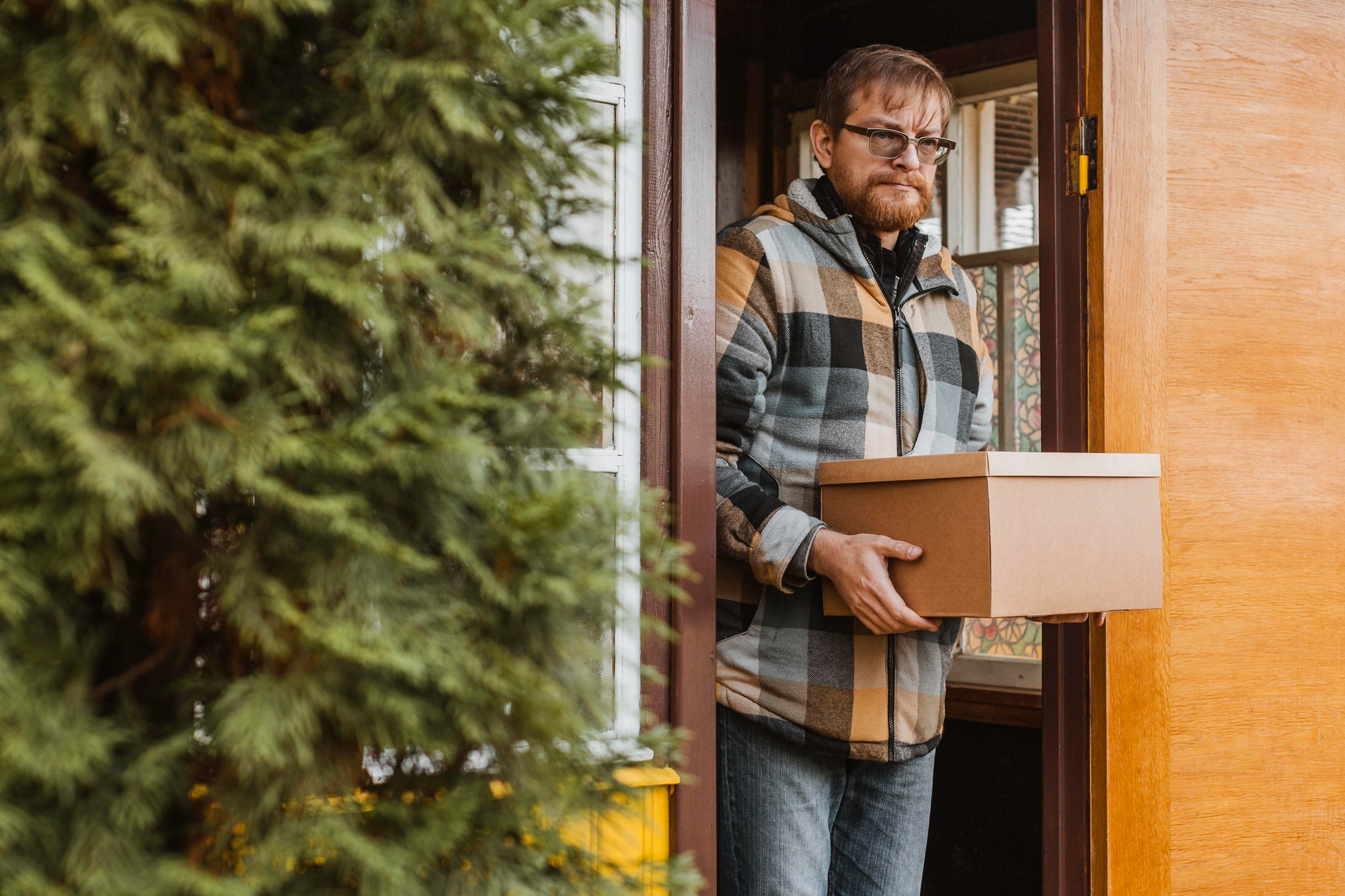
The cardboard box carrying forty years of my life had split open beside the curb. My work boots lay upside down in the damp grass. Fishing lures were scattered among bent kitchen utensils, old tax folders, and photographs curled by the afternoon drizzle. One of my flannel shirts had caught on the corner of the recycling bin and moved gently in the wind, as though someone inside it were waving for help.
I remained behind the wheel of my pickup for nearly a minute. Three days at Lucky Peak had left me sunburned, rested, and ready to return to the ordinary rhythms of home. I had spent the drive back thinking about reheating the chili in the freezer, checking the tomato plants, and calling my son to ask whether the water heater had behaved while I was gone. Instead, everything I owned had been placed beside the trash.
I turned off the engine. The street was quiet for a Friday afternoon. Sprinklers clicked across neighboring lawns, and a delivery van moved slowly past the row of maples lining our Boise subdivision. No one came outside. Curtains shifted in two windows, then became still.
I climbed from the truck and walked toward the pile. The first thing I picked up was a framed photograph of my wife, Ruth. The glass had cracked across her face. We had been married thirty five years when she passed away after a long illness. The picture had been taken on our wedding day outside a small church in Nampa. I wore a brown suit borrowed from my older cousin. Ruth wore a simple white dress her mother had altered at the kitchen table. In the photograph, she was laughing because the wind kept lifting her veil.
For eight years, that picture had rested on the living room mantel. Ruth dusted it every Sunday morning. Now rainwater had seeped beneath the backing, and the thin cardboard smelled like wet leaves. I wiped the glass with my sleeve.
Beneath a pile of winter coats, I found the Timex watch she had given me on our tenth anniversary. The crystal was broken, and the leather strap had absorbed enough water to turn almost black. She had saved for months to buy it. It isn’t fancy, she told me when I opened the box, but it’s dependable. Like you. I had worn that watch to every important event afterward, Gary’s high school graduation, his wedding, Ruth’s final appointment, and the day I signed the last mortgage payment. I held it in my palm while water slipped through my fingers.
The rest of the boxes told the same story. They had been packed quickly and carried without care. Corners were crushed. Labels were torn. One box still had my name written in Ruth’s handwriting from our previous move. Vernon, workshop. The rain had blurred the ink.
I searched through the pile until I found my small fireproof document case. The latch was bent, but it was still closed. That mattered. Inside were property papers, insurance records, Ruth’s letters, and the mortgage documents I had kept even after the loan was paid. I lifted the case into the truck, then walked to the front door. My key entered the lock but would not turn. I tried again. Nothing. They had changed it.
I knew every wire, pipe, switch, and stubborn door hinge inside that four bedroom colonial. When we moved in eight years earlier, I replaced half the electrical system myself. Now I could not enter the home whose walls carried my labor.
I called Gary. Three rings, then voicemail. Gary, it’s Dad. I just got home. My belongings are outside, and my key doesn’t work. Call me immediately. I called Melissa. Melissa, this is Vernon. I’m standing outside the house. My possessions are beside the trash. I need an explanation.
I waited on the porch for ten minutes. No call came. The rain strengthened, tapping against the gutter I had repaired the previous fall. I carried the document case and Ruth’s photograph back to the truck, then crossed the street toward Carl Thompson’s house. Carl had lived across from us since we moved into the neighborhood.
He answered after my second knock. Vernon. His eyes moved toward the boxes behind me. Do you know what happened, I asked. He rubbed the side of his neck. I saw a moving company yesterday. A moving company? Small local outfit. Two men and a van. Who hired them? Melissa was outside. And Gary? He came home around lunch. Did either of them say I was moving? Carl hesitated. She told me you had decided to find your own place. I was fishing. I know. Then why didn’t you call me? I thought it was family business.
I had heard those two words used to excuse almost every cruelty relatives preferred not to challenge. What exactly did you see? They packed your bedroom, the garage shelves, and some things from the living room. They put the boxes near the curb. Melissa changed the locks after they left. You watched all of that? I didn’t know what to do. You could have called. You’re right.
I returned to the lawn and found an old folding chair among my belongings. One leg was bent, but it held my weight. For the next four hours, I sorted my life into three piles. Salvageable. Ruined. Uncertain. Clothes could be washed. Tools could be cleaned. Books swollen by rain were probably gone. Ruth’s recipe cards had been stored in a metal tin and survived. Her handwritten note for chicken and dumplings still began with the same instruction. Don’t rush the onions. I placed the tin in the truck.
At seven thirty, a silver Honda turned into the driveway. Melissa was driving. Gary sat beside her. They remained in the car for several seconds after the engine stopped. Through the windshield, I saw Melissa say something without looking at him. Gary nodded once. Then they got out. He was thirty five but looked older under the streetlights. His shoulders curved forward, and his hands disappeared into the pockets of his jacket. Melissa opened the trunk and removed two grocery bags. Neither of them looked surprised to see me.
Thank God, I said, rising from the chair. Tell me what happened. Melissa walked past me. You weren’t supposed to be back until Sunday. My trip ended early. That complicates things. Complicates what? She set the grocery bags on the porch. The transition. I looked at Gary. What transition? He stared at the driveway. Melissa turned toward me. You need to find another place to live.
I waited for the rest of the sentence. It did not come. This is my home. You lived here, she said. That arrangement is over. Why are my belongings beside the trash? Because we needed the rooms cleared. You hired movers to empty my bedroom while I was away? We needed to act while the house was quiet. The calmness in her voice unsettled me more than anger would have.
Gary, I said. He shifted his weight. Dad, we’ve talked about needing more space. No, you talked about converting the guest room into an office. Melissa’s working from home more. My bedroom is not the guest room. We thought it made sense for you to downsize. You thought it made sense to throw my wedding photograph into the rain? Melissa’s expression flickered. I told the movers to pack everything. I can’t control how they handled individual items. You left the boxes by the curb. We expected you to collect them. I was at Lucky Peak. You had your phone. You never called. She folded her arms. You would have argued. Yes. That’s why we made the decision first.
The porch light came on automatically above her. I had installed the motion sensor myself. Gary looked at me for half a second, then turned away. I stepped closer, though I kept my voice level. Son, explain this to me. He finally met my eyes. We tried living together. For eight years. It stopped working. When? He looked toward Melissa. That small movement answered more than his words could have.
Melissa spoke for him. The mortgage is paid. The financial reason for the arrangement is finished. I stared at her. The financial reason? You helped with the house. We appreciated it. I made every mortgage payment. You chose to. Because Gary said he could not qualify. And now the debt is gone. So my job is complete. Her silence confirmed it.
Eight years earlier, Gary and Melissa had been living in a cramped apartment near Meridian. Their rent increased, their credit was weak, and Ruth’s health had begun declining. They proposed a solution. I would buy the house using my income and credit. They would live with us, contribute to groceries, and gradually assume more responsibility as their finances improved. Ruth liked the idea because she wanted family nearby. We’ll all take care of each other, Gary said at the kitchen table. The title and mortgage went in my name because the lender approved me. Gary called it a technicality.
After Ruth passed away, the arrangement changed quietly. Gary and Melissa stopped contributing to utilities. Melissa began referring to the home as hers when speaking with neighbors. My workshop space shrank each year as boxes from their online shopping appeared along the garage walls. I cooked most meals, repaired everything, bought groceries, and paid property taxes. Whenever I mentioned budgeting, Melissa reminded me that I was fortunate not to be alone. I believed her. Grief had made me grateful for noise, even when the noise belonged to people who barely spoke to me.
You paid off the mortgage last month, Melissa said. Now we want a normal life as a couple. I live in one bedroom. You use the living room every evening. It’s a living room. You keep tools in the garage. I’m an electrician. You leave boots by the back door. I clean them. You watch television too loudly. Gary winced at that one.
The complaints were so small that their true purpose became obvious. They needed ordinary habits to justify an extraordinary decision. Where do you expect me to go, I asked. Melissa lifted one shoulder. You’re capable. You’ll figure it out.
I turned to Gary. I taught you to ride a bicycle in the school parking lot. His face tightened. What does that have to do with anything? I sat beside you in urgent care when you broke your wrist. I paid the remainder of your college tuition after you lost your scholarship. I signed the papers for this house because you said we were building a family home. Dad. I am asking whether any of that means enough for you to look me in the eye right now. He did. What I saw was not hatred. It was surrender. He had already agreed to become the kind of man who let someone else make this decision for him.
I’m sorry, he said. Melissa picked up the grocery bags. The locks are changed. Don’t try to enter. We need clear boundaries. The front door opened. They stepped inside. The door closed. A moment later, the porch light went dark.
I stood beside the pile of my belongings while evening settled across the neighborhood. For years, I had mistaken being useful for being loved. That night, the difference became impossible to ignore.
I loaded what I could into the pickup. Carl came outside with a tarp and helped cover the rest. He kept apologizing. I was too tired to forgive or blame him. Where will you sleep, he asked. I know a motel near the interstate. You can stay in our guest room. No. Vernon, it’s raining. I appreciate the offer. I looked toward the darkened windows of my house. But I need somewhere no one knows me tonight.
The motel room smelled of cleaning solution and old carpet. I carried the fireproof document case inside, placed Ruth’s photograph on the small desk, and spread the damp papers across the bed. The deed was there. The mortgage agreement. Property tax statements. Insurance renewals. Every document carried my name. Vernon Caldwell. No Gary. No Melissa.
I had always known the house was technically mine. But after eight years of hearing them call it their home, I had allowed the legal fact to become emotionally distant. I opened the final mortgage statement. Balance, zero. The loan had been satisfied thirty one days earlier. Melissa had waited one month after the final payment to remove me. That was not a family disagreement. It was a timeline.
I barely slept. At eight the next morning, I called Arthur Hoffman, a property attorney I had met years earlier while rewiring his office after a water leak. His assistant gave me an appointment at ten. Arthur entered carrying a legal pad. He was fifty six, broad shouldered, and patient in the way of men who had learned that silence often produced more truth than questions.
What happened, he asked. I placed the fireproof case on his desk. My son changed the locks and put my belongings outside. Whose name is on the deed? Mine. Any written lease? No. Any ownership agreement? No. Did you ever transfer an interest to him? No. He opened the deed. Then the mortgage agreement. Then the property tax records. His eyebrows lifted slightly. Mr. Caldwell, you are not a tenant. I know that now. You are the sole legal owner. They have lived there eight years. That may establish occupancy rights requiring proper notice. It does not create ownership.
They told me the mortgage was paid, so I was no longer needed. Arthur leaned back. Who paid the mortgage? I did. Taxes? I did. Insurance? I did. Repairs? Mostly me. Utilities? Me. He tapped the deed. Then the house is yours. Free and clear.
I stared at the paper. What is it worth? He turned toward his computer and checked recent neighborhood sales. Approximately four hundred twenty thousand dollars, perhaps more depending on condition. For eight years, I had been treated like a grateful guest in a house worth nearly half a million dollars. My house.
Arthur watched my face. You have options, he said. You can serve a formal notice requiring them to vacate. You can negotiate a written lease. You can move back in after the proper process. Or you can sell. Can I list it while they are still there? Yes, but we need to handle access and notice correctly. No shortcuts. I don’t want to move back. Why not? I looked at Ruth’s handwriting on the box label beside the documents. Because it stopped feeling like home before they changed the locks. Arthur nodded. Then sell it. I want the notice delivered today.
He drafted a formal thirty day notice to vacate, along with a letter confirming my ownership and requiring them to preserve the property. Before I signed, he looked at me. Once this starts, your relationship with your son may not recover. My son watched me sort my life beside the trash. Arthur held my gaze. Then sign where I marked. The pen moved smoothly. My hand did not shake.
The notice was delivered that afternoon. I did not call Gary. I did not warn Melissa. They had said they wanted boundaries. I gave them boundaries written on law firm letterhead.
My next appointment was with Helen Walsh, a realtor Arthur recommended. Helen was forty seven, brisk, and observant. I’ll need lawful access for photographs and showings, she said. My attorney has included that in the notice. Are they likely to cooperate? No. Then I’ll communicate only in writing.
Four bedrooms, two and a half baths, updated electrical, new roof six years ago, good school district. I replaced the panel and rewired the kitchen. That helps. I want a fair price and buyers who can close quickly. Do you need the sale proceeds immediately? No. Then we do not have to sacrifice value for speed. I appreciated that she did not ask whether I was trying to punish anyone. She treated me like an owner making a decision.
When I left Helen’s office, my phone showed fourteen missed calls. Six from Gary. Eight from Melissa. I listened to none of the messages. Instead, I drove to the motel, washed the clothes I had salvaged, and spent the evening cleaning Ruth’s watch. The crystal could be replaced. The strap could not. I placed it beside her photograph.
At nine, someone knocked on the door. Gary stood outside. He wore jeans and the gray sweatshirt I had given him for Christmas. His face looked drawn. How did you find me? Carl told me. I did not invite him inside. You sent us an eviction notice. A notice to vacate. You’re selling the house? I’m considering it. Dad, you can’t. It belongs to me. We’ve lived there eight years. So did I. Melissa thinks the notice is retaliation. Melissa put my clothes beside the trash. She was upset. People do not hire movers, change locks, and pack forty years of belongings because they are momentarily upset.
He looked toward the parking lot. We should have talked to you. Yes. We need space, but maybe we handled it badly. Badly? His face tightened. Why are you making me say it? Because I spent your entire childhood finding softer words for what you did. You were never careless, you were tired. You were never dishonest, you were scared. You never took advantage, you needed help. I never asked you to do that. No. You benefited from it.
He lowered his voice. Can you cancel the notice? No. Can we pay rent? Can you afford market rent, property taxes, insurance, and maintenance? We can work something out. That has been the arrangement for eight years. It was working. For you. His jaw moved. Melissa says you’re trying to leave us without a home. You left me without one on Friday. That was different. How? You have savings. The answer came naturally. My money had always been the family’s explanation for why I could absorb whatever they did.
You believe stability makes me less deserving of consideration, I said. That isn’t what I mean. It is exactly what you mean. He looked toward the motel door behind me. Mom would hate this. The use of Ruth as leverage changed the air between us. Your mother would have carried every box back inside herself. You don’t know that. I knew her thirty five years. Gary’s eyes filled, but he looked away before the emotion settled. I don’t want to lose you. You already accepted that possibility. I made a mistake. You made a decision. He stood there for another moment. Then he walked back toward his car.
On Monday morning, Helen arrived at the house with a photographer and home inspector. Melissa refused to open the door. Arthur called her attorney, if she had one. She did not. Helen remained on the porch for fifteen minutes while Melissa spoke through the closed door. This is our private residence. The owner has provided proper written notice and reasonable advance scheduling, Helen replied. We do not consent to strangers entering. Helen did not argue. She documented the refusal and left.
Arthur filed for a court order confirming access for valuation and sale preparation. Three days later, the order was granted. Gary opened the door. The interior looked different from the last time I had seen it. My chair was gone from the living room. Ruth’s quilt had been removed from the back of the sofa. The mantel held three decorative vases where our wedding photograph used to stand.
Melissa remained near the kitchen island with her arms folded. You’re enjoying this, she said. No. Then stop. I asked you for an explanation before you went inside. You were never going to leave voluntarily. You never asked. You would have made us feel guilty. You should examine why.
I entered my former bedroom. The walls had been painted pale gray. My bed was gone. Two white desks stood beneath the windows, and Melissa’s monitors occupied the wall where Ruth’s dresser had been. On one desk lay a folder labeled home improvement plans. Beside the folder was the spare key ring I had kept in the kitchen drawer. Melissa had not merely changed the locks. She had placed my old keys on her new desk like a trophy. I picked them up. They belong to the property, she said. So do I, according to the deed. Her face hardened. Gary stood in the hallway. Dad, please. I placed the keys in my pocket.
The inspection revealed that the house was in good condition. My electrical work passed review. Helen listed the property at four hundred thirty five thousand dollars. Within four days, there were seven serious inquiries. A young couple named David and Jennifer Morrison made the strongest offer. David taught high school science. Jennifer worked as a physical therapist. They were expecting their first child. Their offer was four hundred fifteen thousand dollars in cash from the sale of inherited farmland, below asking price but with a flexible closing date.
Jennifer described the maple trees, the workshop, and the dining room window. We can imagine our child doing homework at that table, she wrote. We want a home we can care for, not just a property we can own. I thought of Ruth at the kitchen counter, flour on her cheek, telling me not to rush the onions. Accept it, I said. The contract allowed thirty days for closing.
That same week, I booked a flight to the Oregon coast. I did not disappear to frighten anyone. I needed distance from the constant calls, motel walls, and sight of ruined boxes in the back of my truck. I rented a small room overlooking the Pacific near Lincoln City. Before boarding, I turned off my phone. For three weeks, I walked the beach every morning. I ate clam chowder at a diner where no one knew my name. For the first time, my days did not belong to anyone’s emergency.
Every few days, I checked email. Helen sent professional updates. Inspection completed. Title work clear. Buyers approved. Closing scheduled. Arthur reported that Gary and Melissa had received all required notices and had begun searching for rental housing. No crisis existed that required me to return. The silence changed me. On the coast, I occupied space without apology. I slept with the balcony door cracked open and listened to the waves.
When I returned to Boise, my phone showed eighty nine missed calls, thirty seven voicemails. The earliest messages were angry. Dad, people are photographing the house. Call me. The tone shifted by the fourth day. Dad, the realtor says there is an offer. Please call us before you sign anything. By the second week, anger had become panic. We applied for three rentals and were rejected because our income doesn’t meet the requirements.
The final voicemail was from Gary. His voice was low. I keep thinking about your things beside the curb. I watched you pick up Mom’s photograph, and I still went inside. I don’t know why I did that. Maybe I do know, and I don’t like the answer. Please call me. I listened once. Then I set the phone down.
From the taxi window, I saw Gary and Melissa standing outside the apartment building. Carl must have told them. They approached before the driver finished unloading my suitcase. Gary looked thinner. Melissa’s hair was pulled into a loose knot. Dad, Gary said. Melissa stepped forward. Vernon, we need to talk. I paid the driver and lifted my suitcase. About what? The house. What about it? You accepted an offer, she said. Yes. This is our home. I looked at her. The words would have made me furious three weeks earlier. Now they simply sounded inaccurate. It is the house you occupied. We’ve lived there eight years. So did I. We can pay rent. To the new owners, if they choose. Her expression changed. You closed already? Tomorrow morning.
Gary moved closer. Please delay it. Why? We need time. You gave me none. We handled that badly. You put Ruth’s photograph beside the recycling bin. Melissa looked down. The movers did that. You hired them. I didn’t tell them to damage anything. You told them to remove everything before I returned. She folded her arms, but the gesture lacked its old confidence. We wanted privacy. You could have rented your own home. We thought this was ours. Based on what? We lived there. We helped care for Ruth. We built our lives there. You did not pay the mortgage. We paid for things. Which things? She did not answer.
Gary looked at me. Dad, we made a terrible decision. You made several. I should have stopped her. Yes. I was afraid our marriage would fall apart if I disagreed. And you decided losing your father was easier. His eyes closed briefly. I’m sorry. I believed the words. I did not yet believe the change. That apology belongs to the man sitting beside the curb, I said. You cannot reach him anymore. What does that mean? It means he spent years believing silence kept the family together. I am not him now.
Melissa’s voice sharpened. So you’re punishing us. No. I am selling my property. You know we cannot qualify for another house. That is information you should have considered before removing the person who owned yours. The sentence left her still. Gary’s face crumpled slightly. Where will we go? I almost answered as Melissa had. That is not my problem. The words rose and stopped. I did not want to become cruel simply because cruelty had been shown to me. You have thirty days of documented notice, I said. Arthur sent you a list of local rental agencies and housing counselors. You both work. You will find something. You could help, Melissa said. I already did. I carried my suitcase inside.
The next morning, I sat at the title company between Helen and Arthur. David and Jennifer Morrison arrived together. When the final document was placed before me, I paused. The house had held Ruth’s final years. Selling it felt like closing a door she could not walk through again. Arthur leaned toward me. You can stop if you are uncertain. I’m not uncertain. I signed. The ownership transferred.
Jennifer looked at me. Thank you for accepting our offer. Take care of the maple near the driveway, I said. The roots dry out in August. We will. The workshop has a separate breaker. I labeled everything. David smiled. I noticed. It’s the cleanest panel I’ve ever seen. Good. Jennifer’s eyes moved toward the keys. We want this to be a home where people feel welcome. I placed the ring in her hand. That is what houses are for.
Gary and Melissa moved into a two bedroom apartment near his office. They did not become homeless. Their lives simply became more expensive and less convenient without my income supporting them.
I used part of the sale proceeds to repair Ruth’s wedding photograph and watch. A jeweler replaced the crystal and fitted the watch with a new brown leather band. The photograph required professional restoration. The crack could not be erased completely, but the restorer softened the line across Ruth’s face until it was barely visible. It has history, she told me. Yes. Sometimes restoring something doesn’t mean pretending it was never damaged. I carried that sentence with me.
I bought a cabin outside Coeur d’Alene with a view of the lake and enough space for a workshop. It was smaller than the Boise house. Two bedrooms, cedar siding, a stone fireplace, and a deck facing the water. No one needed me to purchase it for them. The deed carried one name. Mine.
I spent the first month repairing outlets, building shelves, and simplifying what I owned. Tools I no longer used went to apprentices at the electrical company where I had worked. Ruth’s recipe tin belonged in the kitchen. Her photograph went above the mantel. The repaired watch returned to my wrist.
One Sunday morning, Gary called. I answered. Hi, Dad. Hello, Gary. How is the cabin? Quiet. Do you like it? Yes. He paused. We’re settled in the apartment. Good. Melissa hates the kitchen. She will adjust. A small laugh escaped him, then faded. I started counseling. I did not know what to say. That seems useful. I’m trying to understand why I let things happen instead of speaking. You learned it somewhere. From you? The question was honest enough to deserve an honest answer. Partly. He went quiet. I watched your mother avoid conflict until she became ill. Then I continued. I believed peace meant no one raised their voice. What do you believe now? Peace means no one has to disappear for everyone else to remain comfortable. He breathed out. I miss you. I miss who I thought we were. That hurts. It should. Can I visit someday? Not yet. All right. He accepted the answer. That mattered more than a dramatic apology would have.
Melissa wrote me a letter two months later. She acknowledged that she had viewed my presence in the house mainly through convenience. She admitted waiting until the mortgage was paid before deciding I should leave. She apologized for Ruth’s photograph. I read the letter twice. Then I placed it in the fireproof case. Forgiveness, I learned, could exist without restored access. I no longer wanted revenge. I wanted accuracy. They had not erased me. They had revealed the conditions under which they valued me. Once I understood those conditions, I was free to refuse them.
A year after the sale, Carl drove north to visit. He brought a new fishing rod and looked uncomfortable when he handed it to me. I should have called you that day. Yes. I kept telling myself it wasn’t my place. It was not your job to solve it. But I could have warned you. Yes. He nodded. We spent the afternoon by the lake. He did not ask me to make him feel better. That made it easier to move forward.
The Morrisons sent a Christmas card. The photograph showed them on the front porch with a baby wrapped in a red blanket. Inside, Jennifer had written, we hope you are well. This house has already held more laughter than we expected. Thank you for trusting us with it. I placed the card beside Ruth’s photograph.
For years, I thought the greatest thing I could give my son was security. A house. Paid bills. A reliable person who always answered the phone. I did not understand that security without responsibility becomes entitlement. Help offered without boundaries can slowly teach people that the giver has no needs of his own.
Gary and I now speak once a month. He asks before visiting. He no longer calls only when something is broken. Last fall, he drove to the cabin alone. We repaired the deck railing together and ate chili at the kitchen table. At one point, he noticed Ruth’s old watch on my wrist. You fixed it. Yes. He touched the repaired crystal lightly. I remember Mom giving you that. So do I. I’m sorry it ended up outside. I know. He looked toward the window. I don’t expect you to trust me yet. That is reasonable. I want to earn some of it back. Then do small things consistently. He nodded.
We did not embrace dramatically. We finished the railing. Sometimes rebuilding looks like that. A measured board. A straight screw. A promise too small to perform for an audience.
Melissa has not visited. Perhaps she will someday. Perhaps she will not. My life no longer depends on the answer.
Most mornings, I drink coffee on the deck while the lake changes color beneath the sky. I take occasional electrical consulting jobs and teach younger workers how to diagnose problems without tearing apart an entire system. Understand where the power is coming from, I tell them. Then decide what actually needs to change. The advice applies beyond wiring.
The night Gary and Melissa locked me out, they believed power belonged to the person holding the new key. They were wrong. Power belonged to the name on the deed. To the documents in the fireproof case. To the man willing to stop paying for a place where he was not valued. But even that was not the deepest kind of power. The deepest power was leaving without needing them to understand immediately. It was selling the house without humiliating them publicly. It was choosing consequences without becoming consumed by cruelty. It was building a quieter life and discovering that quiet did not mean empty.
At fifty eight, I had believed my useful years were behind me. I was wrong about that too. I had money in the bank, skills people still respected, and enough time to build something that belonged entirely to me.
One evening, I stood in the workshop installing a row of lights above the workbench. When I flipped the breaker, the room filled with a warm, steady glow. No flicker. No hum. Ruth would have approved. I looked toward the open door, where the last sunlight rested across the lake.
My son and his wife had once told me I was no longer needed. For a long time, I thought that was the cruelest thing anyone could say. Now I understand it was also a release. Being needed had kept me paying, repairing, apologizing, and shrinking. Being free allowed me to ask a better question. Not who needs me. Who values me. The difference gave me back my life.

Adrian Hawthorne is a celebrated author and dedicated archivist who finds inspiration in the hidden stories of the past. Educated at Oxford, he now works at the National Archives, where preserving history fuels his evocative writing. Balancing archival precision with creative storytelling, Adrian founded the Hawthorne Institute of Literary Arts to mentor emerging writers and honor the timeless art of narrative.