I don’t remember standing up.
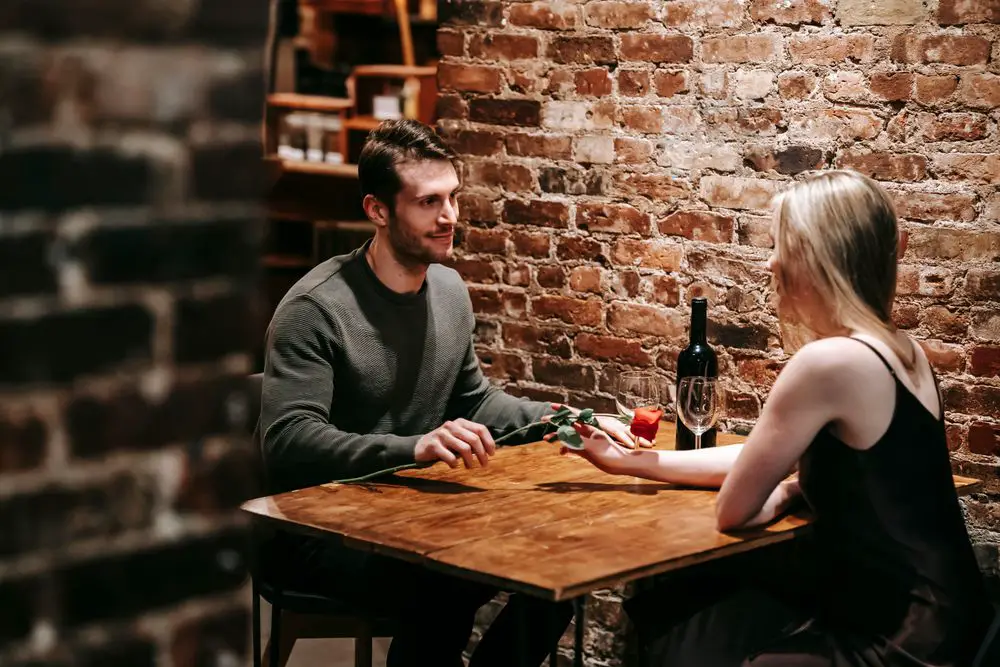
One second I was in that velvet booth with Vanessa’s perfume curling around me and a half-empty glass of wine sweating beside my plate. The next I was on my feet, my knee cracking against the underside of the table hard enough to make the silverware jump.
Vanessa blinked at me. “Dominic?”
I didn’t answer. My eyes were locked on the headline glowing up from my phone.
LEAKED FINANCIAL DOCUMENTS THREATEN REED & PARKER DEVELOPMENT.
And below it, my name.
Not buried three paragraphs down. Not listed among a dozen others. My name was in the second sentence.
Dominic Reed, senior partner at Reed & Parker Development, is alleged to have authorized questionable transfers through affiliated shell entities tied to luxury expenditures and offshore consulting arrangements.
For five full seconds I could not breathe.
Then the phone buzzed again. Thomas.
I answered before the first ring finished. “What exactly did she send?”
His voice was lower than I had ever heard it. Strained.
“Divorce papers. A forensic accounting report. Screenshots. Travel records. Invoices. Wire transfers. Photographs.”
“Photographs?”
Across the table, Vanessa went very still.
Thomas swallowed hard enough for me to hear it. “You and Ms. Hale. Aspen. New York. The Gold Coast apartment.”
The restaurant seemed to tilt on some hidden axis. The jazz still played. A waiter still poured champagne for an elderly couple by the window. Rain still traced silver down the glass. But my whole world had narrowed to the sound of Thomas breathing into a phone.
“Who else has seen it?”
“I have.”
“Good. Lock it down. Everything into my private safe. Call Martin Greer and tell him—”
“Dominic.”
He had never called me Dominic at work. Not once in twelve years. That single word landed harder than the headline had.
“What?”
“It’s already out.”
A hollow opened up somewhere in my chest. “What do you mean, out?”
“The financial documents went to the board. The executive committee. Outside counsel. Two reporters. And, from what I can tell, the state attorney general’s office.”
My grip tightened on the phone until my knuckles burned.
“No,” I whispered.
“Yes,” Thomas said.
I looked across the table at Vanessa. And for the first time since I’d met her, she did not look glamorous.
She looked afraid.
“Dominic,” she said carefully. “What did you do?”
The question was so absurd that I almost laughed.
What did I do.
I had done everything. I had built a life the way a man builds a stage set, and then forced everyone else to perform inside it. I had made Callie my respectable wife, Vanessa my private indulgence, Thomas my cleaner, and Reed & Parker my kingdom. I had mistaken silence for loyalty and money for permission.
And somebody had just pulled the curtain to the floor.
“I have to go.”
Vanessa’s hand shot out and caught my wrist. “Wait. Are my accounts involved?”
I looked down at her fingers on my sleeve. At the diamond bracelet flashing under the restaurant light.
My money. My lie. My evidence, wrapped around another woman’s wrist.
“Your accounts,” I said.
Her expression hardened instantly. Fear folded into calculation, the way it always did with her, faster than most people can manage.
“Don’t look at me like that. You told me everything was handled.”
I leaned in. “It was handled.”
“Then why is my name about to be in the news?”
That was Vanessa in one sentence. A beautiful disaster, right up until somebody else had to pay for the fire.
I pulled my wrist free, dropped four hundred dollars on the table for a bottle I hadn’t finished, and walked out into the rain without my coat.
By the time I reached the curb my phone had turned into a weapon firing without pause. Board members. Clients. My attorney. My father.
And then Callie.
Seeing her name on the screen stopped my breath entirely.
I almost didn’t answer. But pride and panic and some ruined instinct of ownership pushed my thumb across the glass.
“Callie.”
Her voice came through calm and clear. “Dominic.”
That was all. No tears. No screaming. No trembling accusation. Just my name, spoken like she had already buried it.
“What did you do?” I said.
A taxi hit a puddle beside me and threw cold water across my trousers. Callie did not react to the silence.
“I gave you divorce papers.”
“You leaked company documents.”
“I gave evidence to the people who needed it.”
“You have no idea what you’ve done.”
And for the first time, she laughed. It wasn’t loud. It was worse than loud. It was tired.
“No, Dominic. For the first time in our marriage, I know exactly what I’ve done.”
I shut my eyes against the rain. “Where are you?”
“Somewhere safe.”
“Callie, don’t play games.”
“I stopped playing games the day I found the first receipt.”
My jaw clenched. “What receipt?”
“The diamond bracelet. The one Vanessa is wearing right now.”
I turned slowly and looked back through the restaurant window. Vanessa was standing by the booth, phone pressed to her ear, gesturing sharply, already building her own escape route.
“How long have you known?” I asked.
Callie was quiet for a moment.
Then she said, “Long enough to understand that the affair wasn’t the worst thing you did.”
My blood went colder than the rain.
“I never touched your money,” I said, too fast.
“No,” she said. “You touched everything else.”
The line went dead.
I stood there with rain running down my face and looked out at a city that had, in the space of one phone call, become unfamiliar to me. For years Chicago had belonged to me. Its towers. Its boardrooms. Its private clubs. Its dark restaurant booths, where men like me sat and believed that consequences were something that happened to lesser people.
Now every lit window looked like an eye.
When I reached Reed & Parker, the lobby had changed. Nothing physical was different. Same marble. Same brass. Same enormous abstract painting my partners hated and I had insisted made us look international.
But the air had shifted.
The security guards watched me too carefully. The receptionists went quiet as I passed. An associate I had personally hired turned and walked the other way.
By the time the elevator opened on the forty-second floor, I understood that power has a smell when it starts to rot.
The conference room was full.
Martin Greer, our outside counsel, stood at the head of the table with his tie loosened and his face the color of ash. My partners sat along both sides.
Evelyn Parker did not sit. She stood by the windows with her arms crossed, looking out at the storm. Sixty-one years old, elegant, ruthless, and the only person in that firm who had never once been charmed by me.
“Dominic,” she said, without turning around. “How generous of you to attend your own funeral.”
I ignored her and looked at Martin. “What was leaked?”
He slid a folder across the table.
I opened it, and my stomach dropped straight through the floor.
Transfers I recognized. Consulting invoices from hollow vendors. Payments routed through boutique advisory firms. Entertainment charges dressed up as client development. The Gold Coast lease. Aspen. Saint Barts. Vanessa’s jewelry.
But there were other things too. Larger things. Seven-figure movements between development subsidiaries. Land acquisition premiums. Inflated contractor payments. Political consulting fees.
“This isn’t all mine,” I said.
Evelyn finally turned. “No one said it was.”
The room went silent, and that was when I understood.
Callie hadn’t just exposed my affair. She had opened a locked door and found a basement full of bodies.
“This report,” Martin said carefully, “suggests a pattern of improper financial activity going back eight years.”
Eight years. My affair with Vanessa had lasted five. The missing money went back further than my sins did.
I looked at Evelyn. Then at Arthur Bell, our CFO, who had become suddenly fascinated with the grain of the table.
“Arthur.”
He didn’t look up.
“Arthur.”
“Do not,” Evelyn cut in, “start throwing names around just because yours is already on fire.”
I slammed the folder shut. “Half these transfers were approved before I had any authority over discretionary accounts.”
Martin lifted a hand. “Dominic. Stop talking.”
“No. I want to know why my personal mistakes are being wrapped around company-level fraud.”
Arthur finally looked at me. And in his eyes I saw something I had spent years seeing in mirrors.
Calculation. He was afraid, yes. But underneath the fear, there was relief. Because Callie had made me the headline. And men like Arthur survive by letting the louder man drown first.
My phone buzzed. A text from an unknown number. One photograph.
Callie, in our Lincoln Park kitchen, three weeks earlier, in a pale blue maternity dress, one hand resting on her stomach. Across from her sat Thomas. Between them, a stack of documents.
Under the photo, one sentence.
You never noticed the people you trained to disappear.
I looked up slowly. Thomas was standing outside the conference room glass. He wasn’t hiding. He wasn’t ashamed. He looked at me with the steady sadness of a man who has already chosen his side.
I walked out. He didn’t move as I came toward him.
“You helped her,” I said.
“Yes.”
“You were my assistant.”
“I was.”
“I paid you very well.”
“You did.”
“I trusted you.”
“No,” Thomas said. “You used me.”
The words landed cleanly, the way true things do. People were watching through the glass.
“Do you understand what you’ve done to me?” I said, lowering my voice.
And for the first time, anger crossed his face. “I understand what I stopped doing for you.”
“Callie is my wife.”
“She was your wife when you had me send flowers to Vanessa from a fake client.”
“Watch yourself.”
“She was your wife when you had me tell her your flight was delayed while you were in a hotel twelve blocks from home.”
“Thomas.”
“She was your wife when she came into this office six months pregnant, carrying cookies she’d baked for my mother after chemo. And I was sitting outside your door holding a receipt for lingerie you bought another woman with company money.”
My mouth opened. Nothing came out. Because there was no defense. Only explanation, and explanation is just cowardice in a better suit.
“Where is she?” I asked.
He shook his head. “I won’t tell you that.”
“You don’t get to decide.”
“I already did.”
For one insane second, I wanted to hit him. Instead I smiled the smile I used in negotiations. Calm. Cold. Expensive.
“You think she’ll protect you? When the subpoenas come? When lawyers start asking who processed what? You’re in this too.”
He didn’t flinch. “I know.”
“You could lose everything.”
He looked past me, toward the room where my partners were already deciding how much of me to cut away to save themselves.
“Maybe,” he said. “But at least I’ll know when it happened.”
I hated him for that. Not because it was cruel. Because it was true.
By six, the rain had stopped, but the city stayed soaked and shining like a crime scene. Martin told me not to go home. Evelyn told me to resign temporarily. Arthur told me to say nothing, which told me he had the most to hide. My father called seventeen times. I ignored all of them.
I went to Lincoln Park.
The brownstone looked exactly as it always had. Warm windows, black iron railings, white roses dripping rainwater in the planters. For a moment I could almost pretend it was a normal evening. That I would walk in and find Callie in the kitchen, barefoot, making tea. That she would ask why I was late. That I would lie. That she would believe me, because love is so often mistaken for trust.
But the house was too quiet.
Her shoes were gone from the entryway. Her cream coat was gone from the hook. The framed ultrasound was gone from the console table.
I went from room to room. Kitchen. Living room. Bedroom. Nursery.
The nursery was what destroyed me. Not because it was empty. Because it wasn’t.
The crib was still there. The rocking chair. The mural of clouds and small gold stars. The shelves of children’s books she had arranged by color.
But everything of hers was gone. The blue blanket her grandmother had knitted. The stuffed rabbit I’d bought after the first appointment. The silver rattle.
And on the rocking chair, an envelope with my name in her handwriting.
Dominic.
Inside was a single page. Not legal papers. Not accusations. A letter. I almost didn’t read it, because some part of me understood it would hurt more than any lawyer could. But I read it standing in the room we had built for a son I had already failed.
Dominic,
You will tell yourself I did this because of Vanessa. You will tell yourself I was emotional, hormonal, jealous, humiliated. That will be easier than the truth.
I could have survived the affair. That is the saddest thing I have ever admitted to myself. I loved you enough that I probably would have listened if you had confessed. I might have cried, hated you, left for a while, maybe even forgiven you one day.
But you did not just betray me. You built a life where betrayal had employees. You made lying into an operating system. You involved Thomas. You involved company accounts. You involved people who were too afraid to say no to you. You took the world we were raising our son in and you filled it with rot.
Then I found the medical file.
My eyes stopped moving.
The medical file.
I made myself keep reading.
I know about the appointment you canceled. I know about the specialist you told them not to call me about. I know our son may need surgery after birth, and I know you decided I “couldn’t handle the stress” while you sat in meetings and hotels and restaurants pretending to be a man in control.
That was the day I stopped being your wife.
I pressed a hand flat against the nursery wall. The room blurred.
The specialist. Two months earlier, the doctor’s office had called my number instead of Callie’s, because mine was listed first for insurance. There had been a concern on the anatomy scan. Something with the baby’s heart. They wanted more imaging.
I had been walking into a closing. Callie had been fragile that week, anxious, asking me whether worrying so much already made her a bad mother.
So I told myself I was protecting her. I rescheduled the specialist. Then I delayed it again. Then I forgot for eleven days.
Eleven days.
When I finally remembered, I had my assistant arrange it and told the office to route everything through me. And I told Callie everything was fine, because I did not want the crying, or the fear, or the responsibility interrupting my life.
I sat down in the rocking chair and finished the letter.
Our baby deserves the truth before he is even born. So do I. You will hear from my attorney. Do not come looking for me. Do not contact my doctors. Do not use money to find us.
And Dominic, listen carefully. The worst thing you lost today was not your reputation. It was the right to be believed.
Callie.
I sat there until the house went dark around me. No lights. No movement. Just the faint smell of paint and new wood and her lavender detergent.
For the first time in years, there was no one I could call to fix what I had done.
So I called Vanessa.
She answered on the fourth ring. “Are we safe?”
Not are you okay. Not what happened. Are we safe.
I looked at the mural on the nursery wall. “I don’t know.”
“That is not good enough, Dominic.”
Something inside me went flat. “Did you talk to anyone?”
“No.”
“Vanessa.”
“I said no.”
She was lying. I knew, because I had taught her how to lie in my direction.
“If your name shows up in a criminal filing,” I said, “your gallery friends won’t save you.”
“And if yours does,” she said, her voice sharpening, “I am not going down as the mistress who didn’t know anything.”
There it was. The pivot. The survival instinct I had once admired in her.
“What exactly do you know?” I asked quietly.
“I know what you told me. That your partners were dirty. That everyone did it. That you deserved something for yourself.”
I closed my eyes. I had said all of that. Carelessly, drunk, proud. Men like me confess in fragments because we mistake admiration for silence.
“Don’t do anything stupid,” I said.
She hung up.
By midnight the first segment aired. They used an old photo from a charity gala. Callie beside me in a silver dress, smiling softly, one hand tucked around my arm. The anchor called us a prominent Chicago couple.
Prominent. A word that makes betrayal sound polished.
My father reached me at 12:17.
“Tell me it’s not true,” he said.
I sat in the dark living room with a glass of untouched bourbon. “Which part?”
He said nothing.
Richard Reed had built his entire life on reputation. He treated scandal like a contagious disease and weakness like a personal insult. When I made partner he wept, privately, and then told me publicly that now the real work began.
“You embarrassed the family,” he said.
There it was. Not you hurt your wife. Not is your child all right. The family.
“I may be in legal trouble,” I said.
“That can be managed.”
“Callie left.”
A pause. Then a sigh. “Wives come back when the storm passes.”
I almost recognized myself in him, and that was the most frightening thing of all.
“She’s pregnant,” I said.
“She’s also emotional.”
“No,” I said, surprising myself. “She’s not.”
His voice hardened. “Do not let sentiment make you stupid. Your priority is containment. The board. The press. The money trail. That woman—”
“My wife.”
“That woman,” he repeated, “attacked you while carrying your heir. That tells me everything I need to know about her judgment.”
Something old and obedient in me wanted to agree. Something newer and rawer stayed silent.
“She found out about a medical appointment,” I said.
“What appointment?”
I didn’t answer. Because saying it aloud to my father would make it real in a way I was not ready to survive. He mistook the silence for weakness.
“Get ahead of it. File a counterclaim. Question her stability. Suggest pregnancy complications. Make her look vindictive before she can make you look criminal.”
The bourbon glass cracked in my hand. I looked down. A thin red line opened across my palm. For a second I just watched the blood rise.
“Goodnight, Dad,” I said, and ended the call.
At 3:02 the doorbell rang. When I opened it, Evelyn Parker stood on my steps in a black coat and no expression.
“We need to talk.”
She came in like she owned half the house, which, given the firm’s compensation structure, she probably felt she did. In the kitchen she refused coffee, wine, and apology before I could offer any of them.
“Arthur is missing,” she said.
“What?”
“His wife says he left at nine-thirty and never came back. His phone is off. His passport is gone.”
The room felt colder.
“Half the documents Callie leaked point to accounts Arthur controlled,” Evelyn said. “The other half point to you.”
I leaned against the counter. “I didn’t steal seven figures.”
“No. You were too arrogant to steal quietly. You stole stupidly. Jewelry. Apartments. Trips. Things with photographs attached. Arthur stole like a professional.”
The insult was so precise I couldn’t even argue with it.
She took a flash drive out of her handbag, sealed in a plastic evidence pouch. “This arrived at my home an hour ago. No return address. The note said to open it with you.”
She set a folded paper on the counter. I unfolded it. Two sentences.
Dominic knows where the first lie began. Ask him about the lake house.
The kitchen lights hummed.
“What lake house?” Evelyn said.
I said nothing, because a summer night twelve years gone had just risen up in front of me. Before Vanessa. Before Callie. Before I was a partner. A client’s lake house in Wisconsin. A deal that should never have closed. A man named Peter Lang who had found a zoning problem that would have cost us millions. Arthur drunk on the deck. My father’s voice on the phone telling me not to be naive. Peter leaving angry. Peter’s car found the next morning at the bottom of an embankment, in what the police, very quickly, called an accident.
The investigation had been brief. Too brief. The project went forward. Reed & Parker made a fortune. So did my father.
“You know something,” Evelyn said, reading my face.
“Open the drive,” I said.
She set up her laptop. A single video file appeared. No title. Just a date. August 14, 2014.
She clicked play.
The footage was grainy, shot from inside the lake house. The angle showed the deck through a sliding door. Rain past the porch light. Arthur near the railing, younger and heavier, waving a drink. Peter Lang opposite him, furious. Then my younger self walked into the frame, clean-shaven and smiling too hard.
Static, then voices.
“I won’t sign off,” Peter said. “I don’t care who your father knows.”
Then my own voice, clear. “Peter, don’t make this ugly.”
On screen, Peter shoved past me toward the steps. Arthur grabbed his arm. Peter pulled away, and he slipped, and he caught himself. He was fine. I remembered that. God help me, I remembered that part being fine.
Then a fourth figure walked into the frame.
My father. Moving with the calm of a man who had been waiting just outside the light.
Peter turned. And my father struck him once. Not hard enough to kill. Hard enough to silence. Peter folded against a deck chair. Arthur stepped back, horrified. I stood frozen.
On the video my father looked at me and said something the camera caught with perfect clarity.
“Now you learn what control costs.”
The file ended.
For twelve years I had told myself Peter Lang drove drunk. That my father had handled an argument. That I was not responsible for something I never asked to happen.
And there I was, on the screen, watching the first lie begin.
Evelyn closed the laptop very slowly. “Who has this?”
“I don’t know.”
“Does Callie? Does your father know it exists?”
A sound came from the front of the house. We both turned. The doorbell rang once.
My phone buzzed. A message from Callie’s number. For one desperate second, hope moved through me. But it was a photograph. My father, on my front steps, staring into the door camera.
He’s not here for you. He’s here for the drive.
The bell rang again. My father’s voice came through the wood.
“Open the door, son.”
Another message, unknown sender.
Callie was never the one who found the video.
And my wife had declared a war whose weapons, I understood at last, someone else had put into her hands.
I opened the door.
He stepped in like he was entering a boardroom, taking in my wet shirt, my cut palm, my bare feet, before landing on my face.
“You look terrible.”
“Where is it?” No greeting. No denial.
“Where is what?”
“Don’t insult me. I know someone sent you a file.”
Evelyn stepped into the hallway behind me. His expression flickered. Not surprise. Annoyance.
“Evelyn.”
“Richard.”
She lifted the evidence pouch, and for the first time that night the confidence in his face cracked.
“You watched it,” he said.
I stepped closer. “You hit him.”
His eyes returned to mine. Calm. Almost bored. “Yes.”
The word changed the temperature of the room. No denial. No mistake. Just yes.
“You killed Peter Lang,” Evelyn said.
“Peter Lang killed himself by thinking principles were stronger than pressure.” He sighed. “Arthur panicked. You froze. I made sure the police saw what they needed to see.”
“You let me believe it was an accident.”
“I let you grow up.”
“I was twenty-nine. I watched a man die.”
“You watched a business survive.”
And then I saw the gun. Not raised. Just tucked in his coat, his hand near it, resting there like an old habit.
“Dad.”
“Don’t make that sound. I’m not here to hurt you. I just don’t know who else has seen that drive.”
My phone buzzed. Ask him about the second car.
“The second car,” I said, and his eyelid twitched. “Peter’s car went over an embankment. He didn’t drive it there, did he.”
Silence.
“Who did?”
He glanced at the drive. “Give me the file.”
“Who drove Peter’s car?”
Coldness slid into his face. “Your mother.”
The room disappeared. Margaret Reed. Elegant, soft-spoken, dead for six years. The woman who kept fresh flowers in every room and cried at old movies. Who had sent Callie a handwritten note after our engagement. He is better when loved well.
“My mother drove Peter’s car away from the lake house,” he said. “I followed. We staged the wreck. By sunrise it was over. She understood what family required.”
I could not breathe.
Then, outside, a car door. Then another. Blue and red light flickered against the wet glass.
His hand moved under his coat. I stepped between him and the door.
“Don’t.”
He smiled, sadly. “You think this is redemption?”
I looked at the man who had taught me to dominate rooms and ruin rivals and call it strength. And I thought of Callie reading medical files alone.
“I don’t know what kind of man I am without your voice in my head,” I said. It was the first honest sentence I’d spoken all day.
His smile vanished. The door came open. Two men entered with weapons drawn, and behind them Martin Greer, soaked and shouting for everyone to stay calm. My father lifted both hands. He did not resist. As they took the gun from his coat and turned him toward the wall, he looked at me.
“Callie did this to you,” he said.
The old instinct rose. Blame her. Destroy her first. And it died before it reached my mouth.
“No,” I said. “She showed me what was already here.”
Then he was gone.
Evelyn stood beside me in the wreckage of my foyer. After a long moment she whispered, “The police didn’t come because I called them.” She held up her phone. “No signal. Someone jammed it. I never made the call.”
Outside, they were putting my father into a black SUV. Not a squad car. A black SUV. The lights vanished. Martin stood in the doorway, rain on his face.
“That wasn’t Chicago PD,” he said.
My phone buzzed one more time. Now your father knows you watched it. Run.
Everything after that came fast, in the way that catastrophes do once they stop being polite.
The men had not arrested my father. They had extracted him. His own family office, Evelyn said, a machine run by men who had served my grandfather, built to make sure Reed scandals never became Reed consequences. She had not called anyone. Someone else had orchestrated even the appearance of an arrest.
And then Callie’s attorney, Marissa Vale, called, rigid and controlled, to tell me two things. That Callie had not sent me any video. And that Callie was gone.
She had been at a private maternal-care residence outside Evanston, and at 10:46 that night she had walked out with a woman from the facility staff who was not scheduled to be there, and the cameras had gone dark for eight minutes.
Eight minutes. A life can collapse in an envelope and a person can vanish in eight minutes.
In her empty room I found a white card on the pillow. Six words.
Your son deserves a cleaner name.
I knew the shape of that cruelty. It wasn’t my father’s. His threats were direct. This was theatrical. Personal. Designed to wound.
Vanessa.
But when Callie finally called, from a moving car, with a voice thin and trying not to be frightened, it was Vanessa who took the phone from her. Vanessa, smooth and almost amused, telling me she wasn’t negotiating with my father at all.
“You thought your wife became a mastermind overnight?” she said. “Sweet, stupid Dominic. Callie was just the doorway.”
“Who are you working with?”
A pause. “Ask your mother.”
The line went dead. And Martin, pale as paper, said the obvious thing. “Your mother is dead.”
Yes. Six years dead. Cancer. A private funeral. A closed casket, because my father said she no longer looked like herself. No hospital goodbye, because he said she was too weak. No final conversation, because he said sedation had made her unaware. No autopsy. No open casket. No questions.
I sat down hard on Callie’s empty bed. And for the first time that terrible night I felt something sharper than fear. Impossible, insane, devastating hope.
“I’m thinking,” I said, “that my mother may not be dead.”
She wasn’t.
We found Vanessa’s abandoned Mercedes under an overpass on Lower Wacker, doors open, headlights on, blood on the backseat. Callie was not inside. Neither was Vanessa. And then my phone rang with a video call from an unknown number, and a lamp switched on in the dark, and an old woman sat in a chair. Thinner than I remembered. White hair pulled neatly back. Sharper cheekbones. And her eyes, exactly the same.
“Hello, my darling,” Margaret Reed said.
I dropped the phone. Evelyn caught it.
For six years I had carried grief like a sealed box, and now it broke open and something impossible climbed out of it. And over the next hour my mother took my whole life apart with a surgeon’s patience.
Reed money did not begin with development. It began with influence. Land deals, judges, zoning boards, shell nonprofits, campaign money, private security, quiet ownership in companies that never carried the name. My father was not merely powerful. He was protected. And Peter Lang, she said, had not been the first.
She had not helped stage that crash because she believed in her husband. She had done it because he told her he would destroy me if she refused. I had signed documents I never read. My father had put me inside that deal on purpose. If Peter had exposed it, I would have fallen first.
“So you staged the crash,” I said.
“Yes.”
“Why fake your own death?”
Her face crumpled slightly. “Because I tried to leave him. Because I had started collecting evidence. Because Richard found out. And because the only person who could get me out alive was the man everyone believed had died drunk at the bottom of an embankment.”
Peter Lang was alive. He had regained consciousness before the car went over, escaped downstream, been found by a local mechanic, and understood that if he ever surfaced my father would finish the work. So he stayed hidden. And six years ago he had helped my mother disappear too.
“My mother ran away with a dead man,” I said, and it came out broken.
“No,” she said softly. “Your mother ran away from one.”
She put Callie on the screen. Pale, exhausted, a bandage on her arm where an IV had been, but alive. And when I asked about the blood in the car, Callie said it was Vanessa’s. That Vanessa had panicked, been taking her somewhere else, and my mother’s people had intercepted them.
Callie’s hand rested on her stomach. “Our son. We need the specialist. Soon.”
That word landed harder than any accusation.
There was a trust, she told me. Created by my grandfather. It activated when a Reed child was born, and control could pass through guardianship if the father was incapacitated or discredited. My father did not want Jonah as an heir. He wanted control of the trust through him. If I fell, if Callie was declared unstable, if both of us were disgraced, he took everything.
“He cannot find us, Dominic,” she said.
“He won’t.”
“You said that before.”
I flinched, because she was right. I had promised safety while building danger around her.
“You don’t have to believe me,” I said. “Just tell me what to do.”
That surprised her. It surprised me too.
She looked at me for a long moment. Then she said, “Tell the truth.”
“About what?”
“All of it. The affair. The accounts. The lake house. Your father. Your mother. Arthur. Everything.”
“If I do that, I go to prison.”
“Maybe,” she said softly.
There it was. The price. Not money. Not reputation. Truth. The one weapon I had ever truly trusted, and she was asking me to lay it down.
“Will it save you?” I asked.
“It might save our son.”
Our son. Not your son. A small mercy I had not earned.
“Then I’ll do it,” I said.
The confession happened the next midnight, in the ruined shell of the old Michigan Theater, where Peter Lang stepped out of the dark, alive and scarred and limping, and showed me the full map. Trust papers. Offshore entities. Judges. And photographs of Vanessa leaving a private club with my father four months before she ever met me.
She had been placed near me. My father had never needed me strong. He had needed me dirty, because dirty men obey. My affair had not merely handed Callie grounds for divorce. It had handed my father his leverage. He had not just anticipated the scandal. He had cultivated it.
Something broke open in me then. Not grief. Not rage. Recognition.
Peter turned on a camera wired to a streaming setup, with real reporters waiting on the other end. And I stepped into the light and looked into the lens.
“My name is Dominic Reed,” I said, my voice rough but steady. “I have lied to my wife, my partners, my clients, and the public. Tonight I am going to tell the truth about my affair, my company, my father, and a man named Peter Lang who was supposed to have died twelve years ago.”
Somewhere beyond that ruined theater, servers picked up the feed. Phones lit up in newsrooms. My father’s kingdom heard the first crack of thunder.
And I kept talking.
By dawn I was the most hated man in Chicago, and I want to be honest that I had earned it. But hatred is not the same as danger, and my confession made me too visible to erase. My father surfaced anyway, once, with a single statement. My son is unwell and being manipulated by unstable individuals. When truth failed, he questioned sanity. It had worked on me for forty-two years. It did not work on a world that had already seen the documents, the video, Peter Lang alive, my mother alive, Evelyn Parker standing beside me and verifying enough to make denial impossible.
Callie’s condition was worse than she knew. My father had a doctor inside the network who had intercepted her latest report. She needed a hospital with fetal cardiac surgery capability within twenty-four hours. So we forced my father into defense mode, made me the story, and moved her while his men were busy watching me.
I finally saw her in a dim hospital room with rain on the glass. She let me in, which mattered, because for years I had entered every space as though permission were decorative.
“I saw your confession,” she said.
“I’m sorry you had to.”
“I’m not. It was ugly. But it was true.”
I told her I should have told her about the specialist. She said yes. I said there was no excuse. She said no. Each answer landed clean, no performance in any of them, and I deserved every syllable.
“I thought I was protecting you,” I said.
“You were protecting yourself from my fear.”
I closed my eyes. “Yes.”
Then the monitor changed. Nurses came fast. Words I couldn’t hold flew around the room. Decelerations. Fetal distress. Emergency delivery. Callie’s face lost its color, and she reached for me. Not lovingly. Humanly. I took her cold, shaking hand.
“If he doesn’t make it—”
“Don’t.”
“If he doesn’t—”
“Then he will still have been loved by you every second.”
They wheeled her toward surgery, and I walked beside her until the doors stopped me. Before they pushed her through, she squeezed my fingers.
“His name,” she said. “If I can’t. His name is Jonah.”
Not Richard. Not Dominic. Not Reed. Jonah. A prophet swallowed by the dark, who came out alive.
For three hours I learned the shape of helplessness. No boardroom, no money, no charm, no threat could negotiate with a surgical door. Evelyn came with coffee I didn’t drink. Marissa watched me as though waiting for me to prove I was still a fool. Thomas came too and stood by the vending machines, and I told him thank you, and I told him no, I wouldn’t fire him, not now, not ever, and he told me he was cooperating with investigators, that he had implicated me.
“I implicated myself last night,” I said.
A faint, tired smile. “About time.”
At 3:41 a surgeon came through the doors and told me my son was alive. Jonah Reed. Four pounds seven ounces. A heart that needed repair. Lungs that refused to quit. Through the NICU glass he was impossibly small, one fist curled near his cheek like he was ready to fight the entire Reed family himself.
Even then, my father filed for emergency guardianship of his newborn grandson. Reaching for Jonah, even from wherever they were hiding him. And Callie, in a wheelchair against medical advice, looked at me and did not look away.
“What do we file?” I asked Marissa.
The guardianship hearing happened three days later, in a private courtroom that did not stay private, because nothing stays private when a dynasty is bleeding. My father sat at the petitioner’s table in a navy suit, silver hair combed back, wearing the grief of a patriarch and the lie of a lifetime. His attorney called me disgraced, unstable, unfit. Most of it was true. Then he turned it on Callie, called her overwhelmed and fragile and manipulated, and I felt her flinch beside me.
Then Marissa put Callie on the stand, and Callie turned slowly toward my father and said, “Because my son is not an asset.”
The courtroom went silent.
“He is not an heir to be managed, a trust trigger, a family instrument, or leverage. He is a baby. He is sick. He is loved. And the people who speak about him as property should never be allowed near him.”
Then Marissa called me, and asked the question that changed everything.
“Do you believe you should have control over Jonah Reed’s trust at this time?”
The old Dominic would have reached for it. Performed remorse beautifully, argued for partial rights, negotiated fatherhood into a favorable structure. But Jonah was in an intensive care unit with wires on his chest, and Callie had been scared, alone.
“No,” I said.
A murmur moved through the room.
“Why not?”
“Because I spent years becoming a man who thought control was love. I am under investigation. I have lied repeatedly. I endangered my wife emotionally and medically. I want to be his father. But wanting something does not make me entitled to it. Callie should have medical authority. Independent trustees should control any financial structures. My father should have nothing.”
“Dominic,” my father said. One word. A command dressed as a name. For forty-two years that voice had told me to sit, to stand, to smile, to win, to deny, to destroy.
“No,” I said, and felt the last thread snap.
Then the doors opened, and my mother walked into court like a ghost tired of haunting, and Peter Lang came in behind her, alive in front of the cameras and the lawyers and the man who had tried to bury them both. And for the first time in my life I watched Richard Reed be afraid.
My mother testified for ninety-four minutes. Peter testified. Vanessa testified, in a sling, her glamour stripped down to bone, giving up accounts and names and messages, admitting she had been placed near me and had later acted for herself and had helped take Callie because she thought trading her location would buy immunity from both sides.
By sunset the judge denied my father’s petition and issued protective orders against him. He was arrested outside the courthouse, this time by real police, and he did not struggle. He looked back once, at my mother, and smiled.
“You think this ends me?”
My mother stepped forward. “No, Richard. You ended yourself years ago. We only stopped carrying the body.”
That was the line the papers printed. Hers. Not mine.
Six months later Jonah survived his second surgery. Reed & Parker no longer existed under that name; Evelyn led the restructuring and handed whole divisions to investigators. Arthur was arrested in Lisbon. Thomas became a whistleblower and, improbably, a partner at a compliance firm, and he sent Callie flowers after Jonah’s surgery, signed, For the bravest mother I know. Vanessa testified for eighteen days and then vanished into witness protection under a name no one gave me. My father went to trial the following spring, convicted on the financial crimes first, the Lang case reopening after.
When the prosecutor asked why I had stayed silent for twelve years, I told the truth. “Because silence benefited me.” No one liked the answer. But truth does not always make you noble. Sometimes it only means you have stopped lying.
Callie finalized the divorce on a bright morning in June. We signed in separate rooms. Afterward I found her outside under a maple tree, Jonah asleep against her chest in a blue blanket, rounder now, stronger, a faint scar curving beneath his shirt like proof that survival leaves beautiful evidence.
“I’m going to ask the court for supervised visits,” she said.
“Why?”
“Because he deserves the chance to know who you become after losing everything.”
That sentence stayed with me longer than any sentence a judge ever handed down.
We did not remarry. That is what people want, when they hear this from a distance, a repaired marriage and a kiss in the rain. Life was less theatrical, and better. Callie built a foundation for women navigating medical neglect and financial abuse and high-risk pregnancies, funded in part by my mother, from money recovered out of assets my father had hidden in her name. Peter Lang became Jonah’s godfather, which surprised everyone, including me, but Callie said Jonah deserved protectors who understood survival.
And I became useful in quieter ways. School pickups. Doctor visits. Truthful answers. No secret phones. No locked accounts. No lies made beautiful.
Jonah called me Dad for the first time in a hospital parking lot after a routine cardiac check. I had just buckled him into his seat when he put a sticky hand on my face and said, “Dad, home?”
I turned away so he wouldn’t see me cry. Callie saw anyway. She always did.
On Jonah’s fifth birthday she invited me to dinner at her house near the lake, full of light and books and mismatched mugs and drawings taped to the refrigerator. Jonah fell asleep before cake. And on the back porch, in a soft summer rain, Callie handed me an envelope.
My whole body went cold. “The last envelope you gave me ruined my life.”
She smiled faintly. “No. It revealed it.”
Inside was a photograph. Jonah, newborn, in the NICU, one fist curled near his cheek. On the back she had written, The first day we both told the truth.
“I don’t know what this means,” I said.
“It means I’m happy.”
And it startled me, because for years I had believed happiness meant getting back what I’d lost. But Callie’s happiness did not include being my wife. It included freedom, and Jonah, and work that mattered, and a life without pretending. And standing there in the rain, I understood that this was the happiest ending I could have been allowed to witness.
“I’m glad,” I said.
“I know.”
Inside, Jonah called sleepily for water, and we both turned at the same instant, and stopped, and laughed. A small laugh. Quiet. Human.
“You get him,” she said.
His room glowed with a nightlight shaped like a moon. He lay tangled in dinosaur sheets, cheeks warm from sleep.
“Dad,” he murmured. “Storm?”
“Just rain.”
“Stay?”
I sat beside him and brushed the hair off his forehead. “For a while.”
His eyes closed. I listened to him breathe. Steady. Alive. Owned by no dynasty, burdened by no name except the one his mother chose. Behind me, in the doorway, Callie watched, and for once I did not ask for more than the moment gave.
Outside, the rain touched the windows gently. Not like the storm the night everything broke. Not like the night my father came for the drive. This rain sounded clean.
And I understood, at last, a thing my old self would have laughed at. A happy ending is not always getting back what you lost. Sometimes it is watching the people you hurt become safe enough to smile again.
Jonah sighed in his sleep. Callie switched off the hall light. And the last lie of my life finally became the first truth I knew how to keep.

Laura Bennett writes about complicated family dynamics, difficult conversations, and the quiet moments that change everything. Her stories focus on real-life tensions — inheritance disputes, strained marriages, loyalty tests — and the strength people find when they finally speak up. She believes the smallest decisions often carry the biggest consequences.