The sound I remember most from that afternoon is a chair scraping backward across concrete so hard it cut through the whole backyard.
Not the low music drifting from the Bluetooth speaker near the grill. Not the children shrieking through the sprinkler at the far edge of the lawn. Not even Patricia’s voice, which had a particular quality when she had decided something, a steadiness that carried over any other noise like smoke finding its way through a closed window.
Just that chair.
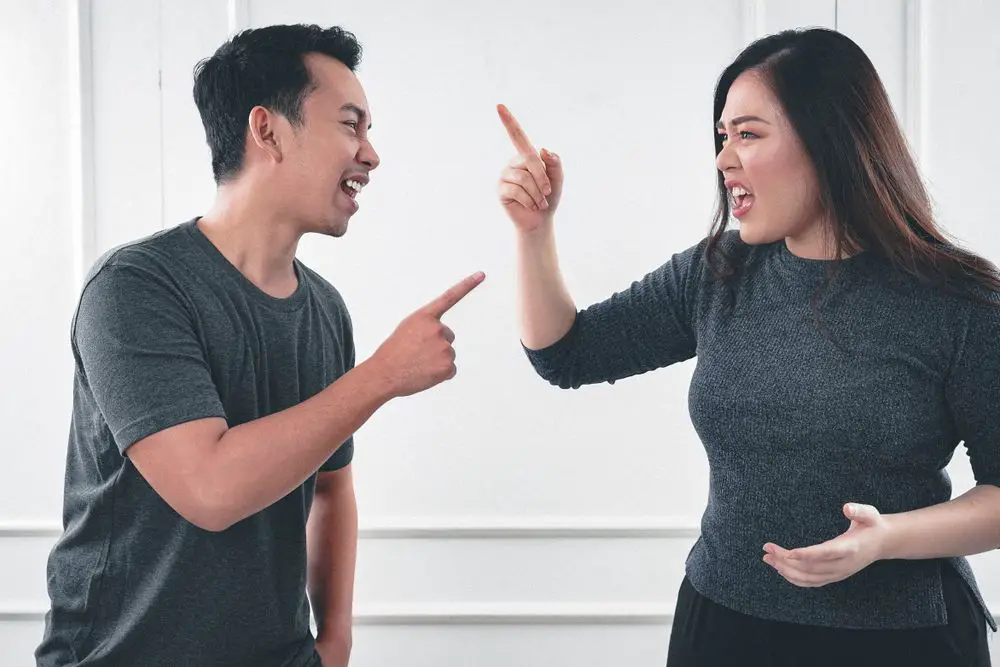
My husband Evan stood in front of his entire family with his face flushed and his back stiff and one finger aimed at the sliding glass door.
“Apologize right now,” he said, “or get out.”
For one second the backyard simply stopped.
Patricia, my mother-in-law, held her plastic cup of sweet tea halfway to her mouth. Evan’s sister Lauren leaned back in her chair with the small, satisfied expression she wore whenever she believed she had finally watched me get cornered. A cousin near the grill set his spatula down. Someone’s toddler started crying by the fence and not one adult moved toward him.
They were all looking at me.
Waiting.
Not because they were uncertain what would happen. They had watched me enough years to believe they already knew.
I had been married to Evan Pierce for six years, and in those six years his family had developed a working theory about me, which was that I would absorb almost anything if you gave me enough social pressure and the implicit threat that dinner would become a war if I didn’t. I was the one who swallowed comments about my cooking and laughed when Patricia called it interesting. I was the one who stayed quiet when Lauren joked that I parented from doctor websites and fear. I was the one who apologized when I had not done anything requiring apology, because someone had to absorb the friction and it had always, reliably, been me.
What they did not know, sitting in that backyard with the charcoal smoke and the too-cheerful music and the sprinkler making its mechanical sweep across the grass, was that I had been quietly running out of the particular resource that absorption requires.
Our three-year-old son Miles was asleep upstairs in Patricia’s guest room with his stuffed fox tucked under his chin. His little sneakers were arranged beside the bed. His dinosaur cup sat on the nightstand. He had gone down hard after too much sun and too much noise and not enough patience from the adults around him, and I had tucked him in and come back out to the patio and sat back down in the particular way you sit when you are tired in a place that does not feel safe to be tired in.
The fight started over fruit.
Miles had been sitting beside me at the patio table, eating strawberries and apple slices from a paper plate while the summer smell of charcoal and sunscreen hung in the hot air. Patricia walked over from the food table, glanced at his plate, and arranged her face into the expression she used when something I had done required correction.
“No cupcake?” she said.
“He already had one earlier,” I said.
“He’s a child, Claire. Children are supposed to enjoy themselves.”
“He is enjoying himself,” I said. He was. He had been perfectly content for the previous half hour, conducting a private conversation with a strawberry about something I had not been able to follow.
Lauren gave a small laugh from across the table. “Claire read one article about sugar and now thinks she’s the Surgeon General.”
A few people chuckled. It was the easy laughter of people who understand they are expected to laugh and find it simpler to comply.
Normally this was the moment where I would have smiled. I would have said something neutral and slightly self-deprecating and let the joke settle onto my skin like it had not left a mark, even though jokes like that never really left without leaving a mark. They collected. They stacked, one on top of the next, and became a weight you carried home in the passenger seat while your husband looked out the window and did not ask how you were doing.
But Miles looked up at me.
That was the part they missed, every one of them, because they were looking at each other with the comfortable assurance of people who have run this particular play before and know how it ends. Miles looked up from his paper plate with strawberry juice at the corner of his mouth, not crying, not confused, just watching me with the clear and uncalculating attention of a three-year-old trying to understand how the world works, learning from the evidence in front of him.
Learning what his mother accepted.
I set my napkin down.
“His pediatrician asked us to cut back because of his stomach issues,” I said, and my voice came out calm in the way that calm sometimes arrives when you have simply used up the alternative. “I don’t think that’s something that needs to be mocked.”
The table went quiet in the way patio tables go quiet when someone has said something outside the expected script.
Patricia’s eyebrows rose. Lauren’s smile tightened at the edges. Evan stared at the beer bottle in his hand like the label contained instructions he badly needed.
“Oh,” Patricia said. “So now I’m mocking you.”
“I didn’t say that.”
“You implied it.”
“You’re doing it again,” Lauren said, crossing her arms with the ease of someone who has been waiting for an opening. “You make everything tense.”
I looked at Evan.
He sighed before he spoke. That sigh told me everything I needed to know about how the next several minutes would go. It said I had embarrassed him. It said his mother’s feelings mattered more than our son’s medical instructions. It said he wanted me to be small again, and quickly, before anyone had to be uncomfortable for too long.
Family peace works that way. It is usually demanded from the person who has already been doing the most to maintain it.
“Can we not?” Evan said.
The old version of me would have stopped there. Would have let that one syllable be enough. Would have found a way to rearrange my face into something that said everything was fine, because everything being fine was what I had been providing for six years in exchange for the privilege of not being asked to leave.
Instead I reached into the diaper bag hanging from the back of my chair and pulled out the piece of paper I had been carrying for two weeks. It was a note from Miles’s pediatrician, folded in half, with the appointment date in the header and the words reduce refined sugar in the follow-up instructions section.
I placed it on the patio table between the plates.
“This is not about control,” I said. “This is about his stomach pain.”
Lauren laughed again, but this time the people around her did not join in.
Patricia looked at the paper without touching it. “You brought paperwork to a family cookout.”
“I brought my child’s instructions.”
The ice in Patricia’s cup shifted as her grip tightened. Evan’s jaw moved. The music played on near the grill, the kind of cheerful summer playlist that becomes almost sinister in the wrong silence.
Then Patricia said, loud enough that nobody around the table could pretend they had not heard it, “Maybe if you weren’t so anxious all the time, that little boy wouldn’t be so delicate.”
There was a moment, ugly and brief, where I imagined upending the entire table. I imagined the red cups bouncing across the concrete and the strawberries rolling under the lawn chairs and Lauren’s expression finally losing its composure. I did not do it because Miles was asleep upstairs and because the satisfaction would have lasted approximately four seconds and then I would have had to live in the wreckage.
I folded my hands in my lap.
“Do not talk about my son that way,” I said.
That was when Evan’s chair scraped backward hard enough to make everyone in the yard look over.
Now he stood there in front of his family, pointing at the sliding glass door, telling me to apologize to his mother while she watched with her mouth pressed into a thin line and his sister looked like she had just received something she had been waiting for.
“Claire,” Evan said, and his voice had the particular edge of a man performing authority for an audience. “I mean it. Apologize to my mom or pack your bags and go.”
The whole patio waited.
I looked at Evan. I looked at the upstairs window where Miles was sleeping behind the curtain. I looked at Lauren, who had settled back in her chair with the comfortable expression of someone watching a conclusion they have already written. I looked at Patricia, whose face had the quality of a woman who has never once considered that this particular conversation might end differently than the previous ones.
And I understood, with a clarity that arrived not as anger but as something closer to relief, that they did not want peace.
They had never wanted peace. They wanted my compliance, which had been passing for peace for six years because I had been providing it and nobody had examined the difference.
I pushed my chair back.
I picked up the pediatrician’s note from the table, folded it once, and put it in my purse.
“Okay,” I said.
Evan blinked. “Okay what?”
I looked directly at him.
“I’ll pack.”
Lauren’s smile went first, which I noted with a small, private satisfaction. Patricia set her cup down too hard and sweet tea sloshed over the rim. And Evan, who had made his ultimatum in front of his entire family with the full confidence of a man who had never once been taken at his word, stared at me with the expression of someone hearing a language he did not know he had never learned.
I walked past him and into the house.
Upstairs, the guest room was warm and quiet. Miles was still curled around his fox, one cheek flushed from the afternoon sun, his breathing the slow and uncomplicated breathing of a child who has not yet learned to sleep carefully. I stood beside the bed for a moment and looked at him, and the looking steadied something in me that had been unsteady for a long time.
I packed the quiet things first. His sneakers. The dinosaur cup from the nightstand. The spare shirt with the small paint stain near the collar that I had been meaning to treat and somehow kept not finding time for. I opened my own overnight bag and removed everything Evan had bought me, not for drama and not to make a point but because I did not want to carry one more thing that had a claim attached to it.
The airline app was already on my phone. I had downloaded it three weeks earlier, after an evening that I had not told anyone about, after driving home from a dinner that had gone the way dinners had been going and sitting in my own driveway for twenty minutes before I felt ready to go inside.
At 6:17 p.m., while Patricia was still telling someone downstairs that I had only gone up to cool off, I bought two one-way tickets. One under my name and one under Miles Pierce.
Then I opened my contacts and sent a text to my sister Diane that said only: Can I come? Just for a while.
She replied in forty seconds: Yes. Room is already made up. Drive safe.
I had just zipped Miles’s bag closed when I heard Evan’s voice carry up through the vent.
“Mom. Where’s Miles’s passport?”
The house went silent so completely I could hear the zipper teeth on my own bag.
Patricia’s footsteps came up the stairs. The guest room door opened, and she stood in the frame with her hand on the wood and her knuckles going white, looking at the closed suitcase on the bed and then at Miles against my shoulder and then at me.
“What do you think you’re doing,” she said. It was not quite a question.
“I’m leaving, Patricia. Like Evan asked.”
“You are not taking my grandson.” She stepped into the room, her eyes fixed on Miles. “Evan, get up here.”
Evan came up the stairs at a different pace than the arrogance he had carried down them. He stopped in the doorway and took in the packed bag, the phone in my hand with the confirmation number visible on the screen, and the small navy passport moving from my coat pocket.
The color left his face.
“Claire,” he said. “What is that.”
“I’m making sure our son grows up knowing that love doesn’t mean standing still while people take pieces of you,” I said. “You asked me to go. I’m going.”
“You can’t take him.” He stepped forward and then stopped when I took a step back, because some part of him still understood that there were lines, and he had already used up considerable moral standing in the last twenty minutes. “We’re married. You’re being irrational. You’re doing this out of spite.”
I looked at him with the steadiness that comes when you have finally stopped hoping for something.
“I have spent six years watching you choose your mother’s comfort over my dignity,” I said. “Every time. Without exception. I have swallowed things in that kitchen and at that patio table and in my car on the way home that you never asked about because asking would have required you to take a side. I will not spend the next sixteen years teaching Miles that this is how a husband treats a wife.”
Patricia stepped between us. Her voice had the quality of a last attempt, loud and certain and slightly desperate in the way of someone who has never had to make a last attempt before.
“If you walk out that door, you destroy this family. You’ll have nothing.”
I looked at her. I had looked at her many times over six years, across dinner tables and patio chairs and kitchen counters, and I had always looked at her with some portion of the energy I was spending on management, on monitoring her expression and calculating her mood and determining what she needed from me in order for the evening to go smoothly. I looked at her now with none of that.
“I’ve been on my own in this family for six years,” I said. “At least going forward, the air will be clean.”
Evan did not move to block me. The weight of his own ultimatum held him where he was, which is the particular consequence of ultimatums made in public by people who do not believe they will be accepted.
I walked down the stairs. Lauren was standing near the bottom, and she did not meet my eyes as I passed, which told me something about the difference between watching someone be small and watching them leave. The patio door slid open and the summer air came in, and it felt different from the air I had been breathing all afternoon, less thick, less freighted with everything that had been accumulating.
I loaded Miles into his car seat. He stirred briefly when I buckled him in, made a small sound of protest that did not develop into waking, and resettled with his cheek against the headrest.
I pulled out of the driveway.
In the rearview mirror I could see Evan standing on the front lawn in the gathering late afternoon light, watching the empty space where my car had been, with the expression of a man who has just understood that when you give someone a choice between their self-respect and your comfort, you should not be surprised when they choose themselves.
I did not look back for long. The mirror was small and the road was wide and Miles’s steady breathing filled the car.
Diane lived forty minutes away in a house with a spare bedroom that had been accumulating the comfortable clutter of a room nobody uses, which is to say it was genuinely spare and I was genuinely grateful for it. She met me at the car before I had finished unbuckling Miles from his seat, took him from my arms without a word because she could see I needed both hands to carry what I was carrying, and walked us inside.
She made tea and did not ask me to explain anything until I was ready to explain it.
The explanation took a while.
Miles slept through the whole of it, curled on Diane’s guest bed with his fox, in a room that smelled like cedar and the particular peace of a house that nobody has been performing in.
The next morning Evan called eleven times before eight o’clock. I answered the fourth call and told him clearly that I was safe, that Miles was safe, and that I needed time without the sound of his family in the background before I was going to be able to have a conversation that was worth having.
He said he understood. Then he said his mother was upset, which was such a perfect distillation of six years that I almost could not believe he had said it.
“Evan,” I said. “Your mother being upset is not something I am available to help with right now.”
I ended the call.
It would have been simpler, and in some ways more satisfying, to tell this story as though what followed was clean and fast. As though Evan had a transformation of the variety that makes other people comfortable, rapid and complete and sufficiently dramatic to justify everything that preceded it. That is not what happened, and I think making it up would be a disservice to anyone who has actually been in a version of this situation and found themselves waiting for the clean version that keeps not arriving.
What happened was slower and more complicated than that, and also, ultimately, more real.
Evan contacted a marriage counselor on the third day, not because he had arrived at clarity but because enough of the panic had converted into something more useful, the recognition that his behavior at that patio table had been the culmination of years of smaller behaviors that he had never been required to examine, and that the examination was going to require someone other than his mother to facilitate it.
He asked me to come.
I came. Not because I was certain of the destination but because I had not yet given up on the possibility that the destination was worth working toward, and because I was not willing to make a decision about my marriage while I was still inside the worst moment of it.
The first session was uncomfortable in ways that were productive and painful in equal measure. Evan was asked to describe the patio incident in his own words, and the description he gave was honest in a way I had not anticipated. He did not defend his ultimatum. He described it as something he had produced out of reflex, a learned response to family tension that had been building in him since childhood, the need to restore surface peace at whatever cost the person with the least power in the room could absorb.
“That was always Claire,” he said. “Because she would let it be.”
The therapist asked him why he had let that continue for six years.
He said because it was easier than the alternative, and then he looked at the floor for a long time.
We went every week. There were sessions that felt like progress and sessions that felt like we were turning the same painful material over without getting closer to anything, and the therapist told me once that this is normal, that the feeling of repetition is usually what the work feels like from the inside when the work is actually happening.
Patricia did not attend therapy, because nobody asked her to and she would not have come if they had. What she did instead was call Evan with a frequency that decreased gradually as the weeks passed and it became clear that the calls were no longer producing the results she was accustomed to. He stopped reporting them to me. He started, slowly and imperfectly, handling them as his own territory.
The first time I heard him tell Patricia that a decision he and I had made was not something he was going to revisit with her, I was standing in the kitchen making coffee and I stood very still for a moment, listening to the shape of it through the phone.
He sounded uncomfortable. The comfort would come later, with practice. But he did it.
Lauren I handled myself, in a phone call I initiated, shorter than it needed to be but covering the necessary ground. I told her that I understood we had not gotten along well, that some portion of that was probably mine and some portion was hers, and that going forward I was not going to be available to absorb jokes about my parenting. She was quiet for longer than I expected.
“I didn’t think you cared that much,” she said finally.
“I know,” I said. “That was the problem.”
We are not friends. We are not enemies. We are two women who share a family through complicated circumstances and have arrived at a wary mutual recognition that the arrangement works better if we treat each other with basic decency. That is probably the most honest resolution available to us, and I have made my peace with it.
Miles and I were at Diane’s house for three weeks. They were not easy weeks, because the work of sorting out what you want and what you are willing to rebuild and what you are no longer willing to carry is not easy work. But they were mine in a way that the previous six years had not entirely been, and that quality of ownership mattered to me more than I would have predicted.
I came home on a Tuesday evening in September. Evan had made dinner, which was not a grand gesture and was not meant to be, just a simple meal he had assembled with some effort in a kitchen that had always been more mine than his. We ate with Miles between us, who was more interested in arranging his peas into categories than in the tentative conversation of two adults trying to find their way back to something.
After Miles was in bed, we sat at the kitchen table and talked for a long time. About the patio and what led to it and what it had revealed about the structure of our marriage that we had both been choosing not to look at directly. About what we wanted the next six years to look like versus what the last six had been.
Evan said things in that conversation that cost him something to say. I said things that cost me something too. We did not arrive anywhere finished by the end of it. We arrived at a shared willingness to keep going, which is different from resolution but is, in my experience, what the ground floor of repair actually looks like.
The conditions were not complicated but they were not negotiable.
His family was not a third party in our marriage. Decisions about Miles, including his medical instructions and his diet and his schedule and the advice of his pediatrician, were made by Evan and me. If his mother wanted a relationship with her grandson, the terms of that relationship would be set by his parents and would be respected without commentary or negotiation. Lauren’s jokes about my parenting were finished.
Evan agreed to all of it.
The harder work was watching him hold to it in practice, which required more of him than agreeing in theory and which he did imperfectly and consistently, which is the combination that actually means something.
The first time Patricia pushed back on a decision about Miles, at a Christmas gathering three months later, Evan said, without raising his voice or looking at me for permission, that it was not up for discussion. Patricia went quiet with the particular quiet of a woman recalibrating, and then she changed the subject, and dinner continued.
It was not dramatic. Nobody’s chair scraped backward. The music kept playing and the children kept running and nobody froze.
But I felt it. The particular sensation of weight being distributed more evenly after years of carrying it alone.
We are still married. The marriage we have is different from the marriage we had, in ways that make it harder in some respects and more honest in all of them. There are things that broke in those six years that have not fully mended, which I expect is true of most repairs that are genuine rather than cosmetic. But I have stopped expecting the repair to be invisible, because invisible repairs are usually how you end up back at the patio with someone’s chair scraping backward and a backyard full of people waiting for you to be small.
Miles is four now. He has graduated from his fox to a phase involving a specific stuffed elephant he calls Professor, whose academic qualifications he takes extremely seriously. He still eats his strawberries from paper plates at family gatherings, without cupcakes when his stomach is not cooperating, and nobody comments on it.
Last month he watched Evan stand up for something at dinner, watched his father say no to something without apology or excessive explanation, and then Miles looked at me across the table with those clear and unfiltered eyes and said, in the matter-of-fact way of a child narrating what he sees, “Daddy said no.”
“Yes,” I said.
“It’s okay to say no,” he said.
“It is,” I said.
He returned to Professor, apparently satisfied with this confirmation of something he was already working out.
I thought about that afternoon in the backyard, about the moment he had looked up from his strawberries and simply watched me. About what he had been learning in that watching, and what he learned instead when I picked up the pediatrician’s note and placed it on the table and said what needed to be said.
I cannot go back and calculate everything he absorbed in the years before I figured it out. I can only start where I am, which is here, at a kitchen table in a house where the air is genuinely mine, with a child who is learning that the people who love you say what they mean and hold to it.
That is not a small thing.
That is, in fact, the whole thing.
Outside the kitchen window this morning, the September light was doing what September light does in the early hours, all gold and slightly nostalgic, the kind of light that makes ordinary things look considered. Miles was still asleep. The coffee was still hot.
I sat at my own kitchen table in my own house in the quiet of a morning that asked nothing from me except to be present in it, and I thought about a chair scraping backward across concrete, about the sound of it cutting through a backyard full of people waiting for me to apologize for knowing what my son needed.
I am glad the chair scraped. I am glad the sound was loud enough to make everyone look.
It was the sound of something ending that should have ended sooner.
And underneath it, if you listened for it, was the sound of something else beginning.

Ethan Blake is a skilled Creative Content Specialist with a talent for crafting engaging and thought-provoking narratives. With a strong background in storytelling and digital content creation, Ethan brings a unique perspective to his role at TheArchivists, where he curates and produces captivating content for a global audience.
Ethan holds a degree in Communications from Zurich University, where he developed his expertise in storytelling, media strategy, and audience engagement. Known for his ability to blend creativity with analytical precision, he excels at creating content that not only entertains but also connects deeply with readers.
At TheArchivists, Ethan specializes in uncovering compelling stories that reflect a wide range of human experiences. His work is celebrated for its authenticity, creativity, and ability to spark meaningful conversations, earning him recognition among peers and readers alike.
Passionate about the art of storytelling, Ethan enjoys exploring themes of culture, history, and personal growth, aiming to inspire and inform with every piece he creates. Dedicated to making a lasting impact, Ethan continues to push boundaries in the ever-evolving world of digital content.