By the end of the first day, the skin at the back of my neck felt cooked through.
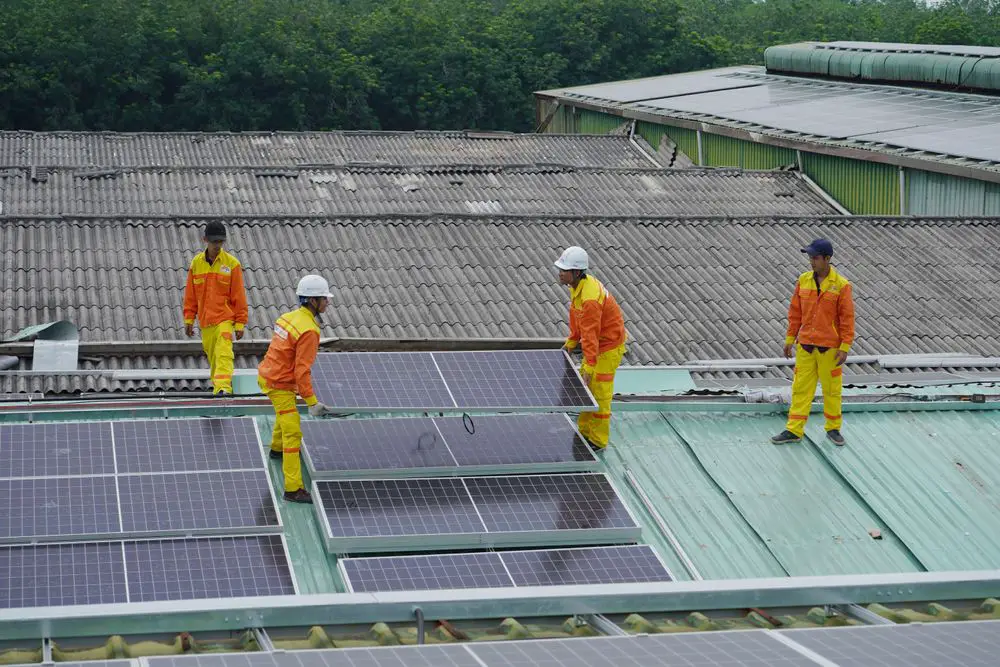
My shoulders had cycled from sore to numb and back to sore again, which was somehow worse than either state alone. Every time I bent to grab another bundle of shingles, my lower back pulled tight in the specific way of a muscle that has been asked for more than it planned to give. The pitch was steeper than most residential roofs I had worked in college, and the July heat sat over the neighborhood like a lid placed deliberately over something that needed to stay contained.
I told myself I was lucky to know what I was doing.
That had always been the script with my family. Audrey is capable. Audrey is practical. Audrey can figure it out. My parents had been saying some version of that for years, but not the way people say it when they are proud of you. More the way they say it when they are relieved, the particular relief of people who have identified the person in the family who can be counted on to step in, so they never have to examine how much stepping in they have come to expect.
I had done the preparation properly. Two full weekends measuring and mapping before I touched a single shingle. I calculated the slope, counted how many sheets of decking I would need if I found rot beneath the surface, priced every component of the job: underlayment, nails, drip edge, flashing, ridge caps, the works. I called an old contractor I had worked with years ago just to verify current labor rates. He laughed when I told him the square footage of the house.
“Twelve thousand for labor is them getting off easy,” he said.
I remember thinking how grateful my parents would be when I told them that. How relieved and how warm.
Instead, my father whistled low and said, “Well, thank God we have a daughter who knows her way around a ladder.”
My mother clapped once, delighted in the particular way of someone who has just confirmed something they were already counting on. “This is why it pays to have smart children.”
Smart, in our family, never meant cherished. It meant available.
The first morning I arrived before seven. The air still carried some cool from the night and the shingles were only warm under my boots rather than soft with heat. I set up the ladder, unloaded the compressor, spread tarps across the driveway, stacked bundles in the shade, and marked the sections I intended to strip first.
My plan was solid. Kitchen side first, then the ridge, then the master bedroom slope. Replace any damaged decking, run the synthetic underlayment, stagger the shingles carefully, seal the valley. If everything went well, I could have the most vulnerable sections weather-tight before the worst of the afternoon heat settled in.
My parents stood on the porch with their coffee and watched me work.
At first I did not think much of it. People watch roofers. There is a genuine fascination in seeing someone move with confidence at that height, carrying real weight, using tools that make noise and mean business. But then my father kept his phone raised even when nothing particularly interesting was happening. He tracked the camera while I hauled bundles up the ladder one at a time. Zoomed in when I braced a bundle against my shoulder and paused for breath. Panned slowly when my boot slipped on loose granules and I dropped to a knee to catch myself.
He was not documenting progress.
He was collecting footage.
When I came down for water around noon, sweating and lightheaded, he waved the phone in my direction.
“Don’t worry, honey, this is great content.”
My mother laughed from the kitchen doorway. “Maybe we’ll make you famous.”
I smiled the way I had learned to smile with them over the years. Mouth only, minimal teeth, don’t invite another remark.
“You could make me useful,” I said. “I need someone to hold the ladder while I get the next stack up.”
Dad took another sip of his iced tea. “I don’t want to be in your way.”
That afternoon I peeled back the old shingles over the kitchen and found two soft spots near the vent stack. Not a catastrophe, just the kind of additional problem that extends a job by a few hours and requires the particular patience of a person who has accepted that complications are part of what they signed up for. I cut out the damaged sections, replaced the plywood, sealed the edges, ran fresh underlayment, and started laying the first courses.
The rhythm of real work has always calmed me in a way that people rarely manage. Measure. Lift. Set. Nail. Repeat. There is mercy in a task that either gets done correctly or does not. A roof does not care about anyone’s feelings. It only cares whether you bothered to line things up.
By the time the light started thinning I had the kitchen side weather-tight and most of the living room slope prepped for the next morning. My shirt was soaked through. My gloves were gritty with tar. When I finally descended the ladder my legs trembled with the specific exhaustion of muscles that have been maintained at tension all day.
My father had set up lawn chairs in the yard.
Not for me.
For himself and my mother, side by side in the shade with a bowl of cherries between them like spectators at an outdoor concert.
“You’re a machine,” Mom said, from her chair.
“I could use some water,” I said.
She pointed vaguely toward the house. “There’s a pitcher in the fridge.”
That night, after I showered at their place because I was too spent to drive home covered in grime, I walked past the living room and heard my own voice coming from the television. I stopped in the hallway.
My father had cast the video from his phone to the screen.
There I was, enormous and unavoidable, bent under a bundle of shingles, hair stuck to my face, making the unglamorous effort-sounds of someone doing genuinely difficult physical work. The caption at the bottom of the screen, in my father’s caption style, read: Look at this joke trying to prove she’s useful.
My uncle had replied with a meme of a raccoon in a hard hat holding a tiny hammer.
My sister wrote: At least hire someone hot next time.
A cousin added: She really said HGTV but make it tragic.
They were laughing. Not the uncomfortable laughter of people who know they have gone too far and are trying to smooth it over. Real laughter, comfortable and easy, the laughter of people who have long ago decided what role you play in the family story and are confident you will keep playing it.
My father noticed me first. He did not reach for the remote. He did not look embarrassed.
“Aw, don’t be sensitive,” he said. “Everybody knows we’re kidding.”
My mother added, “If you can’t laugh at yourself, who can you laugh at?”
I looked at the screen one more time. At my body working under a July sun while the people I had come to help turned me into a punchline for family entertainment.
Something inside me went quiet then. Not dramatically. No revelation music, no sudden speech. Just a small clean click, like a lock turning in a mechanism that had been loose for a very long time.
I slept in their guest room because I had committed to finishing what I started, and I was not yet the person who understood that some commitments were made to a version of events that no longer existed.
The second morning was hotter.
By ten, the shingles were almost too hot to handle with bare skin. I went through two pairs of gloves, the first pair going damp enough to raise blisters on my palms. I stripped the section above the living room, guided the old shingles down the tarp onto the driveway below, cut away a warped board near the ridge, and kept moving.
Around eleven, my mother opened the back door and called up.
“You want tuna or turkey?”
For one genuinely foolish second, my chest lifted. I thought she meant she was bringing lunch out.
Then she added: “For your father. He can’t decide.”
I laughed out loud up there on the roof. One sharp, involuntary sound that even surprised me.
At two I came down to refill my water bottle.
The kitchen was cool and dim and smelled of lemon cleaner and chicken salad. My parents were at the table together looking at a laptop and a stack of glossy printed pages fanned out beside the fruit bowl. My mother reached over to show my father something on one of the sheets, and that was when I saw the heading.
Paris. Florence. Nice. Barcelona.
Below the destinations: first-class flights, private airport transfers, a river cruise upgrade, a vineyard lunch, luxury suite, sea view.
Booked. Not dreamed about, not circled in pencil. Fully booked, with dates six weeks away.
I stood in the kitchen doorway with my water bottle in one hand and three days of accumulated heat still radiating off me, and understood all at once that the story about not being able to afford the labor had been performance from the beginning. They had never been choosing between a new roof and a European vacation. They had been choosing to have both, using me as the mechanism that made both possible, and the planning had been underway the whole time I had been measuring slopes and pricing underlayment and calling my old contractor friend to make sure they were not being overcharged.
My free labor was not a sacrifice they were ashamed to ask for. It was a line item in the budget.
Dad looked up and caught me looking at the printouts.
He did not try to redirect my attention or explain. “Your mother found a great rate out of JFK,” he said. “If you know where to look, you can still travel in style.”
My mother smiled with the brightness of someone sharing good news. “We deserve one nice thing before we get too old to enjoy it.”
“You told me you couldn’t afford the labor,” I said.
“We couldn’t afford both,” she said, as though that clarified everything that needed clarifying.
Dad leaned back in his chair with the ease of a man who does not expect to be held accountable for the logic of his own arrangements. “You said you wanted to help. Nobody forced you.”
That is the family trick, the one it takes years to recognize clearly because it is built from materials that look exactly like love. They never forced me. They simply constructed every situation so that saying no would make me selfish, cold, ungrateful, difficult. Then they stood back and described my compliance as generosity.
I screwed the cap back on my water bottle. “I need to finish the west side before the weather turns.”
“There’s my superstar,” Dad said.
I went back up the ladder and worked until I could no longer trust my hands in the way you need to trust your hands on a steep pitch with a nail gun.
The third day I focused on the section above their bedroom. The most exposed part of the roof, the most likely to cause real damage if anything went wrong. My plan had been to finish that slope, secure the ridge cap, run a final inspection, and tarp the one remaining edge as a precaution.
But the heat had settled into my body in the way it does when you have been working in it for too many days consecutively, a kind of compound interest of physical depletion. And the humiliation kept replaying without my permission, the television, the group chat, the vacation printouts, my father calling me superstar while I bled through my gloves.
Around three I climbed down the ladder to refill my bottle and looked through the kitchen window.
My parents were inside with the air conditioning running, eating sliced watermelon. My father was miming my movement from the first day for my mother, exaggerating the way I had shifted a bundle on my shoulder, performing the awkwardness of it for her entertainment.
She laughed until she had to sit down.
That was the moment.
Not the worst thing they had ever done. Not even close to the worst. But there is a particular quality to the moment when every prior slight arranges itself in perfect order behind a new one, when the pattern becomes too fully visible to un-see. Every Christmas where my gift was practical while my sister’s was beautiful. Every weekend I spent mowing their lawn while my sister rested. Every family dinner where I was praised for being reliable right before someone handed me another task. Every loan I was guilted into repaying twice. Every compliment that was secretly an assignment.
I climbed down the ladder. Packed the nail gun. Coiled the hose.
I covered the exposed section with the heavy tarp I had brought for overnight protection and anchored it as carefully as I could manage alone. Not a perfect installation, but sufficient for light weather. Enough to hold for a day or two.
Then I went inside and said I had a family emergency. My husband, a medical situation. I did not know how long.
Dad raised an eyebrow. “Try not to make us a cliffhanger.”
I loaded my tools into the truck and drove away with my hands shaking badly enough that I had to pull over twice before I reached the highway.
I told my husband everything at once, standing in the kitchen still wearing my work clothes, still coated in dust and tar residue. He listened through all of it without interrupting. When I got to the group chat his jaw tightened. When I got to the vacation printouts he sat back in his chair and went very still.
“Are you going back?” he asked.
I heard how quickly the answer came. “No.”
He nodded once. “Good.”
It rained three nights later.
Not a summer shower. A full midnight downpour with sustained wind, the kind that finds every imperfect seam in a roof installation and applies pressure until the seam gives.
My phone began buzzing at 12:17 a.m.
My sister first. Then my mother. Then my father. Then my sister again. I let all of them ring to voicemail and listened to the messages in sequence while sitting up in bed with the dark and rain pressed against the windows.
My sister was shrieking. “The ceiling came in. Audrey, what the hell did you do?”
My mother’s voice was colder, which landed harder. “You need to fix this immediately.”
My father’s message began with several seconds of breathing, then one sentence: “You’d better pray the damage is limited.”
I put the phone face down on the nightstand and did not respond.
By morning I had thirty-seven missed calls and photographs coming at irregular intervals in the texts. Water pouring through the bedroom ceiling. A sagging wet section above where they slept. Insulation hanging loose. The antique nightstand my mother loved dark with water damage. My father’s camera case soaked through. A suitcase on the floor like someone had tried to save it too late.
My sister sent: Get over there before Dad does something he regrets.
My mother wrote: This is your mess. Fix it.
Not one message acknowledged the three days I had worked. Not one mentioned the group chat or the video or the vacation printouts. In the version of events they were now assembling for themselves and anyone else who would listen, I had appeared from nowhere as the reckless daughter who damaged their home and disappeared.
My cousin Leah texted from a few houses down that afternoon. Two police cruisers outside your parents’ place. What happened?
I called her. She gave me the account from behind her window with barely suppressed laughter in her voice.
My father had stood on the sidewalk telling the responding officers that his daughter had performed unauthorized construction, left the property in an unsafe condition, and abandoned the job without completion. The officer had asked whether there was a contract, whether he had paid me, whether he had invited me to do the work. Yes to the last, no to the first two.
The officer told him it sounded like a civil matter and a poor family decision. My father insisted on filing a report. The officer told him to call a licensed contractor and suggested that perhaps putting family members on a roof and insulting them throughout was not a reliable construction strategy.
Once my parents understood they could not make my departure a criminal matter, they pivoted to making it a moral one.
My sister began posting photographs in the group chat. Before the storm. After the damage. My uncle sent another meme. My mother wrote about how some people offer help they are not actually capable of delivering. My father wrote that he had apparently confused generosity with responsibility.
They needed an audience as much as they needed anything else. The performance of my failure required witnesses.
That evening my husband and I sat at the kitchen table going through everything in sequence. He read the group chat without comment, then pushed the phone back toward me.
“They want you to feel guilty enough to go back and finish the job for free.”
“I know.”
“Are you going to?”
I looked at the messages, at my uncle’s meme, at my mother’s theatrical posts, at my sister’s all-caps demands. Then I thought about the midnight rain finding the seam in the tarp, and how the first response I had was not surprise, and how that absence of surprise told me something I had known longer than I had admitted.
“No,” I said.
The next morning I went to the bank and wrote a check for fifteen thousand dollars. More than the labor cost. More than the immediate repairs likely came to. More than I could easily part with, and it made me sick to do it, but I needed a clean line. I needed them to have no practical argument that I had abandoned them financially. No claim that I walked away from the damage without accountability.
I mailed it without a note.
Four days later, my mother left a voicemail from a number I did not recognize, explaining that they had been going through old records and realized I had never fully repaid a two-thousand-dollar loan from five years ago, and they were discussing stopping the deposit on my check until the older debt was resolved.
I stood in my kitchen listening to the message with a quality of disbelief that was different from ordinary disbelief. I had repaid that loan. Six transfers over six months, on time, each confirmed. I had missed a cousin’s wedding gift to make the final payment, which I remembered specifically because I had felt guilty about it and bought the cousin a nicer gift later.
I checked my records anyway, less out of doubt and more out of the need to see the truth in front of me. Each transfer, each confirmation, each amount. Paid in full. Overpaid by one hundred and eighty dollars on the final installment because I had misread my own notes.
They knew this.
But the debt was never the point. The point was the mechanism. If I paid, they would find another debt. If I explained, they would challenge the explanation. If I sent a check, they would call it an insult. The system was designed so that nothing I did could conclude the obligation, because the obligation was not financial. It was structural. It was my position in the family, which required me to remain in motion toward them at all times.
My husband listened to my father’s follow-up voicemail, which was short and mean and ended with the sentence you owe us, and then he opened his laptop and started a spreadsheet without asking me whether I wanted one.
He titled it simply: What Audrey owes versus what Audrey gave.
At first I found it painful to look at. It felt petty in the specific way of preparing evidence for people who have already decided not to listen. But he kept going, and eventually I sat beside him and added things he did not know about.
Every loan. Every bill I had covered during the year my father’s medical situation supposedly left them without room in the budget. Every transfer I made during their emergencies, some of which had not been emergencies in any verifiable sense. Every weekend I had given to their yard or their house or their various crises. Every birthday gift I had purchased for my sister’s children because she had forgotten to order something in time and did not want to show up empty-handed.
Every shift I had swapped or workday I had arranged around their schedules. Every tank of gas. Every unopened thank-you that had been replaced within days by another request.
Then my husband pulled up the six bank transfers repaying the two-thousand-dollar loan. Plus the extra one-eighty.
He turned the laptop toward me and did not say anything.
I looked at the numbers until my eyes went soft. Not because the total was the largest number I had ever seen. Because of what it represented when you laid it out in chronological order, the shape of a decade of being used in amounts small enough to pass individually as family love.
Before I decided what to do with the file, my father appeared.
Sunday morning. The weather was clear and my husband was in the kitchen making coffee and I was outside watering the plants near the fence when a silver SUV pulled up to the curb and my father stepped out with the careful deliberateness of someone who has rehearsed how to appear calm.
He looked older than the last time I had seen him. More tired. But not sorry.
He stopped about five feet away and said we needed to talk.
He talked about stress. About the difficult year they had been through. About what the trip had meant to my mother and how my check had felt like an insult rather than a resolution. He said maybe they had overreacted, but I needed to understand how things looked from their side.
Then he said the sentence that finished whatever small thread might still have been holding.
“You used to be so grateful. What happened to you?”
I did not answer. I walked back into my house and closed the door.
My husband was at the kitchen window. “You okay?”
“Not yet,” I said. “But I will be.”
Two nights later someone tried to break into my truck. Maybe it was random. Maybe not. The lock was scratched in a specific way, the glove compartment hanging open, nothing taken. The point of entry, not theft.
My husband filed a police report. I added it to the spreadsheet file under the date column.
My mother called from a restricted number and left a voicemail that included crying, a speech about the family falling apart, and near the end, delivered quietly in her particular register: you’re not the only one who knows how to cut people off.
That line chilled me more than the crying did.
Then came the note under my windshield. Plain printer paper, folded once, her handwriting in the stiff little slant she used when she was angry, her perfume still in the fiber.
We won’t forget what you did. This won’t end until you fix it the right way.
I did not bring it inside. I dropped it in the fire pit that evening and watched it go.
Family shifted after that. Not dramatically, not all at once. But my cousin Eric called, which was unusual enough that I answered before I realized I should probably screen it. He said my parents had been telling people I had stormed off the job halfway through, left the property dangerously exposed, ignored their calls, and thrown money at the situation to avoid responsibility.
He had mostly believed them until he remembered the video my father had sent around during the first day of work. He had saved it without thinking at the time. He watched it again and heard my mother’s voice in the background asking if I could do the funny limp thing again after my boot slipped.
He showed it to his father. His father showed it to two other relatives. Small cracks appeared in the story my parents had been building.
Texts began arriving from directions I had not expected. People who said they had always wondered why I was the one who ended up doing things like that for them. People who said the video had not landed the way my father seemed to think it would. No grand apologies. No family intervention. Just enough people seeing the pattern because they had, at various points, brushed up against it themselves.
It turned out I was not the first person my parents had treated this way. Just the first one who left without coming back.
My mother’s legal threats arrived in waves, lawyer language and county filing language and harassment accusation language. Each one added a row to the spreadsheet under my husband’s careful notation system. Date, time, summary, evidence. At some point the process stopped feeling like defense and started feeling like documentation of something I had needed to see clearly for a long time.
Then my sister showed up at my workplace.
No appointment. She walked into the lobby wearing sunglasses and the particular expression she used when she wanted something and did not want to ask for it directly. She said my mother was not eating well and could not sleep. She said the family was falling apart. She said my mother had found an old notebook that confirmed the outstanding loan amount, and they were still willing to settle everything and forgive the rest if I would just apologize and make it even.
Make it even.
I told her I had repaid the loan and overpaid it and I would not give another dollar or another hour.
She called me selfish under her breath and left.
That night my husband and I wrote a letter I never sent. Every hurt, every favor, every version of myself I had trimmed down over the years to stay acceptable in that family. I read it aloud once and then deleted it, because some words are not meant to be understood by the people who caused them. Some words exist only to free the person holding them.
I blocked the last numbers. My parents, my sister, the cousins who had watched and said nothing when it mattered, the group chat, every shared folder and every route back.
I expected guilt.
What I felt was relief so physical that I slept twelve hours straight for the first time in months.
Four weeks later my sister’s daughter showed up at the front door.
Kira. I had not seen her properly in years. She stood on the porch holding a small terracotta pot with a fern in it, knees dusty, eyes too wide, shoulders tense with the uncertainty of someone who was not sure whether she was allowed to be there.
“Aunt Audrey,” she said. “Mom said to give you this.”
I opened the door wider.
She held out the pot with both hands. “She said she’s sorry.”
That was all. No letter attached. No adult courage delivered alongside it. Just a child carrying an apology that was too heavy for her small arms.
I took the fern.
It was wilted at the edges, soil too dry, roots probably crowded in that cheap pot. Before I could ask Kira if she wanted to come inside for water or a snack, my sister’s voice came sharp from the sidewalk.
“Leave it, Kira. Come on.”
Kira flinched. Not much. Just enough.
Then she turned and ran back across the yard.
I stood in the doorway with the plant and watched them go.
My husband came up behind me. “You okay?”
I looked down at the fern. “I don’t know yet.”
He touched one of the drooping fronds lightly. “Needs repotting.”
We brought it inside anyway and set it near the window in the sun room we had been building together. Later that evening he loosened the root ball gently while I found a larger pot and fresh soil, and we worked in comfortable silence, and something about that made my throat ache.
Two people taking care of a plant that nobody else had taken care of properly. It felt obvious and maybe a little on the nose, but there it was.
When we finished the fern looked less doomed. Not healed. Just given a better situation to recover in.
That became the shape of whatever forgiveness I arrived at. Not a reunion, not a reset, not any kind of pretending that what had happened had not happened. Just the decision not to let what they did turn me hard in every direction that remained.
I sent a card to Kira on her next birthday with a bookstore gift card and a short note that said only: You are always welcome here. Nothing about her parents. No adult business delivered through a child.
A week later she mailed me a thank-you note in careful block letters with a tiny fern drawn at the bottom.
That was the first thing in months that made me cry.
Then my father’s brother called.
He said he had stayed out of it because he thought it would resolve itself, and then when it did not resolve, he did not know how to enter it without taking a side. Then he said: You’re not the first one they treated this way. You’re just the first one who walked away and didn’t come back crawling.
I leaned against the kitchen counter and closed my eyes.
Not permission exactly. Something more necessary than permission. Confirmation that I had not imagined the pattern because I was finally the one willing to name it.
After we hung up, my husband looked at me from the workbench where he was sanding trim.
I exhaled fully for what felt like the first time in a very long time. “I think I’m done carrying the part of this that was never mine.”
He gave me the small nod he has when I have told the truth.
It has been long enough now that silence no longer feels like punishment.
Long enough that my body does not tighten when an unfamiliar number calls.
Long enough that when I think of my parents, I mostly feel distance rather than panic, and distance, I have learned, is its own kind of health.
We finished the sun room in early fall. Wide windows, pale floors, a deep chair in the corner where the afternoon light lands at a particular angle that makes the room feel like somewhere worth being. Some mornings my husband and I sit in there with coffee and talk about places we want to go. Small trips, chosen without obligation attached. A weekend on the Maine coast. Maybe Seattle in the spring. Places chosen because we want to be there, not because we are escaping from somewhere else.
The fern lives on the shelf by the south window.
It is considerably greener now.
I water it on Thursday mornings and sometimes stand there for a moment longer than watering requires, thinking about how strange families are. How apology can arrive late and crooked and carried by the wrong person and still be worth receiving. How forgiveness is not a door you fling open or slam permanently shut. How sometimes it is simply a boundary with something growing beside it, tended carefully, allowed to recover in better conditions than the ones it survived.
If my mother ever decides to apologize, actually apologize with the honesty and accountability that real apology requires, she knows where I live. She knows what it would take, and it is not tears and it is not pressure and it is not a child on my porch holding a pot.
Maybe that day comes. Maybe it does not.
Either way, I know what I know now. The roof was never only a roof. It was every time I was expected to climb higher while they stayed comfortable below. Every joke made at my expense and sent to an audience while I was still working. Every favor treated as obligation. Every debt invented to keep me in position. Every version of love that turned out, on examination, to be leverage.
When that ceiling came in during the midnight rain, it was not just their bedroom that gave way. It was the whole structure we had all been pretending was sound.
And the thing that still surprises me is this: when it finally collapsed, I was not underneath it.
I had already left.
I paid what I needed to pay to draw a clean line. I closed the door. I built something quieter and more honest with the person who actually stays beside me.
People ask if I have regrets.
I regret how long it took. I regret confusing being needed with being loved, and staying in that confusion for as many years as I did. I regret the money, the time, the compounded heat of those three days, and every version of an apology I swallowed to maintain a peace that cost only me.
I do not regret leaving.
I do not regret refusing to fix it on their terms.
And every Thursday morning when I water the fern on the shelf in the south window, I think about what my husband said when we repotted it together, the obvious and necessary thing that turned out to be true.
Some things recover after being root-bound and left in the wrong container for too long.
They do not recover by going back to the conditions that diminished them.
They recover because someone finally moves them somewhere with enough light.

Ethan Blake is a skilled Creative Content Specialist with a talent for crafting engaging and thought-provoking narratives. With a strong background in storytelling and digital content creation, Ethan brings a unique perspective to his role at TheArchivists, where he curates and produces captivating content for a global audience.
Ethan holds a degree in Communications from Zurich University, where he developed his expertise in storytelling, media strategy, and audience engagement. Known for his ability to blend creativity with analytical precision, he excels at creating content that not only entertains but also connects deeply with readers.
At TheArchivists, Ethan specializes in uncovering compelling stories that reflect a wide range of human experiences. His work is celebrated for its authenticity, creativity, and ability to spark meaningful conversations, earning him recognition among peers and readers alike.
Passionate about the art of storytelling, Ethan enjoys exploring themes of culture, history, and personal growth, aiming to inspire and inform with every piece he creates. Dedicated to making a lasting impact, Ethan continues to push boundaries in the ever-evolving world of digital content.